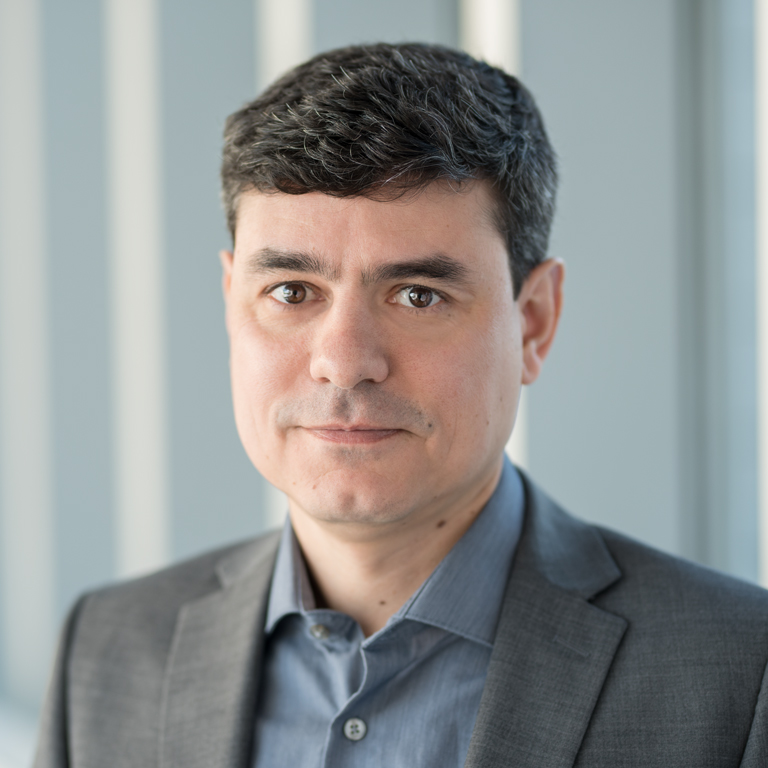
Mark Liberman is a Trustee Professor at the University of Pennsylvania , holding appointments in the Department of Linguistics and Department of Computer and Information Science . He serves as Director of the Linguistic Data Consortium and Faculty Director of Ware College House . His career spans linguistics, speech technology, and computational methods. Education: Harvard University (1965-1969), MIT (M.S. 1972, Ph.D. 1975) Professional Experience: AT&T Bell Laboratories (1975-1990), University of Pennsylvania (1990-present) His research interests include: Corpus-based Phonetics : Analyzing speech patterns via large-scale datasets. Clinical Applications : Developing speech biomarkers for neurodegenerative diseases. Tonal Phonology : Studying lexical tone and intonation in languages like Yoruba and Mandarin. Formal Annotation Models : Creating frameworks for linguistic data standardization. Recent publications highlight automated speech analysis, cross-linguistic prosody, and digital biomarkers for conditions like ALS-FTD and Alzheimer’s. His collaborations span computational linguistics , neurology , and cognitive science . Scientific awards include the IEEE James L. Flanagan Award (2017), Antonio Zampolli Prize (2010), and fellowships from the AAAS and Linguistic Society of America . He advises PhD students May Chan and Jonathan Him Nok Lee and contributes to editorial boards for journals like Cognition and Annual Review of Linguistics . His work bridges speech science , language technology , and neurocognitive research .
Deva Kannan Ramanan is a Professor at the Robotics Institute of Carnegie Mellon University , focusing on computer vision , machine learning , and human-centered robotics . His work bridges neurorobotics and visual perception , with applications in autonomous driving and 4D reconstruction . Research Topics Computer Vision 3-D Vision and Recognition Visual Servoing Neurorobotics Human-Centered Robotics Graphics & Creative Tools His recent publications in CVPR , ICRA , and ICCV emphasize 4D human reconstruction , neural rendering , and vision-language models for autonomous systems. He serves as General Chair of CVPR 2027 and Program Chair of CVPR 2018 , with IARPA funding for aerial-ground rendering (2023-2027). Current students include PhD candidates Sally Chen, Kangle Deng, and Zhiqiu Lin, while past advisees like Arun Vasudevan and Olga Russakovsky now hold positions at Amazon and Meta respectively.
Olga Sorkine-Hornung is a Professor of Computer Science at ETH Zurich and head of the Institute of Visual Computing. She leads the Interactive Geometry Lab, focusing on theoretical and practical advancements in digital content creation, geometry processing, and shape modeling. Current position: ETH Zurich, Department of Computer Science Previous roles: Courant Institute (NYU), Technical University of Berlin Education: BSc and PhD from Tel Aviv University, postdoc at TU Berlin Her research spans shape representation, digital fabrication, computer animation, and fundamental geometry processing. Key contributions include Laplacian surface editing, as-rigid-as-possible deformation, and generalized winding numbers. She works on applications in VR, AR, and autonomous systems. Awards include Test of Time Awards (2024), ACM Fellow (2020), ERC Consolidator Grant (2020), and EUROGRAPHICS Young Researcher Award (2008). She has supervised numerous students and co-developed software libraries like libigl and Instant Meshes . Co-chair roles for SIGGRAPH, Eurographics, and Pacific Graphics Editorial board member for ACM Transactions on Graphics and other journals Keynote speaker at VMV, CVPR, and SIAM conferences Her work bridges mathematical rigor with practical implementation, advancing computer graphics and geometry processing through intuitive algorithms that maintain surface detail while enabling efficient computation.
Lior Wolf is a Professor at the School of Computer Science, Tel Aviv University. Previously, he was a postdoctoral researcher at MIT's Center for Biological and Computational Learning (CBCL) under Prof. Tomaso Poggio and earned his PhD from Hebrew University of Jerusalem with Prof. Amnon Shashua. His educational background includes: PhD in Computer Science, Hebrew University of Jerusalem Postdoctoral Research, MIT CBCL Prof. Wolf's research centers on artificial intelligence with seminal contributions to deep learning, computer vision, and natural language processing. His work bridges theoretical foundations (e.g., attention mechanisms, transformer analysis) with practical applications in medical imaging, speech processing, and sign language technology. He pioneered methods for neural network interpretability, efficient sequence modeling, and multimodal fusion. Analysis of his 2023-2025 publications reveals dominant trends in large language model optimization (neuron pruning, attention analysis), efficient video generation, and cross-modal learning. His work increasingly integrates medical applications (fMRI/EEG analysis) while maintaining theoretical rigor in model architecture design. His scientific achievements include: Best paper award at EMNLP 2024 for 'Backward Lens: Projecting Language Model Gradients into the Vocabulary Space' Best paper award at SCIA 2023 for 'Gradient Adjusting Networks for Domain Inversion' Best paper award at FG 2021 for 'Generating Master Faces for Dictionary Attacks' Prof. Wolf mentors graduate students in the School of Computer Science and leads research at the ICRC building laboratory. His team collaborates with 'the friends of TAU' on projects spanning biometric security, medical imaging, and generative AI. Current work focuses on efficient transformers, neural network interpretability, and multimodal medical diagnostics.
Nicole Koschate-Fischer is Professor and holds the GfK Chair for Marketing Intelligence at Friedrich-Alexander University Erlangen-Nuremberg (FAU), where she currently serves as Dean of Research at the Faculty of Business, Economics and Social Sciences. She is spokesperson for the interdisciplinary research focus "Customer Insights" and founding director of the Experimental Lab for Business Insights Nuremberg (ELAN). Previously, until September 30, 2024, she served as spokesperson for the Institute of Marketing and head of the Master's in Marketing program. Professor Koschate-Fischer earned her doctorate and habilitation from the University of Mannheim after completing a degree in business administration and psychology. Her academic journey includes membership in the interdisciplinary Collaborative Research Center "Concepts of Rationality, Decision Behavior, and Economic Modeling" at Mannheim, along with research stays as visiting scholar at University of Florida and University of Texas at Austin. She has held professorships at Technical University of Kaiserslautern and HEC Paris, and served as visiting professor at University of Vienna and Central University of Finance and Economics in Beijing. Research Interests Professor Koschate-Fischer's research spans customer insights , digital marketing , pricing and product management , and marketing analytics . Her work investigates consumer behavior in digital contexts, brand partnerships, life event impacts on purchasing decisions, and the psychological aspects of pricing. She employs experimental research methods and mediation analysis to understand causal relationships in consumer decision-making processes. Her publication record demonstrates consistent high-impact research in leading journals including Journal of Marketing, Journal of Marketing Research, and Journal of the Academy of Marketing Science. Recent work focuses on digital communication phenomena like emoji usage in electronic word-of-mouth, conversational agent interactions, and the application of behavioral pricing principles in charitable contexts. Professional Recognition Full member of the Bavarian Academy of Sciences and Humanities Member of the Board of Academic Trustees of the Center for Advanced International Marketing Knowledge (AiMark) Editorial board member of Journal of International Marketing Professor Koschate-Fischer regularly serves as reviewer for leading international academic journals and presents her research at both academic and practitioner-oriented conferences. Her work receives funding from organizations including the German Research Foundation (DFG), and she maintains active collaborations with renowned companies across various industries. She has directed the Experimental Lab for Business Insights Nuremberg (ELAN) since its founding, creating a hub for interdisciplinary customer insights research that bridges academic rigor with practical business applications.
Professor Winston Hsu is a distinguished faculty member in the Department of Computer Science and Information Engineering at National Taiwan University, where he has served as a full professor since 2015. He is the co-director of the Communications and Multimedia Laboratory (CMLab) and founder of the MiRA (Multimedia indexing, Retrieval, and Analysis) research group. Additionally, he serves as the Founding Director for NVIDIA AI Lab at NTU, the first such lab in Asia. Professor Hsu received his Ph.D. in Electrical Engineering from Columbia University in 2007 under the supervision of Professor Shih-Fu Chang. Prior to his academic career, he was a founding engineer and research manager at CyberLink Corp., now a public image/video software company. National Taiwan University (2007-Present): Professor (2015-Present), Assistant/Associate Professor (2007-2015) MobileDrive (2021-2024): CTO and Vice President (Joint Venture between Foxconn and Stellantis) IBM TJ Watson Research Center (2016-2017): Visiting Scientist Microsoft Research Redmond (2014): Visiting Researcher Columbia University (2007): Ph.D. in Electrical Engineering Professor Hsu's research focuses on machine learning, computer vision, large-scale image and video search and recognition, and embedded AI. His work spans from fundamental research in visual recognition to practical applications in automotive systems, medical imaging, and e-commerce. He has pioneered work in disguised face recognition, low-resolution face hallucination, 3D model search, and virtual try-on systems. His current research emphasizes Embodied AI, integrating perception, action, and learning technologies for applications in automotive and robotics domains. His research group has produced numerous influential publications, particularly in top computer vision and multimedia conferences like CVPR, where they won first place in the Disguised Face Recognition competition in 2018. Their work spans diverse application areas including security, medical diagnostics, automotive systems, and e-commerce solutions, demonstrating strong translation from academic research to real-world impact. IBM Research Pat Goldberg Memorial Best Paper Award (2018) First Place, IARPA Disguised Faces in the Wild Competition (CVPR 2018) Best Brave New Idea Paper Award, ACM Multimedia 2017 NVIDIA AI LAB Award (First in Asia, 2016) First Place, MSR-Bing Image Retrieval Challenge (2013) World's Top 2% Scientists (2023) Professor Hsu actively mentors students and researchers, with his group consistently recruiting PhD students, postdocs, and research assistants. He has successfully bridged academia and industry through multiple collaborations, including his role as CTO at MobileDrive (a joint venture between Foxconn and Stellantis) from 2021-2024. His research has been supported by significant industry partnerships with Microsoft, IBM, and NVIDIA, as well as government grants from Taiwan's Ministry of Science and Technology. His laboratory, the Communications and Multimedia Laboratory (CMLab), maintains strong industry connections and focuses on cutting-edge research in visual AI. The lab has produced numerous award-winning projects and maintains active collaborations with global technology companies, particularly in the automotive and consumer electronics sectors.
Brian Scholl is a Professor of Psychology at Yale University, specializing in visual cognition, perception, and cognitive science. His research explores how visual perception interacts with higher-level cognition, including object persistence, event perception, causality, and intuitive physics. He leads the Yale Perception & Cognition Lab, focusing on dynamic events, attention, and computational models. He earned his Ph.D. from Rutgers University in 1999. His work spans experimental psychology, neuroscience, and computational modeling, with a focus on phenomena like inattentional blindness, scaffolded attention, and event segmentation. He has authored numerous papers and presented at international conferences, contributing to debates on perception vs. cognition interactions. Key research areas include the perception of dynamic event types, the role of intuitive physics in visual processing, and the influence of event boundaries on memory and decision-making. His lab employs computer-based experiments and collaborations with computational models to study perception across species and clinical populations.
Ilker Yildirim is an Assistant Professor of Psychology at Yale University, where he leads the Cognitive and Neural Computation Lab (CNCL). He received his Ph.D. from the University of Rochester in 2014. His research focuses on understanding how perception transforms raw sensory signals into meaningful representations of objects and scenes through computational modeling approaches. His research interests include: Computational modeling of visual perception and cognition Intuitive physics and physical reasoning Bayesian inference and probabilistic models in cognition Integration of graphics and physics engines in cognitive modeling Neural mechanisms of object representation Attention and resource allocation in dynamic scenes Yildirim's lab develops computational frameworks that bridge cognitive processes with neural mechanisms, using tools including probabilistic models, simulation engines, and deep learning. His work often involves testing these models through behavioral and neural experiments to create unified accounts of perception and cognition. His recent publications reveal a strong focus on how humans perceive physical properties of objects, particularly soft materials and liquids, and how attention dynamically allocates resources during scene perception. Among his notable achievements is receiving an NSF CAREER award for his project "CAREER: CompCog: Reverse-engineering neural mechanisms of object cognition with multilevel computational modeling," which will run from 2025 to 2030. His Nature Human Behaviour paper by Qi Lin was featured on CBS News, Germany's NZZ, and Wired Italy. Yildirim mentors a diverse group of graduate students and postdocs working on various aspects of perception, cognition, and computational modeling. His students have received prestigious awards including the Jane Olejarczyk Award and the Leonard J. Savage Prize.
Franziska Mueller is a Research Scientist at Google Zurich , specializing in Augmented Perception . Prior to joining Google, she earned her Ph.D. in Computer Science at Saarland University under the supervision of Prof. Dr. Christian Theobalt, focusing on real-time hand reconstruction from RGB and depth images. Ph.D. in Computer Science (2016-2020) at Saarland University Master’s and Bachelor’s in Computer Science at Saarland University Research visits at Stanford University (2018) and Reality Labs Research (2019) Her research emphasizes the integration of model-based techniques and machine learning components for real-time 3D hand pose estimation, occlusion handling, and hand-object interaction tracking. Key contributions include methods for single-camera reconstruction and datasets like HandSeg. Scientific Awards : Dr. Eduard Martin Award (2021) Google PhD Fellowship (2017) Günter-Hotz-Medal (2016) Bachelor Award (2015) Völklinger Abiturpreis (2012)
Dr. Divya Jayakumar Nair serves as Senior Lecturer in the School of Civil and Environmental Engineering at the University of New South Wales (UNSW), where she also holds the position of Associate Dean International – South Asia for UNSW Engineering. Her academic work is centered at the Research Centre for Integrated Transport Innovation (rCITI), focusing on transportation systems, network optimization, and disaster management applications. Dr. Nair's research interests span transportation engineering, disaster management, and urban mobility systems. Her work investigates complex network design problems, particularly in pre-disaster evacuation planning, transportation resilience, and food rescue logistics. She employs advanced analytical methods including traffic equilibrium modeling, network optimization techniques, and data-driven approaches to solve real-world transportation challenges with significant societal impact. Her recent publications demonstrate a strong focus on transportation resilience during disasters, with particular attention to equity considerations in pre-event planning. Dr. Nair's research shows how transportation networks can be optimized to improve emergency response while ensuring equitable access to safety for all population segments. Her work bridges theoretical network optimization with practical applications in urban environments facing climate-related challenges. Dr. Nair collaborates extensively with leading researchers in transportation including S. Travis Waller, Vinay V. Dixit, David Rey, and Taha Rashidi. Her collaborative approach spans multiple institutions and addresses pressing challenges in urban transportation systems worldwide.
**Danilo Dantas** is a **Professor** in the **Department of Marketing** at **HEC Montréal**, a leading business school in Canada. He holds additional roles as the **Pedagogical Coordinator of the Specialized Graduate Diploma (D.E.S.S.) in Arts Management** (in French) and a **Regular Member** of the **Observatoire Interdisciplinaire de Création et de Recherche en Musique (OICRM)**. His expertise spans **Music Marketing**, **Database Marketing**, and **Electronic Commerce**, with a focus on cultural branding, consumer engagement, and digital strategies in creative industries. **Education**: He earned his **Doctorat ès sciences de gestion (marketing)** from Université de Grenoble II, along with advanced degrees including a **D.E.A. in Sciences de Gestion (marketing)**, **D.E.S.S. in Commerce International**, and a **B.A.A. in Administration** from UFRGS, Brazil. **Research & Teaching**: Professor Dantas teaches courses such as *Marketing des arts et de la culture* and *Analyse des bases de données en marketing*. His research investigates topics like cultural branding (e.g., leveraging live music for city brands), music industry strategies, and consumer behavior in digital ecosystems. Recent work explores the interplay between brand fit and new product performance, social media impact on online communities, and e-Government service quality metrics. **Advising**: He has supervised **2 PhD dissertations**, **7 Master’s theses**, and **21+ supervised projects**, covering areas such as VR consumer experiences, vinyl store dynamics, and festival attendee motivations. His projects often address practical challenges in arts management, digital transformation, and cultural policy. **Labs/Teams**: His affiliation with OICRM integrates music creation and research, while his work with the Chaire de gestion des arts Carmelle et Rémi-Marcoux emphasizes arts management education and data-driven decision-making.
Allen Husker is a Research Professor of Geophysics at the California Institute of Technology (Caltech), affiliated with the Seismological Laboratory. He manages the Southern California Seismic Network (SCSN) and the Southern California Earthquake Data Center. Previously, he was a professor at the National Autonomous University of Mexico (UNAM), chairing the Seismology Department, and served as Station Manager for the Comprehensive Nuclear-Test-Ban Treaty Organization (CTBTO) seismic stations in Mexico. His academic journey includes a B.S. from the University of Washington (1998), an M.S. from UCLA (2003), and a Ph.D. from Caltech (2008). Research Interests : Husker focuses on geophysical observations of crustal structure, slow-slip events, and seismic network analysis. His work bridges subduction zones (e.g., Mexico) and transform boundaries (e.g., Southern California). He explores planetary seismology, comparing Earth with the Moon and Mars. Recent studies include DAS technology for moonquake detection and seismic monitoring in the Guerrero seismic gap. Publications Trends : His 2024 work emphasizes DAS applications, Mexico’s San Andreas Fault dynamics, and socio-technical aspects of earthquake early warning (EEW) in Mexico. Earlier research (2020s) delves into slow-slip mechanisms, crustal anisotropy, and fault system dynamics in Mexico. He also investigates moonquake behavior and lunar regolith effects. Awards : No explicit scientific awards listed. Advising & Grants : Advises graduate students like Guillermo González (UNAM) and Yuri Tamama (Caltech). Former students include Francesco Civilini (Research Space Scientist) and Jiuxun Yin (Research Geophysicist). Collaborates widely, including with Jennifer Jackson on lunar seismology. Labs/Teams : Leads the SCSN and collaborates with UNAM’s Seismology Department. Engaged with the CTBTO and international seismological networks.
Christine Eckert is a Professor of Marketing Analytics at the TUM School of Management (Technische Universität München). She holds a doctorate in economics from Goethe University Frankfurt am Main and has previously held academic positions at University of Technology Sydney and EBS University of Business and Law. Education: Mathematics (Johannes Gutenberg University Mainz, Christian-Albrechts University Kiel); Economics (Goethe University Frankfurt am Main) Her research focuses on quantitative modeling of market participants' decisions, spanning consumer financial behavior, strategic innovation decisions, and corporate social responsibility. She also explores methodological advancements in management research, particularly causal inference techniques. Notable contributions include serving as co-editor for Big Data and Business Analytics (Journal of Business Research) and receiving an Australian Research Council Discovery Grant (2019-2021). Her work has been recognized with the Center for Financial Planning's Best Paper Award (2021). Key journals: Journal of the Academy of Marketing Science, Journal of Management, Journal of Marketing Research She contributes to academic governance through roles like Panel Member for New Zealand's Performance Based Research Fund (2018) and advisory board membership with Super Consumers Australia (since 2022).
David Lindlbauer is an Assistant Professor at Carnegie Mellon University's Human-Computer Interaction Institute (HCII), where he leads the Augmented Perception Lab and co-directs the CMU Extended Reality Technology Center. His research focuses on advancing Mixed Reality (MR) and Extended Reality (XR) interfaces through computational interaction methods that optimize spatial, temporal, and multimodal feedback.
Matina Terzidou is a Senior Lecturer in the Faculty of Business and Law at Middlesex University, where she belongs to the Department of Marketing, Enterprise & Tourism. Her research focuses on religious tourism, with particular emphasis on tourist experiences, motivations, and the intersection of tourism with wellbeing and sustainability. She investigates how visual media influences destination image formation and examines socio-economic impacts of tourism in cultural contexts. As a module leader for Research Project and MSc Dissertations, she coordinates postgraduate research and teaches Hospitality and Events Practicum. She has previously taught Heritage Tourism, International Tourism Industry, and Tourism & Society. She serves on scientific committees for international tourism conferences and reviews for academic journals.