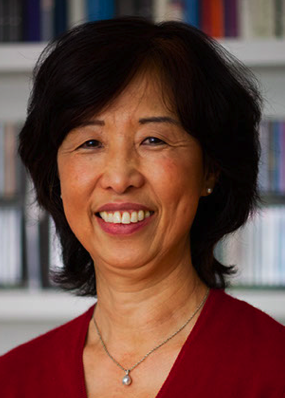
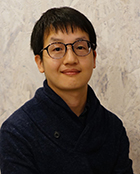
Dr. Soonja Choi is a Research Professor in the Comparative Psycholinguistics Group at the University of Vienna and Director of the Korean Studies Program at San Diego State University (SDSU), where she holds the title of Professor Emerita of Linguistics. She earned her Ph.D. in Linguistics from the University of Buffalo (1986) and holds advanced degrees from institutions in France and South Korea. Her research focuses on language and thought, semantics, spatial language, and Korean linguistics, with a particular emphasis on cross-linguistic studies of spatial categorization and its cognitive implications. Research Contributions: Her work has explored how language influences spatial perception and cognition, notably through long-term collaborations with the Max Planck Institute for Psycholinguistics and the National Science Foundation. Key contributions include studies on spatial term development in Korean/English children and cross-linguistic comparisons of spatial semantics between German, Korean, and English. Grants & Awards: Secured over $1.4M in grants including a EUR 600,000 Vienna Science Fund grant (2016-2020) and multiple NSF awards. Elected to the Academy of Europe (2019) as an Ordinary Member. Professional Roles: Served as Chair of SDSU's Department of Linguistics and Oriental Languages (1997-2000, 2001-2002), Graduate Advisor (multiple terms), and editorial board member for Language, Interaction, and Acquisition . Active in academic governance and international linguistic organizations.
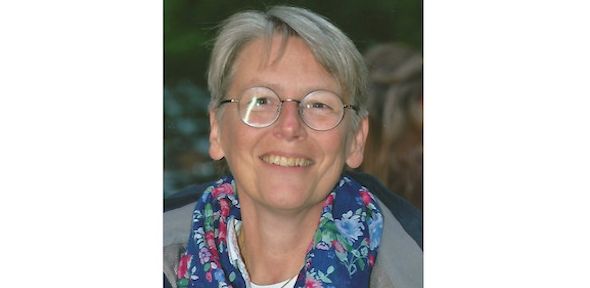
Henriëtte Hendriks is a Professor in Language Acquisition and Cognition at the University of Cambridge, affiliated with the Faculty of Modern and Medieval Languages and Linguistics and the Theoretical and Applied Linguistics (TAL) department. She leads the Cambridge Processing and Acquisition of Language lab (CAMPAL) and serves as Deputy Director of the Centre for Lifelong Learning and Individualised Cognition (CLIC). Education: Sinology at Leiden University Early Career: Coordinator at Max-Planck Institute for Psycholinguistics (DFG/ESF projects) Her research explores how languages encode concepts (person, time, space, causality) and their impact on language acquisition. Key themes include: Cognitive Linguistics and Language-Cognition Interfaces First and Second Language Acquisition Mechanisms Multilingualism and Cognitive Flexibility Typological Variation in Semantic Structures Deictic Terms and Dynamic Space Representation Recent publications focus on motion event typology across English, German, French, and Uyghur, examining cross-linguistic influences in acquisition processes. Her work combines experimental methods with syntactic analysis to study semantic mapping and grammaticalization in multilingual contexts. Current projects include: Centre for Lifelong Learning and Individualised Cognition (CLIC) - Principal Investigator MEITS Project (Strand 5) - Co-Investigator Cambridge Language Sciences Incubator projects on cognitive pacing and parental linguistic contributions International DeicTeS project on deictic meaning processes Labs & Teams: Cambridge Processing and Acquisition of Language lab (CAMPAL) Collaborations with Zoe Kourtzi, Vicky Leong, and Clare Hughes
Danai Koutra is an Associate Professor in Computer Science and Engineering at the University of Michigan, Ann Arbor, and an Amazon Scholar. Her research focuses on large-scale graph mining, graph neural networks, and interpretable machine learning methods for understanding complex networks. Key roles include leading the GEMS Lab and contributing to projects like DeltaCon (graph similarity) and VoG (graph summarization). She holds a PhD from Carnegie Mellon University and has authored over 80 publications in top venues like KDD, SDM, and NeurIPS. Educations: PhD in Computer Science, Carnegie Mellon University (2015) MS in Computer Science, Carnegie Mellon University (2015) Diploma in Electrical & Computer Engineering, National Technical University of Athens (2010) Research Interests: Her work spans graph mining, anomaly detection, knowledge graph completion, and applications in neuroscience, healthcare, and social networks. Recent projects include MAGNET (multi-agent graph networks) and GT2VEC (multimodal graph-text encoders). Grants & Awards: Recipient of the 2025 PECASE award, NSF CAREER Award (2019), and the 2016 ACM SIGKDD Dissertation Award. Active in organizing conferences like KDD and ECML/PKDD. Labs & Teams: Directs the GEMS Lab, collaborating on projects like FIDDLE (clinical data preprocessing) and SpecGreedy (dense subgraph detection). Engages in interdisciplinary efforts, including M-DICE (urban mobility analysis with Detroit).
Dr. Joey Paquet is a Tenured Associate Professor and Department Chair in the Department of Computer Science and Software Engineering at Concordia University in Montreal, Canada. He holds a PhD and specializes in research areas including Design and Implementation of Programming Languages, Context-Driven Computing, and Demand-Driven Computing. His work focuses on advancing programming paradigms and their applications in cybersecurity, distributed systems, and autonomic computing. Dr. Paquet is actively involved in thesis supervision across Computer Science and Software Engineering programs at both master's and doctoral levels. Research interests are centered around programming language design, particularly in demand-driven and context-aware systems. His contributions include frameworks like GIPSY and OpenISS, enabling scalable data processing and forensic computing. Recent work explores autonomic intent-driven networking, real-time gesture recognition, and IoT forensics. These efforts highlight his expertise in both theoretical constructs and practical implementations. His advising role supports students in MCompSc, MASc, and PhD programs. While specific grants are not detailed, his projects often involve interdisciplinary collaboration. Dr. Paquet is affiliated with platforms like LinkedIn and ResearchGate, reflecting an active academic presence. Key technical contributions include pioneering work on forensic computing backends, intent expression languages, and multimodal interaction systems. His research addresses challenges in cybersecurity, distributed systems, and service composition, with a focus on resilience and scalability.
Takako Fujioka is an Associate Professor of Music at Stanford University, affiliated with the Center for Computer Research in Music and Acoustics (CCRMA). Her research focuses on the neural mechanisms underlying auditory perception, auditory-motor coupling, and music-supported therapy for neurorehabilitation. She holds a Ph.D. in Physiology from the Graduate University for Advanced Studies, Japan, and M.Sc./B.Eng. degrees in Electrical Engineering from Waseda University. Her work combines neurophysiological techniques such as MEG and EEG to study brain plasticity in development, aging, and stroke recovery. Notable contributions include investigating how music influences motor and cognitive recovery in stroke patients, as well as exploring the neural basis of musical perception through rhythmic synchronization and pitch discrimination studies. Supported by awards from the Canadian Institutes of Health Research during her postdoctoral work at the Rotman Research Institute, her research bridges clinical neuroscience and music cognition. Dr. Fujioka’s expertise spans auditory neuroscience, neurorehabilitation, and technology-assisted music therapy. She has pioneered studies on tactile mapping for cochlear implant users and networked music performance systems, emphasizing cross-modal perception and human-technology interaction. Her findings contribute to both theoretical understanding of auditory processing and practical applications in medical and educational settings. Awards: Canadian Institutes of Health Research Awards (postdoctoral phase) Labs/Teams: CCRMA, Stanford Music Perception Laboratory, Rotman Research Institute collaborations Key Themes: Neuroplasticity, Music-Mediated Rehabilitation, Auditory-Motor Integration, Multisensory Processing Her recent work examines aging-related changes in binaural hearing and the role of beta/gamma oscillations in rhythmic processing. She advocates for translational research that connects neural mechanisms with real-world therapeutic interventions.
Professor Heather Ferguson is a distinguished cognitive psychologist at the University of Kent's School of Psychology, where she has built an impressive academic career since her appointment as Lecturer in 2009. Promoted to Professor in 2018, she leads groundbreaking research examining the cognitive basis of social communication across the lifespan. Her work bridges cognitive psychology, neuroscience, and social cognition, with particular expertise in perspective-taking, theory of mind, and the interface between cognitive processes and social interaction. Her research primarily investigates how we access and represent other people's perspectives during communication, using methodologies including eye-tracking, EEG, and reaction time measurements. Key questions driving her work include: How do people understand and predict events based on others' mental states? What happens when these conflict with our own knowledge? How do social abilities relate to cognitive skills like memory and inhibitory control? How does aging affect social cognition? Her work has significant implications for understanding autism spectrum disorder, social development, and cognitive aging. Professor Ferguson's recent publications reveal a strong focus on perspective-taking across the lifespan, social cognition in autism, the cognitive effects of fiction reading, and the neural mechanisms underlying empathy. Her research demonstrates consistent methodological rigor through pre-registered studies and meta-analyses, with particular attention to developmental trajectories from adolescence through older adulthood. Psychonomic Society Early Career Award (2019) Open Science Framework Pre-registration Challenge award (2018) Cognitive Neuroscience Society Postdoctoral Fellow Award (2018) University of Kent Prize for Research (2016) Kent Union Teaching Award for 'Best Teacher' (2012) Professor Ferguson actively supervises multiple PhD students and has secured substantial research funding, including a €1.5 million ERC Starting Grant and multiple Leverhulme Trust grants. Her work with the Cognitive basis of Social Communication and Ageing (COGSOCOAGE) research group has produced influential findings on social cognition across the lifespan. She serves as Associate Editor for the Journal of Experimental Psychology: Learning, Memory & Cognition and on the editorial board of Cognition, while also mentoring early-career researchers through the Eastern Arc Mentoring Scheme.
Habib Ullah is an Associate Professor in Data Science at the Norwegian University of Life Sciences (NMBU), Norway, where he conducts research at the intersection of computer vision and machine learning. He is affiliated with the Institute of Data Science under the Faculty of Science and Technology. He has previously held academic positions at COMSATS University Islamabad, Pakistan, and the University of Ha'il, Saudi Arabia, and served as a postdoctoral researcher at The Arctic University of Norway. Educational Background: PhD in Information and Communication Technology (Computer Vision), University of Trento, Italy (2011–2015) MSc in Electronics and Computer Engineering, Hanyang University, South Korea (2007–2009) BSc in Computer Systems Engineering, NWFP University of Engineering and Technology, Pakistan (2002–2006) Habib Ullah's research is primarily focused on computer vision and machine learning, with applications in aquaculture, agriculture, and human behavior analysis. He investigates underwater fish feeding sounds using audio classification, develops zero-shot learning models for recognizing unseen classes, and applies deep learning to detect stress in salmon via skin dot patterns. He also explores AI-driven controlled environment agriculture, leveraging sensors and automation for optimal crop growth. His work emphasizes practical AI solutions for real-world challenges in environmental and biological domains. The recent publications highlight a strong trend in leveraging deep learning for zero-shot and semi-supervised learning, particularly in computer vision tasks such as sea ice classification, crowd anomaly detection, and agricultural monitoring. His research spans remote sensing, biomedical signal processing, and human activity recognition, demonstrating interdisciplinary versatility. The keywords reflect a focus on robust feature representation, knowledge transfer, and model generalization. Scientific Awards and Funding: Industrial PhD grant 'Advancing Controlled Environment Agriculture AI' from The Research Council of Norway (Project number 354125, 2 million NOK, 2024) Team member (Coordinator-Participant) in the Battery Cell Assembly Twin (BatCAT) project funded by Horizon Europe (7 mEuro, 2023–2027) Development of an AI-Based Image Analysis System for Monitoring Plant Status (Funding: 1.8 mNOK, starting 2025) Habib Ullah actively supervises PhD projects and contributes to academic service through editorial and organizational roles. He has served as an Associate Editor for IEEE Access, Guest Editor for MDPI Remote Sensing, and Editor of the Springer book Machine Learning Techniques and Sensor Applications for Human Emotion, Activity Recognition, and Support (ML-SHEARS) . He has also been a Track Chair and Program Committee Member for several international conferences, reflecting his leadership in the academic community. His research is supported by significant grants and collaborative projects, indicating strong institutional and international engagement. He is involved in multiple research teams and projects, including the BatCAT project on battery manufacturing and AI applications in controlled environment agriculture with RIFT LABS AS. His lab work integrates deep learning, sensor fusion, and data analytics for environmental and biological monitoring systems.
Ellie Pavlick is an Assistant Professor of Computer Science and Linguistics at Brown University, where she leads the Language Understanding and Representation (LUNAR) Lab . Her work bridges computational linguistics and cognitive science, focusing on grounded language learning and the structural dynamics of neural language models. PhD from University of Pennsylvania (2017), specializing in paraphrasing and lexical semantics Collaborates with Brown's Robotics, Visual Computing labs, and Cognitive, Linguistic, and Psychological Sciences department Research interests center on cognitively-inspired approaches to language acquisition, analyzing how LLMs and humans encode abstract reasoning and compositional structures. Her lab explores: Grounded language learning in multimodal systems Emergence of compositional behavior in neural networks Interpretability frameworks for black-box AI Key publication areas include: Transformer mechanisms and cognitive modeling Formality and complexity in language systems Relational reasoning and multimodal integration Ellie teaches courses on computational linguistics and human-machine language processing, with a focus on synergies between AI and psychological science.
Reiko Heckel is a Professor of Software Engineering at the University of Leicester, serving as Director of Postgraduate Teaching for Computing degrees and Data Analytics Lead at the Leicester Innovation Hub. She previously held academic roles at the Technical Universities of Dresden and Berlin before joining Leicester in 2004. Her research focuses on graph transformation systems, model-based development, stochastic modeling, and formal methods in software engineering. She earned her PhD (Dr.-Ing.) in Computer Science from TU Berlin in 1998. Her research interests span software engineering pedagogy, formal specification techniques, and applications of graph grammars in system modeling. Recent work explores stochastic graph transformations for social networks, transparency engineering in AI systems, and blockchain-based smart contract frameworks. Her contributions bridge theoretical foundations with practical applications in cybersecurity, data integration, and human-centric systems design. Key contributions include advancements in automated test case generation via graph transformations, visual contracts for software reverse engineering, and formal methods for complex system analysis. Her work frequently intersects with industry through collaborations via the Leicester Innovation Hub, emphasizing data analytics and technology transfer. Education: MSc Computer Science, Technical University of Dresden PhD (Dr.-Ing.), Computer Science, TU Berlin (1998) Leadership Roles: Head of Department (2014-2018) Director of Postgraduate Teaching (Ongoing) Research Themes: Model-Based Development Stochastic Systems Analysis Graph Neural Networks Trustworthy AI Her publications reflect a focus on formal methods, with recent trends in applying graph transformation techniques to social network modeling, blockchain smart contracts, and educational pedagogy.
Joakim Nivre is a Professor at Uppsala University's Department of Linguistics and Philology. He is a leading researcher in computational linguistics, with a focus on dependency parsing, Universal Dependencies (UD) framework development, and multilingual NLP applications. His recent work explores LLMs in climate change discourse analysis, pharmacovigilance explainability, and historical text processing. Key research areas: Dependency parsing theory, Universal Dependencies standardization, LLM evaluation Collaborations: SweSAT-1.0 benchmark development, ClimateEval project, PARSEME integration His 2025-2023 publications demonstrate expertise in explainable AI for healthcare, synthetic data generation for idioms, and multilingual benchmark design. Notably, he co-developed SweSAT-1.0 to evaluate Swedish LLMs and contributed to typology-informed UD revisions. Despite extensive work in NLP, no scientific awards are mentioned in available texts.
Amol Deshpande is a Professor in the Department of Electrical Engineering and Computer Sciences at the University of California, Berkeley, College of Engineering. With over 160 publications spanning from 2000 to 2025, his research has significantly impacted the database systems community. His work bridges theoretical foundations with practical systems, evidenced by numerous publications in top-tier venues including SIGMOD, VLDB, and ICDE. Professor Deshpande's research focuses on database systems, with particular expertise in graph databases, data management, probabilistic databases, query optimization, and data provenance. His work addresses fundamental challenges in managing complex data, including efficient graph analytics, dataset versioning, streaming data processing, and privacy-preserving data management. Recent research directions include entity-relationship abstractions beyond traditional relations, standalone catalog engines for large data systems, and graph theoretical approaches to dataset versioning. His publication trends show a consistent focus on evolving database technologies, with early work on probabilistic databases and query optimization, transitioning to graph analytics and data provenance, and more recently addressing modern challenges in data cataloging, privacy-first data management, and serverless stream processing. His research spans both theoretical contributions (e.g., approximation algorithms for stochastic optimization) and practical systems building (e.g., RStore, TreeCat). Professor Deshpande has mentored numerous PhD students who have become active researchers in the database community, including Hui Miao, Souvik Bhattacherjee, and Konstantinos Xirogiannopoulos. His collaborative work spans across institutions, with frequent collaborations with researchers from MIT, University of Maryland, and other leading institutions. His research has been supported by major funding agencies and has influenced both academic research and industry practices in data management. The evolution of his work reflects the changing landscape of data management, from traditional relational systems to modern graph and streaming data challenges.
Simon Hanslmayr is a Professor in the School of Psychology & Neuroscience at the University of Glasgow. His research investigates neural oscillations' role in attention and memory processes, employing EEG, fMRI, and transcranial stimulation techniques. He focuses on healthy populations and clinical conditions like Schizophrenia and PTSD. His lab develops tools like the Brain Time Toolbox for electrophysiological data analysis. Education: Ph.D. in Cognitive Neuroscience (not explicitly detailed in text) Research interests include understanding how precise neural timing via oscillations underpins cognitive functions. Key areas: hippocampal memory coding, theta phase synchronization in associative memory, and causal effects of rhythmic stimulation on memory plasticity. Recent articles highlight mechanisms linking theta oscillations to memory formation, thalamocortical interactions in perception, and hippocampal-neocortical coupling. His work bridges experimental and computational approaches to model memory dynamics. Grants: Sensory stimulation for memory impairment (BIAL Foundation, 2025-2026) EU-funded studies on neural oscillations and memory (2020-2021) Awards: None explicitly listed, but active grant recipient. Supervised students include Kiera Capstick, Eleonora Marcantoni, and others. Collaborates with researchers worldwide through lab affiliates and visiting scholars. Current work emphasizes scalable neurotechnologies for cognitive enhancement and memory rehabilitation. Labs/Teams: Leads the Memory & Oscillations Lab at the University of Glasgow, collaborating with institutions like the University of Zurich and Maastricht University on neuroimaging and clinical studies.
Mariya Toneva is a tenure-track faculty member at the Max Planck Institute for Software Systems , conducting groundbreaking research at the intersection of Machine Learning , Natural Language Processing , and Neuroscience . She leads the Bridging AI and Neuroscience (BrAIN) group , focusing on computational models that align AI systems with human brain processes. Her work aims to enhance both AI capabilities and neuroscience understanding through this cross-disciplinary approach. Actively recruiting postdocs, PhDs, and research interns in areas like code/text representation, brain-AI alignment, and neuroimaging data analysis Collaborator on NIH-funded projects using fMRI and neuropixel data Research Themes : Her group explores neural mechanisms of language processing, event segmentation in narratives, memory reactivation via music, and effective human-AI collaboration frameworks. Key methods include LLM analysis, cross-modal similarity metrics, and naturalistic task-based fMRI studies. Key Publications (2024-2025): Brain-tuned speech models (INTERSPEECH 2025) Cognitive event boundaries in LLMs (Behavioral Research Methods 2025) Music-induced memory reactivation (biorxiv 2024) LLM-brain alignment reasons (EMNLP 2024) Advising : Mentors PhD candidates Omer Moussa (speech processing), Camila Kolling (representational similarity), and Gabriele Merlin (LLM alignment). Collaborates with institutions like MIT, NYU, and ETH Zurich.
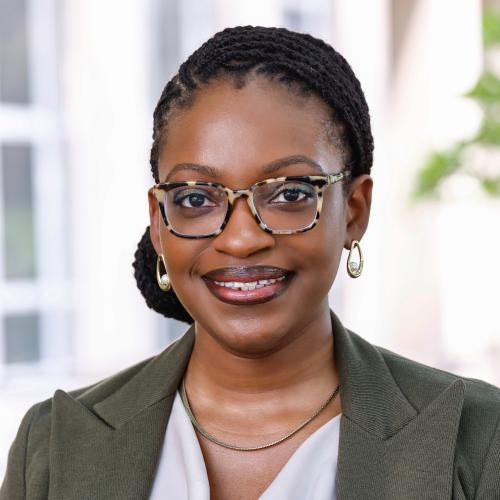
Chinasa T. Okolo is a Research Fellow in the Governance Studies program and Center for Technology Innovation (CTI) at the Brookings Institution. A recent computer science PhD graduate from Cornell University, she focuses on AI governance, data policy, and equity issues in artificial intelligence, particularly as they relate to the Global Majority and Africa. B.A. in Computer Science from Pomona College M.S. in Computer Science from Cornell University Ph.D. in Computer Science from Cornell University Dr. Okolo's research critically examines global equity in AI, with a focus on how African governments can develop robust AI and data governance frameworks. She investigates the geopolitical impacts of AI in the Majority World and analyzes datafication and algorithmic marginalization in Africa. Her work incorporates ethnographic methods to understand how frontline health care workers in rural settings perceive and value AI, with particular emphasis on explainability in AI-enabled technologies deployed throughout the Majority World. She has conducted significant research on the effective adoption of AI in Africa, COVID-19 misinformation spread on social networks within African communities, and the impact of generative AI within Africa. Her recent publications explore cultural encoding of gender bias in language models for African languages, AI safety governance approaches in Southeast Asia, and the impacts of generative AI within Africa. Her work spans the intersection of artificial intelligence, international development, and social justice, with publications at top-tier venues including ACM's CHI, CSCW, COMPASS, EAAMO, and FAccT conferences. Scientific Awards Named one of TIME's top 100 most influential people in AI of 2024 Honored in the inaugural Forbes '30 Under 30' AI list Recognized as one of 100 Brilliant Women in AI Ethics™ Dr. Okolo has received research funding from the Social Science Research Council, MacArthur Foundation, McGovern Foundation, Kapor Center, National GEM Consortium, Oracle Corporation, North American Network Operators' Group (NANOG), National Science Foundation (NSF), and Google. She serves as editor-in-chief of ACM SIGCAS Computers and Society, is a Scientific Advisory Committee member of the Global Index on Responsible AI, and an inaugural member of the Partnership on AI's SAIGE Council. She has contributed to global AI governance efforts including serving as a consulting expert on the African Union AU-AI Continental Strategy, an expert contributing writer to the International AI Safety Report, and a drafting member of the Nigerian Federal Government's National AI Strategy. She also participates in the IEEE Standards Association working group on algorithmic bias and is a member of the ACM US Technology Policy Committee. As founder of Technēculturǎ, Dr. Okolo leads initiatives focused on critically examining global equity in AI. She recently launched the 'AI Safety and the Global Majority' series at Brookings, convening experts from Africa, the Caribbean, Latin America, Oceania, and Southeast Asia to counter Western-centric assumptions in AI safety. She is actively engaged in current policy discussions, with her most recent work including 'AI Safety Governance, The Southeast Asian Way' report and upcoming participation in the AI Safety Asia launch event on August 28, 2025.
Tengfei Ma is an Assistant Professor in the Department of Biomedical Informatics at Stony Brook University, with affiliations to Computer Science and Applied Mathematics & Statistics. He holds a Ph.D. from The University of Tokyo, M.S. from Peking University, and B.E. from Tsinghua University. Previously, he was a Research Scientist at IBM T.J. Watson Research Center. His research focuses on machine learning, natural language processing (NLP), and biomedical informatics, particularly deep graph learning, scalable graph methods, and healthcare applications. He has contributed to frameworks like EvolveGCN for dynamic graphs and IGB datasets for graph benchmarks. Key awards include ISWC 2021 Best Paper (Research Track) and IBM Outstanding Research Accomplishments (2019, 2022). His work bridges theory and practice, addressing challenges like over-dilution in GNNs and interpretable time series analysis. Collaborations span interdisciplinary areas, such as AI for wound monitoring and code summarization. He teaches BMI530: Software Development for Biomedical Informatics and is open to graduate students from CS, BMI, and AMS departments. Research highlights include: Deep Graph Learning: Scalability (FastGCN, IGB), dynamic graphs (EvolveGCN), and topology-enhanced GNNs. Healthcare: Models for EHR analysis, medication recommendation (GAMENet), and wearable wound monitoring. NLP: Document summarization, code summarization (CP-BCS), and commonsense generation via knowledge graph compression. Recent projects include AI tools like Influencer for promotional content creation and neural-symbolic models for interpretable time series analysis. His lab explores foundational AI for healthcare, code analysis, and graph systems.