Olga Sorkine-Hornung is a Professor of Computer Science at ETH Zurich and head of the Institute of Visual Computing. She leads the Interactive Geometry Lab, focusing on theoretical and practical advancements in digital content creation, geometry processing, and shape modeling. Current position: ETH Zurich, Department of Computer Science Previous roles: Courant Institute (NYU), Technical University of Berlin Education: BSc and PhD from Tel Aviv University, postdoc at TU Berlin Her research spans shape representation, digital fabrication, computer animation, and fundamental geometry processing. Key contributions include Laplacian surface editing, as-rigid-as-possible deformation, and generalized winding numbers. She works on applications in VR, AR, and autonomous systems. Awards include Test of Time Awards (2024), ACM Fellow (2020), ERC Consolidator Grant (2020), and EUROGRAPHICS Young Researcher Award (2008). She has supervised numerous students and co-developed software libraries like libigl and Instant Meshes . Co-chair roles for SIGGRAPH, Eurographics, and Pacific Graphics Editorial board member for ACM Transactions on Graphics and other journals Keynote speaker at VMV, CVPR, and SIAM conferences Her work bridges mathematical rigor with practical implementation, advancing computer graphics and geometry processing through intuitive algorithms that maintain surface detail while enabling efficient computation.
Tobi Delbruck is a titular professor of physics and electrical engineering at ETH Zurich, where he leads the Sensors Group at the Institute for Neuroinformatics (INI) in Zurich, Switzerland. He collaborates closely with Shih-Chii Liu and Giacomo Indiveri as part of the 'hardware groups' at INI. Delbruck has also served as visiting faculty at Caltech and is a Fellow of the IEEE. His work focuses on bio-inspired and neuromorphic event-based sensory processing systems. Professor Delbruck's research spans multiple areas of neuromorphic engineering, with particular emphasis on event-based vision systems and low-power analog VLSI circuits. His work has significantly advanced the field of Dynamic Vision Sensors (DVS), which mimic the human retina's response to changes in brightness rather than capturing full frames. This approach enables extremely low-latency vision processing with minimal power consumption, making it ideal for high-speed applications and robotics. His research has applications in robotics, autonomous systems, and low-power embedded vision. Delbruck is an active contributor to the neuromorphic engineering community, co-organizing the annual Telluride Workshop on Neuromorphic Engineering and serving in leadership roles with IEEE. He has authored numerous influential publications and co-authored books including "Event-Based Neuromorphic Systems" and "Analog VLSI: Circuits and Principles." His jAER (Java Address-Event Representation) project provides open-source tools for real-time event-based sensory processing. Analysis of his recent publications shows a clear trend toward integrating event-based vision with deep learning techniques and applying these systems to practical robotics problems. His scientific achievements have been recognized with multiple awards including: IEEE Fellow Winner of Best Live Demonstration award at ISCAS 2012 Honorable Mention Award from Sensory Systems Technical Committee at ISCAS 2012 Overall Best Student Paper Award and Best Paper Award from Sensory Systems Technical Committee at ISCAS 2010 Winner of the 2006 ISSCC Jan Van Vessem Outstanding European Paper Award Professor Delbruck actively mentors students and has supervised numerous PhD and Master's theses in the areas of neuromorphic engineering and event-based vision systems. His group has secured significant research funding from various sources to support their innovative work in bio-inspired sensory processing. He teaches courses on "Electronics for Physicists II (Digital)" and "Neuromorphic Engineering," helping to train the next generation of researchers in this field. The Sensors Group at INI, which Delbruck leads, operates state-of-the-art facilities for designing and testing neuromorphic vision systems. The group maintains close collaborations with researchers worldwide and has developed several important open-source resources including the jAER project and bias generator design kits. Their work continues to push the boundaries of what's possible with event-based sensory processing, with applications ranging from high-speed robotics to low-power embedded vision systems.
Shih-Chii Liu holds the rank of Privatdozent (Associate Professor) in the Department of Information Technology and Electrical Engineering at ETH Zürich. He is affiliated with the Institute of Neuroinformatics , a joint institute between the University of Zurich and ETH Zurich. His research focuses on neuromorphic engineering, bio-inspired neural hardware, and edge computing systems, emphasizing energy-efficient algorithms and sensor technologies. Key research areas include neuromorphic sensors for real-time data processing, sparsity-aware neural networks, and adaptive computing architectures for edge devices. His work spans applications such as speech enhancement, wearable health monitoring, and bio-inspired keyword spotting systems. He leads the Sensors Research Group, which develops neuromorphic systems integrating novel sensors, spiking neural networks, and low-power hardware accelerators. Recent projects include the DeltaKWS low-power keyword spotting IC, EFLOP computational cost metrics for spiking networks, and NeuroBench benchmarking frameworks for neuromorphic systems. His contributions emphasize bridging biological neural principles with practical engineering solutions for IoT and embedded systems. Liu teaches courses such as Neuromorphic Engineering I and collaborates on cross-disciplinary projects involving neuroprosthetics, smart wearables, and multimodal sensor fusion. His work is characterized by hardware-software co-design approaches to tackle challenges in real-time, low-latency, and energy-constrained computing environments.
Dr. Daphné Chopard is a Researcher affiliated with the Professorship for Medical Data Science at ETH Zürich. Her work focuses on advancing medical data science through machine learning, clinical informatics, and multimodal learning applications in healthcare. She specializes in areas such as time-series analysis in critical care, generative models for medical data, and natural language processing for clinical texts. Her research emphasizes improving healthcare outcomes through innovative data-driven approaches, including projects like the SwissPedHealth pediatric data network and foundational work on multimodal variational autoencoders. Dr. Chopard’s contributions span clinical decision support systems, adverse event detection in trials, and acronym disambiguation in medical narratives. Her recent projects include studies on ventilation protocols in pediatric critical care and weakly-supervised learning applied to medical imaging datasets like MIMIC-CXR. She collaborates on initiatives to enhance representation learning in multimodal healthcare contexts, reflecting her commitment to bridging AI advancements with practical clinical applications.
Davide Scaramuzza is a Professor and Director of the Robotics and Perception Group at the University of Zurich. He holds a Ph.D. from ETH Zurich and has conducted postdoctoral research at the University of Pennsylvania and Stanford. His research focuses on autonomous drone navigation using visual and event-based sensors, leading to breakthroughs like AI drones outperforming human pilots in racing (Nature 2023). He pioneered algorithms for Mars helicopter navigation and developed the PX4 autopilot system. Key awards include the Kiyo-Tomiyasu IEEE Technical Field Award (2024), ERC Consolidator Grant (2019), and multiple best paper awards. His entrepreneurial ventures include co-founding Zurich-Eye (later Meta Zurich) and SUIND for agricultural drones. He co-authored the textbook Introduction to Autonomous Mobile Robots , widely used in academia. Research spans event camera algorithms, visual-inertial SLAM, and reinforcement learning for agile flight. His lab's work is featured in IEEE Spectrum, The Guardian, and Forbes. He advises UN initiatives on AI for disaster response and nuclear safety. Current projects include Graph-Generating State Space Models (CVPR 2024) and event-based vision for automotive systems (Nature 2024).
Pasquale Davide Schiavone holds multiple research and teaching positions at École Polytechnique Fédérale de Lausanne (EPFL), serving as a Lecturer at the School of Computer and Communication Sciences (IC) and as a Scientist at both the Embedded Systems Laboratory (ESL) within the School of Engineering (STI) and PAT Administration. His interdisciplinary work bridges computer architecture, embedded systems design, and biomedical applications, with office located at ELG 136 in Lausanne, Switzerland. Dr. Schiavone's research focuses on ultra-low-power computing systems, particularly RISC-V architectures and TinyML applications for edge devices. His work develops open-source hardware platforms like X-HEEP and HEEPOCRATES that enable energy-efficient AI at the edge, with applications spanning biomedical monitoring, neural interfaces, and wearable computing. He explores innovative hardware-software co-design approaches to overcome energy constraints in resource-limited environments. His recent publications reveal a consistent research trajectory centered on open, configurable computing platforms for specialized applications. The work spans from fundamental RISC-V architecture improvements (ARCANE, e-GPU) to application-specific implementations for biomedical contexts (BiomedBench, neural interfaces). A strong emphasis on energy efficiency permeates all his research, whether through novel arithmetic approaches (Posit), system architecture (near-memory computing), or specialized accelerators (Strela, Quadrilatero). Lecturer, School of Computer and Communication Sciences (IC) Scientist, Embedded Systems Laboratory (ESL), School of Engineering (STI) Scientist, PAT Administration, School of Engineering (STI) Dr. Schiavone teaches courses on hardware compilation, presenting algorithms and methods for transforming hardware description languages into optimized circuit implementations. His Embedded Systems Laboratory work places him at the forefront of developing practical, open-source solutions for next-generation computing challenges in energy-constrained environments.
David Atienza is a Professor in the Department of Electrical Engineering at the School of Engineering, Swiss Federal Institute of Technology in Lausanne (EPFL), renowned for pioneering embedded systems education and research in ultra-low power computing. His innovative teaching methods, including using Nintendo DS consoles and smartphones to teach embedded systems, earned him the 2015 EPFL Teaching Award in Electrical Engineering. His research focuses on Embedded Systems , Edge AI , and Wearable Healthcare , with breakthroughs in energy-efficient hardware-software co-design for biomedical applications. Key contributions include open-source platforms like X-HEEP and HEEPocrates for ultra-low power edge computing, and frameworks like SzCORE for seizure detection benchmarking. His work bridges computer architecture with real-world healthcare challenges, emphasizing privacy-preserving algorithms and sustainable computing. Recent publications (2023-2025) reveal a dominant trend toward biomedical edge AI and sustainable computing , with 70% of articles targeting healthcare wearables (seizure detection, cough monitoring) and 30% addressing energy efficiency in data centers and edge devices. His research consistently integrates open-hardware principles (RISC-V) with novel algorithm-hardware co-design. Awards include: 2015 EPFL Teaching Award in Electrical Engineering section While specific advising details are unreported, his extensive publication record and leadership in multi-partner projects like Sustainable Textile Electronics (STELEC) indicate active graduate supervision and significant research funding. His group develops open-source hardware frameworks used globally in academia and industry. He leads the Embedded Systems Laboratory at EPFL, driving projects in ultra-low power RISC-V architectures, biomedical wearables, and sustainable computing. Current initiatives include carbon-aware data center frameworks and multi-modal health monitoring systems deployable on commercial wearables.
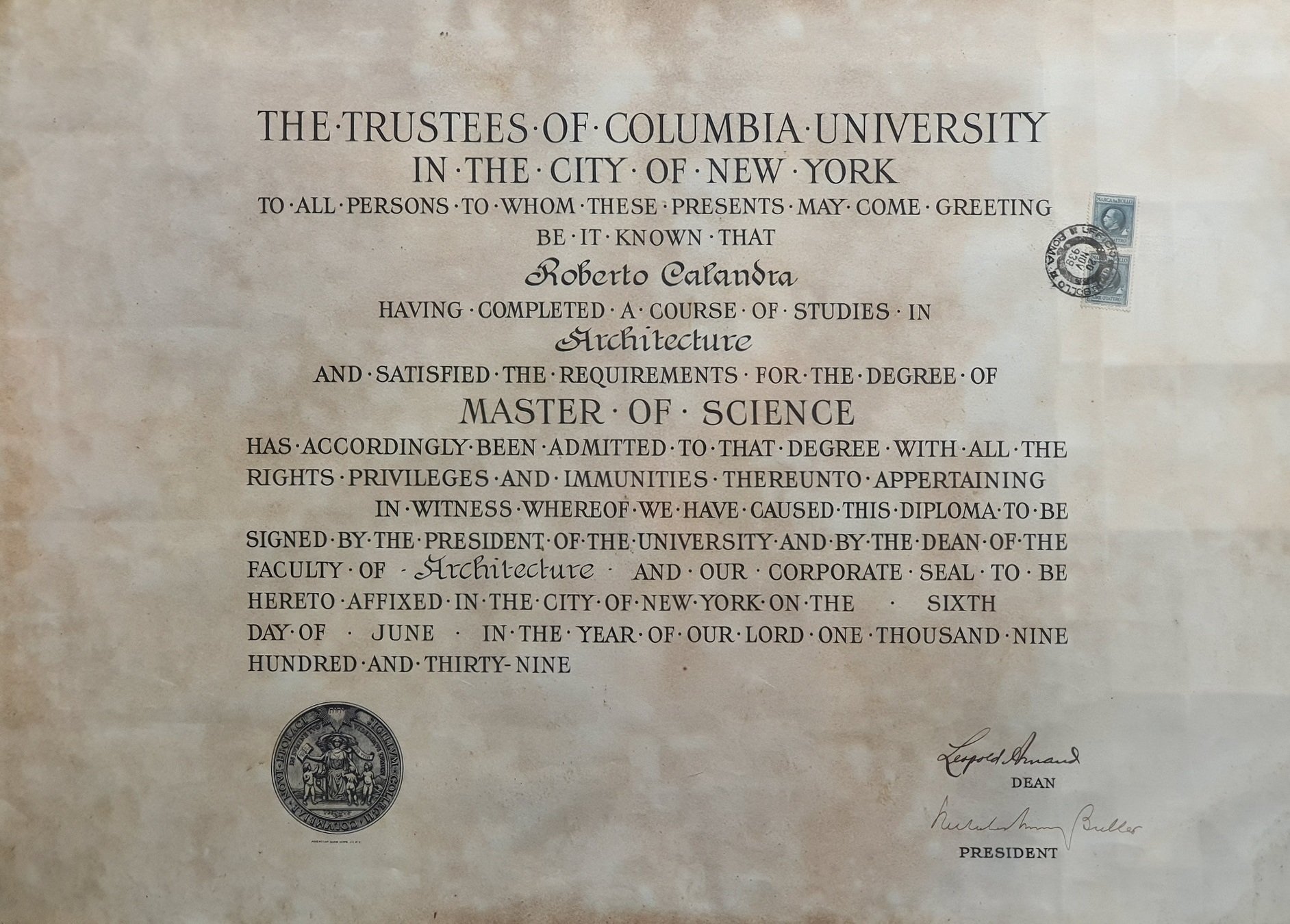
Roberto Calandra is a Full (W3) Professor at Technische Universität Dresden, where he leads the Learning, Adaptive Systems and Robotics (LASR) Lab. Previously, he served as a Research Scientist at Meta AI (formerly Facebook AI Research) and a Postdoctoral Scholar at UC Berkeley’s BAIR Lab under Sergey Levine. His academic journey includes a PhD in Robotics from TU Darmstadt, an M.Sc. in Machine Learning from Aalto University, and a B.Sc. in Computer Science from Università di Palermo. His research bridges Robotics and Machine Learning, focusing on tactile sensing, Bayesian Optimization, and model-based reinforcement learning. He pioneered the DIGIT tactile sensor , now the most widely used tactile sensor in robotics, and advocates for a computational field of Touch Processing to advance haptic understanding. His work emphasizes data-efficient learning, real-world dexterous manipulation, and multimodal perception. Recent publications highlight breakthroughs in tactile sensor design, in-hand object manipulation, and multimodal integration. He organizes workshops on robotics and machine learning (e.g., at NeurIPS, ICRA) and promotes open-source tools like PyTouch and TACTO .
Tao Lin is a Tenure-Track Assistant Professor and Principal Investigator of LINs Lab at Westlake University, School of Engineering. He leads cutting-edge research in deep learning optimization, generalization, and robustness, particularly in distributed and federated settings. Prior to this, he was a Ph.D. student at École Polytechnique Fédérale de Lausanne (EPFL), Switzerland, under the supervision of Prof. Martin Jaggi and Prof. Babak Falsafi. Doctor of Science, School of Computer and Communication Sciences, EPFL, Switzerland (2017–2022) Master of Science, School of Computer and Communication Sciences, EPFL, Switzerland (2014–2017) Bachelor of Engineering (with honors), College of Electrical Engineering, Zhejiang University, China (2010–2014) His research focuses on the intersection of optimization and generalization in deep learning, leveraging theoretical and empirical insights into loss landscapes and training dynamics to design efficient and robust learning and inference methods. This includes work on decentralized and federated learning under noisy, heterogeneous, and hardware-constrained environments. His work spans algorithmic innovation, theoretical analysis, and practical system integration. The recent publications from his lab demonstrate a strong trend in advancing federated learning, efficient inference for large language models, multimodal foundation models in pathology, and robust training under distribution shifts. Key themes include communication efficiency, model personalization, gradient tracking, and hardware-aware learning. His group has published at top venues including NeurIPS, ICML, ICLR, CVPR, and ECCV, with several papers receiving oral or spotlight presentations. ECCV Best Paper Candidate, 2024 Top 2% Scientists Worldwide 2024 (Stanford University) Doctoral Program Thesis Distinction Award, EPFL, 2022 Outstanding Performance Bonus, EPFL, 2021–2022 Top Reviewer: NeurIPS, ICML, AISTATS He advises multiple Ph.D. and master’s students, including Yongxin Guo, Futing Wang, Peng Sun, and Yuxuan Sun, whose work has been accepted at premier conferences. He has secured competitive grants as PI and participant, including the National Natural Science Foundation of China for Excellent Young Scientists Fund (Overseas) and the Science and Technology Innovation 2030 – Major Project. He also contributes to the community through service as an area chair (NeurIPS, ICML), reviewer for top journals and conferences, and organizer of workshops and academic events. His open-source contributions, such as Post-local SGD, have been integrated into PyTorch. Tao Lin teaches graduate courses such as Research Methodology of Computer Science and Technology and Deep Learning at Westlake University. He is actively involved in academic governance, serving on committees for student seminars, academic exchange, doctoral studies, and teaching leadership. The LINs Lab runs a regular research seminar on Deep Learning and Optimization, fostering a collaborative and dynamic research environment.
Antonio Rago is a Researcher in the Department of Computing at Imperial College London. He specializes in Explainable Artificial Intelligence (XAI) with a focus on computational argumentation frameworks and their integration with data-driven AI systems. His work bridges symbolic AI and machine learning to enhance transparency and societal benefit in AI applications. Education: PhD in Computing (2019) from Imperial College London, supervised by Prof. Francesca Toni and Dr. Marco Aurisicchio, with an MEng in Automotive Engineering from Loughborough University (2012). Research: Explores explainable AI through argumentation semantics, counterfactual reasoning, and hybrid symbolic-statistical methods. Application domains include e-learning, Formula One race strategy, healthcare, and mechanical engineering. Workshops: Organizer of international workshops like Arg&App 2025 and ArgXAI-25, and co-organizer of previous events at KR, ECAI, and COMMA conferences. Publications: Active in top AI venues (KR, IJCAI, AAAI, AAMAS) with over 25 publications since 2016, emphasizing argumentation-based explanations and robust AI systems. Industry Experience: Former Race Strategy Engineer at Mercedes AMG Petronas F1 Team (2012-2014) and Project Manager at Green Lifting Ltd. (2014-2017).
Dr. Yu Liang is a Lecturer at the Department of Information Technology and Electrical Engineering at ETH Zürich. His research focuses on advancing computer vision and machine learning techniques, particularly in video generation, image restoration, and event-based systems. He specializes in developing innovative frameworks for tasks like motion-aware video synthesis, low-light image enhancement, and diffusion models applied to multimedia processing. Key research interests include hierarchical information flow architectures, transformer-based networks, and scalable solutions for real-world imaging challenges. His work emphasizes practical applications of generative models and cross-modal fusion techniques to achieve high-quality visual outputs. Dr. Liang has contributed extensively to the field through publications on topics such as Fractal-IR for image restoration, Uni3C for 3D-enhanced video generation, and event-based frame interpolation. His research often bridges theoretical advancements with practical implementations, addressing issues like temporal coherence, motion deblurring, and adaptive illumination estimation. Although no specific academic awards are listed, his prolific publication record (over 20+ papers since 2019) highlights his active role in the academic community. His work has led to impactful datasets like Lsdir and frameworks like SwinIR, demonstrating strong contributions to both methodology and infrastructure in computer vision.
Simone Lionetti is a Lecturer and Co-Head (acting) of the Applied AI Research Lab at the Lucerne School of Computer Science and Information Technology, Lucerne University of Applied Sciences and Arts. His academic journey includes a Ph.D. in Physics from ETH Zürich (2018), a Master's in Physics from Università degli Studi di Milano (2013), and a Bachelor's in Physics from the same institution (2010). He has held postdoctoral and research roles at institutions such as Durham University and ETH Zürich. His research focuses on AI applications in healthcare, including medical anomaly detection, dermatology, and bioaerosol monitoring. He also explores theoretical particle physics and software engineering for scientific computing. Key competencies include data analysis, algorithm design, and self-supervised learning techniques. Recent work emphasizes robust AI systems for medical imaging, data quality audits, and scalable foundation models. His projects bridge technical innovation with societal needs, such as addressing diversity gaps in dermatological AI and improving real-time environmental monitoring. He has contributed to over 20 peer-reviewed articles and holds two notable awards/honors (specific details not disclosed in text). His work integrates cross-disciplinary approaches, combining theoretical physics insights with practical AI solutions for healthcare and environmental challenges.
Prof. Dr. Renato Pajarola is the Head of the Visualization and MultiMedia Lab at the Department of Informatics, University of Zurich. His research focuses on computer graphics, scientific visualization, and geometric processing, with applications in 3D scanning, point cloud analysis, and real-time rendering. He leads a team developing advanced visualization techniques for high-dimensional data, parallel rendering frameworks, and interactive systems for complex datasets. Key research areas include: 3D reconstruction of indoor environments Tensor approximation for volume visualization Interactive ray tracing and point cloud processing Parallel rendering frameworks (e.g., Equalizer) Scientific computing and sensitivity analysis His recent publications emphasize: High-dimensional data exploration using tensor methods Efficient rendering techniques for large-scale point clouds Integration of citizen-reported weather data for environmental analysis Prof. Pajarola’s lab collaborates on projects like VIAN (visual annotation tool for film analysis) and Terrender (web-based terrain visualization). His Erdős number is 3, reflecting interdisciplinary research connections in mathematics and computer science.
Albert Gatt is a researcher at the University of Malta , with extensive contributions to Natural Language Generation (NLG) , Vision-and-Language (V&L) models , and evaluation practices in NLP . His work spans multimodal reasoning, data pruning efficiency, and reproducibility challenges in human evaluations. Key collaborations include studies on temporal grounding in image sequences (TempVS benchmark) and automated legal violation detection in cookie banners. Research highlights include bridging linguistic theory with computational models (e.g., VALSE benchmark for multimodal grounding) and improving generation quality through contrastive learning frameworks. Scientific awards are not explicitly mentioned in the provided texts. His work emphasizes rigor in automatic metric validation and cross-modal interpretability , particularly in multimodal model attention mechanisms and logical formula minimization for text generation.
Emiel Krahmer is a Professor in the Department of Communication and Cognition at Tilburg University's School of Humanities in the Netherlands. With over 368 publications and more than 7,000 citations, he is a leading researcher in Natural Language Generation (NLG) and Computational Linguistics. His work spans multiple subfields including Referring Expression Generation, Data-to-Text systems, human evaluation methodologies, and more recently, the application of Large Language Models in therapeutic contexts. Professor Krahmer's research interests focus on the computational aspects of language generation, with particular emphasis on how machines can produce human-like referring expressions, generate text from structured data, and evaluate the quality of automatically generated language. His work combines theoretical linguistics with practical applications, bridging the gap between computational models and human language production. He has made significant contributions to understanding the psychological aspects of language generation and how these can inform computational models. His recent publications demonstrate a clear evolution in his research trajectory, moving from foundational work in referring expression generation to exploring the capabilities of modern Large Language Models in specialized contexts like motivational interviewing. The analysis of his 15 most recent articles reveals a strong focus on reproducibility in human evaluation studies, the application of NLG techniques in healthcare contexts, and the development of robust evaluation frameworks for NLG systems. His work increasingly intersects with clinical psychology and therapeutic applications, showing how language generation technology can be adapted for sensitive communication contexts. Professor Krahmer has been instrumental in organizing key events in the NLG community, including serving as co-editor for the Proceedings of the First Workshop on Natural Language Generation in Healthcare (2021). His work on human evaluation best practices has helped establish standards in the field, while his research on reproducibility addresses critical methodological challenges in NLP research. His collaborations span multiple institutions and disciplines, reflecting the interdisciplinary nature of his work. He has mentored numerous researchers who have gone on to make their own contributions in computational linguistics, as evidenced by his extensive co-authorship network. While specific lab affiliations aren't detailed in the provided information, his work is clearly embedded within Tilburg University's research ecosystem focused on language technology and human communication.