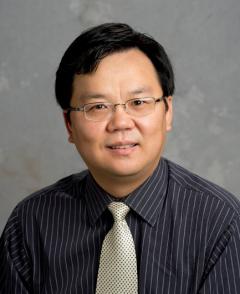
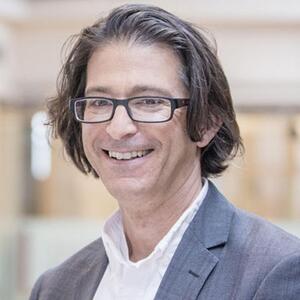
Yingjie Chen is a Professor at Purdue University's Purdue Polytechnic Institute, Department of Computer Graphics Technology. He holds a Ph.D. in Human-Computer Interaction from Simon Fraser University (2011), a Master of Science in Information Technology (2007), and a Bachelor of Engineering from Tsinghua University (1992). His research focuses on interdisciplinary domains including Virtual Reality, AI in Computer Graphics, Human-Computer Interaction, and Information Visualization. He has led multiple grants, including projects on VR training systems for Cryo-EM and precision medicine using Graph AI. Education: Ph.D., Human-Computer Interaction, Simon Fraser University (2011) M.Sc., Information Technology, Simon Fraser University (2007) B.Eng., Thermal Engineering, Tsinghua University (1992) Dr. Chen’s research emphasizes practical implementation and evaluation, blending theory with real-world applications. His work spans VR training systems, autonomous driving perception, and clinical decision support systems. Recent grants include funding for VR-based Cryo-EM training and AI in precision medicine. Research Interests: Virtual Reality (VR) System Design AI-Driven Computer Graphics Visual Analytics for Healthcare Human Factors in Autonomous Systems Grants & Awards: "Virtual Reality Augmented Hands-on Cryo-EM Training" (2020–2023) "Graph AI for Precision Medicine" (2021–2023) VAST Challenge Awards (2017, 2019) His lab, VA.Tech , develops innovative visual systems for interdisciplinary challenges. Collaborations span healthcare, transportation, and environmental science.
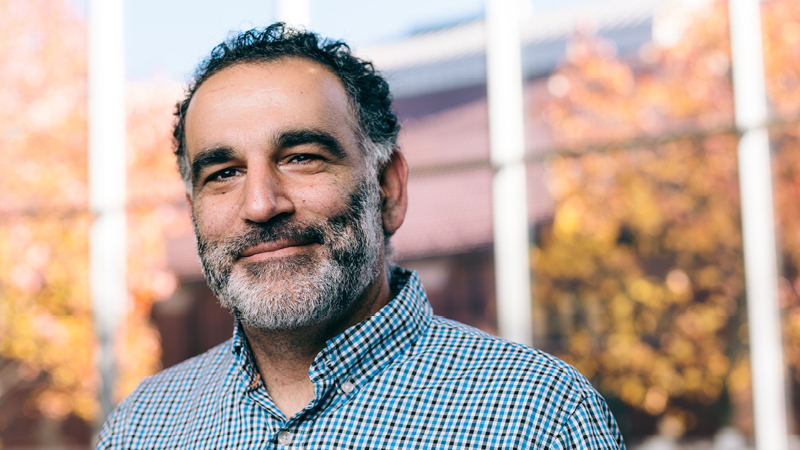
Dan Goldwasser is an Associate Professor of Computer Science at Purdue University's Department of Computer Science (College of Science). He joined the faculty in 2014 and focuses on Artificial Intelligence, Machine Learning, and Natural Language Processing. His work emphasizes analyzing social media discourse, political communication, and integrating large language models (LLMs) into interactive systems. Education: PhD in Computer Science from the University of Illinois (2012). Research interests include multimodal understanding, ethical reasoning in AI, and social context modeling. Recent work explores LLMs' roles in uncovering latent arguments, cultural context grounding, and morality frame analysis in social media debates (e.g., vaccination campaigns, climate policy). Notable projects include VIBE (visual language model analysis), EmoGist (visual emotion understanding), and frameworks for political discourse analysis. His work frequently addresses fairness, bias detection, and contextual reasoning in AI systems.
Aggelos Katsaggelos is the Joseph Cummings Professor of Electrical and Computer Engineering at Northwestern University's McCormick School of Engineering, with courtesy appointments in Computer Science and Radiology. He leads the Image and Video Processing Lab (IVPL), co-directs the Center for Scientific Studies in the Arts (NU-ACCESS), and serves as Deputy Director of Computation at the Center for Computational Imaging and Signal Analytics in Medicine. With a PhD from Georgia Tech, Katsaggelos specializes in artificial intelligence, machine learning, and computational imaging, applying these to medical diagnostics, astrophysics, and cultural heritage preservation. His work bridges engineering, computer science, and medicine, emphasizing interdisciplinary innovation. Notable contributions include the Gravity Spy citizen science project for gravitational-wave data analysis and the Bayesian-based IVPL lab's advancements in image restoration and medical imaging. He has received the 2023 Spanish Society of Statistics award for his crowdsourcing research. His research teams actively collaborate across fields, addressing challenges in signal processing, deep learning, and healthcare technology. Education: PhD in Electrical Engineering (Georgia Tech), M.S. (Georgia Tech), B.S. in Electrical/Mechanical Engineering (Aristotle University of Thessaloniki). Research activities include computational imaging, medical AI, neural networks, and astrophysical simulations. He directs interdisciplinary centers and has published extensively in top journals/conferences. His grants and collaborations span federal agencies, industry, and international partnerships.
Prof. Dr. Laura Busse is a Professor in the Department of Biology II, Division of Neurobiology at Ludwig-Maximilians-Universität München. She leads the Vision Circuits Lab, focusing on understanding how neural circuits mediate contextual processing in the visual system. Her work combines electrophysiological recordings, optogenetics, and computational modeling in mice to study feedback mechanisms, behavioral state effects, and spatial integration in visual pathways. Key collaborations include the Wachtler Lab, Tübingen's CIN, and the MPI for Brain Research. Busse is affiliated with the Graduate School of Systemic Neurosciences (GSN) and the Research Training Group (RTG) 2175. She actively supervises PhD students including Simon Renner, Gregory Born, and Felix Schneider. Her research spans cellular and systems neuroscience, with a focus on how visual perception adapts dynamically to context and behavioral goals. Dr. Busse’s research interests include thalamocortical interactions, corticothalamic feedback, and the role of inhibitory circuits in visual processing. She investigates how locomotion and behavioral state modulate early visual system activity, and how natural visual inputs are processed across retinal and thalamic stages. Her lab employs advanced multi-electrode recordings and naturalistic stimuli to dissect the neural mechanisms underlying visual perception. Current projects explore contrast invariance, serotonin's role in visual acuity, and the impact of impaired inhibition on network oscillations. Busse has received funding from the DFG, SFB 870, and BCCN Smart Start grants. Her work bridges systems neuroscience and computational modeling, emphasizing translational insights into neural circuit dynamics. The lab collaborates extensively with institutions like the University of Tübingen and the MPI for Biological Cybernetics.
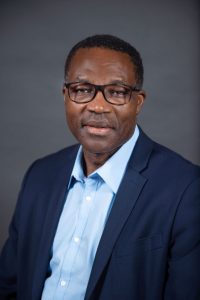
Christophe Bobda is a Citi Endowed Professor in Advanced Technologies and Associate Chair for Academics at the University of Florida's Department of Electrical & Computer Engineering within the Herbert Wertheim College of Engineering. His research focuses on FPGA-based systems, cybersecurity, embedded systems, and resilient architectures. He holds a Ph.D. from the University of Paderborn, Germany, and degrees from Universities in Germany and Cameroon. Research interests include System-on-Chip design, reconfigurable computing, and robotics. Notable contributions span secure cloud FPGA deployment, multi-tenant hardware security, and near-sensor processing architectures. He received the HWCOE International Educator of the Year award in 2024. Recent work emphasizes FPGA security in cloud environments, with projects like CIVIC-FPGA and ISO-TENANT addressing isolation and attack mitigation. His lab explores embedded imaging and robotics applications, leveraging low-power and high-performance FPGA solutions. NSF grants support his research in FPGA acceleration and datacenter infrastructure. Publications highlight advancements in event-based vision systems, 3D semantic modeling, and hardware trojan detection. Ongoing projects include chiplet interfaces for on-device AI and galvanic isolation for physical attack prevention. His work bridges theoretical cybersecurity with practical FPGA implementations for resilient systems.
Alexander Semenov is an Assistant Professor in the Department of Industrial & Systems Engineering at the University of Florida and serves as Assistant Director of the Center for Applied Optimization (CAO). He holds a Ph.D. in Computer Science from the University of Jyväskylä (2013). His research focuses span network science, social media analytics, algorithm design, large dataset analysis, optimization, and machine learning applications. University: University of Florida Department: Industrial & Systems Engineering Lab: Center for Applied Optimization (CAO) Academic Rank: Assistant Professor Email: asemenov@ufl.edu Office: REEF 132 Phone: (850) 833-9350 [Ext: 239] His recent publications demonstrate interdisciplinary applications of network science and machine learning in healthcare (AI-assisted EHR standardization, drug discontinuation detection), financial markets (P/E ratio forecasting, high-frequency trading impact analysis), art economics (color palette effects on painting prices, authorship analysis), and cybersecurity (key management in WSN). Current methodological work involves novel approaches to influence propagation modeling, change-point detection via MIP, and SAR image navigation systems. Research themes emphasize solving real-world problems through graph-based methodologies, deep learning, and optimization frameworks. His editorial roles include Associate Editor positions at the Journal of Combinatorial Optimization and IET Blockchain journal. Contact details available at REEF 132, University of Florida.
Xiaowu Sun holds dual affiliations at EPFL: as a Researcher in the Chair of Mathematical Data Science (SB/MATH/MDS1) and a Postdoctoral Researcher in the Signal Processing Laboratory 4 (STI/IEM/LTS4). Their work bridges machine learning, signal processing, and biomedical imaging with applications in cardiovascular analysis and medical AI. Research focuses on deep learning-driven approaches for medical image analysis, particularly in cardiac MRI segmentation, predictive modeling of cardiovascular events, and explainable AI systems for clinical decision support. Publications highlight innovations in graph neural networks for coronary angiography analysis, transformer-based feature fusion in 4D flow MRI, and contrastive learning for echocardiographic view integration.
Brian Anthony is a Principal Research Scientist in the Department of Mechanical Engineering at the Massachusetts Institute of Technology (MIT). His research focuses on advanced imaging technologies, optimization systems, and AI applications in healthcare and manufacturing. Key interests include video event analysis, machine vision, ultrasound elastography, and ethical AI. He has contributed to innovations in medical imaging, renewable energy integration, and smart manufacturing frameworks. Anthony’s work bridges computational methods with real-world applications, such as developing frameworks for Industry 5.0 and addressing misinformation risks in large language models. His research also spans virtual reality systems tailored to personality traits and digital twins for manufacturing systems. He has received the Reviewer’s Recognition in 2018 for his contributions to peer review processes. Notable projects include the Factory 4.0 Toolkit for training and collaborations on non-invasive medical diagnostics using ultrasound. His articles highlight interdisciplinary approaches to challenges in energy, healthcare, and automation, emphasizing practical solutions for industry and clinical settings.
Angelique Taylor is the Andrew H. and Ann R. Tisch Assistant Professor at Cornell Tech and the Cornell Ann S. Bowers College of Computing and Information Science. She directs the Artificial Intelligence and Robotics Lab (AIRLab) and holds affiliations with the Information Science Department, Computer Science field membership, Department of Emergency Medicine at Weill Cornell Medicine, and the Health Tech Hub at Cornell Tech. Her work focuses on designing intelligent systems that work alongside people in real-world, safety-critical environments. Ph.D. in Computer Science and Engineering, University of California, San Diego (2021) B.S. in Electrical Engineering, University of Missouri-Columbia (2015) B.S. in Computer Engineering, University of Missouri-Columbia (2015) A.S. in Engineering Science, Saint Louis Community College (2012) Taylor's research centers on human-robot interaction at the intersection of robotics, computer vision, and artificial intelligence. She designs systems that interact with people through robots, AI, and extended reality devices, with a particular focus on healthcare applications. Her work emphasizes community engagement with stakeholders to develop systems that support multi-user interactions in high-stakes environments like emergency departments. Analysis of Taylor's recent publications reveals a clear trajectory toward practical applications of robotics in healthcare settings, particularly emergency medicine. Her work has evolved from foundational research in group detection and social navigation to applied systems like medical crash cart robots and augmented reality tools designed specifically for clinical teamwork. The research demonstrates increasing emphasis on real-world deployment, human factors considerations, and collaborative design processes with healthcare professionals. NSF Foundation Research in Robotics award Cornell Einhorn Center Community-Engaged Practice & Innovation award Google Award for Inclusive Research NSF GRFP award Microsoft Dissertation award Google Anita Borg Memorial Fellowship Best Paper awards at HRI 2022, HRI 2024, and CSCW 2019 Taylor actively mentors students across multiple levels, with AIRLab comprising PhD students, Master's students, and undergraduates working on healthcare robotics projects. Her lab has secured funding from major organizations including NSF, Google, and Microsoft. The AIRLab conducts field deployments in real healthcare settings and collaborates with emergency medicine professionals to ensure research addresses genuine clinical needs. Taylor's teaching includes courses on Practical Applications in Machine Learning and Introduction to Human-Robot Interaction. The AIRLab conducts research through community engagement with healthcare stakeholders, focusing on designing intelligent systems for safety-critical environments. Current projects include medical crash cart robots, augmented reality tools for clinical teamwork, risk-aware robot navigation systems, and emotion regulation applications for young adults. The lab regularly participates in events like BASE Camp at Weill Cornell Medicine and presents at conferences focused on healthcare innovation.
Dong Jin Song is a full Professor at the National University of Singapore's School of Computing, Department of Computer Science. He joined NUS in 1998 and was promoted to Professor in 2016 after serving as Associate Professor (2005) and Assistant Professor. He has held various leadership roles including Deputy Head of CS Department (2023-2024), NUS Senate Member (2020-current), and Assistant Dean (Graduate Office, SoC). PhD, University of Queensland, Australia (1993-1995) BInfTech with First Class Honours, University of Queensland, Australia (1989-1992) - Major in Software Engineering Professor Dong's research spans formal methods, safety and security systems, probabilistic reasoning, sports analytics, and trusted machine learning. He is best known for co-founding the PAT verification system which has attracted thousands of registered users from over 150 countries and won the 20-year ICFEM Most Influential System Award in 2018. He also co-founded 'Silas: Trusted Machine Learning' and the Dependable Intelligence company. His work bridges formal verification with practical applications in security, AI, and even sports analytics where he developed Markov Decision Process models for tennis strategy analysis. His recent publications show a strong trend toward integrating formal methods with modern AI systems, particularly focusing on trustworthy AI, LLM verification, and security applications. The research spans multiple high-impact venues including ICML, NeurIPS, IEEE Transactions, and top security conferences like USENIX Security, reflecting his interdisciplinary approach that combines formal verification with machine learning, security, and practical applications. Professor Dong has received numerous honors including the ACM SIGSOFT Distinguished Paper Award for ICSE 2020, the 20-Year ICFEM Most Influential System Award (2018), and being named a Fellow of the Institute of Engineers Australia (2018). His awards reflect both theoretical contributions to formal methods and practical impact on software engineering. ACM SIGSOFT Distinguished Paper Award for ICSE 2020 NUS Research Recognition Award (2020) Fellow of Institute of Engineers Australia (2018) 20-Year ICFEM Most Influential System Award (2018) Best Paper Award at ICECCS (2015 and 2012) Professor Dong has successfully supervised 33 PhD students, many of whom have become tenured faculty members at leading universities worldwide including The University of Auckland, Aston University, Singapore Management University, and Monash University. His students have gone on to successful careers in both academia and industry at organizations like Google, Apple, HP Research Lab, and IBM. He has served on the editorial boards of prestigious journals including ACM Transactions on Software Engineering and Methodology and has been active in numerous conference organizing committees. Through his research group and commercial ventures (Dependable Intelligence), Professor Dong has built a strong team focused on formal verification, trusted AI systems, and practical applications of model checking. His work has evolved from foundational formal methods research to cutting-edge applications in AI safety and security, maintaining a consistent thread of rigorous verification throughout his career.
Wynne Hsu serves as Provost's Chair Professor in the Department of Computer Science at NUS School of Computing and Director of the Institute of Data Science (IDS), driving Singapore's AI research agenda through strategic academic leadership and healthcare innovation. Her academic foundation includes: B.Sc. in Computer Science, National University of Singapore M.Sc. in Computer Science, Purdue University, U.S.A. Ph.D. in Electrical & Computer Engineering, Purdue University, U.S.A. (1994) Professor Hsu's research integrates Artificial Intelligence and Machine Learning with critical healthcare applications, specializing in Retinal Image Analysis for diabetic complications, Social Media Analytics for misinformation containment, and Spatio-temporal Data Mining for dynamic system modeling. Her patient similarity analytics framework has enabled risk communication tools deployed in Singapore's national diabetes program, demonstrating translational impact from algorithmic innovation to clinical practice. Recent work emphasizes multimodal AI systems that bridge ophthalmology with systemic disease prediction. Analysis of her 2025 publications reveals three converging trajectories: (1) Healthcare AI extending from retinal diagnostics to kidney disease and dementia prediction using deep learning, (2) Temporal reasoning frameworks for claim verification addressing misinformation through timeline analysis, and (3) Privacy-preserving multimodal LLMs tackling inadvertent data memorization. These strands reflect her consistent focus on robust, clinically actionable AI systems. Her exceptional contributions are recognized by: President’s Technology Award, Singapore (2014) for national AI healthcare impact SIGKDD Test-of-Time Award (2014) for foundational social network influence research As IDS Director, Professor Hsu secures strategic grants for national AI screening programs while mentoring cross-disciplinary teams that combine computer vision expertise with clinical partnerships. Her leadership has established NUS as a hub for healthcare AI validation, particularly in multi-ethnic populations through collaborations with Singapore's National Healthcare Group. The Institute of Data Science under her direction operates as Singapore's central AI innovation engine, with current initiatives focused on multimodal disease progression modeling and temporal fact verification systems. Key projects integrate retinal vessel analysis with cardiovascular risk prediction and develop LLM-based tools for physician-patient communication in chronic disease management, maintaining strong alignment with national healthcare priorities.
Christopher Metzler is an Assistant Professor in the Department of Computer Science at the University of Maryland (UMD), with appointments in the University of Maryland Institute for Advanced Computer Studies (UMIACS) and a courtesy appointment in the Electrical and Computer Engineering Department. He leads the UMD Intelligent Sensing Laboratory, focusing on computational imaging, machine learning, and wireless communications. His research develops novel systems and algorithms for imaging through scattering media, multimodal sensor fusion, and self-supervised AI techniques. Education: PhD in Electrical and Computer Engineering (Rice University, 2019), MSEE (2014), BSEE (2013). Postdoctoral Fellowship: Stanford Computational Imaging Lab (2020). Awards: AFOSR Young Investigator Program (2022), NSF CAREER (2023), ARO Early Career Award (2024), and multiple fellowships (NSF GRFP, NDSEG). Research interests include computational imaging, machine learning, statistical signal processing, and AI-driven sensor fusion. His work addresses challenges in non-line-of-sight imaging, turbulence mitigation, and hardware-aware algorithms. He advises 10 PhD students and collaborates on projects funded by the Air Force, NSF, and other agencies. Key contributions include neural wavefront shaping, adversarial sensing frameworks, and high-resolution non-line-of-sight imaging. His lab develops open-source software and datasets, such as the Transmission Matrix Dataset and learned compressive sensing tools.
Professor Dorothy Monekosso holds a position at Durham University as Professor of Computer Science and serves as Chief Technical Officer (0.5FTE) at More Life UK Ltd, a health services company. Her academic career spans over two decades, with a PhD in Spacecraft Engineering (2000) from Surrey Space Centre, a Master's in Satellite Engineering, and a Bachelor's in Electronic Engineering. Her research focuses on assistive technologies, digital health innovations, and applications of machine learning in healthcare. Notable contributions include the Virtual Physiotherapist project (funded by MRC) and the Health-5G mixed reality system for emergency medical assistance. She has pioneered work on ear recognition biometrics and VR-based rehabilitation frameworks like Rehab-Immersive. Professional roles include leadership as PGR Director at Durham and membership in prestigious committees such as the Royal Society Diversity Committee and World Economic Forum initiatives. Awards include the Royal Academy of Engineering Foresight Award (2000) and BCS Honorary Fellowship (2020). Her work integrates robotics, AI, and sensor networks into solutions for independent living and healthcare delivery. Current projects explore digital twins in healthcare and smart environments to support aging populations.
Dr. Emma Beauxis Aussalet is an Assistant Professor at the Faculty of Science of Vrije Universiteit Amsterdam, affiliated with the Business Web and Media department and the Network Institute . Her work bridges Artificial Intelligence, Interactive Visualization, and ethical considerations in technology. Research interests include AI fairness, bias mitigation in recommendation systems, user-centered visualization design, and uncertainty quantification in machine learning. Notable contributions address fairness in public sector AI applications and trust-building through interactive systems. Recent Themes: Environmental sustainability of AI practices in corporations Designing ethical voice agents for child-centric play Automated bias detection in hiring algorithms Current projects include leading the Smart Societies theme: Designing ethical voice agents for children's active and social play (2024-2025), focusing on responsible AI development for vulnerable populations. Teaching responsibilities include the Fair Digital Design course, emphasizing ethical tech practices.
Michael Greenspan is a Professor in the Department of Electrical and Computer Engineering at Queen's University, affiliated with the Ingenuity Labs Research Institute. His expertise spans computer vision, image processing, and robotics. He holds a PhD in Systems and Computer Engineering from Carleton University and has extensive industry experience, including leading the Computational Video Group at the National Research Council of Canada. His research focuses on object recognition, motion planning, and applied computational geometry, with applications in autonomous robotics and 3D scene analysis. He has published over 30 technical papers and 3 patents, and collaborates with industry on applied projects. Education BSc in Physics and Applied Mathematics (1986), University of Toronto BASc and MASc in Electrical Engineering (1989, 1991), University of Ottawa PhD in Systems and Computer Engineering (1991), Carleton University Research Interests Object recognition and pose determination using geometric probing and minimalist template matching Efficient motion planning algorithms for robotic systems Computational geometry solutions like TINN for nearest neighbor problems Applications in autonomous robotic capture, LiDAR data analysis, and collaborative robotics Dr. Greenspan’s work bridges theoretical computer vision with practical robotic systems, emphasizing real-time performance and industrial relevance. His lab, the Robotics and Computer Vision Laboratory, develops algorithms for 3D localization, sensor fusion, and autonomous navigation. He is active in professional organizations like IEEE and serves on the Research Management Committee of Precarn Associates. Key Contributions Developed TINN for nearest-neighbor problem optimization Pioneered efficient collision detection methods for robotic motion planning Advanced 3D point cloud registration techniques using virtual interest points Co-created the CycleCrash dataset for bicycle collision analysis