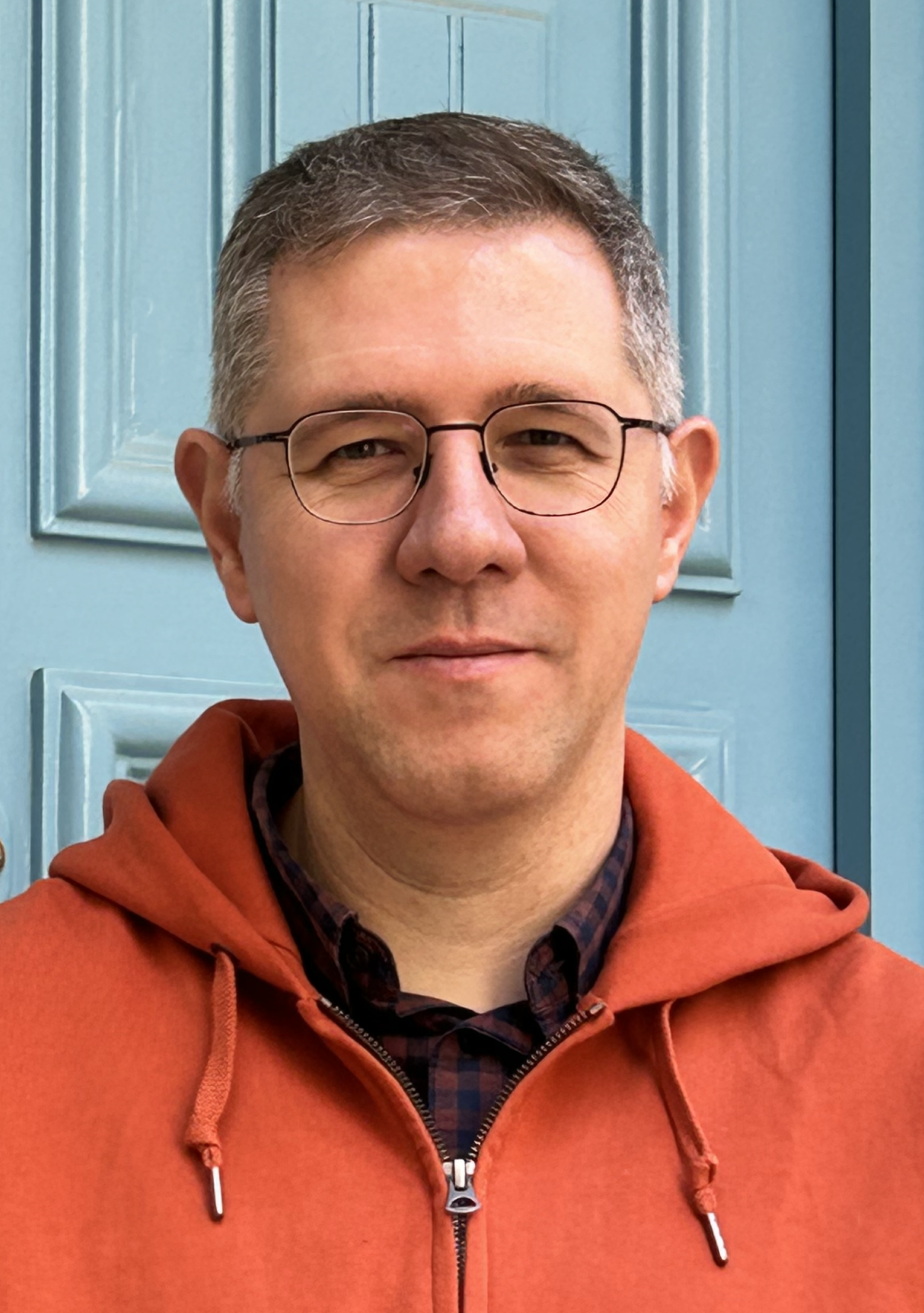
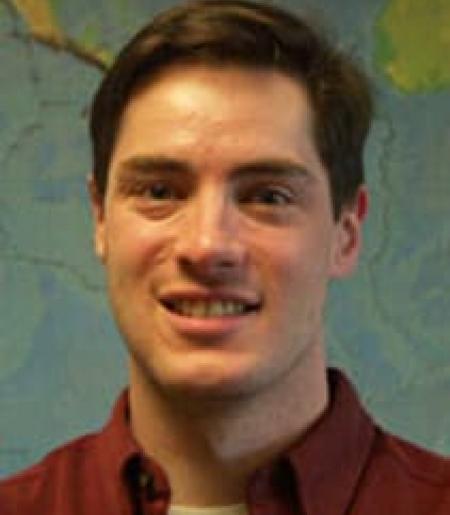
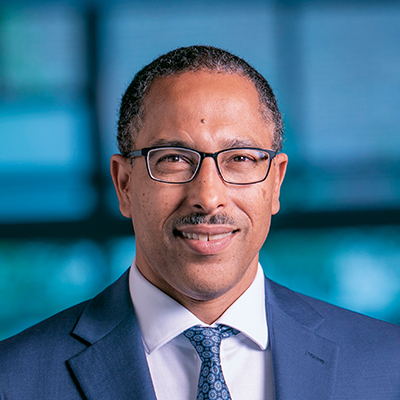
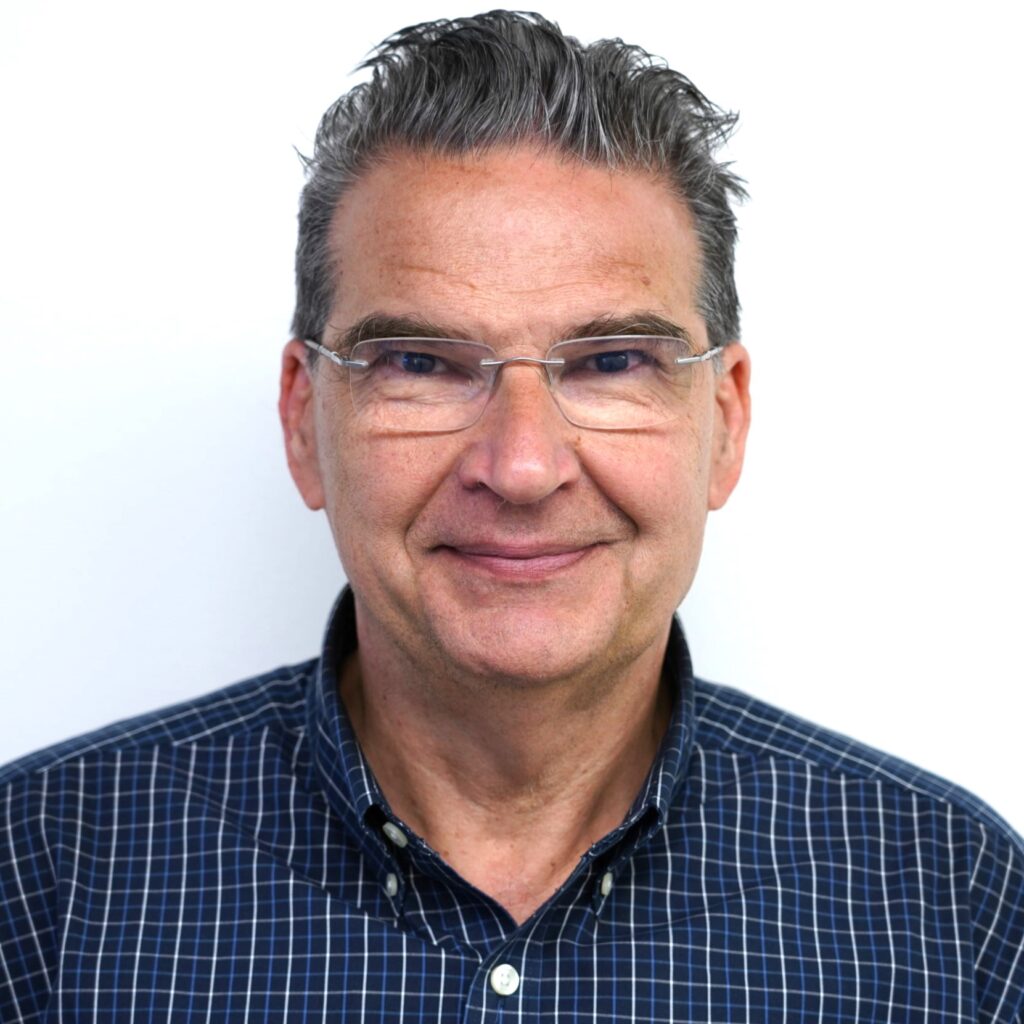
Aykut Erdem is an Associate Professor of Computer Engineering at Koç University, affiliated with the KUIS AI Center. He earned his PhD, MSc, and BSc in Computer Engineering from Middle East Technical University (METU), with visiting researcher experiences at Virginia Tech (2004) and MIT (2007). His research focuses on learning-based approaches for visual data understanding, including image editing, visual saliency estimation, and vision-language integration. Research Interests: Vision and Graphics, Machine Learning, Artificial Intelligence, Computer Vision, Natural Language Processing, Generative Artificial Intelligence. Recent work includes text-guided image/video editing, diffusion models for object removal, and GAN-based frameworks for domain adaptation. Scientific Awards: Young Scientist Award (BAGEP 2021) by Science Academy in Computer Engineering Best Paper Award at 5th Multimodal Learning and Applications Workshop (2022) Collaborations and Funding: Principal investigator for TUBITAK 1001 project on generative AI for visual data (2021-2024), Adobe Research Gift (2023), and co-investigator for multiple TUBITAK grants. Serves as Associate Editor for IEEE Transactions on Image Processing (2022-present).
Erkut Erdem is a Professor in the Department of Computer Engineering at Hacettepe University, where he leads the Computer Vision Laboratory (HUCVL). His research focuses on computer vision and machine learning, particularly on incorporating different kinds of context (spatial, temporal and cross-modal) into visual processing across all levels from low to high-level vision. He received his Ph.D. (2008), M.Sc. (2003), and B.Sc. (2001) from Middle East Technical University. Prior to joining Hacettepe University in 2010, he completed a post-doctoral fellowship at Ecole Nationale Supérieure des Télécommunications (2009-2010) and held visiting researcher positions at UCLA (2007) and Virginia Tech (2004). His current research interests include Visual Saliency Prediction, Automatic Image Description, Video/Photoset Summarization, Image Filtering, and Image Editing. Recent work has focused on multimodal learning with video-language models, diffusion-based image editing, and event-based vision for low-light conditions. His research has been published in top venues including NeurIPS, ICLR, ICCV, SIGGRAPH, and ACL. He has received significant recognition including The Young Researcher Award from Turkish Academy of Sciences and being named a 2022 Outstanding Associate Editor of IEEE Transactions on Multimedia. He has secured multiple research projects funded by TUBITAK and received gift funds from Adobe Research for text-guided image synthesis work. Current Teaching: BBM202: Algorithms, AIN434/BBM444: Fundamentals of Computational Photography Graduate Supervision: 6 current Ph.D. students, numerous recent graduates including Burak Ercan (2024) and Aysun Kocak (2023) Professional Affiliations: Co-affiliated with Koç University and İş Bank AI Center (KUIS AI)
Matthew Dunbabin is a Professor at Queensland University of Technology (QUT) and Chief Investigator at the Australian Centre for Robotic Vision (ACRV). His expertise spans environmental robotics, with a focus on vision-based autonomous systems for marine conservation, water quality monitoring, and greenhouse gas management. He holds a PhD from QUT and a BEng (Aerospace) from RMIT. Dunbabin has led projects at CSIRO and QUT, developing robots like COTSBot and RangerBot to combat marine pests and promote reef restoration. His work has earned national and international awards, including the 2019 Australian Water Association Award and 2016 Google Impact Challenge. Education: PhD in Engineering, Queensland University of Technology (Queensland, Australia) BEng (Hons) in Aerospace Engineering, Royal Melbourne Institute of Technology (Melbourne, Australia) Research Interests: Environmental robotics and autonomous systems Vision-based perception and classification Marine habitat restoration and pest control Greenhouse gas monitoring via autonomous vehicles Cooperative robotics and sensor networks Awards & Recognition: 2019 Australian Water Association Award (SAMMI Project) 2019 Good Design Award - Sustainability (RangerBot) 2016 Google Impact Challenge People’s Choice Award (RangerBot AUV) 2010 Australian ICT Industry Association National iAward (iSnet) 2006 Queensland Engineering Excellence Innovation Award (Starbug Project) Grants & Projects: ARC Centre of Excellence for Robotic Vision (ACRV): Leading robotic vision research (2014–present) Revolutionising Protection Against Air Pollution: Air quality monitoring networks (2015–present) Establishing Advanced Networks for Air Quality Sensing: Sensor development for urban environments (2017–present) Labs & Collaborations: ACRV at QUT Institute for Future Environments (QUT) CSIRO Autonomous Systems Laboratory (2001–2013)
Chuang Gan is an Assistant Professor at the University of Massachusetts Amherst, affiliated with the College of Information and Computer Sciences and the Department of Computer Science. His work focuses on advancing artificial intelligence, robotics, computer vision, and embodied agents through interdisciplinary research combining neural networks, physical simulations, and multimodal learning. Research interests include generative models, reinforcement learning, vision-language integration, and scalable autonomous systems. He explores topics like world modeling for robots, adaptive policy learning, and physics-driven AI. His projects often involve creating systems that learn from visual, auditory, and tactile inputs to perform complex tasks such as object manipulation, navigation, and decision-making in dynamic environments. Recent research trends emphasize embodied AI systems capable of long-horizon planning, compositional reasoning, and efficient learning from limited data. His work bridges theory and practice, with applications in robotics, simulation platforms, and multimodal generation. Key contributions include frameworks for 3D scene understanding, adaptive world models, and novel training paradigms for large language models. His research has been applied to robotics platforms like RoboDreamer and UBSoft, focusing on unbounded soft environments. Collaborations involve designing benchmarks for physical scene understanding (e.g., Physion++), and creating tools like DiffTactile for tactile simulation. His work often integrates principles from differential geometry, PDE dynamics, and game theory. Chuang Gan’s research group develops open-source tools and benchmarks, such as the SoftZoo robot co-design platform and the SOK-Bench situated reasoning benchmark. His team emphasizes scalable alignment methods beyond human supervision and explores ethical AI through principles like symmetry-enhanced training.
Oliver S. Cossairt is an Adjunct Associate Professor at Northwestern University's departments of Computer Science and Electrical and Computer Engineering. He leads the Computational Photography Lab , focusing on computational imaging, optics, and display technologies. His work bridges computer vision, graphics, and optical engineering to design novel imaging systems with applications in medical, astronomical, and scientific domains. Education: Ph.D. Computer Science, Columbia University (2011) M.S. Media Arts and Sciences, MIT Media Lab (2003) B.S. Physics, Evergreen State College (2003) Research Interests: Cossairt develops imaging systems that combine optical innovations with computational methods to enhance performance and functionality. Key areas include computational displays, depth sensing, and high-precision 3D imaging. His work emphasizes practical applications like medical imaging, holography, and non-line-of-sight sensing. Awards: NSF CAREER Award (2015–2020) Best Paper Award at ICCP 2011 NSF Graduate Research Fellowship (2008–2011) Teaching & Funding: Taught courses on computational photography and computer vision. Secured grants from NSF, NIH, and industry partners (e.g., Samsung, Omron) for projects like Coherent Computational Imaging and Snapshot 3D Holographic Microscope . Labs & Teams: Directs the Computational Photography Lab, collaborating with institutions like Argonne National Labs and museums for projects in cultural heritage imaging.
Professor Jun Zhang is a leading academic in cybersecurity at Swinburne University, Australia, where he directs the Cybersecurity Lab. He has been honored as Australia's top cybersecurity researcher and instrumental in establishing Swinburne as a globally recognized cybersecurity research institution. His work includes high-impact papers and multi-million-dollar R&D projects, culminating in awards like the 2021 'Top Cybersecurity Research Institution' accolade. As course director of the Bachelor of Cyber Security, he pioneered an industry-driven teaching model with Deloitte and CSIRO, significantly boosting course enrollment. His collaborations extend to Adobe's Curriculum Innovation Program and the Australian P-TECH initiative, promoting STEM education and cybersecurity awareness. He supervises doctoral candidates and leads grants focused on AI-driven cybersecurity, smart home security, and blockchain-based edge computing. His research spans vulnerability detection, GAN forensics, IoT security, and privacy preservation in OSNs. Research interests include cybersecurity fundamentals, data science applications, and distributed systems. Notable achievements include the PTFix framework for Java vulnerabilities, the IoTFuzz smart home testing system, and CTI mining methodologies. Awards reflect his mid-career research excellence and industry partnerships. His grants with CSIRO and defense organizations emphasize real-world impact, addressing challenges from malware detection to adversarial machine learning. The Cybersecurity Lab and collaborative projects like Artchain demonstrate his commitment to bridging academia and industry. Professional activities include supervising over 20 HDR students and securing grants totaling millions. His work on blockchain-based edge storage (CSEdge) and SDCCP congestion control highlights innovation in networking. Future directions include advancing AI for design collaboration with CSIRO and enhancing privacy in smart energy technologies. His contributions span technical, educational, and community outreach domains, positioning him as a pivotal figure in cybersecurity's evolution.
Yiyu Yao is a Professor in the Department of Computer Science at the University of Regina, Faculty of Science. He holds a B.Eng. from Xi'an Jiaotong University and earned both his M.Sc. and Ph.D. from the University of Regina. His office is located in College West 308.6, and he can be reached at Yiyu.Yao@uregina.ca or by phone at (306) 585-5226. Dr. Yao's research spans multiple interconnected domains in intelligent systems. His primary focus is on three-way decisions, which serves as a unifying framework for his work in granular computing, rough sets, and decision-theoretic models. He has developed significant theoretical contributions to decision-theoretic rough sets (DTRS) and probabilistic rough sets, creating bridges between uncertainty management and practical decision-making applications. His work extends to web intelligence, information retrieval systems, and multiview data analysis, where he applies his theoretical frameworks to real-world problems in data science and artificial intelligence. Analysis of Dr. Yao's recent publications reveals a strong continuing focus on three-way decision theory, with increasing applications across diverse domains. His work demonstrates evolution from foundational theoretical contributions to sophisticated applications in multi-criteria decision making, conflict analysis, and explainable AI. The research shows integration of granular computing principles with modern machine learning techniques, particularly in handling uncertainty and developing interpretable models. Recent publications indicate growing interest in the intersection of three-way decisions with fuzzy sets, shadowed sets, and cognitive approaches to data analysis. Dr. Yao has mentored numerous graduate students and has hosted many visiting scholars, primarily from Chinese institutions including Nanjing University Posts and Telecommunication, Harbin Normal University, Shaanxi Normal University, and others. He serves as Area Editor on Rough Sets for the International Journal of Approximate Reasoning and as Associate Editor for Information Sciences. He is also Associate Editor-in-Chief for the Journal of Emerging Technologies in Web Intelligence and serves on multiple editorial boards including LNCS Transactions on Rough Sets and Web Intelligence and Agent Systems. He has organized significant conferences including the International Joint Conference on Rough Sets (IJCRS 2017) and served on the Steering Committee for the International Symposium on Fuzzy and Rough Sets.
Mehmet Esat Belviranli is an Assistant Professor in the Computer Science Department at the Colorado School of Mines, where he directs the High Performance Systems and Software Lab (HyperSys). His research focuses on increasing resource utilization in heterogeneous architectures through runtime systems, scheduling algorithms, and performance modeling, with publications in top venues including MICRO, PPoPP, and SC. Education: Ph.D. in Computer Science, University of California, Riverside (2016) M.S. in Computer Science, Bilkent University (2009) B.S. in Computer Science, Bilkent University (2006) Belviranli's research spans heterogeneous architectures, runtime systems, performance modeling, parallel programming, autonomous computing, deep learning acceleration, cyber-physical systems, and edge-cloud platforms. His work develops analytical models and programming abstractions to address resource management, scheduling, and security challenges in diversely heterogeneous systems, with applications in edge computing, autonomous systems, and machine learning acceleration. Recent projects emphasize real-world constraints and security implications. His publication trends reveal increasing focus on edge-cloud resource management (e.g., HARNESS), security vulnerabilities in heterogeneous systems (e.g., MC3), and deep learning acceleration under resource constraints. Key themes include memory contention modeling, scheduling for cyber-physical systems, and concurrent DNN execution, reflecting a shift toward practical deployment in security-sensitive edge environments. Scientific Awards: U.S. Air Force Research Lab Summer Faculty Fellowship Award (2022) U.S. Air Force Research Lab Summer Faculty Fellowship Award (2021) Oak Ridge National Laboratory Significant Event Award (2019) Best Paper Finalist, IEEE HPEC 2018 Outstanding Paper Award, DATE 2024 Belviranli mentors Ph.D. students Ismet Dagli (MLCommons Rising Star 2024, CGO'24 SRC finalist) and Justin Davis (DATE'24 Outstanding Paper Award winner). He has secured $2M+ in funding from NSF, DoE, and SRC, including an NSF-SaTC grant on mobile security (2024), a DoE grant on superconductive systems (2023), and an NSF FuSe grant on graphene nanoribbons (2023), often leading multi-institutional teams from Rochester, Virginia, Arizona, and Minnesota. The HyperSys Lab develops ecosystems for high-performance heterogeneous systems, with recent projects including HARNESS for edge-cloud resource management and MC3 for mobile SoC security. The lab has received equipment donations from Google Coral.ai and Xilinx, and collaborates with national labs on security challenges and next-generation semiconductor technologies.
Dr. Karim El-Basyouny is a Killam Laureate Professor and City of Edmonton Urban Traffic Safety Research Chair at the University of Alberta's Faculty of Engineering, where he serves as Associate Dean (Research Infrastructure and Innovation) in the Civil and Environmental Engineering Department. A licensed Professional Engineer in Alberta, he holds advanced degrees in Transportation Engineering from the University of British Columbia and has dedicated his career to advancing road safety through data-driven management frameworks. His academic credentials include: Doctor of Philosophy, Civil Engineering, University of British Columbia, 2011 Engineering Management Sub-specialization, Civil Engineering, University of British Columbia, 2010 Master of Applied Science, Civil Engineering, University of British Columbia, 2006 Bachelor's degree (ABET Equivalent), Civil & Environmental Engineering, United Arab Emirates University, 2003 El-Basyouny's research pioneers the integration of remote sensing, machine learning, and statistical modeling to enhance transportation safety. His work develops automated tools for infrastructure digitization, collision prediction, and speed management, treating safety as a systemic product requiring management frameworks. Key contributions include LiDAR-based road feature extraction, network-level safety evaluations, and frameworks for vision-zero outcomes that address both human-driven and autonomous vehicle contexts. His recent publications demonstrate a cohesive research trajectory centered on leveraging point cloud data and computational intelligence for safety management. Over 15 major publications since 2021 focus on automated infrastructure assessment (light pole detection, clear zone mapping, vertical clearance evaluation), weather-impact modeling, and enforcement resource optimization. This body of work bridges transportation engineering with computer vision and operations research to create scalable safety solutions. His scientific contributions have been recognized with prestigious honors including: 2024 Killam Annual Professorship Award 2024 Road Safety Achievement Award from TAC 2023 Donald Stanley Award for environmental engineering 2022 Faculty of Engineering Graduate Teaching Award 2021 Daniel B. Fambro Student Paper Award As an academic leader, El-Basyouny actively mentors graduate students and secures significant research funding through his endowed chair position. He currently recruits fully-funded PhD and postdoctoral candidates specializing in remote sensing applications, machine learning, and geomatics for road digitization projects. His research group collaborates with national safety committees and municipal agencies to translate findings into policy, while he serves on editorial boards for Transportation Research Record and Analytic Methods in Accident Research. The research group operates at the intersection of transportation engineering and computational science, developing automated frameworks that merge sensor technologies with data processing tools. Current projects focus on semantic segmentation of 3D point clouds, safety implications of infrastructure digitization, and machine learning applications for road feature extraction in both urban and rural environments.
Prof. Matt Pritchard is a Professor in Earth & Atmospheric Sciences at Cornell University, based at Snee Hall. His research focuses on volcanology, geodesy, and remote sensing, with a particular emphasis on using satellite data to monitor volcanic activity, deformation, and glacial interactions. He leads studies on global volcanic systems, including Indonesia's Semeru and Raung volcanoes, Chile's Cordón Caulle, and Bolivia's Uturuncu, applying techniques like InSAR, SAR, and thermal imaging. Key research interests include volcanic eruption dynamics, magma-hydrothermal systems, and the integration of multi-sensor datasets. He has contributed to developing tools like Hotspotter for automated volcanic thermal feature detection and has explored planetary volcanism (e.g., Venus). His work bridges geophysics, glaciology, and computational methods, addressing both Earth and extraterrestrial systems. Prof. Pritchard has received recognition such as the William Bowie Lecture (2022, 2023). His projects often involve international collaborations, including the CEOS Volcano Demonstrator initiative and the EarthDEM/ArcitcDEM projects. He also engages in geothermal energy research and seismic monitoring in Ithaca, NY.
Corrado De Sio is a Fixed-term Researcher at the Department of Control and Computer Science (DAUIN) , Politecnico di Torino , affiliated with the College of Computer, Film, and Mechatronics Engineering . His academic roles include course instruction and collaboration for Reconfigurable Computing , High Performance Computing (HPC) , and Operating Systems for High-Performance Supercomputers across multiple academic years (2020-2025). Research Interests focus on: Reliability of reconfigurable systems and FPGAs under radiation effects Hardware-software co-design for fault tolerance Embedded systems in aerospace and safety-critical applications Machine learning acceleration on reconfigurable hardware Radiation effects on real-time operating systems and CNN implementations Recent publications address: 2025: Selective hardening of RISCV soft-processors for space applications 2025: Real-time 'signal for help' gesture recognition systems 2024: Reliability analysis of RISC-V processors and CNN placement algorithms 2023: Fault tolerance in FPGA-based CNNs and radiation effects on RTOS Patents include: PyXEL - Python Toolkit for Reconfigurable Hardware Surveillance Software for Real-Time Violence Detection Academic Supervision : Co-supervisor for PhD candidate Arash Amini Bardpareh in Computer and Systems Engineering .
Monica Lam is the Kleiner Perkins, Mayfield, Sequoia Capital Professor in Stanford University's School of Engineering and holds a courtesy professorship in Electrical Engineering. She leads the Stanford Open Virtual Assistant Laboratory and has pioneered work in virtual assistants, privacy protection, and compiler design. Her research includes the Almond virtual assistant, privacy-preserving IoT systems, and the ThingTalk programming language. She co-authored the seminal 'dragon book' on compilers and co-founded Tensilica (now part of Cadence). Education: Bachelor of Science (Honors), Computer Science, University of British Columbia, 1980 Master of Science, Computer Science, Carnegie Mellon University, 1982 Doctor of Philosophy (PhD), Computer Science, Carnegie Mellon University, 1987 Research Interests: Dr. Lam's work focuses on conversational AI with privacy guarantees, compiler optimization for parallel computing, and open-source virtual assistant ecosystems. She is a leader in decentralized systems, having developed frameworks like SociaLite for large-scale graph analysis and Musubi for mobile social networking without centralized platforms. Article Trends: Recent publications emphasize multimodal interactions, multilingual dialogue systems, and LLM-driven applications in areas like question answering, persuasive chatbots, and adaptive assistants. Her work bridges foundational AI research (e.g., semantic parsing) with real-world deployments (e.g., privacy-compliant IoT). Awards & Honors: Member of the National Academy of Engineering ACM Fellow Popular Science's Best of What's New Award (Security, 2019) Advising & Grants: Lam oversees the Open Virtual Assistant Initiative, a collaborative project to build open-source semantic models. Her NSF CNS grant (CNS Core) focuses on federated privacy systems. She has advised over 50 students in AI and systems research, though specific names are not listed in the provided texts. Labs & Teams: Directs the Stanford Open Virtual Assistant Laboratory, collaborates with the Stanford NLP group, and maintains ties to industry through former startup Tensilica's legacy in embedded processors.
Camillo J. Taylor is the Raymond S. Markowitz President’s Distinguished Professor in the Department of Computer and Information Science at the University of Pennsylvania , where he has been a faculty member since 1997. He also serves as Associate Dean for Diversity, Equity, and Inclusion at the School of Engineering and Applied Science. His research focuses on Computer Vision and Robotics , particularly in 3D reconstruction, semantic mapping, and autonomous navigation. Education: A.B. in Electrical Computer and Systems Engineering, Harvard College (1988) M.S. and Ph.D. in Computer Science, Yale University (1990, 1994) Research Interests: Dr. Taylor’s work bridges Computer Vision and Robotics to enable autonomous systems to perceive and navigate complex environments. Key themes include semantic SLAM, event camera applications, and meta-learning for adaptive controllers. His projects often integrate vision, physics, and multi-agent collaboration, as seen in systems like EvMAPPER and OCCAM . Recent Article Trends: His 2024–2025 publications focus on semantic mapping , event-based vision , and multi-agent LLM systems , reflecting his lab’s emphasis on real-time perception, physics-informed reconstruction, and rational decision-making in robotics. These works span applications from solar eclipse imaging to wildfire analysis and natural hazard resilience. Awards: NSF CAREER Award (1998) Lindback Minority Junior Faculty Award (2001) IEEE WACV Best Paper Award (2012) Lindback Distinguished Teaching Award (2012) Advising and Service: Dr. Taylor has advised numerous PhD students, including Jason Hughes and Bowen Jiang. He has served as a Program Chair for CVPR (2006, 2017) and General Chair for ICCV (2021). His contributions to the GRASP Laboratory have advanced autonomous micro-UAVs and semantic SLAM.
Kostas Daniilidis is the Ruth Yalom Stone Professor at the University of Pennsylvania in the School of Engineering and Applied Science , specifically the Department of Computer and Information Science . He is also affiliated with the GRASP Laboratory and Archimedes, Athena Research Center, Greece . Education : PhD in Computer Science (1992) from the University of Karlsruhe with Hans-Hellmut Nagel Diploma in Electrical Engineering (1986) from the National Technical University of Athens Research Interests : Kostas Daniilidis is a leading researcher in Computer Vision and Robotics , with significant contributions to event-based vision , equivariant learning , 3D human pose estimation , and hand-eye calibration . His work spans neural rendering , dynamic scene modeling , and low-latency sensing systems . Article Trends : Daniilidis’s recent publications focus on event cameras for low-light and high-speed applications, Gaussian splatting for real-time 3D reconstruction, and equivariant neural architectures for robust motion estimation. His work bridges deep learning with geometric vision , emphasizing human mesh recovery and multi-agent coordination . Scientific Awards : Best Conference Paper Award at ICRA 2017 IEEE Fellow (2012) Teaching : He has taught courses such as CIS580: Machine Perception and CIS121: Data Structures , alongside advanced topics in robotics and computer vision. Lab & Collaborations : As director of the GRASP Laboratory (2008–2013), he fostered interdisciplinary research in robotics, and currently collaborates with institutions like the Athena Research Center in Greece.
Ying Cai is an Associate Professor in the Department of Computer Science at Iowa State University, joining in 2003 after earning his Ph.D. in Computer Science from the University of Central Florida (2002). His research focuses on AI, machine learning, data science, cybersecurity, privacy protection, and database systems. He leads projects funded by the Air Force Research Laboratory, including work on authentication data structures for rank-aware queries, requiring U.S. citizenship and expertise in linear algebra/cryptography. Dr. Cai’s work spans cybersecurity (e.g., adversarial example defense, secure secret sharing), spatio-temporal systems (e.g., traffic risk prediction, check-in time modeling), and healthcare AI (e.g., cervical spine diagnosis with transformers). His publications emphasize practical applications of ML in privacy, security, and distributed systems. Professional roles include Associate Editor for Multimedia Tools and Applications (since 2009), Co-chair for COMPSAC TAIN/NCIW symposium (2014–2017), and TPC Chair for Mobilware 2010. His service includes contributions to INFOCOM, ICDCS, and MDM conferences. Current research opportunities exist for graduate students with strong programming/math skills, particularly in cryptography and linear algebra. He emphasizes interdisciplinary work, such as bridging AI with social sciences via large language models.