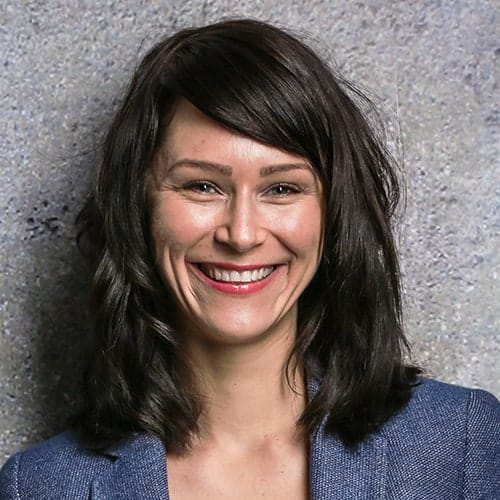
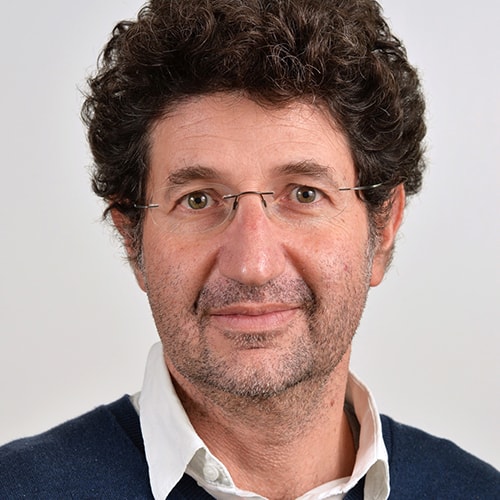
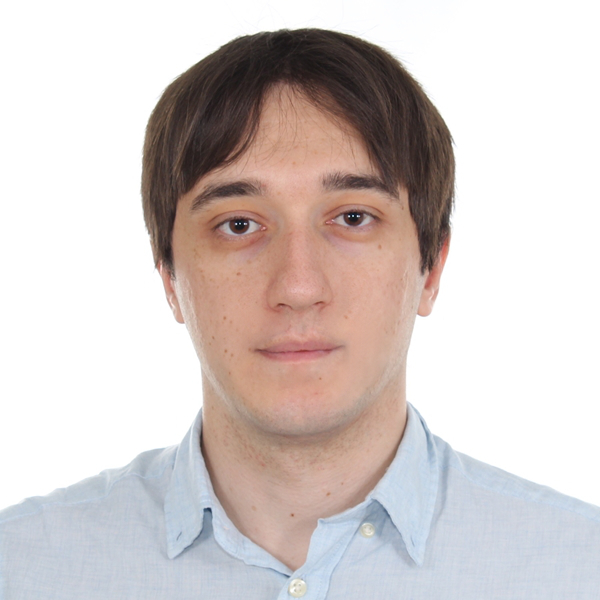
Jan Madsen is a Professor at DTU Compute, Technical University of Denmark, and Head of the Embedded Systems Engineering section. His research focuses on system-level modeling and design of embedded computing systems, particularly cyber-physical systems, microfluidic biochips, and synthetic biology applications. Develops design automation tools and methodologies for embedded systems Supervises numerous PhD students and leads major research projects Research Interests Key areas include: Embedded systems-on-a-chip Cyber-Physical Systems (Internet-of-Things) Microfluidic Lab-on-Chip devices Synthetic biology with molecular computing Design, modeling, and optimization of complex systems Scientific Awards DATE Fellow (2019) IEEE CEDA Outstanding Recognition (2019) DTU Scientific Advise Award (2013) Best Paper Awards at MECO (2013) and CASES (2009) Jorck’s Foundation Research Award (1995) Publications His 14+ journal papers and 115+ conference papers demonstrate expertise in: SystemC-based modeling frameworks Energy-aware sensor networks Self-healing eDNA architectures Microfluidic biochip synthesis RTOS modeling and MPSoC exploration
Alessandra Meddis serves as an Assistant Professor in the Section of Biostatistics within the Department of Public Health at the University of Copenhagen's Faculty of Health and Medical Sciences. Her academic work centers on developing and applying advanced statistical methodologies for longitudinal and time-to-event data analysis, with significant contributions to public health research in Denmark and internationally. Her institutional affiliation is clearly established through university contact details and departmental listings. Her primary research interests include correlated survival data analysis, competing risk modeling, informative cluster size methodology, causal inference techniques for observational studies, and environmental epidemiology applications. Dr. Meddis has developed specialized expertise in handling complex survival data structures while maintaining focus on real-world public health problems, particularly in HIV comorbidity patterns, environmental exposure effects, and pandemic-related mortality analyses. Her methodological innovations directly address challenges in clustered and censored data common across medical research domains. Analysis of Dr. Meddis's recent publication record reveals a consistent trajectory of high-impact interdisciplinary research spanning clinical medicine, epidemiology, and statistical methodology. Her work appears in leading journals across biostatistics, infectious diseases, and public health, demonstrating strong collaborative networks with clinical researchers and epidemiologists. Key thematic areas include HIV treatment outcomes, environmental health exposures, and critical care applications during the pandemic, with recent methodological papers advancing survival analysis techniques for complex data structures. Scientific Awards: No scientific awards were specified in the available institutional profile. Advising and Grants: The institutional profile does not provide details regarding graduate student supervision or specific research grant funding. Her collaborative publications suggest involvement in multi-investigator projects including the COCOMO HIV cohort study and pandemic-related research initiatives. Labs and Teams: Dr. Meddis is affiliated with the Section of Biostatistics within the Department of Public Health, though specific laboratory facilities or dedicated research teams are not described in the source material. Her extensive co-authorship patterns indicate active participation in multiple research consortia across medical specialties.
Professor John W. Edmunds is a leading academic in Infectious Disease Modelling at the London School of Hygiene and Tropical Medicine (LSHTM). Holding a Professor position since 2013 and serving as Dean of the Faculty of Epidemiology and Population Health (2013-2019), he combines mathematical, statistical, and economic models to inform public health policy. His part-time role at the Health Protection Agency (HPA) since 2008 underscores his policy advisory contributions. PhD in Infectious Disease Modelling (Imperial College, 1994) MSc in Health Economics (University of York, 1995) BSc in Biology (Imperial College, 1989) His research focuses on understanding disease transmission and optimizing control strategies. He has pioneered methods integrating social contact surveys , participatory surveillance (e.g., Influenzanet), and economic analysis to evaluate vaccines and interventions. Recent work includes SARS-CoV-2 dynamics , Ebola spatial forecasting , and typhoid vaccine prioritization . His 15 most recent publications highlight social contact patterns (Reconnect, CoMix studies), vaccine impact (HPV, typhoid), and real-time outbreak analytics (Ebola, cholera). Key trends include digital epidemiology , behavioral surveillance , and cross-country modeling for global health. Knighthood (2024) for services to epidemiology Weldon Memorial Prize (2022) for biostatistics contributions FMedSci (2018) for medical science excellence OBE (2016) for public service As an educator, he teaches "Modelling and the Dynamics of Infectious Diseases" and co-organizes "Pandemics: Emergence, Spread and Response" . Current grants include National Institute for Health and Care Research projects on post-pandemic surveillance and Bill & Melinda Gates Foundation funding for polio eradication. He leads collaborations with the Centre for Mathematical Modelling of Infectious Diseases , Vaccine Centre , and Health in Humanitarian Crises Centre , while advising UK and WHO committees on zoonotic influenza , variants , and testing programs .
Sascha Struwe serves as a Postdoctoral Researcher at Aalborg University Business School within the Faculty of Social Sciences and Humanities, actively contributing to the International Business Research Group. Based at Fibigerstræde 11 in Aalborg Øst, Denmark, Struwe operates at the intersection of service innovation theory and business practice with international focus. Research expertise centers on service innovation , value co-creation , and digital servitization , particularly examining B2B contexts and open banking ecosystems. Work consistently explores institutional influences through German-Chinese case studies, addressing how cultural and regulatory frameworks shape service design. Recent trajectories reveal evolution from foundational service design challenges (2019-2021) toward digital transformation implications (2022-2023), with emphasis on value co-destruction mechanisms in financial ecosystems. Struwe led the PhD project Innovating the Invisible and Intangible: Value Creation in B2B service (2018-2021) investigating co-creation capabilities across industrial sectors. Academic engagement includes conference participation at EIBA and CICALICS events, plus a visiting researcher appointment at Fudan University's Nordic Centre (2019-2020). Current work continues through the International Business Research Group, focusing on digital literacies and service ecosystem resilience.
Remus Teodorescu is a Professor at AAU Energy , Aalborg University , specializing in Power Electronics System Integration and Materials . His work bridges Lithium-Ion Batteries , Modular Multilevel Converters , and Smart Battery Systems . Education : Not explicitly mentioned in the text. Research Interests focus on Battery Management Systems , AI-Driven Energy Optimization , and Power Electronics for renewable energy integration. Key projects include Digital Twin for Lithium-Ion Batteries and BMS-DC for Data Centers . Recent Publications (2025) emphasize Finite Set MPC , Gradient Descent Optimization , and AI in Battery Parameter Estimation . His 2024 work explores Physics-Informed Neural Networks and Fault-Tolerant Converters . Scientific Awards : Villum Foundation Grant (313 million kroner, 2021) Named world's best in electrical engineering (2023) Advising includes supervising PhD projects on AI-Accelerated Battery Twins and Data-Driven SOH Estimation . Collaborations span Energy Cluster Denmark and Villum Fonden .
Claudia Wagner is a full professor for Applied Computational Social Sciences at RWTH Aachen University and the Scientific Director of the Computational Social Science department at GESIS—Leibniz Institute for the Social Sciences. She is also an External Faculty member at the Complexity Science Hub Vienna. Her work bridges computer science and the social sciences to study algorithmic systems and their societal impacts. Her research focuses on socio-technical phenomena such as inequality, sexism, and perception bias in algorithmically infused societies. She investigates methodological challenges in using digital behavioral data to study human behavior, attitudes, and group dynamics. Her interests span computational social science, algorithmic fairness, network science, and AI ethics. The analysis of her recent publications reveals a strong emphasis on bias, fairness, and methodological rigor in digital data analysis. Her work spans AI psychometrics, gender inequality in online platforms, and validation frameworks for digital traces. She frequently publishes in top-tier venues such as Nature , Science , and AAAI conferences. DOC-fFORTE fellowship from the Austrian Academy of Sciences Four best paper awards at international conferences (ICWSM, CSCW, WWW, AAAI) Associate Editor, EPJ Data Science Steering Committee Member, International AAAI Conference on Web and Social Media Board Member, International Society for Computational Social Science Claudia Wagner has led and co-led substantial research projects funded by national and international agencies. She mentors a diverse group of PhD students working on topics like algorithmic bias, data quality, and dehumanization. She has organized training events such as the CSS Methods Summer School and delivered keynotes globally on inequality and computational social science. She leads the Computational Social Science department at GESIS and collaborates with interdisciplinary teams at RWTH Aachen and the Complexity Science Hub. Her group develops tools for measuring algorithmic impacts and visualizing disparities in socio-technical systems, such as the 'Planets of Disparity' dashboard.
Francisco Camara Pereira is a Professor and Head of Section at the Department of Technology, Management and Economics at the Technical University of Denmark (DTU). His research focuses on Intelligent Transportation Systems, Machine Learning, and Data-Driven Decision-Making in transportation contexts. He actively contributes to advancing transportation science through interdisciplinary approaches combining simulation, optimization, and AI techniques. His work addresses challenges in public transport analysis, charging infrastructure planning, and multimodal demand prediction. Recent projects include developing graph-based optimization methods for electric vehicle networks and causal discovery frameworks for transportation systems. He supervises multiple PhD students in areas like federated learning for cyclist safety, causal graph neural networks, and socially aware AI models. Key contributions include publications on smart card data analysis for travel surveys, stochastic infrastructure expansion models, and transfer learning for bike-share systems. His research aligns with UN Sustainable Development Goals related to sustainable cities and innovation. Dr. Pereira collaborates internationally on transportation policy and infrastructure projects. His lab focuses on translating theoretical advancements into practical solutions for urban mobility challenges.
Tor Hernes is a Professor at the Department of Organization, Copenhagen Business School, and directs the Centre for Organization and Time (COT). His research focuses on organizational continuity, temporal dynamics in organizing processes, and narrative theory. He holds adjunct professorships at the University of South-Eastern Norway and has been a visiting professor at Université Paris-Dauphine. His research explores how organizations navigate time through event-based perspectives, distant future goal setting, and temporal trajectories in resilience. Key themes include the interplay between organizational processes and natural environments, particularly in sustainability contexts. Hernes has authored influential works such as Organization and Time (2022) and A Process Theory of Organization (2014). His recent articles analyze temporary organizing structures, environmental framing, and resilience frameworks. He actively supervises master’s theses and PhD students in organizational studies. Hernes also contributes through academic leadership roles, including editing research agendas on organizational continuity. His work bridges theoretical insights with practical challenges like climate change adaptation and strategic innovation.
Søren Lundbye-Christensen is an Associate Professor and Biostatistician affiliated with the Clinical Institute at the Faculty of Health Sciences, Aalborg University, and Aalborg University Hospital in Denmark. He specializes in biostatistical support for medical research, with a strong emphasis on cardiovascular and epidemiological studies. His research interests include biostatistics, survival analysis, cohort studies, clinical epidemiology, and statistical modeling in public health. He has contributed to a wide array of healthcare research, particularly in cardiovascular diseases, cancer, maternal health, and infectious diseases. His methodological expertise spans time-to-event analysis, registry-based research, and interval-censored data modeling. The recent publications highlight a strong trend in applying advanced statistical methods to large-scale clinical and population-based datasets. His work often involves collaboration with medical researchers to derive prognostic models, validate clinical databases, and assess public health outcomes. Key themes include cardiovascular risk, fertility, cancer biomarkers, and implementation of medical training programs. Scientific Contributions and Recognition: Published over 320 research articles and datasets. Active contributor to methodological advancements in biostatistics. Regular peer reviewer, including for journals like the R Journal. Public engagement through media appearances on statistics and health. Academic Advising and Grants: Søren has supervised 31 student theses, formally serving as PhD supervisor for 14 theses and as a biostatistical advisor for 19 others, primarily in mathematics and statistics. He has participated in numerous research projects funded through institutional and national grants, including studies on seasonal disease trends, postoperative complications, and metabolic disease prediction. His work often involves interdisciplinary collaboration across medicine, public health, and data science. Labs and Research Teams: He is embedded in collaborative research networks at Aalborg University Hospital and Aalborg University, contributing statistical expertise to clinical research groups. He is involved in projects utilizing Danish national health registries and has contributed to the development and validation of clinical databases. His work supports both hypothesis-driven medical research and methodological innovation in biostatistics.
Abayomi Baiyere serves as an Associate Professor in the Department of Digitalization at Copenhagen Business School (CBS), where he conducts cutting-edge research at the intersection of digital technologies and organizational transformation. His work significantly contributes to UN Sustainable Development Goals through digitally-enabled societal impact initiatives and has yielded 69 research outputs including high-impact publications in premier journals like Information Systems Journal and Information Systems Research . His research program focuses on: Digital transformation frameworks (notably the MIND framework for capability assessment) Platform design and governance mechanisms Smart service systems development Workplace transformation through digital subtraction logic Digital strategy implementation challenges Analysis of his 15 most recent publications (2024-2025) reveals a strong theoretical grounding in institutional and practice-based perspectives, with increasing emphasis on ethical dimensions of digital transformation, AI implementation constraints, and methodological innovations in computational research. His work consistently bridges conceptual rigor with practical applicability for organizational leaders. Dr. Baiyere actively shapes academic discourse through editorial roles including co-editing The Routledge Companion to Management Information Systems (2025) and organizing key events like the African IS Paper Development Workshop (2020). His public engagement includes 6 media contributions discussing digital workplace transformation and strategic implementation challenges, demonstrating commitment to translating research into practical insights for broader audiences. Within CBS, he has supervised 8 academic works while contributing to the department's international recognition in digitalization research. His activities reflect deep engagement with both theoretical advancement in information systems and practical solutions for organizational digital maturity.
Vito Latora is a Professor of Applied Mathematics and Chair of Complex Systems at the School of Mathematical Sciences, Queen Mary University of London, and also holds the position of Professor of Theoretical Physics at the University of Catania. He leads the Complex Systems and Networks Group, driving cutting-edge research at the intersection of physics, mathematics, and interdisciplinary sciences. His research focuses on complex systems, particularly the structure and dynamics of networks, including multiplex, temporal, and higher-order networks such as simplicial complexes and hypergraphs. He explores applications in social, biological, financial, and cognitive systems, with recent work on creativity, innovation, and success through network analysis. The 15 most recent publications reveal a strong trend in advancing network theory beyond pairwise interactions, with a focus on higher-order structures, memory effects, synchronization, and epidemic spreading. His work combines rigorous mathematical modeling with real-world applications, often published in high-impact journals like Nature Communications , Physical Review Letters , and Science Advances . Dual communities in spatial and biological networks Modeling epidemics with limited detection resources Synchronization via higher-order and directed interactions AI-driven financial risk management Evolutionary games on hypergraphs Interdisciplinary success and funding dynamics Vito Latora has mentored several researchers who appear as co-authors, including Iacopini, Williams, Di Bona, and Lacasa. While specific grants are not listed, his collaborative projects with neuroscientists and anthropologists, along with frequent publications, suggest active funding. He is involved in major scientific events such as NetSci 2023, indicating leadership in the network science community. He leads the Complex Systems and Networks Group at Queen Mary, fostering a collaborative environment for studying complex systems through theoretical, computational, and data-driven approaches.
Wiebke Meesenburg is an Assistant Professor in the Department of Civil and Mechanical Engineering at the Technical University of Denmark (DTU), specializing in Thermal Energy. She is actively involved in research on large-scale heat pump systems, district heating integration, and digital twin applications for energy optimization. Her research focuses on sustainable thermal energy systems, particularly the design, monitoring, and optimization of heat pumps in district heating networks. Key areas include dynamic modeling, real-time adaptation, fouling mitigation, and the integration of renewable energy sources. She contributes to advancing energy efficiency and sustainability in urban infrastructure. The recent publications highlight a strong trend toward digitalization and optimization of thermal systems, with an emphasis on model-based monitoring, digital twins, and operation scheduling using advanced algorithms. Her work bridges mechanical engineering, energy systems, and computational modeling to improve system performance and reliability. She has supervised PhD research and contributed to major projects such as the implementation of digital twins for heat pump systems and EnergyLab Nordhavn. Collaborations involve key figures in energy research at DTU, including Professor Brian Elmegaard. While no formal awards are listed, her active participation in conferences and project leadership demonstrates recognition in her field. Wiebke Meesenburg has been involved in organizing and presenting at international events, including the 35th International Conference on Efficiency, Cost, Optimization, Simulation and Environmental Impact of Energy Systems and workshops on Modelica and flexible heat supply. Her work is embedded in interdisciplinary teams focused on future energy infrastructures and smart urban energy systems.
Márton Karsai is an Associate Professor and Head of the Department of Network and Data Science at the Central European University in Vienna, and a Research Professor at the HUN-REN Alfréd Rényi Institute of Mathematics in Budapest. He leads the Computational Human Dynamics Lab, focusing on data-driven modeling of social and biological systems. He is also the Editor-in-Chief of the journal Advances in Complex Systems . His research interests lie at the intersection of network science, human dynamics, and socioeconomic systems. He specializes in temporal and spatial networks, modeling contagion processes (both social and biological), and analyzing large-scale human behavioral datasets. His work integrates computational methods with real-world data to understand complex social phenomena such as mobility patterns, migration, segregation, and epidemic spread. He is particularly known for using remote sensing and digital trace data to infer poverty and socioeconomic conditions in urban areas. The recent publications highlight a strong trend in applying network science and machine learning to societal challenges. His work spans high-impact journals in complex systems, data science, and computational social science, with recurring themes in epidemic modeling, urban analytics, socioeconomic inference, and the structure of temporal and spatial networks. The research is highly interdisciplinary, combining physics, computer science, and social science methodologies. He has been invited to speak at major events such as the Conference on Complex Systems, the Lake Como School on Complex Networks, and workshops on data for vulnerability assessment. He served as general co-chair of CCS 2021 in Lyon, demonstrating leadership in the complexity science community. General Co-Chair, Conference on Complex Systems (CCS) 2021, Lyon Invited speaker, 4th Workshop on Data for the Wellbeing of the Most Vulnerable @ ICWSM'23 Invited speaker, Complexity72h Workshop Invited lecturer, Lake Como School on Complex Networks Invited talk, Hungarian Academy of Sciences on COVID-19 modeling While specific grant details are not listed, his coordination of projects on segregation, migration, and poverty inference—often in collaboration with the Complexity Science Hub—suggests active involvement in externally funded interdisciplinary research. He advises students through the Department of Network and Data Science at CEU, though specific advisees are not named. His lab, the Computational Human Dynamics Lab, serves as a hub for data-driven research on social systems.
Abdulkadir Çelikkanat is an Assistant Professor in the Department of Computer Science at Aalborg University, Denmark, where he is part of the DKW (Data Science and Knowledge) research group. His research focuses on genome representation learning, graph representation learning, and machine learning applications in bioinformatics and network science. Research Interests: His work lies at the intersection of artificial intelligence and biological data analysis, with a strong emphasis on scalable methods for genome and metagenome representation using k-mer profiles, as well as modeling dynamic and complex networks. He develops novel machine learning models to capture the structure and evolution of graphs over time. Recent Research Trends: His recent publications, appearing in top-tier venues like NeurIPS, AAAI, and AISTATS, demonstrate a consistent focus on improving scalability and effectiveness in representation learning. Key themes include revisiting traditional k-mer methods for modern deep learning, modeling citation dynamics, and developing continuous-time node embedding techniques. His work bridges theoretical advances with practical applications in genomics and network analysis. Scientific Awards: Best Paper Award, TGL Workshop @ NeurIPS 2023 Top Reviewer, LoG 2024 Conference Advising and Grants: While current advisees are not listed, he is actively leading research projects as evidenced by his recent publications and project organization (e.g., Nordic ProbAI summer school). His work is supported through institutional affiliations and likely competitive research funding, given the high-impact venues of his publications. Labs and Teams: He is affiliated with the DKW group at Aalborg University. Previously, he was part of the Inria OPIS team and the Centre for Visual Computing during his Ph.D., and worked in the Section for Cognitive Systems at DTU Compute as a postdoctoral researcher.
Peter D. Ditlevsen is a Professor at the Niels Bohr Institute , University of Copenhagen, specializing in Physics of Ice, Climate and Earth (PICE) . With a background in theoretical physics, he transitioned to climate dynamics and turbulence. Dr. Scient (2004), University of Copenhagen PhD (1991), Technical University of Denmark Research Interests : Focuses on Tipping Points in the Earth System , especially AMOC collapse , using stochastic dynamical systems , alpha-stable processes , and nonlinear climate modeling . His work bridges climate physics , dynamical meteorology , and time series analysis . Recent Publications : 2025 work on ice-core-based Dansgaard–Oeschger event modeling , 2024 studies on AMOC multistability and complex system predictability , and 2023 Nature Communications paper on AMOC collapse early warning (cited 4000+ times in media). Scientific Leadership : Leads CriticalEarth H2020 (2021-24) and contributed to TiPES (2019-23). Holds Carlsberg Fellowship and Ole Rømer Prize . Outreach : Produces weekly climate science podcast with David Trads, delivers 4-6 public lectures/year, and has appeared in 40+ media outlets. Teaches Electrodynamics , Thermodynamics , and Turbulence courses.