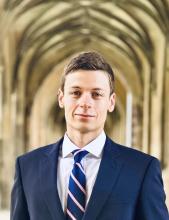
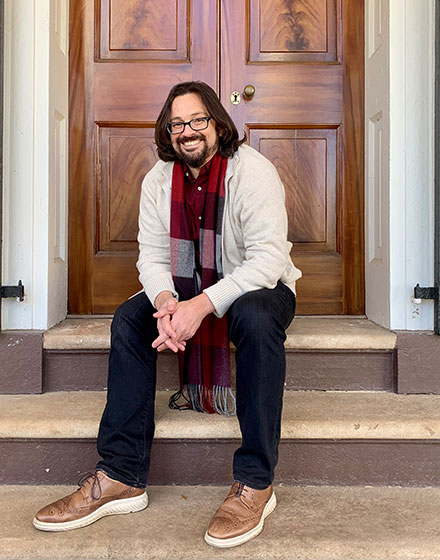
Mathew Thomson is a Professor of History at the University of Warwick, specifically within the Department of History under the Faculty of Arts. He holds a BA in History from University College London (1987) and a D.Phil. from the University of Oxford (1992). His research focuses on the cultural and social history of medicine, eugenics, and psychological practices in 20th-century Britain. He has been a Wellcome University Award Holder at the University of Sheffield (1993-1998) and has held roles such as Lecturer and Reader at Warwick (1998-2015) before his current professorship. Thomson's teaching includes undergraduate modules like 'The Cultural History of the NHS' and 'Eugenics Lecture,' as well as postgraduate courses on medical humanities. His publications, including books like *The Problem of Mental Deficiency* (1998) and *Psychological Subjects* (2006), explore themes of mental health policy, eugenics, and the intersection of psychology with societal structures. His recent work examines the NHS's cultural representation and post-war childhood landscapes. He has contributed to public engagement through BBC documentaries (e.g., *The NHS: A People's History*), museum consultations (V&A Museum of Childhood), and policy initiatives like the British Academy Childhood Policy Programme. His research on mental deficiency policies, wartime mental health, and the history of psychological practices underscores his interdisciplinary approach to societal and medical history.
Engelbert Stockhammer is Professor of Political Economy in the Department of European and International Studies at King's College London, where he joined in 2018 after previously working at Vienna University of Economics and Business (2000-2009) and Kingston University London (2010-2018), where he led the Political Economy Research Group. He holds a PhD in Economics from the University of Massachusetts at Amherst and has held visiting positions at Bilkent University, German Institute for Economic Research (DIW Berlin), Maastricht University, Macroeconomic Policy Institute (IMK), and Sabanci University. His research interests focus on political economy and macroeconomics , with particular emphasis on financialisation, distribution and growth, and economic policy in Europe. His work bridges Post-Keynesian economics with comparative political economy, examining growth models, housing systems, and business cycle dynamics. He has published over 70 peer-reviewed articles and is actively engaged in research projects funded by organizations like the Leverhulme Trust and the Institute for New Economic Thinking. His recent publications reveal a strong focus on housing cycles, heterodox business cycle theory, and the political economy of growth models, with particular attention to European economies and historical perspectives. His work integrates macroeconomic modeling with institutional analysis, examining how financialization affects growth patterns across different economic systems. Stockhammer actively engages with policy through collaborations with international organizations including the International Labour Office (ILO), and think tanks such as the New Economics Foundation, Friedrich Ebert Stiftung, Renner Institute, Rosa Luxemburg Foundation, and Foundations for European Progressive Studies. He has published commentary in media outlets including The Guardian, Al Jazeera, Profil, and ORF. He leads the ongoing research project "The Political Economy of Growth Models in an Age of Stagnation" funded by the Leverhulme Trust (2021-2024), and previously led a project on "Income distribution, asset prices and aggregate demand formation 1850-2010" funded by the Institute for New Economic Thinking. His work contributes to several United Nations Sustainable Development Goals, particularly those related to economic growth and reduced inequalities.
Professor Eugene Shargorodsky is a Professor of Mathematics at King's College London's Department of Mathematics, part of the Faculty of Natural, Mathematical & Engineering Sciences. He holds a PhD from Tbilisi State University (1990) and has held academic positions at King's College and the University of Sussex. His research focuses on Analysis, including Partial Differential Equations, Spectral Theory, Functional Analysis, and applications in Fluid Dynamics and Elasticity Theory. Education: MSc (1988), PhD (1990) from Tbilisi State University. Research Interests: Partial Differential and Integral Equations Spectral Theory & Microlocal Analysis Functional Analysis & Complex Variables Applications in Fluid Dynamics & Elasticity Publications: Recent works focus on Toeplitz operators, Fourier multipliers, and essential norms in functional spaces. Key themes include operator theory, spectral analysis, and harmonic analysis. Awards: Leverhulme Trust Research Fellowship (2003). Advising & Grants: Supervised 4 doctoral projects and led projects funded by EPSRC and Royal Society. Editorial roles include Memoirs on Differential Equations and Mathematical Physics.
Professor Christopher Price serves as Deputy Director of the NIHR Applied Research Collaboration (ARC) North East and North Cumbria (NENC) and holds the position of Professor of Stroke and Applied Health Research at Newcastle University's Faculty of Medical Sciences. He also functions as the NIHR's National Specialty Lead for Stroke and maintains a clinical role as a Stroke Medicine Consultant with the Northumbria Healthcare NHS Foundation Trust. Professor Price completed his medical training with an MB ChB (hons) from Birmingham in 1992, earned his MD from Newcastle University in 2003, and became a Fellow of the Royal College of Physicians (FRCP) in 2006 while simultaneously completing his MClinEd at Newcastle. As a clinical researcher, Professor Price specializes in developing and implementing interventions that improve emergency stroke treatment access. His work focuses on three main pillars: clinical trials of non-pharmaceutical technologies in stroke care, translational studies of diagnostics, and evaluation of service provision models. He has pioneered ambulance-based clinical trials evaluating novel point-of-care diagnostics and enhanced clinical assessment processes for suspected stroke patients. His research extends to stroke recovery, where he investigates innovative approaches like wristband accelerometry to encourage upper limb activity and collect recovery biomarker data. The Stroke Association has recognized his contributions with the HRH Princess Margaret Senior Reader Fellowship. Professor Price's recent publications reveal a strategic shift toward system-level interventions addressing the entire stroke care pathway. His work increasingly examines mobile stroke units, health equity in stroke care, and implementation challenges of new treatment pathways across the NHS. There's a clear progression from individual diagnostic tools toward comprehensive service redesign that considers geographic accessibility, cost-effectiveness, and patient-centered outcomes. The Stroke Association HRH Princess Margaret Senior Reader Fellowship Stroke Association HRH Princess Margaret Research Development Fellow Professor Price has mentored several doctoral researchers including Graham McClelland (focusing on stroke mimic probability scores), Eugene Tsang (researching post-stroke dementia), and Sarah Moore (investigating physical activity interventions after stroke). He has secured substantial research funding totaling millions of pounds from major organizations including the Medical Research Council, Innovate UK, NIHR, and The Stroke Association. His most significant grants include the £3 million RATULS trial on robot-assisted upper limb rehabilitation after stroke and the £1.96 million NIHR Programme Grant for 'Promoting Effective And Rapid Stroke Care,' which evaluated enhanced paramedic assessment processes for stroke patients. Professor Price leads the Stroke Research Group within Newcastle University's Population Health Sciences Institute. His team maintains strong collaborations with national and international academic institutions, industry partners, the North East Ambulance Service, and multiple NHS Trusts. The group has gained particular recognition for its innovative ambulance-based clinical trials, including the landmark PASTA trial published in JAMA Neurology, which demonstrated how enhanced paramedic assessment improves thrombolysis delivery during emergency stroke care.
Professor Andy Byford is a Professor and Director of Research at Durham University’s School of Modern Languages and Cultures. His work focuses on the history of science, education, and human-animal relations in Russia and the USSR. He leads research projects on Soviet primate studies, child science, and the intelligentsia’s role in academic institutions. His research spans interdisciplinary topics such as the historical construction of animal mentality, the rise of child studies in Russia, and the intersection of science with socio-political changes. He has authored books like *Science of the Child in Late Imperial and Early Soviet Russia* and edited volumes on transnational Russian studies. Publications highlight his expertise in Soviet-era pedagogy, child welfare policies, and the legacy of repressed sciences like pedology. Recent work addresses the implications of Russia-Ukraine tensions on academic fields. He supervises PhD students in Russian history and culture, emphasizing topics like human-animal relations and Soviet-era education systems. His contributions include over 30 journal articles and book chapters, exploring themes such as eugenics, Cold War science, and migrant communities. While no formal awards are listed, his extensive scholarly output underscores his influence in Russian studies.
Henrice Altink is a Professor of Modern History and Co-Director of the Interdisciplinary Global Development Centre (IGDC) at the University of York. She holds a BA from Zwolle, MA from Nijmegen/Lancaster, and a PhD from Hull. Her research focuses on social inequalities in the Caribbean, particularly race, gender, and environmental vulnerability. Key works include Public Secrets: Race and Colour in Colonial and Independent Jamaica (2019) and studies on health policies in the British Caribbean. She has secured grants from the British Academy, GCRF, and Rockefeller Foundation. Education: BA (Zwolle) MA (Nijmegen/Lancaster) PhD (Hull) Affiliations: Co-Director, IGDC (2017–present) Former roles: Head of Department, Lecturer, Senior Lecturer Her research explores race/color discrimination in post-emancipation Jamaica, gender roles in Caribbean societies, and the intersection of social inequality with environmental risks. Recent projects include studies on artisanal gold mining in Ghana and disaster resilience in the Caribbean. She teaches modules on Caribbean history, decolonization, and Black radicalism. Altink advises on postgraduate research in Caribbean history, particularly decolonization and migration. She collaborates internationally, leveraging archives in Jamaica, Barbados, Trinidad, and London. Her work emphasizes interdisciplinary approaches to global development challenges, including health equity and urbanization.
Richard Cleminson is a Professor of Hispanic Studies at the University of Leeds, affiliated with the School of Languages, Cultures and Societies within the Faculty of Arts, Humanities and Cultures. His academic career includes roles as External Examiner for Catalan studies at Queen Mary University of London (2010–2014) and Visiting Research Fellow at the University of Granada (2003–2004). He holds a BA (Hons) and PhD. His research focuses on intersections between Gender and Sexuality Studies and History, particularly in Iberia. Key areas include the cultural and scientific construction of male homosexuality, hermaphroditism, eugenics, anarchism, and anticolonialism. He has led AHRC-funded projects on anarchism-eugenics dialogues and colonial eugenics in Portugal. Current collaborations include the Spanish Ministry-funded 'Ciudadanía social, estado del bienestar y género en España' and the Portuguese FCT-funded 'Photo Impulse' project. Research outputs include over 150 publications, with recent works analyzing LGBTQ+ movements in 1960s Spain, anarchist anticolonial thought, and eugenic theories in Portugal. His book Anarchism and Eugenics: An Unlikely Convergence, 1890–1940 (2019) explores transnational anarchist engagement with eugenics. Current supervision topics span LGBTQ+ histories in Iberia, cultural studies, and anarchist theory. He serves as Associate Editor of Anarchist Studies and on editorial boards of journals like Dynamis and International Journal of Iberian Studies . Awards include AHRC and Wellcome Trust fellowships. His work bridges historical analysis with contemporary debates on race, gender, and colonialism.
Dr. Eugene Miakinkov is a Senior Lecturer in History at Swansea University's School of Culture and Communication. Specializing in Russian history within a broader European context, his research examines war as a cultural practice, militarization of society, and the evolution of information states. He has published extensively on topics ranging from Catherine II's military culture to modern Russian militarism under Putin. Research Focus: Russian history, war and society, Enlightenment studies, information history, and 18th-century European history. Current Projects: Investigating Russia's 'information state' development and the militarization of Russian culture under Vladimir Putin. Scientific Recognition: Awarded by the Canadian Federation for Humanities and Social Sciences, received honourable mention from the Canadian Association of Slavists, and recognized as a Fellow of the Higher Education Academy. Teaching: HIH121 (Europe of Extremes), HIH122 (Making History), WS-M94 (From Swords to AI), and convenor of War and Society MA program. Leadership: Admissions Officer for War and Society program, Academic Integrity Officer for Political and Cultural Studies.
Eugene Shevchuk serves as a Research Fellow at the University of Cambridge's Faculty of Law, concurrently holding teaching appointments as Supervisor in Contract Law for Law Tripos Part IB and Tutor in Business Analytics at Cambridge Judge Business School. He maintains active affiliations with the Cambridge Private Law Centre (CPLC), Centre for Business Research (CBR), and Centre for Corporate and Commercial Law (3CL). PhD in Law, University of Cambridge LLM Air and Space Law, McGill University MPhil, Judge Business School, University of Cambridge BCL/MJur, University of Oxford His research program integrates aviation law with commercial legal frameworks, specializing in aircraft finance mechanisms, contractual remedies in cross-border disputes, and conflict-of-laws applications within international litigation. This work demonstrates particular expertise in EU regulatory environments and passenger rights jurisprudence, bridging theoretical legal analysis with industry-specific commercial practices in air transport. His recent scholarly output centers on aviation regulation, exemplified by the 2021 Annals of Air & Space Law publication analyzing EU passenger rights legislation, which establishes connections between extraordinary circumstances defenses and consumer protection standards in air travel. No scientific awards are documented in the available materials. Information regarding student supervision or research funding allocations is not provided in the source documentation. He contributes to collaborative research initiatives through the Cambridge Private Law Centre, Centre for Business Research, and Centre for Corporate and Commercial Law, focusing on corporate governance structures and commercial law applications within these interdisciplinary hubs.
Dr. Eugene C Lim is a Lecturer at Queen's University Belfast's School of Law, specializing in international and comparative intellectual property law. His research focuses on the intersection of law, technology, and emerging issues like non-traditional trademarks (e.g., 3D shapes, scents, virtual brands) and the societal impacts of digital innovation. He holds a PhD and has published extensively in peer-reviewed journals such as the European Intellectual Property Review and Canadian Journal of Law and Technology . Research interests include biotechnology law, trademark dilution, copyright fixation, and cross-disciplinary legal methodologies. He teaches courses on copyright, tort law, and intellectual property in immersive technologies. His work contributes to UN Sustainable Development Goals related to innovation and sustainable development through intellectual property frameworks. Research Highlights: Examines how consumer perceptions evolve with multisensory branding and explores ethical implications of synthetic biology patents. Recent Awards: 2016 Outstanding Presentation Award in Intellectual Property. Dr. Lim actively participates in academic conferences and serves on editorial boards, reflecting his commitment to advancing IP discourse globally.
Dr. Lisa Tilley is a Senior Lecturer in Development Studies at SOAS University of London, where she serves as Convenor for the MSc Environment, Politics & Development program. She joined SOAS in 2021 after previous roles at the University of Warwick, Queen Mary University of London, and Birkbeck. Senior Lecturer in Development Studies Convenor: MSc Environment, Politics & Development Coordinator: London Political Ecology Collective Lisa Tilley’s research bridges critical political ecology, political economy, and decolonial theory, with a focus on socioecological harm, extractivism, and the intersections of race, gender, and class in Indonesia and Southeast Asia. Her work interrogates colonial and capitalist structures in resource frontiers like plantations, mines, and cities. Her recent publications explore themes such as: Neoliberal racial capitalism and its ecological consequences Anti-racist climate justice frameworks Colonial legacies in resource extraction Indigenous protective ontologies Gendered dimensions of urban evictions Planetary political economy of the Global Majority Lisa supervises PhD students researching topics including labor regimes, water politics, racial capitalism, and settler colonial territoriality.
Vivienne Orchard is a Lecturer in French at the University of Southampton's Department of Modern Languages and Linguistics. Her work bridges Francophone film, literature, and cultural theory with critical disability studies, migration narratives, and disciplinary epistemology. B.A. in French and Spanish, University of Oxford M.A. & Ph.D. in French, University of London (British Academy funded) Former lectrice at University of Paris XIII and Research Fellow at University of Birmingham Research interests focus on knowledge institutionalization, disability representation, and cross-border narratives. Her current project with Dr Eleanor Jones examines UK universities' role in historical disability marginalization, including eugenics genealogies. Recent publications analyze neurodiversity discourse , institutional well-being frameworks , and autism representation in French contexts. She has presented at international conferences across six countries, supported by British Academy and University of Southampton grants. PhD Supervision: Charlotte Grace Fodor As part of the Southampton Centre for Medical and Health Humanities, her interdisciplinary work challenges disciplinary boundaries while maintaining strong foundations in French literary and philosophical traditions.
Gregory D. Smithers is a Professor of American History in the Department of History at Virginia Commonwealth University (VCU), recently holding a British Academy Global Professorship hosted at the University of Birmingham. With teaching experience across California, Hawaii, Scotland, and Ohio, his scholarship bridges Indigenous and African American histories from the eighteenth century to contemporary climate justice movements. His educational foundation includes a Ph.D. in History from the University of California, Davis. Smithers' research centers on Cherokee history, Two-Spirit identities, and the environmental consequences of settler colonialism, examining how Indigenous and African American communities have navigated ecological disruption and cultural survival. His work consistently connects historical analysis to present-day struggles for racial equity, gender justice, and environmental sustainability, emphasizing Indigenous knowledge systems in climate adaptation. His publications reveal a profound engagement with marginalized histories, particularly through award-winning works like 'Reclaiming Two-Spirits' (2022) and 'Native Southerners' (2019), which document Indigenous resilience against colonial erasure. Recurring themes include the weaponization of scientific racism, the gendered violence of slavery, and the reclamation of sovereign narratives through cultural renewal. Major recognitions include: 2023 PROSE Award in Cultural Anthropology and Sociology for 'Reclaiming Two-Spirits' British Academy Global Professorship supporting 'Native Ecologies' research At VCU, Smithers mentors graduate students in historical methodology while securing competitive fellowships for projects like 'The Water Carriers,' examining Cherokee relationships with river systems. His public scholarship extends through media collaborations with The Washington Post and Bloomberg News, translating academic research into accessible commentary on racism and environmental policy. Current initiatives include the 'Treatied Spaces' research cluster at Birmingham focusing on Indigenous climate solutions, alongside completion of 'The Water Carriers: A Journey Through Cherokee History and the Secret Life of Rivers' (Pegasus Books).
Dr. Anna-Viktoria Vittinghoff is a Lecturer in East Asian Studies at the University of Sheffield, School of Languages, Arts and Societies, a position she has held since August 2022. Her academic work focuses on the social history of modern Japan, with particular emphasis on the intersections of feminism, disability, and reproductive justice. Dr. Vittinghoff's educational background includes: B.A. in Japanese Studies and History of Art from Ludwig Maximilian University Munich M.Sc. in East Asian Relations from the University of Edinburgh Ph.D. in Japanese Studies from the University of Edinburgh Dr. Vittinghoff's research spans several interconnected fields within modern Japanese history. She specializes in the Disability movement in post-war Japan , the Ūman ribu (women's liberation) movement of the 1970s , and reproductive justice and politics in modern Japan . Her work critically examines the intersection of disability and gender within social activism , eugenics and anti-eugenics , and transnational networks of reproductive justice in East Asia . Additionally, she explores the Japanese student movement and the New Left , social order and bio-politics in Japan , and the global context of 1968 . Dr. Vittinghoff's recent publications reveal a consistent focus on the interplay between gender, disability, and social movements in modern Japan. Her work, including articles on the feminist student movement, radical feminism from the vantage point of disability, and feminist challenges to eugenics, demonstrates a deep engagement with intersectional analysis. The research spans from the post-war period through the 1970s and beyond, highlighting the emergence of disabled women's voices and anti-eugenics activism. Her forthcoming work on Tokoro Mitsuko further explores the personal dimensions of political activism in the late 1960s and early 1970s. Dr. Vittinghoff has been recognized with several prestigious awards and grants, including: Sarah Hyde Memorial Award 2019 for PhD research project Great Britain Sasakawa Foundation Studentship (Sept 2018 – Sept 2020) Japan Foundation Endowment Committee Grant for conducting field work in Japan (March 2020) British Association for Japanese Studies John Crump Studentship 2021 University of Edinburgh College of Arts, Humanities and Social Sciences Centre for Data, Culture and Society Small PhD Fund (May 2020) Dr. Vittinghoff is actively involved in academic mentoring, supervising undergraduate and postgraduate taught dissertations. Her research has been supported by competitive grants, including the Sasakawa Foundation Studentship and the Japan Foundation Endowment Committee Grant, which facilitated fieldwork in Japan. These grants underscore the significance of her work on grassroots activism and historical analysis in the field of East Asian Studies. As a member of the East Asian Studies staff at the University of Sheffield, Dr. Vittinghoff contributes to the academic community within the School of Languages, Arts and Societies, collaborating with colleagues on research and teaching initiatives in Japanese and East Asian studies.
London School of Economics and Political Science (LSE)United Kingdom
Shikha Dilawri is a Research Fellow in International Relations Theory at the Department of International Relations, London School of Economics and Political Science (LSE). She holds a PhD from SOAS, University of London, and an MSc from LSE, funded by the Social Sciences and Humanities Research Council of Canada (SSHRC). Her work focuses on postcolonial theory, South Asian diasporas, and racial capitalism, examining how migration, race, and capitalism interact across spatial scales. Expertise: Postcolonial theory, global historical sociology, cultural studies, minority rights. Education: PhD (SOAS), MSc (LSE), SSHRC-funded research. Her current research traces migration histories between India, East Africa, and Britain (1900s–present), analyzing how vernacular capitalists and diasporic institutions shape global hierarchies through race, caste, and capital. She also explores 'cultural infrastructure' in advancing global racial capitalism, including transnational temple industries. Teaching & Advocacy: Taught International Relations and Political Theory at SOAS. Conducted human rights research and advocacy for minority communities in South Asia with international organizations. Delivered talks at institutions like the School of Advanced Study and Goldsmiths. Availability: Not currently supervising MPhil/PhD students.