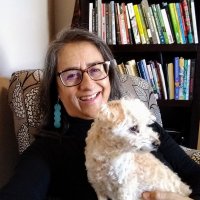
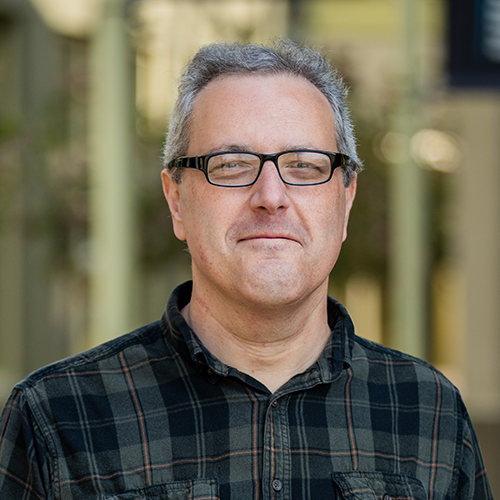
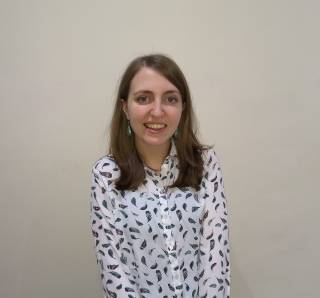
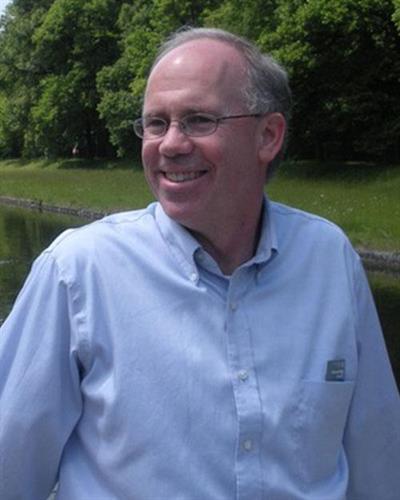
Dr. Jamie Folsom is an Assistant Professor in the Department of American Indian and Indigenous Studies at South Dakota State University (SDSU), affiliated with the School of American and Global Studies. Their office is located in Lincoln Hall, Room 227. Dr. Folsom’s work focuses on interdisciplinary research within Indigenous Studies, emphasizing topics such as tribal sovereignty, cultural preservation, and ethnohistory. While no specific publications or awards are listed in the provided text, their role suggests engagement with academic and community initiatives related to Indigenous communities. Advising and grants are not detailed here, but their department aligns with broader institutional priorities in American and Global Studies.
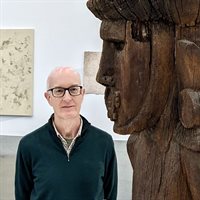
Prof. Dr. Ahmet Taşağıl is a prominent historian specializing in Turkic studies, Eurasian history, and pre-Islamic cultures. He holds the rank of Professor at Yeditepe University's Faculty of Arts and Sciences, History Department, since 2015, and previously served at Mimar Sinan Fine Arts University. His academic journey includes a PhD from Istanbul University (1989-1991) and extensive research on ancient Turkic empires like the Gokturks and Huns. Education: PhD in General Turkish History (Istanbul University), MSc in Medieval History (Istanbul University), BA in History (Istanbul University). Affiliations: Currently at Yeditepe University; previously at Mimar Sinan Fine Arts University and Kirgizistan-Türkiye Manas Üniversitesi. Research Interests : Focuses on early Turkic states (Gokturks, Huns, Uyghurs), cross-cultural relations between Turkic and Chinese empires, shamanism, and pre-Islamic Turkic societies. His work bridges archaeology, ethnohistory, and political analysis, with a particular emphasis on primary sources like Chinese records and Orkhon inscriptions. Publications : Over 50 books and articles, including seminal works like Kök Tengri’nin Çocukları , Avrasya'nın Sekiz Asrı Çengizoğulları , and İslamiyet Öncesi Türkler . His research often examines the socio-political structures of nomadic empires and their legacy in Eurasian history. Awards : Recipient of the Moğalistan Devlet Onur Madalyası, Muğla Sıtkı Koçman Tarih Ödülü, and numerous academic honors. His contributions to Turkic cultural heritage are widely recognized internationally. Grants & Projects : Led projects on Central Asian archaeology, cultural atlas of the Turkic world, and historical studies of Siberian tribes. Collaborated with institutions in Kazakhstan, Russia, and Turkey. Teaching : Offers courses on pre-Islamic Turkic history, Eurasian empires, and historical methodology in Turkish and English.
Timo Kaartinen serves as Professor of Social and Cultural Anthropology and Vice Dean for Research and Doctoral Education at the University of Helsinki 's Faculty of Political Science . Since 1992, he has conducted extensive research in Southeast Asia with a focus on Indonesia, exploring communicative practices, narratives, and cultural responses to uncertainty. His teaching spans social change in bachelor's, master's, and doctoral programs, covering environmental anthropology, political anthropology, cosmologies, religions, and linguistic anthropology. PhD in Anthropology, University of Chicago (2001) Docent (Adjunct Professor), University of Helsinki (2011) Research interests center on ethical discourse in Indonesian Islamic universities, resource politics in oil palm estates, and linguistic anthropology with emphasis on storytelling, folk poetry, and minority language revitalization. His work combines ethnographic focus on Southeast Asia with theoretical contributions to frontier studies and postcolonial anthropology. Recent publications examine frontier temporalities (2020-2025), Islamic transformations (2019), and oral narrative structures (2017-2013). Key projects include ARCTIC Research Centre (2025-2029), Diversity in Society and Life (DIVSOL) (2025-2030), and Religious Movements in Ethical Life (2019-2023). Grants from the Academy of Finland and University Profiling Funding support these initiatives. Academic activities include keynote speeches at international conferences (e.g., Empowering Local Wisdom 2014, Labor Migration in Asia-Pacific 2013) and editorial roles. He has conducted fieldwork in Indonesia since 1992, focusing on Bandanese cultural heritage and Maluku religious dynamics . His methodological approach combines ethnographic fieldwork with historical document analysis .
Joel Palka is an Associate Professor in the School of Human Evolution and Social Change at Arizona State University (ASU). His research focuses on Maya archaeology, ethnohistory, and cultural interaction in Mesoamerica, particularly in Chiapas, Mexico. He leads long-term collaborative projects with Lacandon Maya communities, emphasizing ritual landscapes, pilgrimage routes, and subsistence strategies. His work integrates archaeological, ethnographic, and historical methodologies. Key research areas include Mesoamerican warfare, sacred landscapes, and Lacandon Maya cultural resilience. He investigates how ritual practices, such as pilgrimage and cremation, reflect socio-religious dynamics. His projects at sites like Mensabak explore overland trade networks, fortified sanctuaries, and ecological adaptations like aquaculture. Recent studies highlight Lacandon Maya knowledge systems, including indigenous conservation practices and artifact repatriation. His interdisciplinary approach bridges archaeology with contemporary community engagement, addressing themes of identity, environment, and colonial impact. Publications span 30 years, with a focus on ritual symbolism, ethnohistory, and archaeological site analysis. He has collaborated with international scholars and institutions on projects such as the Paso de la Amada ceremonial center and the repatriation of Maya artifacts.
London School of Economics and Political Science (LSE)United Kingdom
Michael W. Scott is a Professor of Anthropology at the London School of Economics and Political Science (LSE). His primary research focuses on Oceania, particularly Melanesia, with a theoretical emphasis on anthropological ontology, cosmology, and wonder studies. He has conducted extensive fieldwork in the Solomon Islands since 1992, focusing on the Arosi people and their poly-ontological cosmology. His work explores human-nonhuman relations, indigenous Christianities, and the interplay between Euro-American and Melanesian ontological frameworks. Education: PhD from the University of Chicago, influenced by mentors like Marshall Sahlins and Marilyn Strathern. He co-organizes the Melanesia Research Seminar at the British Museum. His major publication, The Severed Snake , examines Arosi matrilineages and place-making. Current projects include a comparative study of wonder as an ontological instrument and analysis of relationalist assumptions in ontology debates. Key interests include poly-ontology, ontological transformation, and the re-enchantment of modernity. His research challenges monolithic views of Melanesian sociality, proposing instead a nuanced engagement with diverse cosmological frameworks. Though no formal grants or labs are explicitly listed, his work intersects with LSE's broader anthropological research initiatives.
Jennifer Nelson is an Associate Professor in Art History at the University of Delaware’s College of Arts & Sciences. Their research focuses on early modern European art and its global intersections, with expertise in Renaissance studies, art-science interactions, and transimperial cultural dynamics. Nelson holds a PhD from Yale University, an MFA in Poetry from New York University, and advanced degrees from the Courtauld Institute and Harvard College. Education: PhD (Yale), MFA (NYU), MA (Courtauld Institute), AB (Harvard) Current research includes a book project analyzing 16th-century cultural production at border sites across Southeast Asia, New Spain, and Europe. Notable publications include Disharmony of the Spheres (2019), which won the 2021 Historians of British Art Prize, and a forthcoming poetry collection On the Way to the Paintings of Forest Robberies (2024 Ottoline Prize). Grants and fellowships include support from Harvard’s Radcliffe Institute, the National Endowment for the Humanities, and the Clark Art Institute. Their work bridges art history with literary and cultural studies, emphasizing global perspectives.
Micah Pawling is an Associate Professor of History & Native American Studies at the University of Maine. He specializes in ethnohistory with a focus on the Wabanaki people of the Northeast. His research examines Indigenous sovereignty, environmental history, and colonial interactions, particularly through collaborative projects with the Penobscot and Passamaquoddy Nations. Education: Ph.D., University of Maine, 2010 M.A., University of Maine, 1999 B.A., University of Delaware, 1996 Research Interests: Wabanaki ethnohistory and waterscapes Indigenous legal and land rights Nineteenth-century colonialism in northern New England Indigenous women’s roles in proprietorship Awards: 2018 Canadian Historical Association Prize for Indigenous History (2017 article) Recipient of Whiting Public Engagement Fellowship Teaching: Teaches courses on Native American history, Maine Indian history, and Indigenous legal history. Recent courses include HTY 481: Amerindians of the Northeast and HTY 550: Indigenous Legal History . Collaborations: Works with the Passamaquoddy Tribe of Indian Township and co-edited Wabanaki Homeland and the New State of Maine with the Penobscot Nation.
Mark Harris is a Professor at Monash University's School of Philosophical, Historical and International Studies (SOPHIS). His research focuses on historical anthropology, ethnohistory, and Latin American societies, particularly in the Amazon region. He has held academic positions in the UK, US, Brazil, and Australia, and his work emphasizes interdisciplinary approaches to Indigenous studies, colonialism, and decolonization. Education: PhD in Anthropology (London School of Economics and Political Science, 1998), BSc in Anthropology/Psychology (University of London). Research interests include the intersection of environment and society in Amazonian contexts, Indigenous knowledge systems, and transatlantic histories. Recent projects include studies on Brazilian Amazonian cultures and Jesuit documentary sources. He has contributed to over 30 research outputs since 1998, emphasizing riverine societies, seasonal rhythms, and Indigenous histories. Notable awards include the British Academy Postdoctoral Fellowship (1996), Phillip Leverhulme Prize (2004), and Warren Dean Memorial Prize (2011). His funded projects explore Indigenous experiences in Brazil and Australia, aiming to create socially responsible knowledge communities. Advising and grants focus on fostering global interdisciplinary collaboration. His work aligns with UN SDGs related to education and sustainable development, emphasizing socially responsible research practices.
Richard Ravalli, Ph.D., is an Associate Professor in the School of the Humanities & the Arts at Jessup University, located in Rocklin, CA. He has been teaching History courses since 2011, focusing on Western frontier studies, California history, and American film/television. His research bridges historical analysis with cultural narratives, emphasizing accessibility for diverse student backgrounds. Education : Ph.D. in History, University of California, Merced M.A. in History, California State University, Stanislaus B.A. in History, California State University, Stanislaus Research Interests : Professor Ravalli explores intersections of cultural identity, environmental history, and media representation. His work on California history includes studies of indigenous resource management, colonial legal systems, and the evolution of fitness culture. He also analyzes Hollywood’s historical narratives and their sociocultural impacts. Publications : Ravalli has authored two books and contributed to peer-reviewed journals, including the Journal of the West and Business History . Recent work examines transpacific colonial dynamics and marine conservation histories. Awards/Grants : No specific awards are listed, though his prolific publication record reflects scholarly engagement. Teaching and research activities include mentoring through course instruction.
Martin Nesvig is a Professor at the University of Miami in the Department of History, College of Arts and Sciences. He serves as Director of Undergraduate Studies and Co-Faculty Lead for Mexico and Mesoamerica in the University of Miami’s Interdisciplinary Programs (UMIA). His research focuses on colonial Latin America, particularly religious hybridism, inquisitorial systems, and decentralized power structures in Michoacán. University of Miami, College of Arts and Sciences Department of History Director of Undergraduate Studies Mexico and Mesoamerica Co-Faculty Lead Nesvig's scholarship interrogates the complexities of religious syncretism, bureaucratic conflict, and cultural negotiation in colonial Mexico. His work challenges traditional narratives of 'spiritual conquest' by highlighting the mutual adaptation between Spanish and indigenous communities, emphasizing the role of hallucinogenic rituals, vernacular scripture, and micro-imperial governance in shaping colonial religious practices. His 2010 Charles A. Ryskamp Research Fellowship supported his project on frontier religion in Michoacán, analyzing how Spanish clergy and laity adopted indigenous practices. His publications span topics from peyote use in Catholic rituals to the political implications of prohibited books and the dynamics of postcontact cultural liminality. Notable Works: Promiscuous Power: An Unorthodox History of New Spain , Peyote, Ever Virgin: A Case of Religious Hybridism in Mexico Awards: Charles A. Ryskamp Research Fellowship Nesvig’s research reveals a colonial state perpetuated through bureaucratic litigation rather than violence, with his irreverent historiographical style challenging academic conventions. His students and colleagues engage with his critical perspectives on power, religion, and cultural identity in early modern Latin America.
Dr Jane Ushiyama Dinwoodie is a Lecturer in Nineteenth-Century American History at University College London (UCL). She specializes in Indigenous histories of the American South, particularly focusing on Indian non-removal during the 19th century. Her current book project, We Remain , examines how Indigenous communities resisted forced relocation. Previously, she held fellowships at Jesus College (Cambridge) and the McNeil Center for Early American Studies (University of Pennsylvania). She earned her DPhil in History from Oxford University in 2017, supported by grants from the UK Arts and Humanities Research Council and others. Teaching includes modules on American borderlands, Civil War history, and Indigenous sovereignty. She supervises PhD students in related fields. Her research explores intersections of sovereignty, empire, and state development. Publications include articles in the Journal of American History and edited volumes on North American sovereignty. Awards include fellowships from the American Historical Association and Royal Historical Society. She is on leave from January 2025.
James Rice serves as the Walter S. Dickson Professor of English and American History in the Department of History at Tufts University's School of Arts and Sciences. Appointed in 2016 and serving as Department Chair from 2018-2024, he holds a prominent position in early American historical scholarship. His academic credentials include a BA in History from Colorado College (1985), followed by an MA (1989) and PhD (1994) in History from the University of Maryland, College Park. Prior to Tufts, he taught at SUNY Plattsburgh, Washington College, and Tübingen University. Rice's research dismantles traditional boundaries between American history and Native American history, colonial history and prehistory, and national histories across North America. His work bridges historical scholarship with environmental studies and interdisciplinary approaches, currently focusing on two major book projects: a comprehensive synthesis of Native American environmental history spanning from Oaxaca to the Arctic since first human habitation, and a critical reassessment of England's first permanent American colony titled Founding Massacres: Violence, Ambition, and the Birth of Virginia . His publication record reveals a sustained emphasis on Indigenous perspectives in colonial America, with recurring themes of environmental change, intercultural violence, and political diplomacy. Recent works increasingly integrate environmental history frameworks with ethnohistorical methods, particularly examining Powhatan expansionism, Bacon's Rebellion, and captivity narratives within broader Atlantic World contexts. His scholarly recognition includes: OAH Binkley-Stephenson Award for best article in the Journal of American History (2015) State University of New York Chancellor’s Award for Excellence in Scholarship (2016) Professional service demonstrates significant field leadership through editorial board membership for Environmental History journal (2025-2029), prize committee roles for the American Society for Environmental History and American Society for Ethnohistory, and advisory positions including the Commonwealth of Virginia's 2019 Commemoration Historian Council and Historic Jamestowne project. His teaching portfolio at Tufts spans advanced seminars on North American history, colonial America, and environmental humanities.
Pierre Beaucage is an anthropologist and Professor at the Department of Anthropology, University of Montreal. His work focuses on Indigenous peoples in Mexico, particularly the Nahuas, exploring themes like ethnohistory, cultural preservation, and social movements. He has collaborated extensively with organizations such as the Tosepan Titataniske cooperative and the PRADE A.C. NGO, analyzing issues of land rights, economic development, and cultural autonomy. His research critiques institutional and state interventions in Indigenous communities, emphasizing participatory methodologies and ethical engagement. Beaucage's research interests span economic anthropology, political activism, and the intersection of culture and power. He has authored seminal works on Indigenous oral traditions, cooperative structures, and the impact of global economics on rural communities. Key publications include studies on Nahua ethnohistory, Garifuna-Yanomami cultural exchange, and the ethical dilemmas in applied anthropology. His work highlights the tension between academic research and community-driven initiatives, advocating for Indigenous self-determination. Collaborations with NGOs and grassroots movements have shaped his approach to anthropological practice, emphasizing equitable partnerships and knowledge-sharing.
Daniela Bleichmar serves as Professor of Art History and History at the University of Southern California, where she holds leadership positions as founding director of the Levan Institute for the Humanities and director of the USC Society of Fellows in the Humanities. Previously, she held the role of Associate Provost for Faculty and Student Initiatives in the Arts and Humanities (2015–2020), demonstrating sustained institutional commitment to humanities scholarship. Her academic foundation includes a Ph.D. in History from Princeton University (2005) and an A.B. in History of Science from Harvard University (1996), followed by a Mellon Post-Doctoral Fellowship at the USC-Huntington Early Modern Studies Institute (2004–2006). This interdisciplinary training underpins her distinctive research approach. Professor Bleichmar's scholarship centers on Early Modern Europe and the Spanish Empire , with particular expertise in visual and material culture , colonial science , and global knowledge exchange . Her work examines how images and objects functioned as instruments of imperial power while facilitating cross-cultural encounters. Current research explores the visual dimensions of natural history practices and the epistemological significance of collecting in colonial contexts, revealing how visual representation shaped European understanding of the Americas. Analysis of her recent publications (2015-2021) shows consistent engagement with the visual archive of imperialism, particularly through studies of the Codex Mendoza and early modern collecting practices. These works bridge art history, history of science, and colonial studies, demonstrating methodological innovation in analyzing visual evidence across disciplinary boundaries while maintaining focus on power dynamics in knowledge production. Her distinguished recognition includes: American Council of Learned Societies Fellowship (Frederick Burkhardt Residential Fellowship) Smithsonian America's Young Innovators in the Arts and Sciences (37 under 36) Getty Research Institute Scholar appointment Multiple awards for specific publications including the Jerry Stannard Memorial Award Professor Bleichmar has secured significant research funding including the USC Advancing Scholarship in the Humanities and Social Sciences Grant and Del Amo Research Grant. She actively contributes to scholarly discourse through editorial roles at Journal18 , Isis , and multiple book series, while mentoring emerging scholars through her leadership in the Society of Fellows. She maintains deep institutional connections through the USC-Huntington Early Modern Studies Institute, Visual Studies Research Institute, and USC-Getty Program in the History of Collecting and Display. These affiliations support her interdisciplinary approach while providing platforms for collaborative research on global visual culture and material exchanges in the early modern world.
Prof. Dr. Heike Bungert is a leading scholar in North American History at the Westfälische Wilhelms-Universität Münster , focusing on ethnic migration, cultural history, and civil religion. Habilitation (2004) and Doctorate (1995) from German institutions Extensive teaching career since 2000, including visiting roles at UC Berkeley and Columbia University Her research bridges: German-American identity formation through festivals and cultural practices Transnational university history and academic networks Civil religion in US patriotic holidays Native American representation in film and collective memory Key article trends: 19th-20th century German migration patterns Academic institutions in transnational contexts Civil religion analysis in political rituals Historiography of indigenous peoples Scientific Honors : Heisenberg Fellowship (DFG, 2005) DAAD and DFG research fellowships Stuart L. Bernath Prize (1995) As a supervisor , she has guided doctoral research on topics like: Russian-American periodicals Symbolic communication in colonial legislatures Evangelical responses to immigration