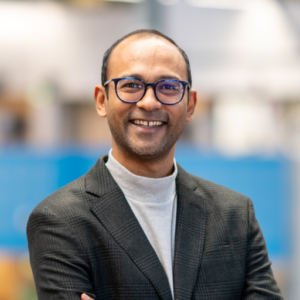
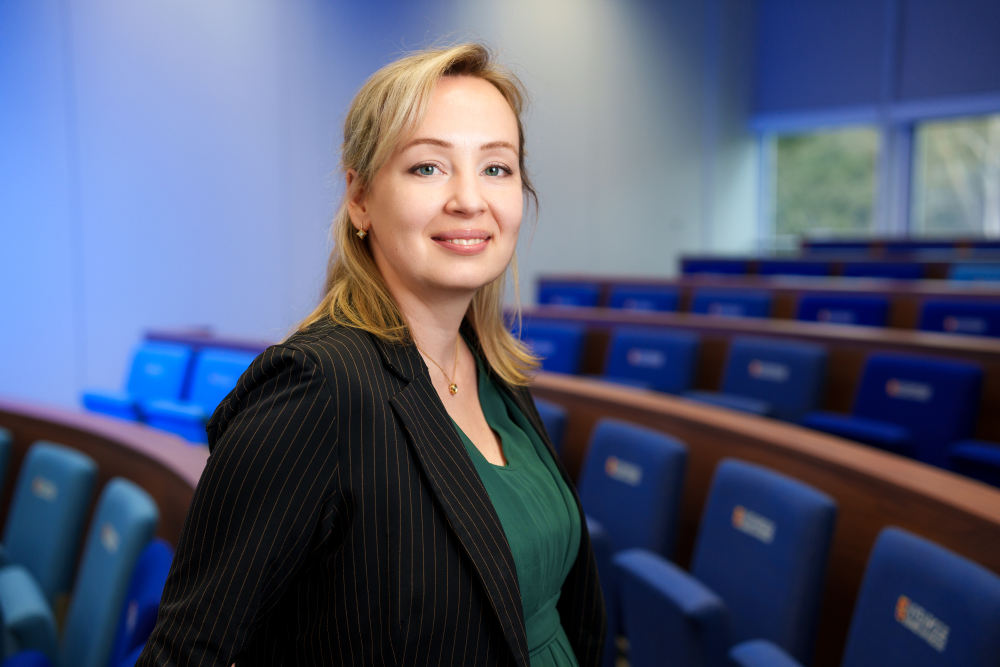
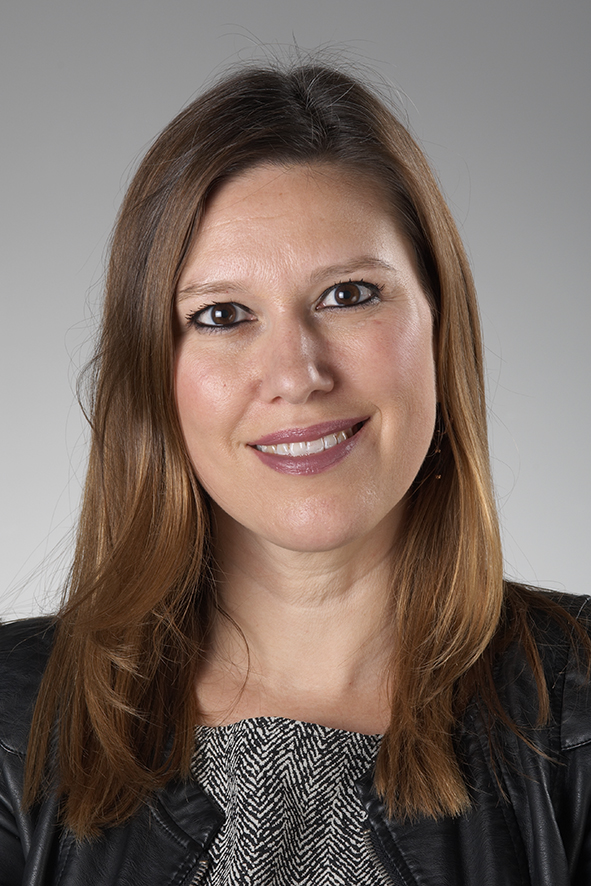
Hauke Smidt is a Personal Professor at Wageningen University & Research, affiliated with the Molecular Ecology group within the Faculty of Veterinary Medicine and Animal Sciences. His research focuses on microbial ecology, particularly gut microbiota dynamics, antibiotic resistance, environmental microbiology, and the One Health framework. Smidt has supervised over 50 PhD students and contributed to 519 publications, including studies on microbiome resilience, fermented food impacts, and bioremediation strategies. Education and affiliations include leadership roles in projects addressing antimicrobial resistance, pig health, and drinking water microbiology. His work spans collaborations across Europe and Asia, with notable contributions to understanding microbial community responses to environmental stressors and dietary interventions. Smidt is actively involved in public outreach, as seen in media contributions discussing microbiome research and health benefits. Key projects include aquifer treatment for drinking water, microbiome simulation models, and combating plant pathogens. His awards and recognition are not explicitly listed, but his extensive publication record and project leadership highlight significant academic impact.
Mr. Dr. Gerdien Oldenhuis is an Assistant Professor at the Faculty of Law of the University of Groningen, specializing in Labor Law and Social Security Law. He holds multiple roles including Coordinator and Head Teacher of the post-academic social security law course (PAO), Member of the Supervisory Board of the Groninger Leergang Arbeidsrecht, and Coach for the National Team of the Hugo Sinzheimer Moot Court Competition. His expertise spans work contract law, social security claims, and legal policy analysis. He contributes to academic publications such as the Tijdschrift voor Ontslagrecht and Tijdschrift Arbeidsrechtpraktijk . Oldenhuis teaches courses on work contracts, social law fundamentals, legal research methodologies, and thesis supervision. His research focuses on labor transitions, dismissal law, and the intersection of employment and social security policies. Ancillary activities include roles at the Bestuursacademie Nederland, Schuldhulpacademie, and editorial work for legal journals. He actively participates in policy discussions and legal education initiatives, emphasizing practical applications of law in real-world scenarios.
Prof. Dr. Madalina Busuioc is a Full Professor of Public Governance at the Department of Political Science and Public Administration, Vrije Universiteit Amsterdam. She serves as Director of the Graduate School of Social Sciences and co-Director of the R&I Lab on Artificial Intelligence and Digital Governance. Her ERC-funded research explores public accountability in the AI era, with a focus on algorithmic governance and cognitive biases in administrative decision-making. She holds a PhD cum laude from Utrecht University (2010). Her research interests center on public power dynamics, algorithmic governance, and institutional accountability. Notable contributions include work on AI's impact on citizen-state interactions, reputational authority in bureaucracy, and regulatory oversight mechanisms. Her book European Agencies: Law and Practices of Accountability (Oxford UP) and peer-reviewed articles in Public Administration Review , Journal of Public Administration Research and Theory , and Governance highlight her scholarly impact. Teaching contributions include designing the MSc Public Administration: Artificial Intelligence and Governance program, which integrates technical and governance perspectives. Awards include the Haldane Prize (2016) and Fernand Braudel Fellowship (2021). She advises on AI policy through ancillary roles like membership in the Meijers Commission on international law. Her research projects address AI ethics, algorithmic accountability, and regulatory innovation. Recent work explores behavioral dimensions of human-AI collaboration in public services and the societal implications of AI adoption in administrative systems.
Elly Konijn is a Full Professor at the Faculty of Social Sciences and Humanities and Network Institute of Vrije Universiteit Amsterdam, holding the Fenna Diemer-Lindeboom Endowed Chair. As chair of the Media Psychology Amsterdam program, her work bridges media psychology, social robots, affective processing, and adolescent media use . Research Pillars : Relating to media figures, virtual humans, and social robots Media-based reality perceptions and moral standards Adolescent media effects (cyberbullying, video games, body image) Recent Publications explore emotional bonding with robots, narrative complexity in film, and media's impact on adolescent cognition. Her 2025 Communication Theory article introduces a framework for human-artificial others relationships. Scientific Recognition : KNAW/NWO Eurekaprijs (2015) Computable Award (2021) Network Institute Competitive Research Funding (2025) She supervises 16 PhD students and leads projects like ROBOT-BOND (ERC Advanced Grant 2025-2029) and Communicating with Social Robots (2020-2025). Her documentaries (e.g., Alice Cares ) translate research into public discourse.
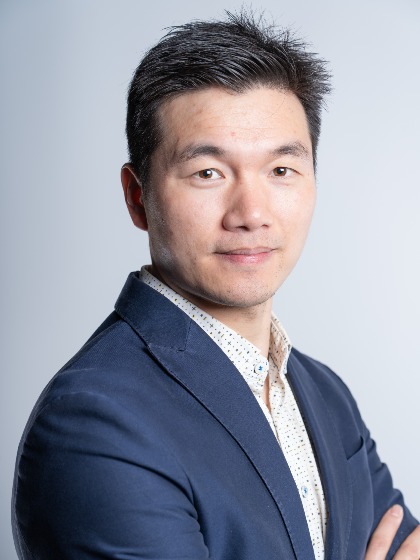
C. (Chengyong) Xiao is an Associate Professor of Sustainable Supply Chain Management at the University of Groningen's Faculty of Economics and Business. He holds a BSc in Management Science from the University of Science and Technology of China (2010) and a PhD in Operations Management from the University of Groningen (2019). His research focuses on sustainable supply chains, particularly the extension of sustainability standards in global supply chains, corporate social responsibility, and social enterprises. Education: Bachelor's Degree: Management Science, University of Science and Technology of China (2010) PhD: Operations Management, University of Groningen (2019) Research Interests: Global supply chain sustainability Supplier sustainability capability development Corporate social responsibility and stakeholder engagement Case study and mixed-method research methodologies Awards: Chan Hahn Best Paper Award (2020 AOM Conference) Teaching and Editorial Roles: Teaches courses including Global Supply Chain Management & Sustainability, Management Science, and Operations & Logistics Management Editorial board member of the Journal of Supply Chain Management and Journal of Operations Management Collaborations: Partnerships with multinational companies like Philips and Signify to study supply chain sustainability practices
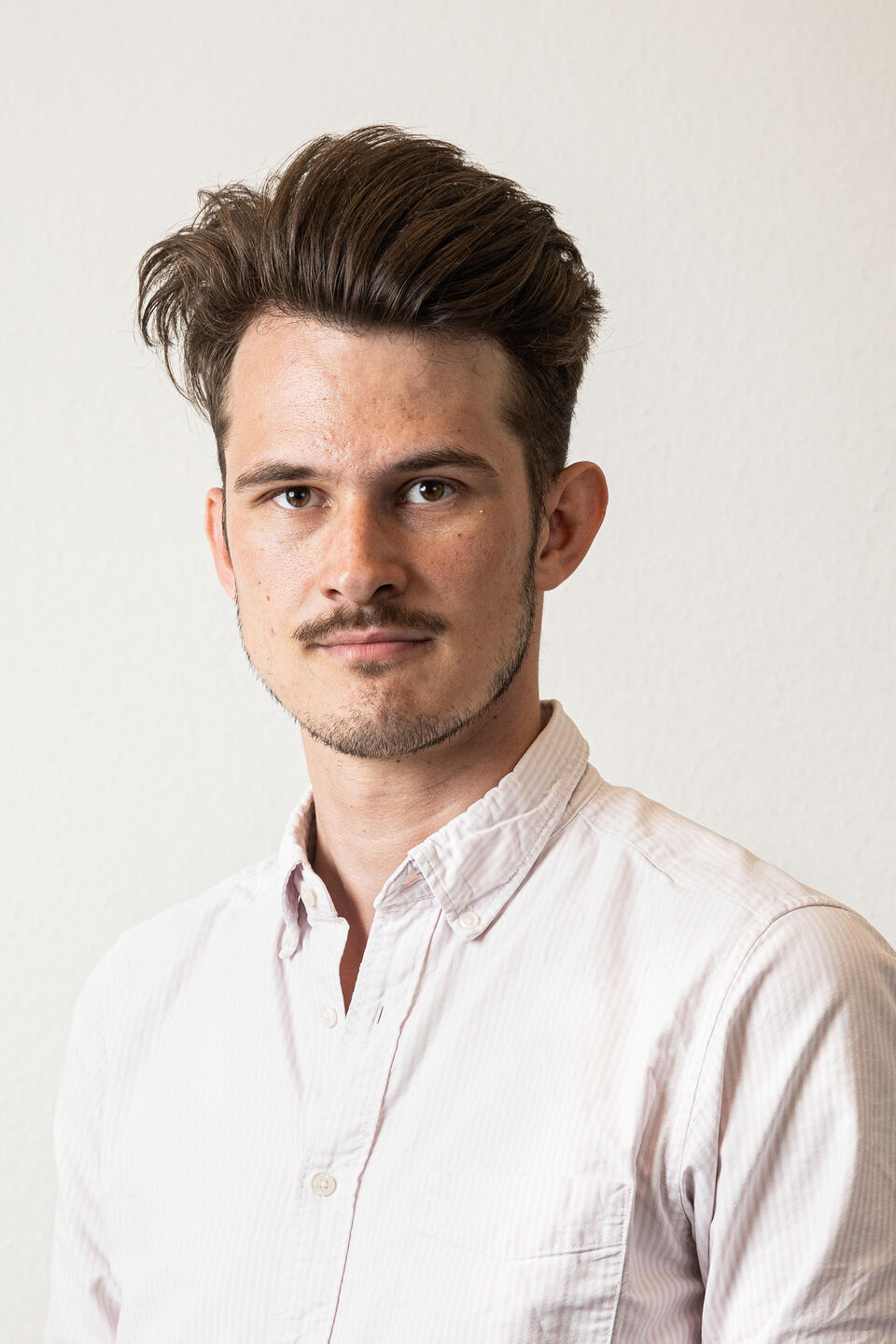
Pascal Mettes is a tenured Assistant Professor at the University of Amsterdam within the Informatics Institute, specializing in Artificial Intelligence. He leads groundbreaking research in hyperbolic deep learning, a field he has significantly advanced through theoretical developments and practical applications in computer vision and multimodal learning. His research focuses on three primary domains: hyperbolic vision-language models that address the hierarchical nature of language-vision relationships; hierarchical deep learning using hyperbolic embeddings that naturally accommodate exponential growth patterns; and robust deep learning in hyperbolic space that improves out-of-distribution detection and network resilience. Mettes has established himself as a leading figure in this emerging field through numerous publications at top-tier conferences including CVPR, ICCV, ICML, NeurIPS, and ICLR. His recent work demonstrates how hyperbolic geometry provides natural solutions to fundamental limitations in modern deep learning, particularly regarding hierarchical data structures that cannot be adequately represented in Euclidean space. The publication trends show increasing impact and recognition in the computer vision and machine learning communities, with multiple papers receiving oral presentations and best paper nominations. Best paper nomination ESWC25 for 'Designing Hierarchies for Optimal Hyperbolic Embedding' Finalist MM 2023 Best Open-Source Software Competition (for HypLL) Multiple reviewer awards across major conferences including CVPR, ICLR, ECCV, ICML, and NeurIPS MM 2016 Best Doctoral Student Award TRECVID 2015 Winner Multimedia Event Detection Benchmark Mettes actively mentors eight PhD students working on hyperbolic learning and related topics, while also securing significant research funding including ELLIs PhD Award, NWO ClickNL, Google Perception Academic Funding, and Data Science Centre PhD Grants. He serves in prominent academic roles as Program Chair for International Conference on Multimedia Retrieval 2026 and has organized multiple workshops on hyperbolic learning at major conferences. His leadership in establishing hyperbolic deep learning as a recognized research direction is evident through his survey paper in IJCV 2024 and the development of the HypLL library for hyperbolic learning.
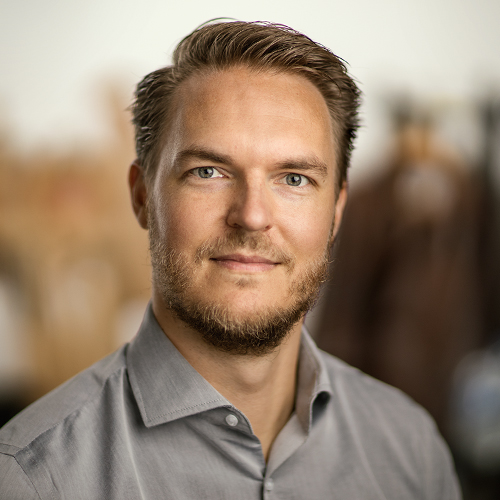
Dr. Arnout Geeraert is Assistant Professor at Utrecht University’s Utrecht School of Governance, specializing in the intersection of Law, Economics, and Governance . His research focuses on public-private interactions in global governance, particularly the European Union’s role as an international actor in sport-related policy domains. Active in Sport and Society research group Developed benchmarking tools: Sports Governance Observer , National Sports Governance Observer , and National Anti-Doping Governance Observer Geeraert’s work has been published in leading journals such as Journal of European Public Policy , Public Administration , and European Sport Management Quarterly . His book The EU in International Sports Governance (Palgrave, 2016) and co-edited Good Governance in Sport (Routledge, 2022) are key contributions to the field. He serves as president of the Integrity Commission of the Belgian Football Association and has held advisory roles for the UNESCO MINEPS VI Working Group , IPACS Task Force , Flemish Government Committee , and EU Expert Group . His expertise centers on enhancing compliance with good governance principles in sport federations, addressing corruption risks, and analyzing EU interventions in FIFA/UEFA. Recent publications explore topics like collaborative governance , Flemish nationalism through sport , and EU sectoral diplomacy , reflecting his multidisciplinary approach to sport policy and institutional analysis.
Konrad Kollnig is an Assistant Professor at Maastricht University’s Faculty of Law, specializing in the intersection of law and technology. He leads the RegTech4AI project, which combines legal and technical methods to address challenges in the AI and digital platforms sector. His academic background includes a PhD and MSc from the University of Oxford and a BSc from RWTH Aachen, with his PhD thesis winning the prestigious Stefano Rodotà Award 2024. Research focuses on market power analysis in digital platforms, ethical AI governance, and privacy-preserving technologies. He developed the TrackerControl app (200,000+ downloads) to expose app tracking practices. His work has influenced EU, OECD, US FTC, and other regulatory bodies, and been featured in Forbes, Wired, and New Scientist. Key achievements include winning the United Nations Privacy Competition 2022 and the Best Student Privacy Paper Award 2022. He holds a five-year RegTech4AI project grant (€2.1M) funding six researchers. Talks and collaborations span institutions like Georgetown University, CNIL, and the Council of Europe. His interdisciplinary approach bridges computer science, law, and policy to address systemic risks in digital ecosystems.
Sible Andringa is Professor of Second Language Pedagogy at the University of Amsterdam's Faculty of Humanities, officially inaugurated on June 16, 2023. Dr. Andringa serves as Academic Director of the Institute for Dutch Language Education (INTT), Coordinator of the Language Learning, Literacy and Multilingualism research group, and Coordinator of the Master's program in Dutch as a Second Language and Multilingualism. Dr. Andringa's research focuses on second language acquisition and bilingualism, specifically investigating the added value of explicit instruction, how input distribution affects language learning outcomes, and the role of awareness in language learning trajectories. Key ongoing projects include the Meta-LLL project examining how literacy shapes language learning, the SLA4All initiative for reproducing SLA research with non-academic samples, and the OASIS project creating accessible research summaries for practitioners. Previously, Dr. Andringa led Project MIND studying bilingual daycare effects and contributed to the Stilis project on listening proficiency. As General Editor of the Dutch Journal of Applied Linguistics (DuJAL), Dr. Andringa promotes open science principles in language research. Recent publications demonstrate a focus on addressing sampling biases in SLA research, open access publishing ethics, and practical applications of language acquisition research for educational settings. Academic Director, Institute for Dutch Language Education (INTT) Coordinator, Language Learning, Literacy and Multilingualism research group Coordinator, Master's program Dutch as a Second Language and Multilingualism General Editor, Dutch Journal of Applied Linguistics (DuJAL) Member, Mastery Team for Modern Foreign Languages Member, OASIS project team Member, IRIS database advisory group Dr. Andringa supervises PhD candidates including Kyra Hanekamp and Darlene Keydeniers, particularly in research related to bilingual daycare environments and language development. The research program has received funding from the Dutch ministry of Social Affairs for Project MIND and continues to secure support for ongoing projects examining language learning mechanisms. Dr. Andringa leads the Language Learning, Literacy, and Multilingualism research group which investigates language and literacy acquisition across the lifespan, with emphasis on how language skills are learned, maintained, and used in educational contexts. The group meets weekly to discuss projects, plans, funding opportunities, and research topics while promoting collaboration, methodological innovation, and open science principles.
Prof. Jacco van Ossenbruggen is a Full Professor in Intelligent Information Systems at Vrije Universiteit Amsterdam (VU), affiliated with the Network Institute. He serves on the Management Board of ODISSEI, a national research infrastructure for social sciences and economics. His academic background includes a PhD in Computer Science (2001) from VU’s Faculty of Science, focusing on hypermedia processing. Research Interests: His work centers on cultural AI, FAIR data principles, ontology engineering, and semantic web technologies. Key areas include inclusive cultural heritage metadata, bias mitigation in AI systems, and knowledge discovery via linked data. Recent projects involve leveraging large language models (LLMs) for metadata enrichment and ontology construction. Key Contributions: He leads initiatives like the Cultural AI Lab, exploring AI applications for cultural heritage. His research bridges technical innovations (e.g., semantic integration of restricted-access data) with societal impacts (e.g., ethical AI frameworks for public-sector applications). Developed frameworks for evaluating entity alignment in knowledge graphs Pioneered FAIR-aligned data management plans for scientific communities Designed tools like Alter Heritage for collaborative metadata curation Grants & Projects: Principal Investigator of the ODISSEI Portal project (2020–2024), advancing open data infrastructures. Active in funding initiatives promoting reproducible research and ethical data practices. Labs/Teams: Cultural AI Lab at VU, focusing on AI-driven solutions for cultural heritage preservation and accessibility.
Syeda Amna Sohail is an Lecturer at the University of Twente , affiliated with the Public Administration school and the Datamanagement & Biometrics department. Her research focuses on process mining, metadata management, and privacy-preserving techniques in healthcare contexts. She actively contributes to interdisciplinary projects addressing ethical challenges in AI and data governance. Key research interests include: Data privacy in healthcare processes Process mining applications for metadata analysis Ontology-based frameworks for FAIR data principles Ethical AI and surveillance technologies Recent work highlights collaborations with institutions like CAiSE and VMBO workshops. She has presented at conferences such as the 33rd International Conference on Advanced Information Systems Engineering and delivered invited talks on privacy value modeling. Her research has been published in peer-reviewed venues including Lecture Notes in Computer Science and MDPI journals. Professional activities include organizing workshops, contributing to conference proceedings, and participating in multidisciplinary initiatives aligning with UN Sustainable Development Goals. Her work emphasizes practical solutions for balancing privacy and utility in healthcare data systems.
Himanshu Verma is an Assistant Professor at the Knowledge and Intelligence Design Group within the Faculty of Industrial Design Engineering at Delft University of Technology. His research focuses on Human-AI Collaboration, Cognitive Empathy, and designing AI systems attuned to human needs. Prior to TU Delft, he held postdoctoral roles at the University of Fribourg, EPFL, and HES-SO Valais-Wallis, Switzerland. Education: PhD in Computer Science (EPFL, Switzerland), focusing on collaborative group interactions and shared environments. Postdoctoral research in Human-Computer Interaction and Ubiquitous Computing. Research Interests: Empathy-Centric Design for inclusive technologies. Social Signal Processing in human-AI interactions. Health, well-being, and accessibility in AI systems. Key Projects: Co-leads the PERISCOPE (H2020) research project. Designs tools like EmpathiCH and COCTEAU for empathy-driven decision-making. Teaching: Design Analytics (2023–2024). Empirical Design Research (2024). Labs & Teams: Active in the Knowledge and Intelligence Design Group, focusing on AI ethics, hybrid workspaces, and empathetic systems.
Dr. Irene Kamara is an Assistant Professor at Tilburg Law School and TILT (Tilburg Institute for Law, Technology, and Society) at Tilburg University. She holds a joint doctorate from Tilburg University and Vrije Universiteit Brussel (VUB), specializing in data protection standardization. Irene is an affiliated researcher at VUB’s Law, Science, Technology, and Society (LSTS) group and serves as Research Coordinator at TILT since August 2022. Education: PhD in Law with a focus on Data Protection Standardization (Tilburg University & VUB, 2021) LL.B. in Law (Democritus University of Thrace) MSc in International and European Studies (University of Piraeus) Research Interests: Irene examines the intersection of technology and human rights, particularly cyberviolence (cyberstalking, image-based abuse), cybersecurity governance, AI ethics, and data protection law. Her work emphasizes EU legal frameworks, technical standards, and soft law instruments. Recent projects include analyzing child cyberbullying legislation across EU states and developing privacy-preserving AI frameworks through the ENCRYPT Horizon Europe project. Teaching: Course coordinator for Cybercrime (LL.M. Law & Technology) and Regulating Cybersecurity (MSc Artificial Intelligence & Cybersecurity). Supervises PhD and master’s theses. Professional Activities: Member of ENISA Experts List, Netherlands Network for Human Rights Research (NNHRR), and European Academy for Standardisation (EURAS) Evaluator for EU-funded proposals on societal security Editorial Board member of the Journal of Standardisation Awards & Grants: 2025 KNAW Early Career Partnership Grant 2021 CEN CENELEC Standards+Innovation Individual Researcher Award 2023 Nominated for Praemium Erasmianum Foundation Prize Current Projects: CArE Project : Combating technology-facilitated cyberviolence (2023–2027) ENCRYPT Project : Privacy-preserving AI frameworks (2022–2025) HE Edu4Standards.eu : Standardization education initiatives (2024–2026)
Dr. Yulia Levashova is an Associate Professor at Nyenrode Business University, affiliated with the Faculty Research Center for Entrepreneurship, Governance & Stewardship . She also holds an Associate Research Fellow position at Utrecht University. Education: BA (Russian law, Saratov State Law Academy), BA (University College Roosevelt), LLM (Utrecht University), PhD (Utrecht University, 2018) Leadership: Director of Dispute Prevention Program, Asia Pacific FDI Network (since 2021) International Engagement: Visiting scholar at European University Institute, Ghent University, and Max Planck Institute (2012-2019) Advisory: Legal consultant to UNCTAD, contributor to World Investment Report 2019 Her research focuses on international investment law , particularly the intersection of foreign direct investment , corporate social responsibility , and legal frameworks for SEZs . She explores the balance between state regulatory authority and investor protections , including fair and equitable treatment during crises like pandemics and climate change. Recent publications (2020-2025) analyze pandemic-related investment disputes , SEZ legal frameworks , and climate change implications for ISDS mechanisms. She co-edits special issues on investment law and environmental topics. Key contributions include: Authoring the book The Right of States to Regulate (2019) Co-editing Balancing the Protection of Foreign Investors and States Responses (2022) Organizing international conferences, including the 2018 World Investment Forum seminar She supervises Master’s theses and integrates leadership , entrepreneurship , and stewardship into Nyenrode’s mission. Her hobbies include impressionist painting and outdoor family activities .
Lotty Hooft is a Full Professor at Utrecht University, affiliated with the University Medical Center Utrecht (UMC Utrecht), where she contributes to strategic research programs in Child Health and Methodology development. She holds key external roles as a member of the independent advisory committee for the Advenzo funding scheme at Zorginstituut and the Cochrane Council and Methods Groups for Prognosis, Screening, and Diagnostic Tests. Her research focuses on Evidence-Based Medicine, specializing in Systematic Reviews and Diagnostic Test Accuracy, with clinical applications in Paediatric and Perinatal Medicine. She investigates methodological challenges such as bias in diagnostic studies using expert panels, stakeholder engagement in paediatric trial reporting, and neonatal outcomes in preterm infants. Her work bridges rigorous methodology with real-world clinical impact across diverse medical domains. Analysis of her 2025 publications reveals a cohesive trajectory in advancing diagnostic methodology—particularly in reference standard development and bias mitigation—while expanding into patient-centered paediatric research and neonatal care. Her contributions to sleep medicine diagnostics and workforce well-being further demonstrate cross-disciplinary relevance in improving healthcare systems and clinical practice. No scientific awards were documented in the provided materials. Professor Hooft actively shapes research funding through her Advenzo committee role, evaluating project proposals and subsidy applications, though specific grant awards or student mentorship details remain unreported. Her Cochrane involvement underscores leadership in global evidence synthesis standards, yet no laboratory or dedicated research team structure is specified in the current data.