Thomas Choi is a Regents Professor and the AT&T Professor at Arizona State University's W. P. Carey School of Business, specializing in supply chain management. He leads the Complex Adaptive Supply Networks Research Accelerator (CASN-RA) and has advised major organizations like LG Electronics, Samsung, and the U.S. Department of Energy. His research focuses on supply chain design, multi-tier dynamics, and complex adaptive systems. He holds a Ph.D. from the University of Michigan (1992) and a B.A. from UC Berkeley (1980). Research Interests: Supply chain design, multi-tier management, supply network complexity, and resilience. Notable contributions include theories on triads in supply networks and supply chain financing. He has co-authored the Oxford Handbook of Supply Chain Management and been recognized as a Clarivate Highly Cited Researcher. Awards: 2018 Highly Cited Researcher, 2017 Emerald Citation of Excellence, 2016 Harold Fearon Best Paper Award. Collaborations span academia and industry, including a $15M USAID project in Ghana. Grants and Labs: Principal researcher in NSF-funded studies on supply network design and environmental performance. Co-directs CASN-RA and CAPS Research. Advised doctoral students now leading academic and industry roles globally. Service: Editorships in top journals, invited talks at institutions worldwide, and leadership in global executive education programs.
Vincenzo Della Mea is an Associate Professor of Information Processing Systems at the University of Udine's Department of Mathematical, Computer and Physical Sciences. His research focuses on medical informatics, digital pathology, biomedical ontologies, and AI applications in healthcare. He holds abilitation to full professorship and is a member of the WHO Italian Collaborating Centre for International Classifications (WHO-FIC), ICHI Task Force, and ESDIP's Executive Board. He leads the EU MSCA Doctoral Network BosomShield (2022-2026) and previously managed the AIDPATH Marie Curie project. As an editor for journals like Digital Health and Journal of Pathology Informatics , he bridges academia and practice. Beyond academia, he is a poet with awards, including the Nelle terre dei Pallavicino Prize for his 2004 collection Algoritmi , and organizes interdisciplinary events merging science and literature. Education & Roles : Holds a professorship in Computer Science and teaches courses on web technologies, medical informatics, and AI across multiple degree programs. Previously served as Vice-President of SIBIM (Italian Biomedical Informatics Society). Research Interests : Specializes in digital pathology, medical AI, telemedicine, and standardization of health classifications like ICD-11 and ICF. His work emphasizes ontology harmonization and machine learning for clinical decision support. Recent Contributions : Published on WHO classification harmonization, AI-driven pathology tools, and energy-sector LLM applications. Active in editorial roles and international collaborations, including the HEROHE Challenge for breast cancer analysis. Awards & Recognition : 2023 – Poetry collection Clone 2.0 (neurally generated) 2005 – Nelle terre dei Pallavicino Award Grants & Projects : Led EU-funded projects (AIDPATH, BosomShield) and contributed to initiatives like the ICD-11 Mortality Coding System. Collaborates with institutions like AcegasApsAmga on AI for utilities. Labs & Initiatives : Involved in digital pathology workflow optimization and educational platforms for medical coding and AI ethics.
Dr. Dennis Desmond is a Lecturer in Cyber Security at the University of the Sunshine Coast's School of Science, Technology and Engineering. He holds a PhD from USC, an MA from Indiana University, and a BA from Ohio State University. Prior to academia, he served in counterintelligence roles with the U.S. Army, FBI, and Defense Intelligence Agency, specializing in cyber threats from Eastern Europe and identity operations. His research focuses on cryptocurrency laundering, darknet marketplace interventions, and cybersecurity systems analysis. Education: PhD, University of the Sunshine Coast MA, Indiana University BA, Ohio State University Research interests include darknet interventions, human factors in cybersecurity, and socio-technical systems underlying financial crime. He leads the ARC Linkage Grant project on darknet market interventions and collaborates with international law enforcement agencies. Recent work explores AI ethics in cybersecurity, facial recognition privacy risks, and cryptocurrency laundering dynamics. Scientific awards include the ARC Linkage Grant (2017), Harvard National Security Fellowship (2013), and a George C. Marshall Fellowship (1994). He advises on national security matters and teaches advanced courses in cyber intelligence, cryptography, and blockchain technologies. Grants: Led the $540,322 ARC Linkage Grant (2017-2021) investigating darknet market interventions. His research addresses global cybersecurity challenges through interdisciplinary systems ergonomics approaches. Labs/Teams: Active researcher in the Centre for Human Factors and Sociotechnical Systems at USC, focusing on darknet intervention strategies and cryptolaundering prevention.
Akila de Silva is an Assistant Professor of Computer Science at San Francisco State University (SFSU). He holds a PhD from UC Santa Cruz (advised by Prof. Alex Pang and James Davis) and an MS from Columbia University. His research focuses on artificial intelligence, machine learning, computer vision, and applied AI for environmental monitoring. Key projects include RipViz/RipScout systems for real-time rip current detection using ML and UAVs, and citizen science platforms like SmartCS for creating no-code mobile apps. Education: PhD in Computer Science & Engineering (UCSC), MS in Computer Science (Columbia). Grants include a NOAA-funded coastal observation system (2025-26) and an ethical generative AI in CS education initiative (2025-26). Notable award: Michael Richman Award (2024-25). Research emphasizes interdisciplinary applications: coastal safety via AI-driven monitoring, STEM education through citizen science tools, and improving data quality in facial recognition systems. Active reviewer for IEEE Visualization, CVPR, and other top conferences. Lab opportunities available for motivated students.
Professor Michelle McManus is a leading academic in Safeguarding and Violence Prevention at Manchester Metropolitan University's School of Nursing and Public Health, within the Faculty of Health and Education. She holds dual roles as a Professor and Co-Director of the Institute for Children’s Futures. Her research focuses on child protection, domestic/sexual abuse, and multi-agency safeguarding strategies, emphasizing cross-sector collaboration to address exploitation (e.g., CSE, CCE, County Lines) and serious youth violence. Education: PhD, MSc, BSc (Hons), AFBPsS (Associate Fellow of the British Psychological Society), CPsychol (Chartered Psychologist). Research Interests : - Development of safeguarding frameworks (e.g., 12Cs Collective Safeguarding Model) - Evaluation of law enforcement tools like the Kent Internet Risk Assessment Tool (KIRAT) - Domestic abuse responses during crises (e.g., pandemic lockdowns) - Policing strategies for vulnerable populations Key Projects : - Led thematic reviews of Child Practice Reviews in Wales - Evaluated Operation Provide (police-health co-responder model for domestic abuse) - Shaped the National Independent Safeguarding Board's Wales strategy Awards : - 2021: LJMU Vice Chancellor Award for Pandemic Research - 2013: Kent Constabulary Merit Award for KIRAT - 2018: Lancashire Constabulary Evidenced-Based Policing Certificate Grants & Grantsmanship : - Secured £338,970 for County Lines Program Evaluation (Home Office) - Led £106,744 Welsh Government project on safeguarding reforms - Co-Investigator on £336,676 UKRI domestic abuse study Labs/Teams : - Institute for Children’s Futures (co-directed) - Collaborations with Public Health Wales, police forces, and NGOs
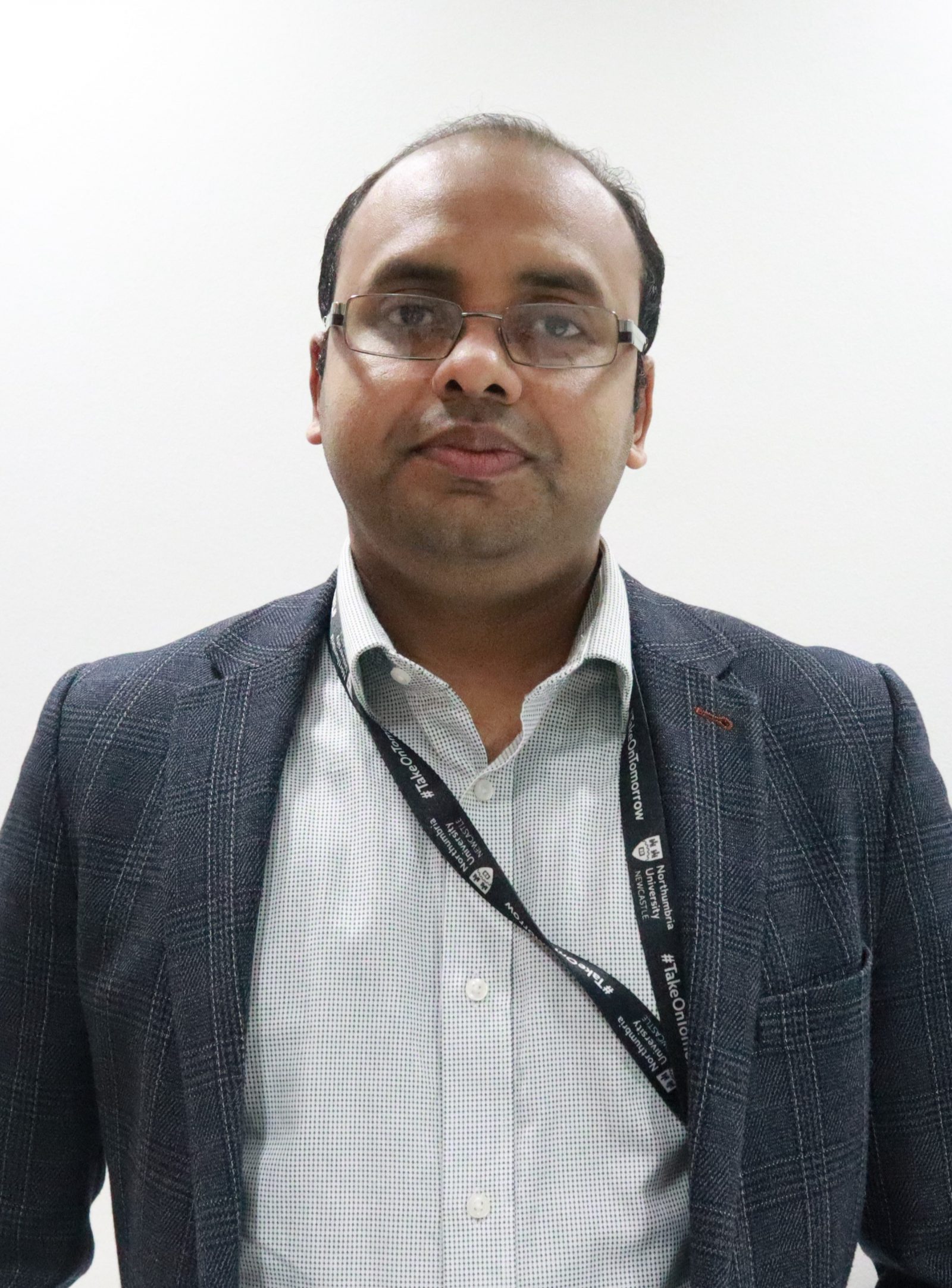
Abdul Ali is Lecturer in Operations and Supply Chain Management at Northumbria University's London campus. He holds a Ph.D. in Supply Chain Management from the University of Bedfordshire and is a certified Lean Six Sigma Green Belt practitioner. Research Focus: His interdisciplinary work examines: Sustainable supply chain models Green logistics strategies Circular economy implementation Supplier collaboration mechanisms He also researches technology applications including blockchain and AI in supply chain contexts. Recent publications address cybersecurity in cyber-physical systems, multi-objective optimization techniques, and blockchain applications for electoral systems. His research aims to develop resilient and ethical supply chain frameworks.
Dr. Bin Hu is an Assistant Professor in the Department of Engineering Technology at the University of Houston (2022–present) and previously held the same position at Old Dominion University (2019–2022). He earned a Ph.D. in Electrical Engineering from the University of Notre Dame (2016), an M.S. in Control Science from Zhejiang University (2010), and a B.S. in Electrical Engineering from Hefei University of Technology (2007). His research focuses on resilient Cyber-Physical Systems (CPS), AI-human collaboration safety, machine learning-driven control, and vehicular networks. Key projects include NASA-funded work on adaptive human-autonomy responsibility allocation (2023–2026) and NSF-supported AI-human collaboration in autonomous vehicles (2020–2023). He has secured over $1.2 million in grants, including a $700k NASA grant (pending) and an ONR Rapid Solutions grant ($42k). Dr. Hu’s work bridges control theory, machine learning, and human factors. Recent contributions include safer leader-follower robotic systems, fault-tolerant UAV control, and studies on driver trust in AI-driven vehicles. His research has been recognized through awards like the 2024–2025 APeX Excellence Speaker Series. Teaching experience includes courses on C++ programming and electrical engineering fundamentals at both the University of Houston and Old Dominion University. He advises multiple undergraduate and graduate students in projects ranging from LiDAR systems to cyber-physical security. Key Labs/Teams : NAIL Lab (Networked Autonomous Intelligence & Learning), part of the University of Houston’s Cybersecurity and Robotics initiatives. Grants : NASA TTT Grant ($700k), NSF CHS Grant ($500k), ONR RSLP Project ($42k).
Mark A. Stockman is an Associate Professor at the University of Cincinnati, specializing in cybersecurity, cloud computing, and system administration. He holds a BS in Industrial and Systems Engineering from Ohio University's Russ College of Engineering and Technology (1992) and an MBA in Management from Ohio University's College of Business (1994). His research focuses on integrating social science principles into cybersecurity education, developing cloud-based educational infrastructure, and analyzing cybercrime prevention strategies. Notable contributions include pioneering work on honeynet systems for hacker behavior analysis and organizational cybersecurity victimology frameworks. Stockman has published extensively on topics like insider threat mitigation, IT curriculum design, and virtualization technologies. His work bridges technical cybersecurity practices with organizational risk management, emphasizing interdisciplinary approaches to modern IT challenges. He has advised on multiple educational initiatives including cloud lab development and remote-access systems for computing disciplines. His publications reflect a commitment to advancing both technical and pedagogical innovations in information technology.
Tara Whalen is an Adjunct Professor at the School of Computer Science, Carleton University. Her research focuses on cybersecurity, privacy engineering, usable security mechanisms, and information control systems. She has contributed to studies on password security, authentication alternatives to CAPTCHA, and mobile device privacy challenges. Her work bridges technical security practices with human factors, emphasizing how security systems interact with end-users. Notable projects include breach alerting services and empirical studies on browser security interfaces. She has published extensively since 2003, with recent work addressing modern challenges in password management and privacy-by-design frameworks. No academic awards or grants are listed, though her publications indicate active collaboration in computer security research. She maintains an affiliation with Carleton's Herzberg Laboratories and can be reached at tjwhalen@gmail.com.
Prof. Dr. Armin Heinzl is a leading academic in the field of Information Systems and Business Informatics, holding the Chair of General Management and Information Systems at the University of Mannheim since 2002. His research focuses on digital innovation, healthcare IT, and platform ecosystems, with significant contributions to understanding AI integration in teams and decision-making processes. Chair of General Management and Information Systems, University of Mannheim (2002–present) Former Chair of Business Informatics, University of Bayreuth (1996–2002) His research spans: Digital Innovation (Platform Ecosystems, Agile Methodologies, Conversational Agents) IT Outsourcing and Cloud Computing Healthcare IT (Mobile Health Applications, AI-Driven Decision Automation) Recent work examines generative AI's role in team decision-making and stroke detection using 5G technology. He has received prestigious awards including the AIS Fellow Award and AISD First Award. Scientific recognitions include: AIS Fellow Award for contributions to Information Systems AISD First Award for novel research methods He supervises students in the Chair of General Management and Information Systems, with co-authored studies appearing in top journals like the Journal of Organizational Behavior . His lab supports innovative projects such as the 5G-powered "RettungsNetz-5G" for emergency stroke care.
Dr. Chaminda Wijethilake serves as a Senior Lecturer in Accounting at Essex Business School, University of Essex, where he contributes to sustainability accounting education and research. His academic journey spans Sri Lanka, Taiwan, and Australia, culminating in impactful work at the intersection of accounting, sustainability, and governance across diverse global contexts. Education: Bachelor of Commerce with First Class Honours, University of Peradeniya, Sri Lanka (2007) Master of Business Administration, National Cheng Kung University, Taiwan (2011) PhD in Accounting and Corporate Governance, Macquarie University, Australia (2016) Chaminda's research pioneers the application of accounting frameworks to urgent sustainability challenges, particularly examining how management control systems mediate organizational responses to environmental pressures. His work spans waste management governance, sustainable supply chains in emerging economies, and accountability mechanisms during disasters, consistently revealing how formal control systems interact with cultural and institutional factors to drive (or hinder) sustainability outcomes. Current projects investigate digitalization in NGOs and sustainability core values in risk management. His publication portfolio demonstrates a clear trajectory toward increasingly complex global sustainability challenges, evolving from firm-level sustainability controls to transnational waste governance and pandemic response systems. Recent work shows growing emphasis on Global South contexts and the political dimensions of environmental accountability. Scientific Awards: President’s Award for Scientific Research by the Government of Sri Lanka Best International Impact Research Award by the University of Essex Chaminda actively supervises four PhD candidates researching sustainability management accounting in healthcare, Thailand's primary care system, and public sector accountability. His research program is supported by significant grants from PEFA-World Bank Group, Innovate UK, and the Global Challenges Research Fund, including a 2021 ESRC IAA project developing an Essex employability toolkit and a 2020 GCRF project integrating climate change into South Asian public finance policies.
Manuela Nocker serves as a Senior Lecturer in Organisation and Sustainability at Essex Business School (EBS), University of Essex, where she teaches Organisation Studies, Business Ethics, and Research Methodology. She has held significant leadership roles including Undergraduate Programme Director for Management Science and Entrepreneurship Group (2012-July 2019), module leader for capstone projects across all programs, and representative for the PRME programme on Principles of Responsible Management Education. As the institutional liaison for the UNAI Academic Impact scheme, she actively promotes sustainability and ethical principles in alignment with the UN Global Compact initiative. Dr. Nocker earned her PhD in Organisational Psychology from The London School of Economics and Political Science and completed her BSc in Work and Organisational Psychology at the University of Padua, Italy. Her academic journey includes previous roles as careers adviser, trainer, and management consultant before joining EBS in 2006. Her research focuses on critical approaches to project work, organizational ethnography, narrative and poetic approaches in organizational analysis, identity construction, ethics, social responsibility, sustainability, collaboration, learning, strategy-as-practice, and organizational innovation. Her work often examines organizational dynamics through qualitative, ethnographic methods with particular attention to professional identity, belonging, and ethical considerations in workplace settings. Analysis of her recent publications reveals a strong emphasis on healthcare governance (particularly NHS Foundation Trusts), emotional dynamics in organizational settings, and the intersection of technology with business models. Her work consistently demonstrates methodological innovation, particularly in ethnographic approaches, while maintaining a critical perspective on organizational phenomena. Recent publications increasingly address contemporary challenges including AI implementation, big data applications in HR, and sustainability in organizational contexts. British Council award winner for Knowledge Economy Partnership Programme UK-Pakistan (2014-17) Elected Senate member at University of Essex (Oct. 2011-15) Vice-President of Free University of Bozen-Bolzano (2014-February 2018) British Council award winner for Researcher Links Workshop (2013-2014) LSE annual research scholarship awards (1999-2003) Dr. Nocker has successfully supervised numerous doctoral students, with seven completed PhDs as first supervisor on diverse topics including entrepreneurial identity of Afghan migrants, NHS governance, gendered practices in Pakistani banking, organizational innovation in healthcare, and professional identity in higher education. Her research has been supported by significant grants including the British Council Knowledge Economy Partnership Programme UK-Pakistan and the British Council Researcher Links Workshop, demonstrating her commitment to international collaboration and knowledge exchange. As Editor of the Journal of Organizational Ethnography for a decade (2012-2022), she has significantly shaped scholarly discourse in organizational studies.
Karthik Srinivasan is an Assistant Professor in the Analytics, Information, and Operations Academic Area at the University of Kansas School of Business. He holds a Ph.D. in Management Information Systems from the University of Arizona, an M.Mgt. in Business Analytics from the Indian Institute of Science, and a B.E. from Mumbai University. His research focuses on interpretable machine learning, explanatory modeling, text mining for business applications, and healthcare information systems. He develops methods to enhance transparency in AI systems and applies data science to healthcare, finance, and retail contexts. Recent work includes predictive modeling for incomplete data, graph-based retail analytics, and analyzing pandemic impacts on stock markets and public health. His publications span journals like MIS Quarterly, Decision Support Systems, and Nature Digital Medicine. He also contributes open-source tools like TextRegress and MoreThanSentiments for advanced text analysis. Teaching responsibilities include undergraduate and graduate-level data management courses. His research emphasizes practical applications in business and public health, leveraging interdisciplinary approaches to address real-world challenges.
M.K. Weerasinghe is a Senior Professor and Head of the Department of Library and Information Science at the University of Kelaniya, Sri Lanka. He has held multiple leadership roles including Director General of the National Library and Documentation Services Board (2008–2010) and Acting Head of his department on multiple occasions. His academic journey includes a B.A. from the University of Kelaniya, an M.Lib.I.Sc. from Punjab University, and a Ph.D. from the University of Antwerp, Belgium. His research focuses on national libraries, technical services, and e-information systems. Notable projects include proposals for cultural national libraries and collaborative frameworks for library networks. He has authored over 30 research papers and presented at international conferences in Japan, Germany, and the U.S., addressing topics like leadership ethics and organizational restructuring of national libraries. Professor Weerasinghe has received prestigious awards including the British Council Grants (1999, 2003) and a President’s Fund Scholarship (2005). He coordinates diploma and master’s programs in Library Science, emphasizing curriculum development and practical training. His work extends to community projects such as providing library resources to schools in difficult areas and promoting Buddhist literature preservation. He currently serves as Course Coordinator for multiple Library Science programs and has been a key figure in shaping Sri Lanka’s library policies through his advisory roles in national committees and international conferences.
Ryan Shi is an Assistant Professor at the School of Computing and Information (SCI) at the University of Pittsburgh. His research focuses on applying AI to address societal challenges in food security, environmental conservation, and public health, collaborating with nonprofit organizations globally. He specializes in game theory, online learning, and reinforcement learning, emphasizing deployable solutions. Shi holds a B.A. in Mathematics and Computer Science from Swarthmore College and a Ph.D. in Societal Computing from Carnegie Mellon University's School of Computer Science. He interned at Microsoft and Facebook during his Ph.D. and has been recognized with awards such as the 2023 IAAI Deployed Application Award and the 2022 Siebel Scholar Award. His work includes developing systems like Newspanda for environmental media monitoring and Maviper for interpretable multi-agent reinforcement learning. Recent projects involve optimizing food bank logistics, improving crowdsourcing platforms, and advancing low-resource language NLP for environmental conservation. Key Research Themes: Interpretable AI, Social Good Deployment, Responsible Algorithms Notable Deployments: Food rescue platforms, conservation monitoring tools Shi's research bridges theoretical foundations and real-world impact, with a focus on scalability, sustainability, and ethical considerations in AI applications.