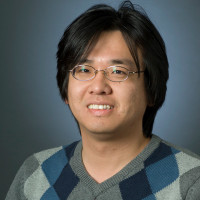
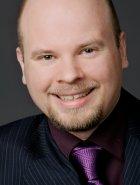
YING-TSONG LIN is an Acting Professor at the Scripps Institution of Oceanography (SIO), UC San Diego. His research focuses on applied ocean sciences, autonomous ocean platforms, internal waves, ocean acoustics, and instrumentation. He leads projects like the New England Shelf Break Acoustics (NESBA) experiment, emphasizing real-time acoustic modeling and environmental interactions. Research interests include 3D acoustic propagation modeling, ocean mixing dynamics, and seabed characterization. His work integrates high-performance computing and distributed sensor networks for oceanographic studies. Recent studies address underwater explosions, renewable energy impacts, and vessel localization using acoustic coherence. Publications emphasize advancements in hydroacoustic modeling, seabed inversion techniques, and environmental asymmetry effects. His contributions span interdisciplinary areas like bioacoustics and seismic-to-acoustic wave conversions. Labs/Teams: Involved with SIO's Acoustics and Oceanography research groups, focusing on autonomous platforms and global observing systems.
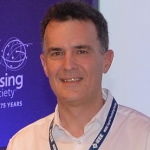
Athanasios Rontogiannis is an Associate Professor at the School of Electrical and Computer Engineering of the National Technical University of Athens (NTUA). He holds a PhD in Signal Processing from the National University of Athens (1997) and has held roles including Research Director at the National Observatory of Athens (2017–2021). His research focuses on signal processing, machine learning, and hyperspectral image analysis. Education: MEng (Electrical Engineering, NTUA, 1991), M.A.Sc. (University of Victoria, Canada, 1993), PhD (Signal Processing, National University of Athens, 1997). Research interests include adaptive algorithms, sparse representations, and tensor models. He has served on editorial boards of IEEE Transactions on Signal Processing and EURASIP journals, receiving an honorary distinction in 2020. He is a Senior Member of IEEE and affiliated with EURASIP and the Technical Chamber of Greece. Key contributions span hyperspectral unmixing, Bayesian algorithms, and space data exploitation. His work integrates machine learning for applications in space science and signal processing.
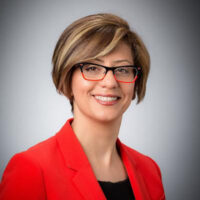
Dr. Saiedeh Razavi is an Associate Professor and the inaugural Chair in Heavy Construction at McMaster University's Department of Civil Engineering, directing the McMaster Institute for Transportation and Logistics (MITL). She holds a multidisciplinary background with degrees in Computer Engineering (B.Sc., Sharif University), Artificial Intelligence (M.Sc., Iran), and Civil Engineering (Ph.D., Waterloo). Her research focuses on smart infrastructure, connected mobility, and construction safety, funded by NSERC and the Ontario Ministry of Transportation. Key areas include transforming construction management through AI, autonomous vehicles, and smart work zones. Education: B.Sc. (Sharif), M.Sc. (Iran), Ph.D. (Waterloo) Research Interests: Smart cities, connected vehicle systems, data fusion, risk analysis, and sustainable logistics Leadership Roles: Director of MITL, Associate Chair (Research), and lead of national/international multidisciplinary projects Her work bridges academia, government, and industry to enhance mobility and safety. Notable grants include NSERC funding for transformative transportation systems. Awards include teaching excellence and innovation in team-based projects. Grants & Projects: NSERC, Ontario Ministry of Transportation, and industry collaborations Labs/Teams: MITL, CPS-based construction safety initiatives, and autonomous vehicle research groups
Richard Zemel is a Professor in the Department of Computer Science at the University of Toronto, where he has been since 2000. He holds an Industrial Research Chair in Machine Learning and co-founded the Vector Institute for Artificial Intelligence. His research focuses on machine learning, including unsupervised learning, deep learning, and ethical AI, with contributions to probabilistic models, fairness, and representation learning. Zemel has developed influential systems like the Toronto Paper Matching System and holds awards such as the NVIDIA Pioneers of AI Award and multiple NSERC grants. Education: B.Sc. in History & Science from Harvard University (1984), Ph.D. in Computer Science from the University of Toronto (1993). Postdoctoral work at the Salk Institute and Carnegie Mellon University. Research Interests: Machine Learning (unsupervised/deep learning), probabilistic models, fairness in algorithms, computer vision, natural language processing. He emphasizes ethical AI and practical applications like recommendation systems and causal inference. Awards & Affiliations: Fellow of CIFAR, member of the Neural Information Processing Society (NIPS) Executive Board, and advisor to the Creative Destruction Lab. His work is funded by NSERC, CIFAR, Google, Microsoft, and DARPA. Grants & Labs: Active in grants supporting machine learning research, including projects on fairness and invariant learning. Collaborates with industry partners and leads teams at the University of Toronto and Vector Institute.
Steven Ceron is an Assistant Professor in Robotics at the University of Michigan's College of Engineering. His research focuses on swarm robotics, multi-agent systems, and programmable self-organization of micro- and macro-scale robot swarms. He leads the Synergetic Adaptive Machinas (SAM) Lab, which develops reconfigurable robot swarms for biomedical applications and smart materials integration. Key research areas include microrobot fabrication, heterogeneous swarm coordination, and self-reconfigurable modular systems. His work envisions seamless integration of robot swarms into daily life through innovations in design, control, and scalability. Recent publications emphasize swarmalator dynamics, strain-based coordination in soft robots, and scalable fabrication methods. His lab explores both theoretical frameworks and practical implementations, bridging micro-scale and macro-scale robotics applications. Though no awards were explicitly listed, his contributions to novel fabrication techniques and modular robotics suggest ongoing recognition in the field. Advising and grant details are not provided here, but his lab's focus on biomedical and aerospace applications indicates active collaborative projects.
Jean Ponce is a Professor at Ecole Normale Supérieure - PSL and a Global Distinguished Professor at New York University's Courant Institute and Center for Data Science. He serves as Scientific Director of PRAIRIE Interdisciplinary AI Research Institute and co-founded Enhance Lab, commercializing super-resolution imaging software. His research focuses on computer vision, machine learning, robotics, and image processing. Ponce has held roles at Inria, MIT, Stanford, and the University of Illinois, and is an IEEE and ELLIS Fellow. He has served as chair of major conferences like CVPR, ECCV, and ICCV, and authored the textbook 'Computer Vision: A Modern Approach.' Research interests include statistical models for exoplanet detection, neural networks for 3D reconstruction, and self-supervised learning. His work combines theoretical foundations with practical applications in astrophysics, robotics, and imaging. Notable awards include the IEEE CVPR Longuet-Higgins Prize (2016, 2020) and ICML Test-of-Time Award (2019). Key projects include Enhance Lab's high dynamic range imaging and PRAIRIE's interdisciplinary AI initiatives. Ponce's articles explore cutting-edge topics like neural object priors, geodesic motion planning, and satellite image analysis. His contributions bridge academic research and industrial applications, emphasizing both fundamental theory and real-world impact.
Stavros G. Vougioukas is a Professor and Vice Chair in the Department of Biological and Agricultural Engineering at the University of California, Davis. His research focuses on agricultural robotics, mechanization, and automation for specialty crops, with particular emphasis on robotic harvesting systems and precision agriculture technologies. He leads initiatives in developing actuator systems, perception, and control mechanisms to optimize crop management. Key areas of expertise include robotic fruit harvesting, autonomous vehicle navigation in orchards, and site-specific pest management strategies. His work integrates mechanical engineering principles with advanced automation to address labor shortages and improve agricultural efficiency. Recent projects emphasize data-driven solutions for yield estimation, worker activity analysis, and economic viability of robotic systems. Academic contributions span over 50 peer-reviewed publications (2023-2025), with a focus on robotic orchard platforms, crop transport systems, and sensor-based automation. Notable innovations include vacuum suction end-effectors for fruit harvesting and GNSS-free navigation systems for autonomous vehicles. He also explores sustainable agricultural machinery through techno-economic analyses of electric/hybrid tractors. Current research bridges robotics and agricultural economics, addressing labor cost optimization and precision irrigation. His lab collaborates with industry partners to translate prototypes into field-ready solutions, emphasizing practical applications for specialty crop production systems.
Alan Hunter is a Professor in Autonomous Systems at the University of Bath's Department of Mechanical Engineering. He serves as Deputy Head of Department for Workload and Wellbeing and is affiliated with the Water Innovation & Research Centre (WIRC) and the UKRI CDT in Accountable, Responsible and Transparent AI. His research focuses on underwater acoustics, signal processing, imaging, and machine intelligence, with applications in sonar-based remote sensing and marine robotics. Education: B.E. (Hons I) in Electrical and Electronic Engineering from the University of Canterbury (2001), PhD in Synthetic Aperture Sonar (SAS) from the same institution (2006). Career highlights include roles at the University of Bristol (2007-2010), TNO Netherlands (2010-2014), and NATO CMRE (2014). He has led projects on sub-sediment imaging, autonomous mine-hunting systems, and precision navigation algorithms. Research Interests: • Underwater Acoustics & Sonar Imaging • Autonomous Underwater Vehicles • Machine Learning for Acoustic Data Analysis • Non-Destructive Inspection via Ultrasound • Sustainable Coastal Protection (via UN SDG contributions) Active Projects (2023-2025+): - Noise Network Plus : Engineering a Quieter Future (EPSRC) - TESSMEX SR 4 : Naval Mine-Hunting Technology (Defence Lab) - Decision-Making with Ambiguities : Legal AI for Robotics (EPSRC) Professional Affiliations: • Senior Member, IEEE • Associate Editor, IEEE Journal of Oceanic Engineering • Collaborations with NATO, TNO, and UK Defence Orgs. Labs & Teams: • Robotics and Autonomous Systems Lab • Centre for Space, Atmospheric and Oceanic Science • WIRC @ Bath (Water Innovation Hub)
Robert Piche is a Professor at the Computing Sciences Mathematics Research Centre, specializing in advanced signal processing, positioning systems, and sensor fusion. He holds a Doctor of Science (Technology) and Master of Science from the University of Waterloo, Canada (1986 and 1982, respectively). His research focuses on Kalman filters, Global Positioning Systems (GPS), particle filters, and indoor positioning technologies. He has contributed extensively to fields like satellite orbit prediction, non-line-of-sight (NLoS) positioning, and machine learning applications in biomechanics and robotics. Dr. Piche has authored over 230 publications and received recognition through an invitation/ranking in a 2014 competition. He actively participates in academic activities, including conference presentations and peer-review roles. His work bridges theoretical advancements and practical applications, with contributions to autonomous systems, sensor data analysis, and wearable technology. Collaborations span international institutions, reflecting his global impact in engineering and computer science disciplines.
Esa Rahtu is a Professor in the Department of Computer Science at Aalto University, Finland. His research focuses on computer vision, machine learning, and deep learning applications. He leads projects in image coding, neural networks, 3D reconstruction, object pose estimation, and anomaly detection. Rahtu has contributed to over 98 research outputs since 2017, with recent work emphasizing Gaussian splatting for SLAM, neural radiance fields, and hybrid video codecs for human-machine compatibility. His expertise spans visual-inertial odometry (e.g., ADVIO dataset), LiDAR-based place recognition, and manufacturing quality control systems. Key areas include: 3D scene reconstruction using Gaussian splatting techniques Deep learning models for anomaly detection in industrial processes Hybrid video codecs optimizing human perception and machine processing Multi-sensor fusion for robotic navigation and indoor mapping Notable datasets include ADVIO for visual-inertial odometry and FIORD for 3D reconstruction benchmarking. His research aligns with UN SDG 9 (Industry, Innovation & Infrastructure) and SDG 4 (Quality Education) through advancements in smart manufacturing and educational technology. Rahtu has received continuous research funding, including a grant period from April to June 2018. His work emphasizes practical applications, collaborating on real-world challenges like paper manufacturing quality control and smartphone-based 3D reconstruction.
Sebastiano Battiato is a Full Professor of Computer Science at the University of Catania's Department of Mathematics and Computer Science. He serves as Scientific Coordinator of the PhD Program in Computer Science and Deputy Rector for Strategic Planning and Information Systems at the University of Catania. As Director and Co-Founder of the International Computer Vision Summer School (ICVSS), he has significantly contributed to computer vision education globally. Education: Bachelor's degree in Computer Science (summa cum laude), University of Catania, 1995 Ph.D. in Computer Science and Applied Mathematics, University of Naples, 1999 Professor Battiato's research primarily focuses on Computer Vision, Imaging Technology, and Multimedia Forensics . His work spans from developing ISP algorithms for embedded devices to creating advanced techniques for image enhancement, coding, and forensic analysis. He has pioneered research in social media forensics, developing methods to determine if images have been processed through specific social platforms. His research has practical applications in assistive technologies, retail, digital marketing, and medical fields. His scholarly output shows a consistent focus on digital forensics and image processing, with an increasing emphasis on social media forensics in recent years. The research trajectory demonstrates progression from foundational image processing techniques to sophisticated forensic applications capable of addressing modern challenges like deepfakes and social media manipulation. Scientific Awards: 2017 PAMI Mark Everingham Prize for the series of annual ICVSS schools 2011 Best Associate Editor Award of IEEE Transactions on Circuits and Systems for Video Technology Professor Battiato has coordinated IPLab's participation in numerous large-scale research projects funded by national and international bodies as well as private companies. He has served as principal investigator on many international and national research projects, demonstrating strong leadership in securing research funding. His editorial work includes serving as associate editor for the SPIE Journal of Electronic Imaging and IET Image Processing Journal, and membership on several other editorial boards. As Director of IPLab research lab (http://iplab.dmi.unict.it), Professor Battiato leads a team focused on computer vision and digital forensics. The lab collaborates extensively with law enforcement agencies through iCTLAB, a university spinoff he founded that provides digital forensic services. IPLab is recognized for its contributions to image/video forensics, with techniques implemented in commercial forensic software like AMPED Authenticate.
Sean O'Rourke is an Associate Professor in the Department of Mathematics at the University of Colorado Boulder. His research focuses on probability, random matrix theory, and random polynomials. He has organized multiple workshops and minisymposia, including events at the Canadian Discrete and Algorithmic Mathematics Conference (CanaDAM) and ICERM, demonstrating his active role in academic community engagement. His research spans spectral properties of random matrices (e.g., singular values, elliptic matrices, Laplacian matrices), probabilistic behavior of polynomial roots under operations like differentiation and summation, and applications of free probability theory. Recent work includes universal behavior in eigenvalue gaps, non-Hermitian matrix controllability, and asymptotic refinements of classical theorems for random polynomials. Publications highlight collaborations with researchers such as Andrew Campbell, Kyle Luh, David Renfrew, and Van Vu. His work appears in leading journals like Annals of Probability , Electronic Journal of Probability , and Transactions of the American Mathematical Society , covering topics from Gaussian fluctuations to low-rank perturbations and noncommutative harmonic analysis.
Professor David Taubman is a distinguished academic serving as Professor and Deputy Head of School (Research) at the School of Electrical Engineering and Telecommunications (EE&T) at the University of New South Wales (UNSW) in Sydney, Australia. He is also co-director of Kakadu Software Pty. Ltd. and its affiliates Kakadu R&D and Kakadu GPU. With a career spanning over three decades, Professor Taubman has made significant contributions to the field of image and video compression, most notably as the author of the EBCOT coding algorithm adopted in the JPEG2000 international standard. Professor Taubman earned his B.Sc. in Mathematics and Computer Science (1986) and B.E. (Medal) in Electrical Engineering (1988) from the University of Sydney, followed by an M.Sc. (1992) and Ph.D. (1994) in Electrical Engineering from the University of California at Berkeley. His professional journey includes engineering work at the Electricity Commission of N.S.W. (1988-1990), research positions at Hewlett-Packard Laboratories in Palo Alto (1994-1998), and an academic career at UNSW where he progressed from Senior Lecturer (1998-2003) to Associate Professor (2004-2009) and finally to Professor (2009-present). He has held various leadership roles including Head of the EE&T Telecommunications Research Group (2003-2014), Head of the EE&T Signal Processing Research Group (2014-present), Director of Research for the School of EE&T (2011-2016), and Deputy Head of School (Research) since 2017. Professor Taubman's research interests center on image and video compression, with particular expertise in JPEG2000 standards and implementations. His work spans signal processing, wavelet transforms, scalable video coding, motion modeling, and multimedia systems. He has pioneered numerous compression algorithms and frameworks, including the EBCOT coding algorithm that became central to the JPEG2000 standard. His recent research focuses on efficient motion modeling with cuboidal partitioning, learned lifting-based transform structures, and high-throughput implementations of JPEG2000 for video applications. His work bridges theoretical foundations with practical implementations, as evidenced by the commercially successful Kakadu Software tools that have garnered around 500 commercial licensees. Analysis of Professor Taubman's recent publications reveals a consistent focus on advancing compression technologies with particular emphasis on scalability, efficiency, and adaptability. His work spans traditional image compression (JPEG2000 extensions), video coding (cuboid-based partitioning for UHD/360-degree video), and emerging applications (nanopore sequencing data compression). A notable trend is the integration of machine learning techniques with traditional compression frameworks, as seen in his work on learned lifting-based transform structures. His research maintains strong connections to real-world applications across diverse domains including medical imaging, astronomical data processing, and genomic sequencing. IEEE Fellow Engineers Australia Fellow (by invitation) Professor Taubman has served as Associate Editor for the IEEE Transactions on Image Processing for two four-year appointments (2003-2005 and 2010-2013). He has been actively involved in numerous research grants focused on image and video compression technologies, particularly those related to the JPEG2000 standard and its extensions. His work has received significant industry support, reflected in his consultancy with various U.S., Japanese, and Australian corporations. He has also contributed to international standards development as a member of Standards Australia Technical Committee MS-065 (mirroring ISO TC42 on Digital Photography) and as a constitutional member of Standards Australia Technical Committee IT-029 (Coded Representation of Picture, Audio and Multimedia/Hypermedia Information). Professor Taubman co-directs Kakadu Software Pty. Ltd. and its research affiliates Kakadu R&D and Kakadu GPU, which have developed the commercially successful Kakadu Software tools for JPEG2000. His research group at UNSW focuses on advanced image and video compression techniques, with particular expertise in wavelet-based methods, scalable coding, and motion modeling. The group maintains strong industry connections and has contributed significantly to the development and standardization of image compression technologies worldwide.
Chao Liu is a Research Scientist at CNRS (French National Center for Scientific Research) since 2008, affiliated with the DEXTER team and the Department of Robotics, LIRMM at University of Montpellier, France. He earned his Ph.D. in Electrical & Electronic Engineering from Nanyang Technological University, Singapore (2006). Current research focuses on surgical robotics , haptics , teleoperation , and nonlinear control theory with applications in computer vision. His work addresses challenges in robotic-assisted telesurgery, including: Stable and transparent human-robot interaction through wave variable compensators and passivity filters Physiological motion compensation using spatio-temporal LSTM and dual Kalman filters EMG-based motion recognition for surgical skill assessment 3D soft-tissue reconstruction with stereo-endoscopes and deep learning Dr. Liu leads European and French projects like: TS2RT (CNRS-funded): Safer teleoperation with motion compensation ROBACUS (ANR-funded): Needle positioning with MPC control HaTUMoCo (CNRS-funded): Haptic teleoperation with uncertainty handling ARAKNES (EU-funded): Microrobotic systems for endoluminal surgery Scientific honors include Senior Member of IEEE and Member of Sigma Xi . He supervises Ph.D. and Master's students working on topics such as concentric tube robot optimization, haptic teleoperation, and EMG-based force estimation. Dr. Liu serves on IEEE Technical Committees for Telerobotics and Haptics , and as Technical Editor of IEEE/ASME Transactions on Mechatronics.
Dr. Tim Conrad is a researcher at the Zuse Institute Berlin in the Visual and data-centric computing department under the Mathematics of Complex Systems division. He leads projects at the intersection of computational biology, AI, and medical data analysis. Projects: Geometric Learning for Single-Cell RNA Velocity Modeling, MODAL MedLab, Sparse Compressed Sensing in -Omics Data, BIFOLD (Big Data and Machine Learning) Research Networks: Affiliated with MATH+ and MODAL Research Campus His research focuses on applying machine learning , network optimization , and sparse data analysis to biological and medical challenges including disease modeling, microbiome dynamics, and ECG classification. Recent work explores hybrid PDE-ODE epidemic models and federated learning in healthcare. 2023-2025 publications highlight trends in AI for biological networks , temporal community detection , and medical signal processing . He co-authored studies on SARS-CoV-2 simulations, proteomics feature selection, and multi-label ECG analysis. His 2004 doctoral thesis at Monash University laid foundations for later work in metabolic pathway analysis. Awarded as a Zuse Fellow , he contributes to open science initiatives like FAIR data sharing . Collaborations span institutions including Freie Universität Berlin and Charité in medical informatics and clinical applications.