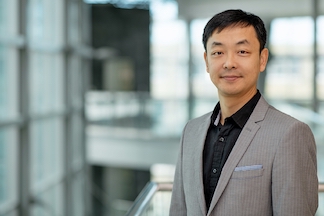
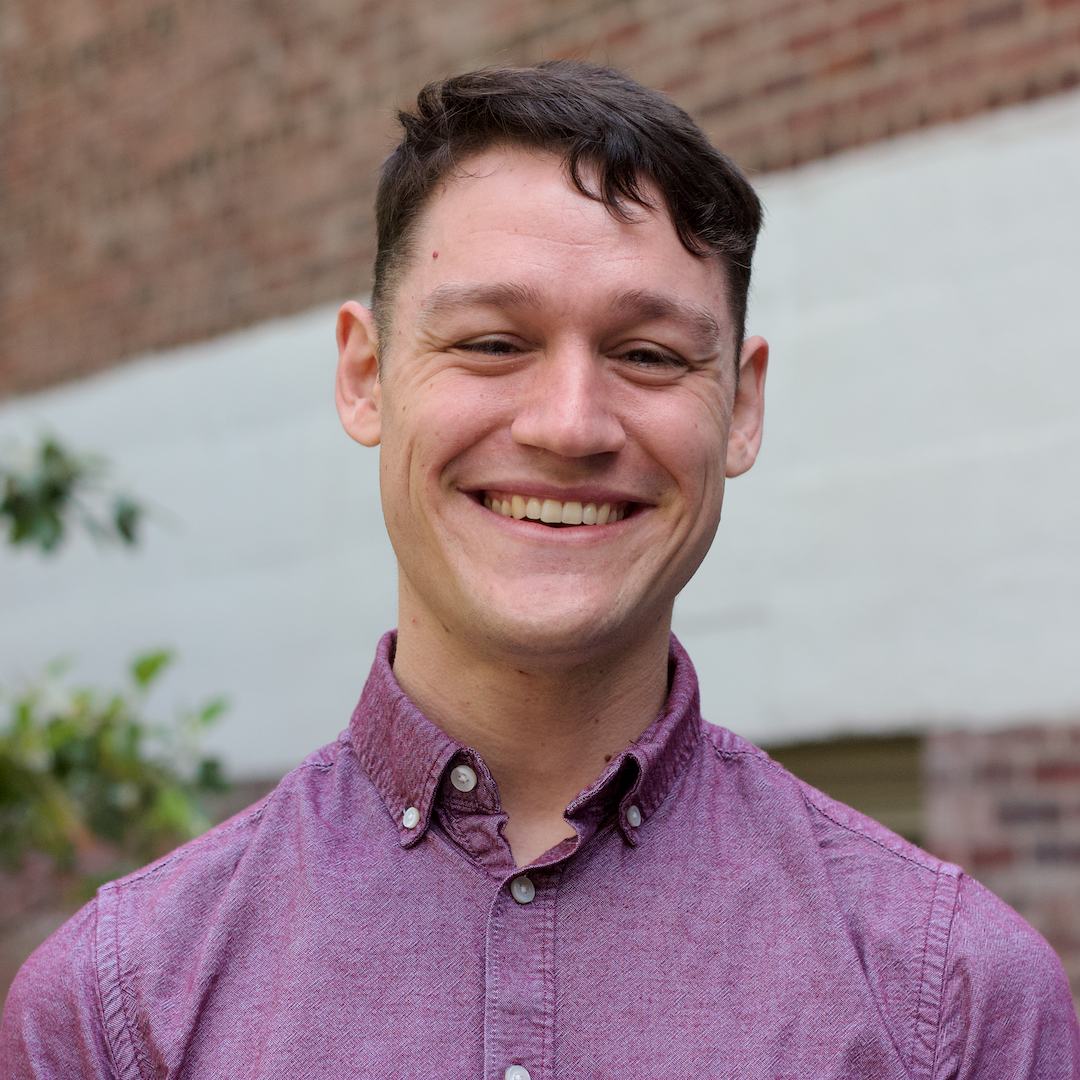
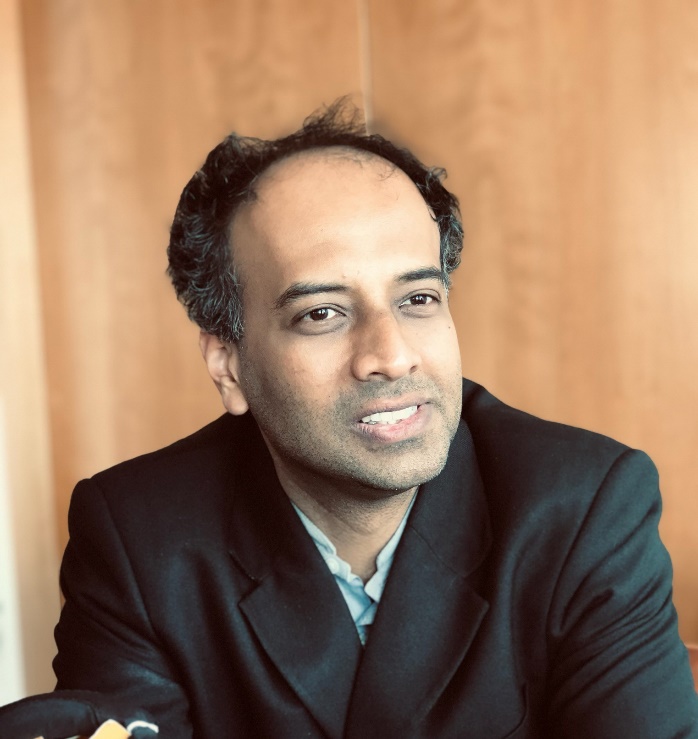
Weiyu Xu is a Professor at the University of Iowa, affiliated with both the Department of Electrical and Computer Engineering and the Department of Applied Mathematical and Computational Sciences. He joined the College of Engineering in 2012 and leads the Intelligent Information Processing Lab (IIPL). Ph.D., Electrical Engineering, California Institute of Technology, 2009 M.S., Electrical Engineering, California Institute of Technology, 2006 M.S., Electronic Engineering, Tsinghua University, 2005 B.E., Information Engineering, Beijing University of Posts and Telecommunications, 2002 His research focuses on compressive sensing, information theory, signal processing, network optimization, and deep learning applications in medical imaging and cybersecurity. He has made significant contributions to adversarial attack robustness, distributed optimization algorithms, and medical imaging techniques for OCT segmentation and brachytherapy. Recent publications highlight trends in Adversarial machine learning Medical imaging algorithms Compressed sensing for diagnostics Optimization in wireless communication He has also contributed to federated learning over tree networks and theoretical guarantees for sparse signal recovery. Weiyu Xu's lab, IIPL, integrates deep learning with classical optimization and signal processing. His work bridges foundational theories (e.g., information-theoretic robustness) with real-world applications in healthcare (e.g., cancer treatment planning) and communication systems (e.g., MIMO channel estimation).
Francis Y. Yan is an Assistant Professor of Computer Science at the University of Illinois Urbana-Champaign (UIUC), holding an affiliate appointment in Electrical & Computer Engineering within the Grainger College of Engineering. He leads the Illinois Networked Systems and AI (NSAI) research group, focusing on building intelligent networked systems that are safe, robust, and performance-optimized through practical machine learning integration. Prior to joining UIUC in January 2025, he served as a Senior Researcher at Microsoft Research Redmond under Victor Bahl. His educational background includes: Ph.D. in Computer Science from Stanford University (2020), advised by Keith Winstein and Philip Levis B.S. in Computer Science (Yao Class) and B.A. in Economics from Tsinghua University (2015) Additional undergraduate studies at MIT Yan's research adopts a holistic approach to practical machine learning for networked systems, emphasizing judicious application rather than indiscriminate use. He builds real-world systems and research platforms to lay ML foundations, devises deployable algorithms using domain insights, and validates performance through extensive empirical evidence. His work consistently addresses operator concerns regarding ML deployment—focusing on safety, robustness, generalization, and efficiency—while strategically combining ML with classical networking and systems techniques. Analysis of his 15 most recent publications (2023-2025) reveals dominant themes in resource allocation for microservices (DeDe, Autothrottle), real-time video optimization (Mowgli, GRACE), and LLM-driven network algorithm design. His work bridges theoretical advances with industrial deployment, evidenced by platforms like Puffer (400,000+ users) and OpenNetLab that have become community standards for validating congestion control algorithms. His research has been recognized with top honors: USENIX NSDI Outstanding Paper Award (2024) for Autothrottle APNet Best Paper Award (2022) IRTF Applied Networking Research Prize (2021) USENIX NSDI Community Award (2020) USENIX ATC Best Paper Award (2018) for Pantheon Yan actively recruits master's and undergraduate researchers for his NSAI group, prioritizing self-motivated students for projects in networked systems and AI. His research is supported by industry collaborations (notably Microsoft) and manifests in deployable platforms like Puffer—which has enabled award-winning research at NSDI and SIGCOMM—and OpenNetLab for real-time communications. His work directly impacts production systems including Microsoft Teams and Bing. He founded and directs the Illinois Networked Systems and AI (NSAI) research group, which operates critical infrastructure including Puffer (a live TV service and research platform) and OpenNetLab. These platforms facilitate community-wide validation of novel algorithms, with Puffer alone supporting multiple best-paper awards at top conferences. Current workstreams span cloud resource management (Teal, Autothrottle, DeDe), low-latency video (Puffer, Tambur, Mowgli), and LLM-augmented systems (Nada, Designing Network Algorithms via LLMs).
Carles Padro Laimon is a Professor at the Universitat Politècnica de Catalunya (UPC), affiliated with the Department of Mathematics and the School of Telecommunications Engineering. He is a leading researcher in cryptography and information security, focusing on secret sharing schemes, combinatorial structures, and cryptographic protocols. His work integrates discrete mathematics, coding theory, and algorithmic design to address security challenges in digital systems. Padro leads the MAK Research Group (Mathematics Applied to Cryptography) and the ISG-MAK Information Security Group. He has been involved in numerous competitive research projects, including initiatives on post-quantum cryptography and secure multi-user systems. His contributions span over 211 documented activities, including articles, theses, and conference participations. His research interests include the theoretical foundations of cryptography, with a focus on optimizing secret sharing schemes, analyzing matroid-based structures, and developing secure communication protocols. He has collaborated extensively with institutions like the UPC and European research networks, contributing to both academic and practical advancements in cybersecurity. Padro holds a PhD in Mathematics from UPC and has supervised doctoral theses and mentored researchers in his field. His work frequently appears in top journals like IEEE Transactions on Information Theory, Designs, Codes and Cryptography, and SIAM Journal on Discrete Mathematics.
Yuanzhu Chen is a Professor in the School of Computing at Queen’s University, affiliated with the Faculty of Arts and Science. He previously served as Professor and Department Head at Memorial University of Newfoundland (2005–2021). His research focuses on computer networking, mobile computing, complex networks, and applied machine learning, emphasizing wireless innovation beyond traditional wired systems. He holds a PhD from Simon Fraser University (2004) and a B.Sc. from Peking University (1999). Education: PhD in Computing Science (Simon Fraser University, 2004); B.Sc. in Computer Science (Peking University, 1999). Earlier roles include Post-doctoral Researcher at Simon Fraser University (2004–2005) and leadership positions at Memorial University, including Department Head (2019–2021). Research Interests: Network Coding and Opportunistic Routing Mobile and Wireless Network Protocols Complex Network Analysis Machine Learning Applications Indoor Positioning Systems Social Network Dynamics Selected Awards: Recipient of Queen’s University President's Award for Distinguished Teaching. Lab Affiliation: Director of the Wireless Networking and Mobile Computing Lab (WineMocol). Active in collaborative projects involving smartphone sensors, community-based environmental monitoring, and stock market prediction using web data.
Andrew Head is an Assistant Professor at the University of Pennsylvania's Department of Computer Science, specializing in Human-Computer Interaction (HCI) and Programming. His work bridges interactive reading , math notation accessibility , and AI-assisted code comprehension . Affiliated with Penn HCI, PLClub, and MindCORE, he co-leads research with Danaé Metaxa and Benjamin Pierce. University of Pennsylvania Assistant Professor, Computer Science Affiliations: Penn HCI, PLClub, MindCORE His research focuses on interactive reading interfaces , AI-powered programming tools , and math notation analysis . Recent projects include: FreeForm : Interactive math notation editor Tyche : Property-based testing tools Explainable Notes : Medical note interpretation systems Publications in CHI , UIST , and ICSE demonstrate his systems-centric approach combining user studies with working prototypes. Notable awards include Best Paper at UIST 2024 and CHI 2022. Advising: Ph.D. Students: Alyssa Hwang, Litao Yan, Hita Kambhamettu, Jeff Tao, Jessica Shi Grants: $1M NSF grant for Property-based Testing Tools (2024) Teaching: Spring 2025: CIS 4120/5120 - Human-Computer Interaction Fall 2024: CIS 7000 - Interactive Reading
Krishna Jagannathan is a full-time Professor in the Department of Electrical Engineering at the Indian Institute of Technology Madras (IIT Madras), India. He specializes in stochastic modeling, communication networks, information theory, and queuing theory. He obtained his B.Tech from IIT Madras in 2004, followed by S.M. and Ph.D. degrees from MIT in 2006 and 2010, respectively. After post-doctoral positions at Caltech and MIT, he joined IIT Madras in 2011. Education: B.Tech in Electrical Engineering, IIT Madras (2004) S.M. in Electrical Engineering and Computer Science, MIT (2006) Ph.D. in Electrical Engineering and Computer Science, MIT (2010) Research Interests: His research focuses on stochastic modeling and analysis of communication networks , information theory , and queuing theory . He has made significant contributions to understanding network performance, resource allocation, and risk-aware decision-making in complex systems. He leads the Networks and Stochastic Systems lab at IIT Madras, mentoring a large cohort of Ph.D. and M.S. students working on cutting-edge problems in networking, optimization, and stochastic systems. Scientific Awards: Best Paper Award at WiOpt 2013, Tsukuba, Japan Young Faculty Recognition Award for Excellence in Teaching and Research, IIT Madras (2014) Teaching & Mentorship: He has taught a wide range of courses including Probability Foundations , Stochastic Modeling and Queuing Theory , Convex Optimization , and Signals & Systems , consistently receiving high teaching evaluations. He has supervised over 15 Ph.D. and M.S. students to completion and continues to guide several active researchers.
Avi Wigderson is the Herbert H. Maass Professor in the School of Mathematics at the Institute for Advanced Study, Princeton. He is a leading authority in theoretical computer science, particularly computational complexity theory. Wigderson organizes the Computer Science and Discrete Mathematics (CSDM) program at the Institute, fostering interdisciplinary research at the intersection of mathematics and computer science. Wigderson earned his Ph.D. (1983), M.A. (1982), and M.S.E. (1981) from Princeton University. Prior to his current position, he held appointments at The Hebrew University of Jerusalem (1986-2003), Princeton University (1990-1992), Mathematical Sciences Research Institute, Berkeley (1985-1986), IBM Research (1984-1985), and University of California, Berkeley (1983-1984). Wigderson's research spans computational complexity theory, randomness and computation, algorithms and optimization, circuit complexity, proof complexity, quantum computation and communication, and cryptography. His work explores fundamental questions like whether mathematical creativity can be automated (P vs NP problem), the security of electronic commerce, the role of randomness in computation, and the potential of quantum mechanics to enhance computation. He has made significant contributions to understanding the power and limitations of efficient computation. Analysis of Wigderson's recent publications reveals a strong focus on optimization, complexity theory, and their mathematical foundations. His work connects diverse areas including non-commutative algebra, geometric complexity, graph theory, and quantum computing. A recurring theme is exploring whether fundamental computational problems like P vs NP can be addressed through optimization techniques such as gradient descent. His research shows increasing interdisciplinary connections between theoretical computer science, mathematics, and physics. ACM A.M. Turing Award (2023) Abel Prize (2021) Donald E. Knuth Prize (2019) Gödel Prize (2009) American Mathematical Society's Levi L. Conant Prize (2008) Rolf Nevanlinna Prize (1994) Yoram Ben-Porat Presidential Prize for Outstanding Researcher (1994) Bergman Fellowship (1989) Member, American Academy of Arts and Sciences Member, National Academy of Sciences While specific details about Wigderson's students are not provided in the source material, his extensive lecture series, workshops, and program organization suggest significant mentorship activities. His book "Mathematics and Computation" published by Princeton University Press serves as an educational resource for students and researchers. Wigderson has organized major programs at the Institute for Advanced Study including "Lower Bounds in Computational Complexity" (2018) and "Pseudorandomness" (2017), creating research opportunities for numerous scholars. Wigderson leads the Computer Science and Discrete Mathematics (CSDM) program at the Institute for Advanced Study, which brings together researchers from mathematics and computer science to explore fundamental questions in computation. His work with collaborators across multiple institutions has established connections between theoretical computer science and diverse fields including quantum information theory, algebraic geometry, and optimization. Recent projects focus on non-commutative optimization and its applications to computational complexity problems.
Dr. Aykut Koç is an Associate Professor at the Department of Electrical and Electronics Engineering and a faculty member of the National Magnetic Resonance Research Center (UMRAM) at Bilkent University, Turkey. He leads the AykutKoc Lab, focusing on interdisciplinary research at the intersection of machine learning, signal processing, natural language processing, and graph signal processing. Education: B.S. in Electrical and Electronics Engineering (2005, Bilkent University); M.S. in Electrical Engineering (2007), M.S. in Management Science and Engineering (2009), and Ph.D. in Electrical Engineering (2011) under Professor Lambertus Hesselink at Stanford University; LL.B. in Law (Ankara University). His research integrates mathematical signal processing techniques (e.g., fractional Fourier and linear canonical transforms) with modern machine learning architectures like transformers and graph neural networks. Recent work explores semantic communication systems, bias mitigation in legal language models, and cross-modal applications in biomedical imaging and radar technology. Dr. Koç has published extensively in IEEE and Springer journals, with recent articles analyzing Fourier-enhanced transformers, graph-based NLP methods, and time-vertex signal analysis. His work addresses both theoretical innovations and practical applications, including schizophrenia diagnosis, legal outcome prediction, and maritime surveillance. Scientific Awards: Science Academy Young Scientists Award (BAGEP), 2023. He has supervised numerous graduate and undergraduate researchers, many of whom have transitioned to top-tier institutions such as MIT, UCLA, and TU Darmstadt. Dr. Koç actively serves as Associate Editor for multiple IEEE journals and participates in conference program committees, including EMNLP's Natural Legal Language Processing (NLLP) workshop.
Tomaso A. Poggio is the Eugene McDermott Professor in the Department of Brain and Cognitive Sciences at the Massachusetts Institute of Technology , an investigator at the McGovern Institute for Brain Research , a member of the Computer Science and Artificial Intelligence Laboratory (CSAIL) , and the director of both the MIT Center for Biological and Computational Learning (CBCL) and the multi-institutional Center for Brains, Minds and Machines (CBMM) . Research Interests Poggio’s research is fundamentally interdisciplinary, sitting at the intersection of computational neuroscience , machine learning , and computer vision . His work is driven by the conviction that learning is the core gateway to both biological intelligence and artificial systems. Current themes include: Mathematical foundations of statistical learning theory Engineering applications in computer vision, graphics, bioinformatics, and intelligent search Computational neuroscience of visual object recognition and the ventral stream of the visual cortex Scientific Awards & Honors Eugene McDermott Professorship, MIT Advising & Grants Over three decades, Poggio has advised a large cohort of doctoral and master’s students whose theses span machine learning, computer vision, neuroscience, and bioinformatics. Representative graduates include H. Jhuang, Stanley Bileschi, Jacob Bouvrie, Jennifer Louie, M. Kouh, Sayan Mukherjee, Ryan Rifkin, Alexander Rakhlin, Thomas Serre, Gene Yeo, and many others. His research has been continuously supported by major federal and private funding initiatives, most recently through the multi-institutional Center for Brains, Minds and Machines (CBMM) headquartered at the McGovern Institute since 2013. Laboratories & Teams Poggio directs the Poggio Lab (CBCL) at MIT, an interdisciplinary group comprising neuroscientists, computer scientists, mathematicians, and engineers. The lab collaborates closely with experimental neuroscientists to develop predictive computational theories of visual cortex function and to translate those insights into practical algorithms for computer vision and machine learning.
Lin Zhong is the Joseph C. Tsai Professor of Computer Science at Yale University, leading the Efficient Computing Lab. He holds a Ph.D. from Princeton University and M.S./B.S. degrees from Tsinghua University. Previously, he served at Rice University from 2005 to 2019. His research focuses on optimizing computing efficiency, quantum error correction, operating systems, and mobile systems. Education: Ph.D., Princeton University M.S., Tsinghua University B.S., Tsinghua University Research Interests: His work spans quantum computing (e.g., decoding algorithms for surface codes), operating systems (safety, correctness, and lightweight kernels), and mobile/networking systems (massive MIMO, energy-efficient designs). Recent trends include integrating large language models (LLMs) into robotics and securing cloud-based AI workflows. Awards: NSF CAREER Award ACM SIGMOBILE RockStar (2014) and Test of Time (2022) Fellowships from IEEE and ACM Best Paper Awards at ACM MobileHCI, IEEE PerCom, ACM MobiSys, and more Lab & Teams: His Efficient Computing Lab explores systems for quantum error correction (e.g., FPGA-based decoders), secure embedded systems, and LLM-driven robotics. Projects include TimelyLLM (real-time LLM serving) and Blindfold (confidential memory management).
Danfeng Zhang is a faculty member at Duke University whose research sits at the intersection of programming languages and security. Active across the premier PL conferences since 2015, Zhang has served on more than two-dozen program committees and currently co-chairs the POPL Student Research Competition. Education & Affiliation: Home page: users.cs.duke.edu/~dz132 Affiliation: Duke University, United States Research Interests: Zhang’s work spans programming-language design, static and dynamic analysis, formal verification, and security. A recurring theme is developing language-based techniques that guarantee strong security and privacy properties—ranging from side-channel resistance and constant-time execution to differential-privacy proofs—while preserving performance and usability. His recent projects combine type systems, program logics, and automated reasoning to build practical verification tools for concurrent, speculative, and approximate software. Publication Trends: Across nine representative papers (2015-2024) Zhang has advanced static detection of cache side channels, automated proofs of differential privacy, and relaxed concurrency models. The trajectory shows deepening integration of security concerns into language infrastructure, with tool-building (CtChecker, SpecSafe, LightDP) that bridge formal guarantees and real-world systems. Service & Leadership: 2024 POPL Student Research Competition Co-Chair 2025 POPL Program Committee member Repeated reviewer/PC member: PLDI, SPLASH/OOPSLA, ISSTA, ECOOP, APLAS, PriSC, PASS Zhang regularly mentors student researchers through SRC sessions and workshop panels, fostering diversity and early-career participation in the programming-languages community.
Alaa Alameldeen is an Associate Professor in the School of Computing Science at Simon Fraser University (SFU), part of the Faculty of Applied Sciences. Previously, he worked as a Research Scientist at Intel Labs (2006–2020) and held an Adjunct Faculty position at Portland State University (2008–2018). He earned a PhD in Computer Sciences from the University of Wisconsin-Madison (2006), and earlier degrees from Alexandria University, Egypt. His research focuses on computer architecture, including memory systems (processing-in-memory, cache/memory compression, security), energy-efficient architectures, and hardware-software co-design for machine learning. He advises PhD and MSc students in these areas and teaches advanced computing science courses. Key contributions include innovations in memory hierarchies, cache compression techniques, and mitigating hardware vulnerabilities. His work has been published in top conferences (e.g., ISCA, MICRO, HPCA) and patented in areas like near-memory processing and error correction. Alameldeen currently leads a research group exploring secure and high-performance memory architectures. He has supervised multiple graduate students, with many progressing to roles at leading tech companies and academic institutions.
Raymond J. Mooney is a Professor in the Department of Computer Science at the University of Texas at Austin, where he has been a faculty member since 1987. He is the Director of the UT Artificial Intelligence Laboratory and affiliated with multiple research groups including the Machine Learning Research Group, UT Computational Linguistics Lab, and the UT Center for Computational Biology and Bioinformatics. He holds a B.S., M.S., and Ph.D. in Computer Science from the University of Illinois at Urbana-Champaign, where his thesis was supervised by Gerald DeJong. His research spans diverse areas in artificial intelligence, machine learning, and natural language processing: Natural Language Learning Connecting Language and Perception Statistical Relational Learning Information Extraction Transfer and Active Learning Abductive Reasoning Text Mining and Clustering Recommender Systems Knowledge-Base Refinement Recent publications highlight trends in grounded language processing, human-robot interaction, and multimodal reasoning. He has been recognized with prestigious fellowships including ACL (2014), ACM (2010), and AAAI (2005). Scientific awards: Fellow of the Association for Computational Linguistics (2014) Fellow of the Association for Computing Machinery (2010) Fellow of the American Association for Artificial Intelligence (2005) Classic Paper Award (2019) Best Paper Awards (2007, 2004, 1996) He teaches graduate courses like CS 371R: Information Retrieval and Web Search (Fall 2025) and CS 395T: Grounded Natural Language Processing (Spring 2025). His research labs include: UT Artificial Intelligence Laboratory Machine Learning Research Group UT Computational Linguistics Lab UT Center for Computational Biology and Bioinformatics
Jossy Sayir is an Affiliated Lecturer and Senior Research Associate in the Department of Engineering at the University of Cambridge . Holding a Dipl. El.-Ing. ETH and Dr. Techn.-Wiss. from ETH Zurich, Sayir’s work bridges Information Theory and Bioinformatics , focusing on DNA-based data storage and error correction systems. They serve as Director of Studies in Engineering at Newnham College and coordinate Engineering Admissions. Interdisciplinary collaboration with the European Bioinformatics Institute Research on DNA data storage efficiency and cost reduction Expertise in channel coding, source coding, and 5G algorithms Teaching spans mathematics and information engineering modules in Part I Engineering Tripos, with Part II contributions on information theory, error control coding, and cryptography. Sayir also oversees data compression labs and serves as Wine Committee Chair, reflecting diverse interests in food, coffee, wine, music , and jazz . Best Lecturer Award, 2017-18 Research Fellowships in coding theory Key research trends include DNA storage encoding , LDPC decoders , polar code optimization , and Sudoku-inspired constraint coding . Sayir’s work addresses both theoretical and practical challenges in high-density data storage and next-generation communication protocols .
Timothy M. Jones is a Professor of Computer Architecture and Compilation at the University of Cambridge Computer Laboratory, where he leads research in systems-level computing. He is also a Fellow at Gonville and Caius College, contributing to academic leadership and student mentorship within the collegiate system. His primary affiliation with the Computer Laboratory positions him at the forefront of systems research within the university. Dr. Jones's research focuses on extracting various forms of parallelism (thread-level, data-level, memory-level) to enhance computational performance while addressing energy efficiency and reliability challenges. His work spans compiler design, binary translation, and microarchitecture optimization, with specific interest areas including: Compiler technologies for functional and parallel programming Hardware reliability and fault tolerance mechanisms Binary analysis and instrumentation frameworks Memory system optimization and virtual memory management Security enhancements through binary modification Runtime systems for heterogeneous architectures Analysis of his recent publications reveals strong emphasis on systems-level innovation, particularly in fault tolerance techniques, binary analysis tools, memory optimization, and parallel execution frameworks. His work consistently bridges theoretical computer science with practical hardware implementation challenges. Dr. Jones maintains active participation in the academic community through conference leadership roles, including serving as Program Co-Chair for CGO 2026 and committee positions at premier venues including ISMM, CGO, and ECOOP. He contributes to open-source academic resources through GitHub and maintains professional engagement via Twitter.