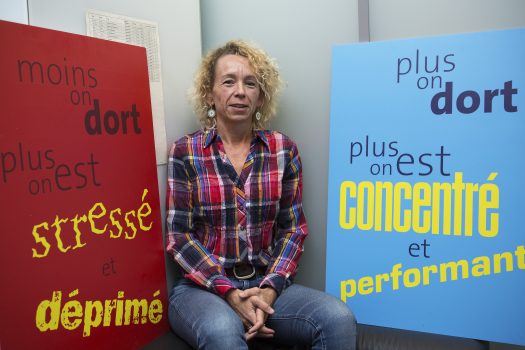
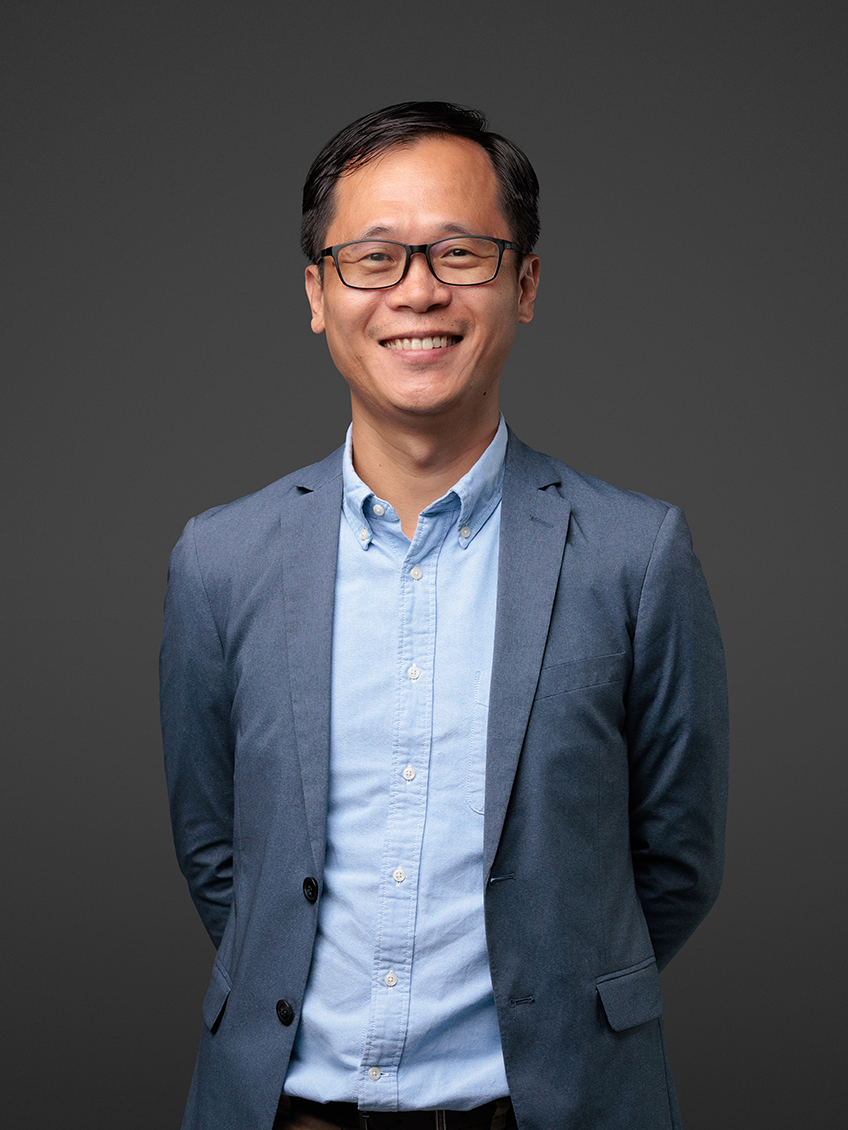
Prof. Sophie Schwartz is a leading neuroscientist at the University of Geneva , where she heads the Sleep & Cognition Lab within the Faculty of Medicine . Her research integrates neuroimaging (fMRI, hd-EEG, MEG) , behavioral testing , and computational modeling to unravel the neural mechanisms underlying memory consolidation , emotion processing , and dreaming during sleep, while also developing clinical interventions to enhance sleep in neurological and psychiatric disorders.
Prof. Dr. Mehmet Reşit Tolun is a full-time Professor in the Department of Software Engineering at Çankaya University (Turkey) since 2022. Previously held full-time professor positions at Konya Food and Agriculture University (2020-2022), Aksaray University (2013-2017), and TED University (2011-2013), along with a part-time professorship at Başkent University (2017-2020). Specializes in Artificial Intelligence , Machine Learning , and Data Mining , with a focus on deep learning applications in aerospace, biomedical data analysis, and software process improvement. PhD in Computer Science (University of Kent, 1985) MSc in Computer Science (University of Kent, 1982) BSc in Physics and Computer Science (University of Kent, 1981) Research Interests span deep learning frameworks, hybrid expert systems, software engineering methodologies, and biomedical signal processing. Publications emphasize practical implementations in medical diagnostics, robotics, and agricultural pest detection. Scientific Awards include the IEEE Third Millenium Medal (2000). Supervised over 55 graduate students, including Burak Çetin, Uğur Özotuk, and Mahinur Doğan. Collaborated with researchers from Orta Doğu Teknik Üniversitesi , Çankaya University , and Aksaray University .
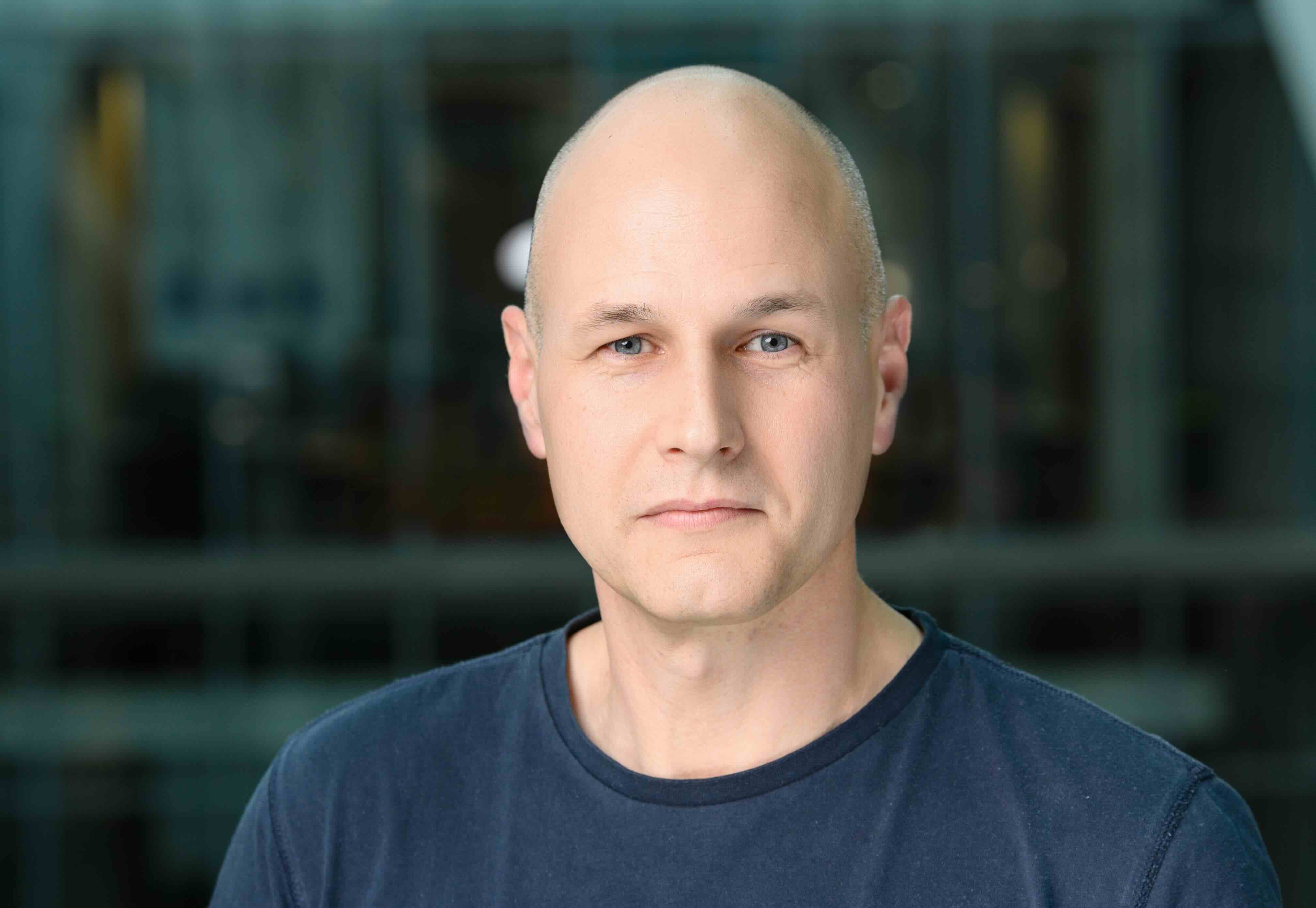
Darko Marinov is a Professor at the Siebel School of Computing and Data Science and a member of the Information Trust Institute at the University of Illinois at Urbana-Champaign. His research focuses on software testing methodologies, particularly regression testing, flaky tests, and software reliability engineering. He has contributed to frameworks like Ekstazi for regression test selection and DeFlaker for identifying flaky tests. Marinov holds an NSF CAREER Award (2008) for his work in this domain. His research interests span testing techniques for modern software systems, including configuration testing, test prioritization, and fault localization. He has pioneered studies on the characteristics of flaky tests in large-scale projects and developed tools to improve software quality assurance processes. Marinov collaborates across academic and industrial settings, addressing challenges in continuous integration, reproducibility of computational experiments, and hardware-software co-design for resilience. His work bridges theory and practice, with applications in cloud computing, AI workloads, and cybersecurity. Awards: NSF CAREER Award (2008) Key Contributions: Ekstazi, DeFlaker, FastFlip, and Ctest4J frameworks Labs/Teams: Active member of the Information Trust Institute and leads software testing research groups at UIUC
Dr. Wibowo Hardjawana is a Senior Lecturer in Telecommunications Engineering at the School of Electrical & Computer Engineering , University of Sydney. He holds a PhD from the University of Sydney and serves as an ARC DECRA Research Fellow. His research focuses on wireless network softwarisation, enabling programmable radio interfaces to address traffic elasticity in 5G/6G systems. Education : PhD (University of Sydney) Grants : ARC DP210100744 (2021), ARC DECRA DE140101114 (2014) His work spans 5G/6G network architectures , machine learning for wireless systems , and open radio interfaces . Key contributions include graph representation learning for interference management, Bayesian neural network detectors for OTFS modulation, and NOMA decoding techniques . Recent publications analyze ultra-reliable low-latency communications , UAV-enabled networks , and stochastic geometry in wireless systems . He has collaborated with institutions in China, Indonesia, and UAE, and engaged with industry partners like Telstra and Ausgrid.
Roles: Prof Peter Bell holds a personal chair in speech technology at the University of Edinburgh's School of Informatics and is a core member of the Centre for Speech Technology Research (CSTR). His primary research focus is automatic speech recognition (ASR), particularly in cross-domain adaptation, lightly supervised training, and minority language systems. He teaches the Automatic Speech Recognition course and advises multiple PhD students. Research Interests: Prof Bell's work spans ASR system development for diverse domains, audio-visual integration, end-to-end models, and under-resourced languages. His projects include the CoG-MHEAR healthcare initiative and the Unmute project addressing language marginalization. He has pioneered techniques for speaker adaptation, raw-waveform modeling, and multi-task learning. Commercial Activities: He advises industry on speech tech adoption, co-founded Quorate Technology (acquired by LSEG), and provides consultancy to firms developing speech solutions. His work bridges academic research with commercial impact through projects like the BBC's MGB Challenge and EU-funded SUMMA platform. Grants & Projects: Leads EPSRC-funded CoG-MHEAR and Unmute initiatives, collaborates on IARPA MATERIAL for low-resource ASR, and contributed to the SpeechWave waveform-based ASR project. His research has been supported by Bloomberg, Ericsson, Samsung, and Toshiba. Labs & Teams: Active in CSTR, leading teams in speech representation learning, adaptation techniques, and multi-modal ASR. His lab supports interdisciplinary work with NLP, HCI, and biomedical engineering groups. Personal: A passionate hillwalker, he explores Scottish Highlands and Corbetts. Previously active in Edinburgh University Hillwalking Club, his outdoor pursuits reflect his disciplined approach to research exploration.
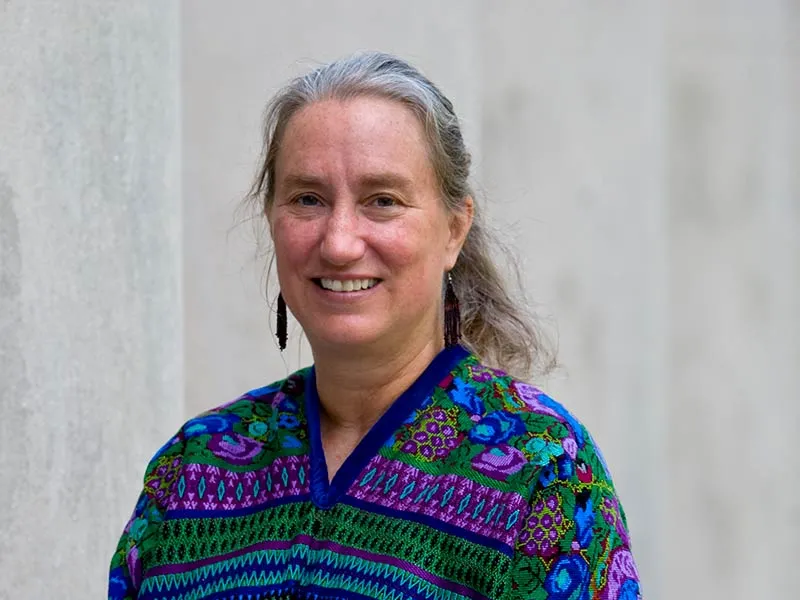
Judith Maxwell is Professor of Anthropology at Tulane University, specializing in linguistic anthropology with primary focus on Mayan languages (Kaqchikel, Chuj, Nahuatl) and discourse analysis. Her work bridges theoretical linguistics and applied language revitalization, particularly through the Tunica-Biloxi language project since 2010. Education PhD in Anthropology, University of Chicago (1982) Research Focus : Maxwell investigates discourse structures in Mayan languages regarding artistry canon, cultural constructs, coherence mechanisms, and societal relationships. Her colonial manuscript analysis explores language change in Kaqchikel/Nahuatl, while contemporary work examines bilingual education, language shift, and gender performance across English and Indigenous varieties. She pioneered the revival of Tunica language through community-academic collaboration. Publication Trends : Recent works (2014-2024) demonstrate consistent focus on Mayan language documentation ( Kaqchikel chronicles , Chuj Narratives ), revitalization pedagogy ( Maja'il Kaqchikel ), and sociopolitical dimensions of language ( Mayan Languages and Guatemala Law ). Key themes include decolonizing methodologies, Indigenous knowledge systems, and practical applications for endangered language communities. Advising & Grants : Maxwell leads the Tunica-Biloxi Language Revitalization Project training Tulane students in documentation techniques. Her collaborative model integrates tribal knowledge with academic research, securing sustained community engagement despite specific grant details being unreported. Research Teams : Directs the Tunica-Biloxi collaborative team comprising Tulane students, tribal scholars, and native speakers, developing e-learning tools like the Q'anil Kaqchikel lessons filmed in Guatemala with native instructors.
Dr. Iñaki Esnaola is a Senior Lecturer at the Department of Automatic Control and Systems Engineering, University of Sheffield, and a Visiting Research Collaborator at Princeton University. He holds a MSc from the University of Navarra (2006) and a PhD from the University of Delaware (2011). His research focuses on information theory, machine learning, and cybersecurity, particularly in cyberphysical systems like smart grids. His work addresses data integrity, privacy, robust estimation, and optimal sensor placement. Research interests include: Information theory and data science, machine learning and high-dimensional statistics, cybersecurity (especially data injection attacks), privacy, robust estimation, and sensor placement optimization. Recent projects involve empirical risk minimization with regularization, stealth attacks on control systems, and compressive sensing for environmental monitoring. Key publications include studies on relative entropy in machine learning, sensor placement for sewer networks, and stealth attacks in smart grids. He leads a research group with ongoing projects in resilient cyberphysical systems and received a UKRI grant for advanced manufacturing. His work bridges theoretical foundations with real-world applications in energy systems and environmental monitoring.
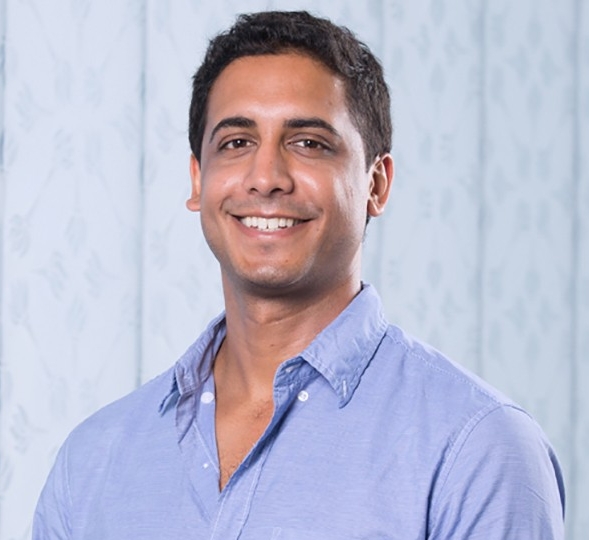
Kartik Sreenivasan is Associate Professor of Psychology and Associate Program Head for Undergraduate Studies in Psychology at New York University Abu Dhabi (NYUAD), with an affiliation in Biology. He is also a Global Network Associate Professor of Psychology, reflecting his role across NYU’s global campuses. His research is centered on the neurobiological basis of working memory and goal-directed cognition. His educational background includes a BA in Psychology from Yale University and a PhD in Neuroscience from the University of Pennsylvania under Dr. Amishi Jha. He completed postdoctoral training at UC Berkeley with Dr. Mark D’Esposito and joined NYUAD in 2014. Sreenivasan’s research focuses on how the brain maintains and manipulates information in working memory. Key interests include dynamic neural coding, feature binding, effective connectivity, and the transformation of memory into action. His lab employs fMRI, MEG, EEG, TMS, and behavioral paradigms to study both healthy and clinical populations. The most recent publications highlight trends in distributed neural systems, phase-coding mechanisms in working memory, and the role of subcortical structures. His work increasingly emphasizes network-level interactions, oscillatory dynamics, and the flexibility of memory representations under interference and attentional demands. Sreenivasan has received no explicitly mentioned scientific awards in the provided text. He actively mentors PhD students (Ying Zhou, Shanshan Li, Hannah Chu) and supervises undergraduate capstone projects. His lab has been supported by institutional funding, though specific grants are not listed. He teaches core courses such as Biopsychology, Cognitive Neuroscience, and Capstone Research in Psychology and Biology. The Sreenivasan Lab at NYUAD is a vibrant research group focused on understanding the neural underpinnings of cognition. It includes postdocs, research assistants, PhD students, and undergraduates, and has produced numerous publications in high-impact journals. The lab investigates topics such as working memory organization, neural connectivity, and the interplay between perception and memory.
Daniel Müller-Gritschneder is an Adjunct Teaching Professor (Privatdozent) at the Technical University of Munich (TUM), affiliated with the Chair of Electronic Design Automation. He leads the 'Electronic System Level' research group, focusing on embedded systems, TinyML, virtual prototyping, and hardware resilience. He temporarily served as head of the Chair of Real-Time Systems (2019–2020) and holds a senior membership in IEEE. His research spans: TinyML : Optimizing neural network inference for microcontrollers. Virtual Prototyping : Fast simulation for embedded software development (e.g., ETISS simulator). Runtime Verification : Hardware monitoring for safety-critical systems. Fault Tolerance : Cross-layer resilience against soft errors. Design Automation : NoC synthesis and RISC-V toolchain optimization. His publications emphasize RISC-V-based systems, TinyML deployment, fault injection, and embedded AI. Recent works show trends toward compiler-assisted security, thermal management, and automated design-space exploration for edge devices. Awards: Best Paper Award (SiPS 2019) Habilitation Award (Bund der Freunde der TUM, 2019) 2nd Best Paper (SMACD'15) Best Paper nominations at DAC'07, DATE'10, Analog'10, NOCS'13 He advises researchers in the Electronic System Level group and contributes to EU projects (e.g., Scale4Edge). His lab develops tools like ETISS, MLonMCU, and Seal5 for RISC-V and TinyML ecosystems.
Professor Paul Fletcher is a Principal Investigator at the Institute of Metabolic Science, University of Cambridge, and holds the Bernard Wolfe Health Neuroscience Fund. He is affiliated with the Department of Psychiatry and collaborates with Professors Steve O’Rahilly, Sadaf Farooqi, Fiona Gribble, and Frank Reimann. His research bridges neuroscience and psychiatry to explore higher-level perceptual and learning processes shaping decision-making and behavior, particularly in relation to obesity and mental disorders. Academic Rank: Professor University: University of Cambridge School: Institute of Metabolic Science Department: Psychiatry Fletcher employs functional neuroimaging, behavioral studies, and pharmacological perturbations (e.g., dopamine agonists/antagonists) to investigate reward-related brain processes and their role in food choice, obesity, and psychiatric conditions like psychosis. His work emphasizes the integration of the brain with metabolic/endocrine signals and external environments. Key trends in his publications include predictive coding , delusions , neuroimaging , and virtual reality applications in mental health. Recent studies focus on anxiety , foraging behavior , schizophrenia , and health interventions . Scientific Awards Bernard Wolfe Health Neuroscience Fund Wellcome Trust Senior Clinical Fellow Fletcher’s research is funded by Wellcome and the Bernard Wolfe Fund, with collaborations spanning psychiatry, psychology, and clinical neuroscience. His work addresses mental health , obesity , and neurocognitive mechanisms of decision-making, supported by recent publications in top-tier journals.
Mahsa Derakhshani is a Senior Lecturer (equivalent to Associate Professor) in Digital Communications at Loughborough University's Wolfson School of Mechanical, Electrical and Manufacturing Engineering. She leads research in the Signal Processing and Networks Research Group (SPNRG) and serves as an Associate Editor for the IET Signal Processing Journal. Her academic journey includes a PhD from McGill University (2013), followed by postdoctoral roles at the University of Toronto and Imperial College London. Key awards include the Royal Academy of Engineering/The Leverhulme Trust Research Fellowship (2020-21) and NSERC Postdoctoral Fellowships (2015-2017). Research interests focus on digital communications, machine learning for signal processing, wireless networks, and reinforcement learning applications. Recent work addresses challenges in satellite communications, OTFS modulation, and opto-physiological monitoring. She has authored over 70 publications spanning topics like NOMA systems, MIMO optimization, and edge-assisted live streaming. Education: PhD (McGill, 2013), MSc (Sharif University, 2008), BSc (Sharif University, 2006) Affiliations: IEEE Senior Member, IET Member, Fellow of the Higher Education Academy Grants & Funding: Leverhulme Trust, Royal Academy of Engineering, NSERC Labs/Teams: Active in SPNRG and collaborates on projects involving 5G/6G networks, satellite systems, and biomedical signal processing. Current research emphasizes AI-driven solutions for communication networks and wearable health monitoring technologies.
Chen Binbin is an Associate Professor and Associate Head of Pillar (Innovation and Enterprise) in the Information Systems Technology and Design (ISTD) pillar at Singapore University of Technology and Design (SUTD). He serves as Deputy Director for the Future Communications Research and Development Programme (FCP), Singapore. Previously, he was a Principal Research Scientist at the Advanced Digital Sciences Center (now Illinois ARCS), affiliated with the University of Illinois. Education: PhD in Computer Science from National University of Singapore, and Bachelor's from Peking University. Research focuses on wireless networking, distributed systems, and cyber security for critical infrastructures like smart grids and industrial control systems. His work addresses secure communications, intrusion detection, and resilience against cyber-physical threats. Notable contributions include error-estimating coding, provenance verification in ICS, and AI-driven network security solutions. Key awards include the 2010 ACM SIGCOMM Best Paper Award for error-estimating coding research. His grants span agencies like Singapore's National Research Foundation (NRF), Cyber Security Agency (CSA), and Energy Market Authority (EMA). He leads projects on secure smart grid communication, industrial control system defense, and AI-enhanced cybersecurity tools. Technical leadership involves developing frameworks like CyberSAGE for security assessment and CMD for IoT malware detection. Active in collaborations with industry and government, his work bridges theory and practice in securing critical infrastructure systems.
Sidharth Jaggi is a Professor at the School of Mathematics, University of Bristol, with over 19 years of experience in Information and Data Sciences through the lens of Information Theory. His work emphasizes fundamental performance limits and algorithm design for systems under adversarial threats. Education: B.Tech, M.Phil, PhD Research interests focus on adversarial communication, information-theoretic security, coding theory, and sparse data estimation. He leads the CAN-DO-IT team (Codes, Algorithms, Networks – Design and Optimization for Information Theory), integrating theoretical tools into practical applications like secure distributed computing and robust data storage. Recent publications highlight advancements in adversarial channels , group testing , and privacy-preserving coding . Trends include covert communication under spectral constraints, causal feedback benefits, and efficient algorithms for high-dimensional problems. Current projects include "Information Theory for Interactive Distributed AI" (2024–2029), exploring interactive systems under adversarial constraints.
Inbar Fijalkow is a Full Professor at the National School of Electronics and Computer Science (ENSEA) within CY Cergy Paris University. She is a member of the ETIS Research Unit (UMR 8051), focusing on signal processing for wireless communications, optimization, and machine learning applications. Her research bridges theoretical advancements with practical implementation in emerging communication systems. Education & Career: PhD in Signal Processing from TelecomParisTech (1993) Postdoctoral Fellow at Cornell University (1994–1995) Professor at ENSEA since 1999 Former Head of ETIS Research Unit (2004–2013) Research Interests: Signal processing for wireless communications Optimization techniques in massive MIMO and NOMA systems Machine learning applications in communication systems Nonlinear effects mitigation in high-power amplifiers Community & Awards: Member of CoNRS Section 7 (National Committee for Scientific Research) Chevalier de l’Ordre National du Mérite (2015) Founder of the CY Alliance Women in Science Prize (2017) Recent Projects: Active in ANR-funded initiatives (e.g., EcoBioH2, AI4code) and EU projects (e.g., PERSEUS). Her work emphasizes sustainability and AI-driven communication systems. Teaching: Teaches signal processing and wireless communications at ENSEA. Supervises PhD students and master’s theses in communication systems and signal processing.
Prof. Akash Kumar is a Professor at the Chair of Embedded Systems at Ruhr University Bochum, Germany. He previously held professorships at TU Dresden (2015–2024) and the National University of Singapore (NUS; 2011–2015). His research focuses on design automation of embedded systems, reliability optimization, and approximate computing, with a strong emphasis on FPGA and emerging technologies. He leads projects such as Lean-MICS (DFG-funded) and SecuREFET-II, addressing cross-layer reliability and secure circuits. Education: PhD in Multimedia Multiprocessor Systems from Eindhoven University of Technology (TUe) and NUS (2005–2009), Master of Technological Design (Embedded Systems) from NUS (2003–2004), and B.Eng (Computer Engineering) from NUS (1999–2002, First Class Honours). Research interests span embedded systems, reconfigurable architectures, and hardware-software co-design. His work includes optimizing energy efficiency, fault tolerance, and cross-layer approximation techniques. Recent publications highlight advancements in FPGA-based accelerators, machine learning optimizations, and mixed-criticality systems. Active in grants and leadership, Kumar is Principal Investigator on multiple DFG and industry-funded projects, emphasizing collaborative research in distributed computing and approximate architectures. His contributions bridge theory and practice, with applications in edge AI, IoT, and cybersecurity.