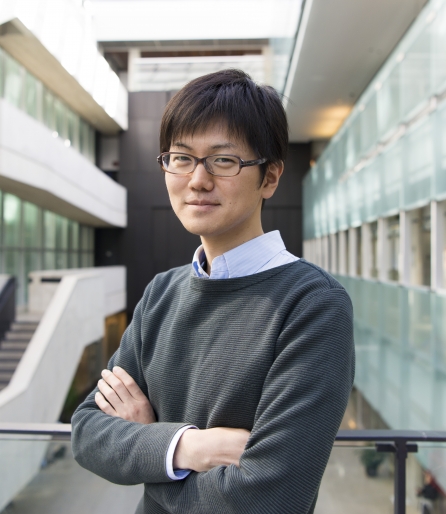
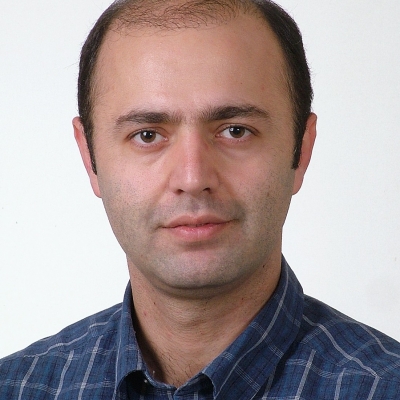
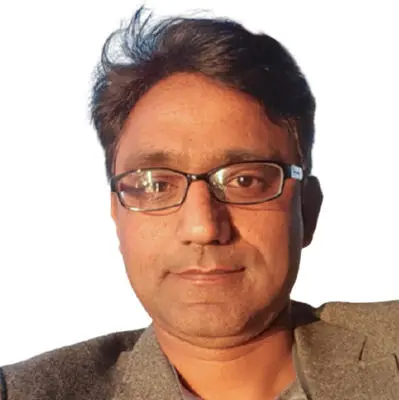
Michel Kulhandjian is a researcher specializing in Wireless Communication and Machine Learning applications. His work spans NOMA Systems , RF Fingerprinting , and Drone-Assisted Sensing across academic institutions. Key collaborations with Carleton University , Carleton University , and University of Ottawa researchers Active in 5G/6G technologies and IoT Security since 2018 His recent articles focus on: 2024 : Pedestrian detection, drone-based tree health monitoring, and industrial IoT security 2025 : AI-powered agricultural robotics Scientific contributions include: Code design for OTFS-NOMA systems Low-complexity detection algorithms 3D CNN frameworks for signal analysis RF Fingerprinting under impaired channels
Xiaojun Zhang is a Professor actively contributing to cloud computing, blockchain technology, data security, and educational technology. His work spans cybersecurity, signal processing, and wireless systems. Key Research Areas: Privacy-preserving data aggregation, machine learning for biomedical imaging, blockchain-based integrity auditing, and educational metacognition studies. Recent Article Trends (2022–2025): Focus on secure federated learning, data denoising algorithms, and blockchain applications in smart grids, healthcare, and education. Collaborations include institutions in China and international researchers.
Prof. Dr.-Ing. André van Hoorn was a distinguished academic at the University of Hamburg , leading the Software Development and Construction Methods group in the Department of Computer Science since 2023. His research focused on quantitative analysis of performance and quality attributes in complex distributed systems, contributing significantly to software engineering and architecture communities. He held leadership roles in SPEC Research and organized ICPE and ECSA conferences. Education and Career: He previously worked at Oldenburg, Kiel, and Stuttgart universities. His academic rank was Professor, reflecting his expertise and leadership in software systems research. Research Interests: His work emphasized resilience engineering, microservices, cloud computing, and performance optimization. He developed tools like Kieker for performance monitoring and frameworks like Radon for serverless computing analysis. Teaching and Outreach: He actively mentored students and pioneered the SeaSchool project to introduce students to non-programming aspects of computer science. His pedagogical innovations included tablet-based e-exams in large courses. Legacy: His contributions span academic leadership, impactful research, and community engagement. Condolence books are available at the University of Hamburg’s Department of Computer Science, and a fundraising campaign supports his family.
Anwar Hasan is a Professor in the Department of Electrical and Computer Engineering at the University of Waterloo. He specializes in cryptography, post-quantum cryptography, and secure computation, with a focus on algorithm optimization, cryptographic hardware implementation, and energy efficiency. His work spans theoretical foundations and applied systems, including blockchain technology, fault-tolerant cryptosystems, and secure multiparty computation. His research interests emphasize developing quantum-resistant cryptographic protocols, improving efficiency in cryptographic algorithms (e.g., EdDSA signature verification, CSIDH optimization), and designing secure systems against adversarial attacks (e.g., poisoning in federated learning, covert adversary models). He also explores energy consumption analysis of cryptographic algorithms, particularly in the context of NIST PQC standards and elliptic curve-based systems. Recent work includes contributions to threshold cryptography (isogeny-based schemes), decentralized oracle networks (CountChain), and privacy-preserving blockchain applications (AdChain). His publications frequently address hardware-software co-design for cryptographic primitives, emphasizing both theoretical advancements and practical implementation challenges. Dr. Hasan’s research also extends to applied areas such as fraud detection systems, digital rights management using blockchain, and energy efficiency in embedded cryptographic systems. He collaborates on projects involving secure communication in cloud computing and resilient key management for mobile applications.
Beni Yoshida is a Research Professor at Perimeter Institute for Theoretical Physics, focusing on quantum information theory, quantum gravity, and condensed matter physics. His work explores applications of quantum coding theory to quantum many-body systems and black hole physics. He held a 5-Year Senior Postdoctoral Researcher position at Perimeter (2015–2017) and was a Burke Fellow at Caltech’s Institute for Theoretical Physics (2012–2015). Research Interests: Quantum error correction and its holographic interpretations Information retrieval from black holes via entanglement scrambling Connections between quantum gravity and condensed matter systems Awards Nishinomiya Yukawa Memorial Prize in Theoretical Physics (2021). Advising & Grants: No formal advisees listed, but his research involves collaborations with institutions worldwide. Grants and funding details not specified in text. Labs/Teams: Active member of Perimeter Institute’s quantum gravity and quantum information theory research groups, with seminar engagements at leading institutions like Caltech, University of Chicago, and international conferences.
Tuna Tuğcu is a Professor in the Department of Computer Engineering at Bogazici University, where he leads research in nanonetworking and wireless communications. He holds affiliations with the Computer Networks Research Lab (NetLab), Nanonetworking Research Group (NRG), and Telecommunications and Informatics Technologies Research Center (TETAM). He earned his PhD in Computer Engineering from Bogazici University in 2001 and completed postdoctoral research at Georgia Institute of Technology. His research focuses on NanoNetworking/Molecular Communications , 5G Networks , Cognitive Radio , and Wireless Systems . Key areas include diffusion-based signal propagation, modulation techniques for molecular channels, and optimization of nanoscale communication protocols. His recent publications emphasize practical applications in transmitter localization, error minimization, and throughput enhancement for emerging technologies. Awards include: Best Paper Award at ISCC'12 (2012) Best Paper Award at AICT (2010) National Utility Model for disaster coordination systems (TR 2013 11786 Y) He serves as Senior Projects Coordinator and chairs the Information Technologies Committee. He also contributes to ÖBİKAS and TETAM governance. No specific grants or student advisees are detailed in the source text.
Jakob Lechner is an External Lecturer in the Computer Engineering department at Vienna University of Technology. His work focuses on fault-tolerant digital circuit design, asynchronous systems, and robust hardware architectures. Education : PhD in Computer Engineering (2014), Diploma in Computer Engineering (2008) Research interests include: Fault-tolerant computing Asynchronous circuit design Transient error mitigation in FPGAs Triple Modular Redundancy (TMR) Metastability containment Single Event Transients (SET) resilience His publications (2006–2018) emphasize fault injection techniques, robust GALS circuits, and asynchronous communication protocols. Key projects include Intel CARS (2017–2019) on delay-insensitive codes. Supervision : Guided K. D. Pados' thesis on AXI4 bus systems (2013).
Nim Tottenham is a Professor and Department Chair in the Department of Psychology at Columbia University. She also holds an adjunct appointment as an Associate Professor in the Child Study Center at Yale School of Medicine. Her research focuses on developmental affective neuroscience, examining the neural mechanisms underlying emotional development and the impact of early-life adversity on brain circuitry. She received her PhD from the University of Minnesota and completed postdoctoral training at Weill Cornell Medical College. Her work integrates behavioral and neuroimaging techniques to study limbic-cortical development, with a particular emphasis on the amygdala and its connections. Key areas of research include emotional reactivity, caregiving influences, and resilience mechanisms in children exposed to adversity. She leads the Developmental Affective Neuroscience Lab (DANLab), which investigates these topics through longitudinal and cross-cultural studies. Tottenham has received prestigious awards, including the APA’s Distinguished Scientific Award and the NIMH BRAINS Award. Her publications span topics like neural plasticity, caregiving effects, and machine learning applications in mental health. Ongoing projects include investigating resilience in South African birth cohorts and leveraging predictive models to identify caregiving risks for child mental health.
Prof. Christoph Studer is a Full Professor of Integrated Information Processing at ETH Zurich's Department of Information Technology and Electrical Engineering. He leads the Integrated Systems Laboratory and directs SwissChips. His research focuses on wireless communication, machine learning, signal processing, and hardware-efficient algorithms, with applications in B5G systems, sensing-communication integration, and low-power signal processing. He holds a Ph.D. and M.S. from ETH Zurich (2009 and 2006) and has held academic positions at Cornell University before returning to ETH in 2020. Notable honors include the NSF CAREER Award (2017), ETH Medal for Doctoral Dissertation (2011), and multiple teaching awards. Education: M.S. and Ph.D. in Information Technology and Electrical Engineering, ETH Zurich (2006, 2009) Visiting Researcher, Stanford University (2005) Research Interests: Develops algorithms and hardware for high-throughput, low-power wireless systems. Key areas include: B5G multi-antenna systems and simultaneous sensing-communication (SISCO) Analog-to-feature (A2F) conversion for low-power signal classification Hardware-software co-design for efficient microchip integration Publications: Focus on channel charting, jammer mitigation, and deep learning for communication. Recent work includes CSI2Vec, jammer-resilient synchronization, and distributed MIMO systems. Awards: US NSF CAREER Award (2017) Michael Tien Teaching Award (2016) ETH Medal for Doctoral Thesis (2011) Labs/Teams: Leads the Integrated Systems Laboratory at ETH and directs SwissChips, a national initiative for integrated circuit development.
Dilan Senaratne is a Lecturer in the School of Electrical Engineering and Computer Science at Oregon State University, part of the College of Engineering. He joined the faculty in 2023 after completing his Ph.D. in Electrical and Computer Engineering with a minor in Artificial Intelligence at the same institution (2023), following an M.S. (2020) and B.Sc. (Honors, University of Moratuwa, Sri Lanka, 2015). His teaching portfolio includes courses on electrical fundamentals, power system analysis, protection, and smart grid technologies (ENGR 201, ECE 433/533, ECE 536, ECE 437/537). His research focuses on power system resilience, PMU data analysis, hardware-in-the-loop testing, and AI-driven solutions for energy infrastructure. He has authored publications addressing parameter correction algorithms, fault detection systems, and PMU-based event classification. Notable technical contributions include spatio-temporal analysis of PMU data for unsupervised event detection (2021) and sparse regression techniques for power network parameterization (2019). His early work included foundational contributions to 40Gbps Ethernet PCS implementation (2015). No awards or grants are explicitly listed in the provided materials. His research interests bridge electrical engineering fundamentals with modern analytical techniques, emphasizing grid stability, protection systems, and smart grid innovation. Current academic activities include advancing hardware-software co-design methods for power system testing environments.
Michael Gullans is an Adjunct Assistant Professor in the Department of Physics, Department of Computer Science, and the Institute for Advanced Computer Studies (UMIACS) at the University of Maryland. He is also a physicist in the Nanoscale Device Characterization Division at NIST. His research focuses on quantum information systems, quantum simulators, and fault-tolerant computing, emphasizing error correction, noise mitigation, and statistical physics applications in many-body quantum dynamics. Gullans holds a PhD from Harvard University (2013) and has held postdoctoral positions at QuICS and Princeton University. His work bridges theoretical quantum computing and experimental implementations, with contributions to quantum error correction protocols, analog quantum simulation, and the interplay of disorder and noise in quantum systems. Recent publications address scalable quantum architectures, low-depth random circuits, and hybrid fermion-qubit systems. He teaches advanced courses on quantum technology and quantum error correction. Key collaborations include NIST, QuICS, and institutions exploring silicon spin qubits and reconfigurable atom arrays. His research aims to advance fault-tolerant quantum computation and reliable quantum simulators for studying complex systems.
Prof. Saikat Guha holds the Clark Distinguished Chair Professorship in the Department of Electrical and Computer Engineering at the University of Maryland, College Park. He leads the Photonic Quantum Systems (PhoQuS) group, focusing on quantum information theory applications to quantum optics, quantum-limited photonic systems, and cross-disciplinary innovations in information theory, error correction, and network theory. His research spans quantum-enhanced classical communications, quantum network architectures, photonic sensing with non-classical light, and quantum-limited imaging. Notable projects include NSF-funded initiatives for quantum interconnects in ion trap quantum computers and quantum networking protocols. He is recognized as an IEEE Fellow for contributions to quantum communication. Teaching includes a new undergraduate/graduate course Information in a Photon (ENEE 439G/739G), introducing quantum light principles for information processing. His group collaborates on experimental proof-of-concept systems, including entanglement-enhanced LiDAR, fiber-optic gyroscopes, and quantum-optimal coronagraphs for exoplanet detection. Research Labs: Photonic Quantum Systems (PhoQuS) Lab Grants: $5M NSF Convergence Accelerator Award (Quantum Interconnects) $1M NSF Project (Quantum Network for Trapped-Ion Computers) Awards: IEEE Fellow (2023) Key advising contributions include PhD student Itay Ozer (optomechanics) and postdoc Yu Shi (quantum entanglement studies). His work bridges foundational theory with practical implementations, aiming to achieve quantum-limited performance in real-world systems.
Olgica Milenkovic is the Franklin W. Woeltge Professor of Electrical and Computer Engineering at the University of Illinois Urbana-Champaign (UIUC), where she is also a Research Professor at the Coordinated Science Laboratory. She is a leading researcher in coding and communication theory with groundbreaking applications in molecular and DNA-based data storage systems. Her research focuses on the intersection of information theory, bioengineering, and machine learning. She investigates how principles from communication systems can be leveraged to design robust, portable, and high-capacity molecular storage platforms. Her work emphasizes random access mechanisms, expansion of molecular alphabets, and the integration of machine learning for user data reconstruction in DNA-based storage. The recent publications and lecture topics indicate a strong trend in applying theoretical coding frameworks to real-world biocomputing challenges, particularly in creating scalable and error-resilient molecular data systems. Her interdisciplinary approach bridges electrical engineering, computer science, and synthetic biology. Olgica Milenkovic has received recognition through prestigious appointments and invited lectures, though specific awards are not listed in the current text. She advises graduate students and leads advanced research initiatives in collaboration with laboratories focused on computing and biosystems. Her work is supported by significant academic and potentially federal or industrial grants, typical for her rank and research domain, though specific funding sources are not detailed. She is actively involved in research teams at the Coordinated Science Laboratory at UIUC, contributing to cutting-edge developments in next-generation computing and storage technologies.
Dr. Shakeel Ahmad is an Associate Professor in the Department of Science and Engineering at Solent University since 2015. He leads the BSc (Hons) Cyber Security Management, BSc (Hons) Computer Systems and Networks Engineering, and MSc Applied AI and Data Science programs. His research focuses on optimizing multimedia communications and computer networks to maximize user quality of experience, particularly addressing challenges in video streaming over mobile and wireless networks. He holds a PhD (Dr.-Ing) from the University of Konstanz (2008), an MSc from TUHH, and a BSc from UET Lahore. Research Interests: Multimedia Communications Network Optimization for Video Streaming 4K/8K Video Transmission Virtual Reality Network Challenges Error Resilience Techniques His recent work explores digital content strategy in higher education, including website design, student recruitment tactics, and simplification of educational content ecosystems. He has secured significant funding, including £500k from the Office for Students (OfS) in 2020 for an AI/Data Science conversion course and £50k in 2021 for a National Data Skills Pilot project. Awards/Fellowships: Fellow of the Higher Education Academy PG Certificate in Higher Education Teaching & Advising: He teaches multimedia communications, AI, data science, and cybersecurity. Supervised multiple PhD completions and contributed to successful research projects like the EU-funded 'Community Network Game' (2010-2012). Active member of IEEE and IET.
Nikolaos Foutris is a Researcher at The University of Manchester, specializing in dependable and energy-efficient computer architectures. His work emphasizes hardware/software co-design, focusing on systems and processors that balance performance with reliability. Key research areas include memory optimization, GPU acceleration for cryptographic computations, and radiation effects on MPSoC systems. His research intersects with UN Sustainable Development Goals, particularly through energy-efficient technologies and resilient computing infrastructure. Collaborations span academia and industry, addressing challenges in NUMA systems, blockchain, and cloud applications. Recent publications highlight trends in memory analysis for managed applications, SPIR-V code generation frameworks, and mitigating radiation-induced errors in advanced embedded systems. No scientific awards or grants are explicitly mentioned in the provided text.