ZHU Feida is an Associate Professor of Computer Science and Associate Dean for Partnerships and Engagement at Singapore Management University's School of Computing and Information Systems. He holds the Aptos Move Professorship and specializes in Artificial Intelligence, Data Science, and Blockchain Technology. His research spans federated learning, cybersecurity, cryptocurrency analysis, and privacy-preserving data systems. Education: PhD in Computer Science from the University of Illinois (2009). He teaches courses on Data Mining, Business Analytics, and Computer Analysis Tools. Research focuses on machine learning algorithms, blockchain-enhanced systems, and early detection of malicious activities in cryptocurrencies. Key areas include federated learning frameworks, decentralized data governance, and anomaly detection in large networks. Award: Aptos Move Professorship (Recipient). Advising: Supervises students including CHENG Ling, LIU Huiwen, and THIA Boon Sing. His work addresses challenges in data assetization, secure aggregation in federated systems, and interdisciplinary applications of AI. Labs/Teams: Engaged in collaborative projects on blockchain security and smart data analytics through initiatives like the International Workshop on Smart Data for Blockchain (SDBD).
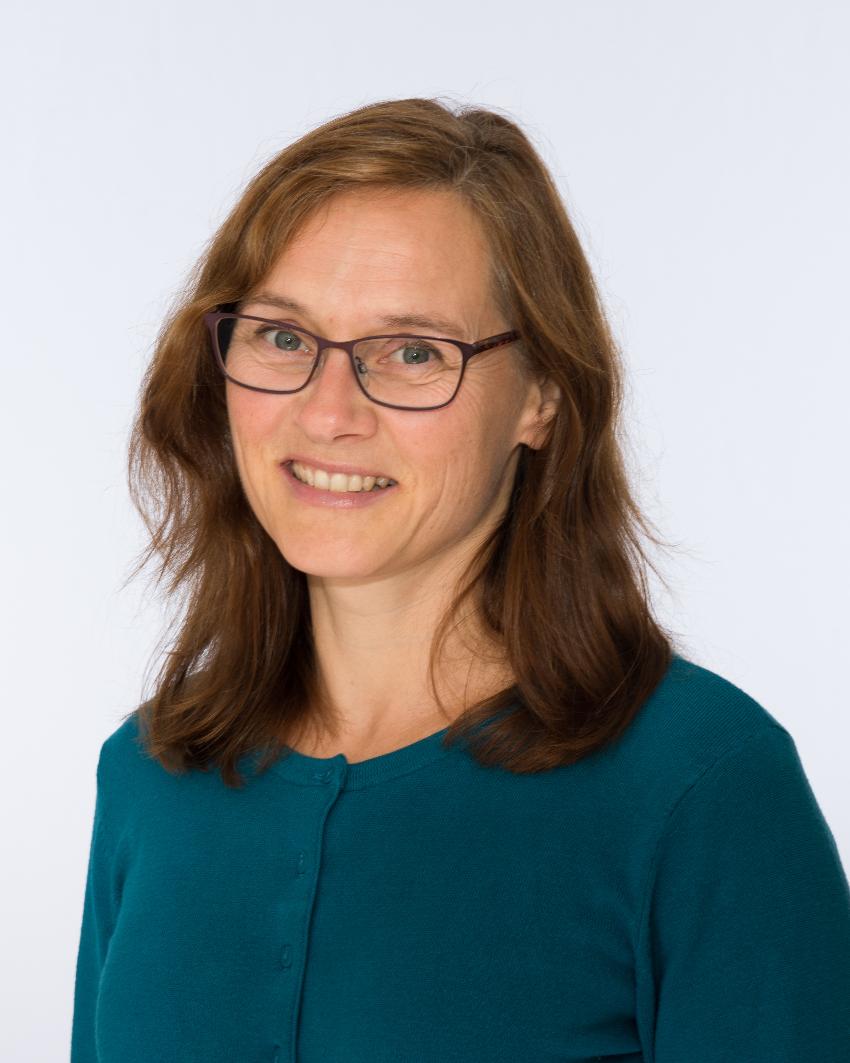
Kristin Killie is a researcher and faculty member at the Department of Education, UiT The Arctic University of Norway. Her work focuses on historical linguistics, particularly the development of English grammatical structures (e.g., progressive constructions, adverbial suffixes), and second language acquisition, especially Norwegian learners' challenges with English grammar. She leads the Teaching and Learning English (TALE) project, exploring effective pedagogical strategies for English language instruction. Her research also addresses language variation, corpus-based studies, and teacher practices in Norwegian schools. Key research interests include grammaticalization theory, subject-verb agreement errors in L2 learners, and the impact of technology (spell checkers) on language learning. She collaborates with institutions like the Language Data and Language Change (LDLC) group at the University of Bergen and contributes to journals such as Journal of Linguistics and Language Teaching .
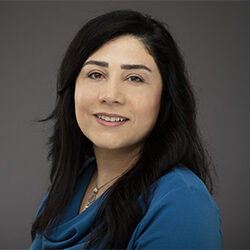
Ineke Mennen is Professor of Applied English Linguistics at the University of Graz, where she heads research in phonetics and bilingualism. She previously held the Chair of Bilingualism and Linguistics at Bangor University and positions at Edinburgh, Newcastle, and Queen Margaret universities. Her research investigates intonation systems across languages, examining how differences emerge in speech production, perception, and acquisition. Current FWF-funded project 'When your native language sounds foreign' explores L1 phonetic attrition. Her work combines acoustic analysis with perceptual experiments to understand bilingual speech patterns. Dr. Mennen has secured funding from ESRC, AHRC, FWF, and British Academy. She supervises doctoral research on L1 attrition, bilingual acquisition, and sociophonetic variation. Recent publications examine plasticity of native intonation in migrant populations.
Zhoulai Fu is a tenured Associate Professor at the State University of New York (SUNY), Korea, specializing in programming languages and software security. He also holds joint appointments as a Research Associate Professor at Stony Brook University and is affiliated with the Electrical and Computer Engineering Department at Virginia Tech. His educational background includes: Ph.D., 2009-2013, INRIA – Université de Rennes 1, France M.Eng., 2008-2009, Télécom ParisTech, France M.S, B.S, and French engineer degrees (Ingénieur), 2005-2008, École Polytechnique, France Professor Fu's research focuses on the intersection of Programming Languages, Software Security, and Large Language Models, with special emphasis on improving software reliability through formal methods, numerical error analysis, and scalable verification techniques . His work spans abstract interpretation, automated testing, and verification tools development. He has made significant contributions to floating-point analysis and program verification, with publications at top-tier conferences including PLDI, POPL, OOPSLA, ICSE, and CAV. His publication record shows a consistent trajectory in programming language theory with increasing practical applications. Early work focused on foundational aspects of abstract interpretation and floating-point analysis, while recent papers address security concerns through programming language techniques and incorporate modern approaches like incorrectness logic. Key themes across his publications include formal verification of low-level code, numerical error analysis, and developing scalable analysis tools for real-world software systems. His notable achievements include: Principal Investigator for DARPA E-BOSS Program funding Sole Principal Investigator for National Research Foundation of Korea funding Program Committee membership for POPL 2026, FSE 2024, and PLDI 2023 Professor Fu actively mentors students and has taught courses including Foundations of Computer Science, Programming Abstractions, and Research in Computer Science. His research is supported by significant grants from DARPA and NRF, enabling him to lead the Data & Intelligent Computing Lab at SUNY Korea. He is currently seeking postdocs, PhD, and graduate students to join his research team. He leads the Data & Intelligent Computing Lab, which focuses on advancing programming language techniques for software reliability and security. The lab collaborates with institutions including Virginia Tech, Stony Brook University, and international partners across Europe, working on projects that bridge theoretical computer science with practical software engineering challenges.
Natalia Dolgova is a full-time Teaching Associate Professor of English for Academic Purposes (EAP) at George Washington University (GWU), where she has been active since 2013. She holds a PhD in Applied Linguistics from Georgetown University and an MA in English Linguistics from George Mason University. Her research focuses on integrating cognitive and corpus linguistics into second language instruction, particularly for advanced learners. She coordinates the EAP 6111 course and contributed to developing GWU's Applied English Studies Program (AES@GW). Education: PhD in Applied Linguistics, Georgetown University MA in English Linguistics, George Mason University Research interests emphasize pedagogical applications of usage-based theories, including task-based language teaching and corpus analysis for EAP contexts. She has published extensively on topics like placement assessment design, error correction strategies, and cognitive frameworks for teaching conditionals and contrastive devices. Her work involves collaborations with institutions such as the Center for Applied Linguistics and the American Institutes for Research. She has presented at conferences like TESOL and AAAL, focusing on EAP course design for STEM disciplines and online teaching methodologies.
Muhidin Mohamed is a Lecturer (teaching-focused) in Business Analytics at Aston University's Aston Business School, with a dual role as Program Director in Operations and Service Management. He holds a PhD in Text Analytics and Natural Language Processing from the University of Birmingham and has extensive experience in teaching and research across institutions in the UK, Malaysia, Saudi Arabia, Sudan, and Somalia. Education qualifications include a PhD (2016), MSc in Electronics and Telecoms Engineering (2011), and BSc in Computer Science (2008). He is a Fellow of the Higher Education Academy (2021) and a Certified Practitioner in Digital Teaching and Learning (2022). Research focuses on Social Media Analytics, enabling NLP/ML for low-resource languages (e.g., Somali), AI adoption in SMEs, fraud detection, and learning analytics. His work emphasizes practical applications, including frameworks like SDbQfSum for query-focused text summarization and AfriMTE/AfriCOMET for African language support. Publications span fraud detection methods, NLP for under-resourced languages, and SME digitalization trends. He actively collaborates on global projects, such as MasakhaNEWS for African language news classification and AfriMTE for machine translation evaluation. Teaching responsibilities include courses on Machine Learning, Big Data, and programming for data analytics across undergraduate and postgraduate programs. He advises students and accepts PhD applications in related fields.
Saman Muthukumarana is a Professor and Head of the Department of Statistics at the University of Manitoba. He joined the department in 2010 as an Assistant Professor, was promoted to Associate Professor in 2016, and became a full Professor in 2022. He holds a BSc (Honours Special) in Statistics from the University of Sri Jayewardenepura, an MSc from Simon Fraser University, and a PhD from Simon Fraser University under Dr. Tim Swartz, focusing on Bayesian methods and applications. His research emphasizes Bayesian methodologies for complex models, with applications in social networks, health studies, sports analytics, environmental science, and machine learning. He has secured over $8.4M in research funding from NSERC, Mitacs, CIHR, and other organizations. His work has been published in journals such as the Canadian Journal of Statistics, Machine Learning with Applications, and IEEE Open Journal of Instrumentation & Measurement. Dr. Muthukumarana’s research spans Bayesian computation, biostatistics, data science, and environmental statistics. He has contributed to anomaly detection in buildings, predictive modeling for public health (e.g., Long COVID), and ecological studies like salmon stock recruitment. His collaborative projects include developing statistical tools for microbiome analysis and improving machine learning approaches for imbalanced datasets. He also leads the Data Science Nexus, fostering interdisciplinary research. His grants and collaborations highlight his role in advancing statistical methodologies for real-world challenges, including health, energy efficiency, and ecological conservation. While no specific awards are listed, his extensive funding and publication record reflect his scholarly impact. He currently supervises graduate students and actively participates in academic leadership roles.
Antoine Beugnard is a Professor in the Department of Computer Science at IMT Atlantique (formerly Telecom Bretagne), located on the Brest campus, where he has served since December 2007. His academic journey began at ENST-Bretagne (1986), followed by a Doctorate in Computer Science from the University of Rennes 1 in 1993, and accreditation to supervise research in 2005. His educational background includes: Former student of ENST-Bretagne (1986) Doctorate in Computer Science from University of Rennes 1 (1993) Accreditation to supervise research (2005) Professor Beugnard's research centers on software modeling, particularly focusing on the meaning, notations, and properties like composition of models. Since 2017, he has applied his research to the Industry of the Future, specifically digital twins, participating in the "Digital Twin" working group of the Alliance Industrie du Futur. His work also explores static verification of names in heterogeneous languages, communication abstractions, component-based software engineering, and late-binding semantics in object-oriented languages. As a member of Lab-STICC (UMR 6285) and the P4S team, he contributes to the development of Openflexo for model federation. His recent publications demonstrate a strong evolution from foundational work on object-oriented languages and component models toward practical applications in Industry 4.0 contexts, with a pronounced focus on digital twin technology, model federation, and software engineering approaches to complex systems. The research trajectory shows increasing integration of theoretical modeling concepts with real-world industrial applications. Professor Beugnard has supervised numerous doctoral students throughout his career, guiding research in areas including model federation, digital twins, component-based software engineering, and socio-technical systems. His teaching philosophy emphasizes active learning with project simulations addressing both organizational and technical aspects of software development. He is responsible for the "Ingénierie Logiciel des Systèmes Distribués" (ILSD) thematic deepening program and teaches software engineering, UML design, object-oriented programming with Java, and fundamentals like concurrency, distribution, and design patterns. His approach centers on three principles: "explicitez" (make explicit the process and product at all levels), "adaptez" (adapt rules and methods to context), and "justifiez" (justify decisions and adaptations).
Dr. Khoulood Sakbani is an Adjunct Professor in Liberal Arts & Sciences at Virginia Commonwealth University in Qatar, specializing in teaching Modern Standard Arabic and Syrian dialect to heritage and non-native learners. She holds a Ph.D. candidacy in Applied Linguistics from the University of Saint-Joseph in Beirut, with prior M.A. and B.A. degrees from Damascus University. Education: Ph.D. Candidate: Applied Linguistics, University of Saint-Joseph de Beyrouth M.A.: Teaching Arabic as a Second Language, Damascus University (2015) B.A.: Arabic Language & Literature, Damascus University (1996) Teaching Experience: Over 25 years of experience, including 15 years at Damascus University’s Higher Language Institute, coordinating study abroad programs like CASA and Flagship. Developed curricula for heritage learners and taught diplomacy Arabic at the British Council and American Embassy in Syria. Research Interests: Focuses on error analysis, writing skills in SLA, curriculum design, sociolinguistics, and Arabic cultural pedagogy. Her work bridges theoretical linguistics with practical language education, particularly for heritage speakers. Professional Contributions: Authored multiple Arabic language textbooks for various proficiency levels, including Syrian dialect and cultural studies. Presented at international conferences such as BATA and Georgetown University Qatar on heritage language education challenges and Arabic pedagogy trends.
Annette M. Volfing is a Professor of Medieval German Studies and Fellow of Oriel College at the University of Oxford. Her research focuses on later medieval religious, mystical, and allegorical writing, with particular expertise in medieval German literature, textual analysis, and gender studies. She holds a D.Phil. and has authored monographs on figures like Heinrich von Mügeln and John the Evangelist, as well as edited volumes on friendship in medieval culture and medieval notions of inner space. Her teaching includes Old High German, medieval German language, and literature. She is a Fellow of the British Academy, recognizing her contributions to humanities scholarship. Notable publications include The Daughter Zion Allegory in Medieval German Religious Writing (2017) and Medieval Literacy and Textuality in Middle High German (2007). Her articles span topics from allegorical interpretation to medieval mysticism's gendered dimensions. Her work often bridges theological, literary, and cultural analysis, with a focus on medieval German texts' intertextual and allegorical layers. Recent research explores dialogic structures in medieval sermons and the role of desire in mystical writing. She has contributed to collaborative projects like Punishment and Penitential Practices in Medieval German Writing (2018) and co-edited special journal issues on Dorothea von Montau and medieval friendship concepts.
Wouter Haverals is an Associate Research Scholar at Princeton University's Center for Digital Humanities and a Perkins Fellow at the Humanities Council. His work bridges computational methods with literary studies, focusing on medieval Dutch prosody, handwritten text recognition (HTR), and digital scholarly editing. He holds a Ph.D. in Literature and Linguistics from the University of Antwerp (2020) and has held postdoctoral and visiting scholar positions at institutions like the Meertens Institute (Amsterdam) and the Polish Academy of Sciences (Kraków). Research Interests: Computational analysis of medieval poetic meter Handwritten text recognition applied to historical manuscripts Digital methodologies in Hispanic-Filipino literature Stylometric analysis of children's literature His articles explore topics ranging from HTR datasets for medieval manuscripts to computational analyses of implied readership in Harry Potter. He contributes to projects like DigiPhiLit, advancing digital approaches for under-resourced languages. Current work includes a distant reading analysis of the Princeton Prosody Archive to study canonical authorship and prosodic concepts. Affiliations: Center for Digital Humanities, Princeton University Humanities Council, Princeton University Technical Council, Erasmus+ DigiPhiLit Project
Myounghee Cho is a Lecturer in Korean Language at the University of Rochester, previously teaching at Rice University and Northern Arizona University. She focuses on language pedagogy, curriculum design, and socio-linguistic aspects of Korean. Her research emphasizes effective teaching methodologies and student engagement. Research Interests include Language Acquisition Strategies Korean Linguistics and Pragmatics Innovative Classroom Activities Technology-Enhanced Learning She advises courses like KOR 101-207 (Elementary to Advanced Intermediate Korean) and KOR 107/157/207 (Summer Study Abroad programs). She serves as a board member of the American Association of Teachers of Korean (AATK) and actively participates in conferences like NCOLCTL and ACTFL, presenting on topics such as YouTube-based language learning and study abroad program design.
Juan David Guerrero Balaguera is a Research Fellow at Politecnico di Torino's Department of Automatic Control and Computer Science (DAUIN), affiliated with the CAD group. He holds a Ph.D. in Computer and Control Engineering from Politecnico di Torino (2024), advised by Prof. Matteo Sonza Reorda and Prof. Ernesto Sanchez. His research focuses on dependable hardware for safety-critical systems, including GPU reliability, fault tolerance, AI accelerators, and functional in-field testing. Prior to his Ph.D., he earned a Master's (2017) and Bachelor's (2013) in Electronics Engineering from Universidad Pedagógica y Tecnológica de Colombia, where he taught digital design, embedded systems, and FPGA-based image processing from 2014 to 2020. His research interests span advanced FPGA design, computational arithmetic for AI, fault effects analysis in GPUs, and reliability assessment of neural networks. Notable contributions include methods for generating self-test libraries (STLs) for GPUs, evaluating fault impacts on TCUs, and enhancing CNN robustness via dropout layer optimization. Education: Ph.D. in Computer and Control Engineering, Politecnico di Torino (2024) M.S. in Electronics Engineering, Universidad Pedagógica y Tecnológica de Colombia (2017) B.S. in Electronics Engineering, Universidad Pedagógica y Tecnológica de Colombia (2013) He has received the Ph.D. Quality Award (2023 and 2024) from Politecnico di Torino and Best Paper recognitions at DATE 2023 and DDECS 2021. His work bridges theoretical fault models with practical GPU testing methodologies, emphasizing real-world applications in AI and edge computing. Current teaching roles include collaborating on GPU programming (Master's level) and computer sciences courses (Automotive Engineering). Research collaborations involve exploring reliability trade-offs in split-computing DNNs and developing fault-aware design flows for AI accelerators.
Prof Steve King is a Professor (Teaching and Scholarship) at the University of York's Department of Computer Science, part of the Faculty of Sciences. He has held roles including Associate PVC for Teaching, Learning and Students, and has been involved in academic leadership positions such as Deputy Head of Department and Associate Dean. His research focuses on formal methods for system specification and development, with applications to safety-critical systems. King holds degrees from Oxford University: MA in Maths, MSc in Computation, and DPhil in Computation. He has contributed to over 30 publications in areas like formal verification, model transformation, and software safety assurance. His work emphasizes practical applications of formal methods in industry, particularly in ensuring safety-critical systems' reliability. Prof King has also served as an external examiner for multiple PhD theses, demonstrating his engagement in academic governance and quality assurance. Key professional roles include membership in the Standing Committee on Assessment and QAA HE Review activities. His research interests span formal specification techniques, model-driven engineering, and the application of rigorous methodologies to complex software systems. Recent publications highlight contributions to test data generation, UML model simulation, and compliance notations for concurrent systems.
Chris Chang-Bacon is an Assistant Professor in the Curriculum, Instruction & Special Education department at the University of Virginia's School of Education and Human Development. He holds a Ph.D. from Boston College (2019), an M.Ed. from Boston University (2014), and a B.A. from Gustavus Adolphus College (2007). His research focuses on disrupting racial and linguistic biases in multilingual education, with particular attention to equity in ESL, dual-language, and bilingual programs. He has advised equity initiatives in Boston Public Schools and leads the UVA Equity Center's educational initiatives. His scholarship addresses language ideologies in teacher education, critical literacy, and anti-oppressive pedagogy. Key areas include translanguaging practices, deficit discourse disruption, and advocacy training for educators. Chang-Bacon has consulted on linguistically inclusive K-12 textbooks and collaborates with publishers to enhance accessibility. Chang-Bacon has secured grants from the Spencer Foundation, NCTE, and the International Research Foundation for English Language Education. His work appears in top journals like TESOL Quarterly and Journal of Teacher Education . He serves on editorial boards for Linguistics and Education and the American Educational Research Journal . Notable awards include the 2022 James E. Alatis Prize and 2023 UVA All-University Teaching Award. He directs the Simulation Lab and contributes to the Race and Public Education in the South initiative. His teaching emphasizes advocacy skill development and critical reflection on systemic inequities.