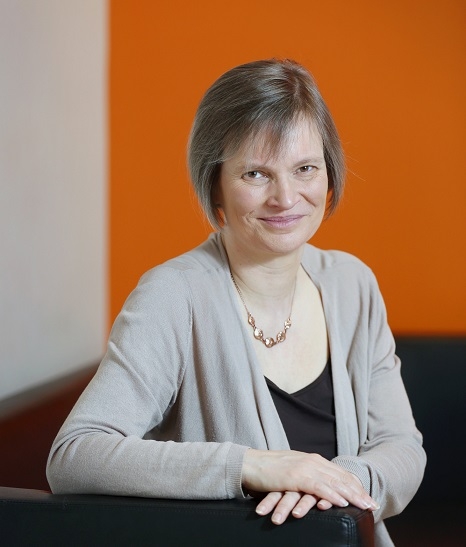
Jennifer R Mc Conville is a researcher at Chalmers University of Technology's Department of Urban Design and Planning. Her work focuses on sustainable sanitation systems, particularly in developing countries, with extensive research on wastewater management, community-based approaches, and resource recovery. Key affiliations: Formas-funded projects (2012–2020) Geographic focus: Bolivia, West Africa, Sweden Methodologies: Gamification, participatory planning, regime analysis Research interests include: Sanitation planning frameworks Decentralized wastewater systems Equity in urban-rural transitions Policy implementation barriers Recent publications analyze: Circular economy in sanitation Decision-support tools Community-managed infrastructure Role-playing in engineering education
Professor Edgar Pieterse is the founding director of the African Centre for Cities (ACC) at the University of Cape Town, based in the Environmental & Geographical Science Building on Upper Campus. His work is enriched through active global engagements with Bauhaus der Erde (Berlin), Club of Rome, 10X100 Forum, Robert Bosch Stiftung's Science Circle (Stuttgart), Indian Institute for Human Settlements (Bangalore), Pathways to Sustainability (Utrecht University), UNITAC-Hamburg, and UCLG's Ubuntu Board (Barcelona). His research explores urban imaginaries, alternative futures, sustainable infrastructure, place-making, public cultures, responsive design, and adaptive governance. Focusing on climate change, inequality, informality, governance, and technology in African and Global South urban contexts, he develops radical yet grounded urban futures through experimental practices in doing, organizing, regulating, and social narration. His conceptual framework integrates critical urban theory, open systems approaches, design-based methods, technological intermediation, and aesthetics. Recent publications (2020-2023) demonstrate concentrated expertise in sustainable urban infrastructure transitions, climate-resilient cities, and urban equity frameworks. Key thematic clusters include the politics of urban legibility, mainstreaming sustainable investment models, reframing African urbanism, and situated innovation practices. His work consistently bridges theoretical rigor with actionable pathways for just urban transitions, emphasizing context-specific solutions for African cities facing systemic emergencies. No scientific awards or fellowships were mentioned in the provided text. Professor Pieterse supervises doctoral and post-doctoral candidates while leading transformative educational initiatives including the African Mayoral Leadership Initiative (AMALI), MPhil in Southern Urbanism, and MA in Sustainable Urban Practice. His projects portfolio features the Integrated Urban Development Framework for SA, Coalition for Urban Transitions, REframe Conversation Series, and #NextGenCities, supported by partnerships with the Presidential Climate Commission, Cities Support Programme, and World Bank. Through the Cityscapes platform co-curated with Tau Tavengwa, he produces boundary-pushing exhibitions and the podcast 'The City Show,' with upcoming 2024 projects including decentralized urban complexity installations and the 'Museum for the City.' His leadership of the African Centre for Cities fosters collaborative ecosystems through Urban Academy and ReBuilt Cape Town initiatives.
Neha Lall serves as Professor of the Practice and Director of Externships at the University of Baltimore School of Law, where she has pioneered one of the nation's largest paid legal externship programs since joining the faculty in 2019. Her leadership focuses on eliminating financial barriers for students pursuing public service careers through compensated field placements and bar exam stipends, directly addressing systemic inequities in legal education. Her academic credentials include: J.D. from the University of Michigan School of Law B.A. from the University of Michigan Professor Lall's research examines critical intersections of experiential learning, professional identity development, and social justice. She investigates how paid externships transform student access to public interest law careers while advancing scholarship on gender-based violence and housing law. Her empirical approach bridges classroom theory with real-world legal practice, emphasizing student empowerment through compensated professional experiences. Analysis of her recent publications reveals a cohesive scholarly trajectory centered on institutionalizing paid externships nationwide. Through surveys, empirical studies, and policy advocacy, she documents the accelerating shift toward compensated field placements while critiquing federal and institutional failures to support equitable legal training. Her work consistently links compensation structures to professional identity formation and long-term career sustainability in public service law. Her contributions have earned significant recognition: 2025 Emerging Leader Award from AALS Externships Committee University of Baltimore James May Faculty Award (2022) Chicago Bar Association Alliance for Women Founder’s Award (2018) Bellow Scholars Program selection by AALS Clinical Section In her administrative role, Professor Lall oversees comprehensive externship placement systems serving hundreds of students annually while managing the bar stipend program that provides critical financial support during licensure preparation. Her strategic partnerships with legal organizations expand access to public service careers and promote demographic diversity within the profession. As co-Vice President of the Clinical Legal Education Association, she leads national initiatives through the Externship Committee, Membership Committee, and Faculty Equity and Inclusion Committee. Her collaborative work shapes best practices for experiential education and advances policy reforms that strengthen externship frameworks across American law schools.
Professor Lisa Jack is a Professor of Accounting at the University of Portsmouth, based in the Faculty of Business and Law and the Portsmouth Business School. She is affiliated with the School of Accounting, Economics and Finance, and active in research centers including the Centre for Cybercrime and Economic Crime and the Future of Law, Innovation and Technology Research Centre. Formerly President of the British Accounting and Finance Association (2015-2020), her work focuses on accounting practices in the agri-food industry, food fraud, and performance measurement in supply chains. Her career spans auditing, professional accountancy education, and research. She holds a PhD and has been at the University of Portsmouth since 2009. Her research integrates social theory with accounting studies, emphasizing critical-interpretative approaches. She has authored books like Accounting and Social Theory: An Introduction and serves on editorial boards of journals such as the British Accounting Review and Accounting, Auditing and Accountability Journal . Key research themes include fraud in food systems, sustainable supply chains, and the role of accounting in organizational communication. She has led projects on retail returns, circular economy, and food fraud mitigation, collaborating with major retailers and policymakers. Her work is frequently cited in policy reports and media, including BBC and Channel 4 documentaries. Awards and recognitions include editorial roles and panel memberships, though specific prizes are not explicitly detailed. She actively supervises PhD students in areas like food safety governance, lean retail environments, and organic supply chain fraud. Her research also addresses broader societal issues such as food deserts and waste reduction.
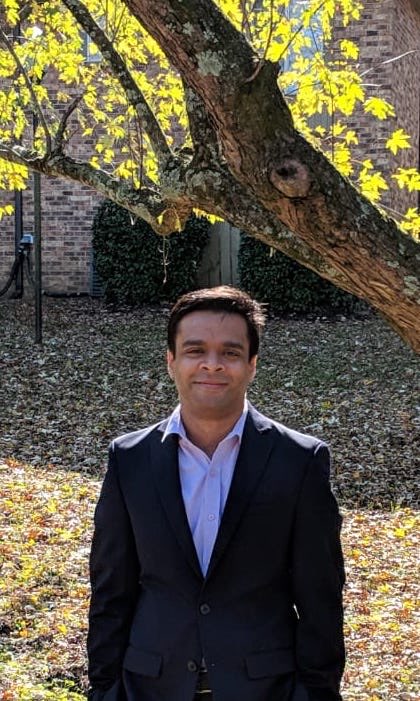
Dr. Ayan Mukhopadhyay serves as a Senior Research Scientist in the Department of Electrical Engineering and Computer Science at Vanderbilt University's School of Engineering. Previously, he was a Post-Doctoral Research Fellow at Stanford Intelligent Systems Lab where he received the 2019 CARS post-doctoral fellowship. His academic journey includes a Ph.D. from Vanderbilt University's Computational Economics Research Lab with a doctoral thesis nominated for the Victor Lesser Distinguished Dissertation Award 2020. His research spans critical domains in smart infrastructure systems with particular focus on: Developing robust decision-making frameworks for cyber-physical systems under uncertainty Creating multi-agent solutions for emergency response optimization Designing machine learning approaches for urban mobility and energy management Building proactive incident detection pipelines using heterogeneous data sources Analysis of his recent publications reveals strong thematic continuity in applying artificial intelligence to real-world infrastructure challenges, particularly in transportation systems, emergency response, and energy management. His work consistently bridges theoretical AI advances with practical implementation in smart city contexts, demonstrating expertise in both algorithmic innovation and systems integration. Award highlights include: CARS Post-Doctoral Fellowship (2019) Best Paper Award at ICLR's AI for Social Good Workshop Victor Lesser Distinguished Dissertation Award Nomination (2020) Dr. Mukhopadhyay leads significant research initiatives through ScopeLab, focusing on creating deployable solutions for public transit, emergency response, and energy systems. His work on vehicle-to-building charging, traffic incident localization, and equitable transit network design demonstrates commitment to solving high-impact urban challenges through rigorous computational methods. Current projects involve developing simulation environments for non-stationary environments (NS-Gym) and explainable planning frameworks integrating formal logic with large language models.
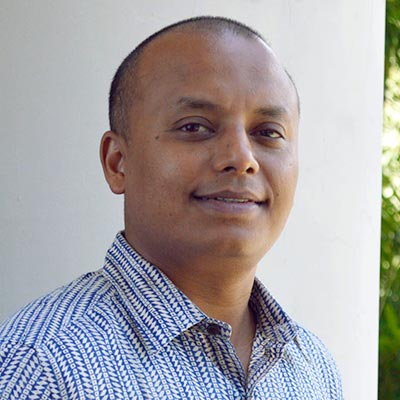
Ashok Das serves as Professor and Department Chair at the University of Hawaiʻi at Mānoa's Department of Urban and Regional Planning, where he teaches courses including Planning Theory, Urbanization and Globalization, and Planning in Asia. His leadership extends to co-chairing the ACSP Global Planning Education Committee and directing multi-year projects funded by the Asian Development Bank and Luce Initiative on Southeast Asia. Ph.D. in Urban Planning, University of California at Los Angeles M.Arch. and M.A. in Environmental Planning and Management, Kansas State University B.Arch., School of Planning and Architecture, New Delhi Das specializes in institutional innovations for urban poverty alleviation across Southeast and South Asia, with particular expertise in community-driven slum upgrading, disaster risk reduction, and platform economy impacts. His research emphasizes civil society's role in fostering inclusive urbanization through integrated microfinance, participatory governance, and pro-poor shelter policies, often focusing on Indonesian case studies like Surabaya. His 15 most recent publications reveal dominant trends in pandemic-responsive urban planning, with 60% addressing informal service systems in Asian cities during COVID-19. Cross-cutting themes include climate-resilient shelter solutions (35% of works), Southeast Asian urban governance (45%), and innovative poverty-alleviation frameworks (50%), demonstrating consistent focus on practical applications for marginalized communities. UHM Chancellor’s Award for Meritorious Teaching (2016) Das leads significant externally funded initiatives including a $1 million LuceSEA grant for Indonesia-focused planning research and ADB-commissioned studies on pandemic impacts. His advisory work spans major international bodies including UN-Habitat, World Resources Institute, and Ford Foundation, with recent contributions to policy frameworks for Asian Development Bank and Office of Hawaiian Affairs. Current projects emphasize community-managed microfinance systems and platform economy impacts on urban mobility. As principal investigator for the Luce Initiative on Southeast Asia grant, Das coordinates collaborative research between UH Mānoa's Center for Southeast Asian Studies and the East-West Center, focusing on inclusive urbanization strategies through capacity building in Indonesian planning institutions.
Trina R. Shanks is a Professor at the University of Michigan School of Social Work and Director of the Center for Equitable Family and Community Well-Being. She leads the ENGAGE team for community engagement and serves as faculty advisor to the New Leaders in African-Centered Social Work Program. PhD in Social Work, Washington University (2003) MSW in Social Work, Washington University (2000) MPhil in Comparative Social Research, University of Oxford (1996) as Rhodes Scholar BS in Business Administration, John M. Olin School of Business (1992) Shanks' research focuses on racial capitalism , asset-building policy , and community development , particularly examining how poverty and wealth affect child well-being . She has pioneered initiatives like the SEED demonstration program and Detroit Summer Youth Employment Program evaluations, while co-leading national efforts to reverse economic inequality. Her article trends reveal consistent engagement with racial justice , youth labor markets , and economic policy , often intersecting with the legacies of slavery and systemic inequality. Key themes include pandemic impacts on employment, gig economy challenges, and reparations frameworks. 2024 SSWR Social Policy Award 2023 Distinguished Faculty Award Fellow, American Academy of Social Work (2021) Rhodes Scholar (1996) $1 million grant from Washtenaw County (2023) Shanks advises on community engagement and macro-level social work , with notable policy contributions to child savings initiatives and urban development programs. She co-leads the Social Work Grand Challenge on economic inequality and maintains affiliations with the Urban Institute and Skillman Foundation projects.
Dr. Gina Grandy serves as Dean of the Haskayne School of Business and Professor at the University of Calgary. Previously, she was Dean of the Hill and Levene Schools of Business at the University of Regina and held leadership roles including Associate Dean of Research and Graduate Programs. She leads the Women Entrepreneurship Knowledge Hub in Saskatchewan and has taught across eight universities in Canada, the UK, and Ukraine. Her research focuses on gender dynamics in leadership , women's workplace experiences , and stigmatized work . Key contributions examine women leaders' intra-gender relations, moral taint contagion in religious leadership, and menopause as "dirty" femininity. Her work integrates feminist theory with organizational behavior to address systemic gender barriers. Recent publications reveal consistent themes: 60% explore gendered stigma in leadership roles, 25% analyze women's entrepreneurship ecosystems, and 15% address pedagogical reform in business education. Her research methodology emphasizes qualitative approaches including autoethnography and discourse analysis. Dr. Grandy has secured competitive grants from SSHRC and CIHR. Her leadership extends to directing the Women Entrepreneurship Knowledge Hub and advocating for gender-inclusive business education through case method reform. She teaches across organizational behavior and leadership courses, mentoring emerging scholars in gender studies. Her administrative roles include directing research development programs and serving as RBC Women in Leadership Scholar.
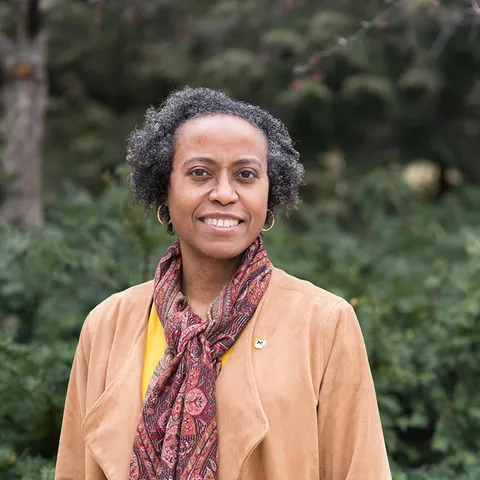
Corinne Wallace is an Adjunct Assistant Professor in the Department of Civil Engineering at McMaster University , with research expertise at the intersection of water security, climate change, public health, and gender equity. Her work spans both technical engineering analysis and community-engaged studies, particularly focusing on marginalized populations in Canada, East Africa, and South America. Dr. Wallace's research interests include: Water-Health Nexus Climate Change Impacts on Disease Gender Equity in Water Access Indigenous Water Governance Mosquito-Borne Disease Modeling Rainwater Harvesting Systems Her publication trends show increasing focus on climate-health interactions (2025), gender-water linkages (2024), and machine learning applications for water quality analysis (2025). She employs mixed-methods approaches and works closely with First Nations communities and international development organizations. Dr. Wallace utilizes art-science communication strategies like the Virtual Water Gallery to transform water and climate knowledge dissemination. Her recent work explores EDI (Equity, Diversity, Inclusion) implementation in large research networks and conceptual frameworks for climate-water equity.
Christopher Cherry is a Professor and Associate Department Head of Undergraduate Studies in the Department of Civil and Environmental Engineering at the University of Tennessee, Knoxville. His research focuses on sustainable transportation, micromobility (e-bikes, e-scooters), pedestrian and bicycle safety, and the impacts of emerging technologies on urban mobility systems. PhD, Civil and Environmental Engineering–Transportation, University of California, Berkeley (2007) MS, Civil Engineering–Transportation, University of Arizona (2003) BS, Civil Engineering, University of Arizona (2000) Dr. Cherry’s research interests lie at the intersection of transportation engineering, behavioral science, and sustainability. He investigates travel behavior, transportation economics, and the safety implications of shared and electric micromobility systems. His work emphasizes non-motorized transportation and the integration of new technologies into urban planning. He leads the Light Electric Vehicle Education and Research (LEVER) Initiative and is an Associate Director of the Center for Pedestrian and Bicyclist Safety (CPBS), a multi-institutional UTC led by the University of New Mexico. His recent publications span topics such as e-bike adoption, micromobility safety, transit integration, and urban delivery systems. Collectively, these works reflect a strong emphasis on data-driven policy, behavioral modeling, and the environmental and public health impacts of transportation choices. NSF CAREER Award TCE Ferris Faculty Award (2015) TCE Professional Promise in Research Award (2014) CEE Research Recognition Award (2009, 2012) Member, Transportation Research Board Chair, SAE Micromobility Committee Dr. Cherry has supervised numerous PhD and MS students in transportation research and has led multiple federally and state-funded projects on micromobility, transit, and safety. He is actively involved in professional service and collaborates with institutions across the U.S. and internationally, including UC Berkeley, Tsinghua University, and the Asian Development Bank. His work bridges engineering, policy, and public health to advance sustainable and equitable urban mobility. He leads research initiatives on e-bike and e-scooter safety, urban logistics, and the integration of big data into transportation planning. His team utilizes smartphone-based data collection, video analysis, and simulation models to understand real-world behavior and improve system design.
AnnaLisa Meyboom is an Associate Professor at the University of British Columbia’s School of Architecture and Landscape Architecture (SALA). As Director of the Transportation Infrastructure and Public Space Lab (TIPSlab), she bridges engineering and architecture through research on digital fabrication, autonomous vehicles, and responsive environments. Engineering from University of Waterloo Architecture from University of British Columbia Her research explores: Digital Wood Fabrication: Robotic construction techniques for large-scale timber structures. Autonomous Urbanism: Reimagining city layouts for self-driving vehicles. Responsive Architecture: Integrating technology into adaptive building systems. While her publications span from 2000 to 2022, recent works focus on infrastructure’s cultural value and future mobility systems. She has taught at institutions globally and led design-build initiatives across Canada. Co-founder of TIPSlab Featured speaker at international conferences Combines engineering rigor with architectural creativity
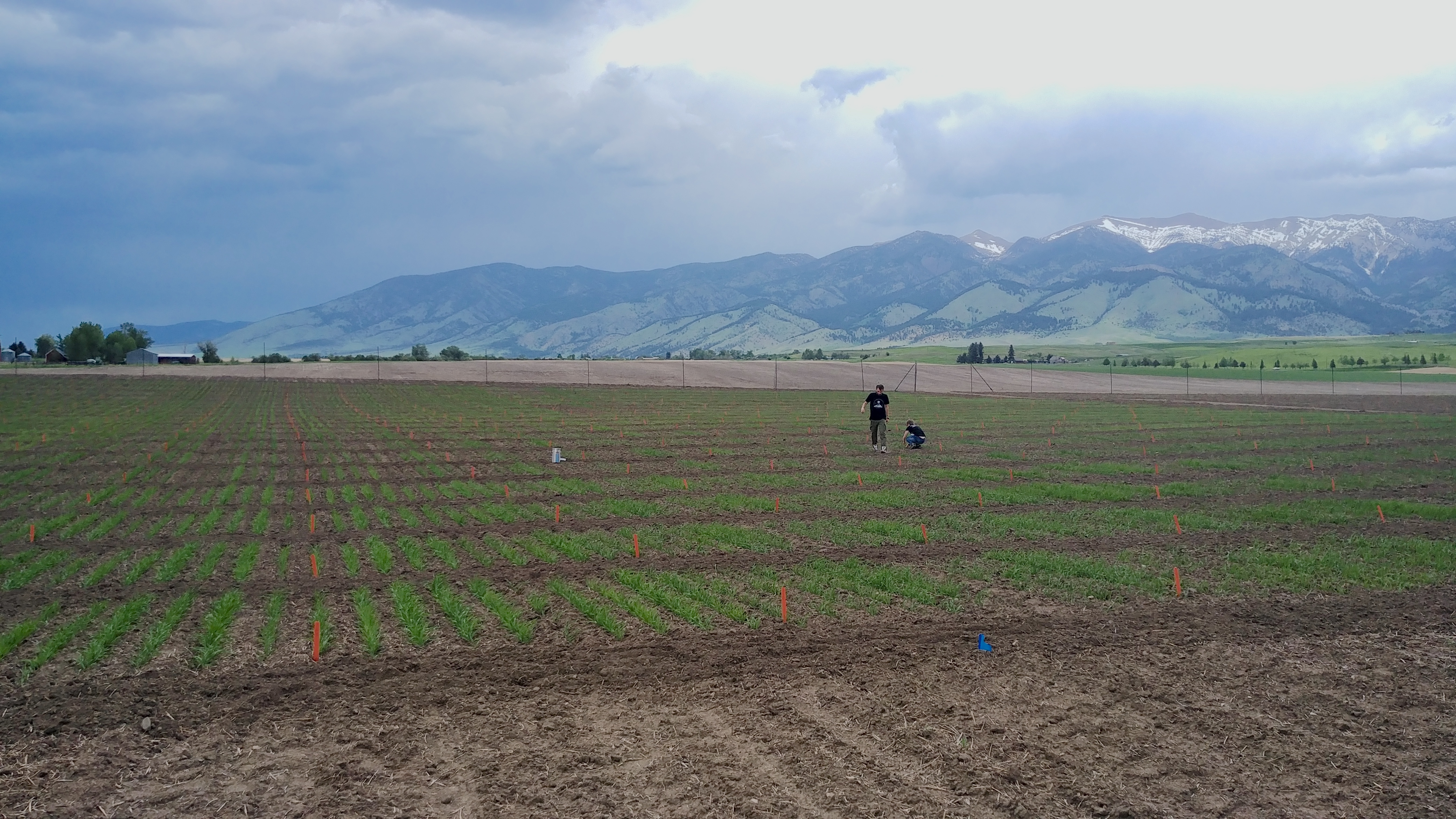
Jennifer Lachowiec serves as Associate Professor in the Department of Plant Sciences and Plant Pathology at Montana State University's College of Agriculture. Her research program focuses on understanding genetic robustness in plants through interdisciplinary approaches spanning quantitative genetics, genomics, and molecular biology. She teaches foundational courses in biometry and research design while leading a technology-driven laboratory that utilizes unoccupied aerial systems for large-scale phenotyping. Educational background: Ph.D. in Molecular and Cellular Biology, University of Washington (2014) B.S. in Genetics and Anthropology, University of Wisconsin - Madison (2008) Her research centers on predicting phenotypes from genetic sequences with emphasis on plant robustness—the capacity to maintain phenotypes despite genetic mutations and environmental fluctuations. The Lachowiec Lab integrates quantitative genetics, molecular biology, and evolutionary approaches to study gene regulatory networks and genetic interactions. A key innovation involves deploying UAVs and automated imaging systems to quantify robustness across plant populations, enabling high-throughput analysis of crop resiliency traits. This work bridges fundamental genetic mechanisms with practical agricultural applications for developing climate-resilient crops. Recent publications (2022-2025) reveal consistent focus on UAV-based phenotyping, polyploid genomics, and crop stress adaptation. Key trends include development of robust phenomic databases, genetic dissection of barley malting traits, herbicide resistance mechanisms in aquatic weeds, and metabolic responses to environmental stress. The work demonstrates strong translational impact through USDA-funded projects addressing nitrogen-efficient camelina production and heat stress tolerance in cereal crops. Scientific recognition includes: Nominated for USDA Teaching Award (2023) Phi Kappa Phi Anna K. Fridley Award (2023) College of Agriculture Teaching Award of Merit (2023) Transformative Teaching Award (2022) Open Education Resources Adoption Award (2021) Research is supported by multiple USDA NIFA and DOE grants including 'Enhancing Camelina Oilseed Production with Minimum Nitrogen Fertilization,' 'Uncovering developmental mechanisms to sustain grain number during heat stress,' and 'Genetic controls for crop microbiome recruitment.' Dr. Lachowiec serves on the North American Plant Phenotyping Network DEI Committee and has organized outreach events including MSU Family Science Day. Her laboratory, located in the Plant Bioscience Building on traditional Amskapii Pikani, Apsaalooke, Tsétsêhéstâhese, and Seliš lands, maintains specialized facilities for UAV-based phenotyping and growth room imaging systems to advance plant robustness research.
Agnès Bénassy-Quéré serves as Professor of Economics at Paris 1 Panthéon-Sorbonne University and Paris School of Economics, currently on leave to fulfill her role as Deputy-Governor at Banque de France. Her distinguished public service portfolio includes: Chief Economist at the French Treasury (2020-2023) Chair of the French Council of Economic Analysis (2012-2017) Director of CEPII (2006-2012) She additionally contributes to the French macro-prudential authority, tax advisory council, productivity council, and Franco-German council of economic experts. Her research concentrates on International Finance, Monetary Policy, and EU Economic Architecture, with specific expertise in international monetary systems, European fiscal frameworks, and crisis impact analysis. She investigates policy coordination mechanisms and economic governance challenges within the European Union through both theoretical modeling and empirical firm-level studies. Recent publications (2020-2025) reveal consistent analytical focus on euro area reform, fiscal-monetary policy synergies during crises, and equitable international monetary structures. Her work demonstrates methodological rigor through integration of firm-level data analysis with macroeconomic policy evaluation, particularly regarding pandemic impacts and investment frameworks.
Evelynn Maxine Hammonds is the Barbara Gutmann Rosenkrantz Professor of the History of Science and Professor of African and African-American Studies at Harvard University. She previously served as Dean of Harvard College from 2008 to 2013, becoming the first African-American and first woman to head the college. Her academic career spans institutions including Harvard University, Massachusetts Institute of Technology, and Georgia Tech, with research focusing on the intersections of race, gender, science and medicine. Dr. Hammonds' educational background reflects her interdisciplinary approach: Bachelor of Science in Physics from Spelman College Bachelor of Science in Electrical Engineering from Georgia Institute of Technology Master of Science in Physics from Massachusetts Institute of Technology PhD in History of Science from Harvard University Professor Hammonds' research explores the complex intersections of race, gender, and science throughout American history. Her work critically examines how scientific and medical practices have constructed racial categories and shaped health outcomes, particularly for African Americans. She has made significant contributions to understanding the historical roots of contemporary health disparities and the role of race in genomic research. Her scholarship also addresses Black feminist theory, particularly focusing on the historical silencing of Black female sexuality and its implications for contemporary health issues including HIV/AIDS. Analysis of Professor Hammonds' recent publications reveals a consistent focus on the ethical and social implications of race in science and medicine. Her work increasingly addresses contemporary genomic research while maintaining historical perspective, examining how historical racial classifications continue to influence modern scientific practice. She has become a leading voice in critiquing the use of racial categories in medical practice and genomic research, advocating for more nuanced approaches that recognize both biological variation and social construction of race. Professor Hammonds has received numerous prestigious honors recognizing her scholarly contributions: President of the History of Science Society (2024-2025) Elected member of the American Academy of Arts & Sciences (2021) Namesake of the Harvard LGBTQ Students' "Evelynn Hammonds Award for Exceptional Service to BGLTQ+ Inclusion" (2021) Election to the Bates College Board of Trustees (2018) Appointment to the National Academies' Committee on Women in Science, Engineering, and Medicine (2017) History of Science Society Distinguished Lecturer (2016) Founder's Award from Lawyers' Committee for Civil Rights and Economic Justice (2014) Throughout her career, Professor Hammonds has been deeply committed to mentoring the next generation of scholars, particularly women and people of color in STEM and humanities fields. She founded MIT's Center for the Study of Diversity in Science, Technology, and Medicine and helped organize the first national academic conference for Black female scholars, "Black Women in the Academy: Defending Our Name 1894-1994." Her leadership extends to significant institutional roles, including serving as Harvard's first senior vice provost for Faculty Development and Diversity before becoming Dean of Harvard College. Professor Hammonds' scholarly impact extends beyond traditional academic settings through her engagement with policy and public discourse. She has served on national committees addressing diversity in science and has been a vocal advocate for more inclusive scientific practices. Her work continues to shape conversations about race, science, and medicine in both academic and public spheres.
Shaddi Hasan is an Assistant Professor of Computer Science at Virginia Tech's College of Engineering. His research focuses on building equitable network infrastructure for underserved regions, emphasizing human-centered design through collaborations with users and policymakers. He holds a Ph.D. (2019) from UC Berkeley and a B.S. (2010) from the University of North Carolina at Chapel Hill. Education: Ph.D. in Computer Science, UC Berkeley (2019) M.S. in Computer Science, UC Berkeley (2013) B.S. in Computer Science, UNC Chapel Hill (2010) Research interests span networks, ICTD, HCI, and distributed systems. Key projects include the Magma open-source core network platform (developed at Facebook Connectivity) and CellBricks for modular rural cellular deployment. His work frequently involves real-world deployments in developing regions. Notable awards include the NSDI 2023 Community Award and multiple best paper recognitions. Current projects analyze broadband mapping accuracy and consumer label interpretation, with a focus on policy implications. Advising: Actively mentoring PhD students and undergraduates. Lab: SPIN Lab (Systems, People, Infrastructure, and Networks). Projects include GitHub repositories for Broadband Data Kit and Magma.