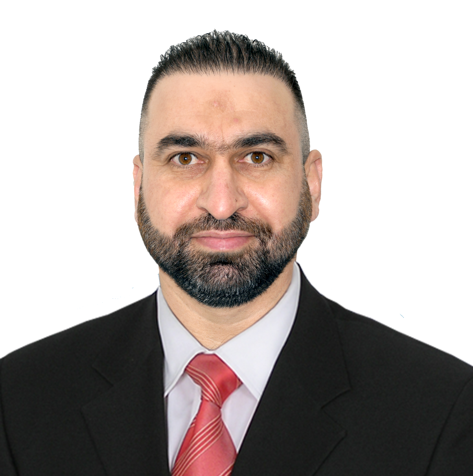
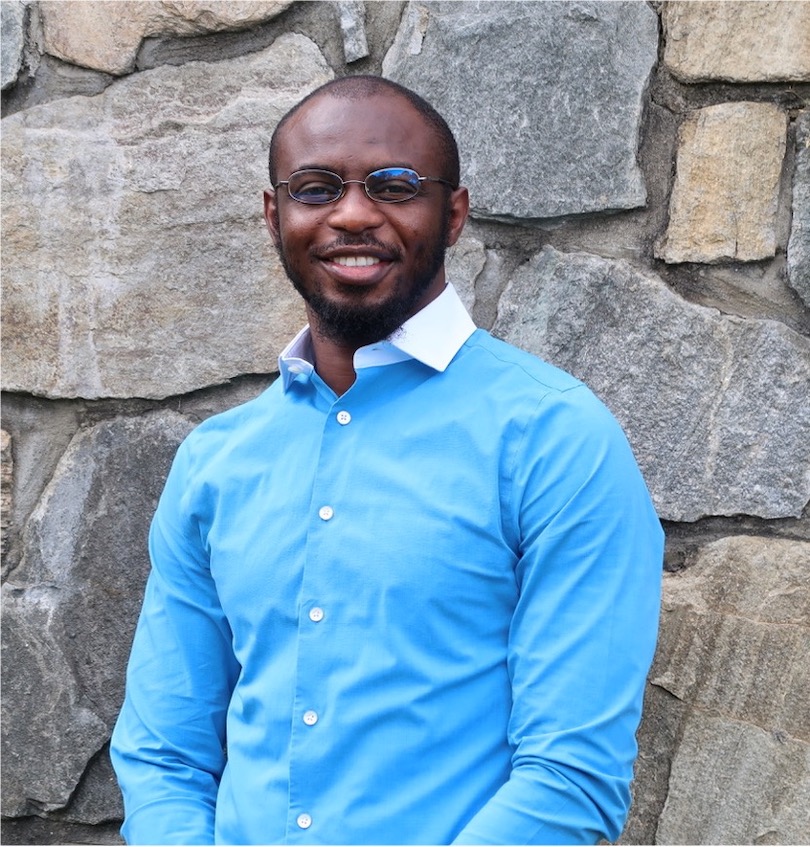
Mohammed Aledhari is an Assistant Professor at the University of North Texas, specializing in cybersecurity, machine learning, and data science. His research focuses on applications in computational medicine, bioinformatics, and autonomous systems. He holds a Ph.D. from Western Michigan University and degrees from the University of Basrah and the University of Anbar. His research interests include social cybersecurity techniques, federated learning in IoT, and AI-driven solutions for healthcare and transportation. Recent work explores blockchain-enabled digital twins, DDoS attack detection, and equitable ASD diagnostics using machine learning. His publications span cybersecurity frameworks, autonomous vehicle communication protocols, and biomedical IoT innovations. Notable contributions include optimizing intrusion detection in IoMT networks and developing interpretable machine learning models for healthcare. While no formal awards or grants are listed, his work emphasizes interdisciplinary applications of AI in healthcare, transportation, and energy markets. His email is Mohammed.Aledhari@unt.edu .
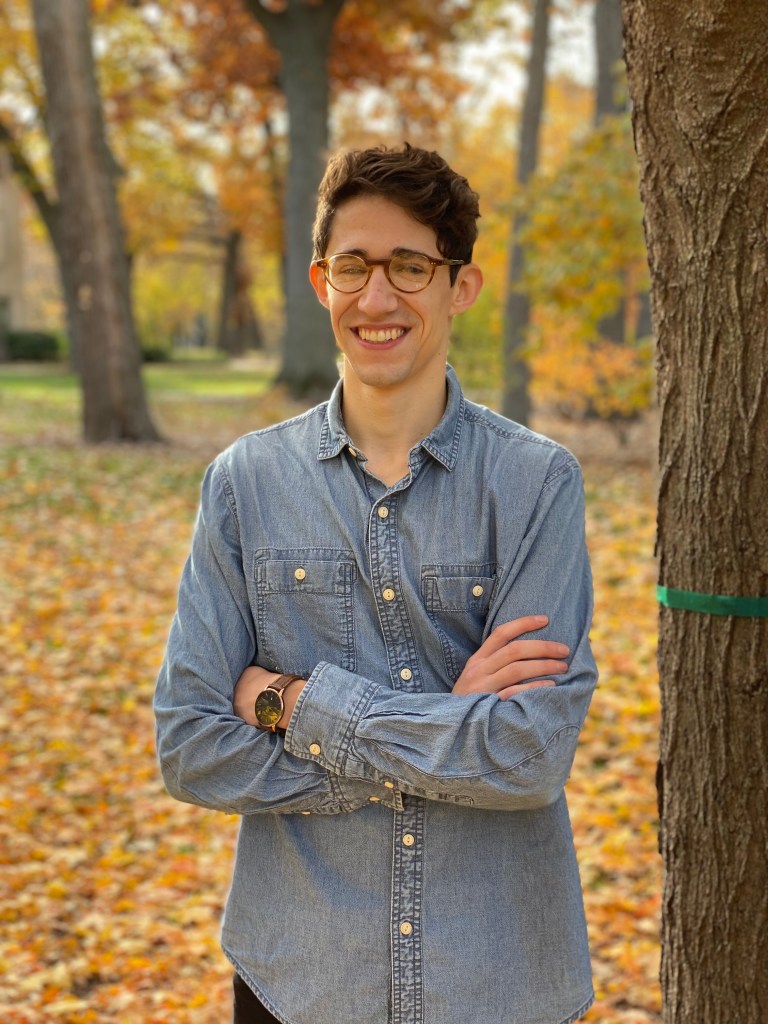
David M. Silverman is an incoming Assistant Professor in the Department of Psychology at Yale University. His academic work bridges social psychological theory with practical applications for institutional change. Dr. Silverman's research focuses on identity and person-context interactions, specifically examining how schools, workplaces, and other societal institutions shape (in)equity. He is particularly interested in developing and testing new approaches for shifting these institutions to expand equitable access to opportunity. Much of his work emphasizes 'strength-based approaches' that recognize valuable skills and knowledge gained through marginalized identities rather than focusing on deficit narratives. His recent publications demonstrate a clear trajectory toward practical interventions in educational and organizational settings. The research examines how institutions can reject stigmatizing narratives about marginalized people in favor of approaches that recognize their strengths. His work has particular relevance for educators and administrators seeking to implement equity-focused changes. Second most cited paper of 2024 in Personality and Social Psychology Review Dr. Silverman actively engages with practitioners, having published articles in EdWeek and making research accessible through open-access publications. His work on classroom practices supporting students from lower socioeconomic status backgrounds demonstrates his commitment to translating research into practical applications.
Victor Tadros is a Professor of Criminal Law and Legal Theory at the University of Warwick, where he also serves as Public Lectures Coordinator. He holds a BA from Oxford University and a PhD from King’s College London. Prior to his current role, he held positions at the University of Aberdeen, the University of Edinburgh, and was a Carter Visiting Professor at Harvard Law School (2015). His research focuses on criminal law, moral philosophy, just war theory, and the philosophy of punishment. He has authored influential books including *Criminal Responsibility* (2005), *The Ends of Harm* (2011), *Wrongs and Crimes* (2016), and *To Do, To Die, To Reason Why* (2020). His work explores intersections between law, morality, and politics, addressing topics like consent to sex, responsibility, and the ethics of war. Notable awards include the Leverhulme Major Research Fellowship (2014–2018) and election as a Fellow of the British Academy (2018). He has led major research projects on criminalization and contributed to debates on the presumption of innocence, terrorism law, and the philosophy of the criminal trial. His recent publications (2020–2023) engage with refugee rights, moral responsibility in warfare, and the ethics of consent in unjust contexts. He is an Associate Editor at *Ethics* and has supervised numerous research grants, including an AHRC-funded project on criminalization (2010–2013).
Professor Tavis Potts is a Personal Chair in Sustainable Development and Environmental Governance at the University of Aberdeen, affiliated with the Department of Geography and Environment within the School of Geosciences. He is actively engaged in research on just transitions, environmental justice, marine governance, and participatory planning. His research focuses on: Understanding just transitions and the social dimensions of climate and energy Marine resource governance and planning Participatory and community-based approaches to managing natural capital The political economy of environmental policy The blue economy and net zero transitions His recent publications highlight a strong trend toward policy-relevant research on just transitions, stakeholder engagement, and environmental governance. Articles and reports examine climate assemblies, community participation in net zero planning, nuclear decommissioning, and measuring equitable outcomes in transition processes. His work integrates social science perspectives with environmental policy, emphasizing democratic participation and equity. Key scientific contributions include commissioned reports for the Just Transition Commission and the Nuclear Decommissioning Authority, as well as peer-reviewed articles in journals such as Environmental Science & Policy and Marine Policy . He has led and contributed to projects funded by Interreg EU, NERC, British Council, and the World Bank. Professor Potts advises research students and leads the Just Transition Lab at Aberdeen. He holds external advisory roles with Aberdeen City Council’s Net Zero Delivery Unit and Aberdeenshire Council’s Climate Ready Aberdeenshire Board, demonstrating active engagement with policy and practice. He is affiliated with key research centers including the Centre for Marine and Coastal Zone Management and the Just Transition Lab, where he advances interdisciplinary work on sustainable futures and equitable environmental governance.
Professor Cameron Tonkinwise is a leading international expert in Design Studies and Transition Design, currently serving as Research Director at the Design Innovation Research Centre at the University of Technology Sydney (UTS). With a career spanning institutions like Carnegie Mellon University, Parsons The New School for Design, and UNSW Australia, he has significantly influenced global design education and practice through his advocacy for systemic sustainability and social responsibility. PhD in Philosophy, Art History and Theory from the University of Sydney (1999) His research focuses on the role of design in enabling structural transformations for sustainable futures, blending Transition Design, ethical considerations, and speculative practices. Recent work examines systemic change through everyday habits, ontological design, and service systems in sharing economies. Key trends in his publications include: Transition Design frameworks for climate futures and circularity Critical analysis of sustainable practices and design ethics Systems theory applications in sociotechnical change Projects currently led by Cameron involve: Transitioning Australian banks toward inclusive financial services Designing equitable distributed energy systems Developing cool public spaces to combat urban heat
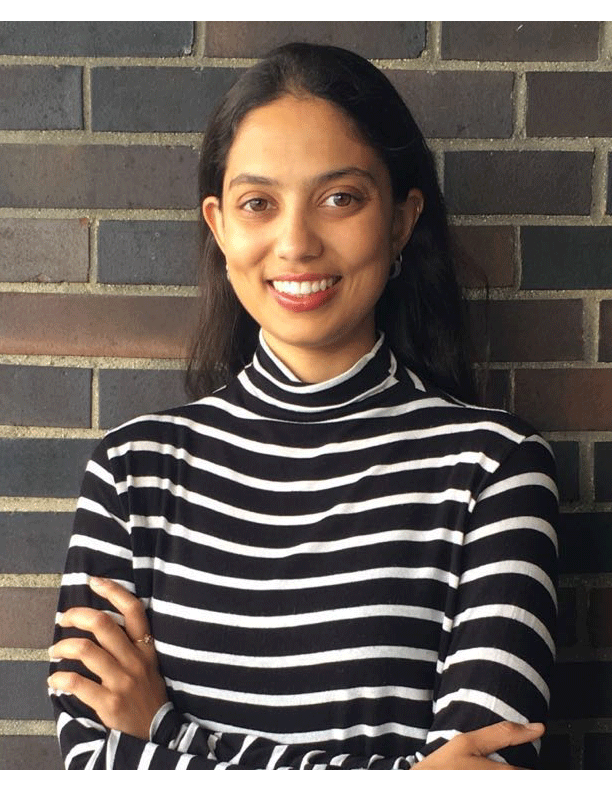
Morgan Edwards is an Assistant Professor at the University of Wisconsin-Madison's La Follette School of Public Affairs, specializing in human-centered energy responses to the climate crisis. Her work bridges policy analysis, systems modeling, and equity considerations across global, national, and local scales. Education: PhD in Engineering Systems (MIT), SM in Technology and Policy (MIT), BS in Environmental Science and Economics (UNC Chapel Hill) Research focuses on: Equity implications of energy transitions Systems modeling for climate policy Natural gas leak detection and mitigation Coal power phaseout strategies Negative emissions technology assessment Her lab develops tools connecting global climate goals with local action, emphasizing partnerships with underserved communities. Recent publications analyze methane mitigation, corporate climate-tech investments, and equity challenges in electrification.
Gireeja Ranade is an Assistant Teaching Professor in the Department of Electrical Engineering and Computer Sciences at the University of California, Berkeley. She previously served as a Researcher at Microsoft Research AI in the Adaptive Systems and Interaction Group. Her educational background includes a PhD in Electrical Engineering and Computer Science from UC Berkeley and an undergraduate degree from MIT. Research Focus Prof. Ranade's research spans control theory, information theory, and machine learning, with applications in wireless communication, algorithmic fairness, and misinformation analysis. Her work addresses fundamental challenges in system stabilization under uncertainty, real-time control optimization, and equitable resource allocation. She maintains strong collaborations across disciplines, resulting in publications at premier venues like IEEE Transactions on Automatic Control, PNAS, and The Web Conference. Her recent publications demonstrate a consistent focus on robustness in control systems, fairness in algorithmic decision-making, and analysis of information propagation in online ecosystems. The work frequently combines theoretical rigor with practical implementations in robotics, networking, and social systems. Awards and Recognition 2017 UC Berkeley Electrical Engineering Award for Outstanding Teaching 2020 UC Berkeley Award for Extraordinary Teaching in Extraordinary Times Academic Leadership Prof. Ranade leads a dynamic research group including PhD candidates, master's students, and undergraduates. She has advised over 25 students on projects ranging from neural network controllers to fairness metrics in resource allocation. She founded the CalMentors program, which connects UC Berkeley students with K-12 learners for tutoring support during the COVID-19 pandemic. Educational Innovation She co-designed and teaches UC Berkeley's introductory EECS 16A/B sequence, integrating linear algebra with applications in machine learning and circuit design. She has also developed courses on optimization (EECS127/227A) and data science (Data 102), with publicly available lecture videos demonstrating her teaching methodology.
Amitabh Chandra is the Ethel Zimmerman Wiener Professor of Public Policy at Harvard Kennedy School (HKS) and the Henry and Allison McCance Family Professor of Business Administration at Harvard Business School (HBS). He holds dual roles as Director of Health Policy Research at HKS and chairs several initiatives, including the Pagliuca Harvard Life Lab and the joint MS/MBA program in life sciences. His research focuses on healthcare pricing, pharmaceutical innovation, racial disparities in care, and Alzheimer’s treatment economics. Dr. Chandra has advised the U.S. Congress, the Massachusetts government on healthcare reform, and serves on the Congressional Budget Office’s Health Advisors Panel. His affiliations include the Malcolm Wiener Center for Social Policy and the Mossavar-Rahmani Center for Business and Government at HKS. His research spans biopharmaceutical capital allocation, Medicare drug negotiation policies, and the economic implications of healthcare cost-sharing. Notable recent work addresses price regulation in healthcare, orphan drug exemptions, and the impact of the Inflation Reduction Act on pharmaceutical innovation. Key Awards: ASHE Medal (under 40), Kenneth Arrow Award, Eugene Garfield Award Committees: Blavatnik Fellows Board, Health Affairs Council on Spending Grants: NIH funding (NIA, NICHD), Robert Wood Johnson Foundation He explores how economic principles shape healthcare systems, focusing on aligning drug pricing with therapeutic value and improving equitable access to treatments. His work bridges academia and policy, influencing national dialogues on healthcare reform and innovation incentives.
Michael T. Rizzo is an Assistant Professor in the Department of Psychology at the University of Illinois, Urbana-Champaign, within the College of Liberal Arts & Sciences. He directs the Developing Equitable Minds Lab (DEML Lab), which focuses on promoting social equity in childhood through research on children's developing conceptions of fairness and social biases. Dr. Rizzo earned his B.S. from the University of California, San Diego (mentor: Dr. David Liu), his Ph.D. from the University of Maryland, College Park (mentor: Dr. Melanie Killen), and completed a postdoctoral fellowship at New York University (mentor: Dr. Marjorie Rhodes). His research program examines three interrelated questions: (1) How do conceptions of equity develop? (2) How do social biases develop? (3) How can we promote concern for equity and disrupt social biases? Using a constructivist approach, his work investigates how children experience, interpret, and respond to the world around them. His primary research areas include conceptions of fairness, racism and racial bias, social status and structures, theory of mind, and unmoderated remote research with children. His work has been published in top journals including Proceedings of the National Academy of Sciences , American Psychologist , Child Development , and Developmental Psychology . Analysis of his recent publications reveals a strong focus on understanding the developmental origins of racial bias, particularly how children's beliefs about social norms and racial inequalities shape their developing racial attitudes. His work demonstrates how children distinguish between structural and individual causes of inequality, and how social status influences children's understanding of fairness and others' mental states. His research has increasingly incorporated innovative methodologies, including unmoderated remote research with children. Dr. Rizzo's work has been funded by prestigious organizations including the National Science Foundation (NSF), the Eunice Kennedy Shriver National Institute of Child Health and Human Development (NICHD), and Beyond Conflict. He is deeply committed to promoting equity, diversity, and inclusion through three primary pathways: transforming university spaces, advancing psychological research practices, and engaging with broader society. His lab partners with organizations like Embrace Race, Story Starters, and We Stories to develop anti-racist education programs and parenting materials. The DEML Lab has created a platform called Developing Minds Online (DMO) that allows for unmoderated remote research with children, enabling families to participate from anywhere.
Rosalie Arendt is an Assistant Professor specializing in multidisciplinary water management and sustainability assessment methodologies. Her research focuses on life cycle assessment (LCA) integration with social dimensions, climate policy analysis, and sustainable construction materials. She has contributed to UN Sustainable Development Goals related to climate action and sustainable cities. Her work explores topics such as monetization of social life cycle assessment results, residual carbon emissions in corporate climate pledges, and material criticality in construction. Recent research includes case studies on renewable building materials and socio-ecological responses to housing challenges in Germany. Research Highlights: Developed frameworks for integrating social indicators into LCA methodologies Analyzed institutional conflicts in urban sustainability policies Evaluated greenhouse gas reduction strategies in construction sectors Rosie's publications appear in journals like Climate Policy , Resources , and IOP Conference Series , with a focus on peer-reviewed contributions. She collaborates internationally on environmental valuation techniques and climate policy implementation.
Habeeb Olufowobi is an Assistant Professor in the Department of Computer Science and Engineering at the University of Texas at Arlington (UTA), where he leads the Cyber-Physical System Security Lab. He holds a PhD in Computer Science from Howard University (2019) and previously served as a Lecturer at Howard before joining UTA in 2020. His research is centered on the security and trustworthiness of embedded and distributed systems, particularly in the domains of autonomous vehicles, IoT, and healthcare AI. He investigates cybersecurity challenges at the hardware-software interface in real-time systems and develops AI/ML models that are transparent, explainable, and equitable. His interdisciplinary work integrates principles from cybersecurity, real-time systems, and machine learning. The recent publications reflect a strong trend in securing cyber-physical systems using advanced AI techniques, with emphasis on intrusion detection, secure communication (e.g., named data networking), and robustness of autonomous systems. His work frequently appears in top-tier venues such as IEEE Transactions, VehicleSec, and ICMLA. Project Management Professional (PMP), PMI (2012–Present) Member, Institute of Electrical and Electronics Engineers (IEEE) (2020–Present) Habeeb has secured significant research funding, including an NIH grant on ethical AI for Chagas disease prediction and an AIM-AHEAD grant focused on health equity. He mentors several graduate students, including Paul Agbaje and Afia Anjum, who have received awards and internships at prestigious institutions like Los Alamos National Laboratory. He teaches courses in cloud computing, embedded systems, and information security, and serves as a faculty advisor for the National Society of Black Engineers (NSBE) at UTA. His lab, the Cyber-Physical System Security Lab, focuses on developing scalable and reliable security solutions for critical infrastructure, with growing emphasis on healthcare applications and fairness in algorithmic decision-making.
Amity Doolittle is a Senior Lecturer II at the Yale School of the Environment (YSE), Yale University. Her research focuses on property rights, natural resource management, and the social and political processes shaping environmental inequities. She employs interdisciplinary methods from anthropology, political science, environmental history, and political ecology. Notable projects include historical land-use studies in New Haven, Connecticut, and analyses of indigenous rights in global climate policy. She teaches graduate courses on qualitative research methods, environmental justice, and property rights, emphasizing active, collaborative learning. Doolittle holds a B.A. from Harvard University and M.E.S./Ph.D. from Yale University. Her office is located in Kroon Hall, Yale’s environmental campus. Education: B.A., Harvard University; M.E.S., Ph.D., Yale University Her research interests include legal pluralism, historical resource conflicts, and the intersection of colonial and postcolonial discourses. Current projects examine urban land-use changes in New Haven and the rhetorical strategies of indigenous leaders in climate negotiations. She advises 10–12 master’s students annually on thesis projects and placements worldwide. Teaching highlights include Qualitative Research Methods , Environmental Justice , and Political Ecology of Tropical Forests . Her courses integrate hands-on methods, such as analyzing oral histories and policy documents. Labs/Teams: Collaborates with the Urban Resources Initiative (URI) on greenspace stewardship and community-led projects.
Bryan Kian Hsiang Low serves as Associate Professor in the Department of Computer Science at the National University of Singapore's School of Computing, while simultaneously holding leadership positions as Director of AI Research at AI Singapore and Deputy Director of the NUS AI Institute. His academic journey includes a B.Sc. (2001) and M.Sc. (2002) in Computer Science from NUS, followed by a Ph.D. in Electrical & Computer Engineering from Carnegie Mellon University (2009). His research spans probabilistic machine learning, multi-agent systems, and trustworthy AI, with particular focus on Bayesian optimization , federated learning , and data-efficient methodologies . The Low Lab develops frameworks for collaborative AI, automated machine learning, and AI applications in scientific domains through the Group of Learning and Optimization Working in AI (GLOW.AI), which maintains a multi-disciplinary approach bridging computer science, mathematics, and engineering disciplines. Analysis of his recent publications reveals a consistent emphasis on data valuation , privacy-preserving collaborative learning , and robust optimization techniques , with increasing integration of large language models into his research framework. His work demonstrates strong theoretical foundations coupled with practical applications in computational sustainability and robotics. Andrew P. Sage Best Transactions Paper Award (2006) NUS Overseas Graduate Scholarship (2004-2009) Faculty Teaching Excellence Award (2017-2018) IEEE RAS Distinguished Lecturer (2019) World Economic Forum Global Future Councils Fellow (2016-2018) Dr. Low actively mentors PhD students including Rachael Sim, Quoc Phong Nguyen, and Zhongxiang Dai, while leading major initiatives like the AI Phenome Platform for plant breeding optimization. His research group GLOW.AI operates at the intersection of theory and practice, with strong industry engagement through AI Singapore. Current projects focus on scalable AI systems for scientific discovery and developing frameworks for equitable collaborative machine learning with robust privacy guarantees.
Chris Russell is the Dieter Schwarz Associate Professor of AI, Government & Policy at the Oxford Internet Institute (OII), University of Oxford. His work bridges computer vision, machine learning, and ethical AI governance. He leads the Governance of Emerging Technologies programme, focusing on algorithmic accountability, transparency, and fairness. Prior roles include Group Leader at the Alan Turing Institute and Reader at the University of Surrey. Russell’s research has been recognized with awards, including the ICRA Best Paper Prize for autonomous driving mapping work. Research interests span algorithmic fairness, explainable AI, and responsible AI design. Notable projects include collaborations with the British Antarctic Foundation on climate modeling and causal approaches to algorithmic fairness. His work with Sandra Wachter and Brent Mittelstadt informs GDPR guidelines and tools like TensorFlow’s 'What-if Tool.' Current projects include advancing medical machine learning for inflammatory arthritis prediction and governance frameworks for emerging tech. Russell advises PhD students on socio-technical AI evaluations and teaches courses in machine learning and AI ethics. Recent publications address deepfake proliferation, LLM regulation, and fairness in foundational models. He co-leads initiatives like the Digital Good Network to align tech development with societal benefit.
Dr. Mylene Lagarde is an Associate Professor of Health Economics and Deputy Head of Department (Research) at the London School of Economics and Political Science (LSE), Department of Health Policy. Her research focuses on applied economic analysis of healthcare decisions in low- and middle-income countries (LMICs), particularly provider behavior, healthcare demand, and health policy evaluation. She has conducted studies on topics such as health worker incentives, user fee removal policies, and the impact of performance-based financing. She holds affiliations with J-PAL and the University of Witwatersrand, South Africa. Her work combines quantitative methods, randomized experiments, and policy analysis to inform global health interventions. Educated in France and with field experience in Cameroon, Lagarde’s academic career includes roles at the London School of Hygiene and Tropical Medicine before joining LSE in 2016. She teaches advanced health economics courses, including MPhil/PhD programs in Health Economics and Policy, and modules on randomized evaluations of health programs. Her research has explored provider behavior in Senegal, Zambia, South Africa, and other LMICs, addressing challenges like antibiotic overprescription, healthcare quality under workload pressures, and equitable access to services. Key areas of focus include the role of pro-social preferences in healthcare workforce distribution, the effectiveness of group incentives for preventive care, and the framing effects of health policies. She has contributed to understanding how financial and non-financial incentives shape healthcare provider performance and patient choices, with implications for improving health system efficiency and equity globally.