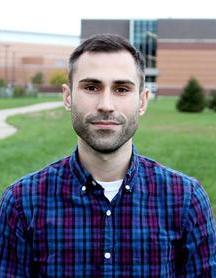
Patrick Beymer is a Researcher at the University of Cincinnati, focusing on student motivation, engagement, and emotion dynamics in STEM education. His work integrates intensive longitudinal methodologies like experience sampling to improve educational interventions. He holds a Ph.D. in Educational Psychology & Educational Technology from Michigan State University (2020), an M.Ed. in Educational Psychology from North Carolina State University (2014), and a B.S. in Economics from the University of Pittsburgh (2012). Research interests include student motivation systems, cost perceptions in learning, and the application of innovative methodologies to track real-time educational experiences. His grants include a National Science Foundation award (2024–2027) for online interventions enhancing belonging in STEM and a Bill & Melinda Gates Foundation grant (2025–2026) as PI investigating teacher engagement in digital platforms. Publications span topics like diary studies in motivation measurement, utility-value interventions, and engagement profiles in science classrooms. His work emphasizes bridging theory and practice to support equitable STEM participation.
María Bastida Domínguez is a Professor at the University of Santiago de Compostela (USC), affiliated with the Department of Business Organization and Marketing within the Faculty of Economic and Business Sciences. She holds a doctoral degree from USC (2003) with a thesis on international assignments and expatriate adjustment. Her research focuses on gender equality, expatriate management, social economy, cooperative models, and sustainable entrepreneurship. She contributes to the Interuniversity Research Center in Economics and Business for Society (ECOBAS) and co-leads the POSMARK research group (People, Sustainable Organizations and Marketing). Her educational background includes advanced studies in business administration and organizational behavior. She has published extensively on topics such as expatriate effectiveness, gender representation in leadership roles, and policy frameworks for social economy initiatives. Key themes in her work include the intersection of gender with international human resource practices, cooperative entrepreneurship as a tool for economic equity, and the role of public policies in fostering sustainable development. Her recent publications (2021–2025) highlight trends in digital nomadism, AI-driven HR strategies, and gender-blindness in EU funding mechanisms. She advocates for inclusive economic models through her analyses of Galician cooperative networks and public policies like the ECOBAS-driven Rede Eusumo initiative. María’s work bridges theoretical frameworks (e.g., person-environment fit theory) with practical applications in talent management and organizational sustainability. Her research also explores subjective well-being among expatriates and the psychological dynamics of international workers. María has collaborated on multidisciplinary projects addressing labor market challenges and regional economic competitiveness. She remains a vocal proponent of leveraging social economy principles to achieve equitable economic recovery in post-pandemic contexts.
Jorge Eduardo Fresneda Fernandez is an Associate Professor at the MT School of Management, New Jersey Institute of Technology (NJIT). His research focuses on marketing analytics, consumer behavior, and accessibility in digital environments. He employs machine learning techniques to analyze retail dynamics, sentiment analysis, and neuromarketing insights. Key areas include optimizing healthcare prediction models, enhancing retail website accessibility for visually impaired users, and leveraging bio-metric sensors for consumer preference analysis. His work bridges technology and human-centric approaches, addressing challenges such as service failures in retail and the role of key opinion leaders. Recent studies highlighted in media include neuromarketing techniques using EEG and skin response sensors to predict consumer emotions, and advocacy for inclusive digital experiences in retail. Collaborations include interdisciplinary projects with computer scientists, economists, and neuroscientists. Media engagements emphasize practical applications of research in technology and consumer welfare. Over 22 peer-reviewed publications since 2005 with a focus on applied data science and marketing strategy. He holds an h-index of 24 and has contributed to journals like Computer Methods and Programs in Biomedicine and Journal of Big Data . His research emphasizes real-world impact through collaborations with industry and advocacy for equitable technology design.
José Luis Serrano Sánchez is a Tenured Professor of Educational Technology at the University of Murcia's Faculty of Education, Department of Didactics and School Organization. A member of the Educational Technology Research Group, he holds a PhD in Educational Technology, Master's in Educational Psychology, and Bachelor's in Pedagogy. His research examines computational thinking integration, AI in education, and digital equity through projects like eduHacking. Serrano investigates how emerging technologies transform learning processes, with particular focus on teacher professional development in computational thinking and STEM education. His work emphasizes gender-responsive approaches to technology education and critical digital literacy. He has developed practical frameworks like the 5PC Model for computational thinking instruction and researches open educational resources for active STEM learning. His scholarship addresses both technical implementation and sociocultural dimensions of educational technology.
Ben Eyre is a Post-Doctoral Research Associate and Leverhulme Trust Early Career Fellow at the School of Global Development, University of East Anglia. His research focuses on sustainability, impact investing, and ethnographic methods, with a focus on East Africa and international development. He holds a BA in English from Oxford, MSc in Social Anthropology from UCL, and a PhD from the University of Manchester. Education: BA in English Language and Literature, University of Oxford MSc in Social and Cultural Anthropology, University College London PhD in Social Sciences, University of Manchester Research Interests: Eyre’s work bridges anthropology and development studies, exploring how digital technologies (AI, vertical farming) and financial innovations shape sustainability initiatives. He emphasizes beneficiary perspectives and equitable impact measurement. Current projects include: Leverhulme-funded study on impact investing infrastructure between UK/East Africa British Academy-funded research on data quality in Kenya/Uganda via enumerator experiences He collaborates with institutions like the University of Nairobi and Busara Center for Behavioral Economics. Grants & Projects: Leverhulme Trust (2023–2026): Social and Sustainable Capital Project British Academy (2024–2026): Enumerating Development Project ERC-funded work on green finance in Kenya/Peru ESRC-funded research on philanthrocapitalism in Tanzania Teaching: Co-convenes Sub-Saharan African Development (UEA), teaches Development Policy Management, and has prior roles at University of Bologna, Manchester, and guest lectures at Northwestern & ANU. Labs/Teams: Research Associate at University of Bologna’s Social & Cultural Anthropology Lab; collaborates with interdisciplinary teams in Kenya, Uganda, and Peru.
Stephenie C. Lemon, PhD, MS, is Professor and Chief of the Division of Preventive and Behavioral Medicine in the Department of Population and Quantitative Health Sciences at UMass Chan Medical School. She holds the Barbara Helen Smith Endowed Chair in Preventive & Behavioral Medicine and serves as Co-Director of the Prevention Research Center at UMass Chan, Co-Director of the Physical Activity Policy Research and Evaluation Network, and Director of the Community Engagement Core of the UMass Center for Clinical and Translational Science. Her academic affiliations span multiple departments across the T.H. Chan School of Medicine and the Morningside Graduate School of Biomedical Sciences. Dr. Lemon earned her BS in Psychology from the University of Massachusetts Amherst, MS in Epidemiology from the University of Massachusetts Amherst School of Public Health, and PhD in Epidemiology from Brown University. Her educational background laid the foundation for her career as a behavioral epidemiologist focused on chronic disease prevention and control. As a behavioral epidemiologist, Dr. Lemon's research program focuses on chronic disease prevention and implementation science across community and clinical settings, with emphasis on contextual factors in behavior change. Her work addresses community and public health capacity building related to the built environment, physical activity, and chronic disease prevention and management. She has developed expertise in intervention research, implementation science, and systems approaches to health promotion. Analysis of Dr. Lemon's recent publications reveals a strong focus on health equity, with research spanning perinatal mental health, pediatric hypertension, cancer screening among vulnerable populations, and physical activity policy. Her work demonstrates interdisciplinary collaboration across public health, clinical medicine, and policy domains, with increasing attention to climate change impacts on health and digital health interventions. Among her notable professional achievements is the Barbara Helen Smith Endowed Chair in Preventive & Behavioral Medicine, recognizing her contributions to the field. Her leadership extends to directing multiple research centers and networks focused on prevention research and policy implementation. Dr. Lemon actively participates in grant-funded research and advising, with numerous collaborative projects addressing health disparities and implementing evidence-based interventions in real-world settings. Her work often involves community-engaged research methods and cross-sector partnerships to translate research into practice. She leads the Division of Preventive and Behavioral Medicine and co-directs the Prevention Research Center at UMass Chan, which serves as a hub for interdisciplinary research, training, and community partnerships focused on chronic disease prevention and health promotion.
Marcia Fetters is Associate Professor in Western Michigan University's College of Education and Human Development. She holds a PhD, MAEd, and BS from Michigan State University. Her research focuses on innovative science education through: Universal Design for Learning frameworks 21st-century skill integration in STEM Teacher professional development Hands-on science modeling Publications demonstrate expertise in creating accessible science curricula using Lego models for molecular processes and developing alternative certification pathways for teachers. Recent work examines strategies for teaching creativity and critical thinking in science classrooms.
Dr. Gerald Knezek is a Regents Professor and Co-Director of the Institute for the Integration of Technology into Teaching and Learning (IITTL) at the University of North Texas. His expertise lies in educational technology, STEM education, and teacher training. He holds a PhD in Educational Psychology from the University of Hawaii (1978), an MEd (1976), and a BA in Mathematics & Social Sciences from Dartmouth College (1974). His research focuses on measuring attitudes toward information technology, developing models for technology integration, and refining educational assessment methods. He has pioneered work using simulated teaching environments to address implicit bias and improve culturally responsive teaching practices. Key projects include NASA-funded space science education initiatives and studies on AI's role in education. Dr. Knezek's recent publications emphasize equity-focused teacher training, STEM engagement through events like solar eclipses, and leveraging simulations to reduce educational bias. His 2018 award recognized outstanding research in digital learning. Active in global education policy, he co-leads initiatives like EDUsummIT to bridge research and practice in IT integration.
Neda Ratanawongsa, MD, MPH, is a Professor in the Division of General Internal Medicine at the University of California, San Francisco (UCSF) School of Medicine, and a core member of the Action Research Center for Health Equity (formerly the UCSF Center for Vulnerable Populations). She serves as the Chief Health Informatics Officer for the San Francisco Department of Public Health and has held interim leadership roles in the San Francisco Health Network and Laguna Honda Hospital. Her academic focus is on leveraging health informatics to improve care for underserved populations, particularly through EHR design and implementation strategies that enhance patient-clinician communication and compassionate care. Dr. Ratanawongsa holds an MD from Harvard Medical School and an MPH from Johns Hopkins Bloomberg School of Public Health. She completed residency and chief residency in Internal Medicine at UCSF, followed by a General Internal Medicine fellowship at Johns Hopkins. Her research emphasizes mixed methods, including implementation science and qualitative analysis, to address gaps in healthcare access and quality. Key areas include EHR usability, patient portal adoption, clinician-computer interaction, and strategies to mitigate health disparities through technology. She has led NIH-funded studies and contributed to national committees with the Society of General Internal Medicine and Academy on Communication in Healthcare. Dr. Ratanawongsa’s work has been widely cited in peer-reviewed journals and media, addressing topics such as clinician multitasking during patient visits, trust-based care models, and the role of technology in chronic disease management. She has received the Milton W. Hamolsky Junior Faculty Award from the Society of General Internal Medicine (2008). Her professional activities include developing curricula for medical trainees and leading initiatives to improve health IT systems in safety-net settings. She has also explored the impact of telemedicine and mHealth tools on diverse patient populations, emphasizing user-centered design principles to ensure equitable access.
Ricky Burdett is a Professor of Urban Studies at the London School of Economics and Political Science (LSE) , where he leads LSE Cities , a global research and teaching center. He founded the Urban Age programme , which explores global metropolitan centers through conferences and interdisciplinary research. His work connects urban form to social equity, environmental sustainability, and governance. Current initiatives include a four-year training and research programme for European mayors with Bloomberg Philanthropies and the Hertie School of Government. He co-founded the Council on Urban Initiatives with Mariana Mazzucato, linking academics and city leaders. Past roles include advising the Mayor of London, serving as Chief Adviser for London 2012 Olympics, and directing the Venice Architecture Biennale. He has received the CBE (2017) for urban planning and an Honorary Fellowship from the Royal College of Art (2019). His publications focus on urban governance, health disparities, and global city comparisons. Recent articles analyze post-pandemic urban recovery, health inequities in London neighborhoods, and the role of infrastructure in equity. Key Roles : Director of Venice Architecture Biennale, Curator at Tate Modern, Jury Chair for EU Prize for Contemporary Architecture. Collaborations : Harvard University (Visiting Professor), New York University (Global Distinguished Professor), National University of Singapore (advisory roles).
Jessica Olson, PhD, MPH, is an Associate Professor in the Department of Community Health at the Medical College of Wisconsin (MCW), within the Institute for Health & Humanity. She holds leadership roles including Co-PI of the NIH-funded ASCEND WI Initiative addressing maternal health disparities, Director of Evaluation and Innovation in the Office of Diversity and Inclusion, and Co-Director of the Clinical and Translational Science Institute's Basic and Translational Science Program. Her research focuses on reducing cancer and maternal health disparities through interdisciplinary collaboration between clinical, basic science, and community stakeholders. Dr. Olson earned both her PhD and MPH from MCW in 2015 and 2017 respectively. Her work spans community-based participatory research, policy advocacy, and translational science. Notable projects include building trust between doulas and healthcare providers, investigating housing instability in birthing populations, and training future researchers in maternal health equity. Her publications emphasize interdisciplinary team dynamics, diet-cancer links, and racial disparities in healthcare access. Leadership positions include roles with the National Lung Cancer Roundtable and academic-police partnerships to address community health challenges. Dr. Olson’s work integrates social justice principles with clinical innovation to advance equitable healthcare outcomes.
Dr. Caroline McGarry is a Lecturer in the Department of Education at SETU (South-East Technological University), Waterford. She teaches across diverse programs including the BA in Adult Further Education, Postgraduate Diploma in Further Education, and Masters in Education. Her research focuses on digital literacy, educational disadvantage, language development, inclusion, and curriculum development. She holds a PhD and Masters in Education from Mary Immaculate College, Limerick. Notably, she organized the Pracademics in Education Research Colloquium (2024) and contributes to UN Sustainable Development Goals related to education equity and quality. Education: PhD in Education, Mary Immaculate College University of Limerick (2017) Masters in Education, Mary Immaculate College University of Limerick Bachelors in Education, Mary Immaculate College University of Limerick (2007) Research Interests: Caroline explores how digital tools enhance adult education and address educational disadvantage. Her work emphasizes inclusive curriculum design, leveraging universal design principles and assistive technologies to improve learning environments. Recent studies examine teacher engagement in curriculum consultations and language curriculum reform in primary education. Grants & Advising: She is open to supervising PhD students and actively publishes in peer-reviewed journals and conferences. Her recent articles highlight digital tools' role in fostering positive educational outcomes and human connections in digital spaces. Labs/Teams: Collaborates with colleagues in FoELL (Faculty of Education and Lifelong Learning) on initiatives blending technology and pedagogy to advance equitable education access.
Bianca Herlo is a Professor of Eco-Social Design at Lucerne School of Design, Film and Art (HSLU DFK), serving as Head of the Competence Center for Transformation Design. She specializes in eco-social transformation, digital justice, and participatory design practices. Her work bridges academia, civil society, and policy-making to address systemic inequalities through design interventions. She previously held interim professorships at the University of Fine Arts Braunschweig and led research groups at the Weizenbaum Institute and Berlin University of the Arts. Her current roles include chair of the German Society for Design Theory and Research (DGTF), co-host of the podcast Purple Code , and member of the Social Design Network. She actively contributes to interdisciplinary collaborations across art, technology, and urban planning, focusing on equitable digital futures and inclusive social innovation. Research interests emphasize structural justice in digital systems, feminist futures, and the role of design in fostering participatory democracy. Her recent contributions include co-editing Design als Haltung (2024) and leading projects like REASSESSING THE SOCIAL and the PhD Programme in Eco-Social Innovation. Her work frequently appears in transdisciplinary platforms such as Weizenbaum Journal and Geography Compass . Key achievements include jury roles for the Gender Design Award, SNSF evaluations, and advisory roles in digital policy initiatives. She frequently lectures internationally on topics ranging from AI ethics to intercultural participation, maintaining a strong commitment to translating research into actionable societal impact.
Courtney Nations Azzari is an Associate Professor in the Department of Marketing and Logistics at the University of North Florida. Her research focuses on consumer vulnerability, transformative rituals, and sustainable service practices. She holds a PhD in Marketing from the University of Wyoming (2016), and prior degrees from Clemson University. Dr. Azzari explores how service providers can enhance consumer well-being through inclusive, co-creative approaches, particularly in contexts like end-of-life rituals and healthcare. Her work addresses marginalized consumer groups, emphasizing ethical frameworks for market access, privacy norms in digital spaces, and the role of luxury in ritual transformation. She has contributed to journals such as the Journal of Macromarketing and Journal of Service Research , with over 17 peer-reviewed articles. Azzari serves on editorial boards, including the Journal of Consumer Affairs , and chairs committees on diversity and curriculum development. Her research highlights intersections between consumer behavior and social justice, advocating for compassionate service design that balances organizational priorities with individual well-being. Recent projects examine data privacy negotiations and crisis research methodologies.
Prof Tapan Sarker is a Professor (Finance) at the School of Business, University of Southern Queensland. He holds qualifications of BSc (Chittagong), MABusComm (Keio), and PhD (ANU). His affiliations include the Centre for Applied Climate Sciences and Institute for Resilient Regions. His research focuses on sustainable development, climate finance, environmental economics, and financial policy. Education: Bachelor of Science in Chittagong Master of Applied Business and Commerce from Keio University Doctor of Philosophy from Australian National University Research Interests: Climate finance mechanisms and policy design Sustainable development goals and financing strategies Green finance instruments (e.g., green bonds) Taxation and compliance in digital economies Energy policy in Asia-Pacific regions His work bridges financial systems with environmental sustainability, emphasizing equitable climate adaptation and economic growth. Recent Research Trends: Post-pandemic resilience in financial markets Blue economy initiatives for coastal sustainability Low-carbon transition challenges in developing economies Blockchain governance in education and finance sectors Advising & Grants: Supervising doctoral research on climate finance, decarbonization, and blockchain governance Leading projects on green bond markets and tax policy reforms Collaborating with international institutions like Asian Development Bank Labs/Teams: Affiliated with cross-disciplinary teams at the Centre for Applied Climate Sciences, focusing on climate resilience and sustainable development.