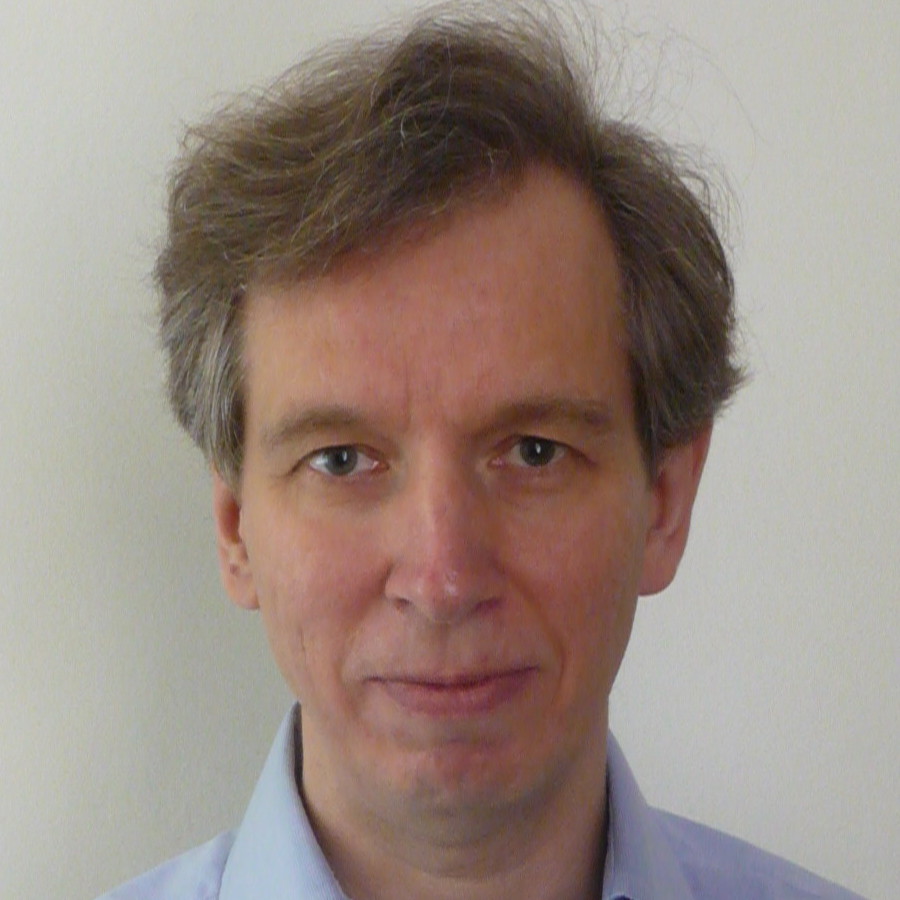
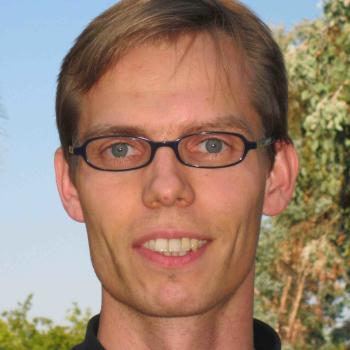
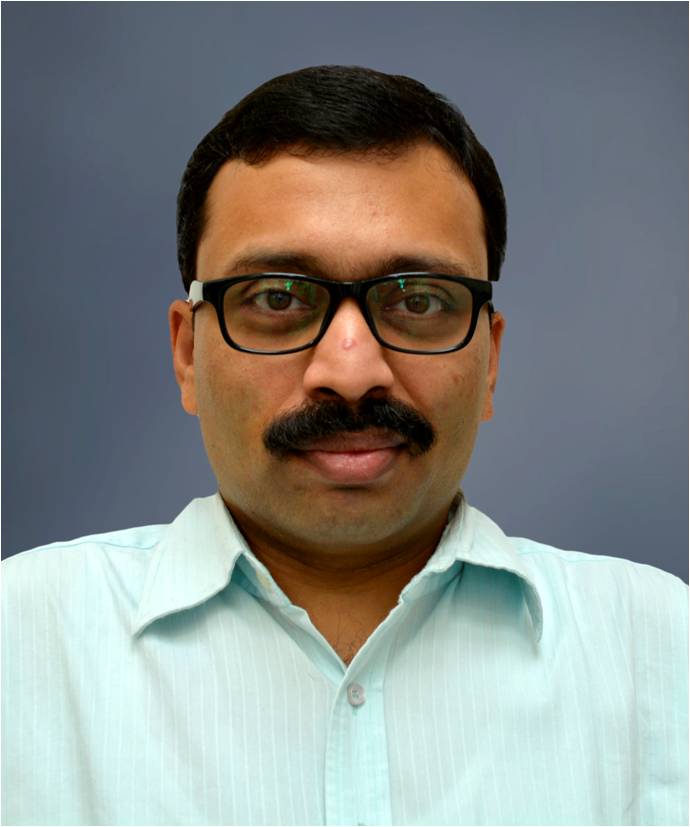
Hugo de Lasa is a Full Professor at the Department of Chemical and Biochemical Engineering, Faculty of Engineering, University of Western Ontario. He holds a Bachelor in Chemical Engineering (1968) from Universidad Nacional del Sur, Argentina, and a Doctoral degree (1971) from Université de Nancy, France. Research Focus: Catalysis, Photocatalysis, Chemical Reactor Engineering, Fluidization, Biomass Gasification Awards: Research Excellence Prize (1998), Fellow of the Chemical Institute of Canada (2000), Medal of Research and Development (2000), Doctor Honoris Causa (2004, 2018) His work spans chemical reactor design , photocatalytic hydrogen production , and fluidized bed technologies . Recent publications highlight machine learning applications in chemical equilibrium modeling and CO2 capture using microalgae. He founded the Chemical Reactor Engineering Centre (CREC) and Recat Technologies Inc. , a university spin-off commercializing reactor innovations. Awards include the Vanguard Award (2019) and Commemorative Issue in Catalysts Journal (2020). His research has generated 389 peer-reviewed publications , 14 patents , and over 10,000 citations .
Dr. Young Yun Kim is a Professor in the Department of Communication at the University of Oklahoma's Dodge Family College of Arts and Sciences, where she has developed nationally recognized Intercultural Communication graduate programs since joining in 1988. Her academic journey spans continents, beginning in Seoul, Korea, and continuing through significant scholarly institutions in the United States. B.A.: Seoul National University, Seoul, Korea M.A.: University of Hawaii (East-West Center Communication Institute) Ph.D.: Northwestern University, Evanston, Illinois Dr. Kim's research pioneers the theoretical foundations of cross-cultural adaptation and interethnic communication. Her Integrative Communication Theory of Cross-Cultural Adaptation positions communication as the central mechanism for achieving internal equilibrium in new cultural environments, while her Contextual Theory of Interethnic Communication examines associative and dissociative behaviors across ethnic boundaries. Her work uniquely bridges personal transformation with systemic cultural dynamics, emphasizing how intercultural experiences foster expanded human understanding. Analysis of her recent publications reveals consistent theoretical refinement with increasing focus on identity transformation, synchrony in communication, and the emergence of intercultural personhood beyond traditional cultural boundaries. Her scholarship demonstrates remarkable continuity in core themes while progressively incorporating globalization's impact on individual and collective identity formation. Scientific Awards Fellow of the International Communication Association (2002) Top Scholar Award for Lifetime Achievement, Intercultural Communication Division, International Communication Association (2006) Dr. Kim has directed numerous doctoral theses and collaborated on significant cross-cultural research projects examining adaptation patterns among diverse populations including Korean and Indonesian expatriates, Hispanic youth, international students, and refugees. Her research funding includes a two-year study of Indochinese refugees (1978-1980) sponsored by the U.S. Department of Health and Human Services, reflecting sustained external validation of her methodological rigor and theoretical significance. As a foundational leader in intercultural scholarship, Dr. Kim serves on 11 editorial boards including Journal of Communication and Human Communication Research, and has held executive positions in the International Communication Association and International Academy for Intercultural Research, culminating in her presidency (2013-2015) of the latter organization.
Dr. Lucas Pahl is a Lecturer in Economics at the University of Sheffield, School of Economics since 2024. His research specializes in mathematical game theory, particularly in equilibrium refinements, fixed point theory, and real algebraic geometry. He holds a PhD in Economics from the University of Rochester, an MSc in Mathematics from IMPA (Brazil), and a BSc in Social Sciences from the University of São Paulo. Previous positions: Postdoctoral Scholar at Hausdorff Institute for Mathematics and Institute for Microeconomics, University of Bonn His research interests include advanced topics like fixed point theory applications in game theory, algebraic topology intersections with economic models, and equilibrium refinement methodologies. Recent work explores information spillover in zero-sum games and polytope-form game structures. Key publications focus on O’Neill’s theorem extensions, sustainable equilibria analysis, and finite characterizations of perfect equilibria. He serves as a reviewer for top journals including Econometrica and Games and Economic Behavior. No scientific awards explicitly mentioned. His advisory and grant activities remain unspecified in current records. Labs/teams: No lab affiliations explicitly stated in provided information.
Dimitrios P. Tsomocos is a Professor of Financial Economics at Saïd Business School and a Fellow in Management at St Edmund Hall, University of Oxford. He holds a BA, MA, MPhil, and PhD from Yale University and previously worked at the Bank of England. He serves on editorial boards including Annals of Finance and Economic Theory, and is a Senior Research Associate at the Financial Markets Group at the London School of Economics. His educational background includes: University of Oxford: M.A. by resolution, 2002 Yale University: Ph.D. in economics, 1996 Yale University: M.Phil. in economics, 1992 Yale University: M.A. in economics, 1990 Yale University: B.A. in economics, 1989 Professor Tsomocos is a mathematical economist specializing in Central Banking, Banking and regulation, Incomplete asset markets, Systemic risk, Financial instability, and Issues of new financial architecture. His research focuses on contagion, financial fragility, interbank linkages, and the impact of the Basel Accord using General Equilibrium models with incomplete asset markets, money, and endogenous default. He is working toward designing a new paradigm of monetary policy, financial stability analysis, and macroprudential regulation. His recent publications show a consistent focus on financial stability, banking regulation, and the interaction between monetary policy and financial stability. The research spans theoretical modeling of bankruptcy and default in general equilibrium frameworks, practical applications to bank regulation, analysis of commodity cycles in emerging economies, and policy responses to crises like the COVID-19 pandemic. His work frequently employs quantitative methods and general equilibrium modeling to address pressing issues in financial economics. His scientific achievements include: 2004 Bank Sabatell prize for the best work on the economics of banking (for "Book vs. Fair Value Accounting in Banking and Intertemporal Smoothing") Co-development of the Goodhart-Tsomocos model of financial fragility (2003) Testimony to House of Lords for the Economic and Financial Affairs and International Trade Sub Committee's report (2011) Appointment to Research Advisory Board, Central Bank of Russian Federation (2018) Professor Tsomocos has advised numerous PhD students and collaborated extensively with central banks worldwide. He has served as an economic advisor to a major political party in Greece and regularly provides commentary on the Greek economy. His research has had substantial policy impact, with the Goodhart-Tsomocos model implemented by more than ten central banks including the Bank of Bulgaria, Bank of Colombia, Bank of England, and Bank of Korea. He continues to collaborate with researchers from the ECB, Central Bank of the Russian Federation, and Bank of Chile on updated versions of his financial fragility model. He co-developed the Goodhart-Tsomocos model of financial fragility while working at the Bank of England, which has been implemented at various central banks globally. His research group at Oxford continues to refine this model and apply it to contemporary financial stability challenges.
George J. Mailath is the Walter H. Annenberg Professor in the Social Sciences and Professor of Economics at the University of Pennsylvania, and an Honorary Professor at the Research School of Economics, Australian National University. He specializes in microeconomics, noncooperative game theory, repeated games, and the theory of reputations. His research explores pricing strategies, evolutionary game theory, and social norms. Mailath is a Fellow of prestigious institutions including the American Academy of Arts & Sciences and the Econometric Society. He served on the Econometric Society Council (2013-2015, 2020-2023), Game Theory Society Council (2005-2011), and co-founded Theoretical Economics . His editorial roles include editorships at Econometrica , Review of Economic Studies , and others. His 2019 book Modeling Strategic Behavior provides graduate-level insights into game theory and mechanism design. Mailath’s articles focus on strategic interactions, reputation effects, and dynamic game theory. Notable works include analyses of trust in risk-sharing mechanisms and coalition-proof strategies under frictions. His research emphasizes long-term strategic behavior and institutional design.
Gabriele Farina is an Assistant Professor at MIT in the Department of Electrical Engineering and Computer Science (EECS) and the Laboratory for Information and Decision Systems (LIDS), with additional affiliations at the Operations Research Center (ORC). Holding the X-Window Consortium Career Development Chair, his research focuses on theoretical and algorithmic foundations for learning and computational decision-making under imperfect information, integrating game theory, machine learning, optimization, and statistics. He previously served as a Research Scientist at Meta's Fundamental AI Research (FAIR) group, where he contributed to Cicero, a human-level AI agent combining strategic reasoning and natural language. Ph.D. in Computer Science from Carnegie Mellon University (advisor: Tuomas Sandholm) Facebook Fellowship (2019-2020) in Economics and Computation Recipient of multiple awards including ACM SIGecom dissertation award, NSF CAREER, and AI2050 Early Career Fellow His research spans four key areas: (1) No-Regret Learning Dynamics in extensive-form games; (2) Correlation and Mediated Equilibria in sequential decision-making; (3) Team Games and Team Max-Min Equilibria; and (4) Human Modeling and Equilibrium Perfection. His work addresses challenges in scalable equilibrium computation, stability of learning algorithms, and robustness to mistakes in multi-agent systems. Recent publications highlight advancements in polynomial-time equilibrium computation, cautious optimism algorithms, and connections between regret minimization and mirror descent. These contributions appear in top venues like COLT, NeurIPS, ICML, and AAAI, with keywords spanning game theory, optimization, and machine learning. NSF CAREER award AI2050 Early Career Fellow Facebook Fellowship ACM SIGecom dissertation award GameSec 2024 best paper award ICLR 2023 outstanding paper honorable mention His research group at MIT collaborates on projects involving strategic reasoning, human-level AI agents, and equilibrium refinements, with applications to games like Diplomacy and poker. Current efforts include developing faster algorithms for correlated equilibria and exploring connections between machine learning and economic theory.
Joseph Tao-yi Wang is a Distinguished Professor in the Department of Economics at National Taiwan University (NTU). He holds a PhD from UCLA and previously served as a Postdoctoral Scholar and Visiting Associate at Caltech. His research spans experimental economics, neuroeconomics, game theory, and behavioral economics, with a focus on strategic decision-making, market design, and learning in games. Wang directs the Taiwan Social Sciences Experimental Laboratory (TASSEL), which hosts large-scale experimental research and conferences like the 2017 APESA. His work integrates eye-tracking, pupillometry, and machine learning to study cognitive processes in economic decisions. Wang is also active in educational innovation, developing flipped classroom models with experiments for economics courses. His publications consistently explore behavioral deviations from game-theoretic predictions, such as overcommunication in sender-receiver games and learning patterns in auctions. Recent work emphasizes reproducibility in management science and AI applications in education. Wang’s research uses diverse methodologies—from neuroimaging to field experiments—to test economic theories in real-world contexts. Wang mentors through NTU’s Berkeley Economics Student Assistant Program (BESAP) and organizes mini-courses for high school students. He has not received scientific awards per the available data.
Maxime Menuet is a Professor of Economics at Université Côte d'Azur (GREDEG) and a Research Associate at IPAG Business School in Paris. His academic credentials include a PhD in Economics and dual M.Sc. degrees in Macroeconomics/Finance and Mathematics from the University of Orléans, complemented by a 2023 HDR (Habilitation à Diriger des Recherches) from Paris VIII. 2023: HDR in Economics, Paris VIII 2018: PhD in Economics, University of Orléans 2015: M.Sc in Macroeconomics and Finance, University of Orléans 2015: M.Sc in Mathematics (Theoretical Probability), University of Orléans His research focuses on Economic Theory and Political Economy , with specialized expertise in public debt , macroeconomic stability , conflict dynamics , and interdisciplinary intersections with theology and history . Recent work explores environmental sustainability through fiscal policy, ideological clashes in macroeconomic governance, and historical economic thought from Jansenist perspectives. Maxime's publications since 2023 show strong interdisciplinary trends, blending theological analysis with economic modeling (e.g., New Testament debt language), refining game-theoretic conflict models , and advancing ecological macroeconomic frameworks for sustainable debt management. ANR Young Researcher Grant Best Paper Award, TIMTED Conference Visiting Scholarships: Duke University, Osaka University, UCAM Montreal As Deputy Director of EUR ELMI and co-director of the European Research Group on Money, Banking, and Finance, he leads major interdisciplinary initiatives. His teaching portfolio mirrors his research, covering economic theory, political economy, and debt/conflict dynamics.
Klaus Schmidt is a Professor of Economics at Ludwig Maximilian University of Munich, holding the chair in the Department of Economics within the Faculty of Economics. His research focuses on theoretical and applied aspects of contract theory, game theory, and industrial organization, with significant contributions to understanding venture capital finance, privatization, and fairness in economic behavior. His educational background includes a Ph.D. in Economics from the University of Bonn (1991) with the dissertation "Commitment in Games with Asymmetric Information" and Habilitation (1994) with "Contracts, Competition, and the Theory of Reputation". Early academic support included scholarships from Studienstiftung des Deutschen Volkes (1982-87) and a German Academic Exchange Service grant (1988/89). Professor Schmidt's research centers on contract theory applications across diverse domains. His work on fairness and reciprocity (notably with Ernst Fehr) revolutionized behavioral contract theory, while contributions to venture capital finance and privatization established foundational frameworks for analyzing incomplete contracts in real-world settings. He employs rigorous game-theoretic modeling to address incentive problems in procurement, privatization, and organizational design. His publication record since 1991 reveals consistent focus on contract-theoretic problems, with increasing emphasis on behavioral aspects after 1999. Key thematic clusters include venture capital finance (2002-2003), fairness/reciprocity (1999-2000), and privatization/incomplete contracts (1995-1996), demonstrating evolution from pure theory to policy-relevant applications. Gossen Prize of the German Economic Association (2001) Commerzbank Prize of the Berlin-Brandenburg Academy of Sciences (2001) Teaching Prize of the Bavarian ministry of science (2000) Walter-Adolf-Jörn Prize (1993) German Academic Exchange Service Grant (1988/89) Studienstiftung des Deutschen Volkes Scholarship (1982-87) Professor Schmidt has secured major research funding including German Science Foundation grants for "Incomplete Contracts" (1999-present) and "Venture Capital Finance" (1998-present). His teaching excellence was recognized with Bavaria's highest teaching award (2000), and he maintains active collaboration with leading economists including Ernst Fehr and Monika Schnitzer. While specific student mentorship details aren't documented, his extensive publication record and seminar leadership indicate significant academic supervision.
Florian Brandl is an Argelander Professor (associate professor with tenure) at the University of Bonn, holding positions in both the Department of Economics and the Hausdorff Center for Mathematics. Previously, he was a postdoctoral research scholar at Princeton University and Stanford University. His academic career demonstrates a strong foundation in mathematical economics and game theory, with affiliations spanning multiple prestigious institutions. Brandl earned his Doctoral degree in Mathematics (summa cum laude) from the Technical University of Munich in 2018, following a Master's degree (2013) and Bachelor's degree (2011) from the same institution. His doctoral work focused on "Zero-Sum Games in Social Choice and Game Theory" under the supervision of Felix Brandt, establishing the foundation for his research trajectory. Prof. Brandl's research spans microeconomic theory with a focus on social choice theory, decision theory, and game theory. He is particularly interested in decision-making under uncertainty, connections between social choice and game theory, and dynamic processes converging to equilibrium. His work employs mathematical tools to analyze interactions of multiple entities in economic contexts, often incorporating algorithmic approaches and methods from theoretical computer science. He has made significant contributions to fair division, mechanism design, and probabilistic social choice. His publication record shows consistent contributions across multiple subfields, with recent work focusing on patience effects in fair division, social learning barriers, and axiomatic characterizations of equilibrium concepts. Brandl's research demonstrates strong interdisciplinary connections between economics, mathematics, and computer science, with publications in top journals across all three disciplines. Best Student Paper Award at WINE 2021 for "Funding Public Projects: A Case for the Nash Product Rule" Associate Editor for Theoretical Economics Co-organizer of the COMSOC Video Seminar Prof. Brandl actively contributes to academic service and community building. He co-organizes the COMSOC Video Seminar and will host a Trimester Program on "Advances in Mechanism Design" in Bonn in summer 2026. He serves on program committees for major conferences including COMSOC 2023 and EC 2023. His research has been supported through his position as a Bonn Junior Fellow at the Hausdorff Center for Mathematics since 2021. Based at the Institute for Microeconomics and affiliated with the Hausdorff Center for Mathematics, Brandl collaborates with a broad network of researchers across economics and computer science. His work often involves interdisciplinary collaboration, as evidenced by his numerous co-authored publications with researchers from various institutions worldwide. He maintains strong connections with the University of Oxford's Global Priorities Institute as a Research Affiliate.
Olivier Tougait is a Professor at the Chemistry, materials and processes for sustainable nuclear power (CIMEND) department within the Unité de Catalyse et Chimie du Solide (UCCS) at Université Lille . He specializes in solid-state chemistry, nuclear materials, and actinide-based compounds, with a focus on understanding fuel cycle processes for nuclear energy. Academic Background: PhD in Chemistry (1998, Université de Rennes1), Postdoctoral Fellow at Northwestern University (1998-2000). Career: Lecturer at Rennes1 (2000-2014), now Professor at UCCS since 2014. Collaborations include the French Alternative Energies and Atomic Energy Commission (CEA) , Orano , and Framatome . Research Interests: Actinide-based intermetallic compounds Phase diagrams of nuclear materials Magnetocaloric properties Fuel cycle process optimization Synthesis and thermodynamic behavior of uranium alloys Collaborative industrial nuclear R&D Publications since 2012 focus on: Uranium-molybdenum fuel characterization Germanium/Aluminum substitution in actinide systems Thermal stability of uranyl peroxide nanoclusters Crystallographic analysis of heavy-fermion materials Labs: Directs the joint research laboratories LR4CU and LRC PUMA, which collaborate with Orano and Framatome on nuclear fuel cycle innovations.
Bernhard von Stengel is a Professor of Mathematics at the Department of Mathematics, London School of Economics and Political Science . His work bridges game theory, computational complexity , and mathematical economics , with a focus on equilibrium computation and algorithmic aspects. Developed Game Theory Explorer , open-source software for analyzing strategic and extensive-form games. Organized major workshops like What is Strategic Information? (2024) and Game Theory and Machine Learning (2023). Authored the textbook Game Theory Basics (Cambridge University Press, 2021). His research spans zero-sum games , correlated equilibrium , inspection games , and communication over noisy channels . Recent work includes characterizing the Condorcet dimension of metric spaces (2024) and stable-set bounds for Nash equilibria in bimatrix games. He has collaborated with institutions like the Game Theory Society and contributed to public discourse via talks on algorithms' societal impact (2021) and game theory in politics (2020).
Matthias Ihme is a Professor in the Department of Mechanical Engineering and Photon Science Directorate at Stanford University. His research focuses on large-eddy simulation (LES) of turbulent reacting flows, aeroacoustics, combustion-generated noise, numerical methods, and high-order schemes. He holds a Ph.D. from Stanford University (2008), an M.Sc. in Computational Engineering from the University of Erlangen (Germany, 2002), and a Dipl.-Ing. in Mechanical Engineering from Munich University of Applied Sciences (Germany, 2000). His work bridges computational fluid dynamics, combustion science, and photon science, with notable contributions to supercritical fluid dynamics, machine learning integration in fluid simulations, and high-fidelity atmospheric transport modeling. Recent research emphasizes ultrafast cluster dynamics, shock-induced interface behavior, and stochastic ignition mechanisms in advanced fuel systems. Publications highlight interdisciplinary advancements, including physics-informed ML frameworks for reacting flows and experimental studies using X-ray photon correlation spectroscopy. His projects often involve high-performance computing and collaboration with national labs like SLAC.
Tarun Sabarwal is a Professor of Economics at the University of Kansas and Director of the Center for Analytical Research in Economics. He has held leadership roles including Associate Chair (2016-20) and Director of Graduate Programs (2016-20), while maintaining active research in game theory and microeconomic theory since joining KU in 2000. Education Ph.D. Economics, University of California at Berkeley, 2000 M.A. Math, University of California at Berkeley, 1999 M.B.A. Finance, University of Cincinnati, 1991 B.Comm. (Hon.), Punjabi University, 1989 Research Focus His work centers on strategic complementarities/substitutes and monotone methods in game theory, exploring equilibrium analysis in interdependent decision-making contexts. Key contributions include lattice-based frameworks for network contagion, directional comparative statics, and robust equilibrium characterization across diverse economic environments. Publication Trends Recent publications (2020-2025) demonstrate consistent focus on extending monotone game theory to network contagion dynamics, financial stability, and antitrust applications. His work bridges abstract mathematical economics with real-world policy implications through rigorous lattice-theoretic approaches. Awards Marquis Who's Who in America (2022-present) Economic Theory Fellow of SAET (2020-present) Berkeley Lectures on Monotone Games (2022) De-Min and Chin-Sha Wu Faculty Award (2018-20) Advising and Service Sabarwal has mentored 22 undergraduate researchers including honors thesis students and NSF/Sloan-funded field researchers. He serves as Associate Editor for the International Journal of Economic Theory and chairs key committees including Promotion and Tenure (2022-23). Research Infrastructure As Director of the Center for Analytical Research in Economics, he leads interdisciplinary initiatives and founded the Colloquium seminar series, fostering global collaboration among economists from institutions including Johns Hopkins, Caltech, and Stanford.
Somnath Basu is a Professor in the Department of Metallurgical Engineering and Materials Science at the Indian Institute of Technology Bombay. He has been serving in academic roles since 2011, progressing from Assistant Professor to Associate Professor and then to Professor in 2022. His work is deeply rooted in process metallurgy and materials engineering, with a focus on industrial steelmaking technologies. His research interests include metal refining , thermodynamics of slag-metal reactions , phosphorus and sulfur removal , and continuous casting processes . He also explores nanofluids and their transport properties, indicating interdisciplinary engagement. His work bridges fundamental thermodynamic studies with practical industrial applications in iron and steel production. The selected publications reflect a strong trend in steelmaking process optimization , particularly in reaction kinetics , inclusion behavior , and process monitoring . His research spans both experimental investigations and thermodynamic modeling, targeting improvements in steel purity and casting efficiency. Scientific Contributions: Published in leading journals such as ISIJ International , Steel Research International , and Metallurgical and Materials Transactions B . Contributions to understanding phosphorus partitioning, nozzle clogging, and nanofluid conductivity. While no specific students or grants are listed, his long-standing academic position and publication record suggest active supervision of graduate research and involvement in funded projects related to metallurgical process innovation. His work likely supports both academic and industrial advancements in steel technology. He is affiliated with a leading research department equipped with advanced facilities for metallurgical experimentation and process simulation, though specific lab names or team structures are not mentioned in the text.