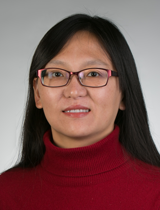
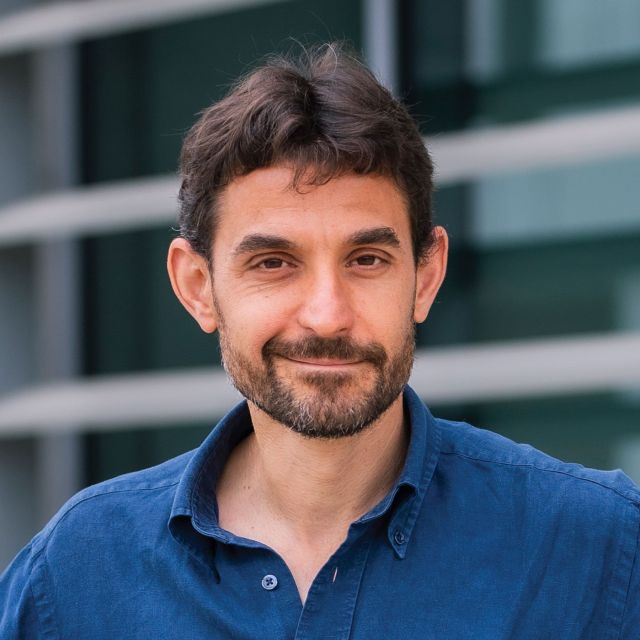
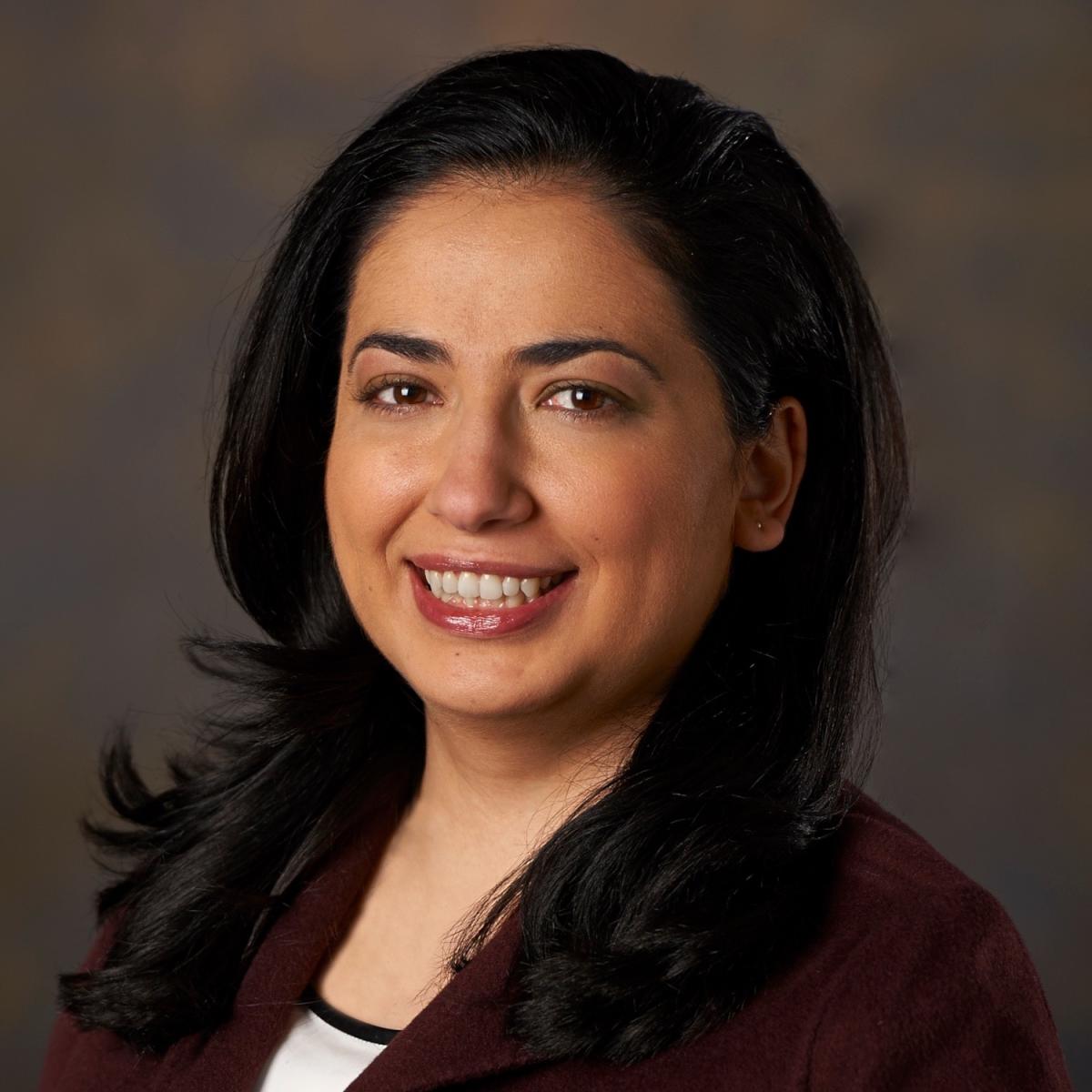
Jennifer Ross is a Professor of Physics and Associate Dean for Creativity, Scholarship, and Research at the College of Arts & Sciences of Syracuse University . As a biophysicist, she investigates how cells organize their interiors through self-assembly and active matter principles, focusing on the microtubule cytoskeleton and enzyme-driven systems using single-molecule imaging . Her research bridges fundamental physics with biological organization . Education: Ph.D. in Physics, University of California, Santa Barbara (2004) B.A. in Physics and Mathematics, Wellesley College (2000) Research Focus: Self-organization of cytoskeletal networks Active matter dynamics in biological systems Motor protein interactions and cargo transport Programming circadian materials via biomolecular systems Microtubule severing mechanisms Recent Article Trends: 2025 studies explore kinesin-driven cytoskeletal composites, urease-DNA origami engineering, and crosslinker-regulated network mechanics 2024-2023 work examines ionic strength effects on microtubules, programmable circadian materials, and motor-cargo dynamics Earlier studies analyze actin-microtubule composites, liquid crystal phase control, and severing enzyme mechanisms Scientific Awards: Fellow of the American Physical Society (APS) and American Association for the Advancement of Science (AAAS) Cottrell Scholar (2025) and STAR Award Margaret Oakley Dayhoff Award (Biophysical Society) Grants: Leads multiple NSF, Sloan Foundation, and Research Corporation grants for projects like "Energy and Entropy Sculpting" and "Explorations: SUPER-Tech SHIP" . Teaching: Offers courses in experimental physics, microscopy, and biophysics, including a globally adopted hands-on microscope-building curriculum. Lab: Heads the Bio-Active Matter Lab , studying how cells harness noisy systems for autonomous organization.
Xin Guo is Professor and Department Chair of Industrial Engineering and Operations Research (IEOR) at UC Berkeley's College of Engineering, holding the Coleman Fung Chair in Financial Modeling. Her research bridges mathematical finance, stochastic control, and machine learning with applications in risk analytics and quantitative trading. Education: Ph.D. in Mathematics, Rutgers University (1999) Research Interests: Professor Guo's work centers on mathematical finance , stochastic games , and reinforcement learning . She develops theoretical frameworks for α-potential games and mean-field systems while applying signature methods and GANs to financial data. Her research addresses critical problems in portfolio optimization, fraud detection (e.g., Medicare analytics), and market forecasting, emphasizing the intersection of stochastic control with machine learning for real-world decision-making under uncertainty. Publication Trends: Recent work (2023-2025) shows increasing focus on multi-agent reinforcement learning through mean-field game theory, with applications spanning finance (corporate bonds, trading), healthcare (fraud detection), and transportation (rate forecasting). Key innovations include BSDE approaches for stochastic games, signature-based time series analysis, and theoretical guarantees for GAN training dynamics. Scientific Awards: Holds the prestigious Coleman Fung Chair in Financial Modeling, reflecting significant contributions to quantitative finance research. Advising and Grants: As IEOR Department Chair, Professor Guo mentors graduate students in stochastic modeling and financial engineering. Her research is supported by the Coleman Fung Endowment Fund, with collaborations spanning finance, healthcare, and transportation sectors through industry partnerships. Labs and Teams: Leads the Risk Analytics & Data Analysis Research (RADAResearch) Lab ( https://risklab.ieor.berkeley.edu/ ), which develops cutting-edge methodologies for risk assessment, data-driven decision-making, and game-theoretic solutions to complex systems. The lab fosters interdisciplinary work connecting mathematical theory with practical applications in FinTech and beyond.
Professor Omar A. Saleh is a distinguished physicist and materials scientist at the University of California, Santa Barbara, holding appointments in both the Materials and Physics Departments. Since summer 2023, he has served as Chair of the Materials Department and maintains a minority appointment in the Biomolecular Science and Engineering (BMSE) Program, where he previously served as Director from 2013-2017. His educational background includes a B.S. in Physics from MIT (1997) and a Ph.D. in Physics from Princeton (2003), supported by a Hertz Fellowship. Following postdoctoral work at École Normale Supérieure in Paris developing single-molecule techniques for motor protein/DNA studies, he joined UCSB in 2005. Saleh's research centers on fundamental principles of biomolecular behavior through experimental investigation of biopolymer elasticity and biomimetic organelles. His lab pioneers precision single-molecule stretching experiments to study entropic/energetic contributions in soft systems and creates life-like behaviors using reconstituted nucleic acid/protein assemblies. Key focus areas include DNA nanostar phase separation, liquid-liquid phase behavior, intrinsically disordered proteins, and non-equilibrium biomolecular systems. His publication trends reveal a strong emphasis on biomolecular condensates (2023-2025), with recurring themes in DNA nanotechnology, polyelectrolyte physics, and single-molecule mechanics. Recent work explores tension-mediated control of phase separation, transcriptional regulation of biomolecular liquids, and active matter principles in DNA systems. NSF CAREER Award (2008) Bessel Research Award from Alexander von Humboldt Society (2017) Fellow of the American Physical Society (2019) Saleh actively mentors graduate students and postdocs including Sam Wilken, Gabrielle Abraham, Anna Nguyen, and Aria Chaderjian, whose research spans DNA nanostar liquids, active droplets, and complex coacervation. His lab develops innovative instrumentation including high-speed magnetic tweezers and GPU-based tracking systems, supported by grants such as NSF/MCB-BSF: Direct force measurements of intrinsically disordered proteins. The Saleh Group operates at BioE 3006, focusing on creating quantitative models of biological function through physical reconstitution.
Anette Mikes is an Associate Professor of Accounting at the University of Oxford’s Saïd Business School and a Hertford College Fellow. She specializes in risk management, corporate governance, and sustainability, with a focus on the intersection of ethics and organizational control systems. Her research explores how risk frameworks shape corporate decision-making, particularly in climate change and decarbonization contexts. Education: PhD in Accounting from the London School of Economics (2005) Pre-doctoral work in the City of London (2006–2007) studying Chief Risk Officer roles Research Interests: Behavioral approaches to risk management Management control systems for sustainability Ethics in corporate governance Decarbonization strategies in heavy industries Her 2012 Harvard Business Review article (with Robert Kaplan) on risk frameworks remains influential, while her documentary on the Kursk submarine disaster highlights crisis management failures. Awards: 2025 Honorary Doctorate from Uppsala University 2017 ACA Prize for Risk Management Contributions 2014 Global Risk Forum Film Award Key Contributions: Co-developed Harvard’s Risk Management executive program Leads research on ‘Values at Risk’ and corporate purpose Published widely on climate risk governance and ethical leadership Her recent work emphasizes decarbonization strategies and moral accountability in business, bridging accounting practices with environmental and ethical imperatives.
Per Krusell is Professor of Economics at Stockholm University and holds the Torsten and Ragnar Söderberg Chair at the Institute for International Economic Studies (IIES). He is a Fellow of the Econometric Society and served as President of the European Economic Association in 2020. He is currently the Secretary of the Prize Committee for the Sveriges Riksbank Prize in Economic Sciences in Memory of Alfred Nobel. Education: PhD in Economics, University of Minnesota Research Interests: Per Krusell’s research spans macroeconomics , inequality , climate economics , labor markets , and political economy . He has made foundational contributions to understanding incomplete markets, wealth distribution, optimal taxation, and the macroeconomic effects of climate change. His work often integrates dynamic stochastic general equilibrium (DSGE) models with heterogeneous agents to study long-run outcomes and policy impacts. Publications Trend: His recent publications (2022–2025) reflect a strong focus on climate policy , integrated assessment modeling , and macro-labor dynamics . Key themes include carbon taxation, labor supply responses to productivity growth, fiscal multipliers in heterogeneous-agent settings, and the macroeconomic consequences of vaccination and epidemic control. Awards & Honors: Fellow of the Econometric Society Torsten and Ragnar Söderberg Chair in Economics President, European Economic Association (2020) Secretary, Nobel Prize Committee in Economic Sciences Advising & Grants: While specific student names are not listed, his leadership roles in global economic associations and policy committees indicate extensive academic advising and grant involvement in macroeconomic policy and climate economics. Labs & Teams: He is affiliated with the Institute for International Economic Studies (IIES) at Stockholm University, a leading research institute in macroeconomics and international economics.
Claire Célérier is an Associate Professor of Finance at the Rotman School of Management, University of Toronto, where she holds the Canada Research Chair in Household Finance. Her academic career spans prestigious institutions including the University of Toronto (where she advanced from Assistant to Associate Professor between 2016-2022) and the University of Zurich (2014-2016). She maintains an affiliation with the People's History Lab and actively contributes to academic discourse through conference organization including 'Race, Equity and Public Policy' (2023) and 'Banks, States and the People' (2024). Dr. Célérier's research explores how finance can benefit households through multiple lenses including behavioral economics, asset pricing, and financial history. Her work investigates innovation in finance, diversity and inclusion impacts, and historical perspectives on financial systems. She has developed significant expertise in household finance, banking, and the intersection of finance with social issues, particularly racial disparities in financial markets as demonstrated in her award-winning research on the Freedman's Savings Bank. Her scholarly output shows a clear trajectory from foundational work on security design and investor behavior toward increasingly socially relevant research on financial inclusion, racial equity, and household financial decision-making. Recent publications demonstrate her growing focus on historical contexts of financial systems and their contemporary implications, particularly regarding marginalized communities. Canada Research Chair in Household Finance (2024) Bank of Canada Governor's Award (2022) University of Toronto Top 5% Merit Award (2021) Petro Canada Young Innovators Award Program (2021) Multiple Rotman School of Management Teaching Awards (2019-2021) Ieke van den Burg Prize for Research on Systemic Risk (2015) Dr. Célérier has successfully secured substantial research funding including Insight Development Grants (CAD 54,500), Connaught Research Grant (CAD 10,000), and the Marianne and Marcus Wallenberg Foundation Grant (EUR 400,000). She mentors several PhD students including Andrada Bilan (2020), Alexey Vasilenko (2023), and Purnoor Tak (Expected 2026), and has supervised numerous master's theses at both University of Toronto and University of Zurich. Her service contributions include Rotman School of Management MBA program committee, executive committee, seminar coordination, and faculty recruiting committee.
Celestine Mendler-Dünner is a Principal Investigator at the ELLIS Institute in Tübingen, co-affiliated with the Max Planck Institute for Intelligent Systems and the Tübingen AI Center. She leads the Algorithms and Society research group, focusing on machine learning in social contexts and the role of prediction in digital economies. Her work bridges theoretical machine learning with practical societal impact, developing tools for safe, reliable, and equitable AI ecosystems. Her educational background includes a PhD from ETH Zurich in collaboration with IBM Research, followed by an SNSF postdoctoral fellowship at UC Berkeley hosted by Moritz Hardt. She was previously a group leader at the Max Planck Institute for Intelligent Systems before joining the ELLIS Institute. Mendler-Dünner's research spans several interconnected themes including performative prediction (where predictions change the behavior they aim to predict), algorithmic collective action (how participants can steer AI systems toward common goals), and the role of LLMs in social science research. Her work combines theoretical foundations with practical implementations, addressing challenges in interactive machine learning, optimization in dynamic environments, and context-specific evaluation of AI systems. She particularly examines how algorithmic predictions mediate services and platforms at societal scale, exploring concepts of economic power in digital markets. Her publication record shows a clear evolution from system-aware machine learning algorithms (including foundational work on IBM Snap ML) toward increasingly sociotechnical questions at the intersection of machine learning, economics, and policy. Recent work focuses on measuring performative power in digital economies, evaluating LLMs as risk scores, and developing frameworks for algorithmic collective action in recommender systems and labor markets. Among her notable recognitions are the ETH Medal for her dissertation, the IBM Research Division Award, the Fritz Kutter Award, and the IBM Eminence and Excellence Award. She is an ELLIS Scholar, a fellow of the Elisabeth-Schiemann-Kolleg, and affiliated with several prestigious research programs including the International Max Planck Research School for Intelligent Systems and the Max Planck ETH Center for Learning Systems. ETH Medal (dissertation award) IBM Research Division Award Fritz Kutter Award IBM Eminence and Excellence Award SNSF Early Postdoc Mobility Fellowship Mendler-Dünner actively mentors the next generation of researchers, advising PhD student Patrik Wolf and supervising research interns including Joachim Baumann, Haiqing Zhu, and Anna Badalyan, as well as Master's student Dorothee Sigg. She serves as core faculty for the International Max Planck Research School and associated faculty for the Max Planck ETH Center for Learning Systems. Her group has secured significant research funding through fellowships and institutional support, enabling work on projects like Powermeter (measuring search engine influence) and Snap ML (resource-efficient machine learning library with over 1 million PyPI downloads). She leads the Algorithms and Society research group, which examines machine learning as part of broader sociotechnical ecosystems. The group explores human-population interactions with algorithmic systems and incorporates these insights into learning system fundamentals. Current projects include investigating economic incentives in digital platforms, developing tools for systematic LLM evaluation in social science contexts, and creating frameworks for collective action in algorithmic systems. Mendler-Dünner also co-organizes the Algorithmic Collective Action workshop at NeurIPS 2025, demonstrating her leadership in emerging research directions at the AI-society interface.
Paul Goldberg is a Professor of Computer Science and Director of the MSc in Mathematics and Foundations of Computer Science (MFoCS) at the University of Oxford. He holds a BA in Mathematics from Oxford University and a PhD in Computer Science from the University of Edinburgh. His research focuses on algorithmic game theory, computational complexity, and machine learning, with notable contributions to equilibrium computation, complexity classes of total search problems, and decentralized systems. Affiliations: Department of Computer Science, Oxford; Editorial Board of ACM Transactions on Economics and Computation. Education: PhD in Computer Science (1993), University of Edinburgh MSc in Computer Systems Engineering (1989), University of Edinburgh and Université Paris-Sud BA in Mathematics (1988), Oxford University Research Interests: Algorithmic game theory, computational complexity (especially total search problems like CLS and PPAD), decentralized computation of equilibria, and applications in machine learning and AI. His work bridges theoretical computer science and economics, with a focus on algorithm design and complexity analysis. Publications and Awards: Over 120 papers, including influential work on Nash equilibrium complexity (2009), gradient descent (2023), and fair division algorithms. Notable awards include the ACM SIGecom Test of Time Award (2022) and a SIAM Outstanding Paper Prize (2011). Grants and Students: Leads EPSRC-funded projects on game theory and machine learning. Supervised 11 PhD graduates and currently advises Giannis Tyrovolas and others. Active in mentoring MSc and undergraduate projects. Labs/Teams: Part of the Algorithms and Complexity Theory group at Oxford, contributing to research on optimization, equilibrium dynamics, and fair division.
Trine Krogh Boomsma is a Professor in the Department of Insurance and Economics at the University of Copenhagen's Department of Mathematical Sciences. Her research focuses on optimization under uncertainty with significant applications in energy systems, particularly electricity markets, renewable energy investments, and power system planning. PhD in Mathematics-Economics, Aarhus University (2003-2007) Visiting PhD at University of Duisburg-Essen (2004) Academic career includes positions at Risø National Laboratory for Renewable Energy and Imperial College London Her work spans stochastic programming, real options analysis, and dynamic programming to address energy sector challenges. Key areas include support schemes for renewables, market risk modeling, and operational optimization of hybrid conventional-renewable systems. Recent research explores policy impacts on investment decisions and advanced scenario generation techniques. Major publications (2012-2020) cover renewable energy policy frameworks, power plant valuation models, and sequential market bidding strategies. These works emphasize electricity market dynamics, investment risk quantification, and robust planning under uncertainty. She teaches linear programming, integer programming, and stochastic programming applications in operational analysis, contributing to energy economics education at the department.
Mungo Wilson is a Professor of Finance at the Saïd Business School , University of Oxford, and an associate member of the Oxford-Man Institute of Quantitative Finance. He holds a PPE degree from Oxford, an MSc in Economics from LSE, and a PhD in Economics from Harvard. His research focuses on asset pricing, credit risk, mutual funds, and macroeconomic influences on financial markets. He has published extensively in top journals and engages actively with industry through board roles and advisory work. Education : Bachelor's in Philosophy, Politics & Economics (PPE), University of Oxford MSc Economics, London School of Economics PhD in Economics, Harvard University Research Interests : Assesses how macroeconomic conditions and credit risk shape asset prices Analyzes mutual fund behavior and market information transmission mechanisms Explores political dynamics' impact on financial markets His professional engagements include board memberships with funds like EA Asia Absolute Return Master Fund and advisory roles at Broadwell Capital. Teaching focuses on microeconomics for MBA programs, covering game theory, market structures, and price discrimination. Advisory & Grants : Supervises doctoral students at Saïd Business School and serves on programme committees for major finance conferences (e.g., European Finance Association, CEPR Annual Spring Symposium). Awards : While no specific prizes are listed, his impactful research has been widely cited and presented globally.
Alp Atakan Overview Alp Atakan is a Professor and Head of School in the School of Economics and Finance at Queen Mary University of London. He holds a PhD from Columbia University and previously served as an Assistant Professor at Northwestern University and Associate Professor at Koç University. His research focuses on Microeconomic Theory, Game Theory, Auction Design, and Information Economics. Key contributions include studies on reputation dynamics, search markets, and information aggregation in auctions. Education PhD in Economics (with distinction), Columbia University, 2003 MA in Economics, Columbia University, 2000 MBA, Columbia University, 1997 BS in Economics, University of Pennsylvania, 1993 Research & Grants Recipient of an ERC Consolidator Grant (2016–2021) for 'Market Selection, Frictions, and the Information Content of Prices'. Notable research includes work on bargaining dynamics, price discovery mechanisms, and the role of information asymmetry in auctions. He has published in top journals like Econometrica , Journal of Economic Theory , and American Economic Review . Teaching spans MBA/EMBA courses on managerial economics and microeconomic theory, alongside advanced graduate courses in game theory and dynamic programming. Grants & Projects ERC Consolidator Grant: Market Selection & Price Information (€1,089,000) Tubitak Grants: Sequential Debate (2014–2015) and Auctions & Information (2012–2014) His work bridges theoretical economics with practical market design, emphasizing strategic interactions in decentralized systems.
Fatma Kılınç-Karzan is an Associate Professor of Operations Research at Carnegie Mellon University's Tepper School of Business, with a courtesy appointment as Associate Professor of Computer Science. She is also affiliated with the Algorithms Combinatorics and Optimization (ACO) PhD Program and was a Visiting Scientist at Berkeley's Simons Institute for the Theory of Computing during Fall 2017. Her educational background includes a PhD from Georgia Institute of Technology's H. Milton Stewart School of Industrial & Systems Engineering with a minor in Mathematics, supervised by Prof. Arkadi Nemirovski. She earned her B.S. and M.S. degrees from the Industrial Engineering Department of Middle East Technical University with a minor in Information Systems. Dr. Kılınç-Karzan's research spans mathematical optimization with emphasis on convex and non-convex optimization theory, algorithms, and applications. Her work bridges theoretical foundations with practical implementations in optimization under uncertainty (robust optimization, chance constraints, distributionally robust optimization), machine learning (preference learning from limited data), and business analytics. She develops foundational theory for large-scale optimization problems with applications in decision making under uncertainty and high-dimensional statistical inference. Analysis of her recent publications reveals a strong focus on convex hull characterizations, semidefinite programming relaxations, distributionally robust optimization, and online convex optimization frameworks. Her work demonstrates increasing integration of optimization theory with machine learning applications, particularly in developing data-driven approaches for decision making under uncertainty. NSF CAREER Award (2015) INFORMS Optimization Society Young Researcher Prize (2015) INFORMS Junior Faculty Interest Group (JFIG) Best Paper Award (2014) BP Junior Faculty Chair (2014-2015) Faculty Giving Chair (2012-2013) Wimmer Fellowship (2012-2013) Dr. Kılınç-Karzan has successfully mentored numerous PhD students who have received prestigious awards, including the 2021 INFORMS Optimization Society Best Student Paper (1st prize) and multiple honorable mentions. Her research has been supported by significant grants including an NSF CAREER Award, an ONR grant (with S. Küçükyavuz), and an AFOSR grant. She serves on editorial boards for Mathematical Programming, Operations Research, Mathematics of Operations Research, and other leading journals, and has held leadership positions in professional societies including the Mathematical Optimization Society and INFORMS Computing Society. Through her affiliations with CMU's Tepper School, Computer Science Department, and ACO Program, she collaborates across disciplines to advance optimization theory and its applications. Her professional service includes committee chair roles for major INFORMS competitions and program committee leadership for international optimization conferences.
Stephen Marglin is the Walter S. Barker Professor of Economics at Harvard University, Department of Economics. His research critically examines foundational assumptions of economics, particularly how economic theories marginalize community and cultural values. He explores labor-surplus economies, cost-benefit analysis, and macroeconomic adjustment processes. His work challenges mainstream economics through publications like The Dismal Science: How Thinking Like an Economist Undermines Community (2008). Marglin also advises governments and international agencies on economic policy, including recent tax reform work in Puerto Rico. His teaching integrates standard economics with critical perspectives, focusing on modernity's cultural impact and globalization. Research interests include development economics, economic theory, and the interplay between economic systems and cultural values. His articles span Keynesian theory reinterpretation, labor dynamics, and critiques of neoclassical economics. Marglin collaborates with his spouse, anthropologist Frédérique Apffel-Marglin, blending economic and cultural analyses. Personal interests include gardening, animal husbandry, and family life. He has held roles such as adviser to governments and institutions, emphasizing policy relevance. His academic contributions are translated into multiple languages, reflecting global influence.
Amy R Greenwald is a Professor of Computer Science at Brown University. Her research spans artificial intelligence, algorithmic game theory, and computational economics, with a focus on multiagent reinforcement learning and market equilibrium computation. Education PhD, New York University (1999) MS, Cornell University (1995) MS, Oxford University (1992) BS, University of Pennsylvania (1991) Research Focus Greenwald's work explores strategic interactions in computational systems, including: Game-theoretic modeling of multiagent systems Algorithmic approaches to market equilibrium Simulation-based equilibrium learning Stackelberg game formulations for hierarchical decision making Applications to supply chain negotiations and economic design Her recent publications emphasize tractable equilibrium computation, social influence in economic models, and advanced reinforcement learning techniques for strategic settings. Teaching CSCI 0100 - Data Fluency for All CSCI 0180 - Computer Science: An Integrated Introduction CSCI 1440 - Algorithmic Game Theory CSCI 2440 - Advanced Algorithmic Game Theory CSCI 2951Z - Advanced Algorithmic Game Theory
Professor Mikko Haataja is a distinguished faculty member in the Department of Mechanical and Aerospace Engineering at Princeton University's School of Engineering and Applied Science. Holding a Ph.D. from McGill University (2003), he leads the Haataja Research Group focused on theoretical and computational approaches to materials science and physical biology. His office is located in D404C Engineering Quadrangle, and he serves as an advisor to numerous graduate students working at the intersection of physics, materials science, and biology. Professor Haataja's research spans multiple domains including theoretical and computational materials science, physics of materials, and physical biology. His work examines microstructure formation during solid-solid phase transformations and solidification, growth of electrodeposited thin films and quantum heterostructures, dynamics of driven interfaces with mobile impurities, recrystallization kinetics, cell signaling mechanisms, and the regulation & self-organization of 'lipid rafts' in plasma membranes. His group has pioneered concepts in 'dynamically programmable electromechanical 2D materials' and investigates phase separation phenomena in biological systems. His publication record demonstrates significant contributions across several key areas: intracellular phase transitions and biomolecular condensates, 2D transition metal dichalcogenide materials, lipid bilayer membrane physics, solid oxide fuel cells and batteries, and organic semiconductor thin films. His most recent work focuses on amyloid-like fibril formation, liquid-liquid phase separation in biological contexts, and defect engineering in 2D materials, reflecting his interdisciplinary approach that bridges physics, materials science, and biology. Professor Haataja actively mentors graduate students and postdoctoral researchers, with numerous co-authored publications indicating strong advising relationships. His research program encompasses multiple funded projects investigating materials for energy conversion and storage, intracellular organization mechanisms, and novel 2D material systems. The Haataja Group maintains strong collaborations with other Princeton researchers and external institutions, particularly in the fields of biophysics and advanced materials. The Haataja Group operates as a dynamic research laboratory employing computational modeling and theoretical approaches to address fundamental questions in materials science and biophysics. Their work spans from atomic-scale simulations to continuum modeling, with particular emphasis on phase-field crystal models, membrane biophysics, and 2D material systems. The group maintains specialized computational infrastructure for multiscale modeling and collaborates extensively with experimental groups to validate theoretical predictions.