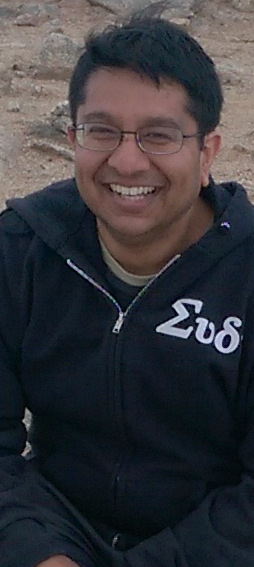
Umang Bhaskar is a Professor at the School of Technology and Computer Science , Tata Institute of Fundamental Research (TIFR), Mumbai, India. His research focuses on Algorithmic Game Theory , Combinatorial Optimization , and Approximation Algorithms . He has taught graduate courses including Algorithms and Data Structures and Computational Social Choice . Education : PhD from Dartmouth College, MTech from IIT Bombay, BSc from NIT Allahabad. Experience : Postdoctoral scholar at University of Waterloo and Caltech; software engineer at Tata Consultancy Services. His research explores computational challenges in multi-agent systems, particularly equilibrium computation in games, mechanism design , and network routing . He co-organizes academic workshops like the 2024 Workshop on Algorithmic Mechanism Design in IIT Gandhinagar. Recent publications span topics such as approximation algorithms , congestion games , and inverse optimization . His work has appeared at conferences including ESA , IJCAI , AAAI , and EC . Students include Phani Raj Lolakapuri , a PhD candidate who tragically passed away in 2019. Umang collaborates with researchers like Siddharth Barman and Katrina Ligett .
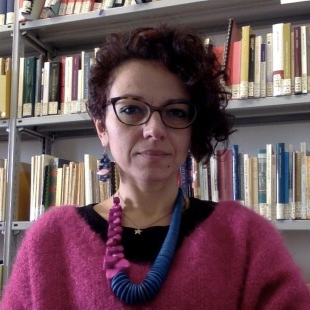
Rossana Mastrandrea is an Assistant Professor at IMT Institute for Advanced Studies Lucca, affiliated with the AXES research unit. Her work integrates methods from mathematics, economics, and complex systems to study economic, social, and biological networks. Research Interests: Her primary fields include Complex Networks, Health Economics, Environmental Economics, Game Theory, and Behavioural Economics. She applies Graph Theory, Statistical Physics, and Agent-Based Modeling to understand macroeconomic networks, innovation diffusion, and human behavior dynamics. A significant focus is on pharmaceutical innovation, particularly mRNA vaccine development through patent citation analysis, and on modeling pro-environmental behavior using evolutionary game theory and peer effects. Recent Research Trends: Her recent publications (2025–2010) reveal a consistent trajectory in network science applied to economic systems. The work increasingly integrates behavioral and cognitive dimensions into network models, with a growing emphasis on health and environmental policy implications. The use of interdisciplinary methodologies—especially from physics and biology—is a hallmark of her approach. Scientific Projects: Local Coordinator, PRIN Project (2023–2025): "The Role of the Public and Private Sectors in Pharmaceutical Breakthrough Innovations (3PBI)" Former member, INET Project: "Empirical and theoretical analysis of macroeconomics networks" Visiting Fellow, Lorenz Institute of Theoretical Physics, Leiden Advising and Grants: While no formal students are listed, her leadership in the PRIN project indicates mentoring and team coordination responsibilities. She has secured competitive research funding through national (PRIN) and international (INET) programs, supporting interdisciplinary work at the intersection of economics, physics, and biology. Labs and Research Groups: She is actively involved with the AXES research unit at IMT Lucca and previously collaborated with the research group of Prof. Garlaschelli at the Lorenz Institute. Her work is embedded in the broader complexity science community, as evidenced by participation in events like the Econophysics Colloquium and CSH Workshop.
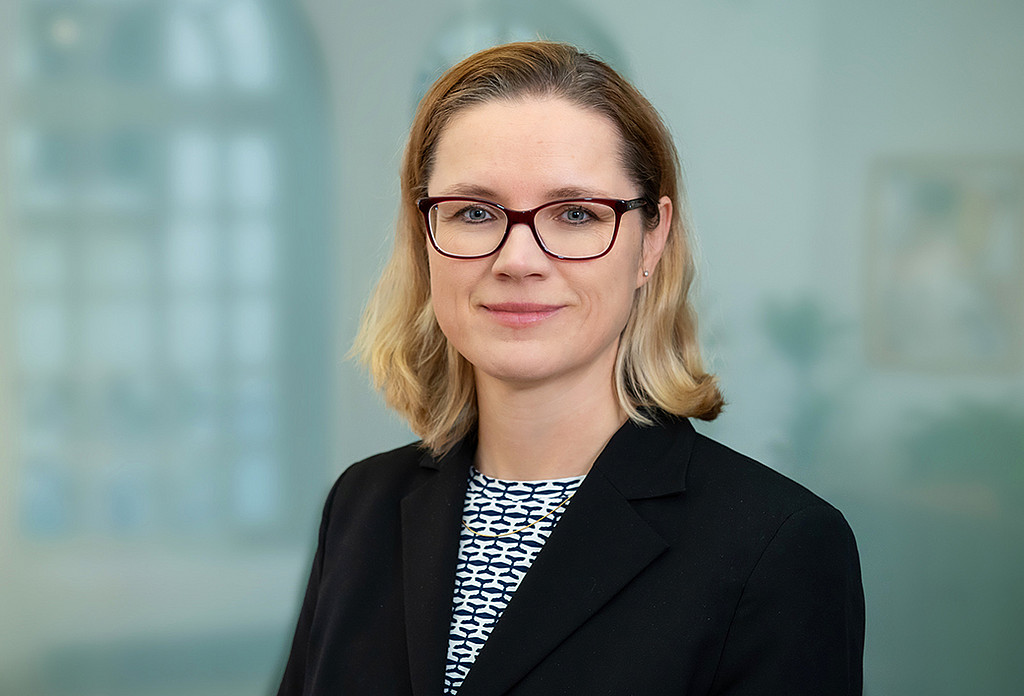
Katja Heinisch serves as Head of the Research Group "Econometric Tools for Macroeconomic Forecasting and Simulation" at the Halle Institute for Economic Research (IWH) since January 2013, and has been a member of the Department of Macroeconomics since September 2009. Her work focuses on developing advanced econometric methodologies for economic forecasting with practical applications for policymakers. Dr. Heinisch earned her diploma from Chemnitz University of Technology and University of Strasbourg, followed by a PhD from Osnabrück University. Her international research experience includes significant positions at the European Central Bank (ECB) and the International Monetary Fund (IMF), which have shaped her expertise in macroeconomic analysis across different institutional contexts. Her research program centers on international macroeconomics, applied time series econometrics, short-term forecasting, and macroeconometric modeling. A distinctive feature of her work is the rigorous evaluation of forecast accuracy, with particular attention to how assumption errors affect prediction quality. She has developed expertise in advanced statistical techniques including partial linear instrumental variable models and double machine learning approaches to address methodological challenges in forecast evaluation. Analysis of her recent publications reveals a consistent focus on improving forecasting techniques for the German economy and the European Union. Her work demonstrates sophisticated methodological approaches while maintaining strong policy relevance, particularly in evaluating EU Commission GDP forecasts and developing tools like the IWH forecasting dashboard. Her research on economic sentiment analysis has provided novel methods for disentangling private information from public knowledge in survey data, enhancing the utility of consumer surveys for economic forecasting. Developed advanced methods for forecast evaluation using machine learning techniques Created tools for real-time economic analysis and forecast comparison Contributed significantly to understanding the relationship between assumption errors and forecast accuracy Advanced methodologies for economic sentiment analysis in forecasting contexts Dr. Heinisch's leadership of her research group at IWH positions her at the forefront of methodological innovation in economic forecasting, with her work bridging theoretical econometrics and practical policy applications.
Ines Angeli Murzaku is a Professor of Ecclesiastical History and Director of the Catholic Studies Program at Seton Hall University, New Jersey. She founded the Department of Catholic Studies there and holds visiting professorships at Universities of Bologna, Calabria, and Münster. Her academic work focuses on Catholic Church history, Byzantine theology, monasticism, and inter-religious dialogue. She earned a PhD from the Pontifical Oriental Institute in Rome and has authored over 100 articles and 8 books, including seminal works on Mother Teresa and Eastern Christian monastic traditions. Her research has been supported by prestigious grants like the Alexander von Humboldt Fellowship and Fulbright Awards. Murzaku frequently contributes to media discussions on religious matters, appearing in outlets such as CNN, Vatican Radio, and The Catholic Thing. She has also served in leadership roles at organizations like the Association for the Study of Nationalities and as a UN-accredited representative for Christians Associated for Relationships with Eastern Europe. Key areas of academic contribution include studies on Albanian religious history, Vatican II’s impact on Eastern Catholic Churches, and the role of monasticism in dialogue between East and West. Her upcoming publications explore interdisciplinary models for Catholic Studies and the legacy of St. Mother Teresa.
Univ.Prof. Alexander Mürmann is a Professor of Risk Management and Insurance at Vienna University of Economics and Business (WU Vienna). He holds leadership roles as Deputy Head of the Institute for Finance, Banking and Insurance and Program Director of the Vienna Graduate School of Finance (VGSF). His research focuses on risk management, insurance economics, behavioral finance, and financial regulation. Notable contributions include studies on asymmetric information in insurance markets, regret theory applications, and systemic risk dynamics. Mürmann has published extensively in top journals such as the Journal of Risk and Insurance and Geneva Risk and Insurance Review, with over 20 years of academic output. His work bridges theoretical advancements with practical regulatory challenges, addressing topics like catastrophe derivatives, pandemic risk, and fire sale effects in financial markets. Research interests span insurance market design, behavioral decision-making under uncertainty, and the interplay between regulation and market outcomes. His editorial roles in special issues highlight expertise in emerging areas like tontines and pandemic economics. Awards and recognitions (4 listed but unspecified) reflect his scholarly impact. Mürmann's academic leadership includes directing top-tier finance programs and overseeing financial research initiatives at WU Vienna. His work frequently intersects with policy implications, emphasizing real-world applications of theoretical findings. Advisory contributions include guiding initiatives on driver safety incentives and solvency regulation. Active collaboration with institutions like the Vienna Graduate School of Finance underscores his role in training future financial experts.沈默的研究团队专注于金融工程、保险创新和系统性风险分析,其成果广泛应用于行业实践与政策制定。
Axel Parmentier is a Lecturer and researcher at the École Nationale des Ponts et Chaussées, where he founded the AI for Air Transport industry research chair with Air France. His work focuses on the intersection of operations research and machine learning, particularly in data-driven combinatorial optimization and stochastic optimization, with industrial applications in air transportation, supply chain, and predictive maintenance. He holds a Ph.D. and has been recognized with awards including the AMIES Dissertation Award (2017) for applied mathematics with industrial impact and the Robert Faure Prize (under 35) from ROADEF. His research also includes contributions to structured reinforcement learning, optimization layers in machine learning, and explainable AI for operational decisions. Awards: AMIES Dissertation Award, Robert Faure Prize Labs/Teams: CERMICS laboratory, AI for Air Transport Chair (collaboration with Air France) Grants/Projects: Continent-scale inventory routing solutions, Renault’s logistics optimization His advising includes students like Victor Cohen, whose work on predictive maintenance was featured on France Culture.
Dr. Lateef Jolaoso is a Lecturer in Mathematical Sciences at the University of Southampton, specializing in the Operational Research group. He joined the university as a Research Fellow in 2021 and was promoted to Lecturer in 2023. His research focuses on developing algorithms for continuous optimization, machine learning, and image processing, with over 40 peer-reviewed publications (1,700+ citations, h-index 27). He holds a PhD in Mathematics from the University of KwaZulu-Natal (2019) and a Postgraduate Certificate in Academic Practice from the University of Southampton (2023). He teaches undergraduate and postgraduate modules in Operational Research, Financial Portfolio Theory, and Python Programming. As a member of CORMSIS (Centre for Operational Research, Management Sciences, and Information Systems), he supervises postgraduate students on optimization, data analytics, and machine learning projects. His work includes collaborations with international teams and contributions to journals as a referee. Key research areas include proximal point frameworks for bilevel programming, gradient-based algorithms for machine learning, and image restoration techniques. He has been recognized as a Fellow of the Institute of Mathematics and its Applications (FIMA) and the Higher Education Academy (FHEA).
Uzma Amir is a Lecturer in the Department of Computer Science & Information Technology at the University of the District of Columbia (UDC), affiliated with the School of Engineering and Applied Sciences. She specializes in programming, web development, and scientific computing, with research focused on molecular spintronics and magnetic tunnel junction (MTJ) devices using Monte Carlo simulations. Her work has contributed to NSF-funded projects and peer-reviewed publications in computational physics and nanotechnology. Education: Doctor of Philosophy in Computer Science (in progress), UDC Master of Science in Computer Science, UDC Master of Science in Physics, University of Dhaka, Bangladesh Bachelor of Science in Physics, University of Dhaka, Bangladesh Her research interests include molecular spintronics device design, magnetic tunnel junction stability, and computational modeling of material properties. She has authored/co-authored studies on topics like hysteresis loop analysis, anisotropy effects, and structural stability of MTJ-based devices. Her expertise extends to programming languages (HTML, CSS, SQL Server, C/C++, Java) and courses taught, including introductory programming, web development, and scientific computing. Amir has held roles such as Coordinator of Amazon Next at UDC, Adjunct Faculty in Mechanical Engineering and Biology/Chemistry/Physics, and Visiting Instructor in Computer Science. She has received the Violet M. Yates Scholarship (2011) and contributed to leadership roles like judging student posters at the Consortium for Computing Sciences in Colleges (CCSC) Eastern in 2021. Her research aligns with NSF-funded initiatives and has been presented at conferences like the ASME International Mechanical Engineering Congress and the IEEE International Conference on Nanotechnology. Current work emphasizes advancing molecular spintronics for nanoelectronic applications through computational methods.
Thomas Kuntzleman is a faculty member at Spring Arbor University specializing in chemical education and physical chemistry. His work focuses on developing accessible laboratory experiments and demonstrations using everyday materials to teach complex chemical concepts. He actively engages in science outreach through National Chemistry Week initiatives. Research Focus Kuntzleman's research spans reaction kinetics (particularly the Diet Coke-Mentos phenomenon), spectroscopy, electrochemistry, and material science applications. Key investigations include: Mechanistic studies of soda geyser dynamics and CO 2 degassing kinetics Innovative teaching methods using smartphones for spectrophotometry Development of safe demonstration materials like fire-retardant gels Electrochemical analysis of battery systems and titration techniques His publications consistently emphasize practical, low-cost approaches suitable for high school and undergraduate laboratories. Scientific Contributions Kuntzleman has developed multiple JCE Classroom Activities and regularly contributes to chemical education scholarship. His outreach includes constructing interactive periodic tables and flame test demonstrations using household items. Collaborations frequently involve colleagues like Bruce Baldwin and John Amend. No scientific awards or student advisees are mentioned in available materials.
Vasileios Paschalidis is an Assistant Professor in the Department of Astronomy and Department of Physics at The University of Arizona . He serves as one of the 5 core faculty members in the Theoretical Astrophysics Program and leads research at the intersection of gravitational physics and theoretical astrophysics , with a focus on compact object binaries and multimessenger astronomy . Department of Astronomy, The University of Arizona Department of Physics, The University of Arizona Theoretical Astrophysics Program, The University of Arizona His research investigates strong-field gravitation through simulations of black hole-black hole , neutron star-neutron star , black hole-neutron star , and white dwarf-neutron star binaries. Key areas include gravitational wave modeling , electromagnetic signatures , neutrino emissions , and equation of state constraints for nuclear matter. Recent work explores eccentric mergers in globular clusters , spin-flip mechanisms in X-shaped radio galaxies, and planet formation around pulsars . The 15 most recent publications highlight his expertise in numerical relativity , general relativistic MHD , and radiation transport . These works examine charged black hole mergers , ultrarelativistic particle dynamics , accretion disk variability , and novel periodicities in jet power from binary black hole systems. His simulations underpin gravitational wave detection by LIGO/Virgo/KAGRA and future missions like eLISA .
Patrizia Beraldi is an Associate Professor of Operations Research at the Department of Mechanical, Energy and Management Engineering (DIMEG), University of Calabria. She has been with the university since 2001, holding roles from Research Fellow to her current position. With over 80 publications, her work focuses on stochastic programming, probabilistic constraints, and their applications in energy systems, healthcare, finance, and logistics. Education: PhD in System Engineering and Computer Science (2000), University of Calabria Degree in Management Engineering (cum laude, 1995), University of Calabria Her research spans solution methods for network flow problems, stochastic programming with recourse, and probabilistic constraint modeling in diverse fields like energy procurement, drone routing, and financial optimization. Recent publications emphasize stochastic bilevel models for energy tariffs and ML-enhanced optimization frameworks. Scientific Awards: Best paper award, 2015 IMA Journal of Management Mathematics Best presentation award, ICEER Conference 2017 Best poster award, ICORES 2018 She supervises numerous master's and PhD students and leads the Financial Engineering and Risk Management Laboratory at DIMEG. Her editorial roles include Associate Editor for TOP , Algorithms , and IMA Journal of Management Mathematics .
Jarkko Lampiselkä is a University Lecturer at the Department of Educational Sciences, University of Helsinki, where he also serves as a Maker@STEAM Supervisor in the Doctoral Program in School, Education, Society and Culture. His work extends to the Matriculation Examination Board as an Examiner in the Chemistry Department since 2006. Dr. Lampiselkä's research focuses on chemistry and physics didactics, with particular emphasis on the educational impact of UMI technologies (Ubiquitous computing, Mobile computing, Internet of Things), trends in science education research, and the importance of experimental work in science teaching, especially chemistry. His work bridges theoretical educational research with practical classroom applications. His recent publications demonstrate a strong focus on STEM education trends across Europe, chemistry curriculum development (particularly the Orbitaali series aligned with the Finnish LOPS19 curriculum), and international comparative studies of educational systems. His research shows consistent engagement with practical teaching materials development alongside theoretical educational research. Acknowledged Flagship Project (2017) University Development of the Year (2018) Dr. Lampiselkä has been actively involved in numerous research projects, most notably the ORCheSSE project (Online Resources for Chemical Safety in Science Education) funded by the European Commission, and the long-running Päijät-Hämeen LUMA Centre project since 2011. His international work includes significant contributions to Ukrainian educational reform, where he worked in Kiev until the Russian invasion forced a transition to remote work. He has supervised doctoral students through the Maker@STEAM program and participated extensively in academic conferences, public talks, and media engagements discussing Finnish education models. His work spans multiple educational contexts, from developing national curriculum materials in Finland to contributing to international educational development projects, particularly in Ukraine, demonstrating a strong commitment to improving science education globally.
Patrick J Kehoe is a Professor of Economics at Stanford University, where he joined the Economics Department in 2015. He previously held distinguished professorships at the University of Minnesota (as Frenzel Professor of International Economics), Princeton University (as Frank Graham Professor of International Economics), University College London, and the University of Pennsylvania (as Lauder Professor of International Economics). Dr. Kehoe earned his PhD in economics from Harvard University in 1986 and has established himself as a leading scholar in international macroeconomics. His research spans several decades of theoretical and empirical work on business cycles, monetary and fiscal policy, and financial frictions. Education : PhD in Economics, Harvard University (1986) Kehoe's research program has evolved while maintaining core theoretical rigor. Initially focusing on categorizing business cycle patterns across countries, he later developed models of financial frictions and optimal policy frameworks. More recently, he has concentrated on business cycle models that account for the Great Recession and optimal bailout policies during economic downturns. His work combines sophisticated theoretical modeling with empirical validation, making significant contributions to how economists understand macroeconomic fluctuations. Analysis of his recent publications reveals a consistent focus on resolving fundamental puzzles in macroeconomics, particularly the relationship between financial markets and real economic activity, the transmission mechanisms of monetary policy, and the design of optimal fiscal responses to economic crises. His work often bridges theoretical models with real-world policy applications. Scientific Recognition Fellow of the Econometric Society Senior Fellow at the Stanford Institute for Economic Policy Research Monetary Adviser at the Federal Reserve Bank of Minneapolis (for several decades) Faculty Research Fellow at the National Bureau of Economic Research Kehoe has significantly influenced economic policy discourse through his editorial roles, serving on the Board of Editors of the American Economic Review, as co-editor of the International Economic Review, and as associate editor for both the Journal of International Economics and the Quarterly Review of the Federal Reserve Bank of Minneapolis. While specific advising relationships aren't detailed in the provided text, his position at Stanford and NBER affiliation suggest mentorship of graduate students and junior researchers. His research has been supported by various academic and policy institutions, though specific grant details aren't provided in the available information.
Dr. Stephanie Sherman is a queer, bilingual, interdisciplinary educator, choreographer, poet, and scholar based in San Francisco and affiliated with the Critical Ethnic Studies Program at California College of the Arts (CCA) as an Adjunct II faculty member. She has taught at institutions across the U.S. and Latin America, including UC Berkeley, Mills College, University of Texas El Paso, and Universidad de las Américas Puebla. Her work spans performance, poetry, and activism, with a focus on social justice, disability accessibility, and transborder communities in the Américas. PhD in Performance Studies, UC Berkeley MFA in Dance, Tisch School of the Arts, NYU BA in Hispanic Studies, Vassar College Her research and creative practice intersect feminist theory, queer embodiment, Latin American cultural studies, and accessible performance art. She explores identity through bilingual poetry and interdisciplinary dance-theater, often challenging gender norms and colonial legacies. Her work emphasizes collaboration with disabled artists and marginalized communities. The 15 most recent creative works reflect a deep engagement with themes of linguistic identity, bodily autonomy, and political resistance. Her publications and performances span poetry, choreography, and video art, with a strong emphasis on bilingual expression and feminist critique. Notable works include Tectonic Tongues / Lenguas Tectónicas (2024), Construyendo la Carne (2018), and la Vida en Rosa (2006), which examine identity, labor, and accessibility through artistic innovation. Dr. Sherman has been recognized with numerous awards: Hemispheric Encounters Fellowship (2022) Fulbright García-Robles Postdoctoral Fellowship (2018) Fulbright Scholar Award (2006) National Performance Network Residency (2007) San Francisco Arts Commission Individual Artist Grant (2025–2026) She has mentored students through teaching and private tutoring in Spanish and the arts. While no formal grants are detailed beyond her awards, her fellowships and residencies indicate sustained support for her creative research. She has not publicly listed formal PhD or Master’s advisees. Dr. Sherman is actively involved in artistic collectives and collaborates across disciplines and borders, particularly between the U.S., Mexico, and Ecuador. She is a core member of transnational artistic networks, including collaborations with Teatro Ciego (Mexico City) and artists in Montreal through her Hemispheric Encounters Fellowship. Her work is exhibited and performed in galleries, theaters, and public spaces, often integrating community participation and digital media.
Dr. Jagannatha Rao is the Cullen Associate Professor in the Department of Mechanical and Aerospace Engineering at the University of Houston, College of Engineering. He also serves as the Senior Associate Dean for Undergraduate Programs and Distance Learning, demonstrating leadership in academic administration. His office is located in the Engineering Building 1, and he has been a core faculty member since 1990. Education: Ph.D. in Mechanical Engineering, University of Michigan, Ann Arbor (1989) B.Tech. in Mechanical Engineering, Indian Institute of Technology-Madras (1985) Dr. Rao's research focuses on mathematical optimization theory and algorithms , including parametric nonlinear programming, multilevel decomposition, duality principles, and game-theoretic modeling in engineering design. His work extends to the numerical optimization of mechanical systems, compliant mechanisms, and structural topology. He has developed theoretical frameworks for optimal decision-making under conflict and unified elastic/plastic structural analysis. His recent publications (2005–1997) reflect a sustained focus on duality-based modeling, topology optimization, and multidisciplinary design , particularly in aerospace and mechanical systems. Key themes include game-theoretic decision protocols, aggregation in modeling, and NAND/SAND logic in launch vehicle design. These works span journals like Engineering Optimization , International Journal for Numerical Methods in Engineering , and AIAA conferences, indicating strong disciplinary impact. Scientific Awards: No specific awards or honors are listed in the provided text. Dr. Rao has extensive experience in teaching and curriculum development, offering both undergraduate and graduate courses in mechanical design, dynamics, finite elements, and optimization. As Senior Associate Dean, he plays a significant role in shaping undergraduate education and online learning initiatives. His research collaborations include work with NASA Langley’s ICASE and industry partners like Sandvik Rock Tools. While no formal lab or team is mentioned, his long-standing research program suggests active supervision of graduate students and research projects.