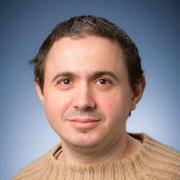
Dr. Lata Narayanan is a Professor in the Department of Computer Science and Software Engineering at Concordia University, Montreal, Canada. Her research spans theoretical and applied aspects of distributed systems, with a focus on algorithms for mobile agents, communication networks, and sensor networks. Department: Computer Science and Software Engineering University: Concordia University Research Interests Lata Narayanan specializes in algorithms for mobile robots and ad hoc networks , with expertise in routing on distributed networks , parallel algorithms , and social network analysis . Her work addresses challenges in sensor network optimization, barrier coverage, and time-energy tradeoffs for evacuation systems. Article Trends Her recent publications (2021-2025) emphasize game theory for network dynamics, cloud resource allocation , and temporal graph exploration . Key themes include strategic diversity, truck-drone delivery logistics, and energy-sharing protocols for mobile agents.
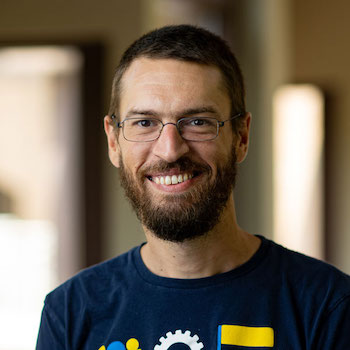
Nicola Nicolici is a Professor in the Department of Electrical and Computer Engineering at McMaster University. His research focuses on methods and algorithms for the design of digital integrated circuits and systems, with significant contributions in manufacturing test, post-silicon validation and debug. His work has expanded to include embedded systems, low-energy computing, and custom hardware-accelerated computing systems. Professor Nicolici's research interests span multiple areas of digital system design and validation. His early work focused on manufacturing test methodologies and power-aware testing strategies for integrated circuits. More recently, he has made significant contributions to post-silicon validation techniques, including constrained-random stimuli generation, trace signal selection, and bit-flip detection. His research has evolved to address emerging challenges in embedded computing systems, low-energy design, and specialized hardware acceleration for various applications including deep neural networks and signal processing. His recent publications reveal a strong trend toward hardware acceleration for specialized computing tasks. The research spans matrix multiplication algorithms (Strassen and Karatsuba), memory system optimization (DDR5 calibration), FPGA-based radar processing, and neural network acceleration. His work consistently bridges theoretical algorithm development with practical hardware implementation considerations, particularly focusing on precision analysis, fault tolerance, and energy efficiency. The research demonstrates a clear progression from traditional digital circuit testing to more complex system-level validation and acceleration techniques. Professor Nicolici has been actively involved in teaching courses related to system-on-chip design and test, digital systems, and embedded systems. His teaching portfolio includes advanced courses such as System-on-Chip (SOC) Design and Test and Digital Systems Design , reflecting his expertise in the field. While specific grant information isn't detailed in the provided text, his extensive publication record suggests ongoing research funding support. His research has contributed significantly to the fields of digital circuit testing, post-silicon validation, and hardware acceleration. The work has practical applications in semiconductor manufacturing, embedded systems design, and specialized computing architectures. His recent focus on neural network acceleration and memory system optimization reflects the evolving landscape of computer architecture research.
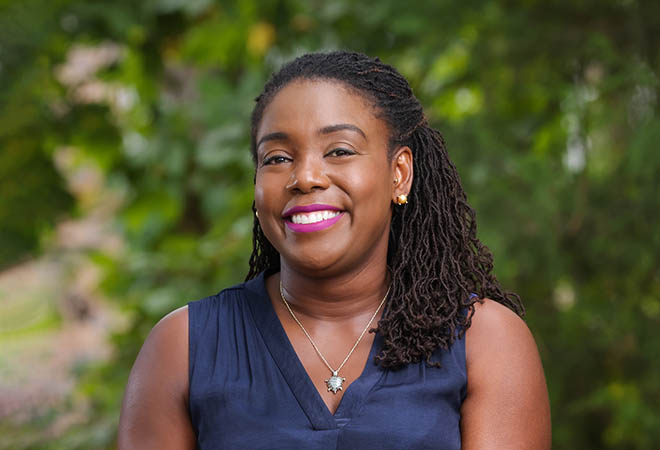
Albert S. Berahas is an Assistant Professor in the Department of Industrial and Operations Engineering at the University of Michigan's College of Engineering. He joined the university in 2020 after completing postdoctoral positions at Lehigh University (2018-2020) and Northwestern University (2018). He holds a PhD in Engineering Sciences and Applied Mathematics from Northwestern University (2018), an MS in Applied Mathematics from Northwestern (2012), and a BSE in Operations Research and Industrial Engineering from Cornell University (2009). His research focuses on designing, developing, analyzing, and implementing algorithms for solving large-scale nonlinear optimization problems. His work spans multiple sub-fields including constrained optimization, optimization for machine learning, stochastic optimization, derivative-free optimization, and decentralized optimization. He is affiliated with the Michigan Institute for Data Science (MIDAS), the Michigan Institute for Computational Discovery and Engineering (MICDE), and the Michigan Center for Applied and Interdisciplinary Mathematics (MCAIM). Berahas has received numerous honors including the Charles Broyden Prize (2025), the Air Force Office of Scientific Research Young Investigator Program award (2025), the IISE Operations Research Division Teaching Award (2024), and the North Campus Dean's MLK Spirit Award for Community Building & Impact (2024). His recent publications demonstrate strong activity in developing novel optimization frameworks with theoretical guarantees for challenging problem settings. His research has been supported by significant grants including from the Office of Naval Research (ONR) and the Air Force Office of Scientific Research. He actively mentors PhD students and has successfully advised Jiahao Shi, who defended his dissertation in March 2025 and joined Amazon. Berahas is also engaged in community outreach, particularly through initiatives like Engage Detroit that aim to empower Detroit's next generation of engineers.
Sandra Fredman is Professor of the Laws of the British Commonwealth and the United States at the University of Oxford, with a professorial fellowship at Pembroke College. A leading scholar in equality and human rights law, she has authored seminal works including Human Rights Transformed and Discrimination Law . Her research focuses on comparative equality frameworks, socio-economic rights, and the intersection of gender with legal structures. Fredman holds degrees from the Universities of Witwatersrand and Oxford, and has advised governments globally on anti-discrimination legislation. She founded the Oxford Human Rights Hub in 2012, directing its interdisciplinary research on rights-based approaches to labor, education, and marginalized populations. Her academic contributions span 48 peer-reviewed articles addressing contemporary issues like gig economy labor rights, pandemic-era equality obligations, and platform work regulation. Fredman has received significant recognition including British Academy Fellowship (2005) and honorary QC status (2012). Her work emphasizes 'substantive equality' as a proactive duty, challenging traditional legal paradigms through intersectional analysis. Key research initiatives include the Oxford Martin Programme on Human Rights for Future Generations and the Fairwork Foundation, addressing modern work challenges. Fredman's scholarship bridges theory and practice, influencing global policy through engagement with UN agencies, the EU, and international NGOs. Her teaching encompasses human rights law, labor law, and equality jurisprudence.
PD Dr. Jannis Lennartz is a Senior Lecturer in Public Law at Humboldt University Berlin, specializing in constitutional law, administrative law, and digital legal issues. He holds a habilitation (2022) and has held visiting professorships at Göttingen and Cambridge. His research focuses on intersections of law and technology, fundamental rights in the digital age, and legal theory. He has published extensively on AI copyright challenges, algorithmic governance, and constitutional limits in administrative contexts. Education: BA Political Science (Erfurt, 2008), dual法学博士 (Göttingen/Berlin, 2013-2017), habilitation (Berlin, 2022). Key awards include the Leibniz Prize. Teaching includes Constitutional History (10 006), New Developments in Law (10 603), and General Administrative Law (10 450). Research highlights: Over 30 peer-reviewed articles since 2015 across constitutional law, intellectual property, and digital governance. Notable works include Chancellor Democracy (2023) and Forbidden Fruits? (2025), examining AI's impact on artistic creation and copyright frameworks. Recent publications address algorithmic filtering, digital trust mechanisms, and AI-generated content regulation. Awards: Leibniz Prize (specific details not provided but denotes Germany's top academic recognition). Active in interdisciplinary projects like LLCon and OSAIC initiatives. Serves as associated scientist under Prof. Möllers' chair, contributing to constitutional law research and academic leadership.
Pietro Liò is Full Professor in the Department of Computer Science and Technology at the University of Cambridge, where he leads research in Artificial Intelligence and Computational Biology as part of the AI group and the Cambridge Centre for AI in Medicine. He holds additional affiliations as Fellow and Council member of Clare Hall College, member of Ellis (European Lab for Learning & Intelligent Systems), and member of Academia Europaea. Professor Liò earned dual PhDs in Complex Systems and Non Linear Dynamics from the University of Florence and in Theoretical Genetics from the University of Pavia, Italy. His educational background bridges theoretical computer science with biological sciences, forming the foundation for his interdisciplinary research approach. His research focuses on developing Artificial Intelligence and Computational Biology models to understand disease complexity and advance personalized medicine. Current work emphasizes Graph Neural Network modeling for integrating multi-scale, multi-omics, and multi-physics data; combining deep learning with mechanistic approaches; explainability in medical AI; and developing AI-based medical digital twins and personal decision support systems. His work spans from fundamental algorithm development to clinical applications, with particular emphasis on translating computational advances into medical solutions. Analysis of his recent publications reveals strong activity in geometric deep learning , explainable AI for healthcare , and multi-omics integration , with increasing focus on clinically applicable tools that maintain both predictive power and interpretability. Member of Academia Europaea Listed among Top Italian Scientists by VIA-Academy Professor Liò has mentored over 40 PhD students and postdoctoral researchers, including notable names such as Petar Velickovic, David Buterez, and Chaitanya Joshi. His research is supported through collaborations with the Cambridge Centre for AI in Medicine and various international partnerships. He serves on departmental committees including Student Complaints and Postdoc Mentoring, and has completed equality and diversity training essentials. He leads research within the Artificial Intelligence group at Cambridge, focusing on creating computational frameworks that bridge biological complexity with clinical applications through advanced machine learning techniques.
Will Fleisher is Assistant Professor in Georgetown University's Department of Philosophy and Research Assistant Professor at the Center for Digital Ethics. His research examines ethical, political, and epistemic implications of AI systems, with specialization in algorithmic fairness, explainable AI, and epistemology of inquiry. His work bridges technical AI development and philosophical frameworks, addressing fairness metrics in machine learning, epistemic norms in AI systems, and ethics of human-AI interaction. Recent publications explore disagreement in AI alignment, fragmentation of evidence, and intellectual virtues in inquiry. Professor Fleisher's research has appeared in Noûs, Philosophical Studies, Philosophy of Science, and AAAI/ACM conference proceedings. He previously held postdoctoral positions at Northeastern University and Washington University in St. Louis.
Gina-Gail S. Fletcher is a Professor of Law and Associate Dean for Intellectual Life at Duke University School of Law. She specializes in financial regulation, market manipulation, and corporate governance, with a focus on racial inequality, ESG frameworks, and AI accountability in financial systems. Professor of Law, Duke University (2024) Associate Dean for Intellectual Life, Duke Law (2024) Member, U.S. SEC Investor Advisory Committee (2024) Member, FINRA Investor Issues Committee (2024) Her research integrates legal and policy analysis on financial systems, emphasizing transparency, equity, and stability. Key themes include: AI and transparency in financial regulation Racial equity in banking and lending practices Climate-conscious procurement policies ESG compliance and fraud Market manipulation and macroeconomic consequences Recent publications appear in Yale Law Journal , New York University Law Review , and Vanderbilt Law Review , with forthcoming work on AI regulation and racial complicity in finance. She received her J.D. cum laude from Cornell Law School and B.A. magna cum laude from Mount Holyoke College.
Ronny Scherer is Center Director and Professor at CEMO (Center for Educational Measurement) and Deputy Director at CREATE (Center for Research on Equality in Education) at the University of Oslo's Faculty of Educational Sciences. His work bridges educational measurement, assessment, and evaluation with a focus on research syntheses and complex sampling surveys. Dr. Scherer's research spans two interconnected domains: substantive areas including digital divides, equity and equality in education, and measurement of complex cognitive skills (such as complex problem solving, adaptability, computational thinking, and executive functioning); and methodological areas focusing on advanced meta-analytic techniques, multilevel structural equation modeling, and spatial analysis of complex survey data. His work frequently utilizes international large-scale assessment data from PISA, ICILS, TIMSS, PIRLS, PIAAC, and TALIS. His publication record demonstrates a clear trajectory toward increasingly sophisticated meta-analytic approaches, with recent work focusing on second-order meta-analyses, AI-assisted screening methods, and advanced techniques for handling complex survey data. His research consistently addresses critical educational challenges related to equity, digital literacy, and measurement of 21st century skills. Dr. Scherer has secured significant research funding for projects including ARISE (Academic resilience in mathematics and science among vulnerable students), DiDiRes (Digital inequalities in education), and ADAPT21 (Educational assessments of the 21st century: Measuring and understanding students' adaptability in complex problem solving situations). Co-director of CREATE (Centre for Research on Equality in Education) since 2023 Professor of Educational Assessment and Measurement at CEMO since 2019 Extensive experience with international large-scale assessments including ICILS, TALIS, and PIAAC As an educator, Dr. Scherer teaches advanced courses in measurement models, multilevel models, meta-analysis, and equity in education. He actively supervises graduate students interested in his research areas and has developed numerous workshops on structural equation modeling and meta-analytic methods for international audiences.
Roles & Affiliations: King Omeihe is a Senior Lecturer at the School of Business and Creative Industries, University of the West of Scotland, and serves as UoA 17 Associate Research Lead for People, Culture, and Environment. He holds external roles including Chair of African Studies at the British Academy of Management and Chair of Entrepreneurship in Minority Groups at the Institute for Small Business and Entrepreneurship (ISBE). He advises on African economic policy and chairs several parliamentary groups in Scotland. Education: PhD from University of the West of Scotland, MBA from University of Aberdeen, and a diploma from University of Cambridge. Research Interests: Focuses on trust institutions, entrepreneurship in Africa, and the intersection of AI with societal challenges. Recent works include Trust and Market Institutions in Africa (2023), Qualitative Research Methods for Business Students (2024), and Handbook of African Studies (2025). Explores institutional economics, ethical AI applications, and decolonizing business education. Articles Trends: Recent publications emphasize AI ethics in healthcare, institutional resilience in developing economies, and leadership in complex systems. Key themes include sustainable development goals (SDGs), cross-cultural entrepreneurship, and policy interventions for minority entrepreneurs. Awards: Includes the 2025 UWS Innovation Teaching Award, 2022 Entrepreneurial Supporter of the Year, and multiple recognitions for teaching excellence. His work has been highlighted by Bright Red Spark for shaping enterprise education. Grants & Advising: Advises startups, policymakers, and global bodies like UNCTAD. Leads initiatives such as the MSc Entrepreneurship programme and collaborates with organizations like Marcel Advisory and the West African Transitional Justice Centre. Active in cross-party policy groups addressing social enterprise and racial equality. Labs & Teams: Co-leads the Centre for African Research on Enterprise and Economic Development (CAREED) and contributes to Emerald’s African Context of Business and Society as Editor-in-Chief. Oversees the UWS BME Staff Network and Academic Integrity Panel.
Prof. Jeroen Temperman is a full professor of International Law at Erasmus School of Law, Erasmus University Rotterdam. He specializes in Freedom of Religion or Belief (FoRB), Human Rights, and the intersection of AI with religious rights. His academic roles include editor-in-chief of Religion & Human Rights (since 2005) and OSCE Panel of Experts member (2016–2022). He holds advanced degrees from institutions including Erasmus University (LL.M), European Inter-University Centre (E.MA), and University for Humanist Studies (MA). His research focuses on religious freedom in digital contexts, religious hatred jurisprudence, and education law. Notable works include Artificial Intelligence and Human Rights (Oxford UP) and Religious Speech, Hatred and LGBT Rights (Brill). He has received grants such as the H2020-funded NETHATE consortium and an ERC Starting Grant (RELIGAY). Education: LL.M (Distinction), Erasmus University Rotterdam E.MA (Honors), European Inter-University Centre MA (Cum Laude), Humanist Studies PhD, Irish Centre for Human Rights (NUI Galway) Awards: Fulbright Scholar (2014) EUR Fellowships Research Excellence Initiative grant Temperman has advised on over 150+ international engagements across 30 countries. His recent work explores AI ethics, religious autonomy in prisons, and conflicts between FoRB and LGBT rights. He leads interdisciplinary research teams addressing religious hatred through the NETHATE project. Lab/Team Affiliations: Principal Investigator in Horizon 2020 NETHATE consortium; Visiting Scholar roles at Washington College of Law (American University), Trinity College Dublin, and University of Siena.
Professor Richard Bellamy is a leading scholar in political science and constitutional theory at University College London (UCL) and serves as a Senior Fellow at the Hertie School, Berlin. He holds a PhD from the University of Cambridge and has held visiting positions across Europe and Australia. Doctor of Philosophy , University of Cambridge (1983) MA Cantab , University of Cambridge (1979) His research spans democratic theory , republicanism , constitutionalism , and EU studies , with a focus on Italian political thought and global ethics . His recent articles explore rule of law , data ethics , and EU differentiated integration . He has authored over 150 publications and 11 monographs, including the acclaimed Political Constitutionalism . Key awards include: Fellow of the British Academy (2022) 2016 PADEMIA Research Award Serena Medal (2012) David and Elaine Spitz Prize (2009) Fellow of the Academy of Social Sciences (2008) Member, Academia Europaea (2024) Bellamy has supervised 24 PhD students and led major Leverhulme , ESRC , and European Commission projects. His current work includes Defending the Political Constitution (Oxford UP) and The Democratic Prince (political leadership study). He co-edits The Cambridge Companion to Constitutional Theory and The Cambridge Dictionary of Political Thought .
Prof. Vesa Välimäki is an Audio Signal Processing Professor at Aalto University's School of Electrical Engineering, leading the Audio Signal Processing Research Group within the Aalto Acoustics Lab. He also serves as Vice Dean for Research and Head of the Doctoral Programme at the university. His research focuses on digital signal processing, machine learning, and their applications in audio, acoustics, and music technology, particularly in artificial reverberation, audio filter design, and virtual analog modeling. He has pioneered techniques like velvet noise for reverberation synthesis and contributed to open-source tools like FLAMO. His academic accolades include IEEE, AES, and AAIA Fellowships, along with multiple best paper awards at venues like DAFx and ICASSP. He has advised numerous students, including recipients of prestigious awards like the Huawei Master's Thesis Award. Prof. Välimäki has held editorial roles at the Journal of the Audio Engineering Society and organized major conferences such as SMC-17. His work extends to applied projects like acoustic optimization for early childhood education facilities and immersive audio in virtual reality (e.g., the 'Space Walk' project). Key Projects: NordicSMC (Nordic University Hub for Sound and Music Computing), Aalto Acoustics Lab, FLAMO library Grants: NordForsk funding (2018–2023), Foundation for Aalto University Science and Technology His research spans both theoretical advancements (e.g., diffusion models for audio restoration) and practical implementations (e.g., real-time equalizers, headphone compensation systems). He collaborates internationally, contributing to acoustic measurement techniques and noise reduction strategies for diverse environments.
Andrew Stewart is a Professor at the School of Law, Queensland University of Technology (QUT), specializing in Labour Law, Employment Relations, and regulatory frameworks for the Gig Economy. His research focuses on internships, platform work regulation, and workplace fairness. Key Collaborations: Penny Williams, Paula McDonald, Rosemary Owens, Jim Stanford Research Themes: Gig economy fairness, internship regulation, employment classification, workplace surveillance His recent work includes Creighton and Stewart's Labour Law (7th Edition) and submissions to parliamentary inquiries on digital platform work. He co-edited Internships, Employability and the Search for Decent Work Experience (2021). Publications span the Industrial Law Journal , American Journal of Comparative Law , and The Economic and Labour Relations Review . Research emphasizes regulatory innovation in employment law and the intersection of education/work.
Dr. Katie Gaddini serves as Associate Professor in Sociology at University College London's Social Research Institute, where she leads research within the Thomas Coram Research Unit (TCRU). She maintains dual affiliations as Affiliate Researcher with UCL's Sarah Parker Remond Centre and Research Associate at the University of Johannesburg's Department of Sociology. Currently (2022-2026), she holds a prestigious UK Research and Innovation fellowship hosted jointly by UCL and Stanford University, investigating Christian women's engagement with conservative politics in the United States. Her academic foundation includes master's degrees from Boston College and the London School of Economics, culminating in a PhD in Sociology from the University of Cambridge. Her ethnographic expertise spans five years of immersive fieldwork with single evangelical women, documented in her critically acclaimed book The Struggle to Stay: Why Single Evangelical Women are Leaving the Church (2022). Gaddini's research program centers on the sociology of religion through four interconnected lenses: (1) Lived religion approaches to evangelical Christianity; (2) Intersectional analysis of race, class, and gender within religious belonging; (3) Comparative studies of Christianity and politics across the Americas; and (4) Identity theory examining the co-constitution of racial-religious-national identities. Her methodological preference for ethnography extends to previous work on gendered violence in Mumbai and Johannesburg. Her scholarly output reveals consistent thematic evolution toward analyzing Christian nationalism's digital transformation, gendered religious experiences during political upheavals (Brexit/Trump), and the crisis of evangelical identity in contemporary Western societies. The publications demonstrate methodological rigor in ethnographic data collection coupled with sophisticated theoretical engagement across sociology, gender studies, and political science. Awards: Betty Scharf Award for Research on Gender & Religion (London School of Economics) British Higher Education Academy Fellowship Gaddini's current UKRI-funded fellowship represents significant grant acquisition, focusing on longitudinal analysis of American Christian women's political engagement. While her mentorship activities aren't explicitly detailed, her position at TCRU suggests involvement in guiding doctoral candidates within UCL's graduate programs. Her research infrastructure includes collaborations through the Politics of Religion study (2020-2022), producing influential infographics and digital resources that bridge academic research and public discourse. She operates within UCL's Social Research Institute ecosystem, particularly through the Thomas Coram Research Unit's interdisciplinary framework and the Sarah Parker Remond Centre's focus on race and equality. Her Johannesburg affiliation indicates ongoing transnational research partnerships, while her active Twitter presence (@katiegaddini) demonstrates commitment to public scholarship and academic communication.