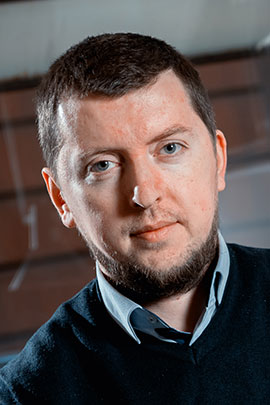
Günther Herbert Johannes Peters is a Professor at the Department of Chemistry Physical Chemistry, Technical University of Denmark (DTU). His research focuses on molecular dynamics simulations of enzymes, particularly lipases, and their applications in organic solvents, biopharmaceutical formulation stability, and protein-ligand interactions. He leads projects investigating enzyme stability at gas-liquid interfaces and lipid interactions. Research Interests: Molecular Dynamics Simulations of Enzymes Enzyme Kinetics in Non-aqueous Media Protein Formulation Stability Computational Biophysics Biocatalysis Publications reflect a trend toward integrating computational methods with experimental biophysical characterization, emphasizing enzyme behavior in industrial and pharmaceutical contexts. Notable collaborations span protein engineering, drug delivery systems, and sustainable biocatalytic processes. Current Projects (2024-2027): ENFACE: Predicting enzyme stability at gas-liquid interfaces High-throughput plant protein production and characterization Longstanding Projects since 1999 include Lipase-lipid interactions and Rheology of grafted amphiphilic chains. Advising: Supervises PhD students in enzymology and biomolecular engineering. Over 36 projects managed, including EU-funded initiatives and industry collaborations.
Bekzod Khakimov is an Associate Professor in the Department of Food Science at the University of Copenhagen, specializing in Food Analytics and Biotechnology. He has held this position since 2017, following his postdoctoral work (2013-2017) and PhD fellowship (2010-2013) at the same institution. His research group focuses on advanced analytical techniques for food quality assessment and nutritional value determination. His educational background includes: PhD in Plant Metabolomics, Department of Food Science, University of Copenhagen (2013) MSc in Chemical Research, Queen Mary, University of London, UK (2009) BSc in Chemistry, Faculty of Chemistry, National University of Uzbekistan (2006) Dr. Khakimov's research centers on food molecular composition (foodomics) and its health impacts through untargeted molecular screening of bio-fluids (metabolomics). His team works on optimizing standard operating procedures, developing efficient algorithms for processing raw instrumental data, and extracting information from complex omics data using multivariate data analysis (chemometrics). His analytical expertise spans high resolution liquid state NMR spectroscopy, GC-Tof-MS and LC-QTof-MS techniques, with applications ranging from plant foods to dairy products and human health studies. His publication record demonstrates consistent advancement in foodomics methodology and applications, with recent work focusing on metabolomics approaches to understand food quality, nutritional value, and health impacts across diverse food matrices including grapes, potatoes, dairy products, and botanical resources. His research increasingly incorporates advanced statistical modeling and deep learning approaches to overcome analytical challenges like the 'cage of covariance' in metabolomics data. His notable scientific achievements include: Nils Foss Talent Prize (2016) - International Award for ground-breaking science in advanced technologies for improved food quality and safety Best Young Investigator Award in Plant Metabolomics (2015) - 10th International Conference of the Metabolomics Society Dr. Khakimov currently serves as main supervisor for three postdocs, one PhD student, and two MSc students. He has successfully secured multiple competitive research grants as PI or Co-PI from sources including the Independent Research Fund Denmark, UCPH Funding, Danish Dairy Research Foundation, and the European Union. His laboratory maintains state-of-the-art analytical capabilities with responsibility for multiple GC-MS systems, LC-QTof-MS, and co-responsibility for NMR spectrometers. His research infrastructure includes four high-throughput GC-MS systems (Agilent GC-singleQ-MS, LECO Pegasus HT GC-TOF-MS and Bruker EVOQ QQQ systems), one LC-QTof-MS (Bruker Impact II), one LC-UV/Vis-FC system (Thermo Ultimate 3000), and co-responsibility for three NMR spectrometers (600, 500, and 400 MHz) from Bruker.
Rafael Pinilla-Redondo is an Assistant Professor in the Department of Biology at the University of Copenhagen's Faculty of Science, where he leads the Bacterial Immunity research group within the Section of Microbiology. His laboratory, located at Universitetsparken 15 in Copenhagen, focuses on the molecular mechanisms of bacterial defense systems against phages. His research interests center on bacterial immunity, particularly how CRISPR-Cas and other bacterial immune systems evolve and function. He investigates the molecular mechanisms driving these complex systems to answer fundamental biological questions and develop novel biotechnologies. His work spans phage biology, molecular evolution, molecular biology, and genetics, with a specific emphasis on bacterial defense mechanisms against viral threats. Dr. Pinilla-Redondo's recent publications demonstrate significant contributions to understanding bacterial immune systems, particularly CRISPR-Cas variants, retrons, and other defense mechanisms. His research shows strong trends in structural biology approaches to understanding immune system function, with increasing focus on the supramolecular organization of defense complexes and their evolutionary implications. Villum Young Investigator grant (2023) His laboratory maintains active collaborations across multiple institutions, as evidenced by the international authorship on his publications. The lab has developed specialized software tools including CRISPR-Cas Typer for automated identification of CRISPR-Cas loci, Plasmid Network for exploring the global plasmidome, and Hoodini (coming soon) for genome neighborhood visualization. His work has received significant attention, with multiple papers picked up by news outlets, blogged about, and widely shared on social media platforms. The Pinilla-Redondo Lab is part of the vibrant microbiology research community at the University of Copenhagen, focusing on the evolutionary arms race between bacteria and their viral predators.
Jasmin Mecinovic is a Professor in the Department of Physics, Chemistry and Pharmacy at the University of Southern Denmark (SDU). He leads an independent research group focused on fundamental aspects of biomolecular recognition and biocatalysis with implications for human health and disease. His academic journey includes a PhD from the University of Oxford and postdoctoral training at Harvard University. Professor, SDU (2023–present) Associate Professor, SDU (2018–2022) Assistant Professor, Radboud University (2011–2018) His research lies at the intersection of chemistry and biology, particularly in understanding how molecules recognize and interact with each other in biological systems and how enzymes catalyze reactions critical to health and disease. His work combines synthetic organic chemistry with biochemical and biophysical methods to probe molecular mechanisms. Although no specific publications are listed in the provided text, his funded projects suggest a strong emphasis on innovative chemical approaches to biological problems, likely involving enzyme function, inhibitor design, and molecular probes. He has received several prestigious scientific awards and grants: ERC Starting Grant (2017–2022) Lundbeck Foundation Ascending Investigator (2021–2026) Novo Nordisk Foundation NERD Investigator (2024–2030) Jasmin Mecinovic has mentored students at various levels, including PhD, MSc, and BSc students within his research group. He has secured substantial grant funding from major European and Danish foundations, enabling long-term, high-risk/high-gain research in chemical biology. His group operates as an interdisciplinary team combining chemistry and biology expertise. The Mecinovic Research Group at SDU is an active and well-funded laboratory environment dedicated to advancing fundamental knowledge in chemical biology and biocatalysis. The team includes postdoctoral researchers, PhD students, and technical staff, working collaboratively on projects supported by major grants.
Marie Sofie Møller is an Associate Professor in the Department of Biotechnology and Biomedicine at the Technical University of Denmark (DTU), where she leads research in Applied Molecular Enzyme Chemistry within the Section for Protein Chemistry and Enzyme Technology. Her work focuses on enzyme biochemistry, protein engineering, and the molecular mechanisms of carbohydrate-active enzymes, particularly in the context of starch and plastic degradation. Her research interests include: Enzyme biochemistry and catalysis Protein engineering of glycoside hydrolases and carbohydrate-binding modules Starch structure and degradation Engineering of plastic-degrading enzymes (e.g., PET hydrolases) Resistant starch and food biotechnology Her recent publications highlight a strong trend toward sustainable biocatalysis, especially in the degradation of synthetic polymers like PET, aligning with environmental and industrial biotechnology goals. She applies principles from enzymology and protein engineering to design fusion enzymes with enhanced binding and catalytic efficiency. Notable scientific contributions include: High-throughput screening of carbohydrate-binding modules for polymer specificity Application of the Sabatier principle to starch granule catalysis Engineering of enzymes for resistant starch generation Investigations into PET hydrolase-enzyme interactions She has supervised several PhD students, including A. P. Rennison, Y. Wang, and S. Andersen, on projects related to enzyme engineering, starch degradation, and plastic-degrading enzymes. Her research is supported by active projects, including the engineering of plastic-degrading enzymes with carbohydrate-binding modules (2021–2025). She is affiliated with the following research groups and facilities: Applied Molecular Enzyme Chemistry group at DTU Protein Chemistry and Enzyme Technology section Collaborative networks in biocatalysis and sustainable materials
Egon Bech Hansen is a Professor at the National Food Institute, Technical University of Denmark (DTU), where he leads research in gut microbiology, fermented foods, and sustainable food systems. He is a member of the DTU Microbes Initiative and heads the Research Group for Gut, Microbes and Health. He holds a PhD and MSc from DTU and has previously served as Head of Department at both DTU and Aalborg University, as well as holding senior R&D and innovation roles in industry. His research focuses on food science , particularly the role of lactic acid bacteria in fermentation, plant-based dairy alternatives , gut microbiome interactions , and food safety . His work contributes to UN Sustainable Development Goals related to health and sustainable agriculture. He investigates microbial metabolism, proteolysis, antioxidant peptides, and the development of safer, more sustainable food products such as fermented fish, camel milk, and plant-dairy hybrid cheeses. The recent publications highlight a strong trend in functional food development , particularly using microbial fermentation to improve nutritional quality and sensory properties of plant-based products. There is also a focus on molecular detection methods (e.g., FRET assays), antimicrobial resistance monitoring , and industrial scalability of fermentation processes. His work bridges fundamental microbiology with applied food technology. He has received no explicitly listed scientific awards in the provided text. Egon Bech Hansen actively supervises PhD students and leads multiple research projects, including Protein rich food products from locally grown legumes , Harnessing AI to Identify Superior Strains , and SusCheese . He collaborates across disciplines with experts in food chemistry, microbiology, and nutrition. His projects often involve public-private partnerships and address real-world challenges in food sustainability and safety. He is involved in the DTU Microbes Initiative and contributes to research networks focused on gut health, microbial fermentation, and food innovation. His datasets and publications are openly accessible, supporting collaborative science.
Weria Pezeshkian is an Assistant Professor in the Biocomplexity research group at the Niels Bohr Institute, University of Copenhagen. With expertise spanning computational biophysics and membrane dynamics, Dr. Pezeshkian leads research that bridges physics, biology, and computational science to address fundamental questions in cellular mechanics. Dr. Pezeshkian's research focuses on: Computational modeling of cellular membranes and their dynamic properties Molecular dynamics simulations of protein-lipid interactions Membrane mechanics and curvature generation mechanisms Plasma membrane repair processes Development of computational methodologies for multiscale biological modeling Analysis of recent publications reveals a strong emphasis on membrane biophysics, particularly in understanding how proteins interact with and shape cellular membranes. The research combines advanced computational techniques with experimental data to model complex cellular processes across multiple scales. Key contributions include elucidating mechanisms of membrane repair, protein-induced membrane curvature, and innovative simulation methodologies like FreeDTS and TS2CG. Scientific recognition includes: MGMS Frank Blaney Award (2024) Dr. Pezeshkian maintains an extensive collaborative network across institutions and disciplines, focusing on integrative approaches to complex biological questions. The research has significant implications for understanding fundamental cellular processes and potential applications in disease mechanisms related to membrane dysfunction.
Vignesh Ramesh is a Research Assistant in Translational Biology at the Department of Biochemistry and Molecular Biology , University of Southern Denmark. His research focuses on metabolic pathways in cancer biology, particularly non-small cell lung cancer (NSCLC) and triple-negative breast cancer (TNBC), with an emphasis on Epithelial-Mesenchymal Transition (EMT) and CRISPR/Cas9 applications. He has contributed to 15+ peer-reviewed publications and media-featured studies on metabolic inhibitors for cancer therapy.
Nils Joakim K. Færgeman is a Professor and director of the molecular metabolism and metabolomics unit at the Department of Biochemistry and Molecular Biology, University of Southern Denmark. He has held this position since 2012, following his promotion from Associate Professor (2003-2012) and Research Assistant Professor (2000-2003) at the same institution. His educational background includes: Ph.D. degree in molecular and cellular biology from Odense University (1997) "Organization and Leadership" from University of Southern Denmark (2002) "Project Strategies and Leadership" from University of Southern Denmark (2003) Pedagogical training course (adjunktpædagoikum) from University of Southern Denmark (2003) Research leadership-education from Copenhagen Business School (2006-2007) Professor Færgeman's research focuses on how metazoans sense environmental and genomic alterations and adapt their metabolism to maintain cellular homeostasis, promote survival, and achieve balanced growth. His work spans lipid metabolism, systems biology, endocrine diseases, obesity research, and molecular mechanisms of metabolic regulation. His laboratory employs a multidisciplinary approach combining genomics, proteomics, and metabolomics to uncover novel metabolic regulatory mechanisms, with particular emphasis on lipid-related pathways and their implications for human health. His recent scholarly output demonstrates a strong focus on metabolic regulation, particularly in the context of obesity, diabetes, and lipid metabolism. His work frequently examines the molecular mechanisms underlying metabolic adaptation, with increasing attention to translational applications of basic metabolic research. His notable recognition includes: Best Teacher Award, Science Faculty, University of Southern Denmark (2009) 2nd Best Poster, Danish Society for Neuroscience Annual Meeting (2018) Professor Færgeman has extensive experience supervising students, having served as principal supervisor since 2003 for 4 postdocs, 14 PhD students, 19 MSc students, and 38 BSc students. His research has been consistently funded since 2003 through multiple grants from The Danish Research Councils, Novo Nordisk Foundation, Carlsberg Foundation, Danish Diabetes Association, and the Lundbeck Foundation. He has participated in numerous large research consortia funded by The Danish Council for Strategic Research, NordForsk, and NIH. He directs the molecular metabolism and metabolomics unit at the Department of Biochemistry and Molecular Biology, which employs systems biology approaches to investigate metabolic regulation. His research group maintains active collaborations with institutions across Denmark and internationally, particularly in the Nordic region, focusing on lipid research, metabolomics, and metabolic disease mechanisms.
Paul Kempen is an Associate Professor at the Technical University of Denmark (DTU), affiliated with the Department of Health Technology and the National Centre for Nano Fabrication and Characterization. His research focuses on nanotechnology applications in drug delivery, biomedical engineering, and materials science, with a particular emphasis on liposomes, gold nanoparticles, and nanozymes. He supervises multiple PhD students and has contributed over 60 peer-reviewed publications. His research interests span the development of nanocarriers for targeted drug delivery, characterization of biomaterials, and the design of sustainable nanotechnologies. Collaborations include studies on phycosphere microbiomes, ammonia electrosynthesis, and MRI tattoo interactions. He leads projects such as 'R2R ProBac' and 'Nanofluidic Electron Diffraction,' exploring biofilm formation and advanced microscopy techniques. Key achievements include the creation of cost-effective wound dressings using nanogels and advancements in mRNA lipid nanoparticle delivery via gastrointestinal devices. His work aligns with UN Sustainable Development Goals, particularly in affordable and clean energy and good health and well-being. Paul advises PhD students in nanofluidics, polymer surface engineering, and electron microscopy applications. His lab, Nanolab , specializes in nanocharacterization and fabrication. Future directions include expanding nanomedicine applications and sustainable nanomaterials.
Kristian Barrett is an Assistant Professor at the Technical University of Denmark , affiliated with the Department of Biotechnology and Biomedicine . His work focuses on enzyme technology, fungal biotechnology, and bioinformatics-driven enzyme discovery. Research Interests : Fungal enzymes, carbohydrate-active enzyme (CAZyme) diversity, bioinformatics tools for enzyme classification, solid-state fermentation, and sustainable biorefinery applications. Publications highlight studies on GH5, GH12, GH20, and GH29 enzyme families, fungal secretomes, and computational approaches like CUPP for functional annotation. Supervision : Involved in advising PhD projects on topics including methionine synthesis, lignin-carbohydrate interactions, and fungal enzyme applications in plant foods.
Jens Laurids Sørensen , Associate Professor at Aalborg University's Department of Chemistry and Bioscience within the Faculty of Engineering and Science, specializes in fungal biology and sustainable energy systems. His research bridges bioengineering with ecological applications, focusing on secondary metabolites and mycotoxin mitigation. Current projects: Biosynthesis of electrolytes in oleaginous yeasts , Metabolic engineering for lipid production from waste , and Biogenic flow batteries . Research Themes : Fungal Secondary Metabolism : Elucidating polyketide and non-ribosomal peptide pathways in Fusarium species. Sustainable Energy : Developing fungal-based electrolytes for green energy storage. Bioprocessing : Membrane technologies for metabolite purification and scale-up applications. Publication Trends : Recent work emphasizes Fusarium pigments, carbohydrate-active enzymes in Apiospora, and biotechnological applications of fungal metabolites for environmental and energy challenges. Scientific Recognition : Recipient of the Future is Fungi Award (2023). Awarded Best Poster at international conferences. Advising & Collaboration : Supervised PhD projects on lipid production and mycotoxin research, collaborating with institutions like Flensburg University of Applied Sciences and Novo Nordisk Foundation.
Blagoy Blagoev is a Professor at the University of Southern Denmark , Department of Biochemistry and Molecular Biology, and a leading researcher in Biomedical Mass Spectrometry and Systems Biology . He serves as Principal Investigator (PI) in the ATLAS Center for Functional Genomics and Tissue Plasticity , focusing on metabolic disorders and ubiquitin signaling. Department of Biochemistry and Molecular Biology ATLAS Center Research Interests : His work spans Proteomics , Ubiquitination , Metallic Dysfunction-Associated Steatotic Liver Disease , and Stem Cell Differentiation . Recent projects include investigating hepatic stellate cell metabolism and non-canonical ubiquitin signaling mechanisms . Scientific Trends : Recent publications highlight multi-omics approaches to liver disease, pharmacological targeting of CK2 in obesity, and fetal metabolic adaptation during maternal inflammation. The work integrates mass spectrometry , single-cell analysis , and signaling pathway mapping . Grants & Collaborations : Active in international collaborations, he participates in projects funded by the U.S. Department of Defense , Novo Nordisk Foundation , and Danish Research Council . Current grants explore PD-1 signaling , mesenchymal stem cell transcription complexes , and adipose-liver crosstalk . PhD Supervision : Mentors students including Christoffer Wernberg , Francesca Boel , and Ditte Hansen in proteomics and metabolic research.
Barbara Ann Halkier is a Professor in the Department of Plant and Environmental Sciences at the University of Copenhagen's Faculty of Life Sciences. She serves as Coordinator of the DynaMo Center and holds a Villum Investigator position since 2021. Her academic journey includes progression from Assistant Professor to full Professor at the University of Copenhagen, with significant leadership roles including Head of the DNRF Center of Excellence for Dynamic Molecular Interactions (2012-2022). Her research focuses on glucosinolates as model specialized metabolites to study cellular and organismal biology. Glucosinolates are amino acid-derived plant compounds in Brassicales (including broccoli, oilseed rape, and Arabidopsis) with dual roles in plant defense and human health applications. Current research emphasizes bioengineering glucosinolates for improved nutrition and crop resistance, investigating glucosinolate metabolons, identifying transporters, and developing USER technology. Her work bridges fundamental plant biology with agricultural applications through pathway and transport engineering. Halkier's research portfolio demonstrates consistent thematic focus with recent publications (2023-2025) centered on glucosinolate transport mechanisms, seed accumulation, and microbial interactions. Key trends include elucidating transporter cascades (UMAMIT-GTR), engineering bacterial systems for enzyme expression, and exploring plant-microbe symbiosis. Her work spans molecular characterization to agricultural applications, with significant contributions to understanding how plants dynamically regulate defensive metabolites. Elected to EMBO (2019) Plant Innovation Prize, Scandinavian Plant Physiology Society (2019) Member of The Royal Danish Academy of Sciences and Letters (2014-2018) University of Copenhagen Innovation Award (2013) Danish Research Result of the Year (2012) Halkier has secured substantial research funding through multiple leadership roles, including coordination of the DNRF Center of Excellence, Danish Strategic Council projects, DANIDA grants with Peruvian partners, Nordic grants, and EU Marie Curie fellowships. Her research group actively engages in knowledge dissemination through public outreach activities including numerous high school visits and media contributions focused on GMOs, sustainable agriculture, and plant science. She leads the Molecular Plant Biology section which investigates cellular transport systems and metabolic networks in plants.
José Moreira serves as a Professor in the Department of Drug Design and Pharmacology within the Faculty of Health and Medical Sciences at the University of Copenhagen. His academic profile shows substantial contributions to translational and clinical pharmacology research with an emphasis on drug discovery and therapeutic applications. Dr. Moreira's research spans multiple critical areas including proteomics, cancer biology (particularly colorectal cancer), mitochondrial function, and natural product discovery. His work bridges fundamental molecular mechanisms with clinical applications, focusing on identifying therapeutic targets and developing novel treatment approaches. The analysis of his recent publications reveals a strong emphasis on utilizing advanced proteomic techniques to understand disease mechanisms at the molecular level. Examination of Dr. Moreira's publication trends shows significant interdisciplinary work connecting pharmacology with oncology, microbiology, and molecular biology. His research group has produced notable findings in colorectal cancer biomarker discovery, natural antibiotic compounds from microbial sources, and mitochondrial metabolism in cancer cells. The publications indicate active collaboration with researchers across multiple departments and institutions, particularly within the University of Copenhagen ecosystem. With 82 documented research outputs including journal articles, reviews, editorials, and book chapters, Dr. Moreira maintains an active research program with consistent publication output. His work appears in high-impact journals across pharmacology, cancer research, and microbiology fields, demonstrating the breadth and significance of his contributions to these scientific domains.