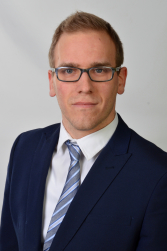
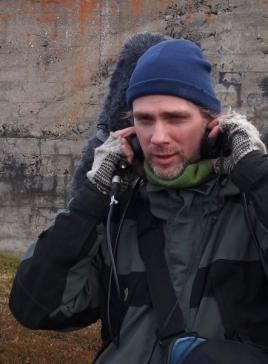
Prof. Dr. Christoph Schneider is a Professor of Climate Geography at Humboldt University of Berlin and currently serves as Vice President for Research (since August 2021). He holds positions in the Faculty of Mathematics and Natural Sciences, leading research in glaciology, climate dynamics, and urban climate modeling. His work spans field studies in Patagonia, the Himalayas, and Antarctica, focusing on glacier mass balance, atmospheric interactions, and climate change impacts. Schneider has contributed to developing open-source models like COSIPY and OSARIS for cryospheric and urban environmental studies. Research interests include climate change effects on glaciers, urban air quality, and interdisciplinary approaches linking geoscience with socio-environmental systems. He has led international projects, such as the German [UC]² urban climate initiative, and serves on editorial boards for journals like Journal of Glaciology and Meteorologische Zeitschrift . His recent work explores glacial lake hazards in High Mountain Asia and urban development impacts on thermal comfort. Academic roles include former Dean of Studies at Humboldt University’s Geographical Institute and leadership in collaborative research on climate adaptation. Grants and collaborations span climate modeling, sensor networks, and interdisciplinary urban studies.
Dennis Gibhardt is a researcher at the Institute of Plastics and Composites at Hamburg University of Technology. His work focuses on the durability and mechanical behavior of composite materials under environmental stressors. Research Areas: Composite materials, hygrothermal aging, fiber-matrix interphase, strain sensing, durability analysis, and environmental effects on polymers. Key Projects: Aging effects in thermoset prepregs, moisture impact on GFRP, scarf-bonded CFRP repairs, and embedded carbon nanotube sensors. Recent Publications Trends: His research emphasizes the interplay between environmental exposure and material degradation, particularly in epoxy-based composites. He explores innovative sensing methods for structural health monitoring and develops failure models for thermoset polymers under combined stressors. Contact: Email dennis.gibhardt@tuhh.de | Office: Building N, Room 2030, Hamburg University of Technology
Christian Borowski is a Researcher at the Max Planck Institute for Marine Microbiology within the Department of Symbiosis . His work focuses on deep-sea chemosynthetic ecosystems, bivalve-microbe interactions, and environmental impacts on marine macrofauna. Research Interests: His studies span chemosynthetic symbioses in extreme marine environments (hydrothermal vents, methane seeps), microbial community structuring in sunken wood ecosystems, metal bioaccumulation in vent organisms, and genetic connectivity of deep-sea bivalve populations. He investigates how host organisms acquire and maintain symbionts throughout their lifetimes. Publications Trends: Over his career, Borowski has contributed to understanding deep-sea symbiotic relationships (15+ papers), particularly involving Bathymodiolus mussels and their microbial partners. His research intersects Marine geochemistry (metal cycling) Bivalve physiology Microbial ecology Environmental disturbance impacts Hydrocarbon seep symbioses Deep-sea habitat mapping Collaborations: He works extensively with international teams studying chemosynthetic environments, including projects in the Gulf of Mexico, Mid-Atlantic Ridge, and South Pacific. His role involves fieldwork using submersibles and advanced sensor technologies.
Prof. Sabina Bigi is a faculty member at the Department of Earth Sciences, Sapienza University of Rome, where she conducts research in geological sciences. Her work focuses on field-based and analytical approaches to geological processes and environmental applications. Research Interests: Her primary expertise spans geological mapping, tectonics, and environmental applications of geoscience. Key research domains include: Quantitative analysis of fracture networks for CO2 storage Remote sensing applications in structural geology Development of environmental monitoring tools Marine ecosystem responses to geochemical changes Geogenic hazard assessment and mitigation Publication Focus: Recent articles demonstrate strong emphasis on fracture characterization across scales (aerial to subsurface), environmental monitoring of CO2 storage sites, marine biogeochemical processes near hydrothermal vents, and geogenic radon risk quantification. Her research consistently integrates field data with computational modeling approaches. Collaborations: Actively collaborates with institutions including the National Institute of Oceanography, British Geological Survey, and National Civil Protection Department. Her network includes 89+ co-authors across multidisciplinary projects.
Dr.-Ing. Philipp Sieberg serves as a Researcher at the Chair of Mechatronics within the Faculty of Engineering at the University of Duisburg-Essen, Germany. His research focuses on intelligent transportation systems, vehicle dynamics, and applied artificial intelligence, with particular emphasis on hybrid methodologies that integrate physical models with machine learning approaches. Based in Room MD-226, he actively contributes to both academic and industrial advancements in automotive engineering through his publications and research projects. His research interests span intelligent transportation systems, vehicle dynamics control, machine learning applications, and hybrid estimation methods. Sieberg specializes in developing reliable AI-based virtual sensors for vehicle state estimation, creating model-based predictive control systems for active roll stabilization, and applying neural networks to complex automotive challenges. His work consistently addresses the critical balance between AI innovation and system reliability in safety-critical automotive applications, with significant contributions to steering system dynamics, wear mechanism classification, and autonomous vehicle development. Sieberg's recent publications (2022-2025) demonstrate a clear trajectory toward increasingly sophisticated hybrid AI methodologies in vehicle dynamics. His research shows growing emphasis on reliability assurance of AI components, multi-fidelity simulation approaches, and practical implementation of machine learning in hardware-in-loop test environments. The work spans fundamental research in neural network-based state estimation to applied solutions for steering systems, wear analysis, and autonomous inland waterway vessels, reflecting both theoretical depth and real-world applicability. Award for Particularly Outstanding Graduation, Department of Engineering, University of Duisburg-Essen Award for Outstanding Completion of Master's Program in Mechanical Engineering, Faculty of Engineering, University of Duisburg-Essen First Prize for Outstanding Master's Thesis 2017, Alumni Chair of Mechatronics eV, University of Duisburg-Essen Active involvement in IEEE Germany Section and Chair of IEEE ITSS German Chapter Sieberg contributes significantly to research projects including AutoBin (Autonomous Inland Waterway Vessel), driving simulators for the Chair of Mechatronics, and machine learning algorithms for mobile state prediction applications. His leadership extends to committee activities as Student Activities Chair of the IEEE ITSS German Chapter, where he bridges academic research with professional society engagement. Current teaching responsibilities include courses on highly automated driving systems and technical fundamentals of future vehicle systems for the Master's program in Automotive Engineering & Management Executive. Working within the Chair of Mechatronics research group, Sieberg collaborates extensively with colleagues including Dieter Schramm, Christian Hürten, and Alexander Haas. His research leverages advanced driving simulators and hardware-in-loop test benches, with strong connections to the AutoBin project consortium developing autonomous inland vessel technology. The research environment emphasizes interdisciplinary collaboration between mechanical engineering, computer science, and control systems specialists to address complex mobility challenges.
Dr. Xin Lin is a Professor at the School of Computer Science and Technology, University of Science and Technology of China in Hefei. With an extensive publication record spanning computer vision, machine learning, and artificial intelligence, Dr. Lin leads a research group focused on solving challenging problems in image processing, robotics, and wireless communications. His work bridges theoretical advancements with practical applications across healthcare, autonomous systems, and industrial manufacturing. Dr. Lin's research interests encompass computer vision, machine learning, image processing, and artificial intelligence, with particular expertise in image restoration, 3D object detection, and human pose estimation. His laboratory develops innovative approaches to handle multiple image degradations simultaneously and create lightweight, efficient vision systems suitable for real-world deployment. The research demonstrates strong interdisciplinary connections, applying computer vision techniques to medical imaging, satellite communications, and industrial IoT applications. Analysis of Dr. Lin's recent publications reveals a strong focus on multi-task learning approaches that address multiple image degradation problems simultaneously. His work shows increasing sophistication in handling complex real-world scenarios, from low-light conditions to rain interference, while maintaining computational efficiency. The research trajectory demonstrates a clear path from fundamental image processing techniques to practical applications in autonomous driving, healthcare, and industrial systems. Dr. Lin has received recognition for his contributions to the field through numerous publications in top-tier venues including CVPR, IEEE Transactions, and ACL. His work on image restoration, particularly the Dual Degradation Representation framework, has gained significant attention in the computer vision community. Dr. Lin actively supervises graduate students and collaborates with researchers worldwide. His laboratory works on cutting-edge projects involving digital twins for manufacturing, satellite communications, and medical imaging applications. Current research directions include developing more robust and efficient models for real-world deployment scenarios, with particular attention to resource-constrained environments.
V. Dinesh Reddy is affiliated with SRM University Andhra Pradesh, Department of Computer Science and Engineering in Amaravati, India. He maintains an active research career with publications spanning from 2017 to 2025 across multiple prestigious venues including IEEE Access, Energy Informatics, Quantum Information Processing, and Sensors. Dr. Reddy's research interests span cloud computing infrastructure optimization, edge computing, quantum computing applications, image processing, and cybersecurity. His work demonstrates expertise in developing evolutionary algorithms, machine learning approaches, and optimization techniques to solve complex computing problems with practical applications in IoT security, vehicular networks, and medical diagnostics. His publication record shows consistent output with increasing collaboration and expanding research scope over time. The research demonstrates strong interdisciplinary connections between traditional computer science domains and emerging technologies like quantum computing, addressing real-world challenges in computing infrastructure efficiency and security. Dr. Reddy has collaborated extensively with researchers including G. R. Gangadharan, G. Subrahmanya V. R. K. Rao, Marco Aiello, Md. Muzakkir Hussain, and Ashu Abdul. His research appears well-funded given the scope and diversity of projects, with applications spanning sustainable data centers, edge computing for vehicular networks, and quantum computing implementations. His research spans multiple laboratory contexts, particularly in cloud computing infrastructure, quantum computing applications, and image processing. Dr. Reddy's future research directions appear to be expanding into more specialized quantum computing applications and advanced edge computing scenarios for vehicular networks, as evidenced by his most recent publications from 2024-2025.
Dr. Victor O. K. Li is a Professor at the Faculty of Engineering, University of Hong Kong, with over three decades of academic leadership. His research spans Machine Learning , Artificial Intelligence , and Smart City Development , focusing on Environmental Monitoring , Intelligent Transportation Systems , and Neural Architecture design. He has co-authored over 550 publications since 1981, with recent work on Alzheimer's disease diagnosis, air pollution modeling, and autonomous vehicle systems.
Sasu Tarkoma is a Professor at University of Helsinki specializing in next-generation computing systems with over two decades of research experience. His work bridges theoretical computer science with practical applications in smart cities, environmental monitoring, and industrial systems. His research interests focus on edge computing infrastructure , federated learning architectures , and AI-driven environmental monitoring systems . Tarkoma's work addresses critical challenges in distributed intelligence, particularly in resource-constrained environments where privacy, energy efficiency, and real-time processing are paramount. Recent work explores the integration of large language models with edge systems and novel approaches to 6G network architectures. The publication record reveals a strategic evolution from foundational mobile computing research to cutting-edge work at the intersection of AI, networking, and sustainability. His recent articles demonstrate particular strength in solving practical implementation challenges for federated learning in industrial settings and developing energy-efficient approaches to AI deployment in constrained environments. Tarkoma maintains an extensive collaborative network across European institutions, frequently partnering with researchers from Aalto University, University of Oulu, and international partners in Asia. His work shows increasing emphasis on environmental applications, particularly air quality monitoring systems using UAVs and mobile sensors.
Prof. Dr. Didier Stricker is a distinguished Professor of Computer Science at Rhineland-Palatinate University of Technology Kaiserslautern-Landau (RPTU) and serves as Scientific Director and Head of the Augmented Reality Research Department at the German Research Center for Artificial Intelligence (DFKI) in Kaiserslautern. He leads the Augmented Vision Group, which comprises approximately 30 researchers working across various domains of computer vision and augmented reality. His work bridges academic research with industrial applications through collaborations with major companies including Sony, Google, and John Deere. His educational background includes electrical engineering studies at the Polytechnic Institute of Grenoble and the Technical University of Karlsruhe. He earned his doctorate from the Technical University of Darmstadt in 2002 with a dissertation on "Computer Vision-Based Calibration and Tracking Methods for Augmented Reality Applications." Prof. Stricker's research spans virtual and augmented reality, computer vision, human-computer interaction, cognitive interfaces, and on-body sensor networks. His work focuses on developing practical applications that enhance human capabilities through advanced visual computing technologies. He has pioneered approaches in video and sensor analytics, particularly in creating cognitive interfaces that respond intelligently to user needs and environmental contexts. His recent publications reveal a strong emphasis on 3D scene understanding, real-time processing for augmented reality applications, and the integration of large language models with spatial reasoning capabilities. There's a clear trend toward more sophisticated multimodal approaches that combine vision, language, and spatial understanding to create more natural and intuitive human-computer interactions. Among his notable achievements: Innovation Prize of the German Society of Computer Science (2006) Organized the first IEEE & ACM International Symposium on Mixed and Augmented Reality (ISMAR) in 2002 Member of the ISMAR steering committee from 2000-2007 Multiple best paper and demonstration awards at major conferences Several registered patents in tracking and augmented reality technologies Prof. Stricker has supervised numerous PhD and Master's students through his leadership of the Augmented Vision Group. His research is supported by significant funding from both European and national research organizations, as well as through industrial partnerships. He serves as an expert reviewer for various research funding bodies and contributes to the academic community through editorial roles for journals and conferences in VR/AR and computer vision. The Augmented Vision Group under his direction maintains strong connections with industry partners and participates in numerous collaborative research projects including LUMINOUS, SHARESPACE, I-Nergy, BIONIC, and VIDETE. These projects span applications in language-augmented XR systems, social experiences in hybrid spaces, AI for energy systems, personalized body sensor networks, and 4D scene analysis.
Md. Mehedi Hasan is a researcher at Daffodil International University's Department of Computer Science and Engineering. With over 17 years of research activity, his work spans multiple domains including Internet of Things (IoT), machine learning, biomedical informatics, and environmental technology. Current affiliations include collaborations with institutions in Bangladesh, Japan, and Malaysia. Research areas: Machine Learning, IoT Security, Medical Imaging, Aquaculture Monitoring Key technologies: Deep Learning, Time Sensitive Networking, Kerberos Authentication Notable contributions: NAND Flash memory analysis, Pediatric health applications, Urbanization impact studies His 2025 publications focus on medical data preservation ( Comput. Biol. Medicine ), pedestrian risk assessment ( Complexity ), and toddler screen time management ( SoftwareX ). Recent work explores the intersection of environmental analysis with deep learning and cryptographic solutions for smart infrastructure. Scientific contributions include: Radiation tolerance analysis of neuromorphic systems (IRPS 2020) Smart meter security protocols (Earth Sci. Informatics 2024) Acoustic breathing phase detection (Proc. ACM IMWUT 2021)
Leo Mrsic is a researcher with extensive contributions to Artificial Intelligence, Machine Learning, and Data Analytics. He has published numerous high-impact articles in journals like Artificial Intelligence Review and Quantum Machine Intelligence , covering topics such as quantum computing applications, blockchain in education, and neurotechnological frameworks. His work also extends to environmental engineering and biomedical research. Research Interests : AI, quantum computing, blockchain, sentiment analysis, educational technology, genomics Collaborators : Siddhartha Bhattacharyya, Mislav Balkovic, Mateo Sokac, Sovan Samanta Recent Articles (2025-2022) explore quantum-inspired metaheuristics, fog computing frameworks, and EEG-based image generation. No awards, students, or institutional affiliations are explicitly mentioned in the provided data.
Raviv Ganchrow is a Lecturer at the Institute of Sonology, University of the Arts, The Hague. He previously taught architectural design in the graduate program at TU Delft. His research explores the interdependencies between sound, place, and listening through installations, writing, and the development of pressure-forming and vibration-sensing technologies. Current research focuses on context-dependent sites of contemporary listening, including environmental infrasound ( Long-Wave Synthesis ), mineral piezoelectricity ( Quarzbrecciakammer ), materiality of radio transmission ( Radio Plays Itself & Forecast for Shipping ), and anechoic chambers. His ongoing Listening Subjects project investigates ambient circuitry where audibility, surroundings, and subjectivity interact.
Elke Kossel is a Researcher in Marine Biogeochemistry at GEOMAR Helmholtz Centre for Ocean Research Kiel, Germany, where she has worked since 2009. Her research focuses on marine gas hydrates, microplastics in marine sediments, and marine carbon dioxide storage. She is affiliated with Research Division 2: Marine Biogeochemistry and Research Unit Marine Geosystems within the institution. Dr. Kossel's educational background includes: PhD in Physics from University of Ulm (1999-2004), promoted to Dr. rer. nat. in 2005 Physics studies at University of Hamburg (1992-1998) Her primary research interests center around marine biogeochemical processes , with specific focus on: Marine gas hydrates and their potential as energy resources Microplastic pollution in marine environments and sediments Carbon capture and storage (CCS) in marine settings Biogeochemical processes in marine sediments Dr. Kossel employs advanced techniques including magnetic resonance imaging and high-pressure flow-through experiments to investigate these topics at both micro and macro scales. Analysis of Dr. Kossel's recent publications reveals a strong dual focus in her research. The first trajectory centers on gas hydrate systems, examining CH 4 -CO 2 exchange processes, hydrate formation/dissociation dynamics, and the geomechanical properties of hydrate-bearing sediments. The second trajectory investigates microplastic pollution in marine environments, with emphasis on detection methods, spatial distribution patterns, and ecological impacts in the Baltic Sea and North Atlantic regions. Her work bridges fundamental science with practical applications for environmental monitoring and energy resource development, demonstrating consistent interdisciplinary approaches throughout her publication record. Dr. Kossel has secured funding for and participated in multiple significant research projects: GEOSTOR I-II (2022-2027) - Focused on geological storage of CO 2 LABPLAS (2022-2024) - Investigating microplastics in marine environments HOTMIC (2020-2023) - Studying microplastics in the ocean STEMM-CCS (2018-2020) - Sub-seafloor carbon dioxide storage SUGAR I-III (2009-2018) - Submarine gas hydrate resources At GEOMAR, Dr. Kossel works within the Marine Geosystems research unit, utilizing specialized laboratory facilities for high-pressure experiments related to gas hydrates and sediment analysis. Her work often involves extensive international collaborations with researchers across Europe and beyond, as evidenced by her publication co-authorship patterns. She has developed expertise in magnetic resonance imaging applications for studying subsurface processes and has contributed significantly to the development of monitoring strategies for carbon dioxide storage sites, with her research having practical implications for both environmental protection and energy resource management.
Prof. Dr.-Ing. Jia Chen is a Professor of Environmental Sensing and Modeling at the Technical University of Munich (TUM), affiliated with the Department of Electrical and Computer Engineering and the TUM School of Computation, Information and Technology. She leads the Environmental Sensing and Modeling Group, focusing on greenhouse gas emissions, urban air pollution, and novel optical sensor technologies. Her pioneering work includes the MUCCnet urban sensor network for long-term greenhouse gas monitoring. Education: Dipl.-Ing. (Electrical Engineering) from KIT, Ph.D. (summa cum laude) from TUM Postdoctoral Research (2011–2015): Harvard University Affiliations: Associate at Harvard’s Earth and Planetary Sciences Department, TUM Institute of Advanced Study Fellow Research Interests: Sensor development for greenhouse gases, atmospheric modeling, CFD, remote sensing techniques (FTIR, TDLAS), and semantic kriging. Key Achievements: ERC Consolidator Grant (2022), Timothy Oke Prize (2024), Global Young Academy membership (2021). Over 180 peer-reviewed publications and 12 patents. Grants: Leadership in projects like EU Horizon 2020’s PAUL initiative, UN Environment Programme campaigns, and German Federal Ministry-funded MCube DatSim 2.0.