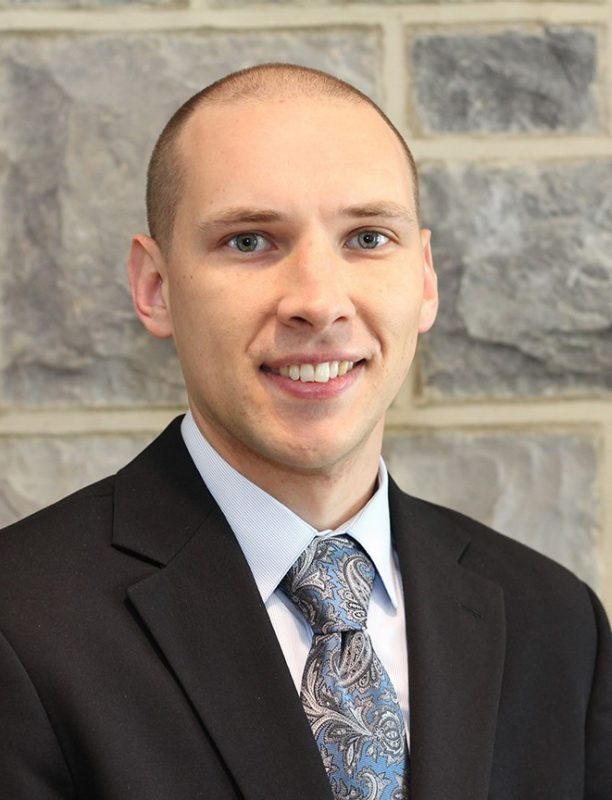
Guillermo Quintero Perez is a Senior Lecturer at the Department of Mechanical Engineering , Technical University of Catalonia . His work focuses on acoustic pollution , low-cost noise sensors , digital signal processing , and noise mapping . He collaborates with researchers like Jordi Romeu and Andreu Balastegui on urban noise monitoring projects. Research Interests : Developing low-cost noise sensors for scalable urban monitoring Optimizing noise mapping through mobile sampling and data stratification Applying digital signal processing to environmental acoustics Investigating sound insulation properties of metamaterial structures Publications : His recent work (2024) includes studies on broadband noise reduction in acoustic windows and compliance testing for low-power sensors. Earlier contributions (2023-2017) explore statistical models for noise estimation, cluster analysis for temporal stratification, and sensor network deployment.
Joseph Strauss is a Full Professor at the University of Natural Resources and Life Sciences Vienna (BOKU), leading the Institute of Microbial Genetics. With a career spanning over three decades, he has focused on fungal genetics, epigenetics, and bioactive metabolite discovery, particularly in filamentous fungi and pathogens. His work bridges fundamental research with applications in agriculture, medicine, and environmental biotechnology. Research Focus: Epigenetic regulation of fungal secondary metabolism, chromatin dynamics, bioactive compounds, nitrate signaling, and microbial interactions. Projects: Leads multiple grants from Austrian Science Fund (FWF), European Commission, and industry partners, including studies on chromatin engineering, fungal biotechnology, and toxin biosynthesis. His recent publications highlight advancements in chromatin proteomics, fungal pathogenicity, and novel bioactive molecules like luteapyrone and rasfonin. Articles emphasize broad disciplines such as Fungal Genetics, Epigenetics, and Natural Product Discovery, with subfields including secondary metabolite clusters, histone modifications, and stress response mechanisms. Scientific Awards: 2021 - Keratinophyton straussii fungal species named after him 1999 - START Preis 1995 - EMBO Stipendium 1994 - OTTO LOEWI Stipendium He has supervised over 69 theses and contributed to 186 publications, reflecting his leadership in fungal genomics and its applications. Projects like 'Bioaktive Mikrobielle Metaboliten' and 'TASSMATA' underscore his commitment to translating research into sustainable solutions.
Jason P. Briner is a Professor in the Department of Geology at the State University of New York at Buffalo, affiliated with the College of Arts and Sciences. His research focuses on Quaternary and glacial geology, paleoclimatology, and arctic environmental change. Education Ph.D. in Geological Sciences, University of Colorado (2003) M.S. in Geology, Utah State University (1998) B.S. in Geological Sciences, University of Washington (1996) Briner studies glacial and lacustrine records to understand ice sheet processes, past climate changes, and glacial landscape evolution using cosmogenic exposure dating and paleolimnologic techniques. His work provides insights into Arctic climate change over Pleistocene and Holocene timescales. His recent research involves developing open-source tools through Ghub for ice sheet modeling, NSF-funded projects on climate change, and fieldwork in Alaska, Greenland, and Norway. He teaches courses including Climate Change, Glacial Geology, and Quaternary Dating Methods. Briner leads the Paleoclimate Lab at UB, mentoring graduate students and conducting fieldwork across glacial regions. He is a member of the Geological Society of America, American Quaternary Association, and American Geophysical Union.
Professor Elizabete Carmo-Silva is a leading expert in crop physiology at Lancaster University's Lancaster Environment Centre. She specializes in the regulation of carbon assimilation by Rubisco in crop plants, particularly wheat and cowpea, with research focused on improving photosynthetic efficiency to enhance agricultural sustainability and climate resilience. Her research interests center on photosynthesis, Rubisco regulation, and sustainable agriculture. She leads a research team investigating how to optimize photosynthetic processes to improve crop yields under environmental stress conditions including heat, drought, and fluctuating light. Her work bridges fundamental plant biochemistry with practical crop improvement strategies to address food security challenges. Professor Carmo-Silva's publication record demonstrates consistent contributions to understanding Rubisco regulation, photosynthetic efficiency, and crop adaptation. Her recent work has focused on Rubisco activase isoforms, thermotolerance mechanisms, and developing methodologies for measuring photosynthetic parameters. Her research has significant implications for breeding crops with improved resource use efficiency and climate resilience. Fellow of the Royal Society of Biology (2022) LEAF accreditation for Rubisco lab Handling Editor for Journal of Experimental Botany (2021-present) She actively supervises four PhD students and leads a multidisciplinary research team working on major projects including RIPE, CAPITALISE, PhotoBoost, and Delivering Sustainable Wheat. Professor Carmo-Silva also contributes to teaching through the Research Design and Delivery course, Biology and Ecology & Conservation programmes, and serves as Director of LEC Postgraduate Research Programmes and Lancaster academic lead for UKRI NorthWestBio Doctoral Programme.
Neil Anthony Lewis, Jr. is an Associate Professor at Cornell University, holding appointments in the Department of Communication and the Jeb E. Brooks School of Public Policy . He is also an Associate Professor in the Division of General Internal Medicine at Weill Cornell Medicine. Lewis studies how social contexts and identities shape behavior, focusing on equity in education, health, and environmental sustainability. Education: B.A. in Economics and Psychology from Cornell University M.S. and Ph.D. in Social Psychology from the University of Michigan Research Interests span behavioral science, public policy, and social psychology. He examines how interventions and policies can promote equitable outcomes, emphasizing the role of identity and social context in shaping goal pursuit and decision-making. His work bridges individual behavior with systemic inequality, often applying insights to real-world problems like vaccine uptake, educational disparities, and housing equity. Public Writing and Engagement include contributions to The Atlantic , FiveThirtyEight , and Science , where he analyzes societal issues through a behavioral science lens. He co-founded the Cornell Action Research Collaborative and serves as Associate Director of the Cornell Center for Racial Justice and Equitable Futures . Scientific Awards Early Career Scholar Award, International Communication Association Janet Taylor Spence Award for Transformative Early Career Contributions, Association for Psychological Science National Academies Eric and Wendy Schmidt Award for Excellence in Science Communication
Shimat V. Joseph is an Associate Professor in the Department of Entomology at the University of Georgia 's College of Agricultural & Environmental Sciences . His research and extension programs focus on urban landscape ecology , pollinator ecology , and integrated pest management for turfgrass and ornamental systems. His research projects aim to develop environmentally sustainable strategies for managing pests like ambrosia beetles , rhodesgrass mealybug , and Systena frontalis , with emphasis on reducing non-target impacts. Recent studies explore RNA interference , ethanol lure dynamics , and trap color optimization for beetle monitoring. The Joseph Lab currently supervises six graduate students and collaborates with researchers across multiple institutions. His work addresses pest management challenges in golf courses , ornamental nurseries , and residential landscapes . Key publications from 2025 cover topics in insect behavior , chemical ecology , and environmentally sensitive pest control .
Lisa Elviri is an Associate Professor in Analytical Chemistry at the Department of Pharmacy, University of Parma, Faculty of Sciences. She holds a PhD in Chemical Sciences (Analytical Chemistry) from the University of Parma and has been a tenured researcher since 2004. Education: PhD in Chemical Sciences (Analytical Chemistry, University of Parma); Laurea in Chemistry (University of Parma). Her research spans analytical chemistry , mass spectrometry , biomaterials , 3D printing , and clinical diagnostics . She focuses on developing LC-MS and immunoenzymatic methods, validating techniques for pharmaceutical analysis, and designing chitosan-based scaffolds for tissue regeneration. Recent publications highlight work on Alzheimer’s disease (PCSK9 inhibition, APOE4 genotype studies), 3D-printed medical devices , and biorefinery quality monitoring using spectroscopy. Her teaching includes Analytical Chemistry for 5-year Master’s programs in Pharmacy and Pharmaceutical Chemistry. She has authored 75 international publications, 140 conference communications, and holds an H-index of 26 (Google Scholar). Her office is located at the Science and Technology Campus, Parma.
Professor MUSTAFA METE is a faculty member at Gaziantep University, Faculty of Economics and Administration, Department of International Trade and Logistics. He has been serving as a Professor since 2023, having previously held the positions of Associate Professor (2017-2023) and Assistant Professor (2013-2017) at the same institution. His academic career spans various roles including department chair, vice chair, and institute deputy director. His educational background includes: Doctorate in Economics (2009-2013) from Kahramanmaraş Sütçü İmam University Institute of Social Sciences Master's in Business Administration (2006-2008) from Kahramanmaraş Sütçü İmam University Institute of Social Sciences Licence in Economics (1998-2002) from Atatürk University Faculty of Economics and Administrative Sciences Professor METE's research focuses on International Economics, International Trade, Strategic Foreign Trade Policies, and Economic Integration. His work particularly emphasizes Emerging Market Economies and Developed Country Economies, with numerous publications analyzing trade relations within Turkic states and regional economic development. His research methodology combines theoretical frameworks with empirical analysis of trade patterns and economic indicators. A significant portion of his work addresses practical applications of trade theory to regional economic development in Southeastern Turkey. His recent publications show a trend toward practical applications of international trade theory, with increasing focus on diaspora tourism, green consumer behavior, service quality in tourism infrastructure, and financial literacy. His work bridges theoretical economic concepts with practical trade policy considerations, particularly in the context of Turkey's position between Europe and Asia, with special attention to Turkic states' economic cooperation. Professor METE has received the following scientific award: 2016 Sivil Toplum Kuruluşu 20. ULUSLARARASI TÜRK DÜNYASINA HİZMET ÖDÜLÜ from Türk Dünyası Yazarlar ve Sanatçılar Vakfı Professor METE has supervised numerous graduate students, including 4 doctoral candidates and 22 master's students. His research has been supported by projects including "International Trade Risks and Management: A Sample Application" (2021-2022) which was completed as a national scientific research project supported by Higher Education Institutions, with him serving as the principal investigator. He has also participated in the international project "Turkic World Citizenship from an Intercultural Education Perspective" (2014-2016) as a researcher. Professor METE has taught a wide range of courses at all academic levels, from undergraduate courses like "International Political Economy" and "International Economics and History of Globalization" to graduate courses such as "Advanced International Economics" and "International Economic Analysis." His teaching reflects his research interests, emphasizing practical applications of international trade theory with relevance to Turkey's strategic position between Europe and Asia.
Dr. Volodymyr V. Tarabara is a Professor in the Department of Civil and Environmental Engineering at Michigan State University (MSU) and Director of the Center for European and Eurasian Studies. He holds a PhD and MS in Environmental Engineering from Rice University (2004, 2001) and a Doctor honoris causa from the Agricultural University of Georgia (2019). His research focuses on separation processes, particularly membrane filtration technologies and virus removal mechanisms, with applications in water treatment, industrial pollution control, and biosafety monitoring. PhD, Environmental Engineering, Rice University (2004) MS, Environmental Engineering, Rice University (2001) Diploma, Solid State Physics, National Research Nuclear University, MEPhI, Moscow (1997) His work intersects colloid and interface science with separation science , emphasizing: Membrane fouling and regeneration strategies Virus adhesion and transport across porous media Photocatalytic membrane development for pathogen inactivation Oil-water emulsion separation mechanisms Low-cost water treatment with natural coagulants With over 100 publications and editorial roles as Chief Editor of the Journal of Environmental Engineering (ASCE) and Editor of Separation and Purification Technology (Elsevier), his research spans international collaborations through NSF PIRE, Fulbright, and EU projects. Recent articles highlight advancements in: Mesoscale membrane morphology optimization using CFD Hydrophobic interaction studies in virus removal Photocatalytic membrane fouling mitigation Quantitative analysis of fomite-mediated viral transmission Industrial applications of oil-water separation Environmental fate of emerging contaminants Scientific honors include: Fulbright Global Scholar (2021/22) ASCE Fellow (2023) Doctor honoris causa (2019) Paul L. Busch award (2011) He directs international research projects and serves as advisor to multiple research groups, including NSF REU and IRES programs.
Sophia Frick is an Assistant Professor at the Erasmus School of Social and Behavioural Sciences, specializing in Work and Organizational Psychology. Her research focuses on the interplay between light exposure, sleep quality, and employee wellbeing, particularly within the context of digitalization's impact on modern workplaces. Research Themes: Role of ambient lighting in reducing workplace exhaustion Bidirectional relationships between sleep patterns and burnout indicators Temporal dynamics of burnout across workdays and weeks Key Collaborations: Co-authored studies with Karen C.H.J. Smolders, L. van der Meij, and Y. de Kort Active in the Sectorplan SSH-Breed research program
Thomas J. Sharpton is a Professor in the Department of Microbiology and Department of Statistics at Oregon State University's College of Engineering. His research focuses on understanding the gut microbiome's role in health, ecology, and evolution through interdisciplinary approaches that combine computational, experimental, and analytical methods. Dr. Sharpton earned his Ph.D. from the University of California, Berkeley and his B.A. from Oregon State University in 2003. His educational background provides a strong foundation for his interdisciplinary research at the intersection of microbiology, statistics, and computational biology. Sharpton's research program centers on three interconnected areas: the microbiome's connection to health and behavior, the impact of exogenous factors on the gut microbiome, and the link between the gut microbiome and vertebrate ecology and evolution. His lab employs systems biology approaches to measure microbiome features and statistically model data to identify those linked to health. They also develop zebrafish as an experimental model to study environmental impacts on the microbiome and explore evolutionary connections across vertebrate species. Analysis of Dr. Sharpton's recent publications reveals a strong focus on using zebrafish models to investigate microbiome-environment interactions, particularly regarding climate change, toxicant exposure, and nutritional impacts. His work increasingly emphasizes computational approaches, including statistical modeling of microbiome data and multi-omics integration. The research spans human health applications, environmental impacts, and evolutionary perspectives on host-microbiome relationships. Dr. Sharpton's work is generously supported by major funding agencies including the National Institutes of Health, the National Science Foundation, and the United States Food and Drug Administration, along with the Morris Animal Foundation and the Oregon Agricultural Research Foundation. The Sharpton Lab manages the Microbiome Core Facility at OSU, which provides services for microbiome data generation and analysis. They value interdisciplinary collaborations, commercial partnerships, and open science practices, developing open-source software and offering training workshops in microbiome data analytics. The lab has processed thousands of samples spanning human, mice, and zebrafish associated microbiomes.
Alba Marcellan is a Professor at Sorbonne Université, affiliated with the Faculty of Chemistry and the Soft Matter and Materials Engineering Laboratory (SIMM), a joint research unit of ESPCI Paris, Sorbonne Université, and CNRS. She leads research on soft matter, polymer science, and sustainable materials, with a focus on designing mechanically robust and self-healing hydrogels and fiber-based materials. Her educational background includes: Doctorate in Materials Science and Engineering, Mines ParisTech (2003) DEA in Mechanics and Materials, Mines ParisTech (2000) Habilitation à Diriger des Recherches (HDR) in Chemistry, Sorbonne Université (2015) Marcellan's research centers on understanding and designing soft materials, particularly hydrogels and polymer fibers, by introducing reversible sacrificial bonds at the molecular or mesoscopic scale. Her work aims to create materials that combine rigidity, fracture resistance, and self-repair capabilities, contributing to sustainable resource use. She has developed experimental platforms for testing soft materials under controlled environmental conditions (pH, ionic strength, humidity) for non-standard samples. Analysis of her recent publications (2013-2023) reveals a consistent focus on the mechanical reinforcement of soft materials, especially hydrogels and fibers. Key themes include the role of weak bonds in self-assembly, biomimetic design, nanoparticle-based adhesion, and thermoresponsive toughening. Her work bridges polymer chemistry, mechanics, and sustainability, often targeting applications in biomedicine and eco-friendly materials. Her scientific awards include: Junior Member of the Institut Universitaire de France (IUF) in Chemistry (2017) PEDR (Doctoral and Research Supervision Grant) level 2 (5 years, 2017) Associate Professor position at Hokkaido University, Japan (2016, renewed 2021) Biennial Prize of the French Polymer Group / French Physical Society and Chemical Society (2014) Marcellan is actively involved in teaching and mentoring. She co-leads the Materials Master's track at Sorbonne Université (100 students) and has developed courses on polymer mechanics, eco-design, and industrial applications of polymers. Her leadership in research supervision is recognized by the PEDR grant. She also serves on national committees, including the CNRS National Committee for Soft Matter. She is a key member of the SIMM laboratory, where she established an experimental platform for environmental-conditioned mechanical testing. Additionally, she holds roles in professional societies, such as Treasurer of the Polymer Networks Group and co-leader of the Polymers Working Group under MÉCAMAT.
Assoc. Prof. Dr. Wayne FULLER is a faculty member at Near East University's Faculty of Veterinary Medicine, Department of Genetics. He earned his BSc in Zoology from the University of Oxford before pursuing doctoral research at Exeter Universities' Centre for Ecology and Conservation in North Cyprus. Specializing in Mediterranean marine turtle conservation and ecology, his work spans climate change impacts, plastic pollution, and stable isotope applications. Education: BSc in Zoology, PhD in Marine Ecology Current Roles: Head of Department of Genetics, Near East University Key Projects: IUCN Marine Turtle Specialist Group (2017-present), EU Nature 2000 implementation in Cyprus (2008) His recent research explores phenological shifts in sea turtle offspring under climate change, macroplastic ingestion patterns, and avian conservation in Mediterranean forests. Publications emphasize ecological monitoring, habitat connectivity, and conservation technology applications like GPS and stable isotopes. Scientific recognition includes: Member of IUCN Marine Turtle Specialist Group
Jonathan Czuba is an Associate Professor in the Department of Biological Systems Engineering at Virginia Tech's College of Engineering. His research program integrates ecological engineering with fluvial geomorphology to address riverine ecosystem dynamics under anthropogenic and climatic pressures. Key Themes: Stream restoration, river network connectivity, ecohydraulics, and plastic pollution mitigation Methods: Coupling field measurements with computational models (HEC-RAS, Landlab) Collaborations: USGS, Indiana University, University of Minnesota Research Focus: Advances understanding of how sediment and nutrient fluxes interact with vegetation, aquatic biota, and human interventions across diverse river systems. Notable work includes quantifying floodplain connectivity, modeling post-wildfire sediment cascades, and developing tools for ecohydraulic assessments. Awards: 2023 UCOW Early Career Award 2023-2024 Engineering Teaching Excellence 2024 CALS Impactful Researcher of the Month Mentorship: Actively advises graduate/undergraduate researchers in Watershed Engineering, emphasizing fieldwork, modeling, and remote sensing. Collaborates with Kyle Strom (Civil Engineering) and Doug Edmonds (Indiana University).
Diana Aga serves as SUNY Distinguished Professor and Henry M. Woodburn Chair in the Department of Chemistry within the University at Buffalo's College of Arts and Sciences. She directs both the Aga Laboratory for Environmental Research & Testing (ALERT) and the UB RENEW Institute, establishing herself as a globally recognized leader in environmental analytical chemistry with over $15 million in research funding since joining UB in 2002. Her research focuses on emerging contaminants including per- and polyfluoroalkyl substances (PFAS), antimicrobial resistance drivers, and climate-intensified pollution. Aga investigates the ecological and human health impacts of "forever chemicals" through advanced analytical techniques, examining contaminant fate in diverse environments from stormwater systems to coral reefs. Her work integrates field studies, laboratory experiments, and computational modeling to address water scarcity and chemical pollution as urgent societal challenges. Analysis of her 2024-2025 publications reveals dominant themes in PFAS biodegradation pathways, real-time detection technologies, and pharmaceutical transport in coastal ecosystems. Her research spans critical interfaces including wastewater-agriculture systems, urban stormwater, and tropical marine environments, with increasing emphasis on climate change interactions and remediation strategies for persistent pollutants. Dr. Aga secured a $3 million NSF grant studying antimicrobial resistance drivers and leads the ALERT laboratory investigating PFAS transport and biodegradation. Her research group develops innovative analytical methods while collaborating internationally, as highlighted by the 2024 Spotlight Symposia Series that convened 200 experts to address planetary health challenges. The Aga Laboratory for Environmental Research & Testing (ALERT) provides critical infrastructure for contaminant analysis, specializing in PFAS detection and biodegradation studies. Under her leadership, the UB RENEW Institute fosters convergent science approaches to environmental sustainability through cross-disciplinary collaborations addressing water security, resource management, and pollution mitigation at global scales.