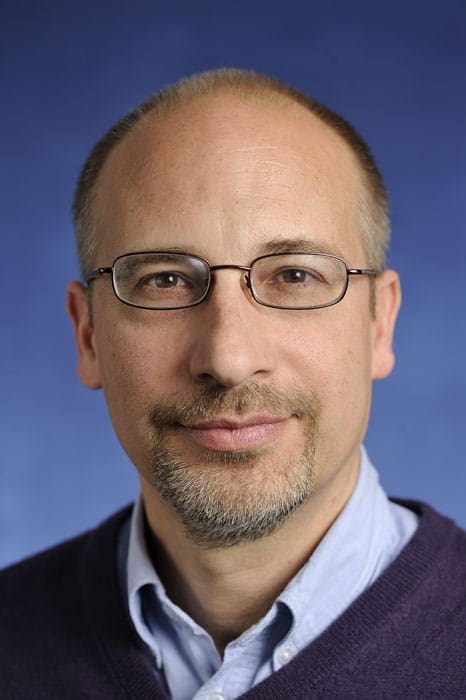
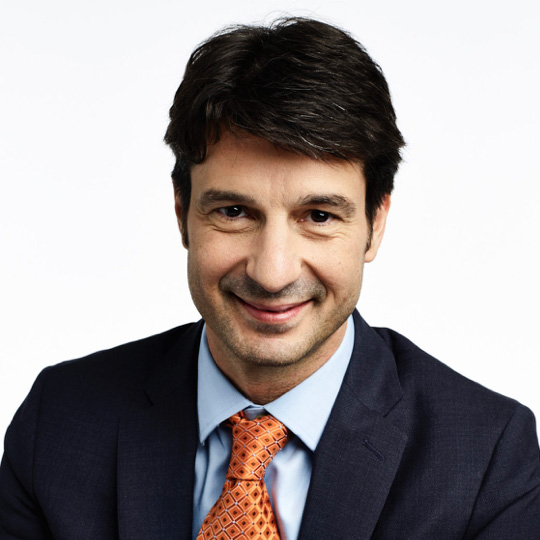
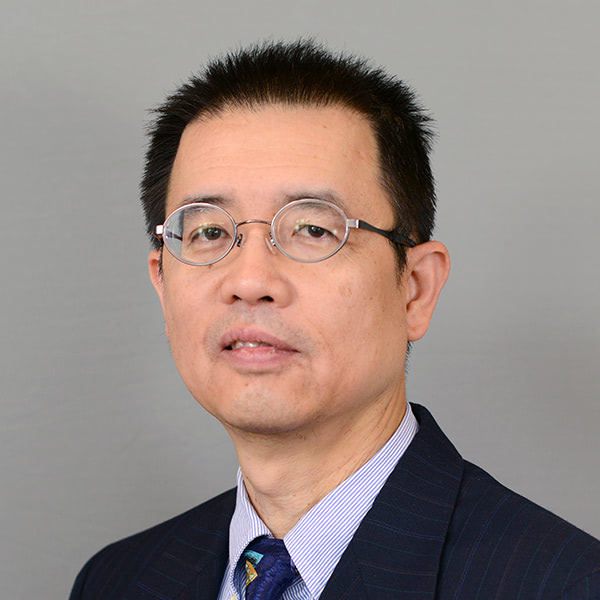
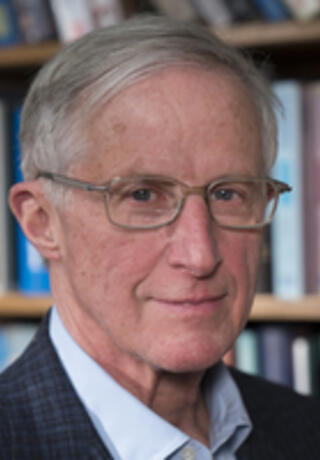
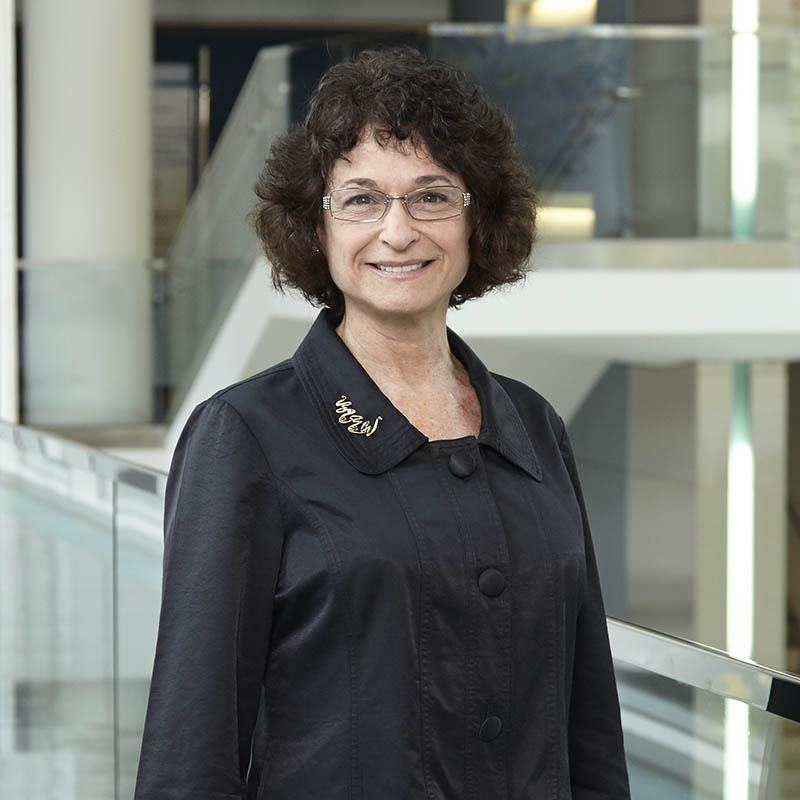
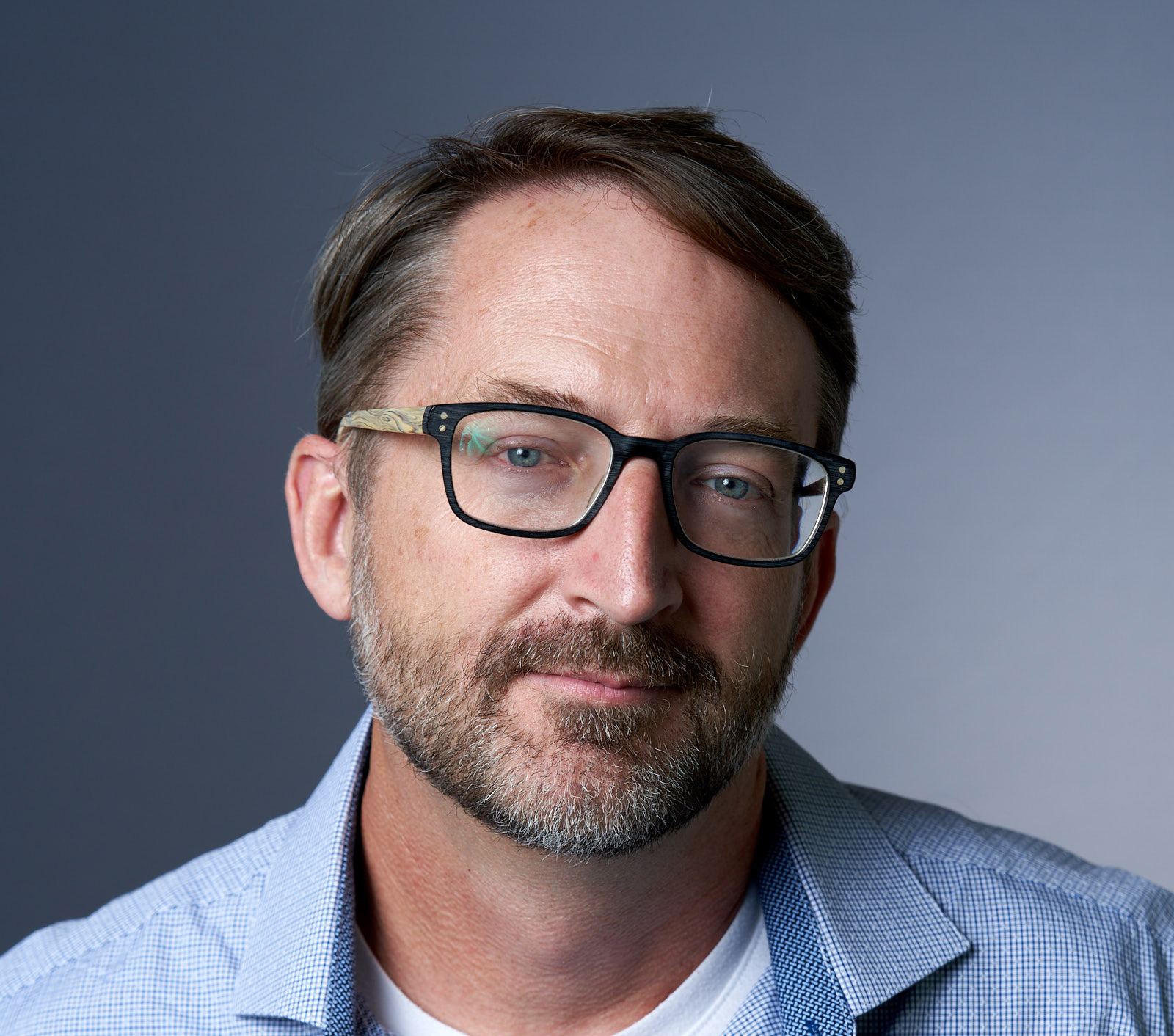
Joel Andreas is a Professor of Sociology at Johns Hopkins University since 2003, serving as Program Director of the East Asian Studies Program. His research focuses on political contention, social inequality, and social change in contemporary China. He holds a PhD in Sociology from UCLA and teaches social theory, political sociology, and courses on Chinese society. He has held visiting positions at universities including the University of Sydney, Hong Kong University, and Ningxia University. His work examines labor movements, rural land policies, and class dynamics in China. Recent research includes analyses of staff-worker congresses, rural land dispossession, and the persistence of militarism in U.S. policy. He critiques market reforms and explores the legacy of the Cultural Revolution. Andreas has contributed to debates on China’s transition to capitalism and the decline of socialist systems. His publications span topics from urbanization to state coercion in rural development. He maintains an active role in academic exchanges and policy-relevant research on China’s socio-political landscape.
Sigrid Schmalzer is a Professor of History at the University of Massachusetts Amherst, specializing in the history of science and modern China. She holds a Ph.D. in History and Science Studies from the University of California, San Diego (2004). Her research bridges the social, cultural, and political dimensions of science in China, with a focus on the intersections of agriculture, activism, and revolutionary movements. Schmalzer is the author of *Red Revolution, Green Revolution: Scientific Farming in Socialist China* (2016), winner of the Joseph Levenson Book Prize, and *The People's Peking Man: Popular Science and Human Identity in Twentieth-Century China* (2008), recipient of the Allan Sharlin Award. Her current projects include a book on agricultural heritage in the People’s Republic of China and leadership roles in organizations like the Critical China Scholars and Science for the People. She co-edits the *Activist Studies of Science and Technology* series for UMass Press, emphasizing socially engaged scholarship. Schmalzer also serves as Co-President of the MSP faculty union at UMass Amherst. Research interests span the history of science activism, transnational movements, and the legacy of Maoist science. Notable awards include the Freeman Book Award (2018) for her children’s book *Moth and Wasp, Soil and Ocean*, which integrates science education with historical narratives. Her work often critiques capitalist and authoritarian structures while advocating for science as a tool for justice and sustainability. Recent publications explore themes like agroecology, science policy, and the global dimensions of China’s scientific history. She teaches courses on modern China, science in society, and radical science movements, blending interdisciplinary approaches to engage students in critical analysis of historical and contemporary issues.
Massachusetts Institute of TechnologyUnited States
Esther Duflo is the Abdul Latif Jameel Professor of Poverty Alleviation and Development Economics at the Massachusetts Institute of Technology (MIT), where she is affiliated with the Department of Economics within the School of Humanities, Arts, and Social Sciences. She co-founded and co-directs the Abdul Latif Jameel Poverty Action Lab (J-PAL) and holds the position of Chaire, Pauvreté et politiques publiques at the Collège de France. Duflo also serves as President of the Paris School of Economics, demonstrating her significant international influence in economic policy and research. Her educational background includes first degrees in history and economics from Ecole Normale Superieure, Paris, followed by a Ph.D. in Economics from MIT in 1999. This strong foundation has enabled her to become one of the most influential economists of her generation. Duflo's research focuses on understanding the economic lives of people living in poverty, with the explicit aim of informing effective social policy design and evaluation. Her work spans critical areas including health, education, financial inclusion, environmental sustainability, and governance. What distinguishes her approach is the rigorous application of randomized controlled trials to evaluate development interventions, bringing scientific precision to poverty alleviation efforts. Her research methodology has revolutionized how economists approach development questions, moving beyond theoretical models to evidence-based policy recommendations. Her scholarly output demonstrates remarkable breadth and impact, with publications spanning from technical academic papers to influential books for general audiences. Duflo's work consistently bridges the gap between academic research and practical policy applications, with recent publications addressing contemporary challenges including climate change adaptation, pandemic response, and economic policy for hard times. Her research trends reveal a deepening commitment to translating complex economic concepts for broader audiences while maintaining scholarly rigor. Sveriges Riksbank Prize in Economic Sciences in Memory of Alfred Nobel (2019, with Abhijit Banerjee and Michael Kremer) Princess of Asturias Award for Social Sciences (2015) A.SK Social Science Award (2015) Infosys Prize (2014) John Bates Clark Medal (2010) MacArthur 'Genius Grant' Fellowship (2009) Member of the National Academy of Sciences (2017) Duflo has supervised numerous graduate students and collaborated extensively with researchers worldwide through J-PAL, which has grown into a global network conducting field experiments across multiple continents. Her grant portfolio includes substantial funding from major foundations and government agencies supporting large-scale development research. Beyond traditional academic advising, Duflo has mentored a generation of development economists through J-PAL's training programs and field research opportunities. Her primary institutional home is the Abdul Latif Jameel Poverty Action Lab (J-PAL), which she co-founded at MIT. J-PAL has grown into a major research center with offices worldwide, connecting academic researchers with policymakers to ensure that program evaluations inform real-world decisions. Duflo also leads research teams at the Collège de France and the Paris School of Economics, creating a transatlantic network focused on evidence-based poverty reduction strategies.
Matthew Louis Mauriello is an Assistant Professor in the Department of Computer and Information Sciences at the University of Delaware , where he directs the Sensify Lab . He holds a PhD in Computer Science from the University of Maryland (2018) and completed postdoctoral work at Stanford University (School of Medicine, 2020; School of Public Policy & Environmental Engineering Department, 2019). Research interests span Human-Computer Interaction (HCI), Ubiquitous Computing, and User-Centered Design with applications in: Sustainability Human-Building Interaction Wearable Technology Personal Informatics Educational Game Design Mental Health Interventions Recent publications highlight trends in stress monitoring (skin-like biosensors, workplace wellbeing), energy auditing (thermography systems), and educational technology (block-based programming tools for teachers). His work appears in ACM CHI, ACM Human-Computer Interaction, and Building and Environment. Scientific awards include: Best Paper Honorable Mention, CHI 2016 Best Paper Honorable Mention, CHI 2015 Best of WebSci'18 Teaching at University of Delaware encompasses courses like Educational Game Design Operating Systems Advanced Web Technologies Computing for Social Good with a focus on project-based learning and systems thinking.
Dr. Corey T. Callaghan is an Assistant Professor in the Department of Wildlife Ecology and Conservation at the University of Florida . Based at the Fort Lauderdale Research and Education Center , his research focuses on global change ecology using big data from citizen science platforms like eBird and iNaturalist, combined with geospatial analyses and macroecological theory . Ph.D. (2019) from UNSW Sydney M.S. (2015) from Florida Atlantic University B.S. + B.S. (2013) from Canisius College His work examines urban ecology , including how species traits influence urban tolerance across birds, amphibians, and butterflies. He develops adaptive sampling frameworks to optimize citizen science data collection while addressing biases. Current projects analyze human-nature interactions through citizen science participation, secondary data in photographs, and machine learning for biodiversity monitoring. He actively contributes to conservation strategies for urban biodiversity and data-driven restoration efforts . Recent publications highlight his expertise in cross-taxa comparisons , continental-scale analyses , and ecosystem service quantification . He leads the Global Ecology Research Group at the University of Florida, emphasizing collaborative science and open-source methodologies .
Alexis Peri is an Associate Professor of History at Boston University, specializing in modern Russian and Soviet history, with a focus on war, gender, and private life. Her work bridges cultural history, environmental history, and transnational studies. She holds a B.A., M.A., and Ph.D. from the University of California, Berkeley. Her research explores Soviet beauty pageants, US-Soviet women’s correspondence, and environmental dimensions of the Crimean War (co-authored with Catherine Ashcraft). Major publications include The War Within: Diaries from the Siege of Leningrad (2017) and Dear Unknown Friend: the Remarkable Correspondence between American and Soviet Women (2024). Dr. Peri has received the 2018 Pushkin House Book Prize, 2019 Gitner Teaching Prize, and 2024 Metcalf Award. Her research has been supported by the Fulbright Program, Kennan Institute, and others. She teaches undergraduate courses on Russian/Soviet history and directs multiple collaborative research projects.
Massachusetts Institute of TechnologyUnited States
Ruben Juanes is a Professor of Civil and Environmental Engineering and Earth, Atmospheric, and Planetary Sciences at MIT. His research focuses on multiphase flow in porous media, energy resources, and CO₂ sequestration. He holds appointments in both departments and has a strong interdisciplinary focus on geosciences and environmental engineering. His work bridges theory, simulation, and experimentation to address energy and environmental challenges. Education: Ingeniero de Caminos (Civil Engineering), University of La Coruña, Spain (1997) MS in Civil Engineering, UC Berkeley (1999) PhD in Civil Engineering, UC Berkeley (2003) Research interests emphasize fluid dynamics in geologic media, especially CO₂ storage, methane hydrates, and ecohydrology. His group develops computational models to predict large-scale Earth processes, with applications to carbon capture and storage, energy resource management, and subsurface engineering. Notable contributions include advancing understanding of fluid displacement mechanisms, capillary trapping in aquifers, and induced seismicity risks during CO₂ injection. His work has been recognized through awards like the APS Fellowship (2024), DOE Early Career Award (2010), and ARCO Energy Professorship (2008). Advising and Grants: Juanes advises graduate students in CEE and EAPS, focusing on thesis research in multiphase flow and geomechanics. His grants include NSF and DOE funding for projects on subsurface energy systems and induced seismicity. His lab, the Juanes Research Group, collaborates on experimental facilities like the FluidFlower CO₂ storage simulator. Labs/Teams: Active in MIT's Carbon Capture, Utilization, and Storage (CCUS) initiatives and the MIT Energy Initiative (MITEI). Collaborates with industry partners on field-scale CO₂ storage validation and subsurface monitoring technologies.
Minh Q. Phan is an Associate Professor of Engineering at Dartmouth College's Thayer School of Engineering. His expertise spans system identification, iterative learning control, model predictive control, robotic swarm control, and intelligent control systems. He holds a BS from the University of California, Berkeley, and MS/M.Phil/PhD degrees from Columbia University in Mechanical Engineering. Dr. Phan has contributed to over 50 peer-reviewed publications and serves as an Associate Editor for the Journal of Guidance, Control, and Dynamics. His research focuses on advancing control theory applications in robotics, structural health monitoring, and sustainable construction materials. Key contributions include the development of OKID (Observer/Kalman Filter Identification) methods and bilinear system identification frameworks. Education History: Bachelor of Science in Mechanical Engineering, UC Berkeley, 1985 Master of Science in Mechanical Engineering, Columbia University, 1986 Master of Philosophy in Mechanical Engineering, Columbia University, 1988 Doctor of Philosophy in Mechanical Engineering, Columbia University, 1989 Research Interests: Advanced control methodologies for dynamic systems Model-based predictive control strategies Applications in robotics and aerospace engineering Structural health monitoring via system identification Machine learning for materials science Teaching Responsibilities include courses like ENGG 149 (Systems Identification), ENGS 145 (Modern Control Theory), and ENGG 148 (Structural Mechanics). His work bridges theoretical control systems with practical industrial applications, including automation in food processing and sustainable construction practices. Dr. Phan has collaborated on projects addressing viral epidemiology in Vietnam and coastal erosion mitigation strategies.
David Noyce is a Professor and Executive Director of the Traffic Operations and Safety (TOPS) Laboratory at the University of Wisconsin-Madison's Department of Civil & Environmental Engineering. He also serves as Associate Director of the Safety Research Using Simulation (SaferSIM) Center, a University Transportation Center. His work focuses on transportation safety, traffic operations, and automated/connected vehicle systems. Key roles include leading over $35M in research since 2003 through the TOPS Lab and advancing technologies like V2V/V2I communication, winter maintenance strategies, and work zone safety. Education: PhD (Texas A&M, 1999), MS (Civil Engineering, UW-Madison, 1995), MBA (UW-Whitewater, 1994), BS (UW-Madison, 1984). Research interests span traffic control devices, driver behavior analysis, crash reconstruction, and multi-modal transportation systems. He pioneered the national implementation of flashing yellow arrow signals and developed the Wisconsin Connected and Automated Transportation Consortium. Current projects include C-V2X localization frameworks, automated vehicle safety testing, and winter maintenance efficiency. Recognized with 20+ awards, including ITE and ASCE Fellowships and the Dr. Arthur F. Hawnn Professorship. His labs offer full-scale driving simulators and field-testing capabilities for real-world validation of innovations.
William Nordhaus is Professor of Economics at Yale University and Professor at the Yale School of the Environment . His work bridges economic theory, environmental policy, and macroeconomic analysis, with a focus on climate change, productivity measurement, and non-market accounting systems. 1963 BA, Yale University 1967 PhD, Massachusetts Institute of Technology 1962 Certificat, Institut D'Etudes Politiques (Paris) Nordhaus has pioneered economic modeling of climate change through his DICE/RICE frameworks, developed the G-Econ project mapping geophysical economic activity, and advocated for integrating environmental costs into national accounts. His recent DICE-2023 model emphasizes risk mitigation, carbon pricing, and updated climate projections. Notable awards include the American Economic Association Distinguished Fellow Prize (2004), membership in the National Academy of Sciences , and fellowship in the American Academy of Arts and Sciences . He has held leadership roles at the National Bureau of Economic Research, Congressional Budget Office, and Brookings Panel on Economic Activity. Nordhaus directs the Yale Project on Non-Market Accounting and has contributed to U.S. federal regulation reform, energy efficiency studies, and nuclear energy policy analysis. His affiliations include the G-Econ project and advisory roles on climate committees.
Cheryl Gaimon holds the Esther and Edward J. Brown Chair and serves as a Regents' Professor at the Scheller College of Business, Georgia Institute of Technology. She is Faculty Director of the Management of Technology (MoT) Certificate Program, which she helped establish, and teaches across all academic levels including executive education. Professor Gaimon initiated the Operations Management Program and served as its first Area Coordinator for seven years. Her academic credentials include: Ph.D. in Operations Research from Carnegie Mellon University M.S. in Industrial Administration (Operations Management) from Carnegie Mellon University B.S. in Mathematics and Economics (Magna Cum Laude) from Brooklyn College, City University of New York Professor Gaimon's research centers on managing knowledge-based resources in technology-driven environments. Her work spans Innovation and Management of Technology , Knowledge Management and Outsourcing , New Product/Process Development , Alliances for Innovation , and Sustainability Research . She examines how firms navigate technological change through strategic resource allocation, knowledge transfer, and sustainable operations, with increasing emphasis on environmental strategies in recent years. Her publication trajectory reveals consistent focus on operations management within technological evolution—from foundational work on technology acquisition and capacity planning to contemporary studies on environmental strategies and multidisciplinary technology management. Key journals featuring her research include Management Science , Operations Research , and Production and Operations Management . Major recognitions include: Regents' Professor designation (2005) by the Georgia Board of Regents The 1999 Georgia Tech Research Award for doctoral student development Brady Family Award for Faculty Research Excellence (2014) Best Department Editor Award for POM (2024) POMS Fellow status and Distinguished Service Award (2009/2014) As an educator, she has mentored doctoral students and shaped curriculum through the MoT program. Her professional leadership includes serving as POMS President (2008-2009), founding co-President of the POMS College on Product Innovation and Technology Management, and editorial roles at top journals including Management Science and Production and Operations Management . Professor Gaimon directs the interdisciplinary Management of Technology Certificate Program, fostering cross-departmental collaboration for technology management research and education while advancing sustainability integration in operations.
Alison Isenberg is a Professor of History at Princeton University and Faculty Associate at the School of Public and International Affairs. She is founding co-director of the Princeton-Mellon Initiative in Architecture, Urbanism, and the Humanities, and formerly directed Princeton’s Urban Studies Program (2012-2014). She serves on the Executive Committees of the Urban Studies Program, American Studies, and Gender and Sexuality Studies. Her research focuses on urban history, American society, and intersections with public policy, preservation, and cultural studies. Ph.D. in History, University of Pennsylvania (1995) B.A. in History, Yale University (1984) Her scholarship examines urban transformations, including award-winning books on urban renewal and historical preservation. She has received fellowships from the National Endowment for the Humanities, Princeton’s Humanities Council, and institutions like the Schlesinger Library and the Graham Foundation. Her collaborative projects with filmmakers, playwrights, and community partners explore public humanities and Trenton’s 1968 unrest. Ellis Hawley Prize (Organization of American Historians) PROSE Award for Architecture & Urban Planning Old Dominion Fellowship NEH Fellowship (2021) Isenberg teaches courses spanning urban history, documentary film, and public policy, including seminars on the 1960s and lectures on urban unrest. She previously taught at Rutgers, UNC Chapel Hill, and Florida International University, with visiting fellowships at Stanford, UNC, and the Bard Graduate Center. Her work bridges academic research and community engagement, supported by grants from the Princeton Histories Fund and 250th Anniversary Fund.
Alice Reznickova is an Associate Teaching Professor and Capstone Lead in the Masters of Environment (MENV) Program at the University of Colorado. She holds a PhD in Environment and Resources from the University of Wisconsin-Madison, an MS in Chemistry from the same institution, and a BA in Chemistry from Smith College. Her work focuses on sustainability education, food systems, urban design, and policy, with a strong emphasis on equity and community engagement. Previously served as Director of Sustainable Urban Environments at NYU Tandon School of Engineering Worked as Campus Sustainability Director at Ripon College Interdisciplinary Scientist at Union of Concerned Scientists, focusing on sustainable food policy Reznickova pioneered NYC's first urban agriculture census and developed experiential learning programs such as the C40 Students Reinvent Cities competition and Ripon's Sustainability Fellowships. Her research addresses food justice, nutrition security, and inclusive sustainability practices.
Sean Cao serves as Associate Professor (with tenure) at the Robert H. Smith School of Business, University of Maryland, where he is Director and Co-founder of the AI Initiative for Capital Market Research. He also holds an affiliation as professor at Harvard Business School's D 3 Institute. His academic journey began with a Ph.D. from the University of Illinois at Urbana-Champaign. Dr. Cao's research focuses on the intersection of artificial intelligence and capital markets, with particular expertise in how machine learning transforms financial analysis, corporate disclosure practices, and investment decision-making. His work examines the evolving relationship between human analysts and AI systems, blockchain applications in financial reporting, and the strategic adaptation of corporate communications for machine readership. He has pioneered research on the "AI divide" among investor groups and developed frameworks for human-AI collaborative stock analysis. His publication portfolio spans top journals including Journal of Financial Economics, Review of Financial Studies, Journal of Accounting Research, and Management Science. The research demonstrates consistent thematic progression toward increasingly sophisticated AI applications in finance, with recent work exploring distributed ledger technologies for auditing, machine learning for extracting private information from disclosures, and the economics of greenwashing in ESG funds. His studies frequently combine textual analysis with traditional financial metrics to uncover novel market insights. Fama-DFA Prize from Journal of Financial Economics for best paper in capital markets and asset pricing Michael J. Brennan Award from Review of Financial Studies Deloitte Initiative for AI and Learning award for developing trustworthy AI for social equity PanAgora Asset Management's Dr. Richard A. Crowell Memorial Prize Multiple best paper awards from Midwest Finance Association, Global AI Finance Conference, and Asian Finance Association Dr. Cao has delivered over 200 invited research talks at major institutions including the Central Bank of Japan, Central Bank of Thailand, and U.S. Securities and Exchange Commission. He serves as Guest Associate Editor for Management Science and has co-chaired Review of Financial Studies conferences on FinTech and Machine Learning. His educational initiatives include a widely adopted free AI textbook for finance and accounting that has been implemented at universities worldwide including Indiana University, UT Dallas, and University of Minnesota. As Director of the AI Initiative for Capital Market Research, Dr. Cao leads a multidisciplinary team exploring practical AI applications in finance. The initiative has secured significant funding including a $150,000 grant from GRF CPAs & Advisors. His research group maintains strong industry connections through partnerships with regulatory bodies, financial institutions, and technology companies, facilitating the translation of academic research into practical financial applications.
Steven Jackson is a Professor of Information Science and Science and Technology Studies at Cornell University's Bowers College of Computing and Information Science, with additional graduate field appointments in Communication and Public Affairs. Since July 2023, he has served as Vice-Provost for Academic Innovation at Cornell, and previously held leadership positions as Chair of Information Science and Dean of William Keeton House. His work bridges academic research with significant institutional leadership in higher education innovation. Dr. Jackson's research focuses on critical intersections of technology, society, and the environment, with three primary strands: technology ethics, law and policy; maintenance, repair and sustainability; and technology, inequality and global development. His work draws from American pragmatism, political economy, and science and technology studies, integrating methods from sociology, anthropology, philosophy, and media studies. He is particularly interested in how computing practices meet social and material worlds, with implications for infrastructure, collaboration, sustainability, and cultural practice. His recent publications reveal a strong emphasis on repair as both theoretical concept and practical methodology, exploring 'ordinary hope' as a framework for technological engagement and examining unmaking as a necessary counterpart to design. The research spans diverse geographical contexts from the global North to South, addressing caste dynamics in computing, digital authoritarianism, and infrastructure challenges in developing contexts. Dr. Jackson has received significant recognition including an NSF CAREER award and more than twenty paper awards at leading computing and information science venues. His research has been supported by major organizations including the U.S. National Science Foundation, Social Science Research Council, Ford Foundation, Sloan Foundation, World Bank, Intel Research, Atkinson Center for Sustainability, and the Canadian Social Science and Humanities Research Council. As an advisor, Dr. Jackson has mentored numerous graduate students who have gone on to prominent positions at institutions worldwide. He currently advises Jen Liu, Amy Cheatle, Daniel Mwesigwa, Johan Michalove, and Ritik Batra, while his former students include Palashi Vaghela (Assistant Professor at Simon Fraser University), Samir Passi (Responsible AI Researcher at Microsoft), Maggie Jack (Assistant Professor at NYU), and Ranjit Singh (Senior Researcher at Data and Society). Dr. Jackson convenes the Computing On Earth Lab, an experimental collaboration bringing together social scientists, humanists, artists, and engineers to rethink the material and planetary foundations of computing. The lab reflects his commitment to interdisciplinary approaches that address computing's environmental impacts and sustainability challenges.