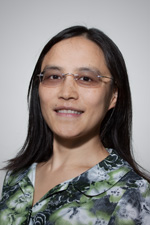
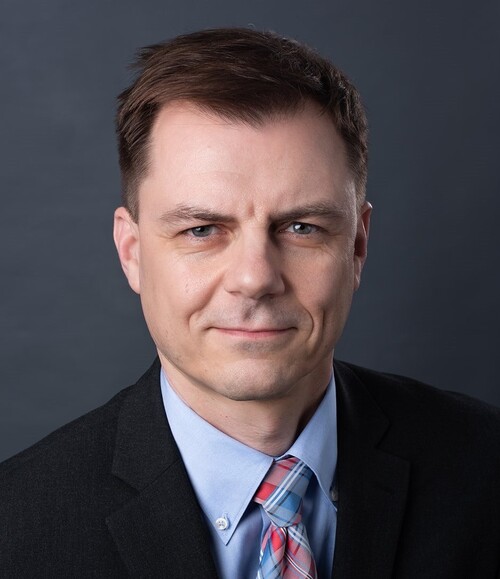
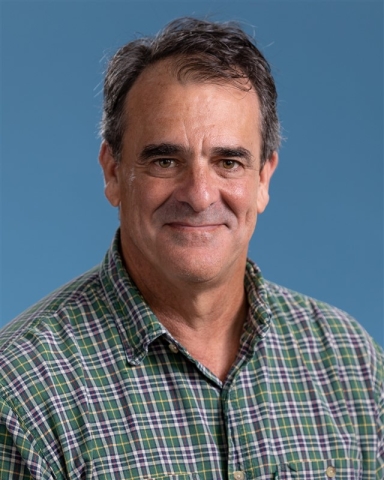
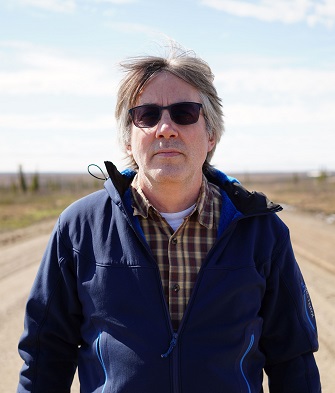
Lisa Elviri is an Associate Professor in Analytical Chemistry at the Department of Pharmacy, University of Parma, Faculty of Sciences. She holds a PhD in Chemical Sciences (Analytical Chemistry) from the University of Parma and has been a tenured researcher since 2004. Education: PhD in Chemical Sciences (Analytical Chemistry, University of Parma); Laurea in Chemistry (University of Parma). Her research spans analytical chemistry , mass spectrometry , biomaterials , 3D printing , and clinical diagnostics . She focuses on developing LC-MS and immunoenzymatic methods, validating techniques for pharmaceutical analysis, and designing chitosan-based scaffolds for tissue regeneration. Recent publications highlight work on Alzheimer’s disease (PCSK9 inhibition, APOE4 genotype studies), 3D-printed medical devices , and biorefinery quality monitoring using spectroscopy. Her teaching includes Analytical Chemistry for 5-year Master’s programs in Pharmacy and Pharmaceutical Chemistry. She has authored 75 international publications, 140 conference communications, and holds an H-index of 26 (Google Scholar). Her office is located at the Science and Technology Campus, Parma.
Jun Wu is a Professor in the Department of Public Health at the University of California, Irvine. Her research focuses on air pollution exposure assessment and air pollution epidemiology, particularly in reproductive health, aiming to improve exposure characterization and assess health impacts. Ph.D. in Environmental Health from University of California, Los Angeles Her exposure assessment work employs geographical information systems (GIS), atmospheric dispersion models, and statistical techniques to quantify population and individual air pollution exposures, including studies on vehicle-related pollution, naphthalene, wildfires, and traffic pollutants. Her epidemiology research links air pollution to adverse pregnancy outcomes like preeclampsia, preterm births, and early pregnancy loss. The Google Scholar articles reflect interdisciplinary work in photonics, semiconductor devices, and optical systems, featuring advancements in microwave photonic oscillators, photodiodes, and color-tunable organic light-emitting diodes. These studies emphasize low phase noise, thermal dissipation, and high-efficiency device design across microwave and optoelectronic domains. Health Effect Institute Walter A. Rosenblith New Investigator Award, 2010 International Society of Exposure Analysis Young Investigator Award, 2005 Samuel J. Tibbitts Fellowship, School of Public Health, UCLA, 2003 Chancellor’s Fellowship, UCLA, 2000, 2003 PWEA Student Research Award, Pennsylvania Water Environment Association, 2000 Jun Wu's laboratory (https://drwulab.net/) develops exposure models and investigates environmental health impacts, combining GIS with atmospheric modeling. Her research bridges environmental science and public health, targeting pollution-related health risks.
Dr. Chen Xihan is an Associate Professor in the Department of Mechanical and Energy Engineering at the Southern University of Science and Technology (SUSTech) . Since 2021, he has led a vibrant research group focused on ultrafast spectroscopy , solar energy conversion , and photocatalytic mechanisms . He is a principal investigator on the National Youth Project and a Shenzhen Overseas High-Level Talent (Category B). Education: Ph.D. in Physical Chemistry, University of California, Berkeley (2012–2017) B.S. in Chemistry, Hong Kong University of Science and Technology (2008–2012) Research Focus: Dr. Chen’s research integrates advanced ultrafast transient spectroscopy to probe and control energy-conversion processes at material interfaces. His group investigates ultrafast interface carrier dynamics , quantum spin control , and photocatalytic kinetics in perovskites, 2D materials, and hybrid systems. These studies provide real-time insights into surface recombination, charge separation, and reaction intermediates—knowledge critical for designing next-generation solar cells, solar-fuel devices, and spin-optoelectronic components. Publication Impact & Trends: With more than 60 peer-reviewed papers in journals such as Science , Nature Catalysis , Nature Communications , Energy & Environmental Science , and Journal of the American Chemical Society , Dr. Chen’s work has accumulated over 6,000 citations (h-index 36). Recent articles (2023–2024) emphasize hot-carrier extraction , spin-polarized lifetime tuning , and interface passivation strategies that push perovskite solar-cell efficiencies beyond 27 % and enable stable, metal-free photocatalytic fuel production. Scientific Awards: Shenzhen Overseas High-Level Talent (Category B), 2021 NREL Postdoc Publication Award, 2020 NREL Director’s Award, 2019 Overseas High-Caliber Personnel (Level B), Shenzhen, 2018 Funding & Team Leadership: Dr. Chen is PI on the National Youth Project and multiple provincial grants. His group presently includes postdoctoral researchers, PhD and MSc students, and visiting scholars working on three synergistic thrusts: (1) in-situ ultrafast reflectance spectroscopy of solar-cell surfaces, (2) transient spin-polarization studies of low-dimensional perovskites, and (3) time-resolved mechanistic studies of photocatalytic water splitting and CO₂ reduction. The team operates state-of-the-art femtosecond pump-probe and transient absorption laboratories at SUSTech’s Engineering Building North 312 .
Dr. Volodymyr V. Tarabara is a Professor in the Department of Civil and Environmental Engineering at Michigan State University (MSU) and Director of the Center for European and Eurasian Studies. He holds a PhD and MS in Environmental Engineering from Rice University (2004, 2001) and a Doctor honoris causa from the Agricultural University of Georgia (2019). His research focuses on separation processes, particularly membrane filtration technologies and virus removal mechanisms, with applications in water treatment, industrial pollution control, and biosafety monitoring. PhD, Environmental Engineering, Rice University (2004) MS, Environmental Engineering, Rice University (2001) Diploma, Solid State Physics, National Research Nuclear University, MEPhI, Moscow (1997) His work intersects colloid and interface science with separation science , emphasizing: Membrane fouling and regeneration strategies Virus adhesion and transport across porous media Photocatalytic membrane development for pathogen inactivation Oil-water emulsion separation mechanisms Low-cost water treatment with natural coagulants With over 100 publications and editorial roles as Chief Editor of the Journal of Environmental Engineering (ASCE) and Editor of Separation and Purification Technology (Elsevier), his research spans international collaborations through NSF PIRE, Fulbright, and EU projects. Recent articles highlight advancements in: Mesoscale membrane morphology optimization using CFD Hydrophobic interaction studies in virus removal Photocatalytic membrane fouling mitigation Quantitative analysis of fomite-mediated viral transmission Industrial applications of oil-water separation Environmental fate of emerging contaminants Scientific honors include: Fulbright Global Scholar (2021/22) ASCE Fellow (2023) Doctor honoris causa (2019) Paul L. Busch award (2011) He directs international research projects and serves as advisor to multiple research groups, including NSF REU and IRES programs.
Dr. Ali Nabavi is a Reader in Energy Systems and Head of the Centre for Energy Decarbonisation and Recovery at Cranfield University . He serves as Director of the Advanced Chemical Engineering Course and has made significant contributions to low-carbon energy systems through experimental and computational research. PhD in Energy (Cranfield, 2016) MSc in Thermal Power and Fluid Engineering (Manchester, 2012) Research Areas: Carbon capture, utilization, and storage (CCUS) Reversible solid oxide fuel cells Hydrogen purification technologies Process intensification for energy efficiency Microfluidic particle formulation Hydrogen social acceptance modeling Recent Publications: Focus on sorption-enhanced reforming, hydrogen social dynamics, and catalyst development for gas processing. His work spans experimental validation and computational modeling across multiple energy systems. Scientific Contributions: Development of novel adsorbents for CO2 capture and optimization of solid oxide fuel cell integration in transportation applications. Facilities: Utilizes Cranfield's High-Performance Computing (HPC) systems and advanced material synthesis labs with pilot-scale reactor infrastructure.
Prof. Dr. Karl-Josef Dietz holds a Professorial Chair (C4) in Biochemistry and Physiology of Plants at the Faculty of Biology, Bielefeld University since 1997. He is Head of the working group 'Biochemistry and Physiology of Plants' at the Center for Biotechnology (CeBiTec). His academic career spans prestigious institutions including Julius-Maximilians-Universität Würzburg (where he completed his PhD and Habilitation), Harvard University (postdoc position), and numerous international research stays in France, Japan, and the USA. Prof. Dietz's research focuses on plant stress responses, redox regulation, and photosynthesis. His work explores how plants acclimate to multiple environmental stresses through molecular signal integration, with particular emphasis on reactive oxygen species (ROS) signaling, thiol peroxidases, and oxylipin pathways. His laboratory investigates the mechanisms of redox regulation in chloroplasts and mitochondria, stress sensing, and plant defense responses against pathogens and abiotic challenges. His recent publications reveal a strong focus on redox biology, stress acclimatization mechanisms, and the role of peroxiredoxins in plant stress responses. His work spans both fundamental biochemical investigations and applied research in plant protection and stress tolerance. Scientific Awards and Recognition: Science Prize of the University Foundation Würzburg (1985) Gay-Lussac-Humboldt Prize (2012) Prof. Dietz has served in numerous leadership roles including Dean of the Faculty of Biology (2004-2006), President of the German Botanical Society (2012), and as a member of the Science Board of the German Research Foundation (DFG). He serves on the editorial boards of several prestigious journals including Journal of Experimental Botany, Physiologia Plantarum, and Plant Physiology. His professional activities demonstrate extensive involvement in national and international scientific communities, including the German Society of Botany, the American Society of Plant Biologists, and the Federation of European Societies of Plant Biology.
Franco Mazzei is a Full Professor at the Department of Chemistry and Pharmacy Technology , Sapienza University of Rome . He leads the Biosensors Laboratory and specializes in electrochemical and optical biosensors for clinical, food, and environmental applications. Research Interests Development of electrochemical biosensors using voltammetric, amperometric, and impedimetric techniques Optical biosensors based on surface plasmon resonance (SPR) and Raman spectroscopy Application of supramolecular chemistry for protein immobilization Study of nanostructured materials and conductive polymers in sensor development Collaborative projects with the Ministry of Health and EU initiatives (6th Framework Programme, Eurostars) Notable Publications focus on: SPR immunosensors for doping agent detection Gold nanoparticle-based platforms for biofuel cells and H2O2 sensing Supramolecular strategies for antibody immobilization and mycotoxin detection Advanced materials like lignin nanoparticles and polythiophene composites Environmental applications including PFAS monitoring and COD analysis Laboratory Activities include the use of: PGSTAT204 Electrochemical Interface for sensor development Spectroelectrochemical Raman for surface analysis Surface Plasmon Resonance (SPR) systems for biomolecular interactions QCM (Quartz Crystal Microbalance) for immunosensor validation
Joshua Rosenthal is a Senior Scientist at the Marine Biological Laboratory (MBL), affiliated with the University of Chicago. His research focuses on RNA editing, molecular biology, and neurobiology, particularly processes that modify genetic information in nucleic acids. He leads the Rosenthal Lab and is at the forefront of developing genetically tractable cephalopod models using CRISPR technology. Educational Background Biology B.A., Haverford College Biology Ph.D., Stanford University Dr. Rosenthal's work centers on A-to-I RNA editing via ADAR enzymes, a mechanism that allows precise single-base modifications in mRNA. His lab discovered unprecedented levels of mRNA recoding in cephalopods, exploring how environmental cues influence editing and how this could be harnessed for human therapeutics. The Rosenthal Lab develops site-directed RNA editing platforms to correct genetic mutations in diseases like cystic fibrosis, chronic pain, and cancer. They co-founded Korro Bio, a Cambridge MA-based biotech company commercializing RNA editing therapies. The lab also investigates structural and functional connectivity of squid chromatophores, revealing novel chromogenic behaviors in open-ocean species. Scientific contributions include 11 recent publications on RNA editing mechanisms, cephalopod genetics, and therapeutic applications. Research spans transcriptome plasticity, enzyme targeting, and marine organism adaptation.
Juan Pablo Trelles is a Professor in the Department of Mechanical and Industrial Engineering at the Francis College of Engineering, University of Massachusetts Lowell. He serves as the Director of the Graduate Program in Energy Engineering and leads the Re-Engineered Energy Laboratory (REng|Lab), which focuses on developing renewable and sustainable energy solutions through fundamental and applied research. Dr. Trelles earned his educational credentials from prestigious institutions: a Ph.D. in Mechanical Engineering from the University of Minnesota (2007), an M.S. in Energy Engineering from the University of Massachusetts Lowell (2003), and a B.S. in Mechanical Engineering from Universidad Nacional de Ingeniería in Lima, Peru (2001). Before joining UMass Lowell in 2012, he worked as a Senior Software Engineer at Intel Corporation in Hillsboro, Oregon. His research focuses on devising concepts, methods, and devices for the direct use of solar energy and electrical energy in industrial processes, ranging from the synthesis of high-value chemicals and materials to the modification of materials and surfaces. A fundamental aspect of Trelles' research is the combination of experimental and computational approaches to achieve impactful understanding. His group develops strategies for solving transport problems at the core of most energy systems, which typically involve multi-scale and multi-physics phenomena. These methods have been applied to analyze diverse plasma flows, thermal systems, radiation transport, and multi-phase problems. Dr. Trelles' recent publications demonstrate a strong focus on plasma-based energy conversion technologies, particularly for CO 2 conversion, hydrogen production, and ammonia synthesis. His work bridges computational modeling with experimental validation, emphasizing sustainable chemical synthesis using renewable energy sources. Key research themes include solar-plasma reactors, non-thermal plasma applications, computational fluid dynamics of plasma systems, and waste-to-energy conversion processes. Scientific Awards Early Career Research Award (2017) - U.S. Department of Energy (DOE), Office of Science CAREER Award (2015) - U.S. National Science Foundation (NSF) Logic Technology Development Division Award (2011) - Technology Manufacturing Group, Intel Corporation Dr. Trelles has successfully advised numerous graduate students, with 11 PhD graduates and 3 Master's graduates to date, and currently mentors 4 PhD students. His laboratory, the Re-Engineered Energy Laboratory (REng|Lab), investigates processes based on concentrated solar energy and plasma technologies for sustainable chemical synthesis. Current projects include nonthermal plasma hydrogen production from polymeric waste, plasma catalysis for ammonia synthesis, solar-enhanced plasma-chemical synthesis, and modeling of atmospheric pressure columnar discharges.
Seda Keskin Avcı serves as Professor in the Chemical and Biological Engineering Department at Koç University, Istanbul, directing the Nanomaterials, Energy, and Molecular Modeling Research Group (NEMO). Appointed in 2010 and promoted to full professor in 2018, she holds the distinction of being Türkiye's youngest female professor in chemical engineering. Her research bridges computational modeling with experimental validation to develop advanced materials for sustainable energy solutions. Education: PhD, Georgia Institute of Technology (2009) MSc, Boğaziçi University (2006) BS, Boğaziçi University (2004) Professor Keskin's research focuses on AI-accelerated design of metal-organic frameworks (MOFs) and covalent organic frameworks (COFs) for gas separation and carbon capture. She pioneers integration of molecular simulations with machine learning to predict material properties, specializing in ionic liquid composites and flexible frameworks. Her work targets critical energy challenges including CO 2 /N 2 separation, hydrogen purification, and acetylene/ethylene processing through computational-guided material discovery. Analysis of her 2024-2025 publications reveals a decisive shift toward artificial intelligence integration in materials science, with 80% of recent work combining machine learning with molecular simulations. Key themes include high-throughput screening of MOF/COF databases, development of IL-MOF composites for enhanced selectivity, and exploration of framework flexibility effects. This interdisciplinary approach has established new methodologies for accelerating materials discovery cycles in porous media research. Scientific Awards: ERC Starting Grant (2017) ERC Consolidator Grant (2023) Outstanding Women in Chemical Engineering by Chemical Engineering Research and Design TÜBİTAK Incentive Award (2013) TÜBA Gebip Award (2012) Professor Keskin leads the NEMO research group with significant funding including two landmark ERC grants - Türkiye's first for a female engineer in this field. Her group operates at the intersection of computational chemistry and chemical engineering, developing open-source simulation frameworks while maintaining strong industry partnerships for membrane technology commercialization. Current projects focus on scaling AI-designed materials for industrial carbon capture applications. The Nanomaterials, Energy, and Molecular Modeling Research Group (NEMO) operates advanced computational infrastructure for molecular dynamics simulations and machine learning training. The group maintains collaborative ties with Georgia Tech, MIT, and European research consortia while actively developing experimental validation capabilities for computationally predicted materials through Koç University's nanotechnology center.
Charles T. Anderson is a Professor in the Department of Biology at Penn State University and a member of the Institute of Energy and the Environment (IEE). With an h-index of 37 and over 4,580 citations from 112 research outputs, his work has made significant contributions to plant cell biology and related fields. Dr. Anderson's educational background is not explicitly detailed in the provided information, but his extensive publication record spanning from 2003 to present demonstrates deep expertise in plant cell wall biology and related areas. Dr. Anderson's research focuses on plant cell wall structure and function, with particular emphasis on cellulose, pectin, and other polysaccharides in model systems like Arabidopsis thaliana. His work bridges molecular biology, biomechanics, and plant physiology to understand how cell walls contribute to plant growth, development, and environmental responses. Key research areas include stomatal dynamics, cell wall integrity responses, and the biomechanical properties of plant cells. His research has important implications for understanding plant responses to environmental stress and for applications in bioenergy and sustainable agriculture. Cell wall structure and function in plants Biomechanics of plant cell growth Stomatal guard cell physiology Cellulose and polysaccharide biosynthesis Plant responses to environmental stress Mechanisms of cell wall integrity maintenance Analysis of Dr. Anderson's recent publications reveals a strong focus on plant cell wall architecture, with particular attention to mechanical properties, structural components like cellulose and pectin, and the dynamics of stomatal guard cells. His work spans fundamental molecular mechanisms to broader applications in agriculture and climate resilience, with increasing emphasis on grass species and crop plants in recent years. Scientific Recognition With 112 research outputs and significant citation impact (h-index of 37), Dr. Anderson's work is widely recognized in the plant science community. His research has been featured in numerous high-impact journals and has attracted attention from news outlets, social media, and scholarly platforms. His work has been picked up by 38 news outlets, blogged about 8 times, referenced in Wikipedia pages, and discussed across various social media platforms including X (formerly Twitter) and Bluesky. Dr. Anderson serves as Principal Investigator on multiple active NSF-funded research projects, demonstrating leadership in plant cell biology research. He has also contributed to community resources through the acquisition of advanced microscopy equipment shared across the Penn State research community. Research Infrastructure Dr. Anderson plays a key role in maintaining and developing research infrastructure at Penn State, particularly in advanced microscopy capabilities. His successful acquisition of a Nikon SIM & STORM capable super-resolution fluorescent microscope has enhanced imaging capabilities for the broader research community.
Yoichi Nakao is a Professor at the School of Advanced Science and Engineering, Faculty of Science and Engineering, Waseda University, specializing in natural products chemistry, chemical biology, and functional food chemistry. His research focuses on marine natural products, stem cell differentiation, and epigenetics, with significant contributions to understanding how natural compounds affect cellular processes. Dr. Nakao earned his Doctor of Agriculture from the University of Tokyo. His educational background includes undergraduate, master's, and doctoral studies all completed at the University of Tokyo between 1985 and 1994, followed by postdoctoral research at the University of Hawai'i Department of Chemistry from 1994-1996. His research spans multiple interdisciplinary fields with a particular emphasis on identifying bioactive compounds from natural sources. Nakao's work explores how marine organisms and traditional food sources produce compounds that influence stem cell differentiation, particularly neural stem cells into astrocytes, and how these processes relate to neurodegenerative diseases and depression. His laboratory investigates epigenetic modifications induced by environmental chemicals and natural products, with implications for developmental toxicology and disease prevention. A significant portion of his recent work focuses on sustainable applications, including serum-free cell culture systems using algal extracts for cultured meat production and regenerative medicine. Analysis of Nakao's recent publications reveals a strong focus on marine natural products chemistry, with numerous discoveries of novel compounds from sponges, cyanobacteria, and other marine organisms. His research increasingly integrates chemical biology approaches with stem cell technology, particularly using induced pluripotent stem cells to study epigenetic changes. There's also a growing emphasis on sustainable biotechnology applications, especially in developing alternatives to animal serum for cell culture, which has significant implications for cultured meat production and regenerative medicine. Dr. Nakao serves in various professional capacities, including as a committee member for the Natural Products Discussion Group (2011-present), the Japanese Society of Chemical Biology (2010-present), and the Chemical Ecology Research Group (2007-present). He is an active member of numerous professional societies including the American Chemical Society, Japanese Bioinformatics Society, and Japanese Society of Chemistry. His laboratory maintains active collaborations across multiple disciplines, working with researchers in microbiology, parasitology, and biomedical engineering. Current research directions include developing chemical probes for target identification, studying microbial interactions in marine environments, and exploring the therapeutic potential of natural compounds for neurological disorders and infectious diseases.
Tina Kabelitz is a Researcher at the Leibniz-Institut für Agrartechnik und Bioökonomie e.V. (ATB) , leading the working group Infections and AMR in Farm Animals since September 2021. Her work integrates sensor technology, digitalization, and artificial intelligence to address antimicrobial resistance (AMR) in livestock systems through a One Health approach. Education : PhD in Epigenetics of Plants (University of Potsdam, 2011-2015) MSc Molecular and Cellular Biology (University of Potsdam, 2009-2011) BSc Molecular Biology/Physiology (University of Potsdam, 2006-2009) Her research focuses on antimicrobial resistance dynamics in livestock, particularly through environmental pathways in pig and poultry farming. She investigates resilient housing design for biosecurity and animal welfare, microbiome changes in manure storage , and machine learning-based mastitis risk assessment using multisensor systems. Her projects include LeibnizLabPP (pandemic preparedness), AirBarn (bioaerosol AMR transmission), ENVIRE (AMR control in chicken systems), and AMR-PIG (AMR spread mechanisms). Recent publications analyze AMR gene dynamics in manure systems (2025), machine learning applications for mastitis prediction (2025), and environmental impacts of dairy farming mitigation strategies (2024). Her work emphasizes systemic solutions like anaerobic digestion plants and slurry injection techniques to reduce emissions.
Professor T. Max Friesen is a leading Arctic archaeologist at the University of Toronto's Department of Anthropology , specializing in prehistoric hunter-gatherer societies, zooarchaeology, and climate change impacts on cultural heritage. His research spans 5,000 years of Arctic history, focusing on the Canadian Arctic regions of Nunavut and the Northwest Territories through collaborations with northern communities. Education: PhD in Archaeology from McGill University (1995) Research Interests include: Prehistoric Arctic migrations (Paleo-Inuit, Thule) and their technological adaptations Zooarchaeological analysis of animal bones from sites like Bell and Pembroke Climate change effects on archaeological preservation in permafrost regions Thule-Inuit cultural evolution and subsistence economies Community-based archaeology and heritage conservation His 15 most recent publications (2000-2018) demonstrate expertise in Arctic colonization dynamics, 3D documentation of endangered sites, and interdisciplinary studies of host-pathogen relationships through HBV subgenotype B5 research. Key projects include the Arctic CHAR initiative for climate change mitigation and comparative studies of Dorset vs. Thule hunting technologies. Scientific Contributions: Coined terminology standardization for Arctic archaeological traditions Developed frameworks for understanding Inuvialuit interregional interaction Advanced 3D recording methods for rapidly deteriorating Arctic sites Reconstructed millennial-scale caribou drive system evolution Advising: Actively mentors graduate students in Arctic archaeology with fieldwork opportunities in Nunavut and the Mackenzie Delta. Collaborates with Kitikmeot Heritage Society and international researchers on heritage preservation.
Dr. Fawad Ali is an Advance Queensland Industry Research Fellow at Griffith University's Centre for Planetary Health and Food Security, specializing in environmental sustainability and management. His research focuses on sustainable crop production systems with particular expertise in tropical fruits, rice, and coffee breeding. Education: PhD in Plant Breeding and Genetics, Southern Cross University (2016-2021) MSC (Hons) in Plant Breeding and Genetics, University of Agriculture Faisalabad (2010-2012) BSC (Hons) in Plant Breeding and Genetics, University of Agriculture Faisalabad (2006-2010) Dr. Ali's research spans plant breeding, quantitative genetics, and environmental remediation, with emphasis on developing sustainable agricultural systems that address food security and environmental challenges. His work integrates molecular biology, field trials, and computational approaches to improve crop resilience and quality. His publication record reveals strong focus areas in environmental remediation (particularly arsenic and heavy metal contamination), tropical fruit breeding (papaya and citrus), and stress-responsive crop improvement. Recent work demonstrates innovative approaches combining microbial solutions with plant systems for pollution mitigation. Awards & Recognition: Best Poster Award at TropAg 2019 Qualified Person (QP) certification for Intellectual Property and Plant Breeding Rights (IP Australia, 2022-2025) Dr. Ali actively supervises doctoral research, currently serving as Associate Supervisor for genomic platform development in Australian papaya. His funded research includes the $646,000 Advance Queensland Industry Research Fellowship project 'Invigorating the Coffee Industry in Tropical North Queensland' and the 'National Papaya Breeding and Evaluation Program' ($1.5M). He collaborates extensively with industry partners to translate research into practical agricultural solutions, particularly in specialty coffee and tropical fruit production. His laboratory work encompasses plant tissue culture, molecular biology techniques, field-based breeding trials, and environmental remediation experiments, with strong emphasis on industry-relevant outcomes and consumer preferences.