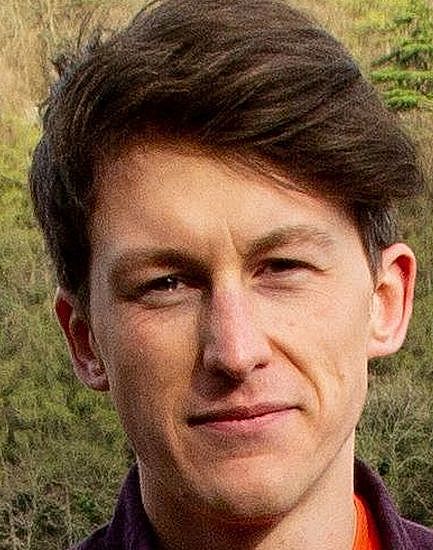
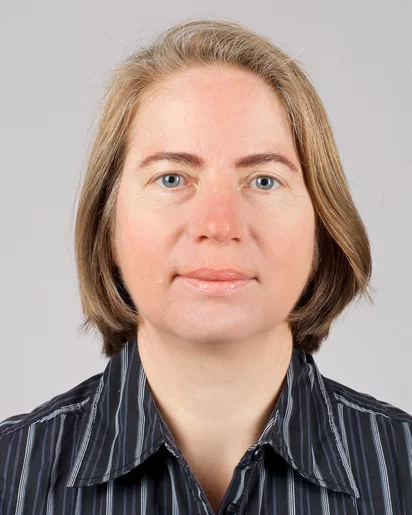
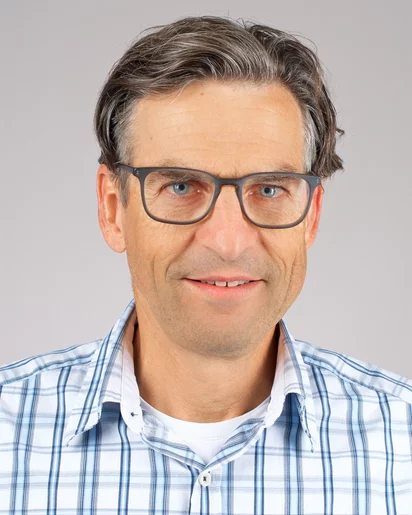
Alistair Morgan is a Researcher at the Department of Environmental Sciences , University of Basel , Switzerland, since November 2021. His research focuses on paleoclimatology and speleothem geochemistry , particularly in SW Asia , to understand historical climate variability and its societal impacts. PhD in Quaternary Geology (2021–present) MRes in Speleothem Isotope Geochemistry (2020–2021) MESci in Environmental Geoscience (2011–2015) His work integrates speleothem records , lake sediments , and historical data to reconstruct rainfall variability over decadal to multi-decadal scales, addressing water scarcity in the Middle East . Key projects involve Byzantine and Hittite climate interactions , Mid-Holocene hydroclimatic optima , and volcanic climate forcing . His publications span topics like Dansgaard-Oeschger cycles , stalagmite dating , and human-climate entanglements .
Chen Lingxin is a Professor and PhD supervisor at the Yantai Institute of Coastal Zone Research, Chinese Academy of Sciences, where he has been working since 2009 after serving as a Research Professor at Hanyang University's Department of Applied Chemistry from 2007-2009. His research focuses on developing innovative environmental analysis and monitoring technologies specifically for coastal zones. His primary research areas include: Bionano sensor techniques combining aptamers with nanomaterials for environmental pollutant analysis Chromatographic microanalysis techniques for trace analysis of environmental pollutants Opto-electronic monitoring techniques for oceanic water environment Pollutant identification, analysis, and assessment technology Ecological environment monitoring and surveillance technology Simulation of offshore environmental pollution processes and ecological restoration Professor Chen leads the innovative research team of 'Coastal Environmental Analysis, Monitoring and Ecological Restoration,' which strategically combines basic research with applied research and technology transformation across analytical chemistry, environmental science, marine chemistry, and ecological restoration engineering. His publications focus on marine environmental analysis and nanoanalysis methods, demonstrating expertise in developing new principles, methods, and instrument technologies for environmental monitoring of coastal pollutants including inorganic ions, persistent organic pollutants, and pathogens. He has successfully secured multiple national and ministry-level research projects spanning microfluidic chip SERS sensing technology, microbial metabolism of pollutants, and seawater nutrient monitoring systems. Professor Chen actively mentors graduate students in Environmental Engineering, Environmental Science, and Marine Chemistry, with a research group that welcomes students from chemistry, biology, and instrumentation backgrounds. His laboratory specializes in environmental microanalysis with capabilities in optical/electrochemical sensor development, microfluidic technologies, and marine pollution assessment for applications in coastal zone management.
Swiss Federal Institute of Technology in LausanneSwitzerland
Philippe Buffat is an Honorary Professor and Guest Professor at EPFL, affiliated with both the School of Basic Sciences (SB) and the Center for Microscopy and Imaging (CIME). He served as Director of CIME from 1971 to 2007. His research focuses on advanced materials characterization using techniques like HRTEM, HRSTEM, and EDS microanalysis. Key areas include nanoparticle structure, semiconductor interfaces, and phase transitions in perovskites. Buffat has contributed to studies on Ni-based superalloys, Ti-base coatings, and biominerals like hydroxyapatite. His work spans materials science, nanotechnology, and catalysis, with over 200 publications. Education: Graduate Engineer-Physicist from EPFL. Research interests include nanodiffraction, EDS microanalysis, and TEM image simulation. He has investigated topics such as CeO2/NLM precipitation, phase transitions, and ion irradiation effects on materials. Buffat’s expertise bridges microscopy techniques and interdisciplinary applications in energy, biomedicine, and environmental science.
Dr. Camelia Nicoleta Borca is a beamline scientist at the PHOENIX beamline of the Paul Scherrer Institute's Center for Photon Science and Laboratory for Femtochemistry. She obtained her B.Sc. in Physics (1994) from the University of Bucharest and her Ph.D. (2001) from the University of Nebraska – Lincoln. Research Focus: Atomistic mechanisms in energy/environmental materials, synchrotron-based trace element detection, X-ray emission spectroscopy, and microfluidic device development. Key Techniques: Soft X-ray surface-sensitive methods, micro-focused tender X-rays, direct laser writing, photolithography. Her recent publications highlight expertise in synchrotron X-ray microanalysis of environmental stability in uranium oxides, crystallization dynamics of amorphous calcium carbonate, alkali-silica reaction products, and battery material degradation mechanisms. She has pioneered microfluidic systems for in-situ X-ray absorption studies and detector innovations. Scientific Awards: American Vacuum Society Graduate Research Award (2000) Material Research Society Graduate Student Award (2001) University of Nebraska Graduate Research Assistant Award (2001) Technical Leadership: Beamline commissioning, user support, and data acquisition/processing at Swiss Light Source since 2006.
Prof. Dr. Markus Ammann is an Adjunct Professor at Paul Scherrer Institute (PSI) and ETH Zurich, serving as Group Head of the Multiphase Chemistry group since 2023 (formerly Surface Chemistry). His research focuses on gas-aerosol and gas-ice interactions in atmospheric chemistry, utilizing advanced techniques such as X-ray absorption and photoelectron spectroscopy to study condensed phase-air interfaces. He has been a Lecturer at ETH Zurich since 2008 and an Adjunct Professor since 2014. PhD in Physical Chemistry (ETH Zurich, 1992) Postdoc at University of Bern (1993) Staff Scientist at PSI (1996–present) Visiting Scientist at University of California, Irvine (2005) His recent work explores aerosol chemistry, radical reactions, and environmental impacts of multiphase processes, including iron-copper cycling, brown carbon effects, and solar geoengineering. Key themes include secondary organic aerosol formation, interfacial reactivity, and thermodynamic modeling. Articles highlight experimental and computational approaches to atmospheric chemistry, with a focus on reactive oxygen species and heterogeneous reactions. The Multiphase Chemistry group at PSI develops tools like the MIMiX microreactor system to simulate aerosol processing, investigating phenomena such as photolytic radical persistence, desorption kinetics, and chemical impacts of stratospheric particle injection. Their studies bridge laboratory experiments with real-world environmental implications, including climate intervention strategies and cryosphere reactivity.
Sayoni Sarkar is a Senior Researcher at the Department of Trace Element and Micro Analysis within the ETH Zürich School of Engineering . Her work focuses on advanced microanalytical techniques and trace element characterization, aligning with the department's expertise in analytical and environmental chemistry.