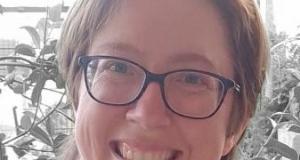
Ruba Salih is a Full Professor of Anthropology at the Department of the Arts, University of Bologna. She holds a Laurea in Political Science from the University of Bologna (1994) and a PhD in Social Anthropology from the University of Sussex (2000), supported by a Marie Curie grant. Previously, she served as Full Professor at SOAS, University of London (2010–2022), and as Senior Lecturer at the University of Exeter (2007–2010). Her work focuses on transnational migration, diasporas, colonialism, Palestinian refugee politics, gender, and trauma studies. Research highlights: aesthetics of waiting among Palestinian refugees, decolonial environmental justice, and intersectional solidarity movements Leadership roles: Board Member of the Arab Council for the Social Sciences (2015–2019), Executive Board member of Insaniyyat (Palestinian Anthropologists Association) Publications include Gender in Transnationalism and Musulmane Rivelate (winner of Premio Pozzale 2011). Recent work explores the Anthropocene through colonial ecological destruction in Palestine.
Caterina Stefania Romeo is an Associate Professor in the Department of Modern Literature and Culture at Sapienza University of Rome's Faculty of Letters and Philosophy. She teaches courses including Introduction to Literary Criticism, Gender, Race, and Mobilities: Narratives and Counternarratives, and Literature, Migration, Inequality. Her office is located on the 4th floor of the Faculty of Letters and Philosophy in Studio B. Dr. Romeo specializes in Postcolonial Studies, Gender Studies, Migration Studies, and Race and Ethnicity Studies, with particular focus on Italian literature and transnational perspectives. Her research explores the intersections of race, gender, and postcoloniality in contemporary Italian contexts, examining how these dynamics shape national identity, urban spaces, and literary production. She has made significant contributions to understanding postcolonial Italian literature, Black Italian experiences, and intersectional approaches to cultural studies. Her scholarly work demonstrates consistent engagement with contemporary issues in Italian society, particularly regarding migration, race relations, and gender dynamics. She has developed innovative frameworks for analyzing how postcolonial perspectives reshape understandings of Italian national identity and cultural production. Premio nazionale di divulgazione scientifica (2014) - finalista John Fante Prize (2009) for La pelle che separa di Kym Ragusa Acerbi Special Prize for Women's Writing (2008) for Vertigo di Louise DeSalvo American Italian Historical Association Award for best doctoral thesis in Italian American Studies (2000) Dr. Romeo has supervised numerous doctoral students including Christina Maraboutaki, Giulia Fabbri, Valentina Quaresima, Barbara De Vivo, Emily Marogi, and Karisma Wilson. She has received multiple research grants including Transliteratures Fellowship, Princeton-Pettoranello Foundation Dissertation Grants, and various post-doctoral fellowships. Her work demonstrates sustained engagement with both theoretical frameworks and practical applications in postcolonial, gender, and migration studies. She is actively involved in organizing academic events, conferences, and seminars focused on postcolonial studies, gender studies, and migration. Dr. Romeo has collaborated extensively with international scholars and institutions, reflecting her transnational approach to research and teaching.
Marco Letta is a Tenure-Track Assistant Professor at the Department of Social and Economic Sciences , Sapienza University of Rome. His research focuses on economic development , regional economics , policy evaluation , and applied econometrics , with a strong emphasis on climate change impacts, food security, and machine learning applications in economic policy. University: Sapienza University of Rome Department: Department of Social and Economic Sciences Email: marco.letta@uniroma1.it His recent work explores the climate migration nexus , household resilience , and policy targeting , often leveraging machine learning and empirical econometric methods . Publications span topics such as local inequalities during the COVID-19 crisis , temperature shocks in rural Tanzania , and machine learning applications in state aid regulation . Notable trends in his research include: Integration of machine learning with traditional econometric techniques Focus on climate resilience and migration patterns Analysis of policy impacts in developing economies Investigation of local mortality estimates during global crises Development of cross-country empirical frameworks Current projects include assessing agrifood system vulnerabilities and refining counterfactual policy evaluation methodologies.
Virginia Pellerey is a Lecturer and Ph.D. candidate in Urban and Regional Development at the Politecnico di Torino, affiliated with the Interuniversity Department of Regional and Urban Studies and Planning (DIST). She collaborates on teaching activities in engineering management and urban planning programs, including courses on sustainable communities and decision-making approaches for development goals. Her research focuses on climate resilience, environmental justice, and nature-based solutions in urban contexts. Pellerey explores how inclusive climate actions can equitably address urban environmental challenges, emphasizing participatory approaches and policy integration. She has published on topics such as green space equity in Amsterdam, frameworks for evaluating climate interventions, and barriers to scaling urban greening initiatives. Pellerey’s academic journey includes collaborations with institutions like the University of Amsterdam, evidenced by co-authored works on urban ecology and justice. Her advisory board includes Professors Sara Torabi Moghadam, Giancarlo Cotella, and Patrizia Lombardi.
Benedetta Giovanola is a Full Professor at the University of Macerata (UniMC) in the Department of Political Sciences, Communication and International Relations. She holds the Jean Monnet Chair 'Ethics for Inclusive Digital Europe' (funded by the EU) and is a Visiting Professor at Tufts University, USA. She also serves as Adjunct Professor of 'Economic Philosophy and Business Ethics' at the Catholic University of Milan. Her roles include Director of the postgraduate course on 'Digital Ethics, Law, Technologies' and member of the executive board of the 'Cybersecurity, Cyber Risk and Data Protection' program, both jointly run with the Polytechnic University of Marche. Current roles: Jean Monnet Chair, Full Professor, Visiting Professor at Tufts, Adjunct Professor at Catholic University Milan. Leadership: Founder of GAIA (AI Ethics and Governance spin-off), Principal Investigator (PI) in EU-funded projects like EthicAI4CARE and REINITIALISE. Professional memberships: Member of the executive board of SIFM (Italian Association for Moral Philosophy), past Deputy Rector at UniMC (2016-2022). Research focuses on digital ethics, AI ethics, media ethics, public ethics, social and global justice. She leads projects such as ENDE (European Network on Digitalization and E-Governance) and publishes extensively on AI ethics in healthcare, cultural heritage, and business contexts. Her work emphasizes ethical frameworks for trustworthy AI and fairness in algorithmic systems. Awards and recognition include the Jean Monnet Chair, and her research has been featured in journals like AI & Society, Computer Vision and Image Understanding, and IEEE Transactions on Technology and Society. She also contributes to policy initiatives and ethical guidelines for emerging technologies.
Angelo Castaldo is an Associate Professor in Public Finance at the Faculty of Law, Sapienza University of Rome, with a Ph.D. in Law and Economics from the University of Siena and an M.Sc. in Economics from the University of York. He serves as Chair of the Graduate Program in European Studies (LM-90) and the Master in Competition and Regulation of Markets (CORE), while also holding roles at international institutions like Zhongnan University of Economics and Law in China. Education: Ph.D. in Law and Economics, University of Siena M.Sc. in Economics, University of York, UK Master in Law and Economics, University of Siena Research Focus: Public Finance Law and Economics Environmental Crime Analysis Occupational Safety and Health Competition Policy Technological Innovation Impact His recent publications analyze workplace accident determinants, environmental crime drivers, and taxation policies for sin goods, employing empirical methods across European and Italian contexts. Current research projects focus on technology's impact on occupational safety and public investment incentives for workplace health improvements. He actively participates in academic conferences and serves as co-managing editor for public finance working papers at Sapienza University of Rome.
Ida Zilio-Grandi is an Associate Professor in the Department of Asian and North African Studies at Ca' Foscari University of Venice, where she specializes in Arabic Language and Literature (SSD L/OR-12). She also holds teaching responsibilities in Islamic Thought and Theology (SSD L/OR-10) and has been actively involved in multiple interdisciplinary programs, including Master’s degrees in Interfaith Dialogue, Islamic Philosophy, and Mediterranean Studies. From 2019 to 2023, she served as Director of the Italian Cultural Institute in Abu Dhabi under the Ministry of Foreign Affairs, reflecting her deep engagement with cultural diplomacy. Education Graduated in Oriental Languages and Literatures (Arabic) from Ca' Foscari University of Venice. PhD in “Studies on the Middle East and the Maghreb from the founding of Islam to the Present day” at the University of Naples “L’Orientale”. Research Interests Her scholarly work centers on Quranic studies, Islamic ethics, and Arabic literature. She investigates religious figures in the Quran (e.g., Mary, Cain, Pharaoh, Jonah), Islamic moral concepts such as gratitude (šukr), patience (ṣabr), tolerance, and mercy, and the ethical dimensions of employment, speech, and hospitality. Her research draws on classical exegesis, adab literature, and contemporary Islamic thought, bridging historical analysis with modern applications. She also explores interfaith dialogue, particularly between Islam, Christianity, and Judaism, and cultural relations between the Islamic world and the West. Publication Trends Her recent publications (2020–2025) reflect a sustained focus on Islamic virtues, ethics, and Quranic interpretation. These include monographs on the moral life of Muslims, studies on Sufism in the UAE, Abraham’s legacy, and environmental ethics in Islam. Her work combines rigorous philological analysis with philosophical insight, often published in high-impact journals and academic volumes. Scientific Service and Recognition Member of the “Committee for Islam in Italy” at the Ministry of Interior (since 2015). Member of the Scientific Committee of the “Dialogue méditerranéen sur la modernité et le religieux” at Collège des Bernardins, Paris. Sits on the editorial boards of Annali di Ca’ Foscari , Islamo-Christiana , and L’opera Comune . Invited Researcher at the Pontificio Istituto di Studi Arabi e d’Islamistica (PISAI), Rome (since 2017). Advising, Grants, and Leadership She has coordinated several Master’s programs at Ca' Foscari, including the LM “Languages, Economies and Societies of Asia and Mediterranean Africa (LEISAAM)” and the international LM “MIM – Crossing the Mediterranean.” She is the Erasmus+ Coordinator for partnerships with the University of Jordan and Mohammed V University in Rabat. She led the research project The Languages of the Absolute (2011–2015), funded by Ca' Foscari University. Though no formal students are listed, her mentorship is evident through her academic leadership and editorial roles. Labs and Research Groups She is affiliated with several research centers, including the Ca' Foscari Center for Studies on Human Rights (CESTUDIR), the Center for Contemporary Middle East Studies (CEM), and the Religion, Law and Economy in the Mediterranean Area Center (REDESM). She is also a member of the Arab-Christian Research Group (GRAC) and the Lay Association for Biblical Culture “Biblia.”
Leonardo Becchetti is a Full Professor at the University of Rome Tor Vergata's Department of Economics and Finance, teaching Microeconomics and Topics in Applied Economics for the 2025-2026 academic year. Based in room P2 S55, he maintains an active research profile with email contact becchetti@economia.uniroma2.it. His research centers on Corporate Finance, Corporate Social Responsibility, and Happiness Economics, extending to Sustainable Development and Ecological Transition. He investigates how economic structures influence well-being through relational goods, generativity, and sustainability frameworks, employing game-theoretic and empirical methodologies to analyze climate action, AI impacts, and cooperative behavior. Analysis of his 2024-2025 publications reveals intensifying focus on ecological transition mechanisms, including renewable energy communities, circular economy governance, and sustainable investment models. His work increasingly integrates climate economics with behavioral insights, examining conditional cooperation in environmental actions and AI's disruption of labor markets. No scientific awards or student advising information is publicly documented. He participates in departmental research initiatives including DEF Seminars and ROBO Seminars, contributing to the university's research centers on economic and social impact.
Federico Demaria is a Researcher at the Environmental Science and Technology Institute, Universitat Autònoma de Barcelona. He focuses on ecological economics, political ecology, and environmental justice, advocating for socio-ecological transformation beyond economic growth. As a founding member of Research & Degrowth and a board member of the European Society for Ecological Economics, he bridges academic research with activism. His current role includes deputy coordination of the ERC-funded EnvJustice project, studying global environmental justice movements. Research emphasizes waste management conflicts, informal recyclers' roles, and degrowth alternatives. Key publications include Decrecimiento: Vocabulario para una nueva era and Pluriverse: A Post-Development Dictionary , translated into multiple languages. Research interests coalesce around dismantling growth-based paradigms, centering marginalized groups in environmental struggles, and redefining sustainability beyond capitalist modernity. His work critiques extractive systems while proposing pluriversal alternatives grounded in indigenous and communal knowledge. Key Projects: EnvJustice (ERC), Degrowth initiative Key Themes: Waste politics, environmental conflicts, post-development, degrowth economics
Camilla Crea is an Associate Professor at the University of Sannio in Italy, affiliated with the Department of Law, Economics, Management and Quantitative Methods (DEMM) . Her work focuses on Private Law , European Economic Law , and Trademarks , with interdisciplinary intersections in Human Rights and Environmental Law . Research interests span European Private Law , Comparative Jurisprudence , and Legal Semiotics . Recent publications analyze Digital Vulnerability in EU frameworks, Trademark Semantics in multicultural contexts, and Environmental Disasters like the Ilva case. She contributed to Antigone and Portia , examining mythological legal references, and co-edited The New Shapes of Digital Vulnerability (2024).
Maria Amalia Barchiesi is an Associate Professor in Spanish Language and Translation (L-LIN/07) at the University of Macerata's Department of Humanistic Studies. She holds a European Doctorate in Information and Communication Theory (2004) and has been a researcher and academic in Hispanic Studies since 1993. Her research focuses on semiotics of Hispanic American literature, cultural imaginaries, translation theory, and political discourse analysis. She has authored monographs like Borges y Cortázar lo fantástico bilingüe (2009) and edited volumes such as Arti in traduzione. Semiotica Linguistica Antropologia (2023). She currently leads research in transmediality in Panhispanic poetry within a PRIN 2022 project. Education: Licentiate in Letters with Linguistics focus from Buenos Aires University (Argentina) European Doctorate in Information and Communication Theory (University of Macerata) Research Interests: Semiotics of narrative and cultural imaginaries in Hispanic America Translation studies (interlinguistic and intersemiotic) Analysis of political, advertising, and museum discourses Landscape aesthetics in literature Postmodern rhetoric in Zapatista discourses Recent Scholarly Contributions: Her 2025 works explore Borges' translation paradoxes and Cortázar's museum imagery. Recent projects analyze transmedial poetic forms and post-dictatorship testimonial theatre. She contributes to editorial boards of Heteroglossia and Lingue e Linguaggi . Awards: National Scientific Qualification as Full Professor (2020) Academic Service: Director of Spanish Language and Civilization courses Member of PhD boards in Information Theory and Humanities Chair of the Language Mediation Program admissions committee
Corine Pelluchon is Professor of Philosophy at Gustave Eiffel University and statutory member of the Hannah Arendt Interdisciplinary Laboratory for Political Studies. Her research spans moral/political philosophy, medical ethics, environmental ethics, and animal ethics, with expertise in Leo Strauss and Emmanuel Levinas. She develops an 'ethics of virtue' addressing modern societal challenges in works like Éthique de la consideration . Her research focuses on overcoming anthropocentric paradigms through ecological ethics, animal rights advocacy, and rethinking Enlightenment principles. Publications consistently explore intersections of ethics, politics, and ecology, advocating for non-dualistic relationships between humans, animals, and nature. She received the 2020 Günther Anders Prize for Critical Thinking for her transformative contributions to philosophical discourse. At THE NEW INSTITUTE, she contributed to the 'Human Condition in the 21st Century' program, developing frameworks for future-oriented humanities.
Valentina Ciciliot is an Associate Professor in the Department of Humanities at Ca' Foscari University of Venice, specializing in the modern history of Catholicism, charismatic Christian movements, and Christianity's relationship with ecology. Her research focuses on topics such as the Catholic Charismatic Renewal, papal canonization policies (particularly under John Paul II), and the globalization of Catholicism. She holds a PhD from the University of Reading (UK), an MA from the University of Padua and Ca' Foscari, and a BA from Ca' Foscari University. Her teaching includes courses such as 'Religions and Ecology,' 'North American Christianity,' and 'Historical Writing Laboratory.' Ciciliot has held prestigious fellowships, including Marie Skłodowska-Curie Global Fellowships (2014/2015), and is affiliated with institutions like the Cushwa Center for the Study of American Catholicism. Her work bridges historical analysis with contemporary religious practices, emphasizing transnational dynamics and environmental ethics. Research contributions include monographs on female canonizations and edited volumes on the Catholic Charismatic Movement. She actively participates in international conferences and editorial boards, fostering dialogue between academia and religious institutions. Ciciliot’s research also explores intersections of Catholicism with social justice, environmental advocacy, and global religious pluralism.
Lucy Amelia Jane Bell is a Research Fellow at Sapienza University of Rome's Department of European, American and Intercultural Studies. Previously, she served as a Senior Lecturer in Hispanic Languages and Cultures at the University of Surrey (2013–2022). Her work bridges literary analysis, social theory, and activist practices. University of Cambridge BA (2008), MPhil (2009), PhD (2013) Her research focuses on Latin American literature and culture as instruments for social transformation. Key areas include cartonera publishing , prison reform , waste studies , and decolonial theory . She collaborates across disciplines with social anthropologists in marginalized communities. Recent publications explore intersections of necropolitics , environmental justice , and gender resistance , with a focus on Mexico and Brazil. Her 2022 book Taking Form, Making Worlds won the LASA Book Prize and pioneered trans-formal methodologies combining literary analysis with action research. Grants: AHRC, Global Challenges Research Fund, BBC Arts, Secretaría de la Cultura (Mexico) Projects: 'Cartonera Publishing' (2017–2020), 'Prisoner Publishing' (2020–2022)
Enrico Mariani is an Adjunct Professor at Ca' Foscari University of Venice , Department of Linguistics and Comparative Cultural Studies. His research focuses on American literature and cultural studies, with an emphasis on ethnic narratives, California studies, and postcolonial discourse. He holds a PhD in Foreign Languages and Cultures from Roma Tre University (2023) and has taught at institutions including Ca' Foscari, Roma Tre, and the University of Naples Federico II. Research Interests: American literature with a focus on immigrant narratives (John Fante, Carlos Bulosan, Louis Adamic) Cultural and environmental critiques of Los Angeles Postcolonial literature (e.g., Gina Apostol) Interdisciplinary approaches to literary modernism and multilingualism Publications: Recent works include a monograph on ethnic marginalization in 20th-century American narratives ( Americani di seconda classe , 2025), essays on water crises in Los Angeles, and analyses of Gina Apostol’s postcolonial metafiction. His research often intersects with environmental and social justice themes. Awards & Fellowships: Marianne DiPalermo McCauley Visiting Scholar Fellowship (2022) Recipient of the Alexandra De Luise Fellowship (2022) Grants & Projects: Principal Investigator on the EU-funded project "Literary California 1884-2022: Spaces of Exception, Spaces of Disaster" (PRIN-CUP 2023-2025). Teaching: Current courses include History of North American Culture and Cultures and Societies of the English Language at Ca' Foscari.