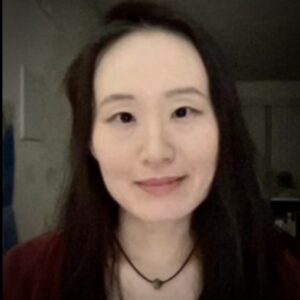
Prof. Ahmet Atay holds the rank of Professor of Communication Studies at the College of Wooster, serving as Program Chair of Global Media & Digital Studies and liaison to the Digital Visual Storytelling Pathway. His academic journey includes degrees from Marmara University (B.A., 1998), Ohio University (M.A., 2001), University of Northern Iowa (M.A., 2003), and Southern Illinois University (Ph.D., 2009). His research focuses on transnational communication, digital media's societal impact, cultural identity formation in global contexts, and queer diasporic experiences. He actively explores media representation of gender/sexuality, critical pedagogy, and autoethnography as research methodologies. Notable projects include editing works on millennial media ecology, intercultural communication pedagogy, and transnational queer cinema. Teaching responsibilities include courses on intercultural communication, mediated gender studies, and digital storytelling for social justice. He has held leadership roles in professional organizations like the National Communication Association and Central States Communication Association. Prof. Atay's recent publications emphasize digital ethnography, decolonizing communication studies, and queer pedagogy innovations. His work bridges theoretical frameworks with practical educational applications, addressing contemporary issues like diversity in academia and media's role in shaping cultural narratives.
Virginia Polytechnic Institute and State UniversityUnited States
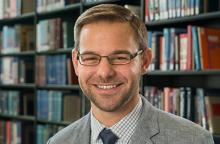
Justin Russell Greene serves as an Advanced Instructor in the Department of English within Virginia Tech's College of Liberal Arts and Human Sciences. With over 15 years of teaching experience across multiple institutions, he currently teaches courses in film, literature, and writing at Virginia Tech, where he has been employed since 2019. His academic journey spans various teaching positions at Virginia Tech, Hampden-Sydney College, Virginia Commonwealth University, and several community colleges. Greene earned his BA, MA, and PhD in English and Media, Art, and Text from Virginia Commonwealth University. His educational background reflects his interdisciplinary approach that bridges traditional literary studies with contemporary media and cultural analysis. He has also completed professional development certifications in Anti-Racist Teaching and Foundations of Online Teaching at Virginia Tech. His research focuses on the intersections of cinema, media, and cultural studies, with particular attention to authorship, celebrity, and gender performance. Greene examines how authors and celebrities construct their identities across various media platforms, exploring topics ranging from Quentin Tarantino's cinematic masculinity to Roxane Gay's digital presence. His work often analyzes the performative aspects of identity in contemporary culture, particularly through fashion, social media, and visual storytelling. Greene's scholarly output demonstrates a consistent focus on authorial identity construction across media platforms. His publications reveal a trajectory from examining literary authors' fashion choices to analyzing digital performances of identity on social media, and more recently to cinematic studies of directors like Quentin Tarantino and Jordan Peele. The evolution of his work reflects broader cultural shifts toward digital and visual media while maintaining a consistent theoretical framework centered on performance and identity construction. Joyce Gentry Smoot Award (2025) for Excellence in Teaching by an Instructor As an educator, Greene has served as a reader on graduate student capstones and has been actively involved in curriculum development and pedagogical innovation. He has participated in numerous professional development activities focused on writing instruction, anti-racist pedagogy, and the integration of AI in teaching. His teaching philosophy emphasizes building student confidence in writing abilities, recognizing diverse student backgrounds, and providing individualized feedback to help students develop their unique voices. Greene is currently working on projects examining Jordan Peele's Nope (2022) regarding point-of-view and gore, as well as speculative adaptations in contemporary US media. His research interests continue to evolve with cultural trends while maintaining his core focus on performance, identity, and media representation.
Anne-Lise François is an Associate Professor in the Departments of English and Comparative Literature at the University of California, Berkeley. She earned her PhD in Comparative Literature from Princeton University. Her work bridges 18th- and 19th-century British literature with contemporary environmental humanities, focusing on themes of ecological ethics, literary minimalism, and non-productive temporalities. Current research explores pastoral worldliness and commons-based economies in Romantic and modernist texts. Key scholarly contributions include her prize-winning book *Open Secrets: The Literature of Uncounted Experience* (2007), which examines 'affirmative reticence' in works by Jane Austen, Mme de Lafayette, and Emily Dickinson. Her recent projects address climate crisis narratives, food politics, and the intersection of aesthetic theory with ecological urgency. Teaching emphasizes transhistorical literary studies and environmental criticism Active in interdisciplinary collaborations across literature, philosophy, and environmental science Current book project: *Provident Improvisers: Parables of Subsistence from Wordsworth to Benjamin* Her writing synthesizes close textual analysis with broader socio-ecological frameworks, challenging Enlightenment models of productivity and advocating for 'recessive fulfillment' in both art and life.
Carl Wennerlind is a Professor of History at Barnard College, specializing in early modern European history with a focus on intellectual history and political economy. His research explores the historical development of monetary theory, credit systems, and the interplay between economic ideology and natural resource management. Specializes in 17th-18th century capitalist systems Examines money as a cultural and philosophical artifact Investigates Sweden's economic modernization efforts Currently researching Linnaean natural science link to capitalism His publications span journals like Journal of Political Economy , American Historical Review and edited volumes. Recent work examines material capitalism history (2024) and scarcity-climate crisis connections (2023). Key themes include financial revolution dynamics, economic semiotics, and natural knowledge's role in empire-building. Scientific awards include: Warren Samuels Prize (2012) History of Economics Society Best Article Prize (2006) European Society for the History of Economic Thought award (2006) Research funding includes NEH, ACLS, and Swedish foundations. Courses cover topics ranging from foundational European history surveys to specialized seminars on capitalism, money history, and political economy debates. Current projects include a monograph on Swedish political economy and a comprehensive history of capitalism discourse.
William O'Donohue, Ph.D., is a Professor in the Department of Psychology at the University of Nevada, Reno (UNR), within the College of Science. He holds advanced degrees in both clinical psychology (Ph.D., SUNY Stony Brook) and philosophy (M.A., Indiana University). His research focuses on forensic psychology, sexual assault, evidence-based practice, and the philosophy of psychology. He has directed a NIJ-funded clinic for 27 years, providing free services to victims of sexual abuse, and secured over $3 million in grants. He has authored 90 books and 300+ publications, serving on key committees like the APA's DSM revision panel. Education: Ph.D. in Psychology, SUNY Stony Brook (1986) M.S. in Psychology, SUNY Stony Brook (1982) B.S. in Psychology, University of Illinois (1979) M.A. in Philosophy, Indiana University (1988) Research Themes: His work critically examines forensic interviewing protocols, ideological bias in psychology, and the scientific validity of therapeutic practices. He advocates for procedural justice in psychological practice and challenges social justice movements' methodological rigor. Grants & Clinical Work: His clinic's NIJ grant supports free services for sexual abuse victims. He has consulted for the U.S. military and legal professionals on evidence-based practices. Labs/Teams: Operates a long-term clinical research program focused on forensic assessment and victim support through his UNR clinic infrastructure.
Angela Crow is an Associate Professor at James Madison University (JMU) in the School of Writing, Rhetoric and Technical Communication, where she has served since 2012. Her research bridges literacy studies, design, and urban mobility, focusing on how communities advocate for car-free infrastructure and equitable public spaces. She explores the role of digital communication in fostering feminist interventions, particularly around cycling advocacy and street design. Her work intersects with gender studies, urban studies, and rhetorical theory. Educated at the University of Kansas (Ph.D., 1997) and Point Loma College (B.A., 1987), she has authored books on writing programs and composition studies, including Aging Literacies (2006) and Field of Dreams (2002). Recent publications analyze surveillance, privacy in digital contexts, and transportation equity. Her research often highlights marginalized voices in shaping public discourse. Research Interests: Her current projects examine embodied literacies in mobility advocacy, social media practices of grassroots movements, and the rhetoric of urban infrastructure. She critiques car-centric planning through feminist and critical frameworks, emphasizing accessibility and safety for non-car users. Her work also addresses aging populations’ digital literacies and the intersection of technology with social inequality. Publications: Her articles span rhetorical analysis of social movements, educational assessment frameworks, and the sociotechnical dimensions of writing. Recent trends include collaborations on privacy in big data and participatory design for community mobility.
Carolyn Rouse is the Ritter Professor of Anthropology at Princeton University and an HMEI Associated Faculty member in the Grand Challenges Program. Her work interrogates the intersections of race, religion, healthcare disparities, and development through ethnographic and visual anthropological methods. Research Interests: Development, medical anthropology, visual anthropology, resistance, critical race theory, consciousness, North America, Ghana, environmental humanities, and environmental policy/ethics. Key Affiliations: Department of Anthropology, Princeton University; Environmental Humanities and Environmental Policy and Ethics through HMEI Grand Challenges Program. Her research critically examines how evidence shapes narratives of social inequality, particularly in healthcare access, racial disparities, and international development. She authored Engaged Surrender , Uncertain Suffering , and Televised Redemption , and created the Ethnographic Data Visualization Lab (VizE Lab) in 2016 to bridge biological and social scientific data. Recent publications explore necropolitics, liberal bias in the Trump era, and epistemological challenges in evidence-based policy. Her films include Chicks in White Satin (Academy Award-nominated), Purification to Prozac , and Listening as a Radical Act . Scientific Awards: 1995 American Anthropological Association Award for Excellence ( Tales from Arab Detroit ) Academy Award nomination for Chicks in White Satin
Cleophas Muneri is an Assistant Professor and Interim Co-Chair in the Department of Communication and Journalism at the University of New Mexico. He holds a Ph.D. from the University of New Mexico (2012). His research focuses on media’s role in shaping cultural identities and democracy, particularly in the Global South. Key areas include media democracy, critical cultural studies, and intercultural communication. He explores how digital media, civil society, and social movements contribute to democratization amid globalization challenges. Dr. Muneri’s work integrates decolonial theory and critical approaches to analyze media’s impact on cultural identities and democratization struggles in postcolonial contexts. His research addresses issues like media capture, news deserts, and disinformation, emphasizing solidarity-building in fragmented media ecosystems. He has co-authored a book on Journalism, Democracy, and Human Rights in Zimbabwe, and co-edited a volume on social media and justice. His teaching spans both graduate and undergraduate levels in media and critical cultural communication. His recent publications analyze social media’s dual role in advancing social justice and its pitfalls, digital journalism challenges in Zimbabwe, and intercultural pedagogy. He emphasizes critical reflexivity in education and interrogates whiteness discourses in classrooms. No scientific awards are explicitly mentioned in the text. Muneri’s advising and grants focus on fostering intercultural dialogue and media literacy. His research groups investigate media’s role in democratization, with ongoing projects on global north-south media dynamics and civil society mobilization. While no specific labs or teams are named, his work aligns with UNM’s interdisciplinary research in communication and cultural studies.
State University of New York at BuffaloUnited States
Elizabeth Mazzolini is an Associate Professor in the Department of English at the University at Buffalo, College of Arts and Sciences. Her interdisciplinary research spans Environmental Humanities, Science Studies, and Ecocriticism , focusing on the intersections of rhetoric, toxicity, and social justice. Interests: Environmental Rhetoric, Waste Studies, Media and the Environment, Class and Environmentalism Contact: mazz@buffalo.edu | Office: 515 Clemens Hall Her recent publications analyze rhetorical infrastructures in environmental crises, including works on Love Canal, Three Mile Island, and the metaphorization of toxicity. She is currently developing a book titled American Toxic , which examines the material and communicative dimensions of poisoning in late 20th-century U.S. history.
Phaedra C. Pezzullo is a Professor in the Department of Communication within the College of Communication, Media, Design & Information at the University of Colorado Boulder. She also holds affiliations as a Faculty Associate of Environmental Studies and Faculty Affiliate of both Ethnic Studies and Media Studies, reflecting her interdisciplinary approach to environmental communication and justice. Dr. Pezzullo's research focuses on environmental and climate justice studies, rhetorics of social movements, and environmental communication in public spheres. Her work bridges academic scholarship with public engagement, particularly through her concept of environmental communication as a care discipline rather than solely a crisis discipline. She examines how communities use storytelling, tours, and other communication practices to address environmental injustices. Analysis of her recent publications reveals a strong emphasis on plastic pollution, care ethics in environmental contexts, climate justice communication, and the intersection of environmental issues with carceral systems. Her work increasingly focuses on networked cultures of care and how communities build resilience through communication practices. Tarla Rai Peterson top Book Award in Environmental Communication Diamond Anniversary Book Award Book of the Year Award in Critical and Cultural Studies Jane Jacobs Book Award from the Urban Communication Foundation Dr. Pezzullo actively engages with numerous organizations including the American Bar Association, Colorado Department of Public Health and Environment, University Cooperation for Atmospheric Research, The Pulitzer Center, and the Sierra Club. She has been quoted in major media outlets including The Guardian, TIME, Los Angeles Times, Open Canada, and CNN Travel. She directs the Sustainability and Storytelling Lab and co-directs several initiatives including C3BC, the Just Transition Collaborative, Inside the Greenhouse, and the CU Boulder Graduate Certificate in Environmental Justice.
Dr. Marianne Mason is an Associate Professor of Translation/Interpreting Studies and Forensic Linguistics at James Madison University (JMU), where she also coordinates the SETI minor and contributes to Linguistics and Legal Studies programs. Holding a Ph.D. in Linguistics from the University of Georgia, along with a BBA in Statistics and an MA in Translation, her expertise spans interdisciplinary research areas including language and law, discourse analysis, and translation studies. She is a 2018–2019 ACLS Fellow for her project on linguistic analysis in the American justice system. Her research focuses on police-layperson interactions, Miranda rights invocation, and interpreter-mediated legal discourse. Notable works include Police Interrogation, Language, and the Law (Cambridge UP, 2024) and co-editing The Discourse of Police Interviews (U Chicago Press, 2020). She has provided expert testimony in criminal cases and serves on editorial boards for journals like Translation and Interpreting Studies . Educations: Ph.D. Linguistics, University of Georgia MA Translation, [institution not specified] BBA Production Management/Statistics, [institution not specified] Research Projects: ACLS-funded study on language in the American justice system Custodial interrogation reform analysis Affiliations: International Association for Forensic and Legal Linguistics National Association of Judiciary Interpreters & Translators (NAJIT)
W. Patrick Wade serves as an Assistant Professor in the Department of Communication at Georgia State University, where he contributes to undergraduate programs (B.A. Journalism, B.A. Speech) and graduate programs (M.A. Human Communication and Social Influence, M.A. Mass Communication, M.A. Digital Media Strategies, Ph.D. Public Communication). Education Ph.D., Northwestern University M.A., Northwestern University B.A., Emory University Research Interests Dr. Wade's scholarship centers on rhetorical studies of visual media, with concentrated expertise in 20th century war photojournalism, visual rhetoric, public memory, and the intersection of imagery with civic persuasion during societal conflicts. His work critically examines how photographic representations shape public understanding of military trauma, social justice movements, and environmental disasters. Publication Trends Spanning 2013-2024, his research demonstrates consistent engagement with visual communication in conflict zones—from Vietnam War narratives to contemporary racial justice protests and ecological crises. This trajectory reveals interdisciplinary connections between communication theory, historical analysis, and sociopolitical critique, particularly regarding how imagery mediates public discourse around militarism, race, and environmental trauma. Professional Recognition No scientific awards, fellowships, or major honors were documented in the source materials. Mentorship and Funding While the provided texts confirm his faculty role, specific details about graduate student advisement, research grants, or funded projects were not disclosed in the available documentation. Research Environment Information regarding dedicated laboratories, research centers, or collaborative teams affiliated with Dr. Wade's work was not specified in the extracted content.
Seo-Young Chu is an Associate Professor in the Department of English at Queens College, CUNY. Her work intersects Asian American studies, science fiction, trauma theory, and experimental writing, with a focus on the Korean DMZ and gendered violence. A Harvard PhD and Yale graduate, she teaches courses on global literatures, literary theory, and Asian American literature. Education: B.A. (Yale, 1999), M.A. (Stanford, 2001), Ph.D. (Harvard, 2007) Her research explores the DMZ as a geopolitical and aesthetic metaphor, linking it to diaspora, postmemory, and techno-orientalism. She has published extensively on trauma, disability, and social justice in venues like The Los Angeles Review of Books and ASAP/Journal . Her upcoming book A Refuge for Jae-in Doe and Other Fugues (Punctum Books, 2025/2026) expands these themes. Notable awards include the 2025 Innovator in Inclusive Practices Award and multiple PSC-CUNY grants. She is a vocal advocate in #MeToo academia, co-organizing events and influencing policy changes at institutions like Stanford and Harvard. Her teaching spans courses on science fiction, theory, and the Korean DMZ, emphasizing interdisciplinary and creative approaches.
Alan Zarychta is an Associate Professor at the University of Chicago Crown Family School of Social Work, Policy, and Practice , where he focuses on the politics of social services in Central and South America, particularly in public health policy and environmental policy . He investigates how institutional reforms can improve local service delivery and strengthen governance systems toward equity and sustainability . His work has been supported by grants from the National Science Foundation , Social Science Research Council , and Spencer Foundation . Education PhD in Political Science, University of Colorado Boulder MA in Public Policy, University of Colorado Boulder BS in Education and Social Policy, Northwestern University His research spans decentralization in public service delivery, street-level bureaucracy in developing countries, and local governance networks in Honduras. Recent projects include analyzing water scarcity and procedural justice in Honduras and studying policy implementation for refugee populations in Turkey. He has published extensively in journals like Journal of Public Administration Research and Theory , Policy Studies Journal , and Public Administration . Scientific Awards Junior Faculty Research Award (2020) Professor Zarychta collaborates with the Honduran Ministry of Health and organizations like Hombro a Hombro and COCEPRADII . He co-organized the Inaugural Latin American Conference on Subnational Governance (LACSUG) in 2025, highlighting his commitment to advancing governance research and international collaboration in public administration.
Amity Doolittle is a Senior Lecturer II at the Yale School of the Environment (YSE), Yale University. Her research focuses on property rights, natural resource management, and the social and political processes shaping environmental inequities. She employs interdisciplinary methods from anthropology, political science, environmental history, and political ecology. Notable projects include historical land-use studies in New Haven, Connecticut, and analyses of indigenous rights in global climate policy. She teaches graduate courses on qualitative research methods, environmental justice, and property rights, emphasizing active, collaborative learning. Doolittle holds a B.A. from Harvard University and M.E.S./Ph.D. from Yale University. Her office is located in Kroon Hall, Yale’s environmental campus. Education: B.A., Harvard University; M.E.S., Ph.D., Yale University Her research interests include legal pluralism, historical resource conflicts, and the intersection of colonial and postcolonial discourses. Current projects examine urban land-use changes in New Haven and the rhetorical strategies of indigenous leaders in climate negotiations. She advises 10–12 master’s students annually on thesis projects and placements worldwide. Teaching highlights include Qualitative Research Methods , Environmental Justice , and Political Ecology of Tropical Forests . Her courses integrate hands-on methods, such as analyzing oral histories and policy documents. Labs/Teams: Collaborates with the Urban Resources Initiative (URI) on greenspace stewardship and community-led projects.