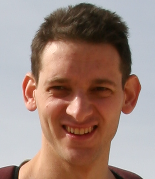
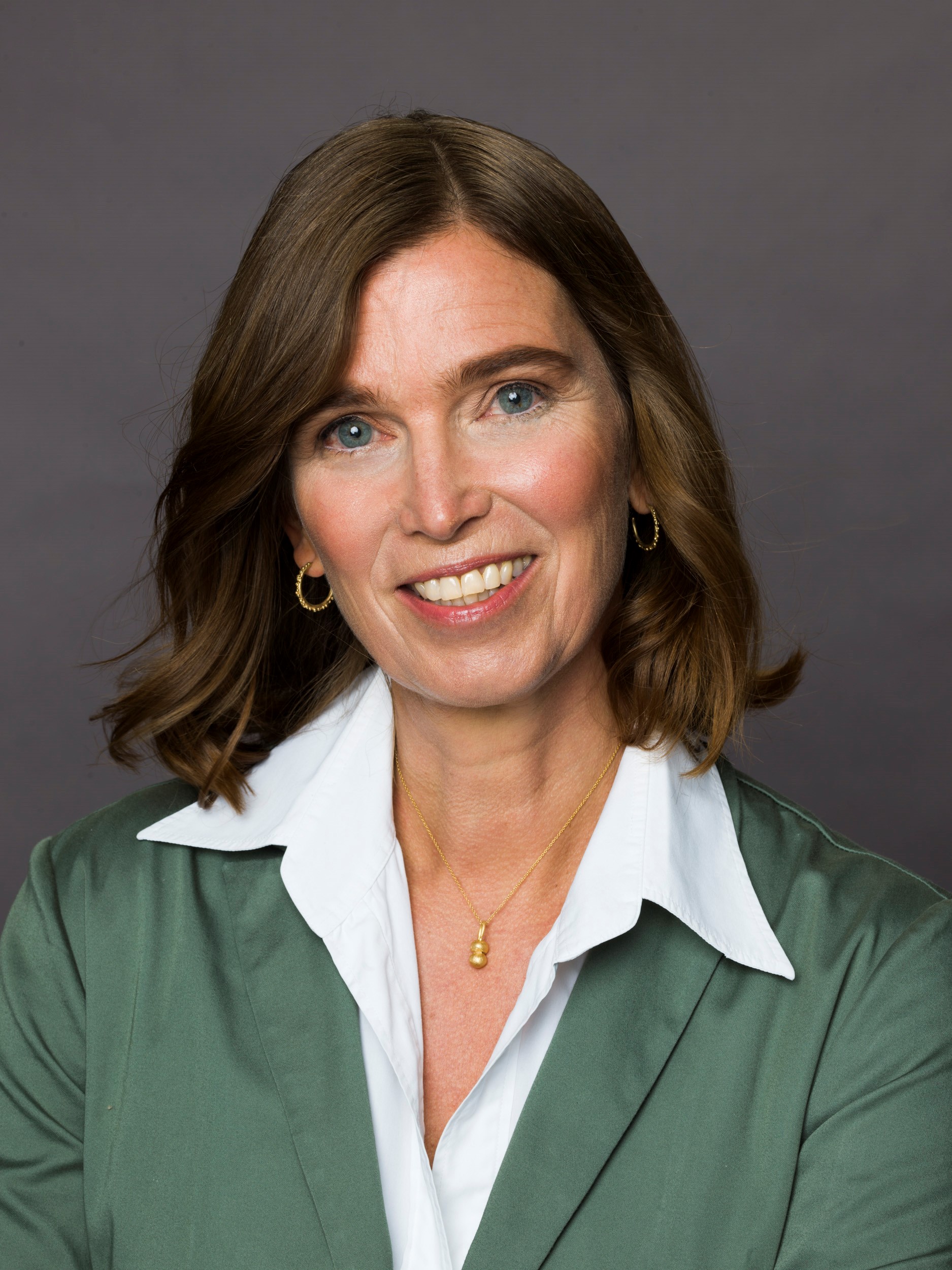
Professor Andrew Hudson-Smith is the Director of the Bartlett Centre for Advanced Spatial Analysis (CASA) at University College London (UCL), where he holds the title of Professor of Digital Urban Systems. He leads UCL's academic and applied research in smart cities, digital twins, and urban informatics. His roles include Editor-in-Chief of the Future Internet Journal and academic lead for the Smart Queen Elizabeth Park project. He contributes to strategic initiatives such as the Greater London Authority Smart London Board and EPSRC Digital Economy Programme Advisory Board. Education: PhD (2003), MSc (1996) from UCL; BSc in Geography from the University of Plymouth (1992). Research focuses on digital urban systems, IoT applications, sustainable urban planning, and cyberphysical systems. Notable projects include urban heat island monitoring, participatory planning platforms, and metaverse-driven urban design. His work bridges technology, art, and public engagement, exemplified by initiatives like Tales of Things and the Haggle-O-Tron. Recent publications emphasize digital twins, metaverse urbanism, and IoT integration in urban environments. Awards include a Fellowship of the Royal Society of Arts. His work addresses SDGs 3 (Good Health) and 11 (Sustainable Cities), with a focus on equitable smart city development and public space innovation.
Hyunghoon Cho is an Assistant Professor at Yale School of Medicine in the Department of Biomedical Informatics & Data Science, with a secondary appointment in the Department of Computer Science. He received his PhD in Electrical Engineering and Computer Science from MIT (2019) and MS/BS in Computer Science from Stanford University (2013). His research focuses on computational challenges in biomedical data privacy, single-cell genomics, and network biology. Assistant Professor (Primary): Biomedical Informatics & Data Science Assistant Professor (Secondary): Computer Science Appointments: Yale School of Medicine | Broad Institute (Schmidt Fellow) Research Themes: Privacy-Enhancing Technologies for genomic and health data Scalable AI/ML tools for omics data analysis Structured biological modeling for system-level discovery His work includes secure GWAS, transcriptomic privacy assessment, and sfkit - a federated genomic analysis toolkit. He received the NIH Director's Early Independence Award and leads NSF-funded projects on confidential genome analytics. Awards: NIH Director's Early Independence Award Lab Members: Haris Smajlović (Postdoc), Vincent Angelo (CBB MS), Denis Loginov (Senior Software Engineer), Lucy Zheng (CBB PhD)
Sanjay Purushotham is an Assistant Professor in the Department of Information Systems at the University of Maryland Baltimore County (UMBC), with a PhD in Electrical Engineering from the University of Southern California (USC) and a postdoctoral background in Computer Science at USC's Integrated Media Systems Center (IMSC). His research focuses on machine learning, data mining, and their applications in biomedical informatics, social network analysis, and multimedia data mining. Key contributions include survival analysis models using pseudo values and federated learning frameworks for healthcare data. He has received awards including the Best Paper Award at SIGSPATIAL 2014 and a Best Poster Runnerup at SCMLS 2016. Education: PhD in Electrical Engineering (USC), Postdoc in Computer Science (USC) His work spans interdisciplinary areas such as domain adaptation for remote sensing, thermal face translation, and interpretable neural networks for medical applications. Recent projects include federated survival analysis models and climate-informatics frameworks for cloud property retrieval. He teaches courses in artificial intelligence, healthcare informatics, and statistical learning at UMBC. Research highlights include developing MedFuseNet for multimodal medical question answering and VDAM for multi-sensor cloud data analysis. His work on fair survival analysis models addresses algorithmic bias in healthcare predictions. Current grants include a NSF CAREER award for trustworthy federated learning in computational healthcare.
Olga Saukh is an Associate Professor at the Institute of Technical Informatics, Graz University of Technology (TU Graz), and a Faculty member at the Complexity Science Hub Vienna (CSH). She leads the Embedded Learning and Sensing Systems research group, which operates across both institutions, focusing on the design and deployment of efficient AI-based systems on edge and mobile platforms. Her work bridges deep learning and embedded systems, with applications in environmental monitoring, precision agriculture, and digital health. Ph.D. in Computer Science, University of Bonn (2009) Habilitation in Embedded Systems, TU Graz (2020) Postdoctoral Training, ETH Zurich (2010–2016) B.Sc. in Applied Mathematics, Taras Shevchenko National University of Kyiv (2002) M.Sc. in Applied Computer Science, University of Freiburg (2004) Her research centers on efficient machine learning, particularly model optimization, neural network pruning, and contrastive learning for resource-constrained devices. She is deeply engaged in solving real-world challenges in IoT, sensor networks, and cyber-physical systems. Her work emphasizes data privacy, sustainability, and practical deployment of AI at the edge. The 15 most recent publications highlight a strong trend in efficient deep learning, including model compression, pruning, and transfer learning, applied to diverse domains such as environmental sensing (air quality, pollution tracking), digital agriculture (cattle farming), and embedded AI (sensor calibration, on-demand sensing). Her work frequently appears in top-tier venues like NeurIPS, ICLR, and IEEE/ACM IPSN, reflecting her leadership at the intersection of machine learning and embedded systems. Scientific awards include: CONET Ph.D. Academic Award (2010) Multiple Best Paper Awards at IEEE PerCom, ACM/IEEE IPSN, IEEE ICPADS, IEEE SECON, and UrbCom Spotlight and Oral presentations at ICML and CoLLAs workshops Ph.D. scholarship from IPVS, University of Stuttgart (2004–2005) Prizes in Ukrainian national mathematics competitions (1996–1998) Olga Saukh actively serves on program committees of leading international conferences in machine learning and embedded systems. She has advised multiple students and leads a collaborative research group spanning TU Graz and CSH Vienna. Her group develops practical AI systems for real-world deployment, with a focus on sustainability and privacy. She co-organizes the public EfficientML reading group and has secured recognition through numerous grants and awards. Her future work continues to explore the theoretical and practical challenges of deploying efficient, trustworthy AI in mobile and embedded environments. Her research group, Embedded Learning and Sensing Systems, operates jointly between TU Graz and CSH Vienna, fostering interdisciplinary collaboration across institutions. The team develops AI solutions for edge computing, sensor networks, and cyber-physical systems, with a strong emphasis on environmental sustainability and data privacy. Members work on joint challenges using advanced collaboration tools, reflecting the distributed nature of modern academic research.
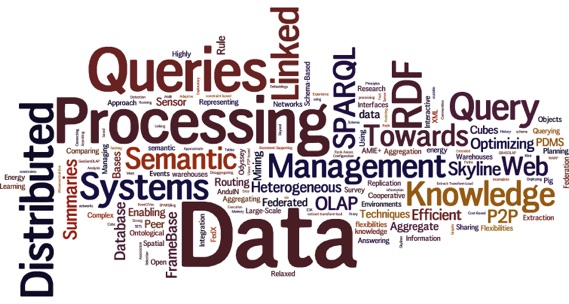
Katja Hose is a Full Professor of Data Management at TU Wien's DBAI research unit, heading the Data Management and Knowledge-Driven AI Lab. She previously held a Poul Due Jensen Foundation Professorship at Aalborg University. Her research focuses on data and knowledge engineering, including graph databases, knowledge graphs, querying, analytics, and machine learning, with interdisciplinary applications in bioscience, healthcare, and environmental assessment. Education: PhD in Computer Science (Ilmenau University of Technology, 2009), Postdoc at Max Planck Institute for Informatics (2009–2012). Academic roles include Program Co-Chair for ISWC 2024 and EDBT 2023, and editorial board membership at VLDBJ and TGDK. She leads projects like TARGET (health virtual twins) and ARMADA (data management). Research Interests: Knowledge Graphs, Semantic Web, Big Data, Machine Learning, Data Integration, and Provenance Systems. Key contributions include SHACL shape extraction, conversational data analytics, and environmental knowledge graphs. Awards include the 2025 Distinguished Meta-Reviewer Award and 2024 Manfred Paul Award. Advising and Grants: Supervised students including E. Pürmayr (Diploma Thesis 2025). Active in EU projects (TARGET, ARMADA) and grant coordination. Labs/Teams: DMKI Lab at TU Wien, collaborating with interdisciplinary teams in healthcare and environmental science.
Clio Andris is an Associate Professor at Georgia Tech, jointly appointed in the School of City and Regional Planning and the School of Interactive Computing. She directs the Friendly Cities Lab, focusing on mathematical models of social networks applied to urban planning, transportation, and geography. Her work integrates spatial analysis with visualization, emphasizing interdisciplinary collaboration. Education and Career: Andris earned a PhD in Urban Information Systems from MIT (2011), where she was an NDSEG Fellow. She held postdoctoral positions at Singapore-MIT Alliance for Research and Technology and the Santa Fe Institute. Prior to Georgia Tech, she was a faculty member at Penn State’s Department of Geography, affiliated with the GeoVISTA Center. Research Focus: Her research bridges social networks, geovisualization, and urban informatics. Key areas include spatial social network analysis, GIS applications for urban policy, and the impact of digital tools on civic engagement. She has developed innovative visual analytics tools like SNoMaN and ROBIN to democratize spatial data exploration. Awards: She received the NSF CAREER Award (2021) and NDSEG Fellowship (2011). Her lab is affiliated with the Center for Spatial Planning Analytics and Visualization (CSPAV) and the Information Visualization Lab. Labs and Collaborations: The Friendly Cities Lab focuses on socially just urban design through computational methods. Her work addresses issues like food security networks, pandemic impacts on biodiversity, and community mapping for activism. Grants and Outreach: Her NSF-funded projects emphasize public good applications, such as real-time pandemic risk communication and educational tools for migration data. She actively collaborates with non-profits and policymakers to translate research into actionable urban strategies.
Alena Thiel is an Associate Professor at the Centre of African Studies within the Faculty of Social Sciences at the University of Copenhagen. Her research examines digital technologies' impact on state formation and knowledge systems across Africa, with primary field sites in Ghana, Senegal, Botswana, and Kenya. Her core research areas include: State knowledge systems (biometric ID, census histories, DHIS2 health records) Digital governance (addressing systems, payment solutions, disaster risk datafication) African/feminist AI development and implementation Anthropology of the state through Science and Technology Studies (STS) frameworks Recent publications (2024-2025) reveal concentrated analysis of health data infrastructures in Ghana, trust dynamics in Africa's global networks, and critical sociological examinations of digital identification. Her work consistently bridges anthropological theory with practical governance challenges in African contexts. As an active member of the Centre of African Studies, she maintains interdisciplinary collaborations across multiple African countries and European institutions, with particular emphasis on Ghanaian research partnerships and editorial leadership for Africa Spectrum journal.
Dr. Daniel Dutton is an Associate Professor in the Department of Community Health and Epidemiology at Dalhousie University's Faculty of Medicine, based at the Dalhousie Medicine New Brunswick campus in Saint John. His research focuses on how social environments influence health outcomes and the role of government policies in mitigating these impacts, particularly in areas like poverty, homelessness, and health economics. He holds adjunct roles at the University of New Brunswick (Sociology) and is the Scientific Director of APPTA, a hub bridging aging research and policy. He teaches courses in epidemiology, population health, and statistics. Education: PhD in Community Health Sciences (University of Calgary) MA in Economics (University of Calgary) BA Honours in Economics (Queen’s University) Research Interests: Dr. Dutton examines population-level health determinants, government policy effectiveness, and socioeconomic disparities. His work employs large datasets and econometric models to analyze topics such as homelessness incidence, healthcare cost savings through preventive measures, and the distributional impacts of public spending. Key Contributions: Scientific Director of the APPTA aging and technology hub. Co-founder of the IMPART research collaborative. Author of influential studies on Housing First programs, opioid prescribing patterns, and the fiscal benefits of guaranteed annual income policies. Advising & Grants: Supervises multiple MSc students and has collaborated on grants analyzing healthcare utilization in New Brunswick and Alberta. His work often intersects with policy-making, emphasizing actionable insights from quantitative research. Labs & Teams: Leads the Dutton Research Group, which uses mascot Odin the Saint Bernard to foster team cohesion. Active in interdisciplinary collaborations across public health, sociology, and economics.
Yvonne Rogers is a Professor of Interaction Design and Director of the UCL Interaction Centre (UCLIC), with a joint appointment as Deputy Head of the Department of Computer Science at University College London. She joined UCL in 2011 after holding professorships at the Open University (2006-2011) and Indiana University (2003-2006). Her pioneering work spans ubiquitous computing, interaction design, and human-computer interaction, with a current focus on human-centered AI. She co-authored the definitive 'Interaction Design' textbook (6 editions, 300,000+ copies) and serves as CTO of LetThink.com. Research interests center on designing technologies that enhance human cognition and daily activities: Ubiquitous Computing: Augmenting learning/work activities through pervasive technologies Human-AI Interaction: Developing AI systems that enhance human decision-making Health Technologies: Creating VR therapies and ADHD support systems Community Resilience: Designing tools for environmental monitoring and sustainable practices Publication analysis reveals three dominant trends: (1) VR applications for mental health (emotion regulation, ADHD support), (2) AI systems for cognitive augmentation, and (3) community-centered tools for healthcare/environmental challenges. Recent work demonstrates strong emphasis on vulnerable populations including children with ADHD, older adults, and postoperative patients. Major scientific recognition includes: International Member, National Academy of Engineering (2024) ACM SIGCHI Lifetime Research Award (2022) Royal Society Robin Milner Medal (2022) Royal Society Fellowship (2022) Microsoft Outstanding Collaborator Award MRC Suffrage and Science Award (2020) Triple Fellow status (ACM, BCS, CHI Academy) Advises PhD students including Leon Reicherts, Sheena Visram, and Tu Duong. Secured major grants including EPSRC Dream Fellowship on ageing/computing and led the Intel Collaborative Research Institute on Sustainable Connected Cities (2012-2018). Directs UCLIC research center and previously established the Pervasive Interaction Lab at Open University.
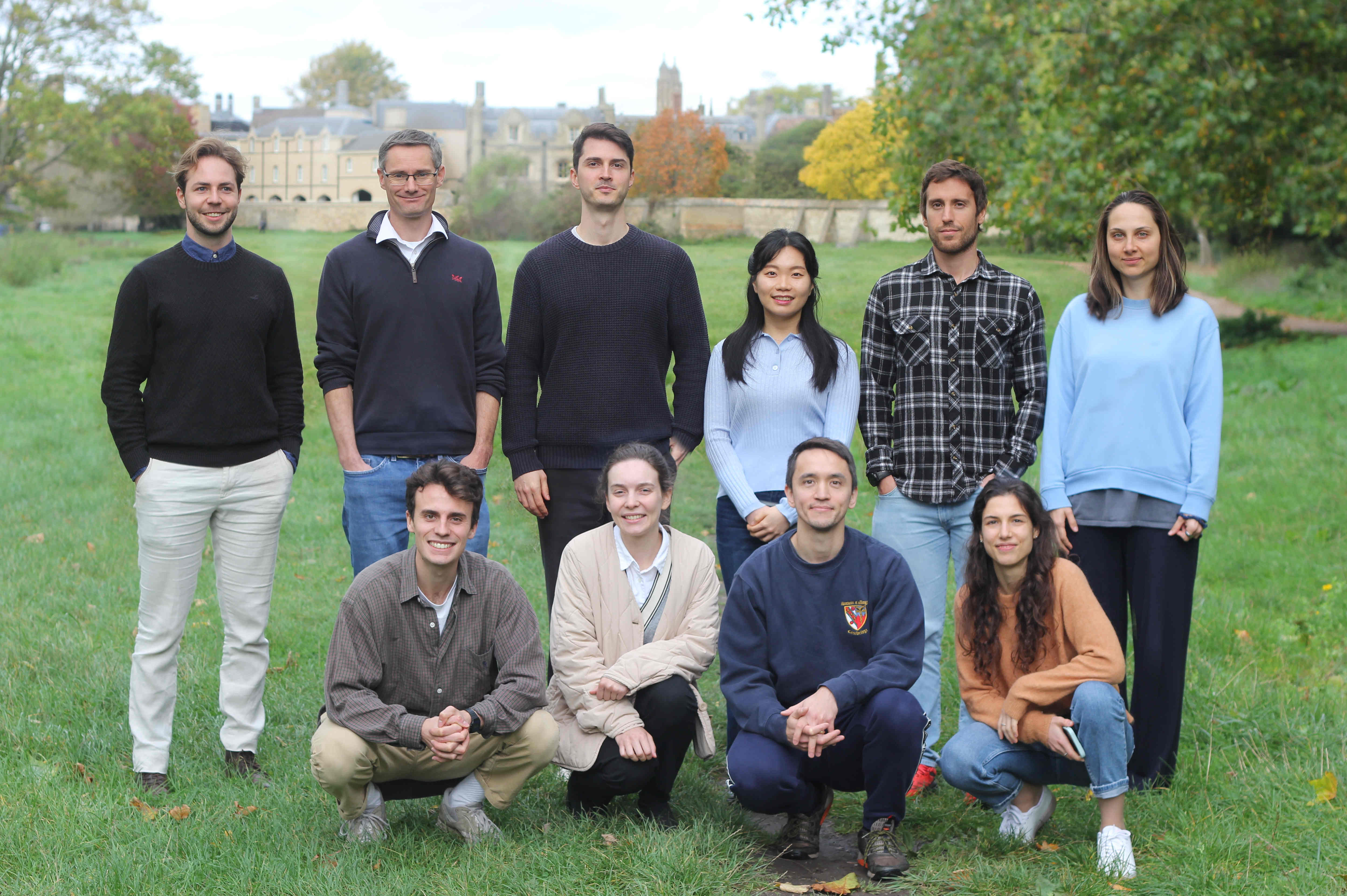
Richard E. Turner is a Professor of Machine Learning at the University of Cambridge's Department of Engineering and Research Lead for AI for Weather Prediction at the Alan Turing Institute. He serves as Cambridge Lead for the EPSRC Probabilistic AI Hub and previously held roles including Visiting Researcher at Microsoft Research, Co-Director of the AI4ER CDT, and Course Director for the Machine Learning and Machine Intelligence MPhil program. Current research focuses on probabilistic machine learning fundamentals, environmental prediction (weather/climate), and spatio-temporal modeling combining deep learning with Bayesian methods Supervised 26 PhD students (13 graduated) and 7 research assistants/associates Secured over £30M in research funding from EPSRC, Microsoft, Toyota, Google, DeepMind, Amazon, and Improbable Featured in BBC Radio 5 Live's The Naked Scientist, BBC World Service's Click, and Wired Magazine His recent publications demonstrate expertise in diffusion models for PDE simulations, Gaussian Processes for environmental applications, and Bayesian methods for spatio-temporal forecasting. Key trends include climate modeling using ML, neural PDE solvers, and scalable probabilistic inference. Awards : Cambridge Students' Union Teaching Award for Lecturing; supervised Qualcomm Innovation Fellowship winner Collaborations : Microsoft Research (AI4Science), Alan Turing Institute, EPSRC Probabilistic AI Hub Turner leads the Turner Group within Cambridge's Machine Learning Group, focusing on uncertainty-aware ML for scientific applications. Current research assistants work on topics like meta-learning, Bayesian inference, and climate science applications.
Itsik Pe'er is a Full Professor and Vice-Chair in the Department of Computer Science at Columbia University's Fu Foundation School of Engineering & Applied Science, and holds a joint appointment as Professor of Systems Biology at the Vagelos College of Physicians and Surgeons. His research focuses on computational methods in human genetics, including genetic variation analysis, disease association studies, and algorithm development for genomic data. He leads the Itsik Pe'er Lab of Computational Genomics, which develops tools like Xplorigin, Germline, and SEACells to address challenges in genomics and medical research. His work spans machine learning applications in healthcare, microbiome analysis, and cancer genomics. Notable contributions include studies on hypertensive disorders in pregnancy, bias correction in predictive models, and the development of non-Euclidean learning libraries like Manify. Pe'er has advised students including Vladimir Vacic, Anat Kreimer, and Arthi Ramachandran, and collaborates on grants addressing genetic epidemiology and computational biology. His lab's location is in the Computer Science Building at Columbia's Morningside Campus.
Veronika Eyring serves as Head of the Earth System Model Evaluation and Analysis Department at the German Aerospace Center (DLR) Institute of Atmospheric Physics and Professor of Climate Modelling at the University of Bremen. She holds dual appointments at these leading institutions, directing cutting-edge research at the intersection of climate science and artificial intelligence. Education: 2008: Habilitation in Environmental Physics at the University of Bremen 1999: PhD in Physics from the University of Bremen 1994: Diploma in Physics from the University of Erlangen Professor Eyring's research program focuses on improving climate models and projections through innovative integration of machine learning techniques and spaceborne Earth observations. Her work spans process-oriented modeling, development of observationally-based performance metrics, and understanding systematic biases in climate models. She has pioneered approaches to weighting model projections based on their performance using machine learning, significantly advancing the field of climate model evaluation. Her research has critical applications across multiple sectors including aeronautics, space research, transportation, and energy systems. Analysis of her recent publications reveals a clear trajectory toward deeper integration of machine learning with traditional climate modeling approaches. Her work has increasingly focused on developing community tools like the Earth System Model Evaluation Tool (ESMValTool) and leading major international initiatives such as the USMILE project (Understanding and Modelling the Earth System with Machine Learning). The publications span climate science, machine learning, Earth system modeling, and remote sensing, with specific emphasis on climate model evaluation, parameterization techniques, and improved climate projections. Scientific Awards: AGU Ambassador Award (2024) TUM Distinguished Affiliated Professor (2024) Gottfried Wilhelm Leibniz Prize (2021) ERC Synergy Grant (2019) Thomson Reuters Highly Cited Researcher (2016-2021) Top female researchers award, Helmholtz-Society (2015) Professor Eyring actively supervises a large research group comprising PhD students working on ML-based sea ice parameterizations, causal model evaluation for air-sea interactions, and machine learning-based detection of droughts in climate projections. She leads the prestigious ERC Synergy Grant USMILE and secured significant funding through the DFG Gottfried Wilhelm Leibniz Prize. Her research group at DLR includes multiple postdocs, research scientists, and software engineers working collaboratively on climate informatics projects. Professor Eyring leads the Earth System Model Evaluation and Analysis Department at DLR, which encompasses research groups focused on CMIP model evaluation, ESMValTool development, and machine learning applications in climate science. She founded and supervises the 'Climate Informatics' Group at the DLR Institute for Data Science in Jena. Her department maintains strong international collaborations, particularly with the National Center for Atmospheric Research (NCAR) in Boulder, Colorado, where she serves as an Affiliate Scientist.
Charles Rahal is an Associate Professor in Data Science and Informatics at the University of Oxford, with additional affiliations as an Associate Member of Nuffield College and Researcher at the Gradel Institute, New College. He serves as a Co-Investigator at the ESRC Centre for Care and sits on the Steering Group of Reproducible Research Oxford. His academic career includes previous roles as a Senior Departmental Research Lecturer at the Leverhulme Centre for Demographic Science and a British Academy Postdoctoral Fellow. Dr. Rahal completed his PhD in 2016 and has established himself as a prominent social science methodologist and applied social data scientist with expertise in high-dimensional econometrics. His research spans multiple domains, focusing particularly on unique Big Data origination processes and their relationship to social inequality, mobility, and stratification. He is deeply engaged in machine learning methods, civic technology, spatial and time series econometrics, model uncertainty, and scientometrics. His recent publications reveal a strong trend toward computational social science, with significant contributions to understanding prediction limits, pandemic impacts, healthcare systems, and environmental sustainability. The articles demonstrate his interdisciplinary approach, bridging traditional social science with cutting-edge computational methods, particularly in the analysis of large-scale datasets and development of novel metrics like the InterModel Vigorish for model comparison. Dr. Rahal is actively involved in teaching and mentoring, co-convening courses in Demographic Analysis, Life Course Research, and the Oxford Partner site of the Summer Institute in Computational Social Sciences. He has developed workshops on machine learning, command line interfaces, and LaTeX, reflecting his commitment to methodological training in social science. He leads the Metrics and Models lab and maintains several open-source projects including the GWAS Diversity Monitor and RobustiPy. His editorial roles include Associate Editor-in-Chief at the Journal of Social Computing and Associate Editor at ACM Transactions on Social Computing, highlighting his influence in shaping computational social science methodology.
Armelle Choplin is an Associate Professor at the University of Geneva's Department of Geography and Environment within the Geneva School of Social Sciences, and affiliated with the Global Studies Institute since 2019. She serves as Director of the Institute of Environmental Governance and Territorial Development (IGEDT), leading research on urban transformations in the Global South. Research Focus Her research examines urban policies, social transformations, and development challenges in African cities and the Global South. Core interests include: urban planning dynamics, governance frameworks, construction industry impacts, poverty alleviation, sustainable development pathways, globalization effects, digital innovation in urban contexts, and postcolonial urban studies. Her geographical specialization focuses on West Africa and MENA regions. Publication Analysis Recent publications (2017-2024) demonstrate consistent focus on material urbanism, governance innovations, and spatial justice in African cities. Key thematic clusters include: urban material flows (concrete, energy), participatory planning methods, transnational urban corridors, and postcolonial urban theory. Methodologically, her work combines spatial analysis with political economy and ethnographic approaches. Research Leadership She directs multiple international projects including: Global Urb: Global Urbanism from the South MatéRhône: Construction materials in Rhone Valley West African Coastal Corridor study (Accra-Lagos axis) URBACOT: West African Coastal Urban Dynamics Observatory Map&Jerry: Participatory mapping in Cotonou Student Advising Currently supervising eight doctoral candidates researching urban development topics across Africa. Her teaching portfolio includes courses on urban globalization, metropolitan governance, spatial justice, and regional project development at both bachelor's and master's levels.
Prof. Dr. André Bardow is a Full Professor in Energy and Process Systems Engineering at ETH Zurich , leading research at the intersection of thermodynamics, machine learning, and sustainable energy systems. Previously, he held professorships at RWTH Aachen University (2010-2020) and TU Delft (2007-2010). He also served as part-time director at Forschungszentrum Jülich (2017-2022) and visiting professor at UC Santa Barbara (2015/16). His work focuses on energy systems optimization , computer-aided molecular design , and CO2 capture & utilization . PhD from RWTH Aachen University Current ETH Zurich affiliation Former roles at RWTH Aachen, TU Delft, Jülich Research Center His research integrates machine learning with thermodynamic modeling to optimize processes like crystallization and electrochemical cooling . Recent publications demonstrate advancements in solvent design, CO2 transport LCA, and ORC working fluid optimization. He chairs the VDI Technical Committee for Thermodynamics (2016-2024) and has received multiple awards including the Covestro Science Award and Arnold-Eucken-Award . Current projects address carbon circular economies , electrified chemical production , and AI-driven process optimization . His lab at ETH Zurich develops cutting-edge technologies like ML-CAMPD frameworks for sustainable separation processes and photoacid-based CO2 capture systems. Funding from the H2020 Systemic Expansion of Circular Ecosystems (grant 101036854) supports these initiatives. 2024 Clarivate Highly Cited Researcher 2022 Inaugural Lecture: "To sustainability and beyond: A computer-animated story on energy & chemicals" Recipient of multiple teaching and research excellence awards