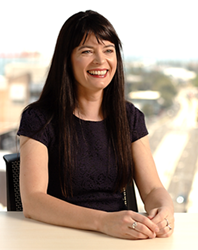
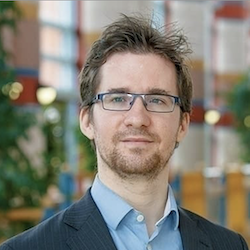
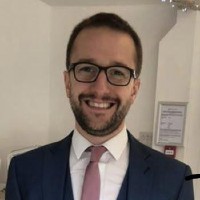
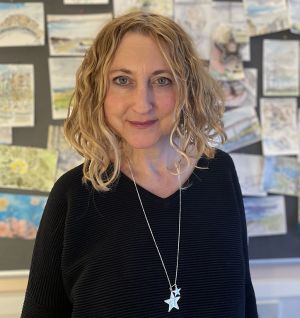
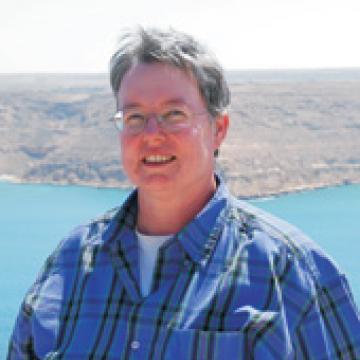
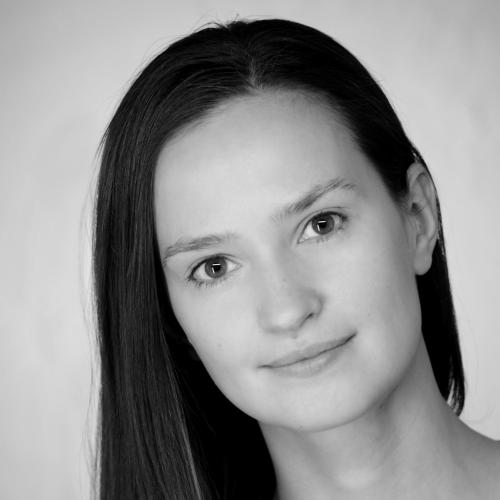
Prof. Ingmar Posner is a leading figure in applied artificial intelligence at the University of Oxford, where he serves as Principal Investigator for the Applied Artificial Intelligence Lab (A2I) and founding Director of the Oxford Robotics Institute. His work focuses on enabling robots to operate effectively in complex real-world environments through experience-driven learning. Key research areas: robot learning, scene interpretation, data-efficient learning, and transfer learning Applications in manipulation, autonomous driving, logistics, and space exploration His team has produced groundbreaking work in world models, sim-to-real transfer, and constraint-based manipulation systems (e.g., COMBO-Grasp). Notable contributions include the TWIST distillation framework and foundational research in tactile data generation (TactGen). He has received multiple best paper awards at top robotics venues. Publications reveal evolving research themes: 2025 work emphasizes language-conditioned learning (Lumos) and multi-agent decision-making, while 2024 focused on diffusion models for locomotion and differentiable simulators. Earlier work spans from urban scene analysis to physically plausible scene synthesis (RELATE).
Professor Anna Korhonen is a leading academic at the University of Cambridge, holding positions as Professor of Natural Language Processing, Co-Director of the Language Technology Laboratory (LTL), Director of the Centre for Human-Inspired Artificial Intelligence (CHIA), and Fellow of Churchill College. Her work bridges computational linguistics, artificial intelligence, and interdisciplinary applications. Her research focuses on human-centric NLP with core interests in multilingual/low-resource systems, conversational AI, and responsible technology development. She emphasizes applications for social and global good, including healthcare, climate science, and equitable language technologies. Her methodology integrates cognitive modeling with machine learning to create interpretable, fair NLP systems. Key projects include ERC-funded initiatives like MultiConvAI (multilingual conversational AI) and Towards Globally Equitable Language Technologies , alongside Innovate UK's ESG RoboFactory and EPSRC's Modeling Idiomaticity project. Her work spans biomedical text mining ( PheneBank , LION ), educational technology ( EF Education First Research Lab ), and cross-lingual transfer learning. Fellow of the Association for Computational Linguistics (ACL) Fellow of ELLIS (European Laboratory for Learning and Intelligent Systems) Royal Society University Research Fellow (2005-2014) Google Faculty Award recipient EACL Chair Elect Korhonen actively supervises PhD/MPhil students in Computation, Cognition and Language programs and leads interdisciplinary collaborations across computer science, linguistics, and domain sciences. Her lab (LTL) develops foundational NLP techniques while addressing real-world challenges through partnerships with healthcare, environmental science, and education sectors. Current strategic initiatives include the Institute for Technology and Humanity and CHIA's human-inspired AI framework.
Professor Amy Maguire is a leading academic in human rights and public international law at the University of Newcastle, Australia. She holds roles as Deputy Head of the School of Law and Justice (2021-2024) and co-founder Director of the Centre for Law and Social Justice. Her research focuses on human rights accountability, Indigenous rights, climate change displacement, and refugee rights. She has secured over $2.7 million in grants, including an ARC Mid-Career Industry Fellowship (2024-2028) for national human rights reform initiatives. Maguire advises the Queensland Parliament on human rights compliance and collaborates with global institutions like the Australian Human Rights Commission. Her work has influenced policy, including Australia’s death penalty abolition strategy and Indigenous rights frameworks. She has been awarded multiple accolades for research and teaching excellence, including the 2020 Leadership Excellence Award and 2016 Early Career Researcher of the Year. Maguire’s education includes a BA, LLB (Hons), and PhD from the University of Newcastle. Her interdisciplinary approach bridges law and social justice, addressing issues like climate migration and legal responses to global crises. She leads projects such as the Hunter Region climate displacement study and the Human Rights Measurement System. Maguire’s public engagement includes over 70 articles for The Conversation, reaching 920,000+ readers, and expert media commentary globally. She advocates for inclusive education through initiatives like early entry programs for Indigenous and refugee students, earning a 2021 Senior Fellowship from Advance HE. Her research outputs span 60+ publications, with key works on MH17 litigation, climate justice, and Indigenous legal frameworks. Grants include a 2021 stimulus grant to establish the Centre for Law and Social Justice, supporting postdoctoral research and international collaborations. Maguire’s leadership extends to global networks, including the UN Human Rights Council evaluation project and the Human Rights for NSW Alliance. She remains committed to translating research into policy, education, and community impact through clinics, youth forums, and law reform advocacy.
David Stillwell serves as Professor of Computational Social Science at Cambridge Judge Business School and Academic Director of The Psychometrics Centre, University of Cambridge. His research leverages big data to understand human psychology and behavior, with significant contributions in personality prediction from digital footprints and personalized advertising applications. His educational background includes: BSc in Psychology from the University of Nottingham (2007) MSc in Research Methods from the University of Nottingham (2008) PhD in Decision Making from the University of Nottingham (2012) Dr. Stillwell's research centers on computational social science and psychometrics, pioneering the myPersonality Facebook application that collected data from over 6 million users. His work demonstrates computers can predict personality as accurately as spouses, reveals psychological targeting's advertising effectiveness, and establishes links between personality-matched spending and life satisfaction. He also explores linguistic honesty markers through profanity analysis and personality-based dating patterns. His recent publications (2019-2025) reveal a strong trajectory toward AI evaluation using psychometric frameworks, particularly in medical and general-purpose AI assessment. Key themes include fairness metrics in language models, crisis emotional responses through social media, and computational personality recognition - demonstrating consistent innovation at the psychology-technology intersection. He has received significant recognition: Top 10 most influential papers of 2013 by Altmetric Nieman Journalism Lab highlight of 2013 Named in 'top 30 thinkers under 30' by Pacific Standard Magazine Dr. Stillwell maintains active industry engagement through consultancy with Barclays, Hilton, and Ubisoft on projects spanning computer-adaptive testing systems to interactive experiences like Predictive World for Watch Dogs 2. His policy impact is substantial, with citations by the European Data Protection Supervisor, World Bank, and multiple national governments, leading to speaking engagements at the European Parliament and Bank of England. As Academic Director of The Psychometrics Centre, he leads a global hub for advancing psychological assessment through innovative methods including Concerto open-source software, collaborating with organizations ranging from the European Commission to major corporations on psychometric applications in people analytics and digital behavior.
John Holmes is Professor of Victorian Literature and Culture at the University of Birmingham, affiliated with the Birmingham Institute of Forest Research (BIFoR). His work bridges literary studies and scientific inquiry, focusing on interdisciplinary connections from 1800 to the present through extensive collaborations with institutions like the Royal Society and major natural history museums across Europe. His academic credentials include a D.Phil. in English Literature from Oxford (2001), an M.A. in Renaissance Studies from Queen Mary and Westfield College, London (1997), and a B.A. in English Language and Literature from Oxford (1994). D.Phil. English Literature, University of Oxford, 2001 M.A. Renaissance Studies, Queen Mary and Westfield College, University of London, 1997 B.A. English Language and Literature, University of Oxford, 1994 Professor Holmes specializes in literature-science intersections, particularly Victorian and modern poetry, Pre-Raphaelite studies, and natural history museums. His current research examines arts architecture within museum spaces and mythic literature's dialogue with evolutionary science. He has authored foundational works on Darwinism in poetry and Pre-Raphaelite scientific engagements while directing major collaborative projects with scientific institutions. Recent publications reveal consistent exploration of poetic form within scientific contexts, with growing emphasis on digital humanities applications and environmental education. His 2023-2024 outputs demonstrate expanded interdisciplinary scope, integrating virtual reality tools for forest education and deepening analysis of myth-science intersections in canonical poetic works. His distinguished honors include: AHRC Collaborative Doctoral Award (2011) British Society for Literature and Science Book Prize (2018) Chair of the British Society for Literature and Science (2012) Honorary Associate of Oxford University Museum of Natural History (2016) President of the Commission on Science and Literature (2023) Professor Holmes leads significant research initiatives including the AHRC-funded Interdisciplinary Forest Education project (2024) and the long-term 'Building the Book of Nature' study (2015-2023). As an active PhD supervisor, he mentors students in literature-science intersections while maintaining robust public engagement through museum collaborations, media appearances, and educational outreach programs that translate academic research for broader audiences. He directs BIFoR-affiliated initiatives connecting literary scholarship with forest research, partnering with natural history museums in Oxford, London, Berlin, and Vienna to develop interdisciplinary frameworks examining how literary traditions shape environmental understanding and scientific communication.
Dr John Stanton is a Reader in Law at City St George's, University of London, with a focus on Constitutional Law and Comparative Constitutional Law. He has held academic roles since 2010, previously at Kingston University and City University, and is a Visiting Lecturer at the University of Malta since 2018. PhD in Law (Kingston University London, 2010) LLB Law (University of Surrey, 2007) His research spans Maltese constitutional history , local government dynamics , democracy , and central-local relations . Recent projects include Law, Localism and the Constitution (2023) and co-editing The Constitution of Malta at Sixty (2024). John’s publications and conference presentations (e.g., at Melbourne and Texas) address themes like constitutional decay , autocracy , and democratic resilience . He contributes to journals such as Legal Studies , Public Law , and Environmental Law Review . Learning Enhancement Award for Teaching (2017) Fellow, Higher Education Academy He testified before the UK Parliament on devolution and is active in the Society of Legal Scholars , UK Constitutional Law Association , and the Honourable Society of the Inner Temple .
University of the Highlands and IslandsUnited Kingdom
Shaun Beattie is a Researcher affiliated with the Scottish Association for Marine Science (SAMS) at the University of the Highlands and Islands . His work focuses on marine conservation , seaweed biodiversity , and aligning research with the United Nations Sustainable Development Goals . Education : Master of Science in Ecological Economics (University of Leeds, 2019), Bachelor of Science in Economics and Management Science (University of Southampton, 2018) Beattie's research explores the intersection of seaweed conservation , policy development , and ecosystem resilience . He contributes to global initiatives addressing biodiversity gaps in international frameworks and investigates the role of seaweeds in human health and marine habitats. His recent 2025 publications analyze seaweed conservation policies in Malaysia, stakeholder perspectives from Indonesia, and systemic gaps in biodiversity strategies. Shaun's work also spans climate-smart agricultural policy , as seen in his 2021 Sustainability review on nutrition integration in Southern Africa. His research outputs are linked to SDG targets like life below water, climate action, and zero hunger.
Mariana Gkliati is an Assistant Professor of International and EU Law at Radboud University, Nijmegen. She holds a Graduate Diploma in Law (Magna Cum Laude) from the National and Kapodistrian University of Athens and a Legal Research Master (Summa Cum Laude) from Utrecht University. Her PhD from Leiden University focused on Frontex accountability, supervised by Professors Rodrigues and Besselink, and was supported by the Meijers Research Institute. Education: PhD in Immigration Law, Leiden University (2016-2020) Legal Research Master, Utrecht University (Summa Cum Laude) Graduate Diploma in Law, National and Kapodistrian University of Athens (Magna Cum Laude) Her research interests center on migration, refugee law, and human rights, particularly the accountability of the European Border and Coast Guard Agency (Frontex). She leads the externally funded project 'European Border and Coast Guard Agency: Systemic Accountability in Practice,' involving an 8-member team. Her work emphasizes evidence-based policy-making and anti-smuggling policies. Professional Activities: Research Affiliate, Refugee Law Initiative (RLI), University of London Teaches on the RLI MA in Refugee Protection and Forced Migration Studies Former visiting Research Fellow at the School of Advanced Study (2016) and Amsterdam Centre for Migration and Refugee Law (2019-2020) Awards: Magna Cum Laude, Graduate Diploma in Law Summa Cum Laude, Legal Research Master Her grants and projects include systemic accountability research on Frontex. She advises NGOs, law firms, and the European Parliament, and contributes to expert reports on migration and borders. Labs/Teams: Leads an 8-member research team for her funded project on Frontex accountability.
Professor Siân Bayne is a leading academic in digital education at the University of Edinburgh , where she serves as Assistant Principal for Education Futures and directs the Centre for Research in Digital Education . Her work bridges critical theory and practical innovation in higher education. Interdisciplinary research on digital education and futures studies Leadership in the Edinburgh Futures Institute and Moray House School of Education and Sport Global impact through UNESCO collaborations and UKRI GCRF projects Bayne’s research explores higher education futures , utopian theory , and digital enhancement , with a focus on: AI’s role in teaching and learning Ethical implications of educational technologies Anonymous social media in academic spaces Speculative scenarios for educational systems Global South digital education models Augmented reality applications in assessment Her 15 most recent publications span 2017-2025 , covering critical perspectives on: Generative AI and educational innovation Utopian design in universities Data governance in learning analytics Augmented reality pedagogy Digital cultural heritage Scientific recognition includes: IASH Sabbatical Fellowship (2023) Bayne leads Higher Education Futures initiatives and partners with institutions worldwide, including: UNESCO Global Education and Technology Report World Bank collaborations European university leadership programs She also drives major research centers like: Centre for Research in Digital Education UKRI GCRF Urban Disaster Risk Hub
Terry C. Lansdown is an Associate Professor in the School of Social Sciences and Department of Psychology at Heriot-Watt University. His expertise lies in Human Factors, particularly focusing on driver safety, workload management, and attentional distraction in transportation contexts. Prior to his academic role, he worked as a senior researcher at the Transport Research Laboratory, contributing to numerous EU-funded and government-sponsored projects. His research integrates ergonomics principles with real-world applications, addressing issues like automated driving systems, social distractions in vehicles, and occupational health in construction industries. Key research interests include: Driver behavior and road safety Human factors in automated systems Workload and attentional demands in complex tasks Health and safety in small-to-medium enterprises (SMEs) He has led studies on pandemic response strategies, such as the CHARIS project analyzing behavioral adherence during the COVID-19 crisis. Lansdown’s work frequently bridges psychological theory with practical interventions, including text messaging campaigns to improve construction worker safety and experimental designs to evaluate automation failure responses. Collaborations span academic and industrial sectors, with publications addressing topics ranging from UV exposure in outdoor workers to the cognitive impacts of in-vehicle distractions. His contributions align with UN Sustainable Development Goals related to health (SDG 3) and sustainable cities (SDG 11).
Dr. Michael Boyd is a prominent archaeologist affiliated with the Department of Archaeology at the University of Cambridge and serves as an Honorary Research Associate at the McDonald Institute for Archaeological Research and a Senior Research Affiliate at The Cyprus Institute . His work centers on the prehistoric Aegean, with expertise in material culture, mortuary studies, ritual practices, and landscape archaeology. Research Interests : Boyd's scholarship interrogates the theoretical and methodological foundations of archaeology, emphasizing the dynamic interplay between landscapes, tombs, and human agency. His studies span Early Bronze Age Cycladic cultures, environmental archaeology, and the emergence of ritualized spaces in the Aegean. Publications : Boyd has co-directed the Keros Seaways Project and authored seminal works on Aegean ritual deposits, including the Keros Sanctuary volumes (2016–2018) and Staging Death (2016). His 2021 edited volume Far from Equilibrium critiques contemporary archaeological theory and advocates for reorienting the discipline. Methodological Contributions : He pioneers interdisciplinary and geo-ethnoarchaeological approaches, integrating soil micromorphology and phytolith analysis to reconstruct degradable architectural elements in the Cyclades.
Dr. Jeni Mitchell is a Lecturer in the Department of War Studies at King’s College London, affiliated with the School of Security Studies under the Faculty of Social Science & Public Policy. She specializes in future war studies, space security, and the evolution of rebellion, serving as co-director of the Future Threats Lab within the Centre for Science & Security Studies. Her work emphasizes human-centric approaches to analyzing existential threats and their societal impacts. Her education includes a PhD from King’s College London, where her doctoral research focused on civilian victimization by non-state armed groups. She has held positions at Chatham House, the Brookings Institution, and the Middle East Institute. Teaching responsibilities include MA modules on future warfare, spacepower, and insurgency, while she also directs the MA International Relations and War program. Mitchell’s research explores future threat perceptions (particularly in space), futures research methodologies, and the intersection of war, genocide, and utopian ideologies. Her methodological innovations, termed ‘future-crafting,’ employ creative formats like films and games to model conflict scenarios. Notable collaborations include work with the Freeman Air and Space Institute and King’s Wargaming Network. Recent publications address Ukraine’s apocalyptic imaginary, space-based threat analysis, and refugee-warrior dynamics. Her research group activities include the Environmental Security research group and contributions to widening participation initiatives like the 2024 Summer School in international security.
London School of Economics and Political Science (LSE)United Kingdom
Dr Alison Powell is an Associate Professor in the Department of Media and Communications at the London School of Economics and Political Science (LSE), serving as Programme Director for the MSc Media and Communications (Data and Society). Her research focuses on technology design, public sector technology, and digital futures. She is known for her book Undoing Optimization: Civic Action in Smart Cities (2021) and her participatory research method, data walking. From 2019–2023, she directed the JUST AI network, supported by the Ada Lovelace Institute and UKRI, advancing AI ethics research. Her work integrates critical theory, participatory methods, and interdisciplinary collaboration. Education: PhD in Communication from Concordia University (Canada), MA in Media Studies from Toronto Metropolitan University, and postdoctoral research at the Oxford Internet Institute. Prior to academia, she worked in the film and TV industry. Research interests include civic engagement in data-driven governance, ethical AI, and participatory urbanism. She has advised projects like Africa Just AI and Operationalising Ethics for AI, funded by Horizon Europe, AHRC, and the Open Society Foundations. Her articles address topics such as AI governance, urban light ecology, feminist research praxis, and the ethical implications of technology for marginalized communities. She contributes to blogs like Media@LSE and leads initiatives at Polis and the LSE’s Digital Futures for Children project. Grants and collaborations include work with Projects by IF, Open Rights Group, and the Human Data Interactions Network (EPSRC). She explores intersections of technology, justice, and sustainability, emphasizing equitable and inclusive innovation.
Linda Hulin is a Researcher at the School of Archaeology, University of Oxford , serving as Research Assistant to the Director of the Oxford Centre for Maritime Archaeology. She works part-time as a tutor in the Department for Continuing Education.
Dr Olga Petri is an Assistant Professor in Human Geography at the Department of Geography, University of Cambridge. She is a Bye-Fellow and Director of Studies in Geography (Part II) at Jesus College, and a Leverhulme/Newton Trust Early Career Research Fellow. Her research bridges cultural and historical geography, queer studies, and more-than-human geographies, with a focus on urban modernity in non-Western contexts. Born in St Petersburg, Olga holds a BA and MA in Geography from Saint-Petersburg State University, an MSc in Urban Studies from University College London (merit), and a PhD in Geography from the University of Cambridge. Olga's research explores four key areas: Queer Geographies in authoritarian urban spaces, More-than-Human Geographies analyzing human-animal relationships, Russian Arctic Studies examining environmental and geopolitical transformations, and Migration Urbanism studying cities as hubs for political refugees. Her work on Beastly St Petersburg and Winged Worlds reconfigures urban history through animal and queer lenses. Scientific awards include the Leverhulme/Newton Trust Early Career Research Fellowship and a 2020 shortlisting for Student-Led Teaching Award . She is a Junior Research Fellow at Wolfson College since 2018. Olga leads postdoctoral research on human-animal dynamics in imperial Russia. She supervises graduate students in cultural/historical geography and urban studies. Her work features in Vital Geographies research group at Cambridge.