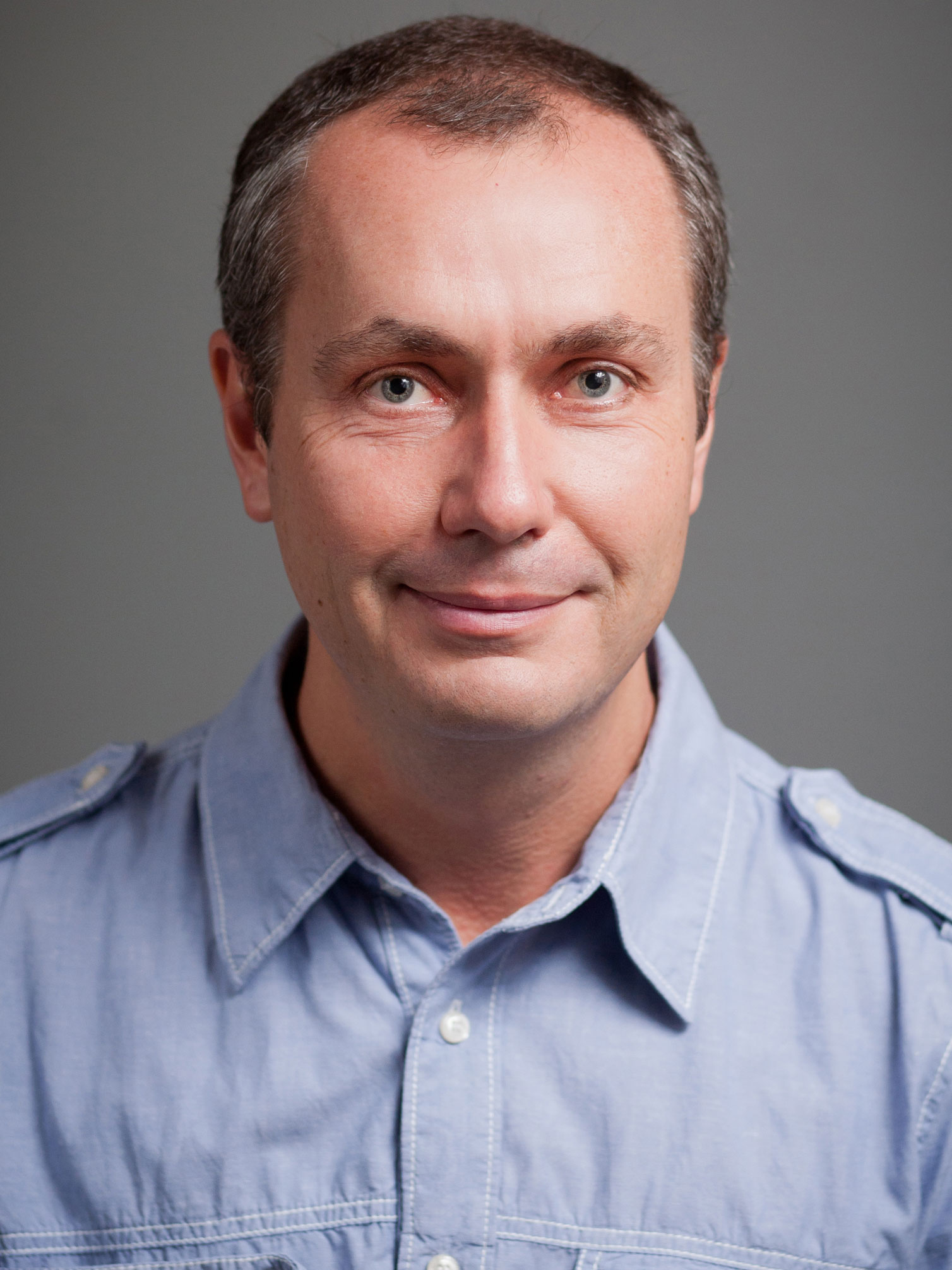
Aaron Smith is an Associate Professor in the Department of Mathematics and Statistics at the University of Ottawa, affiliated with the Faculty of Science. He holds a PhD from Stanford University. His research focuses on applied probability, computational statistics, Monte Carlo methods, and Markov chains, with an emphasis on advancing theoretical understanding and practical applications of these methodologies. Dr. Smith's work includes contributions to community detection algorithms, Markov chain mixing times, and synthetic health data generation. His recent publications explore topics such as nonstandard Dirichlet form representations, perturbation analysis of MCMC algorithms, and sparse Bayesian multidimensional scaling. He advises students in applied probability and has supervised postdoctoral researchers in related fields. His research interests span a wide range of topics, including stochastic processes, statistical inference, and algorithm design. He is particularly known for his analysis of convergence rates in Markov chains and the development of efficient sampling techniques for complex models. His interdisciplinary work bridges theoretical mathematics and practical computational challenges in data science and healthcare. Dr. Smith collaborates on projects involving synthetic data frameworks for privacy-preserving applications and has contributed to foundational work on mixing times and perturbation effects in stochastic systems.
Maria Chudnovsky is a Professor in the Department of Mathematics at Princeton University. Her research focuses on structural graph theory, particularly in areas such as graph decomposition, induced subgraphs, and algorithmic applications of graph structure. She is renowned for her contributions to understanding perfect graphs, even-hole-free graphs, and the Erdős–Hajnal conjecture. Her work often explores the interplay between graph structure and algorithmic efficiency, with applications in combinatorial optimization and theoretical computer science. Notable contributions include foundational results on tree decompositions, chromatic number bounds, and the structure of metrizable graphs. Recent research trends include investigations into induced subgraph obstructions, tree independence numbers, and the properties of sparse graphs. She has published extensively on topics such as clique-stable set separation, rainbow matchings, and the complexity of graph coloring problems in restricted graph classes. Chudnovsky has been involved in significant collaborative projects, including work funded by the DMS-EPSRC grant 'The Power of Graph Structure' (2021). Her research frequently bridges theoretical insights with practical algorithm design, contributing to both fundamental and applied areas of discrete mathematics.
Professor Alexander Scott is a faculty member at the University of Oxford, holding positions as Professor of Mathematics and Dominic Welsh Tutor in Mathematics at Merton College. His research focuses on combinatorics, probability, algorithms, and graph theory, with a particular interest in the interplay between local and global structures in networks. He has organized the Oxford Combinatorics Seminar and co-founded the online Oxford Discrete Mathematics and Probability Seminar, fostering collaboration in these fields. Professor Scott’s work bridges theoretical foundations with applications in statistical physics and algorithmic design. He has supervised numerous graduate students in combinatorics and regularly teaches undergraduate courses in analysis and discrete mathematics. His contributions include advancements in extremal graph theory, probabilistic methods, and structural combinatorics, with over 150 publications in prestigious journals. He actively organizes academic events such as the annual One-Day Meeting in Combinatorics, hosting speakers from around the world. Despite the absence of explicit awards noted, his prolific research output and academic leadership reflect significant contributions to the field. His current interests continue to explore the Erdős-Hajnal conjecture, induced subgraph densities, and algorithmic challenges in combinatorial structures.
Gene Cooperman is a Professor at the Khoury College of Computer Sciences at Northeastern University, with an affiliation in the College of Engineering. His research focuses on high-performance computing (HPC), transparent checkpoint-restart systems, and model checking. He leads the High Performance Computing Laboratory, where he explores checkpointing technologies like DMTCP, MANA for MPI, and CRAC for CUDA, aiming to enhance HPC workflows on supercomputers such as NERSC's Perlmutter. His work bridges distributed computing, parallel algorithms, and system software to address challenges in fault tolerance, scalability, and resource management. Cooperman has advised 10 PhD students and co-authored over 125 refereed publications, contributing to projects like Geant4-MultiThreaded and Roomy for disk-based computation. His teaching includes courses on computer systems and HPC seminars. Education: Background in computational algebra and parallel computing, transitioning to HPC systems and checkpointing. Research Themes: Transparent checkpointing, MPI agnostic solutions, CUDA integration, and HPC resource optimization. Recent articles emphasize MPI checkpointing, reversible debugging (FReD), and CUDA support, reflecting trends in distributed and GPU-accelerated systems. His grants include NSF, NERSC/DOE, and MemVerge funding. Cooperman collaborates with institutions like CERN and NERSC, advancing applications in particle physics simulations and supercomputing. Current students include Aayushi Gautam, Jiajun Cao, Rohan Garg, and Twinkle Jain.
Jan de Gier is a Professor at the School of Mathematics and Statistics, The University of Melbourne . He is also the Founding Director of MATRIX , Australia’s residential research institute in the mathematical sciences, and a former Deputy Director and Chief Investigator in the Australian Research Council Centre of Excellence for Mathematical and Statistical Frontiers (ACEMS) . Additionally, he co-founded the Australian and New Zealand Association for Mathematical Physics (ANZAMP) in 2011 and served as its inaugural Chair. His research focuses on solvable lattice models at the intersection of mathematical physics and statistical mechanics . Key areas include the application of quantum integrability , algebraic structures like the Yang-Baxter equation, Hecke algebras, and quantum groups, as well as analytical methods such as complex analysis and elliptic curves. His work bridges pure and applied mathematics through connections between enumerative combinatorics , representation theory , and real-world phenomena like traffic flow modeling via exclusion processes . The 15 most recent articles reflect his expertise in integrable systems , non-equilibrium statistical mechanics , and algebraic combinatorics . Topics span Macdonald polynomials , stochastic duality , quantum spin chains , and traffic modeling , with methodologies involving matrix product forms , exact solutions , and critical phenomena analysis. He has contributed to editorial efforts through the AustMS Gazette and MATRIX Annals, and has been involved in public science communication via opinion pieces on mathematics funding and applications. His work emphasizes the importance of fundamental research in driving technological innovation, as highlighted in media articles discussing pi calculation , zero-knowledge proofs , and mathematics education .
Zvezdelina Stankova is a Teaching Professor of Mathematics and Director and Founder of the Berkeley Math Circle at the University of California, Berkeley . Her contact details include an office in 713 Evans Hall and the email stankova@math.berkeley.edu . Research Interests: • Algebraic Geometry • Representation Theory • Combinatorics • Olympiad Problem-Solving • Mathematics Education Publications and Research Trends: Her work bridges Combinatorics and Algebraic Geometry , with a focus on permutation patterns, avoidance, and moduli spaces of curves. She has also contributed significantly to Mathematics Education through her leadership in the Berkeley Math Circle, emphasizing problem-solving techniques and outreach programs for students. Teaching and Outreach: Stankova has taught various courses at UC Berkeley, including MATH 52 Calculus II (2025), MATH 110 Linear Algebra , and MATH 74 Transition to Proofs . She actively engages with the Berkeley Math Circle, providing resources for mathematical competitions and advanced training for students.
Günter Rote is a Professor in the Department of Computer Science at Freie Universität Berlin, specifically within the Theoretical Computer Science group (Arbeitsgruppe Theoretische Informatik). He holds a formal academic title of Professor Dr. and is affiliated with the Faculty of Mathematics and Computer Science. His research focuses on theoretical computer science, computational geometry, algorithms, and discrete mathematics. Key research interests include geometric algorithms, optimization problems (e.g., shortest paths, traveling salesman problems), and algorithm design for parallel computing systems. His work spans topics such as systolic arrays, convex hulls, and combinatorial optimization. Rote’s contributions include foundational studies on computational geometry problems, algorithmic complexity, and practical applications in energy equity and infrastructure design. Publications highlight contributions to solving extremal equations, polygon transformations, and the quadratic assignment problem. He has been active in academic leadership, mentoring students, and contributing to computational science communities. His email is rote@inf.fu-berlin.de, and his office is located at Takustraße 9 in Berlin.
Prof. Dmitri Krioukov is an Associate Professor in the Department of Physics at Northeastern University and holds an affiliated faculty position in Electrical and Computer Engineering. He directs the DK-Lab at the Network Science Institute, focusing on theoretical aspects of complex networks, including latent network geometry, random geometric graphs, and navigation in networks. His work bridges mathematical physics and applied network science, with applications to real-world data such as the Internet's structure. Research interests revolve around the interplay between network topology and geometry, including studies of causal sets, graph curvature, and dynamics in complex systems. He has pioneered frameworks linking network growth to hyperbolic geometry, enabling efficient routing algorithms. Notable contributions include the discovery of latent geometric structures underlying real-world networks and their implications for navigation and scalability. He has been recognized for high-impact publications, including multiple Stanford University Annual Assessments placing him among the top 2% most-cited scientists in his field (2024, 2023, 2022). His lab's interdisciplinary approach integrates principles from physics, mathematics, and computer science to address fundamental questions in network science.
Max Alekseyev is an Associate Professor in the Mathematics Department and Computational Biology Institute. His research spans computational graph theory, enumerative combinatorics, computational/algorithmic biology, and comparative genomics. He focuses on interdisciplinary problems, blending mathematics with biological applications, particularly in genome assembly and analysis. His work includes advancements in genome scaffolding algorithms, combinatorial sequence analysis, and mathematical biology. Notable contributions involve genome assembly tools like CAMSA and studies on ancestral genome reconstruction. He also explores theoretical topics such as Bernoulli series generalizations and modular data classification. His research trends highlight a blend of pure mathematics (e.g., number theory, graph theory) and applied computational methods, addressing challenges in genomics and evolutionary biology. He secured an NSF Student Travel Grant in 2018 for computational molecular biology.
Nathan Kaplan is a Professor in the Department of Mathematics at the University of California, Irvine, where he conducts research in number theory, algebraic geometry, and combinatorics. His work spans rational points on varieties over finite fields, arithmetic statistics, coding theory, and the study of numerical semigroups. He is actively involved in the mathematical community, organizing seminars and conferences including the UC Irvine Number Theory Seminar and the Southern California Number Theory Day. Dr. Kaplan received his PhD from Harvard University in 2013 under the direction of Noam Elkies. Following his doctorate, he was a postdoctoral researcher at Yale University from 2013-2015 before joining the faculty at UC Irvine. His research interests focus on the intersection of number theory and algebraic geometry, with particular attention to problems involving rational points on varieties over finite fields, arithmetic statistics, and coding theory. He has made significant contributions to the study of numerical semigroups, cokernels of random p-adic and integer matrices, and quadratic forms and lattices. His work often bridges theoretical mathematics with applications in coding theory and cryptography. Analysis of his recent publications shows a strong trend toward combinatorial aspects of number theory, particularly in the study of numerical semigroups and their properties. He frequently collaborates with researchers across institutions, with recent work spanning algebraic geometry, combinatorics, and coding theory. His publications demonstrate expertise in both theoretical developments and computational aspects of number theory. Dr. Kaplan is deeply committed to undergraduate research and mentoring. He has experience as a mentor for undergraduate research projects through programs including SUMRY (a research program for Yale undergraduates), the University of Minnesota-Duluth REU program, and the Trinity University REU program. He actively encourages undergraduates to apply for summer research opportunities and has organized numerous outreach activities. He is an organizer of the UC Irvine Number Theory Seminar and the Southern California Number Theory Day conference series. In 2018, he co-organized the Conference on Open Questions in Cryptography and Number Theory in honor of Alice Silverberg's 60th Birthday. Dr. Kaplan has given numerous talks at mathematical venues including the Museum of Mathematics' Math Encounters series, where he presented "Error-Correcting Codes: The Mathematics of Communication" in July 2022. He has also spoken at the Yale Undergraduate Math Society, the UCI Math Circle, and various other outreach events.
Prof. Tobias Müller is a Professor at the Bernoulli Institute for Mathematics, Computer Science and Artificial Intelligence at the University of Groningen. His academic journey includes previous positions at Utrecht University, CWI (Centrum Wiskunde & Informatica), Tel Aviv University, and Eindhoven University of Technology, with a doctorate from the University of Oxford under Colin McDiarmid. His research focuses on combinatorics, probability theory, random graphs, percolation, discrete and stochastic geometry, and combinatorial game theory. He has contributed extensively to understanding complex networks, hyperbolic models, and geometric random structures. Research Interests: Random Graphs and Percolation Theory Discrete and Stochastic Geometry Hyperbolic Network Models Probabilistic Combinatorics Geometric Probability Graph Algorithms and Connectivity Notable Contributions: Analysis of Voronoi and Poisson-Voronoi percolation in hyperbolic planes. Studies on Mallows random permutations and their cycle structures. Research on component games and logical limit laws in graph theory. Investigations into the geometry and properties of random geometric graphs. Grants & Collaborations: Active in organizing workshops and conferences on random graphs and geometric networks, including the BIRS Workshop on Random Geometric Graphs and the STAR Workshops series. Labs/Teams: Member of the Bernoulli Institute’s research groups, focusing on stochastic studies, combinatorics, and algorithmic methods.
Tamon Stephen is a Professor in the Department of Mathematics at Simon Fraser University (SFU), part of the Faculty of Science. His research focuses on operations research, with an emphasis on combinatorial optimization, algorithms, discrete geometry, and computational biology. He holds a Ph.D. in Mathematics from the University of Michigan (2002). His work often bridges theoretical and computational aspects, addressing interdisciplinary applications. Stephen is affiliated with the Centre for Operations Research and Decision Sciences (CORDS) and has contributed to software tools for hypergraph transversals and colorful linear programming. He has taught courses such as Math 208W (Introduction to Operations Research) and has advised projects in metabolic network analysis and scheduling optimization. His office is located at the Surrey campus (SRYC 2886). Key research collaborations include studies on firefighter scheduling, nurse rostering, and metabolic pathway analysis. His methodologies often leverage algorithm design, polytope theory, and discrete mathematics. Stephen actively participates in academic service, organizing seminars and contributing to conferences such as the West Coast Optimization Meeting. His work emphasizes practical applications of theoretical results, with a focus on solving real-world optimization challenges.
Cécile Mailler is a Reader in Probability at the University of Bath, where she is a member of the probability group Prob-L@B. She has held significant research positions including an EPSRC postdoctoral fellowship (2018-2021) titled "Random trees: analysis and applications" and previously worked as a postdoc at Prob-L@B (2013-2016) as part of Peter Mörters' EPSRC project "Emergence of Condensation in Stochastic Networks". She earned her PhD under the supervision of Brigitte Chauvin and Danièle Gardy at the Laboratoire de Mathématiques de Versailles. Her research focuses on probability theory with emphasis on branching processes, random trees, reinforcement mechanisms, Pólya urns, stochastic approximation, random networks, and statistical physics. She has made significant contributions to understanding preferential attachment models, zero-range processes, and random Boolean trees. Her work bridges theoretical probability with applications in statistical physics and combinatorics. Analysis of her recent publications shows a strong focus on random tree structures, branching processes, and reinforcement learning algorithms, with applications spanning from network theory to statistical mechanics. Her research demonstrates sophisticated mathematical techniques applied to complex stochastic systems, particularly those with reinforcement mechanisms and memory effects. Associate Editor of the Applied Probability Trust (since October 2020) Associate Editor of Stochastic Processes and Their Applications (since March 2022) Author of a general introduction to Pólya urns for the LMS Newsletter (November 2020) Co-organizer of the "Random Walks: Applications and Interactions" conference at CIRM (January 2026) She actively supervises PhD students working on topics including the multi-city ants process, Pólya urns with growing initial composition, large deviations for the Monkey walk, and competing growth processes. She has secured research funding through EPSRC fellowships and has been involved in multiple collaborative projects with prominent researchers in probability theory. Mailler regularly teaches mini-courses on advanced probability topics at international summer schools and workshops, demonstrating her commitment to knowledge dissemination in the field.
Nikolaos Tziavelis is an Assistant Professor in the Department of Computer Science and Engineering at Basking Engineering, University of California, Santa Cruz. His research bridges theoretical and practical aspects of database systems, focusing on improving real-world data processing through novel algorithmic solutions. Education: Ph.D. from Northeastern University (advised by Mirek Riedewald and Wolfgang Gatterbauer) Diploma from National Technical University of Athens, Greece Research Interests: Data Management Database Theory Query Processing and Optimization Algorithms for Big Data Integration of Machine Learning with Database Systems Publication Trends: His work emphasizes ranked enumeration, join algorithms, and query optimization, with applications in responsive database systems and machine learning integration. Key themes include theoretical foundations, practical system improvements, and algorithmic efficiency for complex data processing tasks. Scientific Awards: 2022 Google PhD Fellowship PODS 2021 Best of Recognition 2023 VLDB PhD Workshop Best Paper Award 2024 Khoury Research Award from Northeastern University Service: He has served on program committees for major conferences including SIGMOD, VLDB, PODS, EDBT, ICDE, and Northeast Database Day.
Dr. Joanna Deaton Bertram is an Assistant Professor in the Thomas Lord Department of Mechanical Engineering and Materials Science at Duke University’s Pratt School of Engineering. She concurrently holds an Assistant Professor appointment in Surgery, underscoring her interdisciplinary commitment to advancing medical robotics. Dr. Bertram leads a research laboratory devoted to the design, modeling, and control of robotic systems for surgical and interventional applications, working closely with Duke’s clinical and engineering communities. Education Ph.D. in Robotics, Georgia Institute of Technology, 2024 M.S. in Mechanical Engineering, Georgia Institute of Technology, 2024 B.S. in Biomedical Engineering, Georgia Institute of Technology, 2018 Research Interests Dr. Bertram’s research program is centered on medical robotics , with particular emphasis on continuum robotics and image-guided interventions . Her work integrates novel mechanical design with advanced control algorithms and smart materials to create robotic systems capable of navigating complex anatomical pathways. A hallmark of her approach is the incorporation of real-time fiber-optic shape and force sensing (using Fiber Bragg Grating technology) to provide surgeons with unprecedented feedback during procedures. Application domains include steerable needles for brachytherapy , robotic guidewires for endovascular surgery , and pediatric neuroendoscopy . Publication Themes Across more than fifteen peer-reviewed articles, Dr. Bertram has systematically advanced the state of the art in surgical robotics , fiber-optic sensing , and robotic system modeling . Her 2024 tutorial on Nitinol and Tungsten tendon attachment techniques provides practical guidance for building highly articulated continuum robots, while her 2023 series on the COAST guidewire robot demonstrates model-based design and simultaneous shape/force sensing for large-deflection medical devices. Earlier work explored 3D-printed patient-specific robotic tools and carbon-nanotube flexible sensors, illustrating a trajectory from fundamental sensor research to full robotic system integration. Scientific Recognition & Collaboration Although no major external awards are explicitly listed, Dr. Bertram’s publications in top-tier venues such as IEEE Robotics and Automation Letters , IEEE Transactions on Medical Robotics and Bionics , and IEEE/ASME Transactions on Mechatronics attest to strong peer recognition. She actively invites motivated graduate students, post-docs, and research staff to join her lab, fostering an open and interdisciplinary environment. Advising & Grants Dr. Bertram’s lab is presently recruiting trainees at all levels. While specific funded grants are not enumerated, her dual departmental appointments and extensive publication record suggest active federal or foundation support. Prospective students and collaborators are encouraged to contact her directly at joanna.d.bertram@duke.edu . Laboratory & Teams Dr. Bertram directs a laboratory within Duke University’s Pratt School of Engineering that collaborates closely with clinicians in the School of Medicine. The group focuses on rapid prototyping of medical devices, in-vitro and ex-vivo validation, and translation of robotic technologies to the operating room.