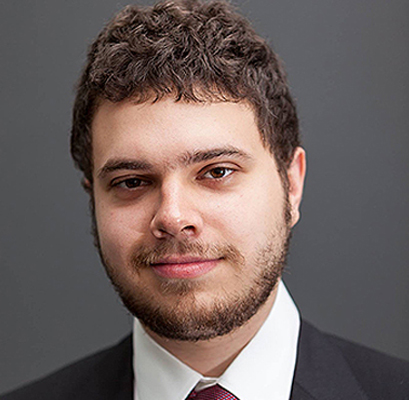
Magnus Svärd is a **Professor** in the **Department of Mathematics** at the **University of Bergen**. His research focuses on computational fluid dynamics, numerical analysis, and high-order methods for solving partial differential equations. He specializes in entropy-stable schemes, boundary conditions for compressible flow models, and numerical discretizations for Navier-Stokes and Euler equations. His work emphasizes stability, accuracy, and efficiency in finite-difference and finite-volume methods, with applications to aerodynamics and fluid-structure interactions. Svärd collaborates extensively with researchers in applied mathematics and computational science, contributing to both theoretical advancements and practical implementations of numerical algorithms. Key contributions include entropy-stable boundary treatments for compressible flows, diffusive compressible Euler models, and stability analyses of high-order schemes. His research is published in top-tier journals like *Journal of Computational Physics* and *BIT Numerical Mathematics*. Academic activities include advising students (none listed here) and leading projects in numerical methods for fluid dynamics. No specific grants or labs are highlighted in the provided information.
Zahit Mecitoğlu serves as a Professor in the Department of Astronautical Engineering at Istanbul Technical University's Faculty of Aeronautics and Astronautics. His academic career spans over three decades with continuous research activity from 1989 to present, including 36 research outputs and 10 funded projects through 2027. His research focuses on advanced structural mechanics with specialization in composite materials, blast load analysis, and additive manufacturing. Key areas include dynamic behavior of laminated composites, fracture mechanics of reinforced structures, and optimization of auxetic metamaterials. His work bridges theoretical methods like Galerkin approach with experimental validation of novel materials. Recent publication trends show concentrated activity in nitrogen-doped graphene oxide reinforced composites (2023-2025) and advanced lattice structures (2022-2024), demonstrating consistent focus on next-generation aerospace materials. His fingerprint analysis reveals strong expertise in blast loads (100%), laminated composite plates (99%), and geometric nonlinearity (36%). Zahit Mecitoğlu has supervised 66 research projects and students throughout his career. Current research funding includes TUBITAK and SRP projects focusing on refractory high-entropy alloys (2025-2027), aerospace lattice structures (2023-2026), and composite delamination behavior (2021-2022). His laboratory work centers on structural testing of advanced materials under extreme conditions, with recent projects investigating electron beam powder bed fusion processes, interlaminar fracture mechanisms, and crashworthiness optimization of novel geometries. Current research directions include development of numerical analysis methodologies for space environment structures and multifunctional aerospace materials.
Prof. Ofer Shayevitz is a faculty member at the School of Electrical Engineering , Tel Aviv University , holding the academic rank of Professor . He is affiliated with the Department of Systems and leads interdisciplinary research at the intersection of information theory , statistical inference , and data science . His research explores theoretical challenges in interactive communication , machine learning , and quantum information , with applications to communication complexity , graph analysis , and non-stationary environments . Notable work includes advances in high-dimensional regression , entropy estimation , and memory-constrained algorithms . The trends in his recent publications highlight information-theoretic bounds , statistical inference under constraints , and interactive protocols . His group has made significant contributions to quantum key distribution , planted graph detection , and guesswork analysis . Scientific awards include the Best Student Paper Award at ISIT 2020 . His research is supported by major grants from the Israel Science Foundation (ISF) , ERC Starting Grant , and Israel Innovation Authority . Prof. Shayevitz advises current PhD students Assaf Ben-Yishai , Uri Hadar , and Shahar Stein Ioushua , as well as M.Sc. students Inbar Pinsly and Oz Ben Hamo . Former advisees include faculty members at institutions like Kyushu University and University of British Columbia .
Sebastian Dalleiger is an Assistant Professor at the Division of Theoretical Computer Science, Kungliga Tekniska Högskolan (KTH Royal Institute of Technology). His research focuses on theoretical foundations of machine learning, data mining, and graph theory, with particular expertise in matrix factorization, pattern discovery, and hypergraph analysis. Current affiliation: KTH Royal Institute of Technology Department: Theoretical Computer Science Email: sdall@kth.se His recent work explores federated learning architectures, non-negative matrix factorization, and structural analysis of stochastic block models across multiple graphs. He develops algorithms combining proximal optimization with privacy-preserving techniques, addressing challenges in distributed data analysis. Publications demonstrate interdisciplinary applications in network science, information theory, and computational geometry. Key contributions include novel frameworks for Ollivier-Ricci curvature in hypergraphs and sequential false discovery control for pattern mining.
Artur Tamm is an Associate Professor of Computational Physics at the Institute of Physics, University of Tartu since 2021. He has held positions at Lawrence Livermore National Laboratory (2020–2021), Uppsala University (2016–2017), and Lawrence Livermore National Laboratory (2017–2020) as a Post-Doc and Research Staff. His academic degrees include a PhD in Physics (2016) and a Master's in Physics (2010) from the University of Tartu. Research Interests : Computational investigation of solid-state systems using Molecular Dynamics (MD) and Density Functional Theory (DFT) , with a focus on high-entropy alloys , electron-phonon coupling , radiation-induced defects , and phase equilibria . Projects : Participated in the Estonian Ministry of Education and Research-funded project SF0180008s08 on ionic electroactive materials. Publications : Authored over 20 peer-reviewed works, with recent studies on hydrogen interactions in CrMnFeCoNi alloys , electron-phonon dynamics in laser-excited metals , and vacancy behavior in semicoherent interfaces . Education : PhD in Physics (2016), University of Tartu MSc in Physics (2010), University of Tartu BSc in Physics (2008), University of Tartu
Aaron Scurto is a Professor in the Department of Chemical and Petroleum Engineering at the University of Kansas. His research focuses on enzyme catalysis in non-aqueous solvents, extractive fermentation, and pharmaceutical/biomaterials processing using compressed carbon dioxide. Research Trends : His recent work emphasizes thermodynamic modeling of ionic liquids, refrigerant separation via extractive distillation, CO2-induced polymer processing, and sustainable chemical synthesis. Applications : Explores ionic liquids for refrigerant recycling, CO2-based polyester upcycling, and enzyme-catalyzed biotransformations.
Professor Stephen R Clark is a faculty member at the University of Bristol's School of Physics, holding the Professor title. His research focuses on non-equilibrium phenomena in many-body systems, including ultra-cold atoms and strongly correlated electron materials. He specializes in tensor network theory, quantum entanglement, and foundational quantum mechanics. Ultra-cold atomic systems Strongly correlated electron materials Quantum entanglement and correlations Tensor network algorithms (DMRG, TEBD) Quantum-classical simulation interfaces Clark has developed the open-source Tensor Network Theory Library , advancing classical simulability of quantum systems. His work connects tensor networks to variational Monte Carlo and dynamical mean-field theory, with applications to light-driven quantum systems and thermodynamics of small systems. Current projects include QuamNESS (2020-2024) and EPSRC-funded research on strong driving correlations. He actively supervises research and has produced 77 research outputs including datasets and software tools. Article trends show a focus on quantum transport , non-Markovian dynamics , machine learning for quantum states , and nonequilibrium quantum thermal machines . Clark's tensor network innovations span 1D to 2D systems, with applications in superconductivity, polarons, and photonic lattices.
Joseph Kileel is an Assistant Professor in the Department of Mathematics at the University of Texas at Austin, with additional appointments as a Core Faculty Member of the Oden Institute for Computational Engineering and Sciences and as a member of the Machine Learning Laboratory. His academic journey includes a Ph.D. in Mathematics from UC Berkeley (2017) under Bernd Sturmfels and a postdoctoral fellowship at Princeton University (2017-2020) with Amit Singer. Professor Kileel's research spans applied mathematics, mathematical data science, and computational algebra, with particular expertise in inverse problems for imaging science, tensor methods, and non-convex optimization. His work has important applications in cryo-electron microscopy, 3D reconstruction, and mathematical theory for machine learning algorithms. His research program is supported by the NSF, DOE, and Sloan Foundation. His publication record demonstrates consistent high-impact contributions across multiple venues including IEEE Transactions, SIAM journals, Foundations of Computational Mathematics, and NeurIPS. His recent work shows a strong trend toward developing algebraic and geometric methods for data science problems, with increasing focus on tensor decompositions and their applications to molecular imaging. His research bridges theoretical mathematics with practical computational methods. Charles Chui Young Researcher Best Paper Award Bernard Friedman Memorial Prize for Best Thesis in Applied Mathematics Professor Kileel currently advises six doctoral students and postdocs, maintaining an active research group that combines theoretical depth with practical applications. His students work on diverse projects spanning tensor methods, optimization theory, and applications to imaging science. The group benefits from strong connections with the Oden Institute and Machine Learning Laboratory at UT Austin, providing access to interdisciplinary collaborations and resources. His research group focuses on developing mathematical foundations for data science problems, particularly those involving algebraic structure. Current projects include tensor decomposition algorithms, geometric methods for 3D reconstruction, and theoretical analysis of non-convex optimization landscapes. The group maintains active collaborations with researchers at Princeton, Berkeley, and international institutions, reflecting the interdisciplinary nature of his work.
Professor Marek Domański is a distinguished faculty member at Poznań University of Technology, holding the position of Professor at the Institute of Multimedia Telecommunications within the Faculty of Computing and Telecommunications. With over four decades of academic career since completing his dissertation in 1983, he has established himself as a leading researcher in video coding and processing. His research primarily focuses on advanced video coding techniques, particularly Video Coding for Machines (VCM), neural network applications in video processing, immersive video coding, and multiview video compression. Professor Domański has made significant contributions to the field through his extensive publication record and active participation in international standardization efforts, particularly at MPEG meetings. Analysis of his recent publications (2020-2025) reveals a strong emphasis on machine-oriented video coding, with numerous contributions to MPEG standardization activities. His work demonstrates a consistent evolution from traditional video coding toward specialized techniques for machine vision applications, incorporating artificial neural networks to improve coding efficiency and processing capabilities. As an academic supervisor, Professor Domański has guided 27 doctoral students to completion, with recent dissertations focusing on cutting-edge topics in video processing and coding. His research group at PUT maintains active international collaborations, particularly with South Korean institutions like ETRI, reflecting the global relevance of his work. Professor Domański's research has practical applications in virtual reality, free-viewpoint television, and machine vision systems, with numerous technical reports indicating ongoing research projects focused on improving machine vision coding techniques. His work bridges theoretical advances with practical implementations, contributing significantly to both academic knowledge and industry applications in video technology.
Yann André LeCun is the Jacob T. Schwartz Professor of Computer Science, Data Science, Neural Science, and Electrical and Computer Engineering at New York University, and serves as Chief AI Scientist at Meta. He holds appointments across multiple NYU institutions including the Courant Institute of Mathematical Sciences, the Center for Data Science, the Center for Neural Science, and the Tandon School of Engineering. LeCun leads the CILVR Lab (Computational Intelligence, Learning, Vision, Robotics) at NYU and is a key figure in Meta's FAIR (Fundamental AI Research) organization. LeCun's research spans machine learning, deep learning, computer vision, robotics, and computational neuroscience. He pioneered convolutional neural networks in the 1980s-90s, which became foundational to modern AI. His recent work focuses on self-supervised learning, energy-based models, and developing architectures for predictive world models that could enable machines to understand and interact with the physical world. LeCun advocates for open-source AI development through projects like Meta's Llama language models. His publication record shows consistent high-impact contributions since the 1980s, with recent work emphasizing self-supervised learning approaches like Joint Embedding Predictive Architectures (JEPA). The 15 most recent publications reveal a strong focus on representation learning, world models, and efficient learning paradigms that reduce reliance on massive labeled datasets. ACM Turing Award (2018) Princess of Asturias Award for Technical and Scientific Research (2022) Member of US National Academy of Engineering (2017) Member of US National Academy of Sciences (2021) Foreign Member of Académie des Sciences, France (2022) Queen Elizabeth Prize for Engineering (2025) VinFuture Grand Prize (2024) LeCun has advised approximately 30 PhD students who now lead AI research at major institutions worldwide. His lab has received significant funding from both government agencies and industry partners to advance fundamental AI research. The CILVR Lab fosters interdisciplinary collaboration across computer science, neuroscience, and engineering disciplines to tackle core challenges in artificial intelligence. LeCun actively engages with policymakers on AI governance, advocating for open research and targeted regulation. His work on open-source AI models represents a strategic approach to democratizing AI development while maintaining safety through community scrutiny. LeCun continues to push the boundaries of what machines can learn and understand about the physical world.
Darjan Karabašević is currently serving as the Acting Dean and Full Professor at the Faculty of Applied Management, Economics and Finance, University of Economics Academy in Novi Sad. He was elected to the position of Acting Dean on April 29, 2023, and achieved the rank of Full Professor for the narrow scientific fields of General Management and Informatics on February 22, 2023. Prior to this, he served as Vice-Dean for Research since March 1, 2018, and held positions as Associate Professor (2020) and Assistant Professor (2017) at the same institution. His educational background includes a Doctorate in Computer Science from the University of Novi Pazar (2022), another Doctorate from the Faculty of Management Zaječar, John Nesbitt University Belgrade (2016), Specialist Academic Studies from Megatrend University Belgrade (2012), and undergraduate studies at the Faculty of Management Zaječar, Megatrend University Belgrade (2009). He completed his secondary education at the Zaječar School of Economics and Trade. Professor Karabašević's research primarily focuses on multi-criteria decision-making methods, neutrosophic logic, fuzzy systems, and their applications in management and computer science. His work demonstrates a strong integration of mathematical modeling with practical business applications, particularly in personnel selection, supplier evaluation, website quality assessment, and e-commerce strategy development. He has published extensively on extensions of methods like WISP, TOPSIS, MULTIMOORA, and SWARA, often incorporating neutrosophic and fuzzy logic to handle uncertainty in decision-making processes. His publication record shows a consistent output of high-quality research, with over 200 scientific and professional papers, including more than 60 papers indexed in SCI/SSCI databases. His research has accumulated 2432 citations on Google Scholar, 863 on Web of Science, and 8 on Scopus, indicating significant impact in his fields of study. Professor Karabašević serves as the Editor-in-Chief of the Journal of Process Management and New Technologies (category M52) and is an editor for the SCI-indexed journal "Axioms" (category M22). He is a member of the editorial boards of numerous international journals including Neutrosophic Sets and Systems, International Journal of Neutrosophic Science, and Journal of Fuzzy Extension and Applications, among others. He has reviewed over 200 scientific papers for prestigious journals such as Mathematics, Applied Mathematics and Computation, Journal of Cleaner Production, and Omega. He has held significant leadership roles including being elected as Co-President and Head of the Neutrosophic Science International Association for Serbia (2018), and later becoming President of the association for Serbia (2022). He serves on the scientific committees of multiple international conferences including the International Congress on Aviation Management and conferences on Sustainable Development based on Knowledge (ERAZ). His professional activities also include serving as a reviewer for the National Body for Accreditation and Quality Assurance in Higher Education (NAT) since 2018 and previously for the Commission for Accreditation and Quality Assurance (KAPK) from 2017-2018.
Christy Jie Liang is an Associate Professor at the School of Computer Science, University of Technology Sydney (UTS), where she leads the Data Visualisation Research Lab in the Visualisation Institute. With extensive experience in both academic and industry settings, including appointments at IBM and Peking University, she has established herself as a leading researcher in data visualization and visual analytics. Dr. Liang earned her PhD in Data Visual Analytics from UTS, where she was awarded the University Medal with First Class Honours. Her educational background includes a Bachelor of Information Technology (First Class Honours) also from UTS. Professor Liang's research focuses on data visualization and visual analytics, with particular emphasis on information visualization, narrative visualization, and the application of these techniques to real-world problems. Her work spans multiple domains including finance, food safety, biomedical applications, smart cities, and social media. She has developed novel visualization techniques and owns five intellectual properties in this field. Her recent publications demonstrate a clear trajectory toward more sophisticated visualization techniques that integrate machine learning, with increasing focus on narrative visualization, user engagement across demographics, and practical applications in domains such as public health and education. The interdisciplinary nature of her work is evident in collaborations across computer science, behavioral science, and domain-specific applications. Dr. Liang has received significant recognition for her work, including: University Medal with First Class Honours from UTS Capital Markets CRC Honours scholarship Australian Postgraduate Awards As an educator, Professor Liang coordinates core subjects for Bachelor of Information Technology, Bachelor of Computer Science with Honours, Master of Interaction Design, and Master of Business Analytics programs. She has recently developed enterprise learning courses including short courses and micro-credentials in data visualization education. Her leadership extends to service roles as associate editor for JVLC and Journal Visual Informatics, program committee member for numerous conferences, and advisory board member for the Australian Computer Society and Peking University Medical Visualization Centre. Professor Liang leads the Data Visualisation Research Lab, which focuses on developing innovative visualization techniques and applying them to real-world problems. The lab maintains strong industry connections, with collaborations spanning government agencies, academic institutions, and commercial enterprises across multiple continents.