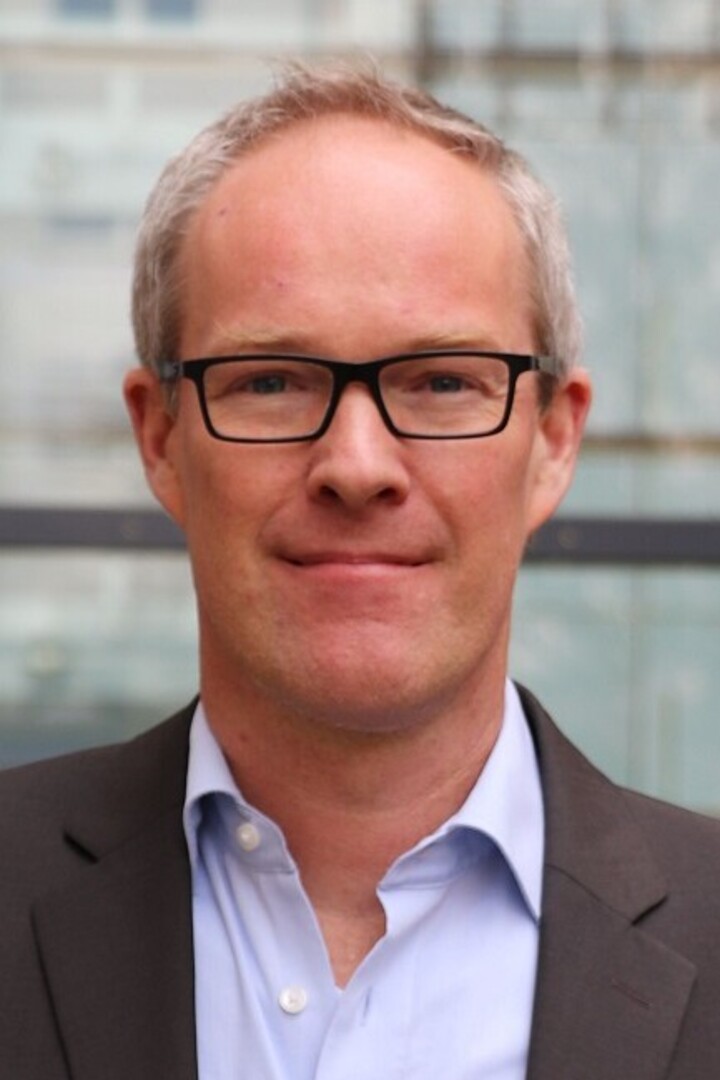
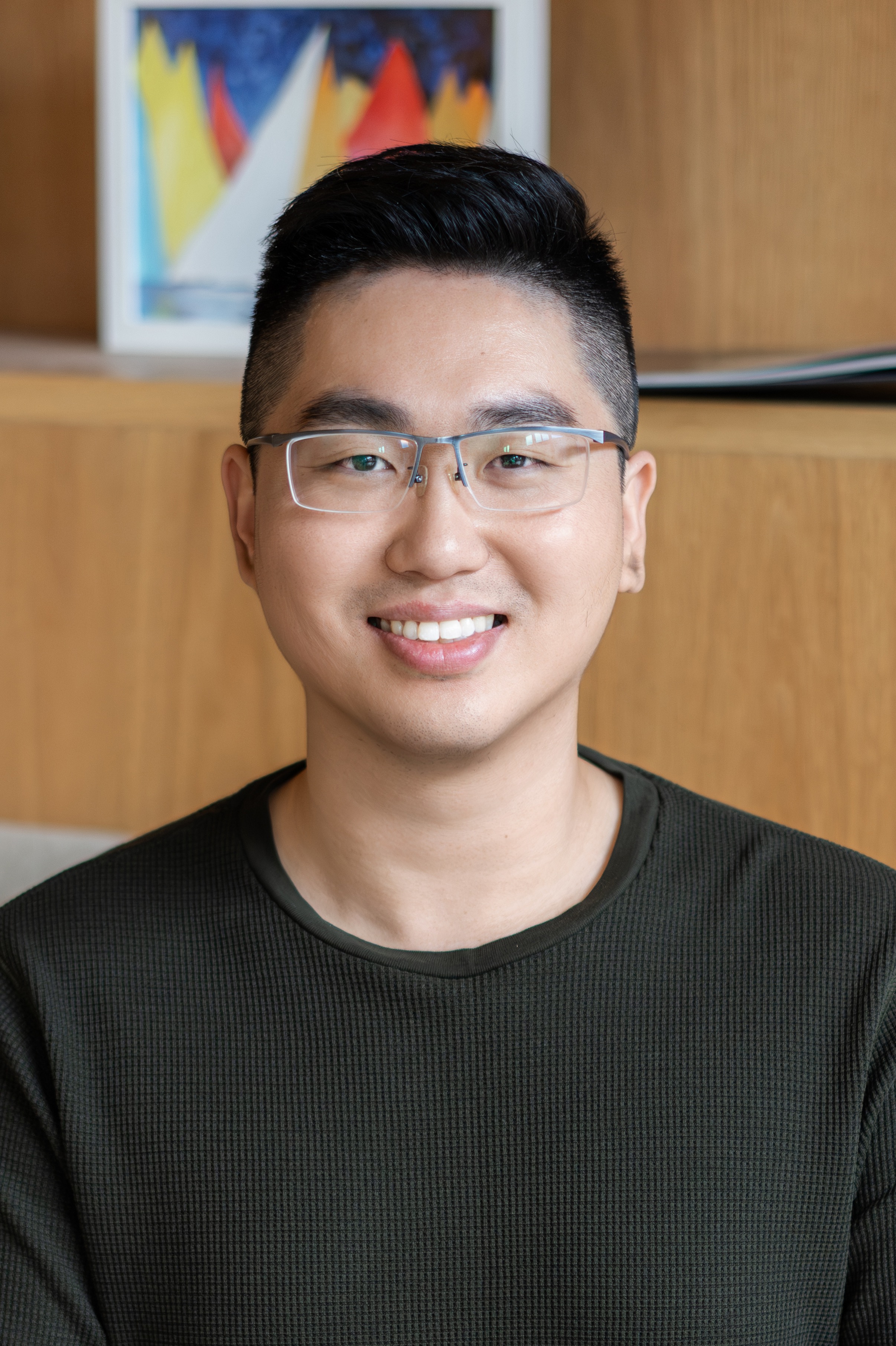
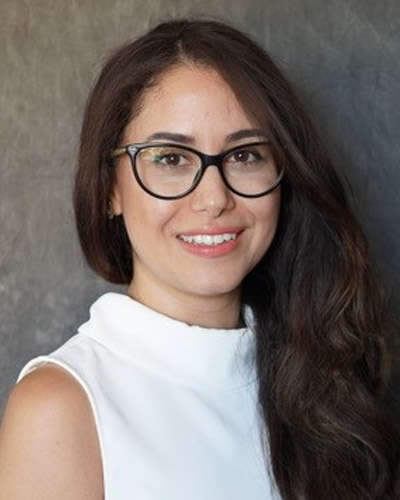
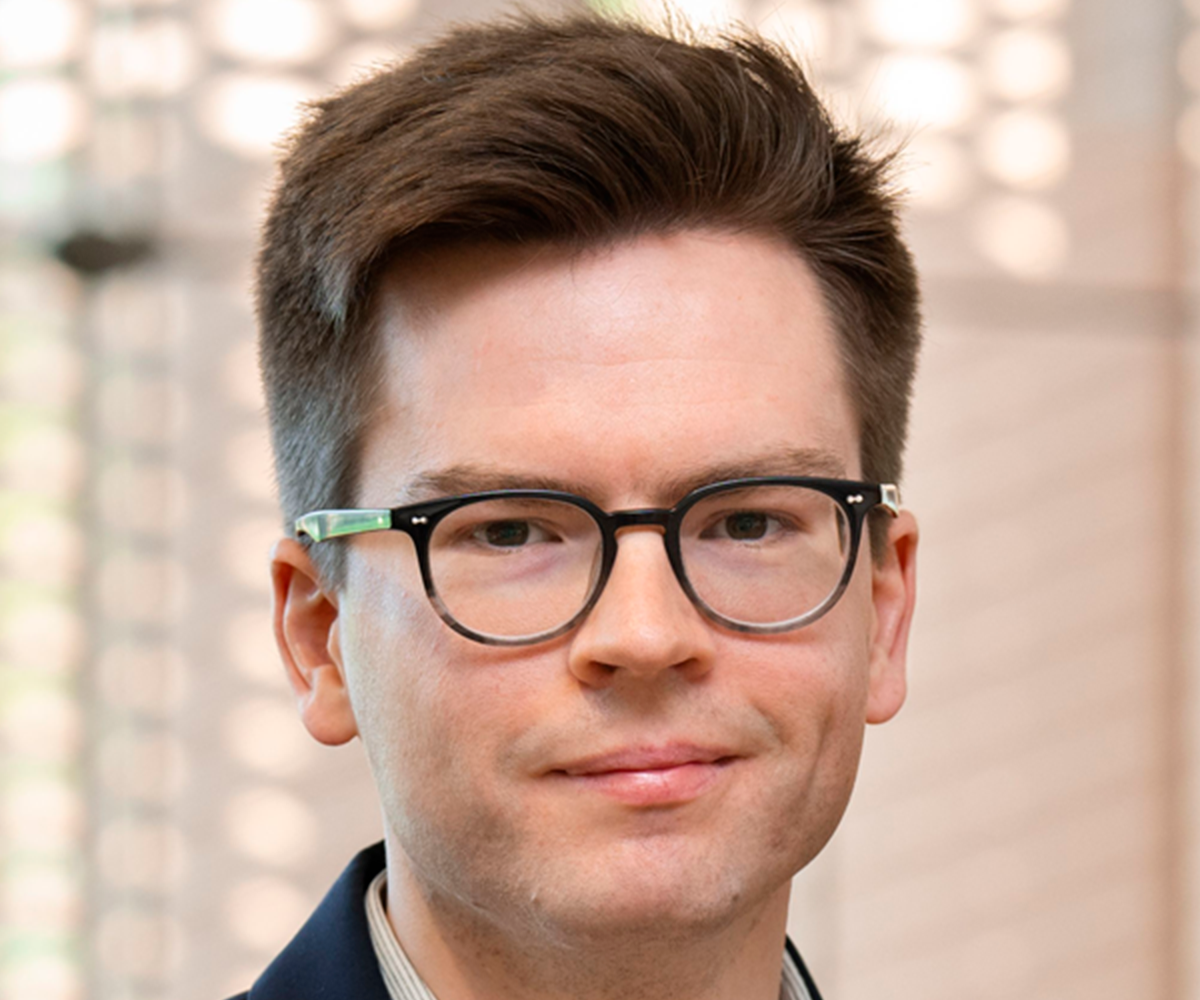
Professor Christian Bizer is a leading figure in web-based systems and data integration at the University of Mannheim , where he chairs Information Systems V: Web-based Systems . His research focuses on integrating data from multiple sources using large language models and LLM-based agents, with applications in product data extraction and DBpedia knowledge graph construction. He co-founded the DBpedia project and initiated the WebDataCommons initiative. Current research areas: Entity matching, schema matching, table annotation, information extraction, data discovery Key projects: WebMall benchmark, WInte.r integration framework, Schema.org analysis His work applies to e-commerce data integration and knowledge graph construction, with empirical studies on schema.org adoption. He supervises PhD students including Alexander Brinkmann and Ralph Peeters. Scientific Awards: Best Paper at iiWAS 2024 SWSA Ten-Year Award at ISWC 2019 Yahoo FREP Award 2015 Semantic Web Challenge winners Teaching includes courses on web data integration, web mining, large language models, and data mining for master's programs. He leads the DWS PhD colloquium and team projects on LLM agents for data integration.
Fabian Suchanek is a full professor at Institut Polytechnique de Paris, specifically affiliated with Télécom Paris. He leads research in the Data, Intelligence, and Graphs (DIG) team within the Computer Science department. His academic career focuses on bridging artificial intelligence with structured knowledge representations. Suchanek's research interests span artificial intelligence, knowledge bases, and natural language processing, with particular emphasis on knowledge graph construction , rule mining , knowledge-based language models , and explainable AI . His work demonstrates how structured knowledge can enhance machine learning systems, particularly large language models, by providing factual grounding and interpretability. The research group he leads develops practical systems that address real-world knowledge management challenges. His recent publications showcase a strong trajectory in knowledge-intensive AI, with notable contributions to knowledge graph completion, rule mining techniques, and neural approaches to knowledge base validation. The research demonstrates increasing integration between symbolic and neural approaches to AI. Best Student Paper Award at KR 2024 for work on contextual reasoning Best Demo Award of IJCAI 2024 for rule mining in knowledge graphs French Open Research Award for the YAGO project Best Paper Award of ESWC 2021 for Neural Knowledge Base Repairs Suchanek has secured significant research funding, evidenced by his active recruitment of PhD students for knowledge-based language model research. He has held visiting positions, including at Nanyang Technological University (June-September 2023), and is recognized internationally through keynote invitations such as the Singapore ACM SIGKDD Symposium 2023. He has deliberately stepped back from administrative duties at Institut Polytechnique de Paris to focus on research. His laboratory maintains strong industry connections through open-source software projects including the YAGO knowledge base, AMIE for rule mining, STACI for explainable AI, and several other tools that have become standard in knowledge representation research.
William Yang Wang serves as the Mellichamp Professor of Artificial Intelligence at the University of California, Santa Barbara (2019-present). He directs the UCSB Center for Responsible Machine Learning, the Mind and Machine Intelligence Initiative, and the UCSB NLP Group. His research focuses on theoretical foundations and practical algorithms for AI, particularly in NLP, LLMs, and neuro-symbolic reasoning. PhD in Computer Science from Carnegie Mellon University Active in AI theory and applications (2016-present) Research interests span multiple AI domains, with special emphasis on NLP and responsible machine learning. He has pioneered datasets like HybridQA, TabFact, and VaTeX, enabling advancements in multi-hop QA, fact verification, and video-language tasks. His work combines statistical relational learning with modern deep learning paradigms. Recent publications center around multimodal reasoning, knowledge graph integration, and responsible AI development. He has received numerous accolades including the IEEE SPS Pierre-Simon Laplace Award (2024) and NSF CAREER Award (2021). Karen Sparck Jones Award (2022) DARPA Young Faculty Award (2018) IBM Faculty Award Mentoring 15+ PhD and postdoc researchers who now hold positions at Microsoft Research, Amazon, Meta GenAI, and academic institutions like Arizona and Rutgers. His lab maintains active collaborations with industry partners through initiatives like ChipAgents.ai, which he founded as CEO.
Chris J. Maddison is an Assistant Professor at the University of Toronto, holding joint appointments in the Department of Computer Science and the Department of Statistical Sciences. He is also a CIFAR AI Chair at the Vector Institute and a member of the ELLIS Society. Maddison earned his DPhil from the University of Oxford and previously worked as a Senior Research Scientist at Google DeepMind and a member at the Institute for Advanced Study. His research focuses on advancing machine learning methodologies, particularly in leveraging data’s natural structure for efficient learning, with applications in drug discovery, causal inference, and AI safety. Education: DPhil in Computer Science, University of Oxford His research interests span machine learning, AI safety, reinforcement learning, and the integration of logical reasoning into large language models. Maddison has contributed to foundational work on gradient estimation techniques and was a key member of the AlphaGo project. He actively explores how statistical structures in real-world data influence AI capabilities. Recent publications emphasize evaluating conversational agents, mitigating AI safety risks, and enhancing logical reasoning in LLMs. His work bridges theoretical advancements with practical applications, such as code generation and multi-agent systems. Awards: NeurIPS Best Paper Award (2014), Open Philanthropy AI Fellowship Maddison advises multiple PhD students and postdoctoral researchers, fostering collaborations across academia and industry. His former advisees now hold roles at institutions like OpenAI, Stanford, and Magic AI. He teaches advanced courses in machine learning and statistical methods, including CSC 2541 (Large Models) and STA 314 (Machine Learning). Maddison is affiliated with the Schwartz Reisman Institute for Technology and Society, extending his impact to societal implications of AI. His lab’s interdisciplinary approach combines algorithmic innovation with real-world problem-solving.
Julia Lawton is Professor of Health & Social Science at the Usher Institute , University of Edinburgh, where she leads the Edinburgh Qualitative Health Research Group (EQual) . Her work focuses on improving healthcare delivery through qualitative research, particularly in chronic condition self-management and health inequalities. Education: PhD and BA in Social Anthropology from University of Cambridge Research Themes: Diabetes self-management, health technology adoption, inequities in healthcare access, process evaluations of complex interventions Key Projects: UNBIASED (diabetes technology disparities), REDUCE (diabetic foot ulcers), CL4P-CF (cystic fibrosis-related diabetes), AiDAPT (pregnancy diabetes management) Her recent publications highlight innovations in diabetes care, including closed-loop systems, structured education, and addressing disparities in technology access for underserved populations. She collaborates extensively with NHS entities and international institutions.
Tim Van de Cruys is a Senior Lecturer at the Faculty of Arts, KU Leuven, serving as Head of the Centre for Computational Linguistics (CCL). He maintains significant affiliations with LECTIO (KU Leuven Institute for the Study of the Transmission of Texts, Ideas and Images), Leuven.AI (KU Leuven Institute for Artificial Intelligence), and LILI (KU Leuven Interdisciplinary Language Institute). His work bridges computational linguistics, artificial intelligence, and humanities research with practical applications across multiple disciplines. Dr. Van de Cruys specializes in computational semantics and creative language generation, with particular expertise in applying NLP techniques to historical and classical texts. His research spans multiple domains including: Natural Language Processing for ancient languages (Latin, Ancient Greek) Computational approaches to lexical and compositional semantics Large language models and their applications in humanities research Creative language generation and human-AI collaboration Named entity recognition and disambiguation in historical contexts Non-autoregressive modeling for sequential generation tasks His recent publications demonstrate a strong focus on applying cutting-edge NLP techniques to humanities challenges, particularly in processing ancient languages. He frequently employs transformer models to address named entity recognition, word sense discrimination, and semantic analysis in low-resource language contexts. His work consistently bridges formal linguistic theory with practical computational applications, creating valuable tools for digital humanities scholars. As promotor and co-promotor on numerous research projects extending through 2029, Dr. Van de Cruys supervises PhD students working at the AI-humanities intersection. His current major projects include "Living Corpora" (exploring human-AI collaboration in digital humanities), "Stochastic processes and non-autoregressive models for sequential generation," and "NIKAW" (exploring knowledge networks from classical antiquity). These projects demonstrate his commitment to advancing both theoretical understanding and practical applications of computational linguistics. He teaches various courses including Computational Linguistics, Scripting Languages, Programming for Humanities, Computational Creativity, and AI for Humanities, training students to work at this critical interdisciplinary crossroads. His leadership of the Centre for Computational Linguistics positions him at the forefront of computational linguistics research in Belgium, where he continues to expand the boundaries of what's possible at the intersection of language, computation, and humanistic inquiry.
Lily Chen is an Associate Professor at the Research School of Accounting within the ANU College of Business and Economics. She previously held positions at the University of Auckland Business School where she earned her PhD in Accounting (2013). Her research focuses on financial reporting, corporate governance, CSR, machine learning applications in accounting, and integrated reporting frameworks. Her work has been published in top journals like The Accounting Review and widely cited by regulatory bodies. Education: PhD in Accounting from the University of Auckland (2013). Professional Affiliations: Board member of Accounting and Finance Association of Australia and New Zealand, editor for Pacific Accounting Review, and editorial board member for Accounting and Finance and Meditari Accountancy Research. Research Interests: Combines traditional accounting topics with emerging technologies, particularly exploring machine learning applications in financial disclosure analysis. Her studies on institutional investor behavior and CSR governance have received significant industry attention. Awards: Multiple accolades including Research Excellence Awards from University of Auckland (2013), Teaching Excellence Awards, and Best Paper recognitions. Supervised 5 PhD, 8 Masters, and 8 Honours students. Teaching: Leads financial accounting courses for both undergraduate and postgraduate students. Active in curriculum development and postgraduate program administration.
Naoki Yoshinaga is a tenured Associate Professor at the Institute of Industrial Science, The University of Tokyo, with extensive experience in natural language processing and computational linguistics. He has held academic positions since 2008 and currently leads research on pragmatic NLP models and multilingual systems. PhD in Computer Science, The University of Tokyo (2005-2008) MSc in Information Science (2000-2002) BSc in Information Science (1996-2000) His research focuses on mechanistic interpretability in NLP models, multilingual/multimodal NLP , and efficient model design using trie structures and conjunctive features. He also investigates knowledge acquisition from social data and evaluation metrics for language generation . Recent publications include work on neuron empirical gradient analysis (ACL-25), multilingual knowledge representation (EACL-24), and compact embedding methods (CoNLL-24). His research has been funded by multiple grants, including the University of Tokyo Excellent Young Researcher program and JSPS fellowships. Committee Special Award, Association for NLP (2023) JSAI SIG Research Award (2022) Best Interactive Award, DEIM Forum (2019, 2016) He developed widely-adopted NLP tools like pecco (fast classification library), RenTAL (LTAG-to-HPSG grammar converter), and J.DepP (Japanese dependency parser). His lab emphasizes strong equivalence in formalism comparisons and pragmatic model design .
Barbara Plank is a full professor and chair for AI and Computational Linguistics at Ludwig Maximilian University of Munich (LMU), where she heads the Munich AI and NLP (MaiNLP) lab and co-directs the Center for Information and Language Processing (CIS). She additionally serves as a visiting full professor at the IT University of Copenhagen, maintaining active dual institutional affiliations in computational linguistics and NLP research. Her research focuses on human-centric natural language processing challenges, particularly learning under sample selection bias (domain adaptation, transfer learning) and annotation bias, learning with limited data through continual/semi-supervised/weakly-supervised methods, multimodal learning at language-vision-speech interfaces, and fortuitous supervision for variety-space aware language understanding. She pioneers methodologies addressing human label variation as a critical factor in model robustness rather than mere noise. Recent publications (2024-2025) reveal dominant trends in modeling human label variation across NLP tasks, especially natural language inference and entity recognition, alongside dialectal language processing and LLM evaluation frameworks. Her work systematically investigates how human disagreement in annotations can be leveraged to build more robust, adaptable systems rather than treated as errors. Scientific recognition includes: ERC Consolidator Grant for the DIALECT project advancing natural language understanding for non-standard languages and dialects ACL 2024 Area Chair Award for the paper 'VariErr NLI: Separating Annotation Error from Human Label Variation' Leading the MaiNLP lab at CIS (LMU), she directs research integrated with MCML (Munich Center for Machine Learning), Munich Intelligent Robotics, ELLIS Unit Munich, UniDive, and COST action. Current projects include ERC-funded DIALECT and KLIMA-MEMES, focusing on human-facing NLP solutions for real-world language diversity challenges. She actively shapes the field through ACL leadership as VP-Elect and numerous keynotes emphasizing human-centric approaches. The MaiNLP lab at Akademiestr. 7, 80799 Munich, drives innovation in computational linguistics through interdisciplinary collaboration, maintaining strong ties with European research networks while developing practical applications for language variation and robust NLP systems. The lab's work directly informs her teaching in LMU's Computational Linguistics programs, bridging research and education in cutting-edge NLP methodologies.
Lasse Niemi is an Associate Professor in the Department of Accounting at Aalto University. He leads the Audit Research Group, which focuses on four key research teams: the value of auditing, social networks in auditing and corporate governance, digitalization in auditing, and the impact of auditors' cognitive abilities on audit quality. His work bridges traditional accounting practices with modern technological and social dynamics. Research Pillars: Voluntary Audit Demand Network Analysis in Auditing Digital Transformation Audit Quality Determinants Scientific Recognition: BEST PAPER AWARD EARNet Symposium 2001 Recent publications explore intersections of gender dynamics in auditing careers, digitalization expertise impacts on fees, and climate risk disclosures. His email is lasse.niemi@aalto.fi .
Sean Ren is an Associate Professor in Computer Science at the University of Southern California, where he holds the Andrew and Erna Viterbi Early Career Chair. He directs the INK Research Lab and serves as Research Team Leader at USC's Information Sciences Institute. Affiliated with the USC NLP Group and Machine Learning Center, his research focuses on developing robust NLP systems through knowledge-aware architectures and data-efficient learning. His research interests include: Evaluation methods exposing NLP limitations in reasoning tasks Augmenting models with commonsense/knowledge via novel algorithms Graph neural networks for relational inference Model robustness verification and enhancement Neural-symbolic integration for interpretable AI Recent publications demonstrate strong emphases on language model reasoning, knowledge distillation, and compositional generalization. His group's ACL/NeurIPS papers frequently address robustness gaps in state-of-the-art models. Honors include: ACL Outstanding Paper (2023) MIT TR Innovator 35 Asia Pacific (2023) NSF CAREER Award (2021) Forbes 30 Under 30 (2019) ACM SIGKDD Dissertation Award (2018) Research is supported by NSF, DARPA, IARPA, and industry partners (Google, Amazon, Meta). He leads the INK Lab with focuses on label-efficient learning and knowledge-guided NLP, while actively recruiting PhD students for projects bridging symbolic and neural paradigms.
Mitra Bokaei Hosseini is an Assistant Professor in the Department of Computer Science at the University of Texas at San Antonio (UTSA), part of the College of Sciences. She holds a Ph.D. in Computer Science from UTSA, an M.S. in Information Technology from K.N. Toosi University of Technology, and a B.S. in Information Technology from Qazvin Islamic Azad University. Her research focuses on legal compliance, natural language processing (NLP), privacy, and software engineering, with an emphasis on regulatory compliance frameworks, privacy policy analysis, and automated tools for policy adherence. Her work bridges NLP techniques with practical applications in software development and mobile security. Key research trends in her articles include privacy policy analysis, automated extraction of regulatory requirements, and the use of machine learning (e.g., few-shot learning, large language models) to align code with privacy policies. Her work addresses challenges in disambiguating policy ambiguities, identifying third-party entities, and ensuring compliance in mobile applications. No scientific awards are explicitly mentioned. Her advising record and grants are not detailed in the provided texts. She may be affiliated with research teams or labs focused on privacy and NLP, though specifics are not listed.
Michael Skinnider serves as Assistant Professor at Princeton University's Lewis-Sigler Institute for Integrative Genomics and Assistant Member of the Ludwig Princeton Branch. His research develops AI-driven computational methods to identify unknown small molecules in mass spectrometry data, with applications in cancer biology and forensic drug detection. His educational background includes: BArtsSc from McMaster University (2015) PhD from University of British Columbia (2021) MD from University of British Columbia (2023) Skinnider's work centers on illuminating the "metabolomic dark matter" —unidentified chemical entities in mass spectrometry data. His lab pioneers machine learning approaches for metabolite identification, focusing on connections between unknown metabolites, cancer risk, and the microbiome. Recent innovations include chemical language models that transform mass spectrometry outputs into chemical structures, with applications spanning cancer diagnostics to forensic analysis of designer drugs. His research bridges computational biology, chemistry, and clinical medicine through low-data learning techniques. Publication trends reveal three dominant themes: (1) AI-driven metabolite identification (25% of recent work), (2) single-cell/spatial data analysis (40%), and (3) molecular interaction networks (35%). His 2024 Nature Machine Intelligence paper demonstrated that invalid SMILES strings enhance chemical language models , overturning previous assumptions. Articles consistently apply computational methods to biological discovery, with growing emphasis on cancer metabolism and translational applications. Major recognitions include: Forbes 30 Under 30 (2022) International Birnstiel Award (2022) Dan David Prize Borealis AI Fellowship NIH Award C&EN's Talented Twelve (2023) Young Explorer Award Grand Prize Skinnider leads the Skinnider Research Lab at Princeton's Carl Icahn Laboratory, which collaborates with forensic laboratories and Ludwig cancer researchers. The lab specializes in transforming mass spectrometry data into biological insights through innovative algorithms. During his undergraduate studies, he co-founded Adapsyn Bioscience to translate natural product discovery research into commercial applications. Current projects include developing metabolome-wide identification tools and exploring diet-derived metabolites that modulate cancer progression.
Craig Knoblock serves as Keston Executive Director of the Information Sciences Institute (ISI) at the University of Southern California (USC), Vice Dean of the USC Viterbi School of Engineering, and Research Professor of Computer Science and Spatial Sciences. He also directs the Data Science Program and the Center on Knowledge Graphs at USC. His educational background includes a Ph.D. and M.S. in Computer Science from Carnegie Mellon University (1991, 1988) and a B.S. with honors in Computer Science from Syracuse University (1984). Knoblock's research focuses on data semantics , specializing in source modeling, schema and ontology alignment, entity and record linkage, data cleaning, Web data extraction, and knowledge graph construction. His work bridges computer science, geospatial analysis, and artificial intelligence to solve complex data integration challenges. Recent projects emphasize historical map digitization, geospatial knowledge graphs, and smart city applications. His 300+ publications demonstrate consistent contributions to knowledge graphs and geospatial data integration, with a growing emphasis on historical map analysis and urban applications. The research trajectory shows increasing interdisciplinary collaboration across computer vision, geoinformatics, and domain-specific applications. IEEE Fellow (2020) ACM Fellow (2017) AAAI Fellow (2004) Robert S. Engelmore Memorial Lecture Award (2014) Donald E. Walker Distinguished Service Award (IJCAI, 2018) Use-Inspired Research Award (USC Viterbi, 2018) As Executive Director of ISI, Knoblock oversees one of USC's premier research centers with significant federal funding. His leadership extends to directing the Center on Knowledge Graphs and the Data Science Program. While specific grant details aren't provided, his extensive publication record and leadership roles indicate substantial research funding across data integration, knowledge representation, and geospatial applications. His work bridges theoretical computer science with practical applications in historical preservation, urban planning, and resource management through collaborative projects with government agencies and industry partners. Knoblock leads the Center on Knowledge Graphs at USC, focusing on developing techniques for building and utilizing knowledge graphs across diverse domains. His team combines expertise in artificial intelligence, geospatial analysis, and data integration to tackle challenges in historical map digitization, urban applications, and resource discovery. The research group maintains strong connections with both academic and government partners through the Information Sciences Institute's extensive network.
Egor Kostylev serves as an Associate Professor in the Department of Informatics within the Faculty of Mathematics and Natural Sciences at the University of Oslo. His research focuses on the theoretical foundations connecting symbolic and sub-symbolic artificial intelligence, particularly examining relationships between formal logic systems and machine learning approaches. His educational background includes an MSc (Specialist, 2005) and PhD (Candidate, 2009) from Lomonosov Moscow State University under Prof. Vladimir A. Zakharov. He subsequently held research positions at the University of Edinburgh (2010-2013) and the University of Oxford (2013-2020) before joining the University of Oslo in 2020. Kostylev's research interests center on bridging symbolic AI formalisms with sub-symbolic approaches. He investigates connections between various logics (Description Logics, Temporal Logics, Datalog), query languages (SPARQL, Regular Path Queries, OTTR), and machine learning formalisms (Graph Neural Networks, Markov Logic Networks). His work addresses critical challenges in Explainable, Trustworthy, and Green AI through theoretical foundations that connect different AI paradigms. His publication record demonstrates consistent high-impact contributions in theoretical computer science and AI, with numerous publications in top venues including AAAI, LICS, Journal of the ACM, and ICLR. His recent work shows a clear trajectory toward unifying logical reasoning with neural network approaches, particularly through graph neural networks and their connections to logical formalisms. The research spans theoretical foundations of knowledge representation, temporal reasoning in knowledge bases, and the logical expressiveness of modern neural architectures. As a research leader, Kostylev supervises multiple PhD students including Shuwen (Aurora) Liu, Maximilian Pflüger, Roxana Pop, Dongzhuoran Zhou, and Erik Snilsberg. He serves as a Research Theme Leader for the Integreat SFF: Norwegian Centre for Knowledge-driven Machine Learning. His teaching responsibilities include IN3020/4020 Database Systems courses. He leads the Data and Knowledge Management (DKM) research group at the University of Oslo, which focuses on foundational aspects of knowledge representation, database theory, and the intersection with modern machine learning techniques. The group actively collaborates with international researchers and contributes to advancing theoretical understanding of how symbolic and neural approaches to AI can complement each other.