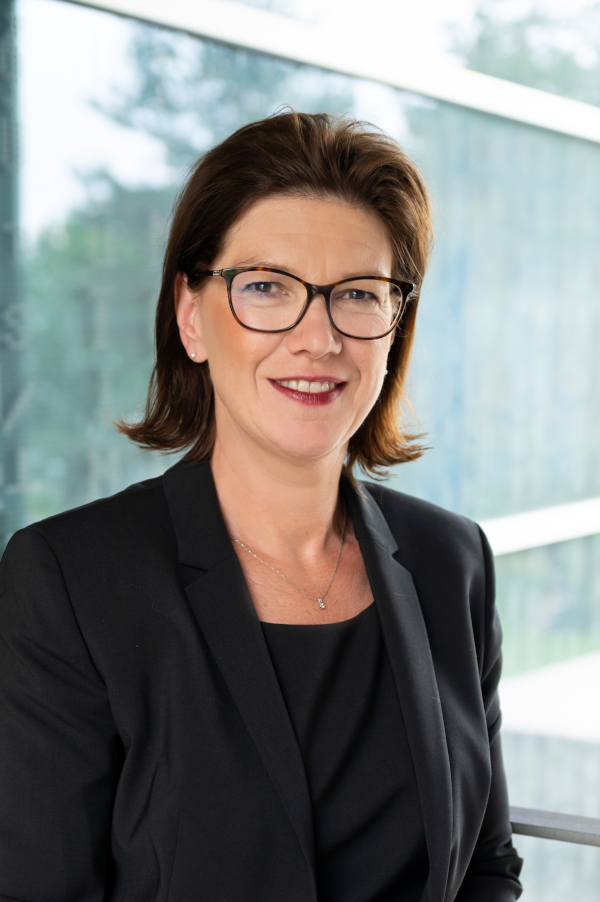
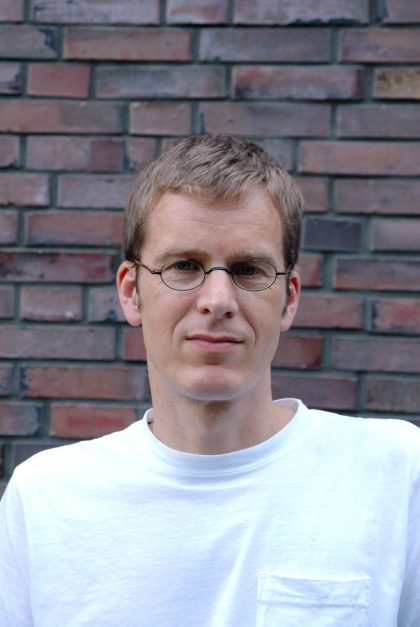
Dr. Maral Dadvar is a Research Fellow at Stuttgart Media University, specializing in Natural Language Processing (NLP) and its applications to social challenges. She holds a PhD in Computer Science from the University of Twente, Netherlands, where her doctoral work focused on cyberbullying detection in social networks. Her current research integrates NLP with identity resolution techniques for the FID Judaica project, aiming to enhance data integration in Jewish cultural heritage domains. Key areas of expertise include cyberbullying detection algorithms, domain-specific knowledge bases (e.g., JudaicaLink), and ethical AI applications. Her work bridges technical innovations with societal needs, addressing issues like online safety and cultural heritage digitization. Dadvar collaborates internationally with institutions like LIBER and the European Research Libraries network. Publications span interdisciplinary topics such as conservation conflict analysis using NLP, linked open data standards, and multilingual entity disambiguation. She actively mentors students pursuing Bachelor’s and Master’s theses in these domains. Her research emphasizes practical solutions for real-world challenges, combining computational methods with human expertise.
Prof. Ulrike Eidel is a Professor of Accounting and Controlling at Pforzheim University since 2002, specializing in financial accounting, corporate valuation, and behavioral finance. She holds a PhD from Saarland University and served as a Visiting Scholar at the University of Illinois at Urbana-Champaign. Her roles include Program Director of the Bachelor’s program in Controlling, Finance, and Accounting (since 2020) and leadership in conflict management initiatives. Education: Diplom in Business Administration (Ecole de Management Lyon, 1994) Diplom (Universität des Saarlandes, 1994) PhD (Saarland University, 1999) Research stay at UIUC, United States (1998) Research Interests: Focuses on financial reporting standards, corporate valuation, behavioral finance, and conflict resolution in negotiations. Integrates legal compliance and international accounting practices into academic and practical applications. Administrative Contributions: Supervises trainees in the Bachelor’s program since 2013 Member of the Faculty Council Co-founder of the interdisciplinary conflict management working group at Pforzheim University Labs/Teams: Active in the university’s conflict management initiatives, co-authoring works like Konflikte lösen - Verhandeln unter Stress (2019).
Prof. Kerstin Walther-Reining is a Professor at the Faculty of Industrial Engineering of Hochschule Mittweida University of Applied Sciences, specializing in Business Law and Labor Law. She holds a Dr. jur. from Johann Wolfgang Goethe University and is qualified as a Specialist in Tax Law. Her expertise spans contractual obligations, corporate governance, and legal compliance issues. She has taught at multiple institutions including Frankfurt School of Finance and Management, FH Coburg, and Südwestdeutsche Academy of Real Estate Management. Education: Law studies at Martin-Luther University Halle-Wittenberg (1990-1995) Legal clerkship at OLG Bamberg (1995-1997) Doctorate in 2004, Tax Law qualification in 2006 Her research includes property law registries and legislative impacts on cooperative law. She serves on professional boards such as the Coburg Chamber of Industry and Commerce examination committee. Teaching focuses on commercial law, labor law, and international legal systems. Publications emphasize legal compliance frameworks and corporate legal structures, with contributions to Wolters Kluwer legal reference works. Current roles include lecturing on anti-money laundering regulations and contractual dispute resolution mechanisms.
Wei Jia is a Professor at the School of Computer and Information, Hefei University of Technology, China. Their research focuses on artificial intelligence, machine learning, computer vision, and robotics, with contributions to knowledge graphs, biometric systems, and autonomous systems. They have co-authored over 130+ publications in top-tier journals and conferences, including venues like IEEE Transactions, CVPR, and AAAI. Research interests span deep learning techniques, graph neural networks, and optimization for large-scale systems. Notable work includes entity extraction frameworks, safety analysis in engineering systems, and swarm control algorithms for unmanned vehicles. Contributions also extend to data management systems, such as the TierBase key-value store and the OVERLORD data loader for foundation models. Publications highlight interdisciplinary applications in cybersecurity, robotics, and biomedical imaging. Their work often bridges theoretical advancements with practical implementations, addressing challenges in both software and hardware systems. No specific awards or grants are listed in the provided text.
Prof. Dr. rer. nat. habil. Gunter Saake is a full professor for Databases and Information Systems at the Otto von Guericke University Magdeburg since 1994. He holds a diploma (1985) and PhD (1988) from Technical University of Braunschweig, followed by a habilitation (1993). His roles include twice serving as Dean of the Faculty for Computer Science (2012 and 1996-1998). Research Focus: Database systems and query optimization Adaptive data management in heterogeneous hardware Graph databases integrating machine learning Software product lines and feature modeling High-performance computing and storage systems Current projects include LARDS (adaptive database engines), SMASH (storage engines for modern hierarchies), and EXPLANT (migrating software variants into product lines). His work addresses challenges like real-time OLTP/OLAP processing (COOPeR project), entity resolution under big data, and GPU-accelerated database operations. He has authored books on object-oriented modeling, databases, and Java. Collaborations: Active in EU projects (BRA working groups) and industry partnerships (e.g., MetaProteomeAnalyzer service). His research spans database theory, system architecture, and practical implementations across academia and industry.
Dr. Michaela Regneri is a Senior Researcher at the Department of Informatics, University of Hamburg, affiliated with the Machine Learning group. She holds a PhD in Computer Science and focuses on interdisciplinary research at the intersection of artificial intelligence, computational linguistics, and ethical data practices. Her work emphasizes data minimalism, sustainable AI development, and clinical NLP applications for neurodiversity analysis. Research interests include: AI ethics and societal impact Resource-conscious machine learning Natural language processing for clinical narratives Knowledge graph construction Investigative data journalism tools Her recent articles explore topics like violence detection in ancient texts, conceptual abstraction in LLMs, and ethical frameworks for data usage. Notable projects include the new/s/leak visualization tool for journalists and the Seedling corpus development initiative. She actively contributes to low-resource language technologies and autism spectrum disorder discourse analysis. Professional activities include supervision of student projects and participation in interdisciplinary collaborations. Her work bridges technical innovation with critical societal discourse, particularly addressing German cultural skepticism towards AI development.
Prof. Dr. Wolf is a full Professor at Leibniz University Hannover, holding the Chair of Civil Law, German, European and International Civil Procedure Law within the Faculty of Law. His affiliations include the Institute for Procedural and Attorney Law and the Institute for International Law. He leads research initiatives, supervises moot court teams, and organizes academic events such as the 'Studentenfutter' lecture series and the Hans Soldan Moot Court competition. Recent activities include publishing newsletters, hosting conferences on advocacy, and engaging in social media outreach via LinkedIn and Instagram. Research Focus: Civil procedure law, international legal frameworks, and legal informatics Key Projects: Development of legal education programs, participation in interdisciplinary research networks, and advocacy science initiatives Awards: No specific prizes mentioned in the text. Office details include Königsworther Platz 1, Hannover, with contact via lg.zpr@jura.uni-hannover.de.
Gerhard Weiss is a Professor at the Department of Data Science and Knowledge Engineering (DKE) at Maastricht University in the Netherlands. With a research career spanning over three decades, he has made significant contributions to the fields of multiagent systems, artificial intelligence, and machine learning. His work bridges theoretical foundations with practical applications across diverse domains including healthcare, social networks, and negotiation systems. Professor Weiss's research interests center around autonomous systems, particularly those inspired by biological principles. He has extensively explored multiagent coordination, negotiation frameworks, and transfer learning techniques. His work often combines theoretical rigor with practical implementations, as evidenced by his involvement in projects like Swarmlab@Work for RoboCup competitions. More recently, his research has expanded into medical informatics, focusing on drug-drug interactions, adverse reaction prediction, and semantic enhancement of biomedical datasets. An analysis of his recent publications reveals a clear trajectory from fundamental multiagent systems research toward applied data science with significant impact in healthcare domains. While maintaining strong theoretical foundations in areas like reinforcement learning and entity resolution, Weiss has increasingly focused on solving real-world problems through interdisciplinary collaboration with medical researchers and data scientists. Throughout his career, Professor Weiss has maintained an active research program with numerous collaborators, most notably Karl Tuyls with whom he has co-authored over 30 publications. His work demonstrates a consistent pattern of bridging theoretical computer science with practical applications across various domains. Professor Weiss leads research in the Swarmlab at Maastricht University, focusing on swarm intelligence and multi-robot systems. His team develops innovative approaches to complex coordination problems, often drawing inspiration from biological systems and social dynamics.
Wolfgang Nejdl is a distinguished Professor at Leibniz University Hannover, working within the Faculty of Mathematics and Computer Science and affiliated with the Institute of Information Systems. With an extensive publication record spanning over two decades, he has established himself as a leading researcher in Natural Language Processing, Information Retrieval, and Web Personalization. His work bridges theoretical advances with practical applications, particularly in clinical NLP and semantic web technologies. Nejdl's research interests encompass a broad spectrum of topics including Natural Language Processing, Information Retrieval, Web Personalization, Semantic Web technologies, Machine Learning applications, Clinical NLP, and Recommender Systems. His recent work has focused on critical challenges such as clinical outcome prediction using MIMIC datasets, financial literacy evaluation of large language models, and developing resources for low-resource languages like Tigrinya. He has made significant contributions to understanding data drift in clinical applications and developing interpretable AI systems for healthcare. His publication record shows a consistent trajectory of impactful research, with recent articles demonstrating his ability to tackle emerging challenges in NLP and AI. From his foundational work on web personalization using ODP metadata to his current research on clinical NLP and low-resource language processing, Nejdl has consistently addressed important problems at the intersection of information systems and human needs. His work on stance detection incorporating toxicity and morality analysis represents innovative approaches to understanding social media discourse. Among his notable achievements are the development of the EDUTELLA P2P infrastructure based on RDF, significant contributions to boilerplate detection algorithms, and pioneering work on preventing shilling attacks in recommender systems. His research has been widely cited, reflecting its substantial impact on the fields of web science and natural language processing. Nejdl has supervised numerous students and collaborated extensively with researchers worldwide, particularly with Alexander Loeser, Jens-Michalis Papaioannou, and Paul Grundmann. His work demonstrates a consistent focus on practical applications of theoretical advances, particularly in healthcare and web technologies. He has also worked on important infrastructure projects like the L3S Research Center, contributing to the broader academic and technological ecosystem.
Monique Reis is a Professor of General Business Administration, specializing in Accounting, at Fulda University of Applied Sciences (Germany). She has headed the Master’s program in Accounting, Finance, and Controlling since 2014 and served on the board of the Faculty of Economy's Friends and Sponsors Association until 2016. Her expertise spans national and international accounting standards (HGB, IFRS, US-GAAP), corporate taxation, and tax law reforms. Doctorate in International Corporate Taxation (University of Würzburg) Teaching areas: HGB/IFRS Financial Statements, National/International Tax Law Former partner at Dr. Peemöller/Dr. Reis GbR (2000-2011) Co-founder of German Institute for Certification in Accounting e.V. (2005-2011) Her research focuses on corporate accounting harmonization, tax optimization strategies, and fiscal challenges in multinational operations. She has published extensively on IFRS conversion, VAT reforms, and business succession taxation. Reis has lectured at institutions like DATEV eG and IHK Würzburg on topics including consolidation practices, charitable organization taxation, and IFRS/US-GAAP comparisons. She also developed ZFU-certified distance learning courses in accounting and tax law.
Diego Bernal Bernal serves as a Postdoctoral Fellow at the Structural Biology of Disease Mechanisms Laboratory within the Biofisika Institute, a collaborative research entity between the Spanish National Research Council (CSIC) and the University of the Basque Country (EHU). The institute operates from the EHU Science Park in Leioa, Bizkaia, Spain, focusing on molecular-level disease analysis. His research centers on structural biology and disease pathogenesis, with specific emphasis on molecular interactions, protein conformational dynamics, biochemical pathways in pathology, biophysical characterization of macromolecules, and structural determinants of disease progression. This work integrates experimental and computational approaches to elucidate mechanisms underlying human disorders. As a core member of the Structural Biology of Disease Mechanisms Laboratory, he contributes to the institute's mission of advancing fundamental biomedical knowledge through high-resolution structural analysis and mechanistic studies of disease-related biomolecules.
Michael Strube is an Honorary Professor at the Department of Computational Linguistics at Heidelberg University and leads the Natural Language Processing (NLP) Group at HITS (Heidelberg Institute for Theoretical Studies) in Germany. He has been with HITS (previously EML Research and European Media Laboratory) since 2003 and became an Honorary Professor at Heidelberg University in 2010. He is also a Fellow of the Association for Computational Linguistics (2019). Dr. Strube received his PhD from the Computational Linguistics Department at the University of Freiburg in December 1996 under the supervision of Udo Hahn. Between 1997 and 1999, he was a postdoctoral fellow at the Institute for Research in Cognitive Science at the University of Pennsylvania, Philadelphia. Michael Strube's research focuses on semantics and discourse pragmatics, graph-based methods for text representation and analysis, extraction of world knowledge from Wikipedia for computational linguistics, and development of methods to synchronize multilingual content. His work spans coreference resolution, discourse processing, text summarization, entity linking, and natural language generation. He has made significant contributions to coherence modeling, anaphora resolution, and the application of geometric deep learning in NLP. His recent publications demonstrate strong trends in discourse processing, coreference resolution, and the application of geometric approaches to NLP problems. Strube has pioneered work in hyperbolic space for entity typing and graph embeddings, while maintaining his foundational work in discourse and coherence. His research bridges theoretical linguistics with practical NLP applications across multiple languages. Dr. Strube has received several prestigious awards, including: Fellow of the Association for Computational Linguistics (2019) Best Paper Award for "Fine-grained entity typing in hyperbolic space" (2019) Honorable Mention for the IJCAI-JAIR best paper prize 2010 for "Knowledge Derived from Wikipedia for Computing Semantic Relatedness" Professor Strube has advised numerous PhD students who have gone on to successful careers in academia and industry. His current PhD students include Yi Fan, Wei Liu, Haixia Chai, Mehwish Fatima, and Sungho Jeon, working on topics such as discourse structure, discourse relations, coreference resolution, and cross-lingual summarization. His former students include Federico Lopez, Benjamin Heinzerling, Mohsen Mesgar, and Nafise Moosavi, who now hold positions at institutions like Argo AI, RIKEN, Bosch Center for AI, and the University of Sheffield. As group leader of the NLP Group at HITS, Strube oversees a team focused on advancing natural language processing through research in discourse analysis, coreference resolution, text generation, and knowledge extraction. The group has been involved in numerous collaborative projects and has made significant contributions to the field through publications, shared tasks, and community building via workshops and conferences.
Anish Das Sarma is a researcher affiliated with Google, USA , specializing in uncertain data management, MapReduce algorithms, and knowledge graph systems. He earned a PhD from Stanford University in 2010 under the supervision of Jennifer Widom and Alon Halevy, with a dissertation on "Managing Uncertain Data." His career spans collaborations with leading institutions, focusing on scalable data integration, social choice theory, and machine learning applications in scholarly knowledge organization. PhD in Computer Science, Stanford University (2010) Key collaborations: Stanford, Google Research, NFDI4DataScience His research interests intersect uncertain data modeling , MapReduce optimization , and large language model applications for scientific synthesis. Recent work includes FAIR data frameworks, ontology learning, and clinical entity linking. Article trends highlight his evolution from foundational database systems (2004-2015) to modern applications of LLMs in scholarly communication (2023-2024). Key areas: scalable algorithms, research data management, and ethical AI.
Nadeen Fathallah is a researcher at the University of Stuttgart, affiliated with the Analytic Computing group at KI. Her work spans AI applications for accessibility, computer vision, and knowledge engineering. Research Focus: Web accessibility, ontology learning, and LLM-based solutions for Deaf/Hard of Hearing communities Projects: Key contributor to the IKILeUS project (Integrated AI in Teaching) at the University of Stuttgart Teaching: Has served as teaching assistant and assistant lecturer at German International University, German University in Cairo, and The Knowledge Hub Her research explores: Automated detection/correction of web accessibility violations (e.g., AccessGuru platform) Improving video captions using large language models Accessibility tools for tabular data (EchoTables) Ontology learning pipelines (NeOn-GPT, LLMs4Life) Recent work shows a focus on combining LLMs with domain-specific challenges across multiple fields, particularly emphasizing inclusive design principles. Contact details: Office at Universitätsstraße 32, Stuttgart, Germany (Room: 2.312b). Available via +49 711 685 88130.
Samira Si-Said Cherfi is a Professor at the Centre d'études et de recherche en informatique et communications (CEDRIC) within the Conservatoire National des Arts et Métiers (CNAM) in Paris. With a research career spanning over 25 years, she has established herself as a leading expert in data quality, conceptual modeling, and ontology engineering. Her work bridges theoretical computer science with practical applications in healthcare systems, business process management, and knowledge representation. Her research interests focus on data quality assessment , conceptual modeling methodologies , ontology engineering for complex systems , and cyber-physical security in healthcare infrastructures . She has pioneered approaches for evaluating RDF data completeness, developing quality metrics for conceptual schemas, and creating ontologies for healthcare security. Her work demonstrates how formal modeling techniques can solve real-world problems in information systems. Analysis of her recent publications reveals a strong trend toward cyber-physical security and healthcare information systems , where she applies semantic technologies to address cascading effects in critical infrastructures. Her work consistently connects theoretical foundations in conceptual modeling with practical applications in knowledge graphs and data integration. She has made significant contributions to understanding how OWL semantics can be effectively utilized in RDF-based knowledge graphs. As an active member of the academic community, she has served as guest editor for special journal issues and contributed to major international conferences including RCIS, CAiSE, and EDOC. Her leadership in the field is evident through her editorial roles and collaborative research projects. Professor Si-Said Cherfi leads research within the CEDRIC laboratory, specifically contributing to the 'Complex data, machine learning and representations' and 'Data mining and statistics' research teams. Her work often involves interdisciplinary collaboration with healthcare professionals, security experts, and industry partners to address complex challenges in information systems security and data quality.