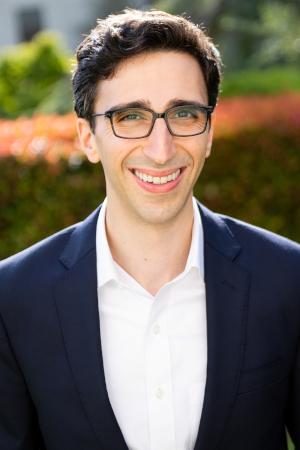
Danny Yagan is a Researcher at the University of California, Berkeley Department of Economics, with expertise in public economics, taxation, and income inequality. He contributes to the National Bureau of Economic Research (NBER) and the Conference on Research in Income and Wealth. His research focuses on fiscal policy, including deficit sustainability and the "growth dividend" concept. He has extensively studied pass-through business entities' impact on labor income share and inequality, using administrative tax data to analyze wealth distribution and taxation of top earners. Recent work examines spatial inequality trends, place-based redistribution, and the role of colleges in intergenerational mobility. Collaborations with scholars like Raj Chetty, Emmanuel Saez, and Owen Zidar highlight his interdisciplinary approach. Yagan's publications span topics including tax reform, capital taxation, and household investment behavior. He is actively involved in policy analysis and empirical economic research.
AnHai Doan is the Vilas Distinguished Achievement Professor and Gurindar S. Sohi Professor in the Department of Computer Science at the University of Wisconsin-Madison. His research focuses on data integration, entity matching, and data science, with particular emphasis on building end-to-end systems that leverage machine learning, scalable data management, and human-data interaction. He leads the Magellan project, which develops open-source tools for entity matching as part of the Python data ecosystem. Dr. Doan's research interests include: Data cleaning and integration: Building end-to-end data integration systems as parts of the Python ecosystem of open-source data tools Data science: Developing an agenda that integrates research, system building, education, and outreach, with focus on data quality Crowdsourcing: Pioneering work on using crowdsourcing for data management and integration Knowledge bases: Building community-centric knowledge bases His recent work shows a strong trend toward developing practical systems for data integration that combine machine learning with traditional database techniques. The Magellan project represents a comprehensive effort to build an end-to-end entity matching system, with numerous publications spanning entity matching algorithms, debugging tools, and cloud-based matching services. His research increasingly focuses on the intersection of data science and data management, particularly on data quality issues. Selected scientific awards: Gurindar S. Sohi Professorship (2020) Vilas Distinguished Achievement Professorship (2018) SIGMOD Research Highlight Award (2017) Vilas Associate, UW-Madison (2016) Alfred P. Sloan Research Fellowship (2007) NSF CAREER Award (2004) ACM Doctoral Dissertation Award (2003) Dr. Doan has been actively involved in service to the data management community, including serving on the SIGMOD Advisory Board, as associate editor for VLDB, and co-chairing the industrial program for VLDB. He has also played a key role in strategic initiatives at UW-Madison, including helping to establish the School of Computer, Data, and Information Sciences. He has mentored numerous students and researchers through his work on the Magellan project and related research efforts. Additionally, he co-founded GreenBay Technologies to commercialize Magellan, which was later acquired by Informatica. He leads the Database Group at UW-Madison and has been instrumental in developing data science educational programs at both undergraduate and graduate levels. His work bridges research, education, and practical applications in the rapidly evolving field of data management and data science.
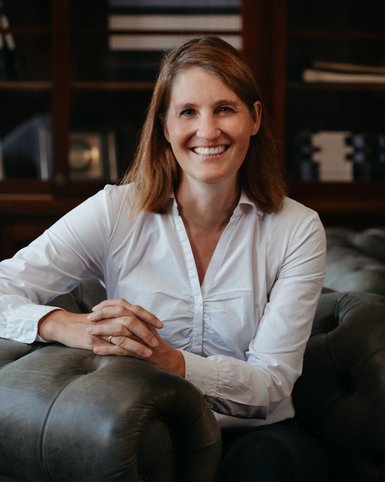
Ning Ai is an Associate Professor at the University of Illinois Chicago (UIC), holding a joint appointment in the Department of Urban Planning and Policy and the Institute for Environmental Science and Policy. Her expertise lies in urban sustainability, material/waste management, and urban metabolism. She joined UIC in 2011 with a Ph.D. from Georgia Tech, an MIT Master's, and dual bachelor's degrees from Tsinghua University and Renmin University of China. Her research integrates life cycle perspectives and data-driven approaches to environmental planning, emphasizing sustainable transportation and waste management. Notable projects include studies on food recovery programs, electric vehicle battery recycling, and neighborhood-level traffic impact analysis in Chicago. She has served on the ACSP Committee on Diversity and led the Air & Waste Management Association’s Sustainability Division (2020-2022). Teaching spans courses like Environmental Planning and Policy, Urban Economics, and System Methods for Environmental Policy. Her work bridges academia and practice, collaborating with entities like the World Bank and Georgia’s Department of Natural Resources. She leads a team advancing eco-friendly product adoption through projects like PFAS-free food service initiatives. Publications focus on sustainable urban systems, waste management frameworks, and policy design. Her research addresses both broad sustainability challenges and localized solutions, emphasizing interdisciplinary collaboration and community engagement.
Dr. Edoardo Bertone is a Senior Lecturer at Griffith University's School of Engineering and Built Environment - Architecture and Design. He holds a PhD in Water Resources Engineering from Griffith University and Bachelor/Master degrees in Civil Engineering from the Polytechnic University of Turin. His research focuses on data-driven modeling, Bayesian Networks, and System Dynamics applied to water resources management, climate change adaptation, and the water-energy nexus. He is affiliated with Griffith's Cities Research Institute and Australian Rivers Institute, collaborating on projects with water utilities, governments, and private entities. Dr. Bertone has received awards such as the 2024 PVC Science Excellence in Teaching and the JSPS Fellowship (2022). He supervises doctoral and master's students in areas like water quality management and climate change impacts. Education: PhD in Engineering (Griffith University, 2015); MEng and BEng in Civil Engineering (Polytechnic University of Turin, 2009-2011). Research Interests: Water quality modeling, drinking water optimization, data-driven prediction, climate change adaptation, and sustainable development goals. He leads over 25 funded research projects, including initiatives on reservoir water quality management in Thailand, real-time nutrient monitoring, and cyanobacteria bloom modeling. Dr. Bertone’s work integrates advanced sensors, machine learning, and Bayesian networks to address environmental challenges. Awards: Listing includes PVC Excellence Awards (2024, 2017), JSPS Fellowship, and recognition as a Rising Star in Queensland Science (2015). Grants & Supervision: Principal supervisor for 10+ doctoral candidates and collaborator on projects funded by Seqwater, CSIRO, and the Ian Potter Foundation. Key grants include $745k for biofertilizer combatting eutrophication and $269k for coagulation optimization models. Dr. Bertone’s contributions extend to urban sustainability, co-editing the book *SeaCities: Urban Tactics for Sea-Level Rise* and developing frameworks for integrating SDGs into architectural education.
Jonathan McCarthy is a Professor and Director of the LLM Business Law Programme at University College Cork (UCC), serving as Deputy Director for Graduate Research in the School of Law. He holds a BCL and LLM from UCC and earned his PhD there in 2018. His research focuses on financial law and corporate governance, particularly regulatory frameworks for FinTech and SME support. He has taught at UCC since 2015 and previously at University of Limerick. Education: BCL (University College Cork) LLM (University College Cork) PhD (University College Cork, 2018) Research interests emphasize EU financial regulation, digital finance innovation, and corporate rescue mechanisms for SMEs. His work explores the efficacy of legal processes for start-ups and the adaptation of traditional frameworks to emerging technologies like blockchain and distributed ledger systems. He frequently reviews submissions for journals and publishers in his field. Teaching spans courses such as Company Law, Digital Finance Regulation, and Corporate Law at both undergraduate and postgraduate levels. He also serves as an external examiner for the Dublin Business School's LLB program. Professional development includes certifications in research integrity, universal design for learning, and connected curriculum strategies. Grants and funding include an Irish Research Council Government of Ireland Postgraduate Scholarship and the Ronan Daly Jermyn Scholarship during his doctoral research on SME rescue procedures in Ireland. His work combines qualitative analysis with policy advocacy for improved legal frameworks. Labs/Teams: Active in cross-disciplinary research within UCC's School of Law, collaborating on projects related to FinTech regulation and EU policy implementation.
Ion Androutsopoulos is a Professor of Artificial Intelligence in the Department of Informatics at Athens University of Economics and Business (AUEB), where he also serves as Head of Department. He is founder and co-director of AUEB's Natural Language Processing Group and an Adjunct Researcher at the Digital Curation Unit and "Archimedes" Research Unit of the Research Centre "Athena". His research spans multiple dimensions of Artificial Intelligence with a focus on Natural Language Processing. Key interests include: Machine learning in NLP, particularly deep learning and large language models Question answering and retrieval augmented generation for document collections Dialog systems for new languages and knowledge domains Sentiment analysis and emotion recognition from text and speech Detecting toxic posts and disinformation online Image-to-text generation for medical diagnostics NLP applications in biomedical, legal, and financial domains His recent publications demonstrate strong activity across medical AI (particularly ImageCLEFmed Caption competitions where his group consistently ranks 1st-2nd), legal NLP (LexGLUE benchmark), financial NLP (EDGAR-CRAWLER), and multilingual challenges. His work shows increasing emphasis on large language models, explainability, and practical applications. Notable awards include: Top 2% scientist worldwide (Stanford University database, 2023) Multiple AUEB Excellent Teaching Awards (2017-18, 2021-22, 2023-24) Three consecutive BioASQ awards (2018-2020) Multiple 1st/2nd place rankings in ImageCLEFmed Caption competitions (2021-2025) He actively organizes major events including the Athens Natural Language Processing Summer School (AthNLP) and SemEval tasks. His group maintains strong industry and research collaborations, particularly in medical AI applications where they've developed systems that generate diagnostic captions from medical images with state-of-the-art performance.
Karin Kreutzer is Professor of Social Business at EBS Business School, EBS University of Business and Law, holding the Chair of Social Business while serving as Head of the Impact Institute and Vice Dean of Research. Her academic leadership bridges theoretical rigor with practical social impact through extensive engagement with social enterprises and nonprofit organizations. Her educational foundation includes a doctorate from the University of St. Gallen complemented by studies at Bocconi University, Universities of Passau and Parma, and a visiting scholar position at ESADE Business School in Barcelona. This diverse academic background informs her interdisciplinary approach to social business research. Professor Kreutzer's research program centers on social entrepreneurship, corporate social responsibility, strategic NGO-corporate partnerships, and nonprofit strategic management, employing qualitative methodologies to dissect organizational identity dynamics and hybrid institutional logics. Her work reveals how social enterprises navigate inherent tensions between social missions and business sustainability, particularly during scaling phases and organizational transitions. Analysis of her 2021-2024 publications shows evolving focus on age-diverse volunteer teamwork, discursive construction of social entrepreneurship in pitch contexts, and career transitions of corporate managers entering nonprofit sectors. These studies consistently appear in premier outlets like Academy of Management Journal , Journal of Management Studies , and Journal of Business Ethics , demonstrating methodological sophistication and theoretical contribution. She actively translates research into practice through board memberships in social enterprises and advisory roles for nonprofits and public sector entities. Her teaching spans bachelor's, master's, MBA, and PhD programs covering business administration, CSR, social entrepreneurship, and qualitative research methods. As Head of the Impact Institute, she directs a research hub fostering social innovation through academic-practitioner collaboration, with current projects examining organizational responses to human rights challenges during conflicts and sustainability managers' moral engagement.
Dr Gëzim Visoka serves as Associate Professor of Peace and Conflict Studies at Dublin City University (DCU), where he also completed his PhD in Politics and International Relations. A prolific scholar, he has authored or co-edited 10 books, published 25 journal articles, and contributed 20 book chapters, establishing himself as a leading voice in critical peace studies and state recognition theory. Education: PhD in Politics and International Relations, Dublin City University Visoka's research interrogates the intersections of peacebuilding, state formation, and global governance, with particular emphasis on diplomatic recognition practices, the foreign policy of small states, and Kosovo's contested statehood. His critical approach challenges liberal peacebuilding paradigms while exploring emancipatory alternatives through concepts like 'normal peace' and 'peace multitudes,' grounded in extensive fieldwork across the Western Balkans. Analysis of his recent publications reveals three dominant trajectories: 1) Theoretical innovations in state recognition/derecognition dynamics, 2) Critical examinations of 'counter-peace' as systemic obstruction to conflict resolution, and 3) Investigations into micro-level normalization practices in post-conflict settings. His work consistently bridges high theory with empirical studies of Kosovo, demonstrating how everyday state-making practices intersect with international governance structures. Dr Visoka holds influential editorial positions including Associate Editor of Peacebuilding journal, editor of Routledge Studies in Statehood book series, co-editor of Rethinking Peace and Conflict Studies , and editor-in-chief of the Palgrave Encyclopaedia of Peace and Conflict Studies . Complementing his academic work, he maintains 15+ years of practical engagement with civil society organizations and policy institutions in post-conflict environments, providing critical insights into transitional justice implementation and peacebuilding effectiveness.
Jennifer Neville is a Senior Principal Researcher at Microsoft Research Redmond and holds the Samuel Conte Chair Professor of Computer Science and Statistics at Purdue University. With over 100 publications and 10K citations, her research spans data mining, machine learning, and AI algorithms for relational and networked domains including social networks, epidemiology, and web analytics. Education: BS in Computer Science, University of Massachusetts Amherst (2000) MS in Computer Science, University of Massachusetts Amherst (2004) PhD in Computer Science, University of Massachusetts Amherst (2006) Her work focuses on relational learning techniques that exploit connections between entities to enhance pattern discovery. Recent research explores large language models (LLMs), emphasizing alignment with user intent through interaction at scale, while addressing statistical biases from graph structures. Selected scientific awards include the NSF Career Award (2012), ICDM Best Paper (2009), and IEEE’s 10 to Watch in AI (2008). She served on the AAAI Executive Council (2015-2018) and chaired multiple conferences including SIAM Data Mining (2019) and ACM Web Search (2016). Contact: neville@cs.purdue.edu jenneville@microsoft.com
Xinya Du is an Assistant Professor in the Department of Computer Science at the University of Texas at Dallas (UT Dallas), affiliated with the Erik Jonsson School of Engineering and Computer Science. She holds a Ph.D. in Computer Science from Cornell University and completed a postdoctoral fellowship at the University of Illinois at Urbana-Champaign. Her research focuses on advancing trustworthy and impactful AI systems, particularly in Natural Language Processing (NLP), Large Language Models (LLMs), and Vision-Language Models (VLMs). Key research areas include Document understanding and knowledge acquisition Trustworthy reasoning and hallucination detection in LLMs Applications of NLP in scientific research and multimodal systems Alignment of AI systems with human values Dr. Du has received notable awards such as the NSF CAREER Award (2024), Amazon Research Award (2023), and recognition as a Spotlight Rising Star in Data Science. She has authored over 30 papers in top venues like ACL, EMNLP, NeurIPS, and CVPR, contributing to foundational work in multimodal reasoning, LLM evaluation, and automated scientific hypothesis generation. She teaches advanced courses including CS 6301: Special Topics in Computer Science - Deep Learning for NLP and actively mentors students in research projects. Her work has been highlighted in major media and led to impactful open-source contributions, including repositories for event extraction and LLM benchmarking.
Dr. Hongwei Wang is a Senior Researcher at Tencent AI Lab Seattle , specializing in applied machine learning for Natural Language Processing and Interconnected Systems . His work bridges Knowledge Graphs , Recommender Systems , and Graph Neural Networks , with a focus on large language models and retrieval-augmented generation. Ph.D. (2018), B.E. (2014) in Computer Science from Shanghai Jiao Tong University Postdoctoral Researcher : Stanford University (2019-2021), University of Illinois Urbana-Champaign (2021-2022) Dr. Wang’s research explores integrating Knowledge Graphs with Graph Neural Networks to enhance recommendation systems, language models, and information retrieval. His work spans Retrieval-Augmented Generation , Representation Learning , and GAN-based Graph Modeling , with recent papers on State-Space Exploration for LLM agents and Semantic Watermarking . His 15 most recent publications (2022-2024) focus on Retrieval Granularity , Interactive Memory , and Agent Systems , with keywords spanning Computer Science , Machine Learning , and Knowledge Graphs . Trends highlight advancements in Token-Level Semantic Matching , Schema-Guided Event Prediction , and Multi-Document Summarization . Scientific Awards: 2020 CCF Outstanding Doctoral Dissertation Award 2018 Google Ph.D. Fellowship Dr. Wang contributes to open-source projects like DKN and RippleNet , with 11 repositories on GitHub. He actively engages in Knowledge Graph Conferences (KDD, WWW, AAAI) and studies Chinese Classical Poetry and Film Arts .
Dan M. Ionel, Professor and inaugural L. Stanley Pigman Chair in Power at the University of Kentucky (UK), directs the Power and Energy Institute Kentucky (PEIK). He is affiliated with the SPARK Laboratory in the Department of Electrical and Computer Engineering, focusing on renewable energy, electric machines, and smart grids. Alternative and Renewable Energy Technologies Electric Machines and Power Electronic Drives Electromagnetic Devices Electric Power Systems Energy Storage Smart Grids and Buildings His research integrates machine learning with electromagnetic design for applications like electric vehicles and aircraft propulsion. Recent work includes axial flux permanent magnet machines with Halbach arrays and cryogenic thermal management systems. Scientific awards include IEEE Fellowship. Research is sponsored by NSF, DOE, NASA, and industry partners like ANSYS, EPRI, and Regal Rexnord. Collaborations span national labs (NREL, ORNL), utilities (LG&E, TVA), and aerospace entities.
Martin Pickup serves as Associate Professor in Philosophy and Director of the Birmingham Centre for Philosophy of Religion at the University of Birmingham, having joined in 2021 after a decade of Oxford-based academic roles including the Turpin Junior Research Fellowship at Oriel College. His career spans teaching, research leadership, and international collaboration such as an Visiting Professorship at the University of Navarra. His educational foundation includes: DPhil in Philosophy (University of Oxford, 2012) BPhil in Philosophy (University of Oxford, 2009) MA in Philosophy (King’s College London, 2006) BA in Philosophy and Theology (University of Oxford, 2005) Pickup’s research integrates Philosophy of Religion, Metaphysics, and Early Modern Philosophy with distinctive methodology: he applies analytic metaphysics to test religious claims’ coherence without advocating theological positions, develops 'situationalism' to explain metaphysical indeterminacy in change and identity, and critically engages Leibniz’s framework for necessity/contingency. His work consistently bridges abstract theory and concrete religious practices, particularly focusing on Eucharistic metaphysics and petitionary prayer. Analysis of his 14 publications (2014-2025) reveals three evolving strands: early Leibniz scholarship (2014-2016), foundational situationalism papers resolving identity puzzles (2016), and mature work connecting indeterminacy frameworks to theology (2021-2025). Recent outputs demonstrate increasing synthesis between metaphysical tools and religious ritual analysis, exemplified by 2025 publications on Eucharistic presence and teleology. His professional recognition includes: Finalist in 'I’m a Researcher Get Me out of Here' (2017) Pickup actively supervises PhD candidates across his research domains and teaches from first-year 'Problems of Philosophy' to Masters-level 'Analytic Theology', though specific grants remain unmentioned in source materials. His leadership as Centre Director involves curating interdisciplinary dialogue through workshops and public engagements like the Institute of Art and Ideas fellowship (2016-17). As Director of the Birmingham Centre for Philosophy of Religion, he cultivates a collaborative hub for advancing philosophical theology through conferences, publications, and cross-departmental initiatives, positioning the Centre as a nexus for rigorous examination of religion’s conceptual foundations.
Min Peng is a Professor at Wuhan University's School of Computer Science. His research focuses on artificial intelligence, machine learning, natural language processing, and knowledge graphs. He has collaborated extensively with institutions like Hefei University of Technology and the University of Chinese Academy of Sciences. His work bridges theoretical advancements in AI with practical applications in finance, social media analysis, and network optimization. Recent contributions include neural-symbolic reasoning frameworks, contrastive learning for knowledge graphs, and financial benchmarking with large language models. Research interests emphasize scalable machine learning models for complex reasoning tasks, explainable AI, and domain-specific applications in finance and social networks. Over 100 publications span venues like WWW, ACL, and NeurIPS, highlighting interdisciplinary impact. Notable projects include SymAgent (neural-symbolic agent frameworks), PIXIU (financial LLM benchmark), and DTC (commonsense machine comprehension). Key technical trends include integrating large language models with structured data, temporal knowledge graph reasoning, and transfer learning across domains. His work often addresses real-world challenges in data efficiency, interpretability, and cross-domain scalability. Current efforts explore financial LLMs, agent-based reasoning systems, and multimodal applications. While no specific grants or awards are listed in the provided data, his prolific publication record indicates sustained research excellence. Collaboration networks include teams in computer science, electrical engineering, and finance disciplines.
Professor Xue Li is a faculty member in the School of Electrical Engineering and Computer Science at the University of Queensland. His research focuses on machine learning, data mining, and their applications in healthcare, materials science, and computer vision. He has authored over 300 publications, including seminal works on knowledge graph completion, video quality enhancement, and alloy design using machine learning. His work bridges theoretical advancements with real-world applications, such as clinical diagnosis andTinyML systems. Key research interests include graph representation learning, medical informatics, and efficient algorithms for multimedia data. Notable contributions include developing commonsense-enhanced relation extraction models and frameworks for compressed video reconstruction. His research also addresses challenges in federated learning and privacy-preserving genomics. Prof. Li has collaborated extensively with industry and academia, contributing to projects in RFID systems, electronic nose pattern recognition, and cybersecurity. His work is published in top-tier venues like IEEE Transactions and ACM conferences. Despite no listed awards, his prolific output underscores academic impact.