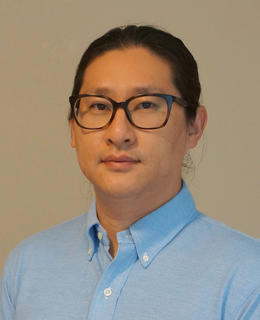
Dr. Daniel O'Brien serves as a Lecturer at the University of Essex's Department of Literature Film and Theatre Studies. His research explores the intersection of cinema, interactive art, and computer gaming through a postphenomenological framework. He examines how digital platforms transform audiences into active participants within visual and auditory narratives. His scholarly work investigates point-of-view techniques in cinema, representations of digital technology in speculative fiction, and the evolving relationship between creators and audiences in interactive media. Recent publications analyze screen representations of computers, video conferencing interfaces, and biographical portrayals in contemporary cinema. As Graduate Director since 2020, Dr. O'Brien oversees academic programs while teaching courses on digital storytelling, interactive media, and postphenomenological approaches to visual culture. His PhD from the University of Glasgow (2016) established the foundation for his research into embodied technological experiences across media platforms.
Hao-Wen Dong is an Assistant Professor in the Department of Performing Arts Technology at the University of Michigan, with an affiliation to the Computer Science and Engineering Department. His research focuses on Human-Centered Generative AI for content creation, emphasizing music, audio, and video domains. He holds a Ph.D. in Computer Science from UCSD, advised by Julian McAuley and Taylor Berg-Kirkpatrick. Affiliations: University of Michigan (Primary), UCSD (Ph.D.), National Taiwan University (B.S.) Research Pillars: Generative AI models for new domains, AI-assisted creative tools, and multimodal content creation His work spans music generation (e.g., MuseGAN), audio synthesis (e.g., ViolinDiff), and multimodal systems (e.g., TeaserGen). He has led over 25+ publications in top venues like ISMIR, ICASSP, and ICLR. He advises students in interdisciplinary projects and teaches courses on AI Music and Generative AI for Music/Audio Creation. Notable awards include the Doctoral Award for Excellence in Research (2024) and Rising Stars in AI (2024).
Eamonn O'Neill is a Professor and Head of the Department of Computer Science at the University of Bath. His research focuses on innovative human-technology interaction, including mixed/augmented/virtual reality, and interaction with intelligent systems. His work emphasizes applied science, deriving design principles grounded in theory and empirical testing. He leads the UKRI CDT in Accountable, Responsible and Transparent AI and is affiliated with multiple centers, including the Centre for the Analysis of Motion, Entertainment Research & Applications (CAMERA) and the REal and Virtual Environments Augmentation Labs (REVEAL). His projects span EU-funded initiatives such as EMIL and UNREST, addressing topics like embodied interaction, AI regulation, and social cohesion. Recent research explores emotion recognition in VR exergaming, EEG-based brain-computer interfaces, and regulatory frameworks for AI. His work contributes to UN Sustainable Development Goals related to innovation and infrastructure. Collaborations include academic institutions and industry partners across Europe.
Cristiano Politowski is an Assistant Professor in the Department of Computer Science at Ontario Tech University's Faculty of Science. His research focuses on software engineering for video games, automated testing, AI4SE, and empirical studies. He holds a Ph.D. in Software Engineering from Concordia University (2022), an M.Sc. in Computer Science from Universidade Federal de Santa Maria (2017), and a B.Sc. in Computer Science from Universidade Regional do Estado do Rio Grande do Sul (2014). Prof. Politowski has extensive postdoctoral experience at Université de Montréal (GEODES group) and École de Technologie Supérieure (ÉTS), focusing on game engine architecture, requirements specification, and certifiable RTOS systems. He has organized workshops like ASE4Games 2021/2022 and FaSE4Games 2024, emphasizing game software engineering. His research interests span video game development challenges, software testing methodologies, and leveraging AI for software engineering. Notable projects include analyzing game engine subsystem coupling, assessing video game balance with autonomous agents, and curating datasets like PlayMyData. Prof. Politowski has secured $20K from MITACS for a 5G infrastructure project during the pandemic and received the Concordia Accelerator Award (2021). His work has been published in venues like MSR, ICSE, and IEEE Transactions.
Christopher Witulski is an Associate Teaching Professor of Ethnomusicology at Bowling Green State University's College of Musical Arts, where he has served since 2016. He holds a PhD in Ethnomusicology from the University of Florida (2014). His research focuses on Moroccan ritual music, North African musical practices, and the intersection of music with religion, globalization, and cultural identity. Witulski is the author of two major works: The Gnawa Lions: Opportunity and Authenticity in Moroccan Ritual Music (2018) and Focus: Music and Religion of Morocco (2019). His articles explore how musicians navigate listener expectations, global markets, and ritual aesthetics in contemporary North Africa. Witulski is an active performer on violin, 'ud, and banjo, with professional experience in orchestras and festivals across Morocco, Florida, Georgia, and Michigan. His performance interests include Arabic music, American old-time music, and building banjos. Additional research interests incorporate computational music analysis, ethical dimensions of religious music, and interdisciplinary music studies. His scholarly articles (2014–2023) consistently analyze Moroccan musical scenes, Sufi rituals, and global music dynamics. No scientific awards are explicitly listed, though his publications indicate prestigious contributions to ethnomusicology. He previously taught at Florida State University before joining BGSU. No lab affiliations or grant details are provided in the text.
Jill Dunham is an Associate Professor in the Department of Mathematics at Schmid College of Science and Technology , Chapman University. Her research spans topological graph theory , computational problems in discrete mathematics , recreational mathematics , and pedagogy , focusing on tactile learning and course assessment. She earned a B.Sc. from Iowa State University and M.Sc. and Ph.D. from George Mason University. Education: B.Sc. in Mathematics, Iowa State University M.Sc. in Mathematics, George Mason University Ph.D. in Mathematics, George Mason University Her research projects include finding the maximum touching number for coin graphs , enumerating solutions to paper-folding problems , and applying graph theory to commutative algebra structures . She also contributes to pedagogical innovations through hands-on activities in undergraduate mathematics education. Recent publications include work on round-robin tournaments , edge colorings in Hamiltonian cycles , and coin graph representations . Her collaborations appear in volumes like The Mathematics of Various Entertaining Subjects and Numery .
Dr. Julia Winkler is a Researcher at the Chair of Communication Psychology and New Media at the University of Würzburg , Germany. She earned her doctorate in 2023 with the dissertation topic "The experience of emotional shifts as a narrative process." Her research focuses on narrative psychology , media effects on emotional states , and climate change communication , particularly through fictional narratives. She has extensively published on emotional shifts in stories, narrative transportation, and strategies to counter extremist online content. Education: MA and BA in Media and Communication Studies (University of Mannheim) Her recent publications analyze emotional responses to media stimuli (2024), event-congruent emotions in narrative persuasion (2023), and radicalization prevention through media literacy education (2020–2017). She actively contributes to understanding how narrative structures influence affective experiences and decision-making, with a special interest in climate communication strategies. Her work appears in journals like Frontiers in Psychology , Media Psychology , and Discourse Processes , as well as edited volumes on extremist propaganda prevention.
Kangsoo Kim is an Assistant Professor in the Department of Electrical and Software Engineering at the Schulich School of Engineering, University of Calgary, where he leads the Human-X Interaction (HXI) Lab. He holds a Ph.D. in Computer Science from the University of Central Florida and previously served as a postdoctoral researcher at the University of Delaware and the Synthetic Reality Lab at UCF, with an additional appointment in the College of Nursing. Education: Ph.D. in Computer Science, University of Central Florida, 2018 M.S. in Electronics and Computer Engineering, Hanyang University, 2011 B.S. in Electronics and Computer Engineering (Cum Laude), Hanyang University, 2009 Dr. Kim's research focuses on Human-Computer Interaction, particularly in immersive eXtended Reality (XR), including Virtual, Augmented, and Mixed Reality. His work explores virtual avatars, social interaction in XR, perception and cognition, and the integration of XR with IoT and digital twins. He investigates how embodied virtual humans influence social presence, trust, and user behavior in educational, healthcare, and industrial settings. His recent publications span top-tier venues such as IEEE TVCG, ISMAR, and IEEE VR, with themes centered on virtual agents, empathy in XR, avatar embodiment, and industrial applications of XR and digital twins. Trends include the use of AI-powered avatars, physiological feedback integration, and XR for public education and infrastructure safety. Scientific Awards: AKCSE Early Achievement Award (2023) Innovation Award at TechConnect World (2021) ACM SUI Best Paper Award (2019) ICAT-EGVE Best Demo Audience Choice Award (2020) ACM VRST Best Student Paper Award (2017) Dr. Kim actively mentors students and has advised numerous graduate researchers in areas including virtual pets, avatar behavior, XR for health, and industrial applications. He has secured research funding through competitive fellowships and grants, including UCF Graduate Fellowships and IEEE VR Doctoral Consortium support. He has also contributed to patents in AR magnification and serves as an Associate Editor for Presence: Virtual and Augmented Reality. He leads the HXI Lab, which conducts interdisciplinary research bridging computer science, psychology, and engineering to advance XR technologies for real-world impact in education, healthcare, and industry.
Jin Yunshui is an Associate Professor at the Media Experiment and Practice Teaching Center within Tongji University's School of Art and Media. He holds a PhD in Digital Design and Technology from the University of the Arts London (2022) and has extensive experience in digital animation, interactive media, and immersive technologies. Education PhD in Digital Design and Technology (2017-2022), University of the Arts London, UK MFA in Media Art and Design (2011-2012), Bauhaus University Weimar, Germany Master of Arts (2010-2013) and Bachelor of Animation (2006-2010), Tongji University Research Interests Jin's work spans virtual reality (VR) , augmented reality (AR) , serious games , cultural heritage digitization , 3D visualization , and natural user interfaces . He focuses on applying immersive technologies to education, mental health, and historical preservation. Research Trends His recent publications highlight comparative studies of VR/AR systems, immersive education applications, and ethical design of interactive media. Key themes include digital storytelling , user engagement metrics , and technological frameworks for generative art . Scientific Awards 金曦奖-创新印象艺术奖 (2022) The Rookies奖沉浸式媒体组冠军 (2019) 全国计算机设计大赛一等奖 (2009) 同济大学优秀教师 (2018) Grants & Projects Jin leads major initiatives like the Shanghai Educational Research Project on Mental Health Intervention (2024), Ministry of Education's National Golden Course in Shadow Puppetry (2023), and international collaborations with Brunel University on creative industries (2023). Labs & Teams He heads the Non-planar Imaging Laboratory at Tongji and contributes to the Forever Project with Holocaust survivor holography (2017).
Georgios Lappas is a Professor of Information Technology with emphases on Social and Political Informatics at the Department of Communication and Digital Media, University of Western Macedonia. He serves as Head of the Department, Director of the Digital Media and Strategic Communication Laboratory, and Vice-Director of the MSc Programs "Public Discourse and Digital Media" and "Digital Games and Multimedia Development". He is also a member of the Regional Council for Research and Innovation of the Region of Western Macedonia. Professor Lappas holds a PhD in Computer Science and an MSc in Applied Artificial Intelligence. His academic career spans numerous research contributions and leadership roles within the university and research community. His primary research interests focus on Social Informatics, E-Government, E-Democracy, Online Politics, Human-Computer Interaction, Digital Marketing, Online Reputation Management, Web Mining, Opinion Mining, Artificial Intelligence, Web Intelligence, and Social Network Analysis. His work bridges computer science with social and political sciences, particularly examining how digital technologies impact governance, political communication, and social interactions. Professor Lappas has published extensively, with over 100 papers in international journals, conference proceedings, and book chapters. His recent work examines social media campaigns in political contexts, citizen engagement with digital government services, and the application of emerging technologies like augmented reality in various sectors. His publications appear in prestigious journals such as New Media and Society, Journal of Information Technology and Politics, Local Government Studies, and International Journal of Electronic Governance. He has served as Program Committee member in more than 130 international conferences and on editorial boards of journals including Journal of Information Technology and Politics, International Journal of Entertainment Technology and Management, and Journal of E-Government. Professor Lappas has chaired or co-chaired four international conferences, served on organizing committees for seven conferences, acted as publicity chair for two conferences, and chaired sessions at over 20 international conferences. Professor Lappas has participated in numerous national and EU-funded projects. Currently, he coordinates the "Wine Live Label Innovative Augmented Reality Applications in Wine Product Labeling" project under the "Research-Create-Innovate" program, and leads work package 5 of the "AGRO-TOUR" project focused on mixed reality applications for promoting mountain trails in Western Macedonia. He teaches courses including Human-Machine Communication, Digital Marketing and Online Entrepreneurship, Online Reputational Management, E-Government, E-Democracy and Political Campaigns on the Internet, Special Issues on Social Informatics, and Big Data and Web Intelligence.
Christoph Mueller-Bloch is an Assistant Professor at ESSEC Business School, France, specializing in information systems governance, blockchain technology, and decentralized systems. He holds a Ph.D. from the IT University of Copenhagen (2020) and has held roles including Postdoctoral Researcher (2020-2021) and Visiting Scholar at New York University (2019). His research focuses on blockchain governance, decentralization metrics, and the socio-technical challenges of distributed ledger technologies. Education: Ph.D. in Information Systems and Decision Sciences, IT University of Copenhagen (2020) M.Sc. in Business Administration and Information Systems, Copenhagen Business School (2017) B.Sc. in Business Administration, University of Göttingen (2014) Main Research Themes: Blockchain governance frameworks Decentralization in proof-of-stake systems Design principles for blockchain applications Comparative analysis of permissioned vs. permissionless blockchains Awards: 2021 AIS Impact Award Teaching & Other Activities: Develops courses on information systems and blockchain technologies at ESSEC Authored Harvard Business School case studies on blockchain adoption Contributed to media discussions on cryptocurrency trends Labs/Teams: Actively involved in ESSEC's research teams exploring blockchain applications in finance and governance.
Youngmoo Kim is Professor of Electrical and Computer Engineering at Drexel University, where he directs the Expressive and Creative Interactive Technologies (ExCITe) Center. His leadership extends to the Music & Entertainment Technology Laboratory (MET-lab), focusing on machine listening, robotics for expressive interaction, and STEM education through music technology. Education: PhD, Media Arts & Sciences, MIT (2003) MS, Electrical Engineering, Stanford University MA, Music, Stanford University BS, Engineering, Swarthmore College BA, Music, Swarthmore College Research Focus: Kim's interdisciplinary work bridges audio signal processing, machine learning for music information retrieval, human-robot interaction, and acoustic synthesis. His lab develops novel interfaces including brain-controlled robotics, augmented instruments, and AI-driven music systems, while championing K-12 STEAM education through technological innovation. Publication Trends: Recent articles demonstrate strong convergence of deep learning with music technology, particularly in neural audio synthesis, instrument recognition, and robotic control systems. Emerging themes include differentiable physical modeling of instruments, neuroadaptive interfaces using fNIRS/tDCS, and computational approaches to creative collaboration. Awards & Honors: 2021 College of Engineering Inclusive Excellence Award 2013 Apple Distinguished Educator 2012 Lindback Foundation Distinguished Teaching Award 2012 Philadelphia Geek Awards Scientist of the Year 2007 NSF CAREER Award Leadership & Funding: Kim has secured research support from the National Science Foundation and Knight Foundation. His ExCITe Center serves as an interdisciplinary hub for creative technology development, while MET-lab advances audio-machine intelligence through collaborations across engineering, computer science, and performing arts.
Malcolm A. MacIver is a Professor of Biomedical Engineering and Mechanical Engineering at Northwestern University's McCormick School of Engineering. His research integrates computational modeling, bio-inspired robotics, and neurobiology to study sensory systems and movement in animals. He leads the Center for Robotics and Biosystems and has contributed to groundbreaking work on the evolution of vertebrate sensory systems and climate policy communication. Prof. MacIver holds a Ph.D. in Neuroscience from the University of Illinois at Urbana-Champaign, an M.A. in Philosophy, and a B.S. in Computer Science from the University of Toronto. His work spans interdisciplinary domains, including robotics, climate science communication, and vertebrate brain evolution. His research has been recognized with prestigious awards such as the Presidential Early Career Award for Science and Engineering (2009) and NSF Career Award (2009). He actively contributes to science communication through roles like Science Consultant for the National Academy of Science's Science Entertainment Exchange and as an organizer of international robotics symposiums. In teaching, he instructs graduate courses in computational neuromechanics and undergraduate classes in neuroscience and Python programming for engineering. His lab's innovations include robotic systems modeling animal behavior and climate prediction market experiments influencing public policy support.
Guannan Liu is an Assistant Professor of Computer Science at the Colorado School of Mines, specializing in cybersecurity and network security. He holds a Ph.D. in Computer Engineering from Virginia Tech (2023) and a BS from Purdue University (2016). His research focuses on system/network security, human-factor security, cloud computing security, and user authentication mechanisms. He has identified critical vulnerabilities in online services, collaborating with major tech firms to address resource mismanagement issues. Dr. Liu's work has been published in top-tier security conferences. He actively seeks motivated students for cybersecurity research projects. His honors include a Student Travel Grant for DSN 2022 and academic recognition through Dean’s List distinctions. His research bridges theoretical insights with practical impact, particularly in identifying real-world system vulnerabilities through comprehensive measurements. Key areas of exploration include container registry typosquatting, cloud gaming service misuse, DNS query analysis, and acoustic side-channel attacks on IoT devices. His interdisciplinary work integrates software engineering, artificial intelligence, and network measurement techniques to enhance security across diverse systems.
Tem Frank Andersen is a Teaching Associate Professor at Aalborg University’s Department of Communication and Psychology, within the Faculty of Social Sciences and Humanities. His research focuses on digital leisure, encompassing comic books, e-sports, and superhero cultures, analyzed through media theory, fandom studies, and ideology critique. He leads projects like ‘Digital consumer culture & mental health’ and ‘ComixCraft’, emphasizing interactive media and experience design. His work intersects with UN Sustainable Development Goals related to climate awareness and cultural sustainability. Education: PhD in ICT and Learning (Youth and Computer Culture, 2006). Key research areas include digital media’s role in youth culture, sports technology, and climate discourse. He has published over 279 works, including articles on comics as climate communication tools and the psychological impacts of lightsaber fencing. Research interests span media ethnography, play theory, and the domestication of technology. His projects often bridge academia and public engagement, such as the ‘DiFUA’ initiative for digital research dissemination. He is affiliated with the InDiMedia Centre and the SSH Children and Youth Research Network. Recent activities include guest lectures on lightsaber fencing’s mental health benefits and peer reviews on animation challenges. Media contributions address societal issues like social media’s impact on youth and cultural preservation.