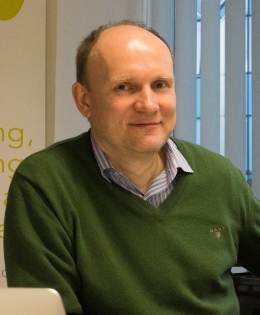
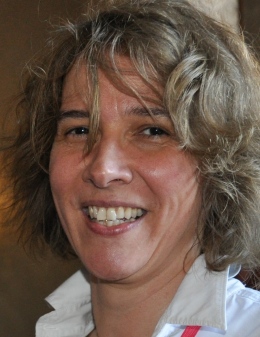
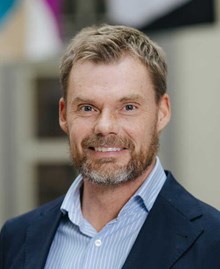
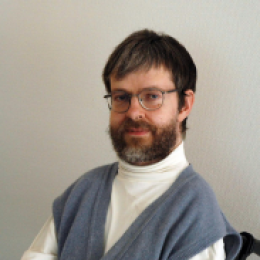
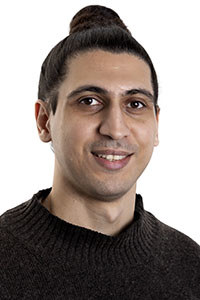
Janis Stirna is a Professor and Unit Head at the Department of Computer and Systems Sciences (DSV), Stockholm University. He leads the PRECIS research group, focusing on theories and tools for organizational and IT solution design. PhD in Computer and Systems Sciences (2001), Royal Institute of Technology, Sweden Associate Professor (2008), Jönköping University Research Interests include enterprise modeling, requirements engineering, organizational patterns, and knowledge management. His work spans methodologies like EKP, EKD, and 4EM, with notable coordination of the EU FP7 project CaaS (Capability as a Service). He co-edited key Springer publications on enterprise modeling and capability management. Teaching: Delivers Object-Oriented System Analysis with UML to DSV BSc students. Leadership: Chairs IFIP Working Group 8.1 and co-initiated the PoEM conference series.
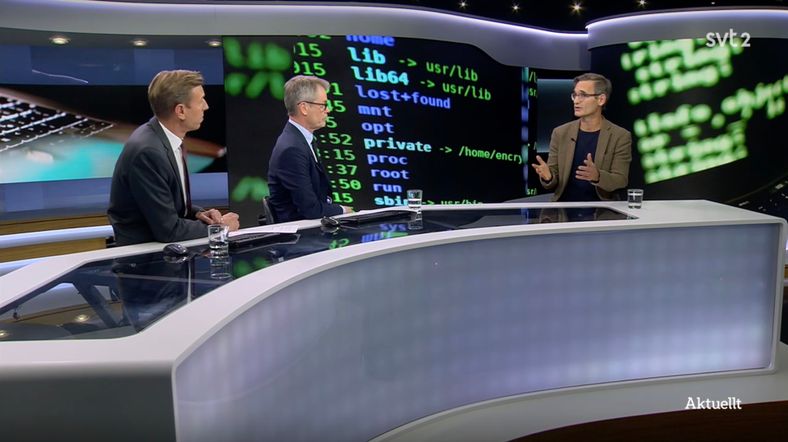
Pontus Johnson is a Professor at the KTH Royal Institute of Technology in Stockholm, Sweden. He leads the Center for Cyber Defense and Information Security (collaborating with Swedish Armed Forces, FRA, MSB, FOI, FHS) and serves as vice director of Cybercampus Sweden since 2024. His research focuses on cybersecurity , enterprise architecture analysis , and probabilistic threat modeling , particularly through his development of the Meta Attack Language (MAL) for simulating cyber attacks on networked systems. Education: MSc in Computer Science, Lund Institute of Technology (1997) PhD in Computer Science, KTH (2002) Docent title, KTH (2007) Leadership Roles: Director, Center for Cyber Defense and Information Security (2013–present) Vice Director, Cybercampus Sweden (2024–present) Board Member, Swedish Research Council (2025–present) Deputy Chair, Swedish Royal Academy of Engineering Sciences (IVA) Board (2024–present) His work spans cybersecurity research , attack simulation methodologies , and enterprise architecture frameworks . He has developed tools like securiCAD (acquired by Google) and pwnPr3d for probabilistic threat modeling. His 15 most recent publications highlight advancements in graph-based attack simulations , automated security assessments , and AI applications in cyber defense . Scientific recognition includes: Listed among Tech Awards Sweden's 50 Most Influential People in Swedish Tech (2022, 2023) Discovery of vulnerability in the Universal Turing Machine (2021) He supervises 16 PhD students and alumni (2005–2024), including Simon Gökstorp , Jakob Nyberg , and Sotirios Katsikeas . His academic service includes over 50 program committee roles and leadership positions in international conferences. He contributes to both academic and public domains through media appearances (SVT, Aftonbladet), courses in ethical hacking , and industry collaboration via his role at Google (20% of his time). His research group Software Systems Architecture and Security (SSAS) focuses on predictive security frameworks and system-of-systems analysis.
Maricela De la Torre Castro is a Professor of Natural Resource Management at Stockholm University , affiliated with the Department of Physical Geography . Her research focuses on coastal and ocean governance through a social-ecological systems lens, emphasizing gender dynamics , seagrass conservation , and climate change adaptation in tropical coastal communities. BSc in Oceanology (Universidad Autonoma de Baja California) MSc, PhD, and Docent in Natural Resource Management (Stockholm University) Her work examines seagrass ecosystem services , small-scale fisheries governance , and gendered impacts of marine protected areas . Recent studies analyze: 2025: Habitat loss risks from seaweed cultivation 2024: Gender-poverty dynamics in Zanzibar MPAs 2022: Adaptive capacity differences between genders 2021: Blue Justice frameworks for fisheries governance Active projects include SEAgender (Swedish Research Council) analyzing gendered effects of MPAs . She supervises PhD candidates in tropical marine systems and has extensive experience with EU Erasmus programs and UNDP collaborations . Research emphasizes hybrid methods , cultural value mapping , and interdisciplinary monitoring of coastal initiatives.
Danilo Brozovic is a Senior Lecturer in Business Administration at the University of Skövde, specifically within the School of Business and the Department of Commerce and Entrepreneurship. He maintains his office in Room E219 and serves as a course coordinator for multiple undergraduate and graduate business courses, each carrying 7.5 credits. His academic work spans teaching, research, and project leadership within the business administration domain. Brozovic's research interests focus on entrepreneurial resilience, particularly in family businesses and small-to-medium enterprises (SMEs), strategic flexibility in business growth, value creation processes, and service ecosystems. He has extensively examined organizational resilience during crises, including the COVID-19 pandemic's impact on retail and tourism sectors. His work also explores sustainability in business models, food tourism, societal collapse scenarios, and the evolution of service systems. Brozovic employs diverse methodologies including literature reviews, scenario-based analyses, and empirical studies to investigate how organizations adapt to multiple crises and changing market conditions. His publication record demonstrates a strong trend toward interdisciplinary research connecting business administration with futures studies, sustainability science, and crisis management. Recent work shows increasing focus on entrepreneurial resilience in the face of multiple concurrent crises, with projects examining how SMEs navigate complex challenges. His research bridges theoretical frameworks like service-dominant logic with practical business applications, particularly in tourism, retail, and family business contexts. Brozovic leads the research project 'Entrepreneurial resilience in small and medium-sized enterprises in the face of multiple crises' (July 2023 - June 2025), which develops knowledge about how SMEs manage multiple concurrent crises. His collaborative approach is evident in numerous co-authored publications with researchers like Börje Boers, Marco Tregua, and Hiroaki Saito across various business disciplines.
Kajsa Haag is an Assistant Professor and Associate Dean of Faculty at Jönköping International Business School (JIBS), affiliated with the Centre for Family Entrepreneurship and Ownership (CeFEO). She holds a dual role as former Co-Director of CeFEO and collaborates with stakeholders to co-create knowledge with practical relevance for family businesses. Her research focuses on succession practices, strategic renewal, legal ownership frameworks, and the Swedish furniture industry, employing interpretative methodologies. Research & Projects: She leads a multidisciplinary research project funded by Jan Wallanders och Tom Hedelius Stiftelse and Tore Browaldhs Stiftelse, investigating ownership dynamics in private businesses. Her doctoral work, 'Rethinking Family Business Succession: From a Problem to Solve to an Ongoing Practice,' redefines succession as an evolving process within family enterprises. Teaching & Engagement: Teaches strategy, family business management, and thesis supervision across academic levels. Engages with practitioners through seminars, executive training for owner families, and advising on succession strategies. She collaborates with accountants, bankers, and family business councils to bridge academic and practical insights. Key Research Themes: Family Business Succession Mechanisms Legal and Regulatory Challenges Gender Dynamics in Family Enterprise Corporate Entrepreneurship in Family Contexts Historical Perspectives on Family Business Longevity
Jelena Zdravkovic is a Professor and Head of the Department of Computer and Systems Sciences (DSV) at Stockholm University. She leads the PRECIS research group which focuses on Process, Requirements, Enterprise, Capability, and Information Systems modelling. Her work spans theoretical and practical aspects of enterprise and IT solutions with a particular emphasis on digital transformation. Professor Zdravkovic's research interests center around Digital Business Ecosystems , Digital Twins , and Data-driven Requirements Engineering . Her work in Enterprise Modeling explores capability-oriented and consumer-oriented approaches to requirements engineering. She investigates how digital transformation and big data can be leveraged to improve requirements elicitation processes, and how organizations can model and manage complex digital business ecosystems. Her research has significant implications for how businesses can adapt to rapidly changing technological environments while maintaining resilience and competitiveness. Her recent publications reveal a clear trajectory toward integrating artificial intelligence with digital modeling techniques, particularly in the context of smart buildings and business ecosystems. There's a consistent focus on how data-driven approaches can transform traditional requirements engineering practices, making them more responsive to the velocity and variety of digital data sources. Her work bridges theoretical modeling with practical applications across various industries including healthcare, energy, and transportation. Professor Zdravkovic has been actively involved in mentoring PhD students, including supervising research on the Management Framework of Resilient Digital Business Ecosystems. She has participated in numerous national and international projects focused on interoperability and model-driven engineering, securing research funding for innovative work at the intersection of business and technology. She leads the PRECIS research group which deals with theories, methods and tools for analysis and design of organizational and IT solutions in congruence. The group's research covers three key topics – Enterprise Modelling, Business Process Management, and Conceptual Modelling. Their work brings together academic rigor with practical applications to solve real-world business challenges through innovative information systems approaches.
Rickard Sandberg is an **Associate Professor** and **Center Director** at the **Department of Entrepreneurship, Innovation and Technology** at the **Stockholm School of Economics (SSE)**. His work bridges econometrics, statistics, and business analytics with a focus on time series analysis, machine learning applications, and sustainability measurement. **Research Interests**: Machine Learning, Deep Learning, Data Analytics, Predictive Analytics, Forecasting, Nonlinear Time Series Modelling, Structural Economic Modelling, Econometrics, and Measuring Sustainability. His research emphasizes theoretical advancements in statistical methods and their practical application in economic and business contexts. **Key Contributions**: His publications explore unit root testing in nonlinear models, ESG rating challenges, and the impact of energy policies. Notable works include analyzing Scandinavian unemployment trends, cartel damage calculations, and Nordic companies' data-driven transformations. His 2023 paper on ESG ratings proposes solutions for consistency in ambiguous evaluation systems. **Teaching & Outreach**: Teaches advanced econometric time series courses (e.g., MSc 5314) and actively engages in international academic collaborations through presentations in Japan and Brazil. His work on AI for sustainability highlights interdisciplinary outreach efforts. **Labs/Teams**: Leads research initiatives within SSE’s Department, focusing on entrepreneurship and innovation through data and economic modeling frameworks.
Stefan Gössling is a Professor of Tourism Research at Linnaeus University and Human Ecology at Lund University. His research focuses on the sustainability of tourism, transport, and mobilities, with particular attention to climate change, carbon emissions, and policy design. Key Research Areas: Climate change mitigation in tourism, transport sustainability, environmental impact assessment, carbon management, and mobility studies. His recent publications analyze global air transport emissions, net-zero aviation challenges, decarbonization strategies, and climate risks to tourism in the European Union. Collaborative work with international colleagues explores economic, behavioral, and policy dimensions of sustainable tourism. Selected Trends: Articles reveal growing emphasis on carbon inequality, transport justice, climate policy barriers, and systemic changes in urban and aviation contexts. Many studies employ interdisciplinary methods combining environmental science, economics, and behavioral analysis.
Yacine Atif is a Professor of Information Technology at the University of Skövde, affiliated with the School of Informatics and Department of Information Technology. He maintains an active research profile with numerous publications spanning from 2002 to the present, demonstrating sustained academic contribution in his field. His research interests focus on Internet of Things (IoT), Cybersecurity, Cyber-Physical Systems, Digital Transformation, Cloud Computing, and Educational Technologies. Professor Atif's work bridges theoretical research with practical applications, particularly in smart city technologies, critical infrastructure protection, and educational innovations. His research has evolved from early work in e-commerce trust (2002) to contemporary work on metaverse learning experiences (2023) and vehicle collision prediction (2025). Analysis of his recent publications (2018-2025) reveals a strong focus on cybersecurity applications for cyber-physical systems, particularly in critical infrastructure protection. His work demonstrates a progression from foundational IoT concepts toward sophisticated integration of machine learning and cognitive approaches in security analysis. The research portfolio shows consistent collaboration with both academic and industry partners across multiple countries. Professor Atif leads or contributes to significant research projects including the ongoing 'Intelligent Driver Support Systems and Safety Enhancement' (I2Connect) project (2023-2026) focused on developing next-generation Advanced Driver Assistance Systems for trucks, and previously led the 'Infrastructure Resilience – ELVIRA' project (2017-2020) which developed time-based infrastructure dependency analysis for power-grid risk assessment. His teaching responsibilities include multiple courses at both bachelor's and master's levels, with course credits ranging from 3 to 7.5 credits across various technology domains. His office is located in room PA420K at the University of Skövde, and he can be contacted at yacine.atif@his.se or by phone at 0500-448312.
Roles and Affiliations: Daniel Ellström is an Associate Professor at Linköping University's Department of Management and Engineering (IEI) and a member of the Industrial Management (INDEK) division. He serves as Director of Studies and Degree Project Coordinator at INDEK, and participates in IL-nämndens programplanegrupp (PPG-IL). His academic email is daniel.ellstrom@liu.se . Education: No specific educational details provided in the text. Research Interests: Ellström's research focuses on market strategies, sustainable business practices, and digital transformation. He applies frameworks such as the resource-based view, resource dependence theory, and dynamic capabilities to analyze firm capabilities in areas like customer support, SME growth, and environmental sustainability. His work emphasizes how firms leverage capabilities to navigate challenges such as digital transformation and sustainable offering development. Research Contributions: His publications span topics including green marketing typologies, startup equity strategies, and synergies in sustainable food systems. Recent work highlights digital transformation dynamics and SME financing mechanisms. Grants and Labs: Affiliated with the Centre for Business Model Innovation (CBMI), which explores adaptive business models in societal changes. Collaborates with industry partners to ensure research relevance. Teaching: Responsible for courses like TEIM32 and TEIM11 in industrial marketing. Engages in educational innovation to align with industry needs.
Paul Johannesson is a Professor at the Department of Computer and Systems Science , Stockholm University. He leads the PRECIS research group (Process Requirements Enterprise Capability Information Systems Modeling), focusing on theories and methods for integrated organizational and IT solutions. Education: BSc in Mathematics (Stockholm University), PhD in Computer Science (1993, Stockholm University). Research Interests: Conceptual modeling, enterprise modeling, process integration, design science, and ontological analysis, with applications in healthcare systems, IoT security, and digital innovation. His work bridges linguistic instruments with information systems design. Recent Article Trends: Focus on healthcare interoperability, IoT security, and ontological frameworks. Topics include drug-drug interaction modeling, decentralized identity management, and policy-based decision-making systems. Projects: Current work includes intelligent IoT security solutions and data-driven services for elderly care (DISRA, DISAL). Past projects examine EU knowledge systems, IT in healthcare, and process modeling education. Teaching: Courses on enterprise modeling and business models at bachelor and master levels. Thesis supervision at the Department of Computer and Systems Sciences. Labs/Teams: Leads the PRECIS research group, which integrates conceptual modeling with IT strategy and organizational design.
Emma Ek Österberg is a Senior Lecturer at the School of Public Administration , University of Gothenburg. Her research focuses on governance and organizational dynamics in the public sector, particularly examining administrative policy reforms, sustainable public procurement, and public sector auditing practices. University: University of Gothenburg School: School of Public Administration Academic Rank: Senior Lecturer Email: emma.ek@spa.gu.se Emma leads significant research projects such as "Taking lead in the circular transformation" (funded by Formas 2023-2025), which investigates challenges in implementing sustainable procurement practices, and "Women 4 Integration" , which explores how Work-Integrating Social Enterprises support foreign-born women's labor market entry through mixed-method research. Her work bridges theoretical and practical dimensions of public administration, analyzing: Implementation gaps in sustainable public procurement Marketization processes in public services Uniformity challenges in state inspections Organizational responses to audit regimes Public procurement's role in labor market integration Emma teaches and supervises at all academic levels, with a focus on strategic procurement, management accounting, and public audit. Her publications span topics including: Sustainable Procurement and Climate Policy Audit Practices in Elder Care Public-Private Collaboration in Migration Integration Accounting for Societal Interests Meta-Governance Mechanisms
Kanchana Dissanayake is an Associate Professor in Textile Management at the Department of Business Administration and Textile Management, Faculty of Textiles, Engineering and Business, University of Borås. Previously, she served as a Postdoctoral Fellow at the University of Borås (2022–2023) and as a Senior Lecturer at the Department of Textile and Clothing Technology, University of Moratuwa, Sri Lanka (2013–2021). She holds a PhD in Sustainable Consumption from the University of Manchester, UK, and a degree in Textile and Clothing Engineering from the University of Moratuwa. Education: PhD in Sustainable Consumption (University of Manchester), Textile and Clothing Engineering (University of Moratuwa) Kanchana's research centers on sustainable and circular supply chains in the textile and clothing industry, with a focus on dynamic capabilities, stakeholder value alignment, and digital transformation. Her work bridges nonprofit and for-profit organizational strategies in circular economy adoption, emphasizing stakeholder collaboration and policy implications. Key Research Themes: Sustainable supply chain configurations for textile recycling Digital twin and 3D modeling for sustainable fashion Paradoxes in scaling circular business models Just transitions in circular economy practices Kanchana co-supervises doctoral students at the University of Borås, including Golzar Daneshzad, Mohammadreza Dehghannejad, and Quazi Shahrul Islam. She has secured funding from the Kamprad Family Foundation for the CLOSeD project and contributed to EU-funded research on apparel sales forecasting.
Erik Rosell is a researcher at Linnaeus University's School of Business and Economics , affiliated with the Department of Management and research groups Centre for Management Accounting Research (CMAR) and Center for Leadership in Småland . His work bridges societal entrepreneurship , environmental research , and rural development through innovative collaboration models. Specializes in cross-sector governance effects Pioneer in Triple Helix collaboration (academia-industry-government) Co-developer of Transnational Living Lab for Active Ageing Expert in action research and dialogue arenas His research explores entrepreneurial learning and communicative entrepreneurship , emphasizing collaborative innovation and organizational reflexivity . Key project themes include boundary management in environmental research, rural enclaves for entrepreneurship development, and green rural integration . While his publications span 2009-2019, recent work focuses on public entrepreneuring and welfare innovation . His methodological approach combines qualitative fieldwork with practice-based research , often involving stakeholder co-creation . The Centre for Management Accounting Research (CMAR) serves as a platform for his governance studies, while the Center for Leadership in Småland supports rural entrepreneurship investigations.
Christina Grundström is an Associate Professor at Linköping University, affiliated with the Department of Management and Engineering (IEI) and the Industrial Management (INDEK) program. Her research focuses on innovation strategies, SME growth dynamics, and brand management. She holds a PhD from Linköping University and has contributed to numerous academic awards including the Outstanding Reviewer accolade at the Academy of Management (AOM) conferences. Her teaching spans brand management and industrial economics across undergraduate to PhD levels. Current research explores how SMEs achieve growth through strategic renewal and effective brand communication. She is part of the Centre for Business Model Innovation (CBMI), emphasizing business adaptation to societal changes. Key collaborations include studies on successful SMEs and stakeholder influence on brand strategies. Education: Master of Science in Applied Physics and Electronics (LiU, 1988), PhD (2004). Research interests emphasize innovation ecosystems, open innovation in manufacturing SMEs, and strategic brand management. Her work bridges theory and practice through industry collaboration, ensuring educational programs remain industry-relevant. Awards highlight her peer-reviewed contributions to STR, TIM, and BPS divisions at AOM. Advising and grants involve thesis supervision in Industrial Economics and Graphic Design. She contributes to curriculum development in cross-media design and international business models. The CBMI lab focuses on business model innovation and adaptive strategies for modern industries.