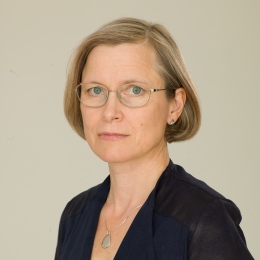
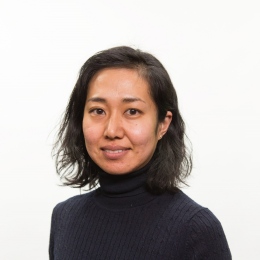
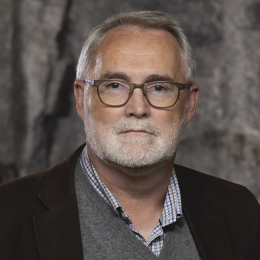
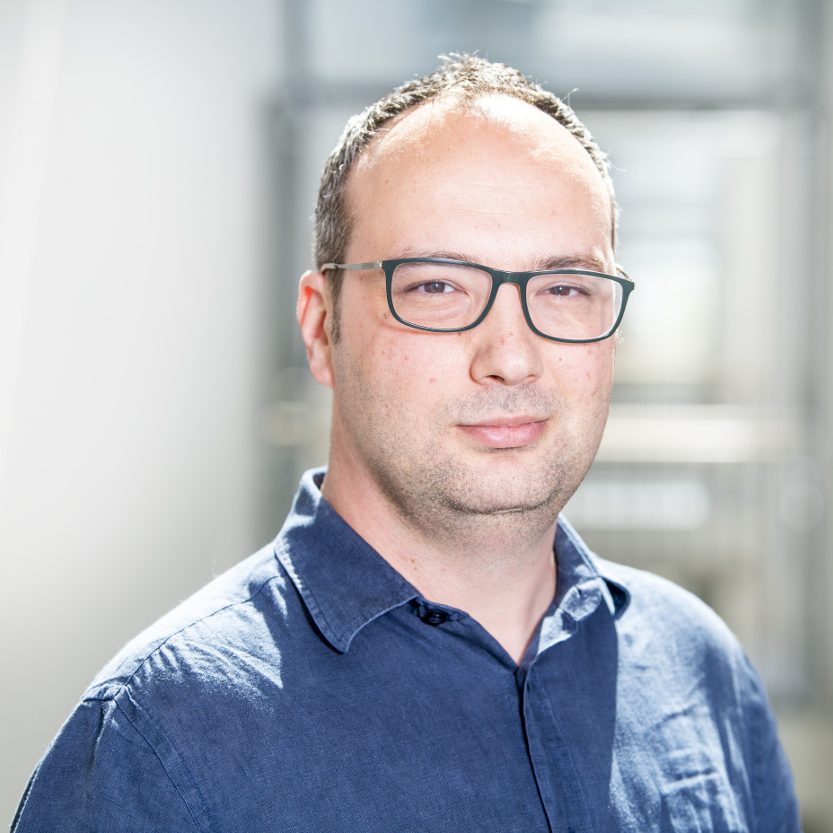
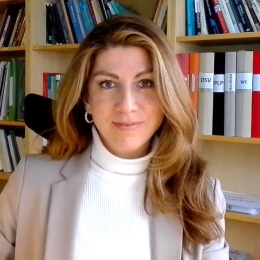
Anna Metreveli is a researcher at the Department of English, Stockholm University , currently conducting doctoral studies on English-medium vocational education and coding bootcamps in Sweden, including their marketing strategies and stakeholder experiences. Her research spans: Discourse analysis of educational marketing Neoliberal influences on educational spaces Family language policies in transnational bilingual autistic households Gendered communication patterns Recent publications analyze: AI integration in vocational training Neoliberal rhetoric in coding bootcamp web presence Critical perspectives on menstruation representation in media Academic background includes an MA in Language Science with Specialisation in Bilingualism from Stockholm University, focusing on transnational family language planning. Contact: anna.metreveli@english.su.se
Maria Kuteeva is a Professor at the Department of English, Stockholm University, where she has been working since 2008. She played a significant role in establishing the Centre for Academic English at Stockholm University, where she served as director from 2010 to 2017. Her career includes visiting researcher positions at the University of Wisconsin, Madison (2013) and the University of Helsinki (2018), as well as an Erik Allardt research fellowship at the Helsinki Collegium for Advanced Studies (2021). Maria Kuteeva's research focuses on the use of English in multilingual university settings, including English-medium education (EME/EMI), writing for publication, and the impact of digital technologies on academic discourse. She has made significant contributions to understanding the tensions between English and multilingualism in academic contexts, particularly in Sweden. Her work has been published in top international peer-reviewed journals such as Applied Linguistics, English for Specific Purposes, Journal of English for Academic Purposes, Discourse, Context & Media, Higher Education, and Journal of Multilingual and Multicultural Development. Professor Kuteeva has an impressive record of publications that examine the complex relationship between English and multilingualism in academia. Her book Tension-filled English at the multilingual university: A Bakhtinian perspective (2023, Multilingual Matters) explores the emotional and practical challenges of English use in non-anglophone academic environments. She has also co-edited important publications on language perceptions and practices in multilingual universities. Among her notable achievements, Maria Kuteeva has been recognized in the Stanford/Elsevier World's 2% Most-Cited Scientists ranking in 2022, 2023, and 2024. She serves on editorial boards of leading journals including Applied Linguistics, Journal of English for Academic Purposes, Journal of English for Research Publication Purposes, and the open access peer-reviewed series "Stockholm English Studies." Together with Ruth Breeze, she is co-editor-in-chief of Ibérica: Journal of the European Association of Languages for Specific Purposes. Maria Kuteeva has supervised research projects across multiple domains including discourse analysis, pragmatics, sociolinguistics, language teaching and learning, and other areas of English linguistics. She currently teaches and coordinates the "Dynamics of Multilingualism" course for the Faculty of Humanities Doctoral School at Stockholm University, as well as other courses on Discourse Analysis, English and Multilingualism, Syntax, Language for Specific Purposes, and English for Academic Research.
Spela Mezek is a Senior Lecturer at the Department of English, Stockholm University. Her academic work focuses on English for Academic Purposes (EAP), English as a Medium of Instruction (EMI), genre theory, second language acquisition, and multilingual classroom dynamics. Teaching: L2 academic writing, English linguistics Research: Investigates EMI implementation, terminology engagement in multilingual settings, and self-regulated learning in academic contexts Publication Trends show consistent contributions to: Evolving EMI practices in Scandinavia Assessment methodologies in multilingual education Student self-regulation in academic writing Humor functions in high-stakes academic interactions Vocabulary acquisition across languages Contact: spela.mezek@english.su.se | ORCID: 0000-0002-8995-4366
Aki Siegel is an Associate Professor in the Department of English at Stockholm University. She holds a Ph.D. in Applied Linguistics from Newcastle University, UK, and is currently conducting research on second language use and development in English as a foreign language and multilingual contexts. Her research interests include: Second Language Acquisition Applied Linguistics Conversation Analysis Complex Dynamic Systems Theory English as a Foreign Language Multilingual Contexts L2 Pragmatics Longitudinal Development Dr. Siegel's recent work focuses on how relationships are co-constructed and develop over time in second language interactions. Her 2024 book, "Human Spoken Interaction as a Complex Adaptive System: A Longitudinal Study of L2 Interaction" (co-authored with Paul Seedhouse), demonstrates how human interactions function as a complex adaptive system using conversation analysis and Complex Dynamics Systems Theory (CDST). She also proposes a conversation analysis-complex dynamics systems theory (CA-CDST) approach for analyzing longitudinal development in L2 pragmatics. She is currently leading the ReMODEL project (2024-2026), funded by the Swedish Research Council, which investigates students' real-time listening comprehension in English as a Medium of Instruction university classes. This project represents her ongoing interest in understanding the dynamics of language comprehension in educational settings. Dr. Siegel's publications show a strong focus on longitudinal studies of language development, English as a Lingua Franca interactions, and the application of Complex Dynamic Systems Theory to second language research. Her recent work has examined topics such as non-comprehension issues while listening, awkward moments in ELF interactions, and the development of shared multilingual resources.
Thomas Lavelle is a Lecturer in the Department of Management and Organization at the Stockholm School of Economics (SSE), and concurrently serves as Head of the Center for Modern Languages. His work focuses on translingual pedagogy, academic writing strategies, and language policy in international educational contexts. He holds a strategic role in advancing multilingual instruction initiatives at SSE. His research explores the intersection of language practices with academic and professional training, particularly in Swedish higher education settings. Key areas include EMI (English Medium Instruction) implementation, translingual approaches to writing, and the role of English as a lingua franca in disciplinary contexts like history and business education. Dr. Lavelle has contributed to discussions on institutional change through writing pedagogy, with recent work addressing how academic writing can drive organizational transformation in universities. His publications span over two decades, reflecting sustained engagement with multilingual education challenges. He oversees the Center for Modern Languages, fostering language education innovation while maintaining active research collaborations. No grants or awards are explicitly listed in the provided materials.
Helena Reierstam is a Senior Lecturer at the Department of Education, Stockholm University, where she is actively involved in research and teaching. She is a member of the International and Comparative Education Research (ICER) group and serves as the project coordinator in Sweden for the international Erasmus+ COALITION project on student-centered inclusive pedagogies (2022-2025). Her work spans multiple educational contexts, from school-level teaching to higher education policy development. Dr. Reierstam's research focuses on the complex intersection of language and content assessment in multilingual educational settings. Her primary interests include assessment practices, multilingualism, language policy, syllabus design, academic literacy, and English medium instruction (EMI) and CLIL (Content and Language Integrated Learning), all examined through an international comparative lens. She has conducted extensive research on how teachers assess subject matter knowledge when students are simultaneously learning the language of instruction, particularly in CLIL contexts and with newly arrived immigrant students. Her recent publications and presentations reveal a strong trend toward examining the challenges of maintaining assessment comparability in increasingly diverse educational environments. Her current research project (2025-2027), 'Higher education in the crossfire?', specifically addresses examinations and relevant competencies in times of generative AI and widening participation in higher education. This work builds on her 2020 dissertation, 'Assessment in Multilingual Schools,' which examined teachers' assessment beliefs and practices among language learners in CLIL and migrant education contexts. At Stockholm University, Dr. Reierstam teaches at the Centre for the Advancement of University Teaching, offering courses in assessment for vocational teachers, Communication, leadership and health, the principal program, and the International master program in International and Comparative Education. She has supervised student theses and provided in-service training for student teachers. She also hosts 'PeP Talk,' a program where faculty discuss various pedagogical issues in higher education. Dr. Reierstam brings extensive practical experience to her academic work, having taught and developed curriculum at various school levels in Sweden and the USA, served as director of education at the Swedish National Agency for Education where she was responsible for national tests in English as a foreign language, and contributed to national frameworks for high-stakes testing. Her expertise is regularly sought through workshops and lectures on assessment in contexts with second language learners.
John Airey is Professor of University Science Education at Stockholm University's Department of Teaching and Learning and Reader (Docent) in Physics Education Research at Uppsala University. His research examines disciplinary knowledge representation, focusing on language and semiotic resources in physics education. He leads a Swedish Research Council-funded project analyzing how students comprehend unseen phenomena (e.g., electromagnetic fields) and teaches courses for science lecturers and PhD supervisors. Airey's research integrates physics education, semiotics, and English-medium instruction (EMI). He investigates how language, visualizations, and symbolic systems shape scientific understanding. His work emphasizes disciplinary literacy, multimodal teaching resources, and cross-cultural EMI implementation in Nordic higher education. Recent publications (2023-2025) explore semiotic resource use in astronomy/chemistry, physics teacher identity, disciplinary literacy in EMI, and pedagogical innovations like flipped classrooms. Trends include critical analyses of educational representations, equation-based reasoning frameworks, and policy implications for multilingual science education. Supervision & Grants: Airey has supervised multiple PhD students and currently mentors candidates in Astronomy Education (Stockholm) and Physics Education Research (Uppsala). He has led several Swedish Research Council projects, including a four-year study on invisible phenomena in science.
Dr. Peter Wingrove is a Research Fellow at Chalmers University of Technology in the Department of Technical Language and Communication. As an applied linguist, he specializes in scientific writing education, English for Academic Purposes (EAP), and English-Medium Instruction (EMI) in higher education contexts. His research integrates quantitative and qualitative methodologies to examine how language policies and pedagogical approaches shape academic communication across Europe and globally. Wingrove's primary research explores the sociolinguistic dimensions of EMI implementation, language policy decision-making, and equity issues in educational access. His interdisciplinary work investigates: The relationship between institutional autonomy and EMI adoption Gender disparities in English-education access Critical discourse analysis of language policy conflicts Transdisciplinary approaches to linguistic research His publication portfolio demonstrates consistent focus on EMI's global spread, with recent works examining measurement validity, policy drivers, and social justice implications. Articles frequently employ mixed methods including corpus linguistics, process tracing, and critical discourse analysis, reflecting sustained engagement with both theoretical and applied dimensions of academic communication. Wingrove leads the 'Multi-Genre Pedagogy' project (2025-2028) and collaborates on pan-European research initiatives. His work involves extensive interdisciplinary partnerships addressing language policy, pedagogical innovation, and equity in higher education systems.
Olcay Sert is a Professor of English Language Education at Mälardalen University, Sweden, and the editor of Classroom Discourse . He leads the MIND Research Group and SOLD Research Environment, focusing on conversation analysis in language classrooms. PhD in Educational and Applied Linguistics (Newcastle University, UK) Key research areas: TESOL classroom discourse, L2 interaction, language teacher education, and technology in teaching His research spans Swedish, Luxembourgish, Turkish, Danish, and UK contexts, with projects funded by the European Union (Erasmus+), Academy of Finland, and MKL. He has collaborated extensively with language teachers to create interaction-rich environments. Recent articles emphasize technology-mediated interactions, EMI (English as Medium of Instruction), and sociomaterial perspectives in pedagogy. Awards include BAAL Book Prize 2016 and AAAL First Book Award 2017 shortlists. He mentors PhD and Master’s students, including Ufuk Balaman and Marwa Amri, and has authored over 15 peer-reviewed articles and a book on L2 classroom discourse.
Beyza Jacobsson is a Professor at Stockholm University's Department of English, where she serves as Deputy Head and chairs the RALV group (Råd för Arbetsmiljö och Lika Villkor), focusing on work environment and equal opportunities. She earned her PhD from Stockholm University in 2010 with a dissertation on spoken lingua franca English in technical universities, followed by a Swedish Research Council-funded postdoctoral fellowship at Roskilde University. Her research examines English as a Lingua Franca (ELF) in academic contexts, with emphasis on: Morphosyntactic and pragmatic features of ELF communication PhD supervision dynamics and knowledge construction Language policy-practice gaps in higher education English-Medium Instruction (EMI) challenges Academic discourse in multilingual settings Recent publications analyze supervision meeting interactions, cross-cultural EMI implementation, and policy comparisons between Swedish and Estonian universities. She teaches English for Specific/Academic Purposes (ESP/EAP), including scientific writing for international publication, and has developed courses on lingua franca English, sociolinguistics, and pragmatics. She currently co-supervises three PhD students and has taught doctoral courses on academic writing and open science through the Faculty of Humanities Research School.
Joseph Siegel is a Professor in the Department of English at Stockholm University, specializing in linguistics and language education with a strong focus on teacher education. His work centers on the critical relationship between spoken output, listening comprehension, and learning in educational contexts. Department of English, Stockholm University Principal Investigator for ReMoDEL project (Swedish Research Council) PhD in Applied Linguistics from Aston University, UK Professor Siegel's research explores how teachers communicate knowledge to students and how students make sense of that input, with particular emphasis on classroom interaction, language teaching methodology, and practical classroom applications. His work bridges theoretical linguistics with practical educational implementation, focusing on real-world classroom challenges in second language contexts. His research portfolio demonstrates consistent focus on listening comprehension, note-taking strategies, and pragmatic development in second language acquisition. The ReMoDEL project represents his current flagship research initiative investigating student listening comprehension in university lectures where English is the medium of instruction. Professor Siegel has been published extensively in leading journals including ELT Journal , The Journal of English for Academic Purposes , and Language Teaching , with notable publications including Teaching English in Secondary School (2022) and Developing notetaking skills in a second language (2021). As Principal Investigator for multiple research projects funded by the Swedish Research Council and Riksbankens Jubileumsfond, Professor Siegel has established himself as a leading researcher in language education, with particular expertise in teacher education methodology and classroom implementation strategies for second language acquisition.
Marko Modiano is a Professor at the University of Gävle, Sweden, specializing in linguistics with a focus on English as a world language and its role in the European Union. His research examines language policy, sociolinguistics, multiculturalism, and education. He holds a BA from San Francisco State University (1976) and a PhD from Uppsala University (1987). His work addresses key issues such as English Medium Instruction (EMI) in Gulf nations, linguistic pluralism in EU contexts, and post-Brexit language dynamics. He has authored books like Cultures in Contact and Teaching English in a European and Global Perspective , and contributed to journals like World Englishes and European Journal of Language Policy . Education : Bachelor of Arts in English, San Francisco State University, 1976 Doctor of Philosophy in English, Uppsala University, 1987 Research Themes : EU language policy and standardization Globalization of English and cultural impact EMI implementation in diverse educational systems Critical analysis of native-speakerism in ELT Bilingualism/plurilingualism dynamics Modiano's recent publications analyze post-Brexit linguistic shifts, Gulf EMI systems, and EU multilingualism frameworks. His work bridges sociopolitical critique with practical educational strategies. Current research trends emphasize documenting English's evolving role as a transnational lingua franca and addressing equity in language education policies. No formal awards or grant details are listed, though his extensive publication record indicates sustained academic engagement. His writings reflect critical engagement with language's sociocultural dimensions, particularly in multinational contexts like the EU and Gulf states.
Joyce Kling is an Associate Professor and Senior Lecturer at the Centre for Languages and Literature (SOL) at Lund University, Sweden. She is affiliated with the English Studies department and maintains her office in room SOL:H331a at Helgonabacken 12, Lund. Her professional activities span research, teaching, and academic leadership within the field of language education. Dr. Kling's primary research interests focus on the integration of content and language in educational settings. Her work specifically examines English-medium instruction (EMI), Content and Language Integrated Learning (CLIL), and the dynamics of the international classroom. She also conducts significant research in language assessment and language teacher leadership and administration. With a career spanning multiple roles including ESL & EFL teacher, program director, administrator, teacher trainer, researcher, materials developer, and consultant, she brings extensive practical experience to her academic work. Recent analysis of Dr. Kling's publication record reveals a strong focus on multilingual university settings, particularly examining how English-medium instruction functions in diverse academic environments. Her work increasingly employs corpus-based methodologies to analyze classroom communication and academic discourse. A significant portion of her research addresses the practical challenges of implementing CLIL approaches and developing appropriate assessment frameworks for language proficiency in higher education contexts. Her notable recognition includes: President of TESOL International Association (2022-2023) Dr. Kling actively supervises graduate students, including PhD candidate Sophia Juul in English Linguistics and Literature at Lund University. She is currently involved in the research project "MCC: Towards a new model of communicative competence in multilingual higher education" (2023-2026), which examines language dynamics in multilingual university settings. Her professional activities also include numerous invited talks, conference presentations, and workshop organization related to English-medium instruction and language education.
Hans Malmström is an Associate Professor at the Department of Language for Specific Purposes and Communication within the Department of Science Communication and Learning at Chalmers University of Technology. He serves as Vice-Dean for Research and Postgraduate Education at his department and teaches across three of Chalmers' degree programs, with particular responsibility for integrated communication elements in the Engineering Physics and Engineering Mathematics programs. Malmström's research focuses on the interface between applied linguistics and learning, with particular emphasis on second language acquisition (especially academic vocabulary and terminology) in academic learning environments where English is used as the language of instruction. His work also examines how consciously integrated language and communication affect subject learning. His research portfolio spans multiple dimensions of English Medium Instruction (EMI), academic vocabulary development, and language integration in disciplinary teaching. Analysis of Malmström's recent publications reveals a strong focus on academic reading challenges, teacher preparedness in EMI contexts, language proficiency measurement, and the intersection of language and disciplinary learning. His work demonstrates a consistent concern with practical applications in higher education settings, particularly examining how language policies and practices impact student learning outcomes across different disciplines and linguistic backgrounds. Recent work increasingly addresses the impact of AI language tools in academic contexts. Malmström leads three research projects funded by the Swedish Research Council and STINT (The Foundation for Internationalisation of Higher Education and Research), and participates in a Danish Research Council-funded project on multilingual competence led by the University of Copenhagen. As an academic leader, Malmström serves as Series Editor for Routledge Studies in English Medium Instruction (with Diane Pecorari) and is one of the editors of the Journal of English-Medium Instruction (John Benjamins). He currently supervises two doctoral students and has been instrumental in developing communication-integrated curricula in engineering programs.