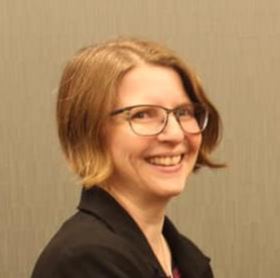
Lillie Padilla is an Assistant Professor of Spanish Linguistics at Sam Houston State University's Department of World Languages and Cultures. Holding a Ph.D. and M.A. in Spanish Linguistics from Arizona State University alongside a Bachelor of Arts from the University of Ghana, her research explores interdisciplinary connections between: Afro-Latinx representation in educational materials Discourse analysis and language ideologies Sociolinguistic studies in Equatorial Guinea Critical race theory applications in language teaching Her work focuses on Spanish subject pronoun expression patterns in multilingual contexts and curriculum development for inclusive pedagogy. Recent publications examine: Representation gaps in Spanish language textbooks Methodological challenges in Equatorial Guinea research Critical discourse analysis of Netflix's Elite series Intersectional representation of Afro-Latinx women Scientific achievements include: Finalist for American Association of Linguistics 2025 award for co-edited volume Representation, Inclusion and Social Justice in World Language Teaching Padilla's research continues to shape conversations about linguistic diversity and marginalized voices in language education through both empirical studies and theoretical frameworks.
Andrew Lynch serves as Professor and Associate Dean for Program Development in the Department of Modern Languages & Literatures within the College of Arts and Sciences at the University of Miami. His academic leadership extends beyond teaching responsibilities to include significant administrative contributions to program development across the institution. Lynch's research interests center on sociolinguistics with particular focus on Spanish language dynamics in Miami, heritage language socialization, bilingualism, and language ideology. His work examines how language functions within specific social contexts, especially in workplace environments where Spanish heritage speakers navigate linguistic demands. He investigates the complex interplay between language, identity, and social structures in postmodern urban settings, with special attention to the Cuban diaspora experience in South Florida. His publication record reveals consistent scholarly engagement with heritage language education, Spanish language variation, and the sociolinguistic landscape of global cities. Lynch's research demonstrates how language practices in Miami reflect broader patterns of linguistic adaptation and resistance within diasporic communities. His work often addresses the tension between linguistic heritage and social integration, examining how language ideologies shape educational practices and community identity. Lynch's scholarly contributions span multiple formats, including single-authored books, co-authored publications, handbook chapters, and journal articles in both English and Spanish. His work frequently appears in high-impact sociolinguistics and language education journals, reflecting his interdisciplinary approach that bridges theoretical linguistics with practical educational implications.
Nathan Wainstein is an Assistant Professor in the English Department at the University of Utah's College of Humanities, where he has been teaching since July 2023. His academic work bridges literary studies with contemporary digital media, particularly focusing on video game aesthetics alongside modernist literature. Wainstein maintains an active scholarly presence through publications, editorial work, and his podcast "Authors Die Twice" co-hosted with Bryan Counter. Wainstein's educational background includes: PhD from Stanford University (2013-2020) BA from Swarthmore College (2007-2011) His research interests span video game aesthetics, modernism, the novel, literary theory, narrative theory, and the intersection of literature and philosophy. Wainstein approaches these fields with a particular focus on paradox, difficulty, and aesthetic experiences that challenge conventional interpretations. His work often examines how seemingly simple literary devices like light descriptions can reveal deeper theoretical tensions within texts. Wainstein's recent publications demonstrate a consistent trajectory exploring the boundaries of literary aesthetics, from his analysis of James Joyce's photomimesis to his examination of narrative glitches in Faulkner's work. His scholarship connects historical literary theory with contemporary concerns, particularly in how he applies these frameworks to video game analysis. The upcoming book "Grant Us Eyes: The Art of Paradox in Bloodborne" exemplifies this interdisciplinary approach, bridging literary criticism with video game studies. Wainstein has held prestigious postdoctoral positions including an ACLS Emerging Voices Fellowship at the University of Utah and a Stanford Humanities and Sciences Dean's Fellowship. As an educator, Wainstein teaches innovative courses that reflect his research interests, including "On Difficulty," "Aesthetics of Violence in Video Games and Literature," "Games with Time," and "Videogame Storytelling." His teaching philosophy appears to emphasize the connections between traditional literary studies and contemporary digital media forms.
University of California, Los AngelesUnited States
H. Samy Alim is a Professor and David O. Sears Presidential Endowed Chair in the Division of Social Sciences at UCLA, holding a joint appointment in the Department of Anthropology. He serves as Associate Director of the Ralph J. Bunche Center for African American Studies and leads the UCLA Hip Hop Initiative. Alim’s research focuses on Hip Hop Culture, Black Language, and Culturally Sustaining Pedagogies, with over 25 years of scholarship in these areas. His work bridges academia and activism, emphasizing Hip Hop’s transformative role in global social justice movements. Alim earned his PhD in Anthropology from Stanford University (2003), following MA (2002) and BA (1999) degrees. His academic contributions include twelve authored/edited books, such as Freedom Moves (2023) and Articulate While Black (2012). His research spans Hip Hop’s linguistic innovations, racialized language politics, and its pedagogical potential in education. Key projects include ethnographic studies in Cape Town, South Africa, and collaborative initiatives like the UC Press Hip Hop Studies Book Series. He co-edits the Oxford Handbook of Language and Race and directs the Center for Race, Ethnicity, and Language. Alim has engaged with global Hip Hop artists (e.g., Chuck D of Public Enemy) to co-produce knowledge, emphasizing Hip Hop as a site of theorizing and activism. His teaching and research highlight intersections of language, race, and power, advocating for pedagogies that sustain cultural identities while fostering equity. Collaborations with organizations like Heal the Hood in South Africa reflect his commitment to community-driven scholarship.
Prof. Dr. Sakibe Nalan BÜYÜKKANTARCIOĞLU is a Professor at Çankaya University, Faculty of Arts and Sciences, Department of Translation and Interpreting Studies (English). She previously served as Professor (2007–2019), Associate Professor (2000–2007), and Assistant Professor (1997–2000) at Hacettepe University, Department of English Linguistics. PhD in English Linguistics (Hacettepe University, 1991) MA in English Language Teaching (Middle East Technical University, 1985) BA in English Teaching (Istanbul University, 1978) Her research spans Linguistics, Cognitive Linguistics, Discourse Analysis, Psycholinguistics, Sociolinguistics, Translation Studies , with a focus on figurative language, interjections, political discourse, and endangered languages. She received the European Language Award (2011) and has supervised numerous PhD and MA theses, including work on Turkish idioms, gender representation, and language awareness. A prolific editor and conference participant, she has contributed to interdisciplinary projects and publications on Turkish sociolinguistics.
Amir Ahmadi Arian is an Iranian-American writer and Assistant Professor in the Department of English, General Literature and Rhetoric at Binghamton University (College of Arts and Sciences). He holds a PhD in Comparative Literature from the University of Queensland, Australia, an MFA in Creative Writing from New York University, and a BSc in Metallurgy Engineering from the University of Tehran, Iran. His research and teaching focus on creative writing, world literature, postcolonial novels, and Persian poetry. He has published two novels, a story collection, and a nonfiction book in Persian, and translated works by E.L. Doctorow, Paul Auster, P.D. James, and Cormac McCarthy into Persian. His English-language publications include fiction in Harper’s , The Paris Review , The New York Times , and other prestigious venues. His debut English novel Then the Fish Swallowed Him (HarperVia/HarperCollins, 2020) received critical acclaim from The New Yorker , Publishers Weekly , and Kirkus Reviews for its political themes and interior portrayal of oppression.
Elaine Francis is a Professor of English and Linguistics at Purdue University's College of Liberal Arts, where she serves as Associate Head of the Department of English and directs the Experimental Linguistics Lab. She holds additional affiliations as an Affiliate Faculty Member in the Department of Linguistics and a Courtesy Faculty Member in the Department of Speech, Language, and Hearing Sciences. Ph.D. in Linguistics, University of Chicago (1999) B.A. in Linguistics, College of William and Mary (1993) MA in Linguistics, University of Chicago (1995) Former Assistant Professor at the University of Hong Kong (1999-2002) Professor Francis's research focuses on syntax and its interfaces with semantics, discourse information structure, and language processing in production and comprehension. She employs experimental methods to investigate syntactic, semantic, discourse-pragmatic, and cognitive factors underlying complex sentence structures. Her primary research areas include word order alternations, filler-gap dependencies, resumptive pronouns, and grammatical acceptability. She examines how various factors contribute to grammatical alternations in language use and explores how processing pressures in production and comprehension contribute to grammatical conventions. Her recent publication record shows consistent output across multiple linguistic subfields, with a strong emphasis on experimental syntax and psycholinguistics. Her 2022 book, Gradient Acceptability and Linguistic Theory , represents a significant contribution to understanding acceptability judgment tasks in relation to syntactic theory. Her work spans theoretical syntax, experimental linguistics, second language acquisition, and cross-linguistic comparison, often bridging the gap between theoretical frameworks and empirical evidence. Regularly teaches short courses at Linguistic Society of America Linguistic Institutes Member of Linguistic Society of America Ethics Committee Editorial board member of Glossa Psycholinguistics Co-editor of Polymorphous Linguistics: Jim McCawley's Legacy (2005) Co-editor of Mismatch: Form-Function Incongruity and the Architecture of Grammar (2003) Professor Francis actively supervises graduate students in linguistics, though she has indicated she will be unable to take on new graduate students for the 2025-2026 academic year. She has received research support for her experimental work, particularly for investigating syntactic phenomena through controlled experiments and corpus analysis. Her collaborative work extends across multiple institutions and disciplines, including collaborations with researchers in computational linguistics, cognitive science, and clinical linguistics. She directs the Experimental Linguistics Lab at Purdue University, which conducts research on syntactic processing using various experimental methodologies. The lab investigates how speakers produce and comprehend complex sentence structures, with particular attention to how grammatical knowledge interacts with processing constraints. Current projects include research on relative clauses, syntactic islands, and acceptability gradient phenomena across multiple languages.
Paulina Łęska-Bayraktar is an Assistant Professor in the Department of English-Polish Comparative Linguistics at the Faculty of English, Adam Mickiewicz University in Poznań, where she conducts research and teaches in formal syntax and comparative linguistics. Her academic foundation is deeply rooted in the same institution, reflecting a sustained commitment to linguistic scholarship in Poland. Her educational background includes: B.A. in English Linguistics, Adam Mickiewicz University in Poznań (2012) M.A. in English Linguistics, Adam Mickiewicz University in Poznań (2014) Ph.D. in English Linguistics, Adam Mickiewicz University in Poznań (2019) Her research interests lie at the intersection of syntax, semantics, and cognitive grammar, with a strong focus on generative approaches to Slavic languages—particularly Polish. She investigates complex syntactic phenomena such as binding theory, pronoun distribution, quantifier scope, agreement, and the structure of relative and nominal clauses. Her work combines formal theoretical analysis with empirical data, often drawing on acceptability judgments and psycholinguistic methodologies. The trends in her recent publications reveal a sustained engagement with the syntax of Polish, especially in non-canonical constructions involving dative arguments, experiencers, and pronominal clusters. Her work contributes significantly to the understanding of how universal syntactic principles manifest in Slavic morphosyntax, and she frequently collaborates with leading scholars like Prof. Jacek Witkoś. She has received research funding from the Polish National Science Center through multiple grants, including OPUS, Beethoven, and Miniatura projects, which have supported her investigations into nominal expressions, pronouns, and anaphora in Polish. These grants underscore the national recognition of her research contributions. Paulina Łęska-Bayraktar actively participates in the international linguistics community, presenting her work at major conferences such as Formal Approaches to Slavic Linguistics (FASL), Formal Description of Slavic Languages (FDSL), and the Poznań Linguistic Meeting. She is also involved in collaborative research teams and has co-authored works with scholars from Humboldt-Universität zu Berlin and other institutions. Her academic presence is further strengthened by her profiles on ORCID and ResearchGate.
Bülent AKAT is a full-time Lecturer (Dr) at Çankaya University , Faculty of Arts and Sciences, Department of Translation and Interpreting Studies (English), where he has taught since 2007. His career is anchored in literary and cultural translation studies, with a particular focus on English-Turkish translation. Education: Dr Akat earned his Bachelor of Arts (1982–1986) from Boğaziçi University, Faculty of Arts and Sciences, Department of Western Languages and Literatures. He then completed a Master of Arts (1986–1994) at Boğaziçi University’s Institute of Social Sciences in English Language Teaching. Finally, he obtained his PhD (1994–2000) from Hacettepe University’s Institute of Social Sciences in American Culture and Literature. Research Interests: His scholarly work spans translation of children’s literature , idiom translation , subtitling and dubbing , culture-bound elements , and neologism translation . He often employs comparative methodologies, drawing on theorists such as Jan Pedersen, Mona Baker, and Teresa Tomaszkiewicz to evaluate strategies of domestication, foreignization, and receptor-oriented translation. Academic Output: Between 2018 and 2025 Dr Akat (co-)authored nine journal articles, two conference papers, and five books. Recurring themes include the translation of Dr Seuss’s neologisms, idiomatic renderings in TV dubbing, Oscar Wilde’s drama in Turkish, and Can Yücel’s interpretation of The Great Gatsby . His publications appear in leading Turkish and international indexes, notably TR Dizin , Mediterranean Journal of Humanities , and RumeliDE . Teaching & Supervision: Dr Akat has supervised twelve master’s theses at Çankaya University’s Institute of Social Sciences, concentrating on English literature and cultural studies. Representative topics include gender in Virginia Woolf, colonialism in Defoe, existentialism in Fowles, and Gothic elements in Wilde. Labs & Projects: No dedicated laboratory or externally funded projects are listed in the provided data.
Tijana Gajić is a researcher at Singidunum University in Belgrade, Serbia. She holds a Ph.D. in Philology (2020), an MA in English Language and Literature (2009), and a BA in the same field (2007) from the University of Belgrade. Her work focuses on the intersection of language education, digital tools, and critical pedagogy. Doctoral Studies: Philology , University of Belgrade (2017-2020) Master Studies: English Language and Literature , University of Belgrade (2008-2009) Bachelor Studies: English Language and Literature , University of Belgrade (2003-2007) Dr. Gajić’s research explores the impact of digital technologies on language acquisition, critical thinking development, and the sociopolitical dimensions of English language learning. She has published extensively on mobile applications like Duolingo, HelloTalk, and WordUp, analyzing their efficacy in modern pedagogy. Her recent publications (2024-2025) examine digital tools’ influence on language education, critical pedagogy in Serbian classrooms, and AI-driven language learning innovations. Earlier works (2020-2016) established her expertise in tandem learning, vocabulary enhancement via apps, and affective factors in language acquisition. Notable collaborations include partnerships with researchers like N. Maenza , A. Gagić , and J. Nikolić . While no specific grants or awards are mentioned, her involvement in conferences such as Sinteza and ELTA Serbia underscores her active role in advancing language education. Her 2022 book, Nastava stranih jezika i razvoj kritičkog mišljenja u eri neoliberalizma , synthesizes her critical pedagogy framework. Current projects likely continue her focus on digital transformation in language teaching.
Erik Ketzan is a Lecturer in Digital Humanities and Cultural Computation at King's College London. He holds a PhD in English/Digital Humanities from Birkbeck, University of London, and has held postdoctoral roles at the University of Cologne and Trinity College Dublin, where he coordinated the MA in Digital Humanities and Culture. His research focuses on computational literary studies, legal/ethical issues in digital research, and corpus stylistics. He has published widely on topics such as Thomas Pynchon’s computational stylistics, legal frameworks for digital humanities research, and gender bias in historical texts. His work includes developing tools like Coleto for textual variant analysis and co-authoring the book *Thomas Pynchon and the Digital Humanities* (2022). Ketzan actively engages in policy advocacy, advising on copyright and data protection in DH, and has contributed to projects like CLARIN and the Leibniz Institute for the German Language. Education: PhD in English/Digital Humanities, Birkbeck, University of London Postdoctoral Researcher, University of Cologne (EncycNet Project) Postdoctoral Research and Teaching Fellow, Trinity College Dublin Research Interests: Computational approaches to literary analysis, legal challenges in data-driven research, corpus stylistics, and gender studies in historical corpora. Teaching: Courses include Python for the humanities, computational literary studies, and legal issues in digital humanities.
University of California , Santa Barbara (UCSB)United States
Mary Bucholtz is a Professor in the Department of Linguistics at the University of California, Santa Barbara (UCSB). She holds affiliations with multiple departments including Anthropology, Feminist Studies, Spanish and Portuguese, the Gevirtz Graduate School of Education, Comparative Literature, and Latin American and Iberian Studies. Her research integrates sociocultural linguistics with anthropological, gender, and social justice frameworks. Education: PhD in Linguistics, University of California, Berkeley (1997) Bucholtz's work examines how language shapes and is shaped by social identities, particularly among youth, through dimensions like race, gender, and cultural practices. She emphasizes community-centered research , linguistic activism , and interdisciplinary methodologies to address systemic inequalities. Recent publications explore affective agency in Latinx youth, educational equity, and antiracist linguistics. Her collaborative projects often involve partnerships with educational institutions and youth communities in California, focusing on translanguaging , Black language justice , and raciolinguistic ideologies . Grants from the National Science Foundation, Spencer Foundation, and Wenner-Gren Foundation support her research. She co-edited the open-access volumes Decolonizing Linguistics and Inclusion in Linguistics (Oxford University Press, 2024), alongside authoring White Kids: Language, Race, and Styles of Youth Identity (Cambridge, 2011) and Talking College: Making Space for Black Language Practices in Higher Education (Teachers College Press, 2022).
Alexandra Horowitz is a Senior Research Fellow and Adjunct Associate Professor at Barnard College. She has been teaching since 2004, specializing in dog cognition and olfactory research. Her academic roles span the Departments of English and Psychology, reflecting her interdisciplinary focus on animal behavior and human-animal interactions. Education: M.S. and Ph.D. in Cognitive Science from UC San Diego; B.A. in Philosophy from the University of Pennsylvania. Research interests include naturalistic observations of dog social play, testing anthropomorphic assumptions, and characterizing canine olfactory abilities. She has authored influential books like Inside of a Dog and Being a Dog , exploring how dogs perceive the world. Her work frequently appears in top journals and media outlets, including the New York Times and TED-Ed. Recent articles highlight studies on dog navigation, play behavior, and olfactory perception. She has been recognized as among the Top 2% of Cited Authors globally. Her presentations and lectures span academic conferences, museums, and public forums, emphasizing science communication.
Simon King is a Professor of Speech Processing at the University of Edinburgh , affiliated with the School of Philosophy, Psychology and Language Sciences . He serves as Director of the Centre for Speech Technology Research (CSTR) and teaches courses like Speech Processing and Speech Synthesis , while directing the MSc in Speech and Language Processing . Research Interests His research focuses on: Developing new acoustic models (e.g., Linear Dynamical Models, factorial-HMMs) for speech recognition Advancing unit selection and HMM-based speech synthesis Integrating articulatory measurement data for enhanced modeling Exploring perceptual measures in synthesis criteria Building multilingual speech systems to identify universal speech building blocks Publication Trends Simon's recent work emphasizes deep learning (DNNs, LSTMs) in speech synthesis, multilingual frameworks , and articulatory-acoustic feature integration . His studies often bridge grapheme-based modeling , perceptual error reduction , and noise-robust synthesis . Scientific Awards EPSRC Advanced Research Fellowship (2005-2009) Students & Collaborations He has supervised numerous PhD students including Rasmus Dall, Tom Merritt, and Srikanth Ronanki. Current research fellows like Mirjam Wester and Zhizheng Wu contribute to projects such as Natural Speech Technology (NST) and Simple4All .
David A. Smith is an Associate Professor at the Khoury College of Computer Sciences, Northeastern University. His research focuses on Natural Language Processing (NLP) and computational linguistics, with applications in machine translation, information retrieval, digital humanities, and social sciences. He is a founding member of the NULab for Texts, Maps, and Networks, a research center focused on digital humanities and computational social sciences. Smith's work has been funded by grants from the Mellon Foundation, NEH, and IMLS, supporting projects such as the Viral Texts initiative analyzing 19th-century newspaper networks and the Oceanic Exchanges project tracking transnational information flows. He has contributed to advancements in OCR for historical texts, text reuse detection, and computational analysis of classical languages. He has advised numerous PhD students, including Shijia Liu, Si Wu, and Ryan Muther, and teaches courses like Natural Language Processing and Information Retrieval. His research has been featured in outlets like Wired and the Economist .