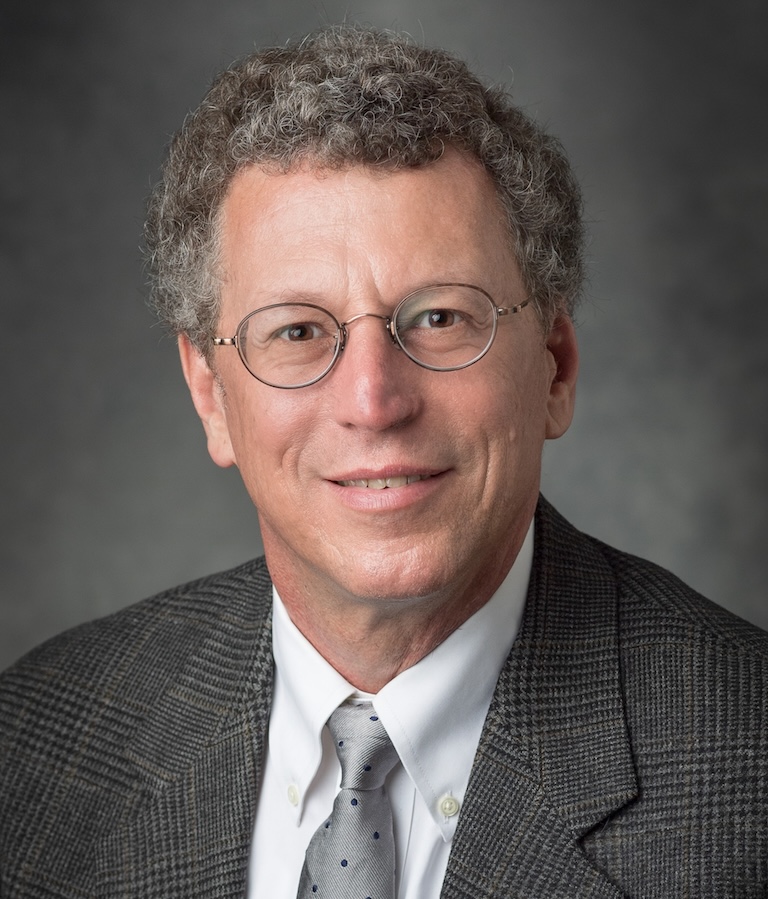
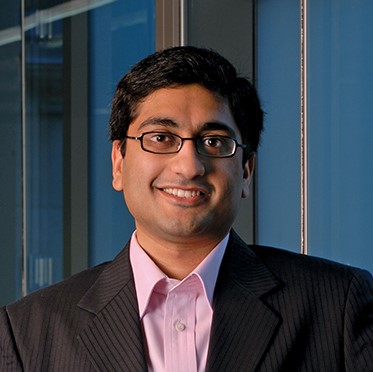
Erkki Ikonen is a Professor of Measurement Science and Technology at Aalto University since 1995, with a joint appointment at VTT Technical Research Centre of Finland Ltd since 2005. His roles include membership in the Board of Directors of EURAMET, Chairmanship of the EMPIR Committee (2016–2021), and Vice President Technical of the CIE (2015–2019). He holds M.Sc. and Dr.Sc.Tech. degrees from Helsinki University of Technology (now part of Aalto University). His research focuses on optical measurements, particularly in metrology of complex micro/nanostructures, aerosol analysis, and photovoltaic characterization. He has supervised 35 doctoral students and authored over 190 peer-reviewed publications. Key contributions include advanced reflectometry techniques, field-deployable sensors, and international metrology standards. Education: M.Sc. (Tech.), Helsinki University of Technology, 1982 Dr.Sc.Tech., Helsinki University of Technology, 1988 Awards: Working Community Award 2008 (Helsinki University of Technology) Grants/Advising: 35 supervised doctoral theses; active in international metrology programs like EMPIR. Labs/Teams: Metrology Research Institute at Aalto University.
Prof. Dr. Amelie Hagelauer holds a professorship in Micro- and Nanosystem Technology at the TUM School of Computation, Information and Technology, Technical University of Munich. Her work focuses on advanced electronics and systems integration across quantum computing hardware, resistive memory technologies, and high-frequency RF systems. She has contributed to innovations in superconducting qubit readout architectures, multi-level RRAM designs, and 3D-integrated CMOS-compatible quantum devices. Research interests span quantum hardware design, nanoelectronic devices, RF front-end systems, and emerging memory technologies. Her work emphasizes practical implementation challenges such as low-power operation, high-voltage handling in RF switches, and wafer-scale fabrication processes. Recent projects include D-band radar systems, energy-efficient 60 GHz transceivers, and antenna tuning solutions for 5G applications. Publications from 2023-2025 showcase advancements in resistive switching device characterization, mitigation of TLS losses in superconducting qubits, and reconfigurable AI accelerators using RRAM-based digital twins. Her work bridges theoretical device physics with practical integrated circuit design, addressing scalability and reliability in next-gen electronics. Awards and grants: None explicitly listed in provided texts. Active collaborations include EU-funded projects on quantum computing platforms and TUM's Electronic Photonic Integration initiatives. Leads research teams in microsystem technology with emphasis on cross-disciplinary approaches combining CMOS processes, MEMS, and quantum engineering.
Charles A. Bouman is the Showalter Professor of Electrical and Computer Engineering and Biomedical Engineering at Purdue University, with a courtesy appointment in Mathematics. He is a leading researcher in computational imaging, integrating statistical signal processing, physics, and computation for applications in healthcare, scientific, and industrial imaging. Education: B.S.E.E., University of Pennsylvania, 1981 M.S., University of California at Berkeley, 1982 Ph.D. in Electrical Engineering, Princeton University, 1989 His research focuses on computational imaging , including statistical image models, multiscale techniques, tomographic reconstruction, and fast algorithms. Key areas include Model-Based Iterative Reconstruction (MBIR), Plug-and-Play priors, document processing, and multiscale segmentation. His work has led to foundational contributions in total variation regularization and sparse-view reconstruction. The recent publications highlight a strong trend in integrating machine learning with physical models for image reconstruction, particularly through Plug-and-Play methods. His work spans optical tomography, halftoning, image scaling, and document compression, demonstrating consistent innovation in both theory and practical software implementation. Scientific Awards and Honors: Member, National Academy of Inventors Life Fellow, IEEE Fellow, IS&T; Honorary Member (2022); Service Award (2023) Fellow, SPIE and AIMBE IEEE Signal Processing Society Claude Shannon-Harry Nyquist Award (2021) Electronic Imaging Scientist of the Year (2014) SIAM Imaging Science Best Paper Prize (2020) Founder, IS&T Computational Imaging Conference (2003) Co-Founder, IEEE Transactions on Computational Imaging Vice President, IS&T; Former VP of Publications (2000–2004) Bouman has advised numerous graduate students and leads a vibrant research group developing open-source tools like MBIRJAX , SVMBIR , and OpenMBIR . His research has been supported by the National Science Foundation, General Electric, Intel, Xerox, Hewlett-Packard, and the State of Indiana 21st Century Fund. He maintains an active presence through tutorials, conference leadership, and educational resources including video lectures and a textbook on Foundations of Computational Imaging. Labs and Research Teams: His group develops cutting-edge software for tomographic reconstruction, clustering, segmentation, and dynamic sampling. Projects include Gaussian Mixture modeling (GMCluster), Plug-and-Play implementations, Sparse Matrix Transforms, and UAV sensing datasets. The research is highly interdisciplinary, bridging engineering, mathematics, and biomedical applications.
Guglielmo Scovazzi is a Professor at Duke University with appointments across multiple departments including the Department of Civil and Environmental Engineering, the Thomas Lord Department of Mechanical Engineering and Materials Science, and as Professor of Mathematics. His interdisciplinary research bridges computational mechanics, scientific computing, and engineering applications. Dr. Scovazzi earned his B.S/M.S. in aerospace engineering (summa cum laude) from Politecnico di Torino (Italy), followed by an M.S. and Ph.D. in mechanical engineering from Stanford University. Prior to joining Duke, he was a Senior Member of the Technical Staff at Sandia National Laboratories' Computer Science Research Institute. His research focuses on developing advanced numerical methods for computational mechanics, particularly finite element methods for fluid and solid mechanics. Key areas include multiphase porous media flows, computational methods for materials under extreme conditions, turbulent flow computations, and instability phenomena. His work emphasizes creating accurate computational approaches that reduce design/analysis costs for complex engineering problems involving fluid-structure interactions and transient phenomena in complex geometries. Dr. Scovazzi's most significant recent contribution is the development of the Shifted Boundary Method, an innovative computational framework that enables efficient simulations on complex geometries without requiring boundary-fitted meshes. This method has found applications in geomechanics, energy systems, and resilient infrastructure design. Kavli Fellow, National Academy of Sciences & Kavli Foundation (2018) Presidential Early Career Award for Scientists and Engineers (PECASE), White House (2017) Early Career Award, U.S. Department of Energy, Advanced Scientific Computing Research Program (2014) Dr. Scovazzi teaches multiple courses in computational mechanics including Nonlinear Finite Element Analysis and Introduction to the Finite Element Method. His research has been supported by substantial federal funding, and he actively collaborates across disciplines to address challenging problems in energy, environment, and infrastructure resilience through advanced computational methods.
Rahul Mangharam is a Professor in the Department of Electrical and Systems Engineering at the University of Pennsylvania's School of Engineering and Applied Science, with a secondary appointment in Computer and Information Science. He directs the Safe Autonomous Systems Lab (mLAB) and is a founding member of the PRECISE Center. Mangharam serves as Penn Director for the Safety21 DoT National University Transportation Center ($20MM), Director of the Autoware Center of Excellence, and leads the F1Tenth Autonomous Racing Community. Education: Ph.D. in Electrical & Computer Engineering, Carnegie Mellon University M.S. in Electrical & Computer Engineering, Carnegie Mellon University B.S. in Electrical & Computer Engineering, Carnegie Mellon University His research bridges formal methods, machine learning, and control systems with applications in medical devices, autonomous systems, and energy-efficient buildings. Key focus areas include safety verification for autonomous vehicles, real-time control systems, and patient-specific cardiac modeling for clinical applications. Recent work explores conformal prediction for safe perception, differentiable control barrier functions, and explainable autonomous systems. Mangharam's publication trends show strong emphasis on autonomous systems safety (control synthesis, uncertainty quantification) and biomedical applications (cardiac modeling, clinical decision support). His 2022-2023 publications demonstrate cross-disciplinary approaches combining control theory, machine learning, and formal methods for robust autonomous systems. Awards and Honors: Presidential Early Career Award (PECASE) 2016 IEEE Benjamin Franklin Key Award 2014 NSF CAREER Award 2013 Intel Early Faculty Career Award 2012 National Academy of Engineers US Frontiers of Engineering (2012, 2018) Stephen J. Angelo Term Chair (2008-2013) He leads multiple major grants including NSF CAREER, DoT Safety21 Center ($20MM), DoE Energy-Efficient Building Hub ($160MM), and DARPA HACMS. Current PhD students include Zirui Zang. Mangharam founded the F1Tenth autonomous racing platform used globally for education and hosts international competitions through the Autoware Center of Excellence.
Michael Mühlebach is a Research Group Leader at the Max Planck Institute for Intelligent Systems in Tübingen, Germany, leading the independent Learning and Dynamical Systems group. His academic journey began at ETH Zurich where he earned his B.Sc. (2010) and M.Sc. (2013) in mechanical engineering, specializing in robotics, systems, and control. He completed his Ph.D. at ETH Zurich in 2018 under Prof. R. D'Andrea, followed by postdoctoral research at UC Berkeley with Prof. Michael I. Jordan. Dr. Mühlebach's research spans machine learning, dynamical systems, control theory, and optimization . His work bridges theoretical foundations with practical applications in robotics, developing methods that incorporate physical constraints and system dynamics into learning frameworks. His group focuses on online learning, physics-informed machine learning, and large-scale optimization for cyber-physical systems, with applications in electromagnetic navigation, robotic table tennis, and energy-efficient flight systems like the shape-changing robot Floaty . His publication record shows a strong focus on constrained optimization, with recent work exploring decision-dependent stochastic optimization, nonlinear feedback, and the theoretical foundations of reinforcement learning. His research integrates perspectives from control theory, dynamical systems, and optimization to develop algorithms with strong theoretical guarantees and practical performance. Outstanding D-MAVT Bachelor Award Willi-Studer prize for best Master's degree ETH Medal and HILTI prize for doctoral thesis Branco Weiss Fellow (2018) Emmy Noether Fellowship (2020) Amazon Fellowship (2024) Dr. Mühlebach actively mentors doctoral researchers and is seeking talented students for PhD and Master's projects. His research group has received funding from multiple prestigious fellowships and maintains collaborations across institutions including ETH Zurich, UC Berkeley, and various Max Planck research units. The group's work spans theoretical developments to practical implementations on robotic systems, demonstrating strong connections between mathematical theory and physical realization.
Steve Hailes is a Professor of Wireless Systems at the Department of Computer Science, University College London. He has served as Head of Department since 2019 and Deputy Head from 2005. His research spans wireless networks, computational trust, AI, and sensor systems for health, ecological, and environmental applications. Education: PhD and undergraduate degree from Cambridge University Appointment: Joined UCL in 1991 (postdoc), Lecturer in 1992 Research interests include: Trust and security in networked systems (co-founder of computational trust) Security of industrial control systems AI/ML applications in security and causal discovery Multi-agent reinforcement learning and moral behavior modeling Gas sensor fabrication and deployment for diverse applications Recent publications focus on feature selection for cybersecurity , moral alignment in LLM agents , trust-based consensus algorithms , and causal discovery using reinforcement learning . Collaborations include co-authors like Westphal, Musolesi, and Tennant. Applications span healthcare (dementia, JIA), ecology (endangered species in Botswana), and environmental monitoring (CO distribution, meth lab detection).
Alessandro Petruzzi is an Industry Professor in the Department of Engineering Physics at McMaster University's College of Engineering. His research focuses on nuclear engineering and reactor physics, particularly in thermal hydraulics and uncertainty analysis for nuclear installations. McMaster University, College of Engineering, Department of Engineering Physics Academic Rank: Industry Professor Petruzzi's scholarly work includes contributions to nuclear reactor safety analysis and computational methods. His 2014 publication on OECD-NEA PSBT benchmarks and 2009 study on void fraction uncertainty in BWR fuel bundles highlight expertise in nuclear reactor design and thermal-hydraulic modeling. Research trends emphasize computational reactor physics, safety assessment methodologies (e.g., CIAU), and uncertainty quantification in nuclear systems. While no specific awards are listed, his work aligns with advanced nuclear engineering practices.
Moritz Wiese is a Researcher at the Chair of Theoretical Information Technology within the Department of Electrical and Computer Engineering at Technische Universität München (TUM) . His work focuses on information-theoretic security, quantum communication, and wireless networks, with significant contributions to interference modeling and secure coding schemes. Research Interests : Information-Theoretic Security, Quantum Wiretap Channels, MIMO Systems, 5G/6G Technologies, Physical Layer Security, and Network Coding. Key Grants : Involved in DFG-funded projects (Gottfried Wilhelm Leibniz Prize, UKoloS) and BMBF initiatives (6G-life, QuaDiQua). Collaborations : Worked with Prof. Holger Boche, Christian Deppe, and Rami Ezzine on secure communication and randomness generation. Labs : Active in the ACES Lab and 6G-life research hub, focusing on joint communication/sensing and neuromorphic computing. Publications : Over 20 papers on secure estimation, wiretap channels, and quantum secrecy, including top-tier journals like IEEE Transactions on Information Theory and Journal of Mathematical Physics .
Prof. Dr. Dominik Schwarz is a faculty member at the Faculty of Physics , Bielefeld University. His research focuses on Cosmology and Particle Physics , particularly in the areas of Dark Energy , Dark Matter , Cosmological Inflation , and Large-Scale Structure Formation . He contributes to projects like the International LOFAR Telescope Consortium and the SFB-TRR 211 on strongly interacting matter. APART Fellow of Austrian Academy of Sciences Humboldt Fellow CERN Fellow His recent work explores the cosmic dipole anisotropy , axion density perturbations , and multi-wavelength cosmic web mapping . He also advances data science infrastructure through the PUNCH4NFDI consortium.
Ameet Talwalkar is an Associate Professor in the Machine Learning Department at Carnegie Mellon University and Chief Scientist at Datadog. He holds a PhD from the Courant Institute at NYU (2010) where he received the Janet Fabri Prize for Best Thesis. His professional achievements include co-founding Determined AI (acquired by HPE), creating MLlib in Apache Spark, co-authoring the textbook 'Foundations of Machine Learning,' and spearheading the MLSys conference. Talwalkar's research focuses on fundamental challenges in machine learning systems, including distributed ML, federated learning, neural architecture search, and human-AI interaction. His work bridges theoretical foundations with practical applications across domains like computational biology, PDE solving, and code generation. Current interests include AI for science, specialized model development, and agent-based systems. His publications demonstrate strong focus on ML systems optimization, foundation model evaluation, and interpretable AI. Recent works investigate specialized foundation models, PDE-solving frameworks, code generation tools, and human-AI interaction paradigms. The research consistently targets efficiency, scalability, and practical deployment challenges. Best Paper Award at EAAMO 2023 Best Student Paper at NYAS ML Symposium 2009 Runner-up for Best Real-world Application at Socal ML Symposium 2017 Janet Fabri Prize for Best PhD Thesis (2010) Talwalkar leads the CMU MLSys Lab focused on scalable ML systems and has served as Board President for the MLSys conference series. His educational contributions include developing courses like 'Machine Learning with Large Datasets' and creating the LEAF benchmark for federated learning and NAS-Bench-360 for neural architecture search.
Dr. Chitraleema Chakraborty is an Assistant Professor in the Departments of Materials Science and Engineering and Physics and Astronomy at the University of Delaware. Her research focuses on solid-state quantum emitters, 2D materials, and quantum optics, aiming to develop quantum technologies for computing, communication, and sensing. She combines computational and experimental approaches to predict, fabricate, and image quantum emitters integrated with photonic devices. Education: Ph.D. in Materials Science, University of Rochester (2018) Dual MS and MTech in Nanophysics and Nanostructures, University of Delhi and Joseph Fourier University, Grenoble (France) BSc Honors in Physics, Jadavpur University, Kolkata (2009) Research interests include quantum emitters in 2D materials, integrated photonics, and hybrid quantum systems. Her work bridges theoretical predictions and experimental validation to advance applications in quantum information and nanoscale sensing. Publications highlight advancements in strain-tunable quantum emitters, on-chip photonic integration, and room-temperature ferromagnetism in van der Waals materials. Recent trends emphasize scalable synthesis methods and defect engineering for quantum technologies. Awards: Carl E. Anderson Outstanding Doctoral Thesis Finalist (2019) Rising Star in EECS (2019) Outstanding Dissertation Award, University of Rochester (2018) Best Student Speaker at MRS Fall Meeting (2017) Egide Scholar, France (2010-2011) Her research group actively explores nanoscale confinement effects and electrical tuning of quantum systems. Collaborations focus on integrating 2D materials with photonic platforms for scalable quantum devices. Ongoing projects aim to develop robust quantum emitters for real-world applications.
Ovijit Chaudhuri is an Associate Professor of Mechanical Engineering at Stanford University, with a courtesy appointment in Bioengineering. He leads research at the interface of mechanics and biology, focusing on how cellular and extracellular mechanical properties influence biological processes like cancer progression and tissue formation. His work employs advanced tools such as atomic force microscopy and 3D cell culture systems. Education: Ph.D., University of California, Berkeley/San Francisco (Bioengineering, 2009) B.S., University of California, Berkeley (Engineering Physics, 2003) Postdoctoral Fellow, Harvard University (Biomaterials, 2013) Research Interests: His lab explores molecular mechanisms behind cellular mechanics, extracellular matrix dynamics, and how mechanical cues regulate cell behavior. Key areas include cancer metastasis, mechanotransduction, and engineered biomaterials for 3D cell culture. Publications Trends: Recent work emphasizes viscoelastic hydrogels, matrix mechanics in cancer progression, and mechanistic insights into cell migration. Over 50 publications since 2015 highlight interdisciplinary approaches in biomaterials and mechanobiology. Awards: Not explicitly listed in provided materials. Advising & Labs: No specific advisee names listed, but his lab focuses on collaborative projects in mechano-biology. Active in developing biomaterial systems for drug discovery and tissue engineering applications. Labs/Teams: Leads the Chaudhuri Lab at Stanford, which integrates engineering principles with biological systems to address complex disease mechanisms and therapeutic strategies.
Ares J. Rosakis is the Theodore von Kármán Professor of Aeronautics and Mechanical Engineering at the California Institute of Technology (Caltech), where he served as Chair of the Division of Engineering and Applied Science from 2009-2015 and previously as Director of the Graduate Aerospace Laboratories (GALCIT). He has held numerous prestigious visiting professorships including at Nanyang Technological University, Northwestern University, Columbia University, Oxford University, and École Normale Supérieure in Paris. Rosakis earned his B.A. and M.A. in Engineering Science from Oxford University in 1978, followed by his Sc.M. (1980) and Ph.D. (1982) in Engineering (Solid Mechanics) from Brown University. He joined Caltech as an Assistant Professor in 1982, was promoted to Associate Professor in 1988, and to full Professor in 1993. In 2004, he was named the Theodore von Kármán Professor, one of Caltech's most distinguished named chairs. Rosakis is globally recognized as the foremost expert in dynamic failure mechanics of solid materials. His pioneering contributions span the dynamic failure of metals, composites, and interfaces. He invented Coherent Gradient Sensing (CGS) interferometry, a novel optical method sensitive to gradients of optical path differences that has been widely adopted in fracture mechanics and thin film stress measurements. His research encompasses dynamic shear-dominated rupture of heterogeneous materials, rupture mechanics of crustal earthquakes (where he experimentally discovered 'intersonic' or 'supershear' ruptures), and reliability of thin films and in-situ wafer level metrology. His work bridges engineering science, materials mechanics, and geophysics with remarkable interdisciplinary impact. His recent publications demonstrate a strong focus on earthquake mechanics and laboratory simulations of seismic events, particularly supershear earthquake ruptures. The research connects fundamental fracture mechanics with real-world geophysical phenomena, revealing how laboratory-scale experiments can illuminate the physics of large-scale earthquakes. His work has established critical links between theoretical models, experimental observations, and geological field evidence. Rosakis has received numerous prestigious awards including: 2024 Foreign Member of the Royal Society, UK 2023 Honorary PhD from National Technical University of Athens 2023 Honorary Degree of Doctor of Engineering from University of Illinois 2021 Zdeněk P. Bažant Medal for Failure and Damage Prevention 2018 Timoshenko Medal from ASME 2016 Elected to the National Academy of Sciences 2011 Elected to the National Academy of Engineering Throughout his distinguished career at Caltech, Rosakis has mentored numerous graduate students and postdoctoral researchers, many of whom have become leaders in their fields. His research has been continuously supported by major grants from the National Science Foundation, Department of Energy, and other federal agencies, focusing on dynamic fracture, earthquake mechanics, and advanced optical measurement techniques. He has served on numerous editorial boards and advisory committees for major scientific organizations. At Caltech, Rosakis leads research in the Graduate Aerospace Laboratories (GALCIT), where he has established world-class experimental facilities for studying dynamic fracture and earthquake mechanics. His laboratory features high-speed imaging systems capable of millions of frames per second, infrared diagnostics for temperature field measurements, and specialized equipment for simulating earthquake ruptures at laboratory scale. His research group combines experimental, theoretical, and computational approaches to address fundamental questions in solid mechanics and their applications to geophysics and materials engineering.
Xugui Zhou is an Assistant Professor jointly appointed in the Department of Electrical and Computer Engineering and the Department of Computer Science at Louisiana State University (LSU). He holds a Ph.D. in Electrical and Computer Engineering from the University of Virginia (2024), where he worked under Prof. Homa Alemzadeh. Prior to his Ph.D., he earned an M.Eng in Control Science and Engineering and a B.Eng in Automation from Shandong University. Before joining UVA, he was a Senior Engineer at NR Research Institute, State Grid of China. His research focuses on the intersection of system dependability, security, and control theory, with applications in autonomous systems and healthcare. Key interests include engineering resilient autonomous vehicles, mitigating adversarial attacks on cyber-physical systems (CPS), and enhancing safety through formal methods and machine learning. He leads a research lab with openings for Ph.D. students and interns. Zhou is actively involved in academic service, serving on program committees for DSN'26, AsiaCCS'26, and ICCPS'25, among others. He also chairs workshops like DSML'25 and organizes conferences such as ICCPS'24. His recent awards include the UVA Engineering Endowed Graduate Fellowship (2023) and selection as a Rising Star in Cyber-Physical Systems (2023). His teaching includes courses like AI-Driven Autonomous Driving Systems and ML for CPS Security at LSU. He has extensive experience in teaching and research supervision, emphasizing hands-on projects and interdisciplinary collaboration.