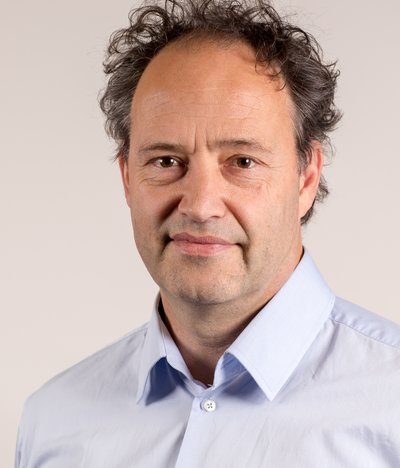
Bart Somers is an Associate Professor at Eindhoven University of Technology , affiliated with the Department of Mechanical Engineering . His primary affiliations include the Power & Flow Group and his own research group, Group Somers , alongside cross-cutting roles in EAISI (Eindhoven Artificial Intelligence Systems Institute) and EIRES (Eindhoven Research on Innovation and Sustainability in Energy Systems). He focuses on advancing combustion science , sustainable fuels , and engine efficiency , leveraging computational fluid dynamics (CFD) and experimental methods. His research interests span alternative fuels (hydrogen, bio-oils, biofuels), high-pressure spray combustion , and low-emission engine design . He investigates combustion optimization through CFD tools like large-eddy simulation (LES) and flamelet-generated manifolds (FGM), emphasizing fuel stratification , ignition dynamics , and emission control . His work bridges experimental diagnostics (e.g., spray visualization, OH* chemiluminescence) and numerical modeling. Academically, he teaches courses such as Thermodynamics , Clean Engines and Future Fuels , and Sustainable Vehicles , integrating practical projects into curricula. His educational activities emphasize interdisciplinary sustainability and innovation, including honors programs focused on professional development. Recent publications highlight his contributions to hydrogen injection strategies, biofuel applications in genset engines, and optimization of diesel-biofuel blends. His work aligns with global sustainability goals, addressing energy transition challenges through advanced combustion technologies.
Michael O. Wood is an Associate Professor in the School of Environment, Enterprise and Development (SEED) at the University of Waterloo and currently serves as the Associate Dean of Work-Integrated Learning in the Faculty of Environment. He holds a Ph.D. in Strategy and Sustainability from the Ivey Business School at Western University, an M.A. in Environmental Studies in Sustainability Management from Western University, and a B.A. in Science from the University of Guelph. Ph.D. in Strategy and Sustainability, Ivey Business School, Western University M.A. in Environmental Studies in Sustainability Management, Western University B.A. in Science, University of Guelph Dr. Wood's research focuses on organizational responses to sustainability challenges through the lenses of space, time, scale, and social license to operate. His work spans industries like insurance, mining, carbon management, waste management, and global security, with a particular emphasis on the Blue Economy and climate change. He has contributed to frameworks for water risk assessment, sustainable packaging practices, and the role of governance in sustainability-financial performance linkages. His recent publications address transdisciplinary tools for water risk management, workforce practices' impact on sustainability, ETS policy effects, and disaster response patterns in multinational corporations. While no scientific awards are explicitly mentioned, his work has been published in journals such as the International Journal of Disaster Risk Reduction and Economic Systems Research . Dr. Wood teaches courses like Introduction to Environment and Business and Environment and Business Project , and he collaborates with researchers like Sandhu, Weber, and Bansal on sustainability-related projects. His studies often incorporate mixed-methods analysis and policy reviews for sustainable resource management in Ontario and Canada.
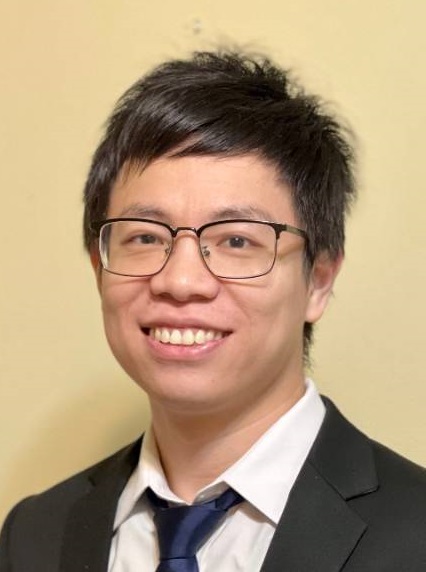
Shungeng Zhang serves as an Assistant Professor in the Department of Computer & Cyber Sciences at Augusta University's School of Computer and Cyber Sciences. He holds a Ph.D. in Computer Science from Louisiana State University (2021) and a B.E. in Computer Engineering from Huazhong University of Science and Technology (2014). His educational background includes: Ph.D. in Computer Science, Louisiana State University, 2021 B.E. in Computer Engineering, Huazhong University of Science and Technology, 2014 Dr. Zhang's research spans distributed systems, cloud computing, and cybersecurity with a focus on enhancing performance and scalability of web applications and IoT stream processing in cloud environments. He employs sophisticated timeline analysis and fine-grained monitoring to identify transient bottlenecks causing long-tail latency problems, addressing propagation effects in complex dependency chains among application components. His publication record (2017-2022) reveals consistent contributions to cloud systems performance, particularly in n-tier architectures, concurrency control, and latency optimization. Key themes include stream processing synchronization, fanout query performance, adaptive concurrency for SLO compliance, and mitigation of transient resource contention attacks across distributed systems. No scientific awards were mentioned in the provided information. Dr. Zhang actively seeks graduate students with strong computer systems backgrounds for research collaboration. His departmental service includes Faculty Assembly participation (2021-2022) and faculty interviewing duties. Professionally, he serves as a reviewer for ACM SoCC'23, ACM TOIT, SmartCom 2023, The Journal of Supercomputing, and ACM SoCC'22. Teaching responsibilities include AIST 4720 (Enterprise System Architectures), CSCI 1200 (Introduction to Computers and Programming), and graduate courses such as CSCI 8940 (Dissertation Research) and AIST 3310 (Advanced Networking). No dedicated research labs or teams were specified in the available documentation.
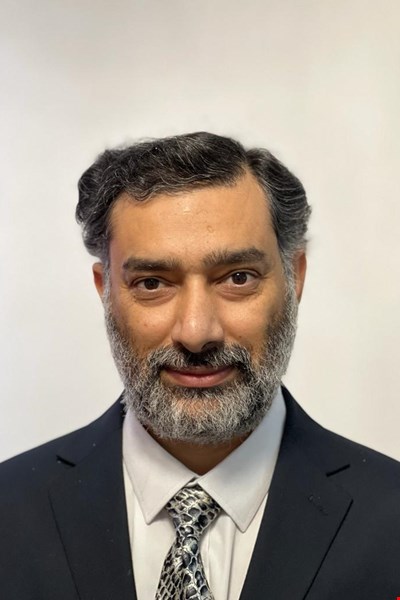
Dr. Matloob Khushi serves as a Senior Lecturer in Computer Science at Brunel University London's College of Engineering, Design and Physical Sciences. With over 25 years of combined academic and industry experience, his work bridges theoretical AI advancements with practical applications in finance, healthcare, and public health domains. His research has established significant collaborations with international banks, healthcare institutions, and technology startups. Dr. Khushi earned his PhD in AI and Data Science from the University of Sydney, developing novel algorithms for genomic data analysis. His postdoctoral research at the Children's Medical Research Institute (2014-2017) pioneered AI-based diagnostic tools for medical condition detection. More recently, he developed bioinformatics tools for environmental assessment under a UKRI NEC grant. Research Focus FinTech Innovation : Creator of the SS Ratio (incorporating volatility and drawdown sensitivities), advanced portfolio optimization models, and synthetic data generation techniques for fraud detection and credit risk assessment Bioinformatics Leadership : Developer of AI tools for genomic analysis and early cancer detection, featured in SBS News and The Daily Telegraph Public Health NLP : Architect of systems for vaccine misinformation detection, mental health monitoring, and health surveillance on social media His publication portfolio shows consistent growth from foundational bioinformatics work to current multimodal AI applications, with increasing interdisciplinary collaboration across finance and healthcare sectors. Awards and Recognition Ranked among Stanford/Elsevier's top 2% of global AI scientists Recipient of Best Paper Awards from IEEE Transactions on Computational Social Systems and PeerJ Media recognition for cancer detection research by major news outlets Mentorship and Teaching Dr. Khushi has supervised six PhD candidates to completion and over 100 postgraduate dissertations. He teaches CS3002 Artificial Intelligence and mentors students in Final Year Projects. His supervision focuses on Deep Learning/NLP for FinTech prediction and Public Health Surveillance applications, emphasizing practical implementation of theoretical concepts.
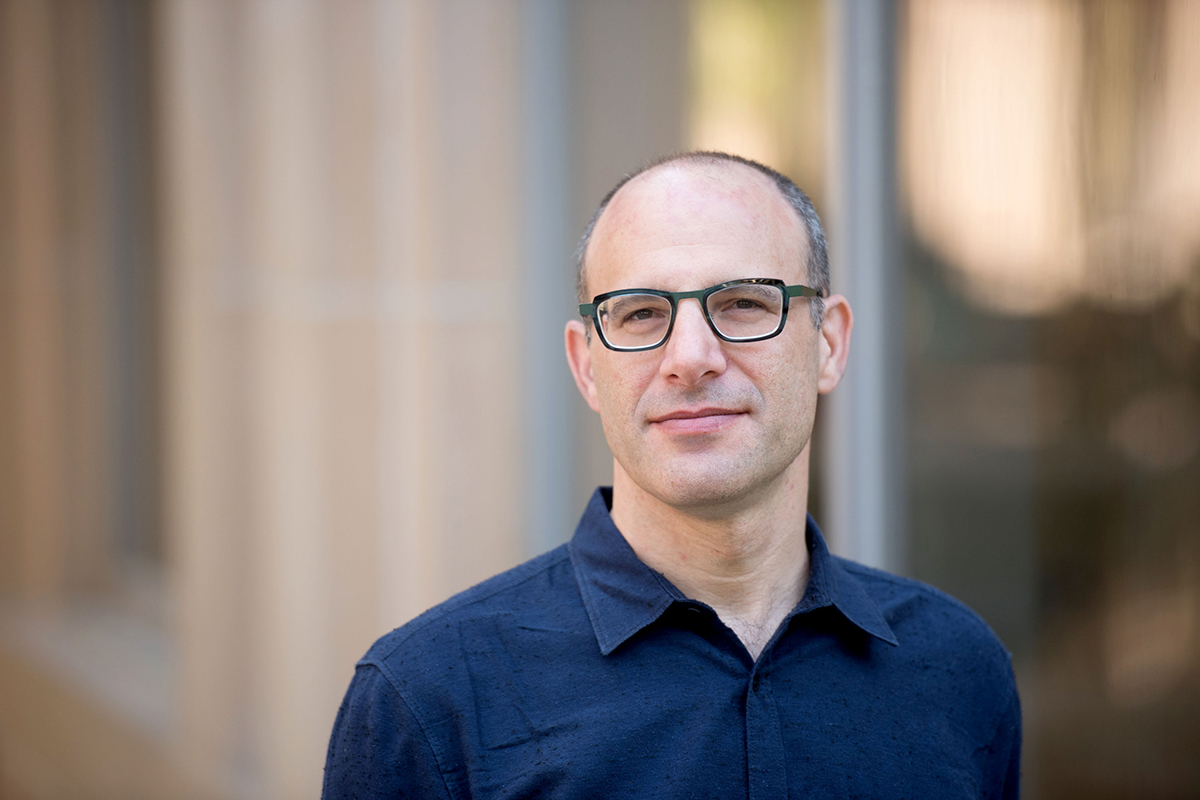
Emmett Witchel is a Professor of Computer Science at the University of Texas at Austin , with research spanning computer architecture, systems, networking, security, and privacy . His work focuses on low-level systems optimization and secure concurrent execution. Research Interests: Concurrent systems, secure execution environments, GPU integration, distributed systems. Teaching: CS 380L (Advanced Operating Systems), CS 371M (Mobile Computing). Scientific Awards: Runner-up Best Paper, ASPLOS 2013 Runner-up Award for Outstanding Research, USENIX Symposium 2012 IEEE Micro Top Pick Award 2007 ACM Honorable Mention 2004 George M. Sprowls Award, MIT EECS 2004 Recent Publications demonstrate leadership in CXL pod databases ( Tigon ), stateful serverless computing ( Boki ), SmartNIC-accelerated file systems ( LineFS ), and GPU security ( Telekine ). His work bridges hardware-software co-design and practical systems implementation.
Saurabh Amin is a Professor in the Department of Civil and Environmental Engineering at the Massachusetts Institute of Technology (MIT), where he also serves as the Edmund K. Turner Professor and Undergraduate Officer. He is a Principal Investigator at the Laboratory of Information and Decision Systems and holds affiliations with the Operations Research Center and the Center for Computational Science and Engineering. His educational background includes: B.Tech. 2002, Indian Institute of Technology (IIT) Roorkee M.S. 2004, University of Texas (UT) Austin Ph.D. 2011, University of California (UC) Berkeley Saurabh Amin's research focuses on the design and control of infrastructure systems using game theory and optimization in networks. His work spans three main areas: resilient network control, information systems and incentive design, and optimal resource allocation in large-scale infrastructure systems. By concentrating on critical infrastructure domains including highway transportation, electric power distribution, and urban water networks, his research develops innovative theory and tools to enhance system performance against both stochastic and adversarial disruptions. His approach involves modeling cyber-physical interactions in infrastructures to assess vulnerabilities, developing detection and response tools for failures at various scales, and designing economic incentive schemes that improve aggregate public good while accounting for dependencies and private information among strategic entities. Amin's work bridges mathematical systems theory with practical civil engineering applications, creating a rigorous theoretical foundation for infrastructure resilience that addresses diverse failure mechanisms from natural disasters to deliberate malicious actions. His recent publications demonstrate a strong focus on decarbonization of energy systems, resilient infrastructure planning under climate uncertainty, optimization methods for complex networked systems, and game-theoretic approaches to sustainable infrastructure management. His work increasingly integrates artificial intelligence and machine learning techniques with traditional control theory to address contemporary challenges in infrastructure resilience and sustainability. The research shows a clear trajectory toward addressing climate change impacts on infrastructure systems while maintaining economic efficiency and operational reliability. Professor Amin has received numerous prestigious awards and honors: Common Ground Excellence in Teaching Award, 2025 HSCC Test-of-Time Award, 2024 MIT CEE, Distinguished Service and Leadership Award, 2023 Samuel M. Seegal Prize (SoE) – inspiring students in pursuing and achieving excellence, 2022 Earll M. Murman for Excellence in Undergraduate Advising, 2022 C3.ai Digital Transformation Institute Research Award, 2020 MIT, Ole Madsen Mentoring Award, 2020 MIT, Energy Initiative Research Award, 2020 National Academy of Engineering, China-America Frontiers of Engineering Symposium speaker, 2019 MIT, Robert N. Noyce Career Development Professor, 2015-2018 Google Faculty Research Award, 2015 National Science Foundation CAREER Award, 2015 Siebel Energy Institute Research Award, 2015 MIT, Solomon Buchsbaum AT&T Research Fund Award, 2012 Professor Amin has been actively involved in significant research projects including the C3.ai DTI project on Causal Reasoning for Real-Time Attack Identification in Cyber-Physical Systems and another on Learning in Routing Games for Sustainable Electromobility. He serves as the chief scientist on multi-institutional NSF grants, including the $9 million Foundations of Resilient Cyber-Physical Systems (CPS) project. His teaching portfolio includes courses such as 1.008 Engineering for a Sustainable World, 1.104 Sensing and Intelligent Systems, 1.020 Engineering Sustainability: Analysis and Design, and 1.208 Resilient Networks. As Undergraduate Officer, he plays a key role in shaping the educational experience for civil and environmental engineering students at MIT. Professor Amin leads the Resilient Infrastructure Networks Lab at MIT, where his team develops theoretical foundations and practical tools for infrastructure resilience. The lab focuses on the intersection of control theory, game theory, and optimization applied to cyber-physical infrastructure systems. Current research directions include pandemic-resilient urban mobility and hurricane-resilient smart grid operations, reflecting the lab's commitment to addressing pressing societal challenges through rigorous systems engineering approaches.
Gautam Kamath is an Assistant Professor at the University of Waterloo's Cheriton School of Computer Science, a Faculty Member at the Vector Institute, and a Canada CIFAR AI Chair. He leads The Salon, a research group focused on statistics, algorithms, machine learning, and optimization. His work bridges theoretical foundations with practical applications in data privacy and robustness, contributing to both academic research and real-world deployments that impact millions of users. Dr. Kamath earned his PhD and SM degrees in Electrical Engineering and Computer Science at MIT, where he was advised by Costis Daskalakis. Prior to MIT, he graduated from Cornell University in May 2012 with a degree in Computer Science and Electrical and Computer Engineering, where he worked with Bobby Kleinberg. His academic journey reflects a strong foundation in both theoretical computer science and practical applications. His research focuses on developing solutions for trustworthy and reliable machine learning and statistics, with particular emphasis on data privacy and robustness. He addresses fundamental problems in these areas, revitalizing statistical toolkits for the modern data era where privacy preservation is paramount. His work spans theoretical foundations of differential privacy to practical applications that have been deployed at scale, including contributions to systems that protect the sensitive information of hundreds of millions of individuals. Analysis of his recent publications reveals a strong trend toward addressing the interplay between privacy, robustness, and machine learning performance. His work increasingly examines practical deployment challenges while maintaining theoretical rigor, with growing emphasis on diffusion models, generative AI, and the legal implications of AI systems. There's a clear trajectory from foundational privacy theory toward addressing real-world implementation challenges across diverse application domains. Canada CIFAR AI Chair Ontario Early Researcher Award 2024 Caspar Bowden Award for Outstanding Research in Privacy Enhancing Technologies STOC Best Student Presentation Award ICML 2024 Best Paper Award Microsoft Research Fellow at the Simons Institute for the Theory of Computing Dr. Kamath actively mentors students, with notable successes including Valentio Iverson winning the Germain-Erdős Undergraduate Award and Chris Trevisan receiving the CRA Outstanding Undergraduate Researcher Award. His service to the research community is extensive, serving as Editor-in-Chief of TMLR, on the Executive Committee of the Learning Theory Alliance, and on steering committees for major conferences including ICML, COLT, and ALT. He has organized numerous workshops focused on privacy-preserving machine learning and differential privacy. Through The Salon research group, Dr. Kamath fosters a collaborative environment where postdoctoral fellows, graduate students, and undergraduates work together on cutting-edge problems at the intersection of statistics, algorithms, machine learning, and optimization. The group maintains strong connections with industry partners and participates in major research initiatives, including the Vector Institute's privacy and security research efforts. Looking forward, Dr. Kamath will be moving to the Computer Science department at NYU's Courant Institute of Mathematical Sciences in September 2026, where he plans to expand his research program.
Vanya Darakchieva is a Professor in Solid State Physics at Lund University's Faculty of Engineering (LTH), serving as Principal Investigator at NanoLund: Centre for Nanoscience and Director of C3NiT: Centre for III Nitride technology. She is a core member of Lund's profile areas in Nanoscience and Semiconductor Technology, Light and Materials, and The Energy Transition, reflecting her interdisciplinary impact. Her research centers on wide bandgap semiconductors, particularly gallium nitride (GaN) and gallium oxide (Ga 2 O 3 ), with emphasis on defect engineering, electron transport, and advanced characterization techniques. She pioneers terahertz spectroscopy and electron paramagnetic resonance methods to analyze material properties critical for quantum technologies and energy-efficient electronics. Her work bridges fundamental physics with industrial applications in high-frequency devices and green semiconductor technology. Recent publications reveal a sharp focus on structural optimization of GaN crystals, doping mechanisms, and contact engineering—key bottlenecks in next-generation power electronics. Trends show increasing collaboration with international teams on epitaxial growth techniques and defect-driven property control. No scientific awards were documented in the provided text. She actively supervises PhD candidates including Logotheti, A. and Rindert, V., guiding dissertation projects within major grants. Darakchieva leads nine research projects with 150+ million SEK in funding, including two flagship Knut and Alice Wallenberg Foundation initiatives (2025–2030) on quantum-ready semiconductors and ceramic-to-semiconductor transformation, plus Swedish Research Council and Vinnova grants targeting terahertz characterization and III-nitride technology. Her work is anchored in NanoLund and C3NiT infrastructure, fostering cross-departmental teams for nanofabrication and device prototyping. Current efforts integrate magnetron sputtering, MOCVD growth, and in-situ characterization to solve industry challenges in thermal management and electron mobility for 6G communications and renewable energy systems.
Karl Henrik Johansson is a Professor at the School of Electrical Engineering and Computer Science, KTH Royal Institute of Technology in Stockholm, Sweden, where he also serves as the Founding Director of Digital Futures. He is a Fellow of both IEEE and the Royal Swedish Academy of Engineering Sciences, and has held leadership positions including Immediate Past President of the European Control Association and IEEE Control Systems Society Vice President Diversity, Outreach & Development. Dr. Johansson earned his MSc in Electrical Engineering and PhD in Automatic Control from Lund University. His academic journey includes visiting positions at prestigious institutions such as UC Berkeley, Caltech, and NTU. His research focuses on networked control systems and cyber-physical systems with applications in transportation, energy, and automation networks. His work investigates fundamental challenges in connecting physical world systems through communication networks, exploring how wireless communication and sensor technology can enhance system robustness, reliability, energy efficiency, and safety. Current research directions include security of cyber-physical systems, distributed optimization, multi-agent systems, and applications to intelligent transportation and energy networks. Analysis of his recent publications reveals a strong focus on distributed optimization algorithms, secure networked control, multi-agent systems, and applications to transportation and energy networks. His work increasingly integrates machine learning techniques with traditional control theory, addressing challenges in privacy-preserving distributed computation, resilient state estimation, and resource allocation in complex networked systems. IEEE Control Systems Society Hendrik W. Bode Lecture Prize (2024) Swedish Research Council Distinguished Professor (2018-2027) Wallenberg Scholar (2009-2026) IFAC Young Author Prize IEEE CSS Distinguished Lecturer (2017-2019) IFAC Outstanding Service Award IEEE Fellow Dr. Johansson has supervised over 100 postdocs and PhD students, with many now holding prominent positions at institutions worldwide. His research has been supported by significant grants including the Swedish Research Council Distinguished Professor Grant (2018-2027), multiple Wallenberg Foundation grants, and numerous EU and national research projects. He has directed major research centers including ACCESS Linnaeus Centre (2009-2016) and Strategic Research Area ICT TNG (2013-2020). His research group operates within the Digital Futures initiative and maintains strong connections with industry partners through projects like the Integrated Transport Research Lab (supported by Scania and Ericsson) and Smart Mobility Lab. The group actively collaborates with international institutions and participates in major EU-funded projects addressing challenges in cyber-physical systems, transportation, and energy networks.
Graeme J. Kennedy is an associate professor in the Daniel Guggenheim School of Aerospace Engineering at the Georgia Institute of Technology where he leads the Simulation-based Multidisciplinary Design Optimization (SMDO) research group. His research focuses on developing numerical optimization techniques for structural and multidisciplinary design problems, particularly for fixed-wing aircraft analysis and design. Dr. Kennedy received his PhD from the University of Toronto Institute for Aerospace Studies (UTIAS) in 2012, followed by a postdoctoral research fellowship at the University of Michigan in the Department of Aerospace Engineering. His research spans several critical areas in aerospace design optimization: Development of advanced numerical optimization techniques for structural design Large-scale topology optimization for aerospace structures Aeroelastic and aerothermoelastic optimization of flexible aircraft Optimization of composite structures with manufacturing constraints Electric motor optimization for electric vertical take-off and landing (eVTOL) vehicles He has developed multiple open-source research codes including TACS (parallel finite-element solver), ParOpt (optimization toolkit), TMR (mesh generation tool), and FUNtoFEM (aeroelastic coupling framework). Dr. Kennedy is particularly interested in designing structures that manage heat from battery packs in air taxis while achieving optimal aeroelastic performance. His publications reveal a strong focus on computational methods for solving large-scale optimization problems in aerospace design. The research shows progressive development from fundamental optimization algorithms toward increasingly complex multidisciplinary applications, with particular emphasis on making high-fidelity simulation-based optimization practical for industrial design cycles through high-performance computing approaches. Dr. Kennedy actively mentors numerous graduate students, including six current PhD candidates and multiple former PhD and MS students who have completed their degrees under his supervision. His research group maintains strong connections with industry through various grants supporting the development of computational tools for aerospace design. The SMDO group also engages in educational outreach through 'Optimization through Intuition,' providing accessible learning modules about optimization concepts for middle and high school students, demonstrating Dr. Kennedy's commitment to broadening participation in engineering education.
Shenyi Liu is a Doctoral Researcher at Aalto University's Department of Electrical Engineering and Automation , focusing on advanced semiconductor packaging and reliability engineering. Active in the Electronics Integration and Reliability research group, Liu contributes to developing innovative interconnect solutions for MEMS and power electronics. Email: shenyi.liu@aalto.fi Research Interests center on low-temperature bonding technologies , 3D packaging architectures , and failure mechanism analysis in electronic components. Key methodologies include solid-liquid interdiffusion (SLID) bonding and thermal-mechanical stress characterization. Publication Trends show expertise in MEMS integration , interconnect reliability , and power component packaging , with recent work addressing TSV interconnects, die-attach fatigue cracks, and Cu-Sn-In bonding systems. Collaborations span materials engineering and applied physics domains.
Sankar Sivarajah is the Head of Kingston Business School and Professor of Technology Management and Circular Economy at Kingston University London. He joined the university in September 2024 after serving as Dean of the School of Management at the University of Bradford (2017-2024). His academic career began at Brunel University London in 2014 as a post-doctoral researcher. Qualifications: PhD in Management and Information Systems Studies, Brunel University London MSc in Management (Entrepreneurship), Bayes Business School BSc in Business and Management (Computing), Brunel University London His research focuses on leveraging digital technologies for societal benefit, particularly in Technology Management , Circular Economy , and Operations/Supply Chain Management . Recent work analyzes AI-driven decision-making in public sectors, blockchain integration for sustainable supply chains, and smart technology applications in green HRM. His publications span journals like Government Information Quarterly , Annals of Operations Research , and Information Systems Frontiers , covering topics from drone-based food security to ethical AI frameworks. Trends show increasing emphasis on Industry 5.0, 6G impact evaluation, and cross-country sustainability practices. Scientific Recognition: Included in World’s Top 2% Scientists (2023, 2024) Fellow of the UK Higher Education Academy (FHEA) He serves as Deputy Editor for the Journal of Enterprise Information Management , peer reviewer for EFMD and AACSB accreditations, and governing council member of Chartered Association of Business Schools (CABS). His £3M+ funded projects address 6G evaluation, AI strategy, and Smart Cities.
Nasir Gharaibeh serves as a Professor in the Zachry Department of Civil & Environmental Engineering at Texas A&M University, specializing in infrastructure systems performance, resilience, and management decision-support systems. His academic credentials include: Ph.D. in Civil Engineering from the University of Illinois, Urbana-Champaign (1997) M.S. in Civil Engineering from Jordan University of Science and Technology (1991) B.S. in Civil Engineering from Jordan University of Science and Technology (1990) Dr. Gharaibeh's research program addresses critical infrastructure challenges through computational methodologies for mitigating gradual deterioration and disaster-induced damage. His work spans pavement, bridge, and stormwater systems with pioneering contributions to citizen-science infrastructure monitoring, enabling community-driven data collection and decision-making processes. He develops decision-support tools for resource allocation, maintenance planning, and project selection while advancing sustainable community resilience frameworks through hazard informatics and infrastructure management systems. No information regarding scientific awards was provided in the source material. Details about graduate student supervision and research grants are not specified in the available documentation. Dr. Gharaibeh leads an active research team focused on computational infrastructure modeling and community-engaged monitoring systems, with ongoing projects targeting real-world implementation of resilience strategies.
Javier Zamora is a Professor at IESE Business School , part of the University of Navarra. He holds a Ph.D. in Electrical Engineering from Columbia University and an M.Sc. in Telecommunications Engineering from the Polytechnic University of Catalonia. Education Ph.D., Electrical Engineering, Columbia University M.Sc., Telecommunications Engineering, Polytechnic University of Catalonia PDG, IESE Business School Research Interests : Zamora specializes in digital transformation, focusing on data-driven organizations and artificial intelligence. His work explores how new technologies reshape business models, organizational structures, and leadership strategies. Publications span topics from AI implementation in finance and sports management to cloud computing in crisis scenarios. His research emphasizes practical frameworks like the "Digital Density" concept and tools for assessing digital maturity. Professional Roles : He co-founded Inqbarna (AI-powered mobile solutions) and served as CEO of eNeo Labs (digital home products). Currently, he directs executive programs at IESE, including Digital Transformation: Senior Management Program and Navigating IT Architecture .
John Hale, Ph.D., is a Professor and Chair of Computer Science at The University of Tulsa's Tandy School of Computer Science, where he holds the Tandy Endowed Chair in Bioinformatics and Computational Biology. He is a founding member of the TU Institute of Bioinformatics and Computational Biology (IBCB) and a faculty research scholar in the Institute for Information Security (iSec). Education: Ph.D., Computer Science, The University of Tulsa (1997) M.S., Computer Science, The University of Tulsa (1992) B.S., Computer Science, The University of Tulsa (1990) Dr. Hale's research spans cybersecurity , bioinformatics , cyber-physical systems , and applied formal methods . His work focuses on neuroinformatics, cyber trust, attack modeling, secure software development, and information privacy. Recent publications highlight trends in large-scale graph analysis for cybersecurity, attack graph generation on high-performance computing clusters, and security frameworks for nuclear reactor control systems. His research also explores hybrid attack graph modeling, reflective deception strategies, and compliance methods for cyber-physical infrastructures. Scientific Awards: 2000 National Science Foundation CAREER Award Dr. Hale has advised numerous research projects and received funding from the U.S. Air Force, Army, NSF, NIH, DARPA, NSA, and NIJ. He has testified before Congress on cybersecurity and holds a patent for anti-piracy technology. His lab work includes developing cyber-physical testbeds and science DMZ security solutions.