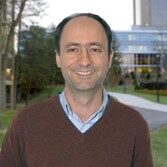
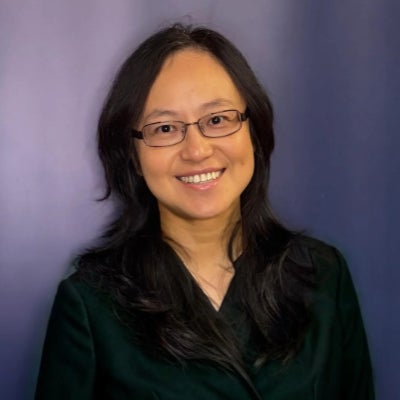
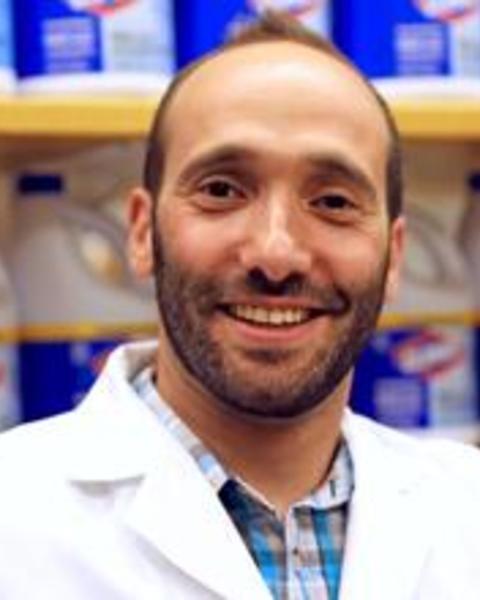
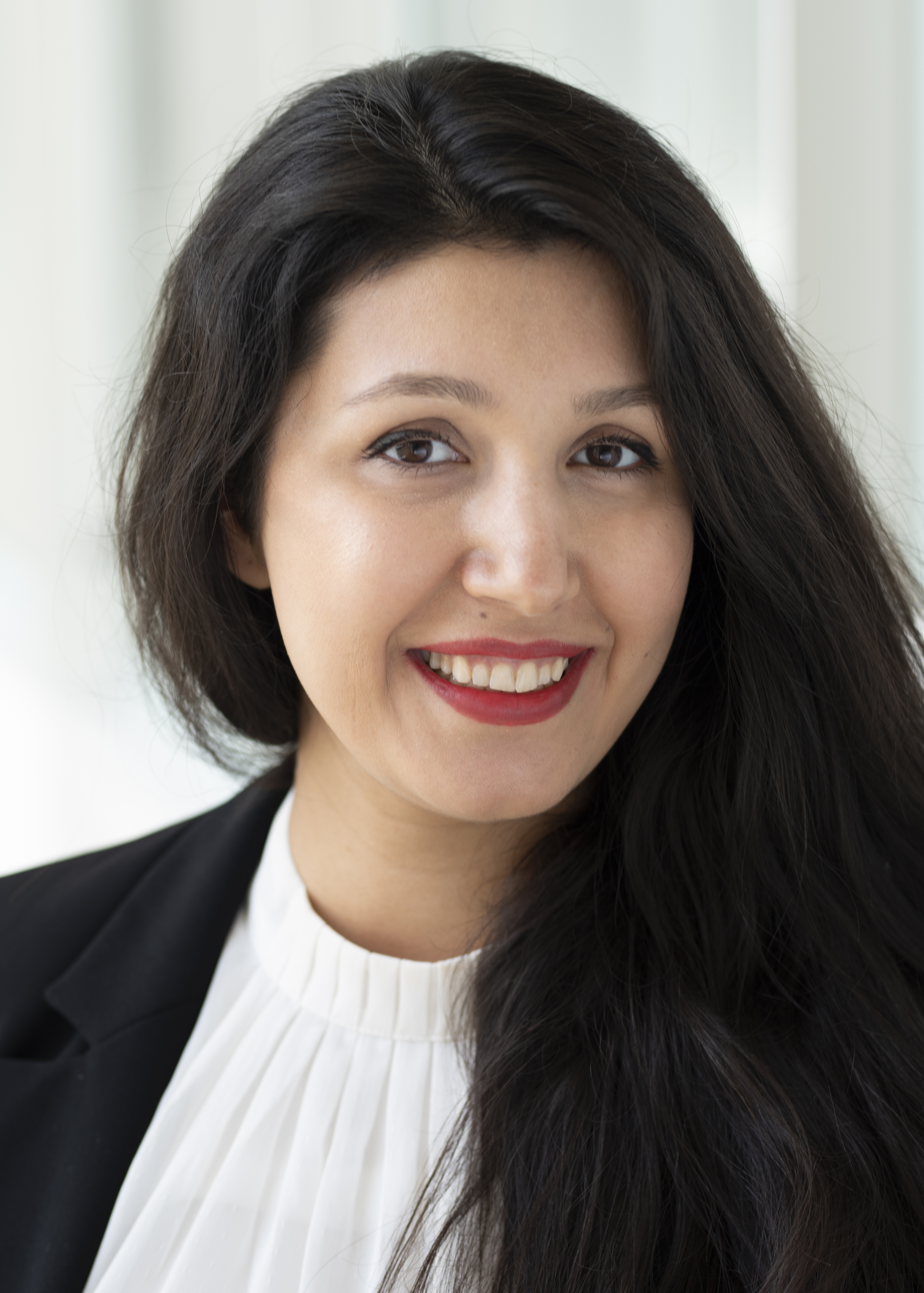
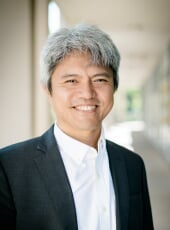
Dr. Amir Hakami is a Professor in the Department of Civil & Environmental Engineering at Carleton University , where he leads the Carleton Atmospheric Modelling Group . His research focuses on advanced air quality modeling techniques to inform environmental policy. Degrees: B.Sc. (Polytechnic of Tehran), M.Sc., Ph.D. (Georgia Tech), Postdoc (Caltech) Contact: Office 3454 Mackenzie Building, Phone: 613-520-2600 ext. 8609, Email: amir.hakami@carleton.ca Research Interests: Air quality modeling at multiple spatial scales Adjoint sensitivity analysis for atmospheric response Inverse modeling and data assimilation techniques Uncertainty quantification in environmental systems Interdisciplinary applications in policy, public health, and economics Teaching: Courses include Environmental Engineering Systems Modeling , Contaminant Transport , and Air Pollution & Emissions Control at undergraduate and graduate levels. Research Group: The group includes Ph.D. candidates, postdoctoral fellows, and alumni working on topics ranging from atmospheric chemistry to sustainable energy systems. Members come from diverse backgrounds in engineering, science, and policy disciplines.
Professor Yan (Lindsay) Sun is a faculty member at the University of Rhode Island in the College of Engineering under the Department of Electrical, Computer and Biomedical Engineering . She is the founding director of the Center for Cyber-Physical Intelligence and Security (CYPHER) and an IEEE Fellow . Her research focuses on cyber-physical systems security , power grid security , network security , and trustworthy social computing , with a particular emphasis on trust modeling and management in complex systems. Her publications span smart grid security , microgrid control , machine learning applications in power systems, and blockchain-based security mechanisms . The work often explores adversarial threats , resilient control strategies , and data augmentation techniques for improved grid monitoring. NSF CAREER Award (2007) IET Wireless Sensor Systems Premium Award (2018) EURASIP Best Paper Award (2015) IEEE Fellow (2019) URI College of Engineering Outstanding Research Award (2022) She actively leads interdisciplinary CYPHER Lab initiatives involving cyber-physical system resilience , network security , and smart grid analysis , collaborating with government and industry partners.
Gizem Kayişoğlu is an Assistant Professor in the Department of Maritime Transportation and Management Engineering at Istanbul Technical University. Her research focuses on cybersecurity challenges in maritime systems, human error probability, and risk assessment methodologies. She actively explores vulnerabilities in shipboard systems such as ECDIS, VDR, and radar while emphasizing regulatory compliance and maritime safety standards. Her work integrates frameworks like CORAS, Fuzzy FUCOM, and SLIM to address cybersecurity dynamics and human factors in maritime operations. Key collaborations involve analyzing ransomware threats, AIS system vulnerabilities, and port infrastructure protection through interdisciplinary approaches. Her articles highlight trends in maritime cybersecurity, including ransomware mitigation, cyber hygiene practices, and critical infrastructure protection. She has contributed to developing risk assessment tools and checklists tailored for maritime environments, emphasizing both technological and human aspects of safety. No scientific awards have been explicitly mentioned. She has not listed formal advisees, and her professional activities focus on advancing maritime cybersecurity through academic and applied research.
Gunnar Kusch is a Senior Research Associate at the Department of Materials Science & Metallurgy, University of Cambridge. His research focuses on defects in semiconductors, porous AlGaN materials, and advanced characterization techniques like cathodoluminescence (CL) and atom probe tomography (APT). He holds a PhD from the University of Strathclyde and leads projects on UV-B LED optimization, nanoscale defect behavior analysis, and semiconductor device design. His work bridges materials synthesis, characterization, and device performance, with applications in energy-efficient lighting and solar cell technology. Key research areas include: Defect engineering in III-nitride semiconductors Porous AlGaN templates for high-efficiency UV emitters Correlative microscopy techniques (CL, EBSD, APT) Composition-structure-property relationships in photovoltaic materials Notable contributions include developing CL-based methods for nanoscale defect analysis and demonstrating improved Cu(In,Ga)S₂ solar cell efficiencies through compositional engineering. His laboratory focuses on translating microscopic insights into macroscopic device improvements.
Ningning Hou is a Lecturer in Computing (IoT/Networking) at Macquarie University's School of Computing. They are affiliated with the Future Communications Research Centre and Data Horizons Research Centre. Previously, they served as a Postdoctoral Fellow at The Hong Kong Polytechnic University (PolyU) and earned their PhD in Computer Science from PolyU in 2021, followed by a B.Eng. in Telecommunication Engineering from Beijing University of Posts and Telecommunications (2017). Research Interests: Low Power Wide Area Networks (LPWANs) Internet-of-Things (IoT) Wireless Sensing and Networking Wireless Security Recent research focuses on enhancing LoRa communication through innovations like full-duplex gateways (FDLoRa) and scalable logical channels (XGate), addressing challenges in network scalability, signal interference, and security threats. Their work spans topics such as data aggregation efficiency, antenna diversity, and covert channel mitigation. Advising: Actively seeking self-motivated PhD students and researchers for projects in LPWANs, edge computing, and wireless security. Labs/Teams: Involved with Future Communications Research Centre and Data Horizons Research Centre.
Dr. Michael Baym is an Associate Professor of Biomedical Informatics at Harvard Medical School with affiliate appointments in Microbiology and the Laboratory of Systems Pharmacology, and as an Associate Member of the Broad Institute. He leads the Baym Lab, which studies microbial evolutionary genomics and antibiotic resistance through a hybrid of experimental, computational, and theoretical approaches. His research focuses on: Antibiotic Resistance Evolution and practical interventions Mobile Genetic Elements (plasmids, phages, transposons) Computational Genomic Algorithms for big data analysis Synthetic Biology tools and technologies Key recent publications explore phage discovery systems , phylogenetic compression of microbial genomes, and RNA-guided gene drives in plasmids. His work is supported by multiple NIH/NIGMS and NSF grants including a MIRA award. Scientific honors include: Packard Fellowship (2018) Pew Biomedical Scholarship (2020) Sloan Research Fellowship (2020) A. Clifford Barger Excellence in Mentoring Award (2021) SSQBio Mentorship Award (2022) The lab actively trains PhD students and postdoctoral fellows with alumni occupying academic and industry positions globally. Current team members include researchers from interdisciplinary backgrounds working at the intersection of experiment, computation, and theory .
Anna Grigolon is an Assistant Professor at the University of Twente , Netherlands, affiliated with the Transport Engineering and Management Research Group . Her research focuses on sustainable urban mobility , user-centric transport solutions , and travel behavior analysis using tools like discrete choice modeling , spatial analysis , and social psychology theories . Research Interests : Sustainable Urban Mobility Accessibility Modeling Travel Behavior Discrete Choice and Latent Class Modeling Spatial Analysis and GIS Shared Micromobility and Mobility Hubs Equity in Transport Planning Article Trends : Anna’s recent work (2025–2024) emphasizes mobility justice , 15-minute city transitions, and equity in transport access , particularly for marginalized communities like São Paulo favelas. She integrates digital tools (e.g., serious games, kiosks) and space-time metrics to evaluate mobility solutions. Projects : She currently leads the SmartHubs project and contributes to DREAMS and R-map , focusing on smart, equitable mobility systems in Europe and Saudi Arabia.
Golnoosh Farnadi is an Assistant Professor at McGill University's School of Computer Science and an Adjunct Professor at the University of Montréal. She serves as a Visiting Faculty Researcher at Google, a Core Academic Member at MILA (Quebec Institute for Learning Algorithms), and holds a prestigious Canada CIFAR AI Chair. Farnadi co-directs McGill's Collaborative for AI & Society (McCAIS) and founded the EQUAL Lab (EQuity & EQuality Using AI and Learning algorithms), which focuses on advancing algorithmic fairness and responsible AI. Her educational background includes a Ph.D. in Computer Science from KU Leuven and Ghent University (2017), with postdoctoral research at the University of Montreal/MILA (2018-2020) and the University of California, Santa Cruz (2017-2018). During her doctoral studies, she was a visiting scholar at UCLA, University of Washington, Tsinghua University, and Microsoft Research. Dr. Farnadi's research centers on developing mathematical tools and algorithms for fairness-aware machine learning systems. Her work addresses bias and discrimination in AI decision-making across critical domains including healthcare, criminal justice, financial services, and social media. She has pioneered approaches to ensure fairness in deep learning models, particularly in sequential decision-making under uncertainty. Her research bridges theoretical foundations with practical applications, examining how AI systems can be designed to promote equity while maintaining performance. Analysis of her recent publications reveals a strong focus on practical implementations of fairness mechanisms across diverse AI applications. Her work spans technical domains from generative models and large language models to recommender systems and healthcare optimization. A unifying theme is the development of mathematically rigorous frameworks that balance performance with fairness considerations, with increasing attention to cultural diversity in multilingual AI systems and privacy-preserving fairness approaches. Google Scholar Award (2021) Facebook Research Award (2021) Rising Stars in AI Ethics (2021) Google Award for Inclusion Research (2023) WAI Responsible AI Leader of the Year Finalist (2023) 100 Brilliant Women in AI Ethics (2023) Canada CIFAR AI Chair Dr. Farnadi advises numerous doctoral and master's students across McGill University, University of Montréal, and MILA, with research focusing on fairness, privacy, and responsible AI. Her EQUAL Lab brings together researchers from computer science, social sciences, and policy domains to address systemic challenges in AI ethics. She has secured significant research funding from Google and other major organizations to support her work on fairness-aware AI systems, with applications spanning healthcare, social media safety, and public policy. The EQUAL Lab serves as a hub for interdisciplinary research on algorithmic fairness, bringing together computer scientists, social scientists, and policy experts. The lab's work spans theoretical foundations of fairness metrics, practical implementations in real-world systems, and policy recommendations for responsible AI deployment. Current projects include developing frameworks for fair kidney exchange programs, mitigating cultural stereotypes in multilingual language models, and creating privacy-preserving approaches for detecting online harms while protecting user data.
Chee-Wooi Ten is a tenured Professor in the Department of Electrical and Computer Engineering at Michigan Technological University, where he has served since 2010 and achieved tenure in 2016. He concurrently holds an Affiliated Professor appointment in Applied Computing and directs both the PSERC Site and ICC CPS Center. His institutional roles emphasize cyber-physical security integration within power infrastructure. His educational background includes: PhD in Electrical Engineering from University College Dublin (2009) MSc in Electrical Engineering from Iowa State University (2001) BSc in Electrical Engineering from Iowa State University (1999) Ten's research pioneers cyber-informed security engineering strategies for bulk power systems, focusing on quantifying rare events through system risk models and data science. His work bridges power grid interactions with robotics and transportation systems to advance decarbonization and electrification. Key methodologies include validating cyber-physical security frameworks against steady-state and dynamic grid approaches, with emphasis on attack/defense combinatorics and smart home technologies. This transdisciplinary approach supports the fourth industrial revolution's resilience requirements. His publication trends reveal strong focus on risk-aggregated substation testbeds using generative adversarial networks, cyber insurance models for power systems, and cascading failure analysis from switching attacks. Recent works increasingly integrate machine learning with physics-based modeling to address cybersecurity threats in inverter-based resource integration and distribution emergency operations. Ten has secured over $6.5M in active funding including: $2M DOE grant (MTU portion $105,000) for CyDERMS Center on DERs/Microgrids cybersecurity $704,409 CyManII award for secure digitalization in smart manufacturing $1.05M DOE ARPA-E grant for decarbonized freight transportation modeling NSF CyberCorps Scholarship for Service program ($3.38M) His grants consistently address risk management through data-driven and physics-based modeling, with industry partnerships through PSERC and utility collaborations. As ICC CPS Center Director, he leads research on cyber-physical security testbeds and coordinates the PSERC Summer Transformation School. His team develops validation frameworks for NERC CIP compliance while addressing practical pain points in OT cybersecurity for grid operators.
Ali Mani is an Associate Professor of Mechanical Engineering at Stanford University and a faculty affiliate at the Institute for Computational and Mathematical Engineering. He earned his PhD in Mechanical Engineering from Stanford in 2009, following an M.S. (2004) and B.S. (2002) from Stanford and Sharif University of Technology, respectively. His research focuses on fluid mechanics, turbulence, and numerical simulations, with applications in multiphase flows, electrokinetic systems, and applied mathematics. His group develops high-fidelity simulation tools and reduced-order models to understand transport processes in turbulent and chaotic systems. Research interests include turbulence modeling, two-phase flow dynamics, and electrochemical transport. Recent work explores eddy viscosity operators, nonlocal transport phenomena, and computational methods for multiphase systems. The group's studies often bridge experimental validation and numerical analysis to improve predictive engineering models. Key contributions span electrokinetic transport in porous media, superhydrophobic surface slip effects, and phase field modeling. His lab’s work is supported by grants focusing on fluid dynamics, renewable energy systems, and advanced simulation frameworks.
Prof. Dr. İbrahim Akduman is a Professor at the Department of Electronics and Communication Engineering , Istanbul Technical University , specializing in microwave imaging and biomedical applications. His research spans antenna engineering, dielectric property analysis, and microwave hyperthermia systems.
Duane J. Seppi is a Professor of Financial Economics at the Tepper School of Business , Carnegie Mellon University since 2001, currently holding the Richard C. Green Professor chair. His research focuses on market microstructure (price manipulation, limit orders, market liquidity) and derivative pricing for commodities. PhD in Finance from University of Chicago (1988) MBA from University of Chicago (1984) BA from Stanford University (1977) His work bridges financial theory with commodity operations , exploring topics like natural gas storage valuation , electricity price modeling , and merchant commodity asset management . Key publication trends include Nash equilibrium in price impact , latent trading demand analysis , and commodity real options . Scientific awards include: Best Paper Award (2015) WFA/NYSE Prize (2005) George Leland Bach Award (2002) Roger F. Murray Prize (1998) As a dedicated educator , he teaches option pricing , stochastic processes , and algorithmic trading . His editorial board service spans the Journal of Finance , Journal of Financial Markets , and Review of Finance . Duane has held visiting fellowships at the U.S. SEC , University of Vienna , and Nanyang Technical University .
Jaline L Gerardin is an Associate Professor in Preventive Medicine (Epidemiology) and McCormick School of Engineering at Northwestern University. She is affiliated with the Center for Global Health, Institute for Public Health and Medicine (IPHAM), Northwestern Institute on Complex Systems, and Robert J. Havey, MD Institute for Global Health. Her career focuses on malaria modeling and public health interventions. Current affiliations: Northwestern University, IPHAM, NICO, Center for Global Health Prior role: Malaria lead at Institute for Disease Modeling Research Focus: Gerardin specializes in malaria transmission modeling and public health intervention optimization . Her work addresses subnational tailoring of malaria strategies, intervention mix analysis for elimination, and ethical modeling practices. She integrates multidisciplinary data (entomology, immunology, demography) into agent-based models to guide policy in resource-limited settings. Article Trends: Recent publications emphasize subnational malaria intervention prioritization (Guinea, Nigeria), diagnostic performance evaluation, human mobility impacts on transmission, and wastewater surveillance applications for disease modeling. Leadership Roles: Co-chair: American Society of Tropical Medicine and Hygiene symposia Member: WHO working groups, Malaria Modeling Consortium Advisor: WHO Malaria Multi-Model Comparison initiatives Education: PhD from University of California, San Francisco (2013)
Lars Nordström is a Professor at the Division of Electric Power and Energy Systems within KTH Royal Institute of Technology, Stockholm, Sweden. His work bridges control systems , communication networks , and power systems , with a focus on future architectures, functionality, and quality aspects of ICT for power grid operations. He has led initiatives such as the Swedish Centre of Electric Power Engineering and served as Thematic Leader for Smartgrids in KIC InnoEnergy. In 2014, he was a Visiting Professor at Washington State University. Education : Ph.D., MSc.EE Nordström's research explores the intersection of smart grids , machine learning , and cybersecurity for power systems. Key areas include: Wide-Area Monitoring and Control (WAMC) systems Decentralized control strategies for DC microgrids Impedance modeling using neural networks Data-driven methods for islanding detection ICT reliability and protocol design for grid operations His recent publications emphasize machine learning applications in power systems, including LSTM networks for EV charging management, graph attention networks for stability monitoring, and digital twin approaches for cyber-attack mitigation. These works span disciplines such as Smart Grids, Power Electronics, and Data Science. Scientific Recognitions : Senior Member, IEEE Senior Member, CIRED Senior Member, Cigre Past Chairman, Swedish IEC TC57 Mirror Committee Nordström actively teaches and examines graduate courses like Communication and Control in Electric Power Systems and Computer Applications and Machine Learning in Electric Power Systems . His work influences industry practices through collaborations on digital substations, energy market analysis, and resilience strategies.
Professor Raja Ayyanar is a faculty member in the School of Electrical, Computer and Energy Engineering at Arizona State University (ASU), where he has served since 2000. He holds a Ph.D. in Power Electronics from the University of Minnesota (2000), an M.S. from the Indian Institute of Science (1995), and a B.E. in Electrical Engineering from PSG College of Technology (1989). His research focuses on power electronics, renewable energy systems (including PV and wind integration), electric vehicles, motor drives, and wide bandgap devices. Notable contributions include advancements in DC-DC converters, power conversion for renewable energy interfaces, and high-frequency power electronics. He has published over 200 journal/conference papers and holds 8 U.S. patents. Ayyanar is a Fellow of the IEEE and has received the Office of Naval Research Young Investigator Award (2005). He leads or participates in major research initiatives, including the ACEPS Center and the Power Systems Engineering Research Center (PSERC). His work spans industry collaborations with entities like Sandia National Labs, Intel, and BP Solar. He teaches advanced courses in power electronics and has advised numerous students. His grants include projects on smart grid technologies, inverter reliability standards, and high-penetration renewable integration. He is affiliated with ASU’s Center for Efficient Vehicles and Sustainable Transportation Systems (EV-STS). Education: Ph.D. Power Electronics, University of Minnesota, 2000 M.S. Power Electronics, Indian Institute of Science, 1995 B.E. Electrical Engineering, PSG College of Technology, 1989 Affiliations: Professor, Ira A. Fulton Schools of Engineering Professor, PSERC and EV-STS Centers Grants & Projects: Over 60 grants from NSF, DOE, ONR, and industry partners Recent projects include dynamic sub-transmission-distribution co-simulation and EV/HEV traction drives