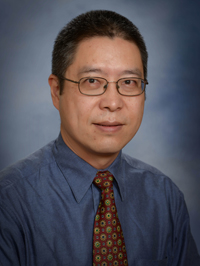
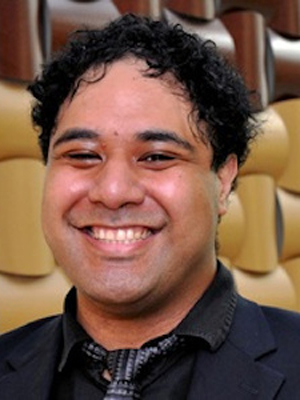
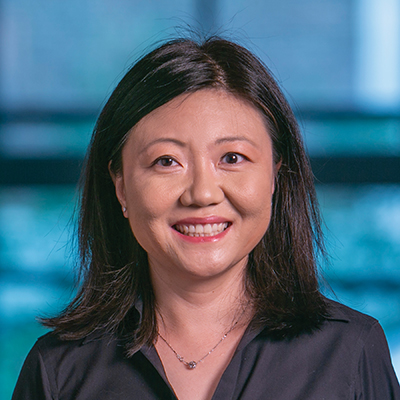
Srdjan Lukic is the Deputy Director of the FREEDM Systems Center and a Distinguished Professor in the Department of Electrical and Computer Engineering at North Carolina State University. His research focuses on power electronics, power systems, and electric vehicle infrastructure. He holds a Ph.D. in Electrical Engineering from the Illinois Institute of Technology (2007). His work emphasizes high-power converters, DC microgrids, and extreme fast charging (XFC) technologies for electric vehicles. Recent projects include the development of a 13.2 kV solid-state transformer for EV XFC stations and resilient distributed control frameworks for smart grids. He has contributed to wireless charging systems and modular medium-voltage fast chargers. Key Awards: University Faculty Scholars (2022) Grants: DOE-funded XFC projects, modular EV charging infrastructure Labs/Teams: FREEDM Systems Center, RIAPS control architecture development Publications highlight innovations in microgrid control, power electronics modeling, and privacy-preserving distributed systems. His work addresses grid resilience, cyber-physical integration, and high-efficiency energy conversion.
Jiang Hu is a Professor in the Department of Electrical and Computer Engineering at Texas A&M University, holding the Eric D. Rubin '06 Endowed Professorship. He also serves as Co-Director of Graduate Programs and is affiliated with the Computer Science & Engineering department. His research focuses on VLSI design automation, machine learning applications, and hardware security. He has held roles as editor for IEEE Transactions on CAD and ACM Transactions on Design Automation, and chaired the 2012 ACM International Symposium on Physical Design. Education: B.S. in Optical Engineering (Zhejiang University, 1990), M.S. in Physics (1997), and Ph.D. in Electrical Engineering (University of Minnesota, 2001). He worked at IBM Microelectronics before joining Texas A&M in 2002. Research interests include energy-efficient VLSI circuits, on-chip communication fabrics, analog layout automation, and AI-driven EDA. Recent work emphasizes machine learning for design closure, privacy-preserving frameworks, and systolic array-based architectures. Awards: IEEE Fellow (2016) Humboldt Research Fellowship (2012) Multiple best paper awards at DAC, ICCAD, and ASPDAC Advising and grants: Leads initiatives like the SLICE project, NSF workshops on ML-EDA infrastructure, and serves as Editor-in-Chief of ACM TODAES since 2024. His work bridges academic research and industry applications in EDA and semiconductor design. Labs/Teams: Active contributor to open-source tools like ALIGN for analog layout generation and collaborations on machine learning for EDA commons.
Paul Taele is an Instructional Assistant Professor and Deputy Lab Director in the Sketch Recognition Lab at Texas A&M University's Department of Computer Science & Engineering. He holds a Ph.D. (2019), M.S. (2010), and dual B.S. degrees in Computer Science and Mathematics from the University of Texas at Austin (2006). His research focuses on sketch recognition, haptics, and intelligent interfaces for education and accessibility, with notable work in mid-air gesture recognition, educational sketching tools, and assistive technologies for disabilities. He has contributed to projects like Kanji Workbook , Hashigo , and HaptiMoto , and has published over 50 peer-reviewed articles across venues like CHI, IUI, and AAAI. Taele has received awards including the NSF Student Travel Grant (2014) and Ford Foundation Honorable Mention (2015). He teaches courses in capstone design, programming, and sketch recognition, and mentors students across all academic levels through strict eligibility criteria for research collaborations. Education : Ph.D. Computer Science, Texas A&M University (2019) M.S. Computer Science, Texas A&M University (2010) B.S. Computer Science & Mathematics, University of Texas at Austin (2006) Concentration in Mandarin Chinese, National Chengchi University (2007) Research Interests : Taele's work bridges HCI and AI to create accessible educational interfaces. His projects emphasize: Sketch Recognition : Developing algorithms for mid-air gestures, children's developmental assessments, and language learning Accessibility : Haptic systems for visually impaired learners and algebra education Educational Tech : Intelligent tutoring systems for music, math, and East Asian languages Awards & Grants : EAAI-20 Travel Grant (2020) Ford Foundation Dissertation Honorable Mention (2015) NSF East Asia-Pacific Summer Institutes (2013, 2012) Royce E. Wisenbaker Fellowship (2009) Lab & Teams : Director of the Sketch Recognition Lab (SRL) and collaborator with global institutions like Singapore Management University and National Taiwan University. Active in organizing workshops like SketchRec at IUI conferences.
Dr. Jing Li is an Associate Professor and Eduardo D. Glandt Faculty Fellow at the University of Pennsylvania , holding dual appointments in the Electrical and Systems Engineering and Computer and Information Science departments. As co-director of the CyberSavvy nationwide security research center and director of the Penn Computational Intelligence Lab (PennCIL) , she pioneers innovations in non-von Neumann computing paradigms. Her research spans post-CMOS technologies, in-memory computing, and hardware-software co-design for security and AI applications. PhD in Computer Engineering, Purdue University (2009) BSc in Electrical Engineering, Shanghai Jiaotong University (2004) Research Focus: Dr. Li's work addresses fundamental challenges in computer systems across the stack. Key areas include: In-Memory Computing: Liquid Silicon architecture combining RRAM with silicon CMOS through monolithic 3D integration Security Engineering: Transforming computer security from "Art" to formal "Engineering" discipline within CyberSavvy Virtualization: Cloud FPGA abstraction layers decoupling compilation from runtime resource management Graph Analytics: Degree-aware optimization techniques for massive-scale graph processing Deep Learning Systems: Roofline model extensions for FPGA-based CNN acceleration Scientific Impact: Awarded DARPA Young Faculty Award , NSF CAREER Award , and IBM CEO Milestone Award , her team has achieved world records in energy-efficient computing (ENIAD supercomputer). With 46 U.S. patents and over 80 publications, she leads ecosystem development for emerging computing architectures through initiatives like the open-source MEG simulation platform . Community Leadership: Dr. Li serves on program committees for flagship conferences ( ISCA , FPGA Symposium ), chairs the International Memory Workshop , and contributes to the MLsys conference's inaugural committee. She actively mentors through multiple PhD openings and industry collaborations.
Jo Wood is Professor of Visual Analytics in the Department of Computer Science at City, University of London, where she has been employed since January 14, 2000. Her work bridges computer science, geographic information science, and human-computer interaction, focusing on innovative methods for visualizing complex spatial and behavioral data. Her research interests center on visual analytics , information visualization , and geovisualization , with applications in transportation, public health, crisis response, and citizen science. She investigates how interactive visual interfaces can support exploratory data analysis, decision-making, and storytelling, particularly through small multiples, faceted views, and sketch-based rendering techniques. The trends in her recent publications reflect a consistent focus on user-centered design , spatial data abstraction , and interactive exploration of multivariate datasets. Her work often integrates real-world behavioral data such as GPS tracks, cycling patterns, and crowd-sourced information to build meaningful visual narratives and support analytical reasoning. Throughout her career, Jo Wood has contributed significantly to the advancement of visual analytics through high-impact publications in top-tier venues such as IEEE Transactions on Visualization and Computer Graphics and Computer Graphics Forum. Her collaborations with researchers like Jason Dykes and Aidan Slingsby highlight her role in a vibrant research community. She has supervised numerous research projects and mentored students in visualization and geospatial analytics, though specific names are not listed in the provided text. Her work has been supported by various research grants, particularly in domains involving urban mobility, energy modeling, and crisis informatics, though grant details are not specified here. Jo Wood has also contributed to the design of visual analytics systems for applications including disease spread modeling, bicycle-hire scheme monitoring, and persuasive technology for health and leisure, demonstrating a strong commitment to impactful, interdisciplinary research.
Aleksandar Kostic is a Lecturer in the Department of Architecture and Built Environment at South East Technological University (SETU), where he also serves as Lead Researcher. He holds a PhD from University College Dublin, awarded in 2022, and is actively contributing to the academic and professional architecture community. PhD in Design Theory, University College Dublin (2022) His research lies at the intersection of philosophy and architectural design, with a strong focus on design theory, epistemology, ethics, and aesthetics. He explores fundamental questions such as aporia (intellectual impasses) in design, the influence of Platonic philosophy, and the ethical responsibilities of architects. His work emphasizes critical thinking and philosophical inquiry in architectural practice and education. The trends in his publications reveal a consistent engagement with philosophical concepts applied to architectural problems. From examining 'aporetic' design challenges to analyzing Plato’s views on expertise, his research bridges abstract thought and practical design. Recent works continue this trajectory, addressing ethical values, non-material aspects of design, and the role of contradiction in innovation. Nomination for MIES EU Award for Architecture (2009) Aleksandar Kostic advises PhD students and is actively involved in research dissemination through publications, peer-review, and conference organization. He serves on the steering committee of the All Ireland Architecture Research Group and is a member of the Centre for Platonic Studies at Trinity College Dublin and the Royal Institute of the Architects of Ireland. His peer-review activities include journals such as She JI and Building Material . He is a key member of the Architecture Research Group at SETU and collaborates across disciplines, particularly with philosophy. His upcoming activity includes organizing the 'Ethics in Architecture' conference in 2025, highlighting his leadership in integrating ethical discourse into architectural research.
Dr Anandadeep Mandal is an Associate Professor in Finance and the Scotcoin Distinguished Chair of Digital Finance at the University of Birmingham , within the Birmingham Business School and the Department of Finance . He is the founding director of the MSc Financial Technology programme and the Programme Director for the MBA (Distance Learning), demonstrating significant leadership in academic program development. Education: PhD in Probability Distribution Fitting, Cranfield University (2016) MRes in Management Science, Cranfield University (2012) MSc in Finance and Investments, Durham University (2008) Bachelor’s in Electronics Engineering Research Interests: Dr Mandal’s interdisciplinary research lies at the intersection of mathematical modelling, artificial intelligence, finance, and digital innovation . His work focuses on AI-enabled investment strategies , blockchain for financial transparency , ESG performance measurement , and the development of the Sustainable Efficiency Index (SEI) . He also pioneers AI applications in digital education , including a patent-pending platform for automated grading of multi-modal student submissions using ensemble AI methods. Publication Trends: His recent scholarly output spans high-impact journals and conferences, reflecting a strong focus on digital finance , climate and social media analytics , cryptocurrency regulation , and AI in financial forecasting . His work combines advanced data science techniques with real-world policy and financial applications, particularly in sustainability and public health. Scientific Awards: No specific awards are mentioned in the provided text. Advising and Grants: Dr Mandal has secured over £2 million in research funding from sources including UKRI, UoB QR Funding, and industry partners. While specific students are not listed, his role as programme director and research leader suggests active mentorship. His research has direct policy impact through collaborations with the NHS Trusts , NIHR , and the UK Government . Labs, Teams, and Impact: Dr Mandal leads a research agenda that bridges academia and public policy. His work extends beyond the university through public engagement at science festivals, outreach for young learners, and expert contributions to UK Parliamentary consultations on AI, sustainability, and financial innovation. He is a key figure in advancing digital finance education and research at the University of Birmingham.
Edward H. Kaplan is the William N. and Marie A. Beach Professor of Management Sciences at the Yale School of Management, Professor of Public Health at the Yale School of Medicine, and Professor of Engineering at the Yale School of Engineering and Applied Sciences. He holds secondary appointments in Chemical and Environmental Engineering, Health Policy & Management, the Institution for Social and Policy Studies, and Statistics. Education: PhD in Urban Studies, Massachusetts Institute of Technology (1984) SM in Mathematics, Massachusetts Institute of Technology (1982) SM in Operations Research and City Planning, Massachusetts Institute of Technology (1979) BA in Urban/Economic Geography, McGill University (1977) Kaplan is an expert in operations research, mathematical modeling, and statistics, focusing on public policy and management. His research spans counterterrorism, HIV prevention, bioterrorism, and public health modeling. He has developed models for suicide bomber detection, smallpox response logistics, needle exchange program effectiveness, and wastewater-based disease surveillance. His work has been recognized with numerous awards, including the Koopman Prize (2003, 2005), INFORMS President’s Award (2002), Charles C. Shepard Science Award (2009), and INFORMS Fellow (2005). He has also served as President of INFORMS (2016) and co-directs the Daniel Rose Technion-Yale Initiative in Homeland Security.
Dr. Matthew Brookhouse is a Senior Lecturer at the Fenner School of Environment & Society, part of the Australian National University's Institute for Climate, Energy & Disaster Solutions. With a PhD in Dendroclimatology from ANU, he specializes in using forest structural complexity and tree-ring analysis to understand climate interactions and ecological responses in Australian subalpine environments. Research Focus: Sub-alpine ecology, Dendrochronology, CO2 responsiveness in eucalypt species Teaching: First-year research methods with emphasis on statistical application, advanced modeling and field botany Projects: Leading collaborative snow-gum dieback research and dendrochronological monitoring initiatives His publications span 2006-2025 with recent emphasis on machine learning applications for forest monitoring, tropical tree-ring chronologies for climate change, and climate sensitivity in Australian alpine ecosystems. Key collaborations include institutions like Australian Nuclear Science and Technology Organisation and University of Canberra researchers. Current projects focus on snow-gum woodland dieback mechanisms, high-resolution dendrometric monitoring, and integrating dendrochronology with environmental policy frameworks. He maintains active supervision of research students and contributes to both undergraduate and postgraduate curriculum development.
Stéphanie P. Lacour is a Full Professor at the School of Engineering, École Polytechnique Fédérale de Lausanne (EPFL), where she holds the Foundation Bertarelli Chair in Neuroprosthetic Technology. She leads the Laboratory of Soft Bioelectronic Interfaces (LSBI) and is affiliated with multiple departments including INX-STI, STI-SMT, SV-SSV, and AVP-DLE-EDOC. Since 2025, she has served as EPFL’s Vice-President for Support to Strategic Initiatives, overseeing institutional research strategy. Her research is centered at Campus Biotech in Geneva, where she was the founding director of the Neuro-X Institute. PhD in Electrical Engineering, INSA Lyon, France (1998–2001) Postdoctoral Research, Princeton University and University of Cambridge Joined EPFL in 2011 Her research focuses on soft bioelectronic interfaces that seamlessly integrate with biological tissues. She pioneers the development of stretchable, compliant electronics for implantable and wearable applications, using techniques from MEMS and microelectronics adapted to elastomeric substrates. Her work enables long-term, minimally invasive neural interfacing for applications in neuroprosthetics, rehabilitation, and health monitoring. Key innovations include soft electrocorticography arrays, liquid metal sensors, and encapsulation methods for chronic implants. Her recent publications span high-impact journals such as Nature , Science Robotics , Advanced Materials , and Nature Nanotechnology , covering topics like neural stimulation, soft robotics, wireless implants, and hydrogel-based interfaces . The work demonstrates a strong trend toward multimodal, closed-loop, and translational neurotechnologies with real-world clinical potential. Scientific Awards: No scientific awards explicitly mentioned in the provided text. She advises a large cohort of PhD students and postdoctoral researchers, many of whom have completed their theses under her supervision. Her team has received funding for projects in neural interfacing, bioelectronics, and soft robotics. She is actively involved in teaching courses such as Soft Microsystems Processing and Devices and Neural Interfaces . Lacour leads the Laboratory of Soft Bioelectronic Interfaces (LSBI) , a multidisciplinary research team focused on the fabrication, characterization, and in vivo evaluation of soft bioelectronic systems. The lab collaborates extensively across EPFL and with clinical partners to translate technologies from bench to bedside.
Michael Lepech is a Professor of Civil and Environmental Engineering and Senior Fellow at the Woods Institute for the Environment at Stanford University. His research focuses on integrating sustainability into civil engineering through quantitative assessment and multi-scale modeling, particularly via the Sustainable Integrated Materials, Structures, Systems (SIMSS) framework. He also leads the Stanford Center at the Incheon Global Campus (SCIGC) in South Korea, exploring smart city technologies for urban sustainability. Education : PhD in Civil and Environmental Engineering (2006), MBA in Finance and Strategy (2008) from the University of Michigan. Research Areas : Sustainable infrastructure design, biopolymer composites, life cycle assessment, digital twinning, smart city technologies, and multi-physics deterioration modeling. Leadership : Director of SCIGC, advancing research on smart and sustainable urban environments in Songdo, South Korea. His recent publications focus on biopolymer-bound composites, traffic signal optimization, and life cycle sustainability analysis. He has received recognition as a Senior Fellow at Stanford’s Woods Institute for environmental research.
Stephen Marshall is Professor of Urban Morphology and Urban Design at The Bartlett School of Planning, University College London. He also served as Visiting Professor at the Department of Architecture and Urban Studies, Politecnico di Milano, Italy from 2019 to 2021. With over twenty-five years of experience in the built environment fields, initially in consultancy and subsequently in academia, Professor Marshall has established himself as a leading expert in urban morphology and design. His educational background includes a Doctor of Philosophy from University College London (2001), a Postgraduate Diploma from Edinburgh College of Art (1995), a Master of Science from the University of Leeds (1989), and a Bachelor of Engineering from the University of Glasgow (1988). Professor Marshall's principal research focuses on urban morphology and street layout, examining their relationships with urban formative processes including urban design, coding and planning. His work bridges urban design theory with practical applications, exploring how cities evolve through complex interactions of physical form, social processes, and planning interventions. He has written or edited several influential books including 'Streets and Patterns' (2005), 'Cities, Design and Evolution' (2009), and 'Urban Coding and Planning' (2011). His recent publications reveal a growing interest in applying complexity science to urban morphology, with particular attention to biological analogies for understanding self-organizing cities. He has pioneered research on digital participation methods in urban planning, exploring how online platforms can enhance public engagement in urban space design. His work consistently bridges theoretical urban morphology with practical applications for contemporary urban challenges like pandemic adaptation and sustainable transport. Professor Marshall has served as Chair of the Editorial Board of Urban Design and Planning from its launch to 2012, and is now co-editor of Built Environment journal. His editorial work has significantly shaped scholarly discourse in urban planning and design. He leads several significant research initiatives including the Incubators of Public Spaces project, which explores digital platforms for co-creating urban spaces, and the Self-Organising Built Environment project, which investigates biological analogies in urbanism. These projects reflect his interdisciplinary approach to understanding and shaping urban environments, connecting with Sustainable Development Goal 11 (Sustainable Cities and Communities).
Pardis Emami-Naeini is an Assistant Professor of Computer Science at Duke University, with joint appointments in the Sanford School of Public Policy and the Department of Electrical and Computer Engineering. She serves as the Director of the Duke Interdisciplinary Security, Privacy, and Interaction Research (InSPIre) lab and is a Duke Science and Technology Scholar. Her interdisciplinary work bridges computer science, public policy, and electrical engineering, with a focus on developing usable privacy and security solutions that empower individuals from diverse sociodemographic backgrounds. Dr. Emami-Naeini earned her Ph.D. in Computer Science from Carnegie Mellon University in 2020, followed by postdoctoral research at the University of Washington (2020-2022). Her research sits at the intersection of security, privacy, and human-computer interaction, with particular expertise in IoT security, technology-enabled abuse, reproductive health privacy, and smart city security. She has published extensively at flagship venues including IEEE S&P, CHI, CSCW, and SOUPS, with her work covered by major media outlets such as Wired and The Wall Street Journal. Her recent publications reveal a clear trajectory toward examining the human dimensions of security and privacy in emerging technologies, from LLM chatbots for mental health to social robots and period-tracking apps in the post-Roe v. Wade landscape. Her work consistently emphasizes the need for privacy-aware design that accounts for diverse user needs and contexts, particularly for vulnerable populations. Google Systems and ML Research Gift Award (2025) Google AI Research Scholar Program Award (2024) Top 5% Instructor in Duke Trinity College (2024) ORAU Ralph E. Powe Junior Faculty Enhancement Award (2023) Duke Science and Technology Scholar (2022) IEEE S&P paper highlighted in IEEE Security and Privacy Magazine (2021) CyLab Presidential Fellowship (2019) Dr. Emami-Naeini actively mentors several Ph.D. students including Jabari Kwesi, Jessie Cao, and Hiba Laabadli, as well as undergraduate and master's students. Her research has influenced key organizations including the National Institute of Standards and Technology (NIST), Consumer Reports, and the World Economic Forum in creating usable security and privacy labels for smart devices. She serves on numerous program committees including USENIX Security and CHI, and has participated in NSF grant review panels, demonstrating her growing leadership in the security and privacy community. Her InSPIre lab conducts user-centered research to uncover security and privacy needs of diverse stakeholders, with a particular focus on marginalized communities. The lab's work spans multiple domains including intimate partner violence, reproductive health, virtual reality, and smart cities, always with a strong emphasis on translating research findings into practical tools and policy recommendations.
Petri Mähönen is a Full Professor at the Department of Information and Communications Engineering , Aalto University. His research focuses on networked systems, machine learning applications in telecommunications, and smart grid technologies. University: Aalto University Department: Information and Communications Engineering Research Interests span networked systems, IoT security, UAV communication, and AI-driven network optimization. His work addresses predictive QoS in cellular-connected drones and generative adversarial networks for cybersecurity. Recent Publications include studies on GAN-based traffic augmentation, anomaly detection in mobile networks, and regulatory frameworks for data platforms. His articles reflect expertise in both theoretical and applied network science.
Emie Yiannaka is a Professor in the Department of Agricultural Economics at the University of Nebraska-Lincoln, affiliated with the College of Agricultural Sciences and Natural Resources. Her research focuses on the economic impacts of new technologies and policies in the agri-food sector, including genetically modified products, food fraud, and consumer behavior. Ph.D. in Agricultural Economics, University of Saskatchewan (2002) M.Sc. in Agricultural and Resource Economics, Mediterranean Agronomic Institute at Chania, Greece (1996) M.A. in Agricultural Policy, Mediterranean Agronomic Institute at Chania, Greece (1995) B.Sc. in Agricultural Economics, Aristotle University of Thessaloniki, Greece (1994) Her research spans topics such as innovation economics, intellectual property strategies, consumer acceptance of food technologies, and the economic effects of corporate social responsibility. Recent work examines food fraud deterrence, information avoidance behavior, and ecosystem services valuation. She has published extensively in journals like Journal of Agricultural and Resource Economics , PLOS ONE , and American Journal of Agricultural Economics . Yiannaka has taught courses including Agricultural Marketing in Multinational Environments, Applied Welfare Economics, and Innovation Strategies. She has mentored numerous advisees, including Mavroutsikos C., Deka A., Britwum K., and Meerza S.I.A., who co-authored key publications on food fraud and consumer behavior.