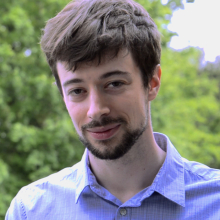
Brent Pym is an Associate Professor in the Department of Mathematics and Statistics at McGill University. His research focuses on the intersection of differential, algebraic, and noncommutative geometry, with a particular emphasis on Poisson varieties and deformation quantization. He has held academic positions at the University of Edinburgh, University of Oxford, and was a Postdoctoral Fellow at McGill and the University of Toronto. Education: BScE in Engineering Physics, Queen's University (2007) MSc in Mathematics, University of Toronto (2008) PhD in Mathematics, University of Toronto (2013) Research Interests: Pym studies Poisson structures, their quantizations, and connections to mathematical physics. His work involves classical/derived algebraic geometry, D-modules, moduli spaces, the Stokes phenomenon, and multiple zeta values. Recent projects include holonomic Poisson manifolds, log symplectic structures, and software for symbolic calculations in deformation quantization. Awards: Lichnerowicz Prize (2018) Advising & Grants: Pym has openings for graduate students (admission 2026) and undergraduate projects (2026–27). He develops the Star Products software package for symbolic calculations in Poisson brackets and quantization. His work is supported by research collaborations and institutional grants. Labs & Teams: Pym collaborates with researchers in geometry and mathematical physics, contributing to projects in noncommutative algebra and geometric quantization. His software tools enhance symbolic computation in these fields.
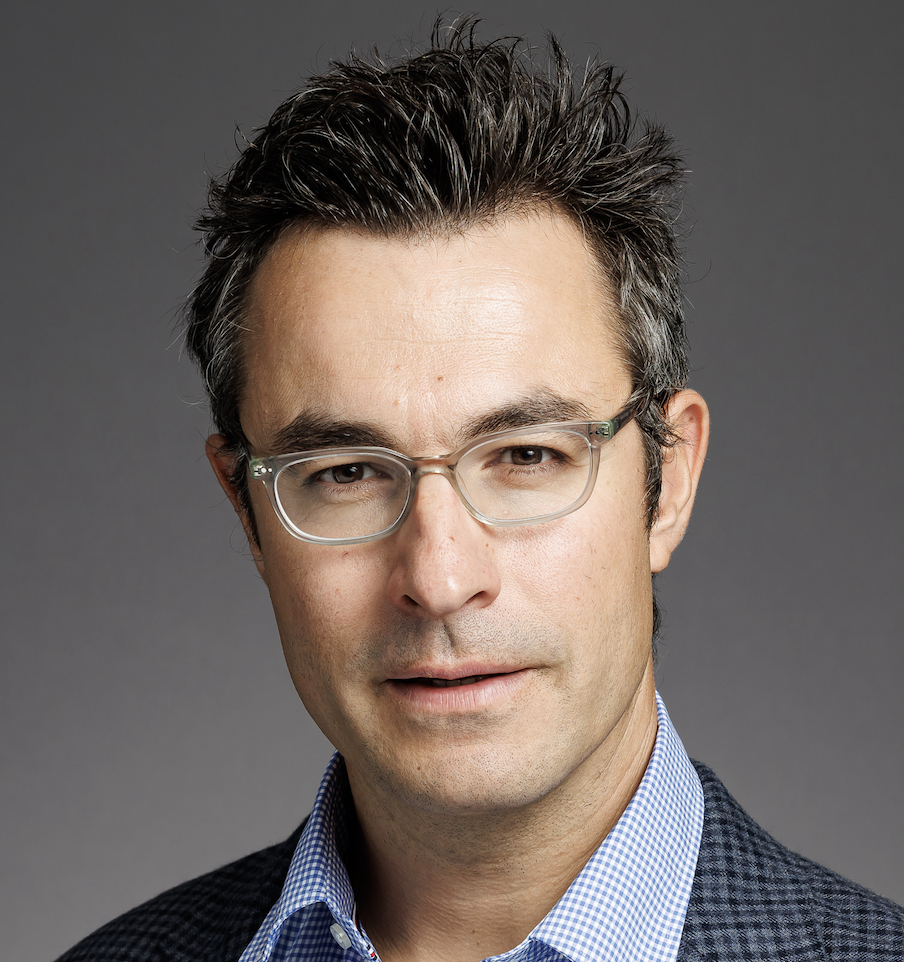
Charalampos Papamanthou is an Associate Professor of Computer Science at Yale University, where he also serves as Co-director of the Yale Applied Cryptography Laboratory and a member of the Yale Institute for Foundations of Data Science. He holds affiliations with the Yale Center for Algorithms, Data, and Market Design. Additionally, he is Chief Scientist at Lagrange Labs. His research focuses on computer security and applied cryptography, particularly verifiable and privacy-preserving computations, leakage-abuse attacks on searchable encryption, and scalable blockchains/cryptocurrencies. He has advised numerous students and postdocs, and his work is supported by NSF, Protocol Labs, and JP Morgan. Research Interests: His primary areas include cryptographic protocols, privacy-preserving systems, blockchain infrastructure, secure cloud computing, and distributed consensus mechanisms. He has pioneered advancements in zero-knowledge proofs, private information retrieval, and dynamic searchable encryption. Awards: He has received prestigious awards such as the CCS Test-of-Time Award (2022), JP Morgan Faculty Research Award (2022), and NSF CAREER Award (2017). His contributions span over 140 publications in top venues like CRYPTO, CCS, and SODA. Teaching: He has taught advanced courses in cryptography, algorithms, and computer systems security at Yale and previously at the University of Maryland and Brown University. Recently, he chairs Yale’s PhD admissions in Computer Science. Labs & Teams: Leads the Yale Applied Cryptography Lab, focusing on real-world applications of cryptographic research. Collaborates with industry partners like Lagrange Labs to develop privacy-preserving technologies.
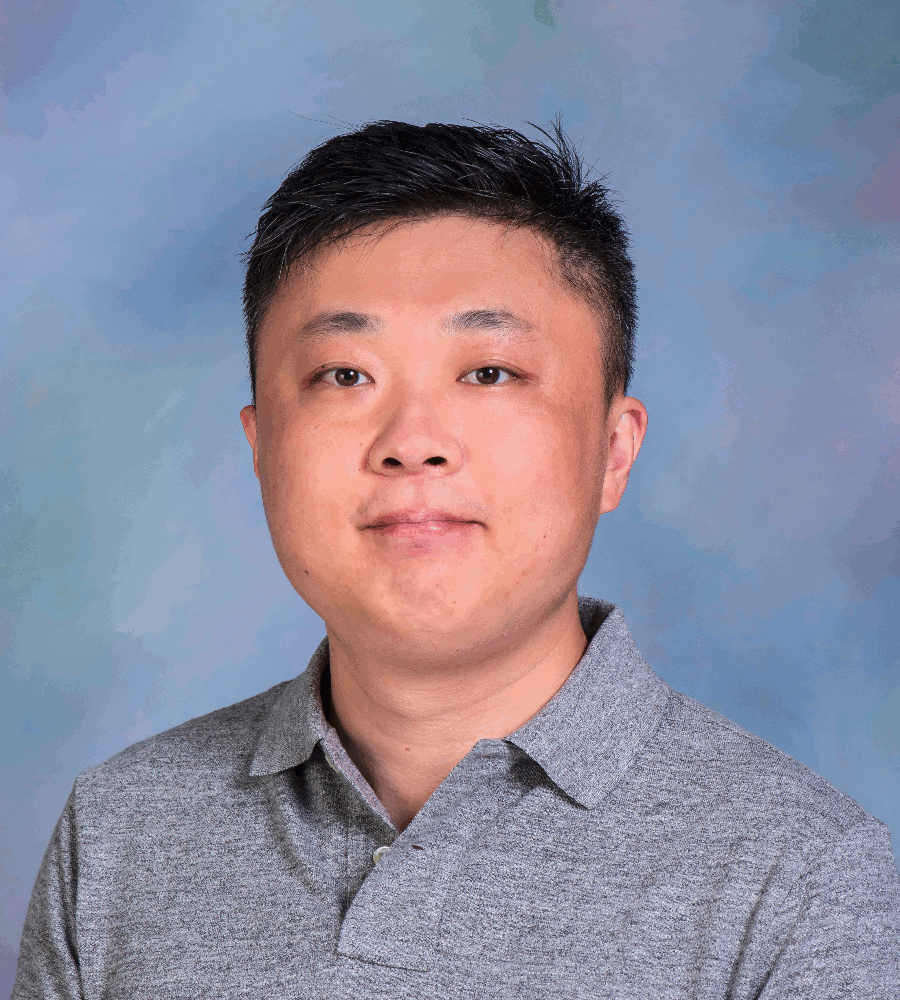
Kaiyu Hang is an Assistant Professor in the Department of Computer Science at Rice University, where he directs the Robotics and Physical Interactions Lab (RobotΠ Lab). His research spans multiple domains of robotics with a focus on physical interaction systems. Before joining Rice, he completed his postdoc at Yale University, earned his Ph.D./M.Sc. at KTH Royal Institute of Technology, and received his B.Eng. from Xi'an Jiaotong University. His research interests include robotic manipulation, grasping, in-hand manipulation, optimization, planning, learning, estimation, and control systems. He develops algorithms that enable robots to physically interact with other robots, people, and the world across scales from small grasping tasks to large-scale dual-arm and multi-robot manipulation systems. His work has practical applications in factories, kitchens, hospitals, warehouses, and construction sites. His recent publications demonstrate strong trends in in-hand manipulation techniques, energy-efficient drone operations, and benchmarking frameworks for robotic grasping. The 2025 IROS papers accepted highlight his leadership in developing standardized competition frameworks for evaluating robotic manipulation capabilities across diverse hardware platforms. ASME Rising Star of Mechanical Engineering (2024) NSF CAREER Award (2023) Multiple finalist awards at IEEE-RAS Humanoids and ICRA conferences Junior Fellowship Award from Institute for Advanced Study, HKUST (2017-2018) As an educator, he has taught multiple robotics courses including COMP 462/562: Introduction to Modern Robotics and COMP 461: Senior Design in A Robotized World. He serves as Faculty Advisor for the Rice Robotics Club and participates in graduate admissions. His lab actively recruits Ph.D. students and offers research opportunities for undergraduate and master's students who have completed core robotics courses.
Junjian Qi serves as the Hohbach Endowed Associate Professor in the Department of Electrical Engineering and Computer Science at South Dakota State University's College of Engineering, holding this position since 2023. His academic journey includes prior appointments as Assistant Professor at Stevens Institute of Technology (2020-2023) and University of Central Florida (2017-2020), along with research roles at Argonne National Laboratory and University of Tennessee. His educational background includes: Ph.D. in electrical engineering from Tsinghua University, Beijing, China (2013) B.E. in electrical engineering from Shandong University, Jinan, China (2008) Dr. Qi's research centers on electric power systems resilience, with particular expertise in cascading failure mechanisms, microgrid control architectures, cyber-physical security vulnerabilities, and synchrophasor applications. His work integrates advanced data analytics and machine learning techniques to enhance grid stability against extreme weather events and cyber threats. Current investigations focus on developing distributed control strategies for inverter-dominated grids and modeling system interdependencies during failure propagation. Analysis of his 15 most recent publications (2021-2024) reveals a strong methodological shift toward data-driven approaches for power system challenges. Key trends include machine learning applications for cascading failure prediction, novel distributed control frameworks for AC/DC microgrids, and cybersecurity enhancements for inverter-based resources. His work consistently bridges theoretical models with real-world utility data, particularly evident in multiple Best Paper Award-winning publications analyzing actual outage sequences. Dr. Qi's scientific recognition includes: NSF CAREER Award (2020) Three consecutive Best Paper Awards at IEEE PES General Meetings (2022-2024) World's Top 2% Scientist designation in energy (2020-2023) IEEE PES Outstanding Working Group Award (2023) Multiple journal Best Paper Awards (IEEE Transactions on Power Systems, Journal of Modern Power Systems) He currently leads significant research initiatives including an NSF CAREER project ($500k) on cascading failure analysis and an NSF collaborative grant ($219k) for grid stability, alongside previous DOE funding ($1.8M) for cybersecurity of distributed energy resources. His service includes editorial roles for IEEE Transactions on Power Systems and IEEE Power Engineering Letters, plus leadership in IEEE PES technical committees focused on voltage control and smart grid security.
Bryan H. Choi is an Associate Professor of Law at the University of Colorado Law School , where he bridges law and computer science to address software and AI safety. His work on software liability has influenced national cybersecurity strategy discussions. As an Adviser for the ALI Principles Project on Civil Liability for Artificial Intelligence , he shapes legal frameworks for emerging technologies. Education : JD and AB in Computer Science from Harvard University; clerkships with U.S. Court of Appeals judges Leonard I. Garth and William C. Bryson. Roles : Former joint appointment at Ohio State University Law School and Computer Science Department; Faculty Fellow at UPenn's CTIC; Director of Law and Media at Yale's ISP. Research Focus : Choi's scholarship examines software liability , AI accountability , and privacy law through interdisciplinary lenses. He critiques institutional approaches to software safety and advocates for empirical legal frameworks over participation-based models. Recent Articles address AI malpractice , NIST software standards , and forensic tool validation , reflecting trends in AI regulation and cyber-physical system liability . His 2021 NSF grant funded technical-legal methods for safety-critical systems. Awards & Grants : National Science Foundation (NSF) Grant (2021) Adviser, ALI Principles Project on Civil Liability for Artificial Intelligence Community Engagement : Active in Law and Computer Science communities , serving on committees for the ACM Symposium , Cybersecurity Law and Policy Scholars Conference , and co-organizing the AAAI Bridge Program on AI and Law .
Prof. Christian Heipke is a distinguished academic serving as Dean of the Faculty of Civil Engineering and Geodetic Science at Leibniz University Hannover, Germany. He also holds the position of Executive Director at the Institute of Photogrammetry and GeoInformation (IPI), one of the leading research institutions in geospatial sciences within the faculty. His leadership extends across multiple committees including the Curriculum and Teaching Committee, Admissions and Examination Boards for Geodetic Science and Geoinformatics, and Navigation and Environmental Robotics. As a Professor at IPI, he maintains active research while overseeing significant academic and administrative responsibilities at the university. Professor Heipke's research spans multiple domains within geospatial sciences, with particular emphasis on: Advanced photogrammetric techniques and algorithms Remote sensing applications for environmental monitoring Computer vision approaches for geospatial data analysis Urban development monitoring using satellite imagery Machine learning applications in geoinformatics Disaster prediction and management systems His recent scholarly output reveals a strong focus on integrating cutting-edge computer vision and deep learning techniques with traditional photogrammetric methods. Analysis of his 15 most recent publications shows a clear trajectory toward more sophisticated AI-driven approaches for processing geospatial data, with particular attention to time-series analysis, uncertainty quantification, and multi-view systems. His work bridges theoretical advancements with practical applications in flood forecasting, deforestation monitoring, urban planning, and construction materials analysis. The geographic scope of his research has expanded significantly, with recent projects focusing on international case studies in the Philippines and tropical regions. Professor Heipke leads the Institute of Photogrammetry and GeoInformation, a major research hub that has celebrated 75 years of contributions to the field. His leadership extends to the Graduiertenkolleg 2159: "Integrity and Collaboration in Dynamic Sensor Networks," where he serves as a professor overseeing doctoral research. The institute maintains state-of-the-art facilities for processing satellite imagery, aerial photography, and developing novel algorithms for geospatial data analysis. Under his direction, the institute has strengthened its international collaborations and interdisciplinary research approaches, particularly in addressing Sustainable Development Goals through geospatial technologies.
Prof. Liam Murphy is a Full Professor of Computer Science & Informatics at University College Dublin (UCD) and Director of the Performance Engineering Laboratory. He holds a B.E. from UCD, M.Sc. and Ph.D. from UC Berkeley. His research focuses on performance engineering of networks, software systems, and multimedia transmissions. He has published over 150 peer-reviewed papers and is an IEEE member and Fellow of the Irish Computer Society. Education: B.E. in Electrical Engineering, UCD (1985) M.Sc. & Ph.D. in Electrical Engineering & Computer Sciences, UC Berkeley (1988, 1992) Research Interests: Dynamic resource allocation in networks Cloud computing efficiency Software performance engineering Wireless multimedia systems Quality of Service (QoS) optimization Recent work emphasizes energy-efficient cloud workflows, multi-objective data center optimization, and decentralized traffic simulation. Grants & Awards: Fellow of the Irish Computer Society (2007) Conference Paper Awards (2004, 2002, 2001) Principal Investigator in multiple funded projects (e.g., EU-funded traffic simulation, cloud resource allocation) Advising & Labs: Directed 24 Ph.D. and 8 M.Sc. students. Leads the Performance Engineering Laboratory (PEL), focusing on distributed systems, cloud efficiency, and network performance. Collaborates on industry-relevant projects like crovan (UCD/DCU campus company). Teaching: Coordinates courses on computer science fundamentals, distributed systems performance, and software engineering at UCD.
Massachusetts Institute of TechnologyUnited States
Wai Cheng is a Professor in the Department of Mechanical Engineering at the Massachusetts Institute of Technology (MIT), School of Engineering, and serves as Director of the Sloan Automotive Laboratory since 2009. His educational background includes: B.Sc. from California Institute of Technology (1974) M.Sc. from Massachusetts Institute of Technology (1975) Ph.D. from Massachusetts Institute of Technology (1979) Professor Cheng's research centers on internal combustion engines , with expertise in engine performance, emissions, and combustion science. His work investigates cold-start phenomena in gasoline direct injection (GDI) engines, soot formation mechanisms, knock dynamics, and the impact of alternative fuels like ethanol. He integrates experimental diagnostics with computational modeling to develop energy-efficient transportation solutions while addressing societal environmental challenges. Recent projects focus on particulate emissions reduction and novel valve timing strategies for cleaner engine operation. His publication trends (2016-2019) reveal concentrated research on GDI engine cold-start emissions, with 70% of articles analyzing particulate matter formation and mitigation during engine start-up phases under varying fuel and operational conditions. Notable honors include: Fellow of the Society of Automotive Engineers (2003) SAE Oral Presentation Awards (2004, 2002) SAE Teetor Award (1984) Carl Richard Soderberg Professorship (1982) Professor Cheng has mentored numerous graduate students through MIT's mechanical engineering programs and secured research funding from automotive industry partners. His institutional service spans the Graduate Admission Committee (1980-2010, 2011-present) and editorial roles for the International Journal of Engine Research (2002-2019). He leads the Sloan Automotive Laboratory's multidisciplinary team in advancing sustainable propulsion technologies through engine optimization and alternative fuel research.
Marco Di Renzo is a CNRS Research Director (Professor) and Head of the iPhyCom group at the Laboratory of Signals and Systems (L2S) at Paris-Saclay University, France. He is affiliated with both CNRS and CentraleSupélec. His roles include: Member of L2S Management Committee and Board Council Member of the Ph.D. School Admission Committee Academic Vice Chair, ETSI Industry Specification Group on RIS Editorial and leadership roles in IEEE communications journals Education: Laurea (cum laude) and Ph.D. in Electrical Engineering from University of L’Aquila (2003, 2007) Habilitation à Diriger des Recherches from Paris-Saclay University (2013) Research focuses on 6G networks , reconfigurable intelligent surfaces (RIS) , and integrated sensing and communications (ISAC) . He explores electromagnetic theory, machine learning applications, and energy-efficient wireless systems. His work addresses challenges in near-field communications, multi-user MIMO, and holographic beamforming. He advocates for physics-driven design principles in next-gen networks. Key awards include IEEE/IEE Fellowships, the Michel Monpetit Prize, and multiple IEEE Best Paper Awards. He holds international visiting professorships at institutions like the University of Oulu (Finland) and Nanyang Technological University (Singapore). Active in standardization via ETSI ISG RIS and contributes to global initiatives like the ITU 6G Vision. His research bridges theoretical models with practical implementations, emphasizing interdisciplinary collaboration between physics, signal processing, and AI.
Lin Ma is currently an Assistant Professor at the University of Michigan, Ann Arbor in the Department of Electrical Engineering and Computer Science (College of Engineering). Previously, they served as a Post Doctoral Fellow at Carnegie Mellon University (2021-2022) and as a Software Engineer at Databricks, Inc. (2022-2023). Research Interests focus on the intersection of database systems and machine learning, particularly in developing self-driving database management systems . Key areas include workload forecasting , automated index optimization , query execution acceleration , and machine learning integration for database automation. Their work explores GPU-accelerated analytics, memory optimization, and transactional consistency models. Academic Contributions span 15+ publications in top venues like VKDB , SIGMOD , and CIDR , including recent 2025 papers on Vortex (GPU memory optimization) and Scompression (workload compression). Earlier work introduced QueryBot 5000 , a workload forecasting framework, and explored anti-caching for storage optimization in OLTP systems. Teaching includes courses like EECS 584: Advanced Database Management Systems and EECS 484: Database Management Systems at the University of Michigan (2023-2025), and 15-445/645 Database Systems at Carnegie Mellon University. Service involves program committee roles for SIGMOD (2023-2025), VLDB (2022-2025), and CIDR (2024-2025). They also served on admissions and search committees at both institutions. Advising includes supervising PhD and MS students: Siyuan (Doug) Dong , Zhongwei Xu , and Haotian (Jack) Gong (co-advised with Barzan Mozafari), among others.
Prof. Dennis Komm is an Associate Professor at ETH Zurich's Department of Computer Science, leading the group for Algorithms and Didactics. He chairs the Center for Computer Science Education (ABZ) and serves on committees such as the Swiss Maturity Board (Schweizerische Maturitätskommission) and the STEM Commission of the Swiss Academies. Previously, he held roles at RWTH Aachen University (Master's, 2008), ETH Zurich (PhD, 2012), University of Zurich (external lecturer, 2014–2020), and PH Graubünden (including department head and professor of 'Fachdidaktik Informatik'). Education: He completed a Master's in Computer Science at RWTH Aachen (2008), a PhD at ETH Zurich (2012), and studies in Information Technology at Queensland University of Technology (2006). His academic journey includes visiting roles at King's College, Stanford, and Comenius University. He has taught extensively across institutions, emphasizing Python and LOGO-based approaches for beginners. Research focuses on algorithm design, approximation algorithms, reoptimization, and advice complexity in theoretical CS. His work in education explores computational thinking, programming pedagogy (especially for K–12), and interdisciplinary approaches (e.g., robotics in math). Recent trends in his articles highlight advancements in online algorithms, optimization under dynamic conditions, and initiatives to integrate CS into Swiss school curricula sustainably. He actively promotes CS education through platforms like WebTigerPython and collaborates on projects such as CyberQuest and MINTerlink. His outreach includes organizing conferences (e.g., STIU 2025) and workshops on programming and cybersecurity for teachers and students. Despite no listed scientific awards, his contributions to education and theoretical CS are recognized through editorial roles in journals like Informatics in Education and contributions to the TigerJython Group. Grant-related advising includes co-supervising doctoral theses on robotics, USOs, and programming didactics. He advocates for equitable educational opportunities via the Passerelle exam and the Swiss Beaver Competition. His team's work spans teacher training, didactic certifications, and bridging university-school collaborations through initiatives like MINTerlink. Labs and teams: Head of ABZ (ETH's CS education center), collaborator with the Computational Robotics Lab, and part of the TigerJython Group. He also co-organizes the Colloquium on Mathematics, Computer Science, and Education with ETH's Mathematics Department.
Haryadi S. Gunawi is a Professor in the Department of Computer Science at the University of Chicago where he leads the UCARE research group (UChicago systems research on Availability, Reliability, and Efficiency). His work focuses on improving the dependability of storage and cloud computing systems, with a particular emphasis on addressing performance stability, reliability, and scalability challenges in modern computing environments. Dr. Gunawi received his Ph.D. in Computer Science from the University of Wisconsin, Madison in 2009. Following his doctoral studies, he was a postdoctoral fellow at the University of California, Berkeley from 2010 to 2012 before joining the University of Chicago faculty. His research focuses on three main areas: (1) performance stability, where he builds storage and distributed systems robust to latency tails and "limping" hardware; (2) reliability and scalability, where he addresses concurrency and scalability bugs in cloud-scale distributed systems; and (3) the intersection of machine learning and systems, exploring how machine learning techniques can solve operating and storage system problems. His work often combines theoretical insights with practical system implementations that address real-world challenges in cloud and storage infrastructure. Dr. Gunawi's publication record shows a consistent focus on storage and cloud system reliability, with recent work increasingly incorporating machine learning techniques to address traditional systems challenges. His research spans the full stack from hardware interfaces to distributed system design, with a strong emphasis on practical solutions that can be deployed in production environments. His work often involves close collaboration with industry partners to ensure real-world relevance and impact. Dr. Gunawi has received numerous prestigious awards including the NSF CAREER award, NSF Computing Innovation Fellowship, Google Faculty Research Award, multiple NetApp Faculty Fellowships, and an Honorable Mention for the 2009 ACM Doctoral Dissertation Award. He has also received the Provost's Global Faculty Award and Facebook Faculty Research Award, highlighting the broad recognition of his contributions to the field. As an advisor, Dr. Gunawi has mentored several PhD students including Ruidan Li, Ray Andrew, Rani Ayu Putri, and William Nixon. His research has been supported by major grants from NSF, Google, Facebook, and NetApp, enabling his team to pursue ambitious research projects at the intersection of systems, storage, and machine learning. Dr. Gunawi leads the UCARE research group at UChicago, which focuses on improving the dependability of storage and cloud-scale distributed systems. He is also involved with the Chameleon cloud research infrastructure project and the broader Systems Group at UChicago, contributing to a vibrant research community focused on systems, programming languages, and software engineering.
Chao Wang is an Associate Professor at the Department of Chemical and Biomolecular Engineering within the Whiting School of Engineering at Johns Hopkins University. He also serves as the Director of the Nano Energy Laboratory and the department’s Master’s Admissions Director. His research focuses on sustainable energy systems and nanomaterials for CO2 capture and conversion, electrocatalysis, thermocatalysis, and green chemical engineering. Education: Bachelor’s degree, University of Science and Technology of China (2004) Doctorate, Brown University (2009) Wang’s research targets efficient energy conversion and storage via nanomaterials with tailored atomic structures, emphasizing catalytic activity, selectivity, and stability. His group explores electrochemical and thermochemical processes for reduced carbon footprints, including CO2 and methane conversion, ammonia recovery, and phosphorus/nitrogen nutrient recycling using zeolite-based systems. Recent publications (2021–2024) highlight his work in high-entropy alloys, solid-state battery materials, CO2 electroreduction, and biomedical nanotechnologies. Collaborative efforts span catalysis, nanoparticle dynamics, and environmental applications. Grants include a $1M DOE award for multi-university research, a $625K DOE grant for electrified transportation systems, and $3M in startup funding for carbon-removal technology commercialization. Alumni under his mentorship include Ph.D. graduates like Michael J. Manto (2018) and Master’s students like Mitchell Keller (2018), with notable achievements in catalyst development for ammonia/phosphorus recovery and industry placements at Grace & Co. and GEA Engineering.
University of North Carolina at Chapel HillUnited States
Juliane Nguyen, PhD, is a Professor in the Department of Pharmacoengineering and Molecular Pharmaceutics at the UNC Eshelman School of Pharmacy, University of North Carolina at Chapel Hill. She serves as Vice Chair and Director of Graduate Admissions in her department and holds an adjunct appointment as Professor of Biomedical Engineering. Dr. Nguyen is also a member of the UNC Lineberger Comprehensive Cancer Center, where she applies molecular engineering approaches to develop innovative therapeutic solutions. Dr. Nguyen's research focuses on molecular engineering to advance protein-based therapeutics, live biotherapeutics (including engineered probiotic yeast), and extracellular vesicles. Her lab develops cutting-edge technologies to treat diverse conditions including cancer, myocardial infarction, chemotherapy-induced cardiotoxicity, and inflammatory bowel diseases. Her interdisciplinary approach integrates molecular engineering, pharmaceutical sciences, and bioinformatics to create complex biologics with exceptional safety and efficacy profiles. Key research areas include developing therapeutics for cardiac repair, genetically encoded materials targeting tumor-associated macrophages, live biotherapeutics for inflammatory bowel diseases using engineered probiotic yeast, and auxetic patches for dynamic organ repair. Analysis of Dr. Nguyen's recent publications reveals a strong focus on translational research with significant contributions to cardiac repair technologies, cancer immunotherapy, inflammatory bowel disease treatments, and advanced biomaterials. Her work consistently bridges fundamental molecular engineering with clinical applications, particularly in the areas of targeted drug delivery, extracellular vesicle therapeutics, and engineered live biotherapeutics. The research demonstrates a clear trajectory toward developing clinically viable solutions for previously challenging medical conditions. Dr. Nguyen has received numerous prestigious awards and honors including the NSF CAREER Award (2018), Eshelman Innovation Award (2020), and recognition as a Fellow of the Controlled Release Society (2023). She was appointed as a Standing Member of the NIH Drug and Biologic Therapeutic Delivery Study Section (2023-2025) and serves as Executive Editor of Advanced Drug Delivery Reviews since 2021. Her Galenus Guest Professorship at ETH Zuerich (2024) and keynotes at major conferences highlight her international recognition in the field. As Director of Graduate Admissions and an active mentor, Dr. Nguyen has advised numerous PhD and Master's students who have co-authored significant publications with her. Her research is supported by competitive grants including the NSF CAREER Award and other NIH-funded projects. The Nguyen Lab maintains strong collaborations across disciplines, particularly with cardiology, oncology, and biomedical engineering researchers. She leads an interdisciplinary team focused on translating molecular engineering breakthroughs into clinically impactful therapies. The Nguyen Lab operates as a dynamic, interdisciplinary research environment combining expertise in molecular engineering, pharmaceutical sciences, and bioinformatics. The lab's mission is to revolutionize medicine by developing next-generation therapeutics that target diseases at the molecular level. Current projects focus on translating cutting-edge research into life-changing therapies for patients suffering from cancer, myocardial infarction, colitis, and other challenging conditions. The lab's innovative approach to biomolecular engineering positions it at the forefront of developing safe, effective, and personalized therapeutic solutions.
Dhruv Shah is an Incoming Assistant Professor of Electrical and Computer Engineering at Princeton University starting January 2026 and currently serves as a Senior Research Scientist at Google DeepMind. He is also an Associated Faculty member in Princeton's Center for Statistics and Machine Learning, focusing on the convergence of machine learning and robotics for real-world deployment. His academic credentials include a Ph.D. and M.S. in Electrical Engineering and Computer Sciences from the University of California, Berkeley (2024) and a B.Tech. (Honors) in Computer Science and Engineering from the Indian Institute of Technology, Bombay (2019). Shah's research pioneers foundation models for robotics, emphasizing large-scale robot learning, out-of-distribution generalization, and long-horizon reasoning. His group adopts a full-stack methodology spanning algorithmic innovation to system design, drawing from cognitive science to develop physical AI systems at the perception-learning-control interface. Key focus areas include reinforcement learning, human-robot interaction, and continual learning for challenging environments. Analysis of his 15 most recent publications reveals dominant trends in foundation models for visual navigation, language-conditioned policies, and multi-agent systems. His work increasingly integrates multimodal inputs (vision, language) while addressing generalization gaps in real-world settings, with strong emphasis on efficient data curation and scalable robot learning frameworks. His accolades feature the Microsoft Future Leaders in Robotics & AI Fellowship (2024), two IEEE ICRA Best Conference Paper Awards (2024), multiple ICRA finalist awards across cognitive robotics and manipulation categories, and the Berkeley Fellowship (2019-2024). Shah will recruit PhD students for Princeton's upcoming admissions cycle, establishing a research group dedicated to full-stack robotics development. While specific grant details aren't provided, his trajectory indicates significant funding for AI-robotics convergence projects, particularly in foundation model development and real-world deployment challenges. His laboratory at Princeton will integrate algorithmic innovation with system design, focusing on physical AI systems that bridge perception, learning, and control while maintaining strong ties to cognitive science principles for human-aligned robotic intelligence.