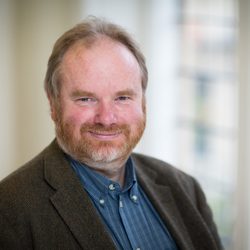
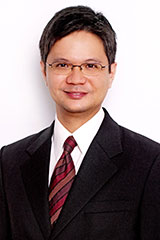
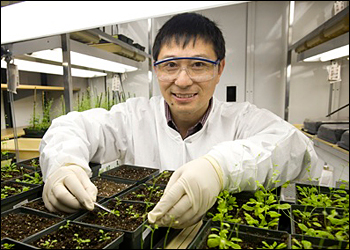
Kaiyuan Yang is an Associate Professor in the Department of Electrical and Computer Engineering at Rice University, leading the Secure and Intelligent Micro-Systems (SIMS) Lab. His research focuses on low-power integrated circuits and bioelectronic implants for applications like the Internet of Everything and medical devices. He holds a B.S. from Tsinghua University (2012) and M.S./Ph.D. degrees from the University of Michigan (2017). Research Interests: Low-power digital/analog/mixed-signal systems Bioelectronics and implantable devices Hardware security and PUF design Mixed-signal computing and emerging materials Recent work emphasizes magnetoelectric-powered implants, secure backscatter communication, and in-memory computing architectures. His publications span top venues like IEEE ISSCC, IEDM, and ACM MobiCom. Awards: 2022 NSF CAREER Award 2022 IEEE Top Picks in Hardware Security 2016 IEEE SSCS Predoctoral Achievement Award Dr. Yang serves on editorial boards for IEEE TVLSI and program committees for ISSCC/CICC. His lab develops miniature, secure, and energy-efficient systems for healthcare and IoT applications.
Alexander T. Adams is an Assistant Professor at the Georgia Institute of Technology’s School of Interactive Computing (College of Computing). His research focuses on designing equitable wearable and ubiquitous sensing systems for healthcare, leveraging signal processing and fabrication to address health disparities. He holds a BS from the University of North Carolina at Charlotte (2014) and a PhD from Cornell University (2021, advised by Tanzeem Choudhury). Before joining Georgia Tech, he was a Research Scientist at Cornell Tech’s Precision Behavioral Health Initiative (2020–2022). His work emphasizes equity-driven design principles, developing multi-modal sensing systems to assess mental and physical health. Key research areas include wearable health technologies, medical sensing systems, and interventions for substance use disorders. Recent projects involve smartphone-based diagnostic tools (e.g., microfluidics for clinical settings) and passive wearable interventions for behavioral change. Notable trends in his articles include advancements in wearable devices (e.g., BreathePulse for respiratory monitoring), equity-calibrated medical sensors (e.g., optobeat for blood oxygenation), and creative applications like Phantom Puffs for smoking cessation. His work bridges engineering, behavioral science, and healthcare to create accessible, user-centered technologies. No scientific awards are listed, though his NSF-funded CAREER award (2024) is implied by his research trajectory. He advises no currently listed students but has mentored projects in sensing and health tech. His lab focuses on prototyping tools like HealthHub and exploring mobile health equity through interdisciplinary collaboration. Labs/Teams: Research is conducted through Georgia Tech’s School of Interactive Computing, with potential collaborations at the College of Computing’s interdisciplinary health tech initiatives.
Malcolm McCulloch serves as Professor of Energy Systems and Group Leader of the Energy and Power Group within the Department of Engineering Science at the University of Oxford. He also holds the position of Co-Director for the Oxford Martin Programme on Integrating Renewable Energy and maintains affiliation with Christ Church college. His research spans four primary domains: domestic energy systems, electric vehicle technology, renewable generation, and energy solutions for developing regions. McCulloch's research focuses on practical energy transition challenges. His domestic energy work develops user-centric demand side management technologies and behavior change interventions, leading to the spin-out Intelligent Sustainable Energy (now Navetas Energy Management). In transportation, he pioneered the Morgan LifeCar hydrogen sports car project, resulting in high-efficiency motors and the Oxford Yasa Motors spin-out. His renewable generation research includes lightweight tidal turbines through Kepler Energy, while his Energy for Development work creates nano/micro grid solutions for distributed electrification. Analysis of his recent publications reveals a strong emphasis on integrating variable renewables through innovative market mechanisms, grid flexibility solutions, and electric vehicle integration. His work consistently addresses the technical and economic barriers to decarbonization, with increasing focus on peer-to-peer energy trading, thermal storage, and climate-resilient cooling solutions since 2020. McCulloch previously served as Co-Director of the Institute for Carbon and Energy Reduction in Transport (2008-2013) under the Oxford Martin School. His leadership extends to creating the Integrated Transport Network for Oxford and developing practical applications through multiple successful spin-out companies that bridge academic research and commercial implementation.
Alexis Battle is an Associate Professor at Johns Hopkins University with appointments in Biomedical Engineering , Computer Science , and Genetic Medicine (secondary). She directs the Malone Center for Engineering in Healthcare and serves as Deputy Director of the Data Science and AI Institute . Educated at Stanford University (PhD in Computer Science, 2013), Battle transitioned to academia after leadership roles at Google. Research Focus: Battle’s work bridges genomics and machine learning , emphasizing the impact of genetic variation on human health. Her lab develops tools like Watershed to predict functional effects of rare variants, aiming to enhance rare disease diagnosis. Key themes include non-coding DNA analysis , personalized genomics , and systems biology , with applications in cardiovascular disease and neurodegenerative disorders . Publications & Awards: Over 60 peer-reviewed articles in journals like Nature , Science , and Genome Biology , with recent emphasis on single-cell transcriptomics , multiomics integration , and telomere biology . Recipient of the President’s Frontier Award (2022), Microsoft Investigator Fellowship (2019), and Searle Scholar (2016). Scientific Awards: 2022 President’s Frontier Award 2019 Microsoft Investigator Fellowship 2019 Johns Hopkins Discovery Award 2017 Johns Hopkins Catalyst Award 2016 Searle Scholar Advising & Funding: Mentors 11 PhD students, 3 undergraduates, and postdoctoral fellows. Her research is funded by NIH, Searle Scholars, and institutional grants. The Battle Lab collaborates on projects like the GTEx Consortium , focusing on gene regulation and clinical genomics .
Peter Teertstra is an Associate Professor, Teaching Stream in the Department of Mechanical and Mechatronics Engineering at the University of Waterloo and Director of the Sedra Student Design Centre. He holds a PhD (2003), MASc (1992), and BSE (1990) from the University of Waterloo and Calvin College, respectively. His research focuses on thermal modeling for microelectronics/optoelectronics cooling, experimental heat transfer in micro/nano-scale systems, and predicting air cooling limits in electronics. He oversees the Sedra Student Design Centre, supporting teams in competitions through resource access and sponsorship. Teertstra teaches courses like GENE 199, ME 101, MTE 201, and PD 21, emphasizing engineering practice and thermodynamics. His publications (2006–2011) address thermal conductivity in fuel cells, convection modeling, and heat transfer in electronics enclosures. He is currently accepting graduate applications via an online process.
Tracey Evans Chan is an Associate Professor and Director of the NUS Law Academy at the National University of Singapore's Faculty of Law. His expertise lies in biomedical law and ethics, with a focus on issues such as surrogacy, transplant ethics, and human-animal research. He has held significant roles, including a secondment to Singapore's Ministry of Health, where he contributed to the Human Biomedical Research Act 2015. He currently serves on the National Medical Ethics Committee and the Advisory Committee on Restricted Research under the same Act, and is a member of NUS's Institutional Review Board. Education: LLM (Harvard University) LLB (National University of Singapore) Research Interests: Chan's work bridges legal and ethical dimensions of biomedical advancements. Key areas include regulatory challenges in mitochondrial replacement technology, consent frameworks for minors, and the ethical implications of emerging medical technologies. His contributions to Singapore's legal committees reflect his commitment to balancing innovation with societal values. Publications & Trends: His recent works explore themes like advance care planning, the placebo effect in clinical practice, and cross-jurisdictional comparisons of healthcare dependency laws. These publications underscore his interdisciplinary approach to legal and biomedical challenges. Awards & Grants: No specific awards or grants are listed, but his policy contributions and academic output highlight his impactful work in regulatory frameworks. Advising & Teams: As a faculty member, he teaches courses like Medical Law and Ethics. His involvement in NUS's Institutional Review Board and Singapore's advisory committees demonstrates his role in shaping research ethics and healthcare policy.
Chang-Jun Liu is a Senior Scientist in the Plant Science Group of the Biology Department at Brookhaven National Laboratory, where he has conducted research on plant phenylpropanoid biosynthesis and lignin metabolism since joining in 2005. He also holds an Adjunct Professor position in the Biochemistry & Cell Biology Department at Stony Brook University and serves as Associate Editor for Plant Cell & Environment (2024-present) and Frontiers in Plant Sciences (2015-present). Dr. Liu's educational background includes: Ph.D. in Plant Biochemistry and Molecular Biology from the Shanghai Institute of Plant Physiology, Chinese Academy of Science (1999) Dr. Liu's research integrates approaches from biochemistry, molecular genetics, biophysics, protein engineering, metabolic engineering, and synthetic biology to investigate phenylpropanoid and lignin biosynthesis in plants. His laboratory addresses fundamental questions about how lignin and related compounds are synthesized and incorporated into cell walls, how regulatory networks govern metabolic activity, and how lignification influences cell wall structure and function. A central aim of his research is optimizing plant feedstocks for efficient lignocellulosic biomass utilization. Analysis of Dr. Liu's publication record reveals a consistent trajectory from fundamental biochemical mechanisms to applied bioenergy solutions. His recent work focuses on cytochrome b5 diversity, electron transfer mechanisms in phenolic biosynthesis, and metabolic engineering approaches to modify lignin composition. This research spans from evolutionary studies of lignin biosynthesis across plant lineages to practical applications in bioenergy crop improvement. Dr. Liu has received recognition for his contributions to science, including: Brookhaven National Laboratory Science and Technology Award (2018) Dr. Liu serves as Editorial Board Member for the Journal of Biological Chemistry (2020-present), PNAS Nexus (2024-present), and Plant Physiology Journal (2025-). He is Scientific Lead at the Joint BioEnergy Institute, Feedstocks Division, Lawrence Berkeley National Laboratory, and Project Lead at the Center for Bioenergy Innovation, Oak Ridge National Laboratory. His research is funded by the U.S. Department of Energy through multiple Bioenergy Research Centers. Dr. Liu leads a research group at Brookhaven National Laboratory focused on elucidating the posttranslational regulation and macromolecular organization of lignin biosynthesis, with applications toward developing designer lignins and reducing biomass recalcitrance for sustainable biofuel production. His work addresses the critical challenge of lignin's dual nature: while it impedes enzymatic access to polysaccharides in biofuel production, it also represents the most abundant renewable source of aromatic carbon for high-value bioproducts.
Pinar Keskinocak serves as the H. Milton and Carolyn J. Stewart School Chair and Professor in the H. Milton Stewart School of Industrial and Systems Engineering at the Georgia Institute of Technology. She co-founded and directs the Center for Health and Humanitarian Systems, demonstrating leadership in both academic administration and research innovation. Her career includes prior roles as College of Engineering ADVANCE Professor and interim associate dean for faculty development, alongside industry experience at IBM T.J. Watson Research Center. Her educational foundation includes a Ph.D. in Operations Research from Carnegie Mellon University and M.S. and B.S. degrees in Industrial Engineering from Bilkent University. This rigorous training underpins her interdisciplinary approach to complex societal challenges. Dr. Keskinocak's research pioneers operations research applications for societal impact , with dual emphases on health systems and humanitarian logistics . She develops advanced models for infectious disease dynamics (including COVID-19, malaria, and Guinea worm), vaccination strategies, disaster response, and supply chain optimization. Her work uniquely bridges engineering analytics with real-world implementation through partnerships with the CDC, American Red Cross, Carter Center, and Children's Healthcare of Atlanta. Analysis of her 2023-2025 publications reveals intensifying focus on eradication program modeling for polio and Guinea worm, with increasing integration of machine learning for predictive accuracy in vaccine distribution. A pronounced trend addresses health equity through targeted interventions for under-immunized populations in Sub-Saharan Africa, emphasizing resource allocation under constraints and cross-border coordination challenges. Her scientific recognition includes: INFORMS Fellow (2015) NSF CAREER Award (2001) Outstanding Professional Education Award, Georgia Tech (2018) Denning Award for Global Engagement, Georgia Tech (2016) Women in Engineering Excellence Teaching Award (2005) Moving Spirit Award, INFORMS (2005) Dr. Keskinocak has secured extensive project funding through collaborations with federal agencies and NGOs, directing research on pandemic response systems, vaccine logistics, and disaster debris management. While specific advisees aren't publicly cataloged, her leadership in the Center for Health and Humanitarian Systems mentors numerous graduate researchers through interdisciplinary projects. She significantly influences national policy via National Academies committees addressing supply chain resilience and vaccine distribution infrastructure. The Center for Health and Humanitarian Systems operates as a dynamic hub where engineering rigor meets humanitarian action, coordinating multi-institutional teams to develop deployable solutions for global health crises and disaster response systems.
Sushmita Roy is a Professor at the University of Wisconsin–Madison, affiliated with the Department of Computer Sciences and the College of Letters and Science. Her research focuses on developing computational methods in statistical machine learning to understand gene regulatory networks in living cells, particularly under environmental, developmental, disease, and evolutionary contexts. She explores bulk and single-cell genomic data integration to study processes like cell fate specification, host-microbe interactions, and diseases such as cancer and neurodevelopmental disorders. Her work emphasizes three key areas: inference of genome-scale transcriptional networks, evolutionary analysis of regulatory networks, and 3D genome organization dynamics. Roy’s lab collaborates across disciplines, leveraging genomic data from plant and mammalian systems. She has contributed to methodologies for analyzing chromatin accessibility, single-cell profiling, and network-based models of pathogen systems. Her affiliations include Wisconsin Institutes for Discovery, and she is a leader in computational biology and systems genomics research.
Manuel R. Amieva is a Professor at Stanford University School of Medicine , holding joint appointments in Pediatrics - Infectious Diseases and Microbiology & Immunology . He is also a member of the Maternal & Child Health Research Institute (MCHRI) . His clinical practice at Stanford Medicine Children's Health focuses on pediatric infectious diseases. Education: Medical Education: Stanford University School of Medicine (1997) Fellowship: Stanford University Pediatric Infectious Disease Fellowship (2004) Internship & Residency: Stanford Health Care at Lucile Packard Children's Hospital (1998-1999) Dr. Amieva's research investigates host-pathogen interactions at epithelial barriers, with specific expertise in Helicobacter pylori , Listeria monocytogenes , Salmonella enterica , and Staphylococcus aureus . His lab develops innovative organoid culture systems with controlled polarity to study microbial colonization and oncogenic mechanisms. Key discoveries include: H. pylori's manipulation of epithelial junctions via the CagA protein Listeria's exploitation of cell extrusion sites for invasion Staphylococcus toxin interactions with adherens junctions Gastric stem cell activation by pathogens Recent publication trends show continued leadership in infectious disease mechanisms (2020-2025), with a focus on: Pathogen-specific epithelial breach strategies Organoid modeling of viral/bacterial interactions Redox-dependent host factor regulation Single-cell spatial transcriptomic analyses Multi-institutional educational frameworks His scientific collaborations span disciplines including: Gastric cancer genomics initiatives COVID-19 lung infection models Stem cell-microbe interactions Medical education reform projects Dr. Amieva maintains active clinical research while mentoring students in both the Microbiology & Immunology and Pediatrics programs. His lab at Stanford employs advanced 3D confocal microscopy and organ-on-a-chip technologies to visualize epithelial colonization dynamics.
Owen R. White is a Professor in the Department of Epidemiology & Public Health at the University of Maryland School of Medicine, serving as Associate Director of the Institute for Genome Sciences and Associate Director of Research Collaboration & Development. He leads a team of 25 scientists and engineers developing genomic annotation pipelines and data analysis tools for state-of-the-art research in microbiome and multi-omic studies. His academic background includes: BS in Biotechnology from the University of Massachusetts (1985) PhD in Molecular Biology from New Mexico State University (1992) Postdoctoral Fellowship in Genome Informatics at the Institute for Genomic Research (TIGR) (1994) Dr. White's research spans bioinformatics, genomics, transcriptomics, and metagenomics with emphasis on data management, metadata standards, ontologies, and cloud systems. His work has been foundational for large-scale initiatives like the Human Microbiome Project (HMP) and Integrative Human Microbiome Project (iHMP), generating over 50,000 datasets totaling 10 terabytes of multi-omic data. Analysis of his recent publications reveals a strong trend toward neuroscience multi-omics (BRAIN Initiative), cloud-based data infrastructure, and ethical data sharing frameworks. His work consistently bridges microbiome research with emerging fields like single-cell analysis and Alzheimer's disease biomarker discovery through integrated data platforms. Notable awards include: Benjamin Franklin Award for Open Access in the Life Sciences (2015) Kumho Science International Award in Plant Molecular Biology and Biotechnology (2001) As Principal Investigator for major NIH-funded centers, he has secured sustained support for the HMP Data Analysis and Coordination Center and iHMP Data Coordination Center. His team's work combines fee-for-service models with collaborative research funding to maintain cutting-edge genomic analysis capabilities. The Institute for Genome Sciences houses his computational team responsible for developing production annotation pipelines, database systems, and visualization tools that serve researchers across the University of Maryland School of Medicine and national consortia.
Habib Ullah is an Associate Professor in Data Science at the Norwegian University of Life Sciences (NMBU), Norway, where he conducts research at the intersection of computer vision and machine learning. He is affiliated with the Institute of Data Science under the Faculty of Science and Technology. He has previously held academic positions at COMSATS University Islamabad, Pakistan, and the University of Ha'il, Saudi Arabia, and served as a postdoctoral researcher at The Arctic University of Norway. Educational Background: PhD in Information and Communication Technology (Computer Vision), University of Trento, Italy (2011–2015) MSc in Electronics and Computer Engineering, Hanyang University, South Korea (2007–2009) BSc in Computer Systems Engineering, NWFP University of Engineering and Technology, Pakistan (2002–2006) Habib Ullah's research is primarily focused on computer vision and machine learning, with applications in aquaculture, agriculture, and human behavior analysis. He investigates underwater fish feeding sounds using audio classification, develops zero-shot learning models for recognizing unseen classes, and applies deep learning to detect stress in salmon via skin dot patterns. He also explores AI-driven controlled environment agriculture, leveraging sensors and automation for optimal crop growth. His work emphasizes practical AI solutions for real-world challenges in environmental and biological domains. The recent publications highlight a strong trend in leveraging deep learning for zero-shot and semi-supervised learning, particularly in computer vision tasks such as sea ice classification, crowd anomaly detection, and agricultural monitoring. His research spans remote sensing, biomedical signal processing, and human activity recognition, demonstrating interdisciplinary versatility. The keywords reflect a focus on robust feature representation, knowledge transfer, and model generalization. Scientific Awards and Funding: Industrial PhD grant 'Advancing Controlled Environment Agriculture AI' from The Research Council of Norway (Project number 354125, 2 million NOK, 2024) Team member (Coordinator-Participant) in the Battery Cell Assembly Twin (BatCAT) project funded by Horizon Europe (7 mEuro, 2023–2027) Development of an AI-Based Image Analysis System for Monitoring Plant Status (Funding: 1.8 mNOK, starting 2025) Habib Ullah actively supervises PhD projects and contributes to academic service through editorial and organizational roles. He has served as an Associate Editor for IEEE Access, Guest Editor for MDPI Remote Sensing, and Editor of the Springer book Machine Learning Techniques and Sensor Applications for Human Emotion, Activity Recognition, and Support (ML-SHEARS) . He has also been a Track Chair and Program Committee Member for several international conferences, reflecting his leadership in the academic community. His research is supported by significant grants and collaborative projects, indicating strong institutional and international engagement. He is involved in multiple research teams and projects, including the BatCAT project on battery manufacturing and AI applications in controlled environment agriculture with RIFT LABS AS. His lab work integrates deep learning, sensor fusion, and data analytics for environmental and biological monitoring systems.
Dane Morgan is a Professor in the Department of Materials Science & Engineering at the University of Wisconsin-Madison, College of Engineering. His research focuses on computational materials science for materials design, including ab initio electronic structure modeling, multiscale methods, and machine learning applications in materials discovery. His work spans nuclear materials, battery and fuel cell electrodes, and electronic materials. Education : PhD, 1998, University of California, Berkeley MS, 1994, University of California, Berkeley BA, 1992, Swarthmore College Research Interests : Computational materials science, ab initio methods for electronic structure and thermokinetics, machine learning for materials discovery, electrochemical systems modeling, and applications in nuclear materials, batteries, and electronic materials. His work integrates advanced computational techniques with experimental validation. Scientific Awards : 2024 APL Materials, Editors Pick 2023 Microscopy and Microanalysis Best Paper Award (Instrumentation and Software category) 2023 IEEE Transactions on Plasma Science Best Paper Award 2023 Kellet Mid-Career Award 2015 TMS Materials Genome Initiative Ambassador 2006 3M Technical Nontenured Faculty Grant
Brian Hie is an Assistant Professor of Chemical Engineering at Stanford University , a Dieter Schwarz Foundation Stanford Data Science Faculty Fellow , and an Innovation Investigator at Arc Institute . He leads the Laboratory of Evolutionary Design , focusing on the intersection of biology and machine learning . His prior roles include a Stanford Science Fellow in the Stanford University School of Medicine and a Visiting Researcher at Meta AI . Education: Ph.D. , Electrical Engineering and Computer Science , Massachusetts Institute of Technology (2021) Bachelor’s Degree , Stanford University Research Interests: Brian’s work bridges machine learning and computational biology , with a focus on protein engineering , single-cell RNA sequencing , and viral evolution . His Evolutionary velocity framework predicts protein evolutionary dynamics across timescales, while his Scanorama algorithm enables efficient integration of heterogeneous single-cell datasets. He also develops structure-informed language models for antibody optimization and uncertainty-aware ML for biological discovery. Publication Trends: His recent work (2023) emphasizes structure-based inverse folding for antibody evolution, evolutionary scale modeling , and unsupervised optimization . Earlier studies (2022-2021) cover evolutionary velocity , multi-modal single-cell analysis , and viral escape prediction using natural language analogies. Scientific Awards: Stanford Science Fellow (2021) National Defense Science and Engineering Graduate Fellowship (2019) Advising: He mentors doctoral students including Brandon Ameglio , Garyk Brixi , and Chang M. Yun , with a focus on biological design and computational methods . Labs & Collaborations: His lab collaborates with Bio-X and the Institute for Human-Centered Artificial Intelligence (HAI) , and he maintains affiliations with Sarafan ChEM-H and Stanford Data Science .
California Institute of Technology (Caltech)United States
Lior S. Pachter is the Bren Professor of Computational Biology and Computing and Mathematical Sciences at the California Institute of Technology (Caltech). He holds a B.S. from Caltech (1994) and a Ph.D. from MIT (1999). His affiliations include the Division of Biology and Biological Engineering at Caltech. Roles: Faculty member, Principal Investigator Departments: Computational Biology and Computing and Mathematical Sciences Research interests span computational and experimental genomics, with a focus on single-cell sequencing technologies and RNA biology. His lab develops tools like kallisto, sleuth, and gget for genomic analysis. Key contributions include methods for quantifying RNA-Seq data and analyzing high-dimensional genomic datasets. Publications highlight advancements in spatial genomics, bioinformatics tools, and genomic data retrieval. His work emphasizes open-source software, with repositories hosted on GitHub.