Pascual Campoy Cervera is a Full Professor at the Universidad Politécnica de Madrid (UPM) and holds visiting professor positions at Delft University of Technology, Tongji University, and Queensland University of Technology. His work focuses on Control Systems , Machine Learning , and Computer Vision for Unmanned Aerial Vehicles (UAVs) . As Principal Investigator of the Computer Vision and Aerial Robotics group at UPM's Center for Automation and Robotics (CAR), he has led over 40 R&D projects with European, national, and industrial funding. Current affiliations: UPM, TU Delft, CAR-UPM Research themes: UAV autonomy, swarm robotics, embedded vision systems His research integrates cutting-edge technologies in image processing, control theory, and artificial intelligence to enhance UAV capabilities in unstructured environments. Recent projects include: Autonomous firefighting systems High-speed drone racing frameworks Swarm-based solar farm inspection Thrust vectoring for heavy UAVs Notable scientific awards include multiple international prizes at UAV competitions (IMAV12–17). His team has developed the Aerostack and Aerostack2 frameworks for aerial robotics, which address execution control, mission planning, and sensor fusion challenges.
Michel Guillaume serves as Professor and Head of the Centre for Aviation at Zurich University of Applied Sciences (ZHAW) School of Engineering, concurrently leading the Centre for Aircraft System Design and Integration. His academic responsibilities include lecturing in aerodynamics, structural integrity, systems engineering, and unmanned aviation, while directing the Master's programme profile commission for MSE in Aviation and coordinating the MSE Advanced Aircraft System Design module. His research centers on sustainable aircraft development through collaborative digital engineering and establishing drone testing infrastructure (indoor/outdoor). Key interests span structural integrity, fatigue analysis, unmanned aerial systems, aerodynamics, and systems engineering, with emphasis on damage tolerance methodologies for aging aircraft and AI-driven drone technologies. Current projects include the Aviation Research Ecosystem Advanced Novel Approach and LINA (Shared Large-scale Infrastructure for Autonomous Systems). Recent publications (2023-2024) demonstrate evolving focus from traditional fatigue analysis toward AI-integrated drone systems and structural risk assessment frameworks. His work consistently bridges theoretical research with practical aviation applications, particularly evident in Swiss aeronautical fatigue reviews and drone safety validation studies. Guillaume directs multiple funded projects including the completed Engineering Documentation for Junkers Ju-52 and Safety Analysis for Structural Integrity of Ageing Airplanes. As Director of the Aviation Research Center Switzerland (ARCS), he manages contractual research efforts through ZHAW consulting projects with annual fixed budgets. He actively participates in professional networks including the International Committee on Aeronautical Fatigue (ICAF) as Swiss national delegate, American Institute of Aeronautics and Astronautics (AIAA), and Swiss Aerospace Cluster, while developing ZHAW's drone test infrastructure as critical research infrastructure for the Swiss aviation ecosystem.
Arthur G Richards serves as Professor of Robotics and Control within the Dynamics and Control department at the University of Bristol's School of Engineering Mathematics and Technology. His research specializes in trajectory optimization for aerospace applications, focusing on UAV autonomy, spacecraft rendezvous, and air traffic management through advanced optimization techniques. His educational foundation includes an M.Eng. from the University of Cambridge and S.M./Ph.D. degrees from MIT. Research interests center on solving complex aerospace challenges through: Non-convex optimization for obstacle avoidance in cluttered environments Robust model predictive control for real-time disturbance compensation Distributed optimization enabling large-scale vehicle cooperation Scalable algorithms for high-traffic scenarios with minimal fuel consumption Analysis of his 132 research outputs reveals evolving emphasis on reliability-aware UAV path planning, interpretable reinforcement learning for aircraft control, and swarm robotics with real-world validation. Recent work increasingly integrates machine learning with traditional control theory while addressing practical constraints like sensor noise and system failures. Professor Richards has supervised 22 research students and secured funding for 11 projects, including the active Aerial Robotics for Search and Rescue (2022-2026) and PORTAL (2022-2024) initiatives. His industry collaborations with Thales and focus on technology transfer demonstrate strong academic-industrial integration. He actively contributes to the Smart Networks for Sustainable Futures and Robotics research groups, developing frameworks for multi-robot systems that balance theoretical rigor with practical deployment requirements in conservation, inspection, and exploration scenarios.
Tom S Richardson is Professor of Aerial Robotics in the School of Civil, Aerospace and Design Engineering at the University of Bristol, where he lectures in Flight Mechanics and Control. With over 105 research outputs and leadership in 7 projects including WildDrone (2023-2026) and WildBotics (2026-2029), his work bridges theoretical control systems and real-world UAV applications. His educational foundation includes an M.Eng. and Ph.D. from the University of Bristol, establishing his expertise in aerospace engineering. Research interests focus on control systems spanning classical flight control to high-level autonomy, with significant contributions to UAV swarm coordination, real-time decision-making, and applications in wildlife conservation and emergency response. His fingerprint highlights Unmanned Aerial Vehicle Engineering (100%), Fixed Wings Engineering (65%), and Real Time systems (50%). Recent publications demonstrate a clear trajectory toward practical implementations: wildlife monitoring via real-time visual tracking and firefighting UAV swarms using mutual shaping frameworks. These works emphasize interdisciplinary collaboration between engineering mathematics and conservation biology, showing strong growth in Kenya and Ohio field deployments. Scientific recognition includes: Engineer Technology & Innovation Awards 2010 for Autonomous Systems development Richardson has supervised 11 students, including Nguyen Ngoc, D. and Meier, K. on the WildDrone project. His grant portfolio features nature conservation-focused initiatives like WildDrone (with Bullock, Watson, Burghardt, and Mirmehdi) and the RAIN expansion project, totaling over £1.2M in active funding. Current advising emphasizes UAV applications for ecological monitoring and disaster response. He collaborates extensively through the University of Bristol's Dynamics and Control research group, with recent network activity spanning Guatemala (58%) and Kenya (33%) field sites. Public engagement includes The Sir Alan Cobham Lecture (2012) on UAV societal impacts.
Ali Emre Turgut is an Associate Professor at Middle East Technical University (METU) in Ankara, Turkey. His research intersects robotics, control systems, and bio-inspired design, with a focus on swarm robotics, UAVs, and complex systems. He maintains a formal email address ( aturgut@metu.edu.tr ) and an online presence at users.metu.edu.tr/aturgut . Education B.Sc. in Electrical Engineering, METU (1996) M.Sc. in Electrical Engineering, METU (1999) Ph.D. in Electrical Engineering, METU (2008) Research Interests center on swarm robotics , mechatronics , and unmanned aerial vehicles (UAVs) . His work explores self-organization in robotic swarms, bio-inspired control mechanisms, and adaptive systems for complex environments. Key themes include: Swarm intelligence for collective motion and task specialization Design and control of aerial and legged robots Applications in environmental monitoring, manufacturing, and biological interaction Publication Trends highlight his leadership in swarm robotics, with recent works addressing predictive flocking algorithms, biohybrid platforms, and exoskeleton-assisted motor learning. His studies often integrate hardware design with computational models. Advising and Grants information is unavailable in the provided texts, though his active research role since 2008 suggests significant contributions to graduate training and funded projects in robotics.
Elin Anna Topp is a Senior Lecturer in the Department of Computer Science at Lund University's Faculty of Engineering (LTH), holding the title of Excellent Teaching Practitioner (ETP) and serving as Head of Department. She manages projects including NEXTG2COM (a Vinnova Competence Centre) and contributes to Lund's Natural and Artificial Cognition and AI and Digitalization profile areas. Her research centers on establishing common ground between humans and machines through Artificial Intelligence, Cognitive Science, and Human-Robot Interaction. She develops robotic systems that communicate effectively with users in industrial/service robotics and autonomous system monitoring (e.g., drones, self-driving cars), focusing on resolving ambiguities from mismatched human-robot expectations. This work stems from her PhD research on Human Augmented Mapping and addresses critical needs for flexible, human-comprehensible interfaces in increasingly autonomous systems. Recent publications (2023-2025) reveal strong thematic cohesion in human-robot interaction for autonomous systems, with dominant trends in situational awareness assessment (UAV operations), conflict simulation (autonomous driving), and conversational interfaces. Her work consistently bridges cognitive theory with practical robotics applications, emphasizing human-centered design for safety-critical domains. Scientific recognition includes: Excellent Teaching Practitioner title from LTH's Pedagogical Academy (2022-present) She actively shapes graduate education as WASP Graduate School Management member (since 2019) and COMPUTE Graduate School Steering group member, coordinating specialized courses like WASP's Interaction, Collaboration, and Visualisation. Major research funding comes from AISA (AI-powered situational awareness, 2023-2026) and NextG2Com (2024-2028), supporting her work on shared autonomy and digital infrastructure. Her leadership extends to supervising PhD projects including 'Get a Grip - Accurate robot–human handovers'. Topp co-manages RobotLab LTH infrastructure and collaborates across Lund's robotics ecosystem through initiatives like Robotics Week for schools and the Natural and Artificial Cognition conference series, fostering interdisciplinary teams spanning computer science, engineering, and cognitive science.
Francesco Nex is an Associate Professor at the University of Twente in the Department of Earth Observation Science , where he holds the chair of real-time analytics for ubiquitous geo-sensors. He earned a Master's in Environmental Engineering (2006) and a PhD (2010) from TU Turin. His career spans roles at Italy's FBK institute (2011-2015) and the University of Twente (2015-present). His research integrates photogrammetry , deep learning , and robotics to enable automated UAV-based solutions for applications like disaster management , infrastructure monitoring , and precision farming . Key projects include EU-funded initiatives (Ingenious, Panoptis, RECONASS) and leadership roles in the ISPRS (Chairman of ICWG II/Ia). He has supervised 12 PhD students directly and co-supervised others at institutions like Politecnico Milano and Politecnico Torino. Recent publications highlight advancements in glacier monitoring using low-cost UAV systems, real-time 3D reconstruction , and autonomous drone navigation . Awards include the ISPRS President’s Honorary Citation (2021) and the E.H. Thomson award (2020). His work aligns with UN Sustainable Development Goals for Smart Industry , Climate Action , and Robotic Mobility .
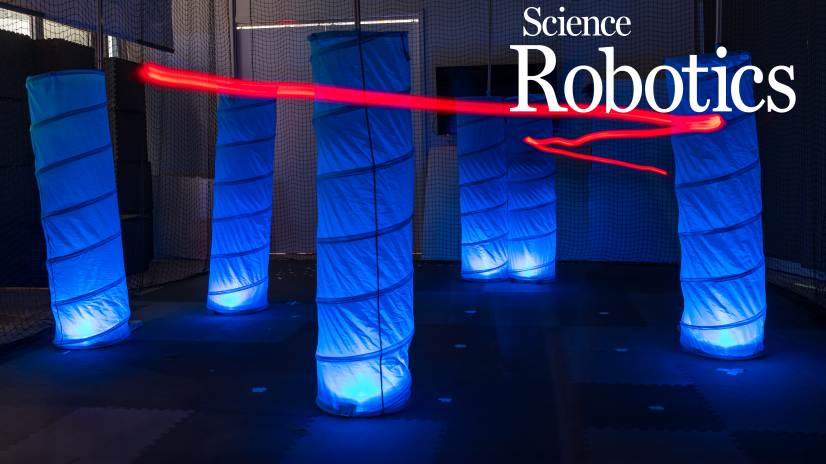
Nitin J Sanket is an Assistant Professor in the Robotics Engineering Department at Worcester Polytechnic Institute, where he leads the Perception and Autonomous Robotics Group (PeAR) founded in 2022. His research focuses on advancing autonomy for tiny mobile robots through bio-inspired approaches that enable on-board sensing and computation without external infrastructure. Ph.D. in Computer Science from University of Maryland, College Park (2021) M.S. in Robotics from University of Pennsylvania (2016) B.E. in Electronics and Communication from M. S. Ramaiah Institute of Technology, Bangalore, India (2013) Professor Sanket's research centers on four interconnected thrusts: Active perception (using movement to simplify perception problems), Interactive perception (selectively interacting with the environment), Novel perception (using data statistics like neural network uncertainty), and Novel sensing (employing sensors like event cameras). His work targets extreme resource-constrained robots, exemplified by the world's first RoboBeeHive prototype – hummingbird-sized nano-quadrotors capable of pollination with all sensing and computation performed on-board. His lab's 'Minimal-AI' philosophy emphasizes efficiency, using perception-action synergy to solve complex problems with minimal computational resources. His recent publications reveal a strong focus on efficient vision algorithms for tiny robots, with papers in Science Robotics (featured on the cover), IEEE ICRA, IROS, and CVPR. Key themes include uncertainty modeling for resource-constrained systems, event-based vision, and bio-inspired navigation. His work frequently bridges theoretical innovation with practical implementation on real hardware. Larry S. Davis Award for Best Computer Science PhD Thesis at University of Maryland (2021) MDPI Drones 2021 PhD Thesis Award Brin Family Prize (2018) Science Robotics cover feature (2023) Professor Sanket actively mentors 19 students (3 PhD, 6 Masters, 10 undergraduates) and recently secured a $705K NSF grant (September 2025) for bio-inspired sound navigation in tiny robots. His lab emphasizes hands-on experience with real hardware systems rather than pure simulation. His research on bat-inspired drones for search and rescue operations has received extensive media coverage from Associated Press, Washington Post, NPR, and other major outlets, demonstrating the real-world relevance of his work. The Perception and Autonomous Robotics Group (PeAR) provides students with opportunities to work on cutting-edge problems in nano-drone development, bio-inspired navigation, and minimal-AI approaches, preparing them for careers at the forefront of robotics innovation.
Dr. Marco Tognon is an Assistant Professor in the Department of Mechanical and Process Engineering at ETH Zurich, specializing in aerial robotics with a particular focus on tethered systems and physical interaction capabilities. Born in Italy in 1989, he completed his doctoral studies at INSA Toulouse in 2018 under the supervision of Antonio Franchi and Juan Cortés. His academic journey has taken him through LAAS-CNRS for postdoctoral research before establishing his independent research group at ETH Zurich. Dr. Tognon's research interests center on aerial robotics, particularly tethered aerial vehicles and their physical interaction capabilities. His work spans control theory for aerial robots, motion planning, human-robot collaboration, and aerial manipulation systems. He has developed novel approaches for cable-suspended load transportation, physical human-aerial robot interaction, and specialized aerial platforms like the Geranos tilted-rotors system for pole transportation. His research bridges theoretical control frameworks with practical implementation in real-world scenarios, especially in industrial and agricultural applications. His publication record demonstrates consistent productivity with numerous high-impact publications in IEEE Transactions on Robotics, IEEE Robotics and Automation Letters, and major conferences like ICRA and IROS. Recent work (2023-2025) shows particular emphasis on agricultural applications (tree shaking), specialized aerial platforms, and advanced control techniques for physical human-robot interaction. His research group maintains strong international collaborations, particularly with institutions in France, Italy, and Switzerland. Specialized aerial manipulation systems for agricultural tasks Novel aerial platforms for specific transportation needs Advanced control frameworks for physical human-robot interaction Rigorous theoretical foundations with experimental validation Dr. Tognon's work exemplifies the integration of theoretical control principles with practical robotics applications, with increasing focus on real-world implementation in agricultural and industrial settings. His research group provides students with opportunities to work at the cutting edge of aerial robotics while addressing practical challenges in physical interaction scenarios.