Aman Arora is an Assistant Professor at Arizona State University's Ira A. Fulton Schools of Engineering, specializing in the School of Computing and Augmented Intelligence. His research focuses on reconfigurable computing, hardware acceleration of machine learning, and non-traditional computing paradigms like Processing-In-Memory. With over a decade of semiconductor industry experience, he bridges academic research and industrial applications. PhD in Computer Science from The University of Texas at Austin Research interests emphasize domain-specific acceleration through FPGA optimization , compute-in-memory architectures , and machine learning for CAD/EDA . His work addresses critical challenges in energy efficiency and throughput for AI workloads. Recent publications demonstrate trends toward compute-in-memory systems , FPGA-based deep learning acceleration , and sustainable hardware design . Key contributions include frameworks like SAF, CSR, and GAMA for dynamic hardware optimization. Laboratory Website: ADVENT Lab Teaching includes courses on digital hardware design (CSE 320) and advanced topics in machine learning acceleration (CEN 524/CSE 524). Industry experience informs his practical approach to research and education.
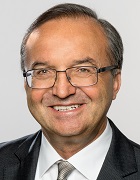
M. Tamer Özsu is a University Professor of Computer Science at the David R. Cheriton School of Computer Science, University of Waterloo, where he holds a Cheriton Faculty Fellowship. He also serves as a Distinguished Visiting Professor at Tsinghua University and is the Founding Director of Waterloo-Huawei Joint Innovation Laboratory since 2018. His extensive contributions to computing have earned him numerous prestigious awards including the 2024 ACM Presidential Award for long-standing and significant contributions to the computing field. Professor Özsu's research focuses on data engineering aspects of data science, particularly addressing data management issues with two main foci: management of non-traditional data and large-scale distributed data management. He is renowned for his seminal book "Principles of Distributed Database Systems" (co-authored with Patrick Valduriez), now in its fourth edition, and the "Encyclopedia of Database Systems" (co-edited with Ling Liu), in its second edition. His work bridges theoretical foundations with practical system implementations, targeting grand societal challenges through computational approaches. His recent publications reveal a strong trend toward graph analytics, streaming data processing, and the integration of large language models with vector data management. The research shows increasing focus on GPU-accelerated graph processing, RDF query optimization, and multimodal data analysis, reflecting the evolution of data management challenges in the era of big data and AI. His work continues to address fundamental challenges in distributed data systems while adapting to emerging technologies and application domains. Scientific Awards and Fellowships ACM Presidential Award (2024) IEEE TCDE Education Award (2024) IEEE Innovation in Societal Infrastructure Award (2022) CS Can | Info Can Lifetime Achievement Award (2018/2019) ACM SIGMOD Test-of-Time Award (2015) ACM SIGMOD Contributions Award (2006) The Ohio State University College of Engineering Distinguished Alumnus Award (2008) Fellow of the Royal Society of Canada Fellow of the American Association for the Advancement of Science (AAAS) Life Fellow of the Association for Computing Machinery (ACM) Life Fellow of the Institute of Electrical and Electronics Engineers (IEEE) Fellow of the Asia-Pacific Artificial Intelligence Association (AAIA) Elected member of the Science Academy, Türkiye Professor Özsu has been deeply involved in academic leadership and community building. As Founding Editor-in-Chief of ACM Books (2013-2019), he launched a series that by 2019 had published 28 major books with another 30 under contract. His service to ACM, particularly through SIGMOD, has been exemplary and widely recognized. He directs the Waterloo-Huawei Joint Innovation Laboratory, which focuses on cutting-edge research in data management and distributed systems, fostering strong industry-academia collaboration.
Doç. Dr. Muhammed Aras is an Associate Professor in the Department of Mechanical Engineering at Baskent University (Başkent Üniversitesi), with a research focus on sustainable machining processes, tool wear monitoring, and surface roughness optimization. His work spans advanced manufacturing technologies, energy storage systems, and biomedical device design. PhD in Manufacturing Engineering (2018), Gazi Üniversitesi MSc in Mechanical Education (2013), Gazi Üniversitesi BSc in Mechanical Engineering (2010), Tabriz Islamic Azad University Research interests include sustainable machining (dry/hard turning, cooling-lubrication strategies), tool wear analysis (CBN, ceramic and coated inserts), and surface integrity optimization using AI-based methods (firefly algorithm, TOPSIS, Grey Relational Analysis). His 15 most recent articles (2017-2024) examine topics like: Surface roughness prediction in dry hard turning Energy storage technology viability assessments Cutting parameter optimization for various steels Acoustic/vibration monitoring in machining He has received scientific awards including the Teşvik Ödülü (Encouragement Award, 2015). His patent on an automatic orthognathic surgery articulator and book chapters on tool monitoring systems demonstrate his multidisciplinary impact.
Mohamed F. Mokbel is a Distinguished McKnight University Professor in the Department of Computer Science and Engineering at the University of Minnesota - Twin Cities , where he also serves as the Director of Graduate Studies. He is recognized as an IEEE Fellow and ACM Distinguished Member for his contributions to spatially- and privacy-aware systems. His research focuses on database systems , spatial data management , and GIS (Geographic Information Systems) , with significant work in spatiotemporal data, location-based services, and machine learning for spatial applications. His most recent publications address scalable BERT-based trajectory imputation , spatial logistic regression frameworks , and spatiotemporal big data decay techniques . Key Awards: Distinguished McKnight University Professor (2023) ACM SIGSPATIAL 10-Year Impact Award (2022) IEEE Fellow (2020) ACM Distinguished Member (2017) NSF CAREER Award (2010) Selected Conference Papers: Recathon (2015, IEEE MDM Best Paper) ST-Hadoop (2017, SSTD Best Paper) KAMEL (2023, ACM SIGMOD Demo) Academic Service: Editor-in-Chief, ACM Transactions on Spatial Algorithms and Systems (2024–) General Co-Chair, ACM SIGSPATIAL 2025 Past Chair, ACM SIGSPATIAL (2014–2017)
Ayse Coskun is a Professor in the Electrical and Computer Engineering Department at Boston University's College of Engineering. She serves as Director of the Center for Information and Systems Engineering (CISE) and as interim Associate Dean for Research and Faculty Development. Her research focuses on the intersection of computer systems, energy efficiency, and AI. Dr. Coskun received her PhD from the University of California, San Diego in 2009. Prior to joining academia, she worked at Sun Microsystems (now Oracle). Her research spans energy-efficient computing, cloud computing, high performance computing, computer architecture, and embedded systems, with recent work focusing on AI's impact on data center energy demands. Her publication record shows consistent innovation across multiple domains, with recent work emphasizing AI applications for improving cloud security (through frameworks like DeltaSherlock and Praxi) and transforming data centers into grid-responsive assets (Emerald AI project). Her research bridges theoretical advances with practical applications, resulting in tools adopted by industry partners including IBM. IBM Faculty Award (2020) Ernest S. Kuh Early Career Award (2017) NSF CAREER Award (2012-2017) Multiple best paper and artifact awards at top conferences As an educator, Dr. Coskun teaches courses including EC327 Introduction to Software Engineering, EC535 Introduction to Embedded Systems, and EC713 Advanced Computing Systems and Architecture. She has advised numerous PhD students including Mert Toslali, Anthony Byrne, and Burak Aksar. Her lab maintains strong industry partnerships with IBM, Intel, AMD, and Oracle, and collaborates with academic institutions worldwide including Brown University, MIT, EPFL, and CEA-Tech in France. Dr. Coskun leads the Coskun Lab, which secured a $500K grant from Sandia National Labs for AI-based analytics in high performance computing systems, demonstrating the practical impact of her research on critical computing infrastructure.
Prof. Sadettin Emre Alptekin is a full Professor of Industrial Engineering at Galatasaray University, Faculty of Engineering and Technology, where he also serves as Vice Dean. Since joining the university as a research assistant in 2000, he has steadily advanced through the academic ranks, becoming an Assistant Professor (2006–2010), Associate Professor (2010–2023), and finally Professor in 2023. Education: PhD (Dr), Industrial Engineering, Istanbul Technical University, Institute of Science and Technology, 2001–2006 MSc, Industrial Engineering, Galatasaray University, Faculty of Engineering and Technology, 1999–2001 BSc, Industrial Engineering, Istanbul Technical University, Faculty of Management, 1995–1999 Languages: Advanced English (C1), Upper-Intermediate French (B2), Advanced German (C1) Research Interests: Prof. Alptekin’s research focuses on Computer Learning , Fuzzy Sets and Systems , and Decision Support Systems . His work integrates artificial intelligence, machine learning, and soft-computing techniques to solve complex industrial and managerial problems in areas such as supply chain management, quality function deployment, blockchain adoption, and mental-health prediction. Publication Trends: Across more than 50 refereed publications, Prof. Alptekin has consistently explored hybrid intelligent models that combine fuzzy logic, machine learning, and multi-criteria decision-making. Recent articles emphasize deep-learning-based anomaly detection in industrial time-series data, blockchain adoption in supply chains, and machine-learning applications in subjective well-being and mental-health modeling. Scientific Awards & Honors: No specific awards or medals are listed in the provided documents. Research Leadership & Funding: Since 2008 he has been the principal investigator (executive) of 12 nationally funded projects, covering topics such as Industry 4.0 sub-system design, Internet of Things applications, artificial neural networks in organizational decision-making, big-data analytics, and strategic decision processes. Graduate Advising: He has formally supervised at least 8 master’s theses and numerous undergraduate projects. Representative thesis titles include Gaussian-process-regression-based man-hour prediction, machine-learning-driven human-behavior modeling, recommender-system design for e-commerce, thyroid-nodule diagnosis from scintigraphic images, software-effort estimation via neural networks, spreadsheet heuristics for joint-replenishment problems, cross-selling decision systems in insurance, and profitability analyses of Turkish banks under disinflation. Laboratories & Teams: While no dedicated laboratory name is disclosed, his continuous role as Vice Dean and principal investigator implies active leadership of the Industrial Engineering department’s research clusters in intelligent systems and decision support technologies.
Ion Stoica is a Professor in the Electrical Engineering and Computer Sciences Department at the University of California, Berkeley, where he holds the Xu Bao Chancellor Chair. He serves as Director of the Sky Computing Lab and is Executive Chairman of both Databricks and Anyscale. His research spans distributed systems, cloud computing, and AI systems, with significant contributions to large-scale data processing frameworks. Stoica's research interests focus on the intersection of AI and systems, with emphasis on developing practical implementations that bridge theoretical foundations with real-world deployability. His work addresses fundamental challenges in distributed computing, resource management, and large-scale machine learning systems. Current projects include Ray (a distributed execution framework), vLLM (a high-throughput inference engine for LLMs), Chatbot Arena (an open platform for human preference evaluations), and SkyPilot (a framework for running AI workloads across clouds). His research output demonstrates a consistent trajectory toward more efficient, scalable systems for modern AI workloads, particularly focusing on optimizing inference performance, resource utilization, and cross-cloud deployment. Recent publications reflect growing interest in large language model serving, video generation optimization, and agent-based systems. ACM Fellow SIGOPS Hall of Fame Award (2015) SIGCOMM Test of Time Award (2011) ACM Doctoral Dissertation Award (2001) Member of National Academy of Engineering Honorary Member of the Romanian Academy Stoica has advised an extensive number of doctoral students who have gone on to prominent positions in academia and industry, including assistant professorships at Stanford, MIT, Carnegie Mellon, and other top institutions. He has received significant research funding through his lab activities and startup ventures. His research group has been particularly successful in translating academic research into widely adopted open-source technologies and commercial products. Stoica leads the Sky Computing Lab at UC Berkeley, which focuses on developing systems for AI workloads across multiple clouds. His research group has produced numerous influential open-source projects including Apache Spark, Apache Mesos, and Alluxio, which have become industry standards for large-scale data processing. The lab maintains strong industry partnerships while pursuing fundamental research in distributed systems and AI infrastructure.
Anthony A Gatti is a Postdoctoral Scholar at Stanford University's Wu Tsai Human Performance Alliance and School of Medicine. His research integrates biomechanics , medical imaging , and machine learning to advance musculoskeletal health diagnostics, particularly focusing on knee osteoarthritis and exercise physiology. Education : Ph.D. in Rehabilitation Science (McMaster University, 2021), M.Sc. in Rehabilitation Science (McMaster University, 2015), B.Sc. in Kinesiology (McMaster University, 2013) His research develops automated tools for quantifying knee anatomy and integrating anatomical data with biomechanical models . These methods analyze acute responses to exercise and long-term joint degeneration, leveraging MRI , deep learning , and statistical shape modeling . Recent publications emphasize AI-driven segmentation , exercise-induced cartilage changes , and biomechanical simulations , spanning journals like Magnetic Resonance in Medicine and Arthritis & Rheumatology . Trends include machine learning validation for clinical predictions and open-source tool development for musculoskeletal analysis. Scientific Awards : CIHR Postdoctoral Fellowship (top 1%), Mitacs Accelerate Entrepreneur, Forge Student Start-Up Competition Winner, multiple scholarships from McMaster University He founded NeuralSeg , a company commercializing deep learning-based MRI segmentation technology. Collaborations include Stanford's Digital Athlete Moonshot Project with advisors like Scott Delp and Garry Gold.
Prof. Dr.-Ing. Gerhard Müller is a Full Professor at the Chair of Structural Mechanics within the TUM School of Engineering and Design at Technical University of Munich (TUM). Since 2004, he has held this distinguished position, and since 2014, he has served as Executive Vice President for Academic and Student Affairs at TUM. His research focuses on structural dynamics and vibroacoustics, with specific expertise in dynamic soil-structure interaction, sound radiation analysis, and seismic risk assessment. Professorship: Structural Mechanics University: Technical University of Munich School: TUM School of Engineering and Design Department: Chair of Structural Mechanics in Civil Engineering Prof. Müller's research spans multiple domains, including: Structural Dynamics : Examining building and vehicle vibrations, seismic soil-structure interaction, and advanced model order reduction techniques Vibroacoustics : Investigating sound radiation from vibrating structures and developing acoustic metamaterials for noise control Computational Methods : Pioneering hybrid deterministic-statistical approaches, Wave Based Methods (WBM) for saturated elastodynamic structures, and parametric model order reduction His recent publications demonstrate expertise in: Wave propagation analysis in poroelastic media Bayesian parameter updating for structural models Acoustic metamaterials for vibration control Advanced numerical methods for seismic risk assessment Hybrid ITM-FEM approaches for soil-structure interaction Energy flow analysis in timber structures Awarded the Spindler Prize in 1984 , Prof. Müller also holds significant academic leadership roles: President of European Association for Structural Dynamics (EASD) Chairman of Bavarian-French University Center (BayFrance) Active member of ASIIN accreditation agency and Bavarian Chamber of Engineers Previously served as Dean of Civil Engineering and Surveying at TUM (2010-2014) He leads the Structural Dynamic Lab (formerly Vibroacoustics Lab) and has developed interactive web apps for engineering education. His work bridges theoretical advancements with practical applications in construction acoustics, transportation noise control, and geothermal energy infrastructure analysis.
Professor Howard Stone is a faculty member at the University of Cambridge, affiliated with the Department of Materials Science and Metallurgy. He has progressed through academic ranks, including Professor of Metallurgy (2021), Reader in Metallurgy (2017), and Lecturer in Metallurgy (2012). PhD (University of Cambridge, 2000) MA (University of Cambridge, 1995) His research focuses on metallurgy and materials science , particularly Nickel-Based Superalloys , High-Entropy Alloys , and Titanium Alloys . Key areas include microstructural evolution under thermal stress, oxidation resistance, and additive manufacturing techniques like laser powder bed fusion. Professor Stone’s recent publications highlight trends in superalloy design , phase stability , and additive manufacturing . Topics include gamma prime precipitation, lattice misfit analysis, and oxidation behavior modification. He is associated with the Rolls-Royce UTC (University Technology Centre) at Cambridge, which focuses on advanced metallurgical research and industrial collaboration.
Dr. Svyatoslav Kondrat is a Research Fellow at the Institute for Computational Physics, University of Stuttgart, working in the group of Prof. Holm. His research focuses on computational studies of ionic systems, nanopores, and energy storage materials, utilizing large-scale molecular dynamics simulations to investigate electrolyte behavior under confinement and in bulk solutions. His primary research interests include: Electrolyte physics and ionic transport mechanisms Nanopore design for supercapacitors and energy applications Solvent effects in confined electrochemical systems High-performance computing for molecular simulations Kondrat's publications (2017-2024) demonstrate a consistent focus on optimizing ion transport and screening in nanoporous materials, with applications in energy storage. His work bridges theoretical electrochemistry, computational physics, and nanomaterials engineering, frequently exploring charge dynamics using advanced simulation techniques. He collaborates extensively within Prof. Holm's research group on projects involving confined electrolytes and decay length phenomena in concentrated ionic systems.
Lakshmi N Sankar serves as Regents Professor and Sikorsky Professor in the Guggenheim School of Aerospace Engineering at Georgia Institute of Technology, where he directs the Computational Fluid Dynamics Laboratory and teaches aerodynamics, helicopter theory, and wind energy courses. His research program spans unsteady viscous flow modeling for aircraft, helicopters, and wind turbines since joining the faculty in 1982 after industry experience at Lockheed Martin. Education: Ph.D., Aerospace Engineering, Georgia Institute of Technology, 1977 MSAE, Aerospace Engineering, Georgia Institute of Technology, 1975 B. Tech., Aeronautical Engineering, Indian Institute of Technology, Madras, India, 1973 Research Focus: Professor Sankar's work centers on Computational Fluid Dynamics for rotorcraft aerodynamics and wind energy systems , with significant contributions to icing phenomena and unsteady flow modeling . His recent publications reveal intensifying focus on adverse weather effects (rain/icing), eVTOL conversion challenges, and high-fidelity hybrid modeling techniques for rotorcraft performance prediction. Publication Trends: Analysis of his 2022-2025 publications shows dominant themes in rotorcraft icing (35%), weather impact studies (25%), and advanced CFD methodologies (20%), with growing interest in drone applications and mathematical aspects of fluid dynamics. His work consistently bridges theoretical mathematics with practical aerospace engineering challenges. Scientific Recognition: AIAA Fellow and AHS Technical Fellow NASA Group Achievement Award (2007) and Space Act Software Release Award (2003) Multiple Sigma Gamma Tau Teaching Awards (2005-2015) Dean George C. Griffin Faculty of the Year (2014-2015) Sikorsky Professorship (2018-Present) Mentorship and Collaboration: As recipient of Georgia Tech's Graduate Research Assistant Development Award, he has cultivated extensive student mentorship. His research integrates with the Vertical Lift Research Center of Excellence and Center for 21st Century Universities, securing major industry and NASA funding for rotorcraft innovation. Current projects include physics-based modeling of ice accretion and eVTOL retrofit feasibility studies. Research Infrastructure: The Computational Fluid Dynamics Laboratory serves as his primary research hub, complemented by collaborations through the Vertical Lift Research Center of Excellence where his team develops next-generation modeling tools for military and civilian rotorcraft applications under federal funding programs.
Crystal Noel is an Assistant Professor at Duke University in the Pratt School of Engineering and Trinity College of Arts & Sciences , with appointments in both the Department of Electrical and Computer Engineering and Physics since 2022. She is also a Member of the Duke Quantum Center since 2024. Ph.D. in Electrical and Computer Engineering from University of California, Berkeley (2019) B.S. in Massachusetts Institute of Technology (2013) Her research focuses on quantum computing and simulation with trapped ions , integrated photonics for scalable trapped ion systems , and electric-field noise from surfaces . Recent work includes developing non-invasive mid-circuit measurement techniques, sympathetic cooling for ion chains, and cross-platform quantum state comparison. She has secured significant grants from National Science Foundation , Rochester Institute of Technology , and Defense Advanced Research Projects Agency for quantum co-design and networking projects. Her lab ( Noel Lab ) explores scalable quantum computing architectures and surface noise mitigation. She teaches courses ranging from foundational Fields and Waves: Fundamentals of Information Propagation to advanced topics in Quantum Engineering with Atoms and Advanced Topics in Electrical and Computer Engineering .
Karthik Menon serves as an Assistant Professor with a joint appointment in the Woodruff School at Georgia Institute of Technology and the Coulter Department of Biomedical Engineering. His research integrates fluid mechanics, computational modeling, and data-driven methodologies to address critical challenges in healthcare, renewable energy, and bio-inspired engineering systems. His academic credentials include: Ph.D. in Mechanical Engineering, Johns Hopkins University (2021) M.S. in Mechanical Engineering, Johns Hopkins University (2019) B.E. in Mechanical Engineering, Birla Institute of Technology and Science, Pilani, India (2015) Menon's research program centers on three interconnected domains: cardiovascular flows for personalized treatment of heart disease, fluid-structure interactions in biological systems like heart valves and bio-mimetic robots, and vortex-dominated flows for renewable energy applications. His approach combines high-fidelity computational modeling with machine learning to uncover fundamental physics and develop clinical solutions, such as cardiovascular digital twins for non-invasive risk assessment. Current projects focus on patient-specific hemodynamics using CT imaging and uncertainty quantification to improve surgical planning. Analysis of his 15 most recent publications (2023-2025) reveals a dominant focus on advancing multi-fidelity computational frameworks for cardiovascular applications. Key trends include Bayesian uncertainty quantification, zero-dimensional solver development, and integration of clinical imaging data to create predictive digital twins. His work bridges fluid dynamics with clinical cardiology, targeting improved outcomes in coronary artery disease and Kawasaki-related complications through physics-informed machine learning. Menon's scholarly contributions have been recognized through competitive awards: WCCM-PANACM 2024 Travel Award, U.S. Association for Computational Mechanics (2024) Future Faculty Symposium Travel Award, Society of Engineering Science Conference (2023) Mark O. Robbins Prize in High-performance Computing, Johns Hopkins University (2021) Corrsin-Kovasznay Outstanding Paper Award, Johns Hopkins University (2020) Prosperetti Travel Award, Johns Hopkins University (2017) Mechanical Engineering Departmental Fellowship, Johns Hopkins University (2016) As principal investigator of the ComBiNE Fluid Dynamics Lab, Menon mentors graduate students in developing computational tools for fluid-structure interaction problems. His collaborative projects with cardiologists at Stanford and Emory hospitals translate engineering principles into clinical applications for cardiovascular disease management. Current grant activities focus on NSF and NIH-funded initiatives for uncertainty-aware cardiovascular modeling and bio-inspired flow energy harvesting. The ComBiNE Fluid Dynamics Lab operates as an interdisciplinary hub where engineers, clinicians, and data scientists collaborate on fluid mechanics challenges. Current lab initiatives include developing real-time hemodynamic simulators for surgical planning, creating reduced-order models for cardiac device optimization, and investigating vortex dynamics in fish schooling for underwater vehicle design. The lab maintains strong partnerships with Children's Healthcare of Atlanta and the Parker H. Petit Institute for Bioengineering and Bioscience.
Aviral Shrivastava is a Professor at the School of Computing and Augmented Intelligence, Arizona State University, leading the Make Programming Simple Lab. He holds a Ph.D. and M.S. from the University of California-Irvine (2006, 2002) and a Bachelor’s from IIT Delhi (1999). His research focuses on making programming simple for embedded and cyber-physical systems, with a particular interest in manycore and accelerated computing, software for CPS, and resilient/fault-tolerant computing. He has co-authored over 120 publications in top venues like DAC, ESWEEK, and ACM TECS, with more than 3000 citations and 5 granted patents. His work has been recognized with multiple awards, including the 2010 NSF CAREER award and best paper nominations. Research Areas: Embedded and Cyber-Physical Systems Compiler Design for Modern Architectures Resilient and Fault-Tolerant Computing Scientific Awards: 2010 NSF CAREER award DAC 2017 Best Paper Award Candidate VLSI 2016 Best Student Paper Award LCTES 2010 Second Highest Ranked Paper ASPDAC 2008 Best Paper Candidate Advising & Grants: He has mentored 9 Ph.D. and over 20 Masters students. His research has been funded by NSF, DOE, NIST, SFAZ, and industry partners, totaling $3.5M. He teaches courses on computer organization, architecture, and embedded systems, with student evaluations averaging over 4/5. He also serves as General Chair of Embedded Systems Week (ESWEEK) and holds editorial roles in IEEE ESL, ACM TCPS, and ACM TECS.