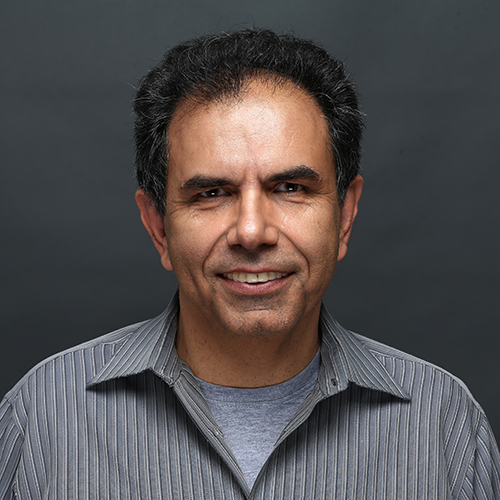
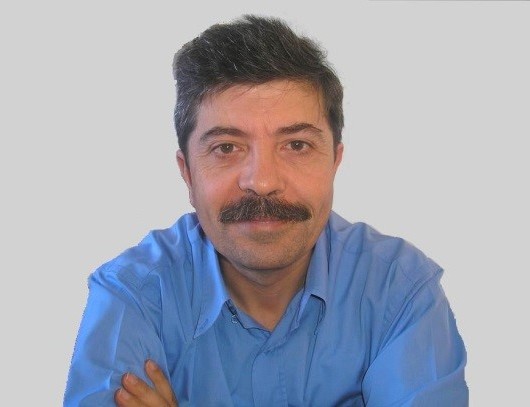
Daniel Schmid is a Project Researcher at the Laboratory of Molecular Science and Engineering Technologies for a Sustainable Future, Faculty of Science and Engineering, Åbo Akademi University. His work focuses on biomass conversion, gasification, and chemical processes for sustainable energy and environmental protection.
Johan Werkelin is a Senior Lecturer at the Faculty of Science and Engineering, Åbo Akademi University. He works within the Laboratory of Molecular Science and Engineering under the Technologies for a Sustainable Future initiative, focusing on biomass energy and ash chemistry research. Affiliation: Faculty of Science and Engineering, Åbo Akademi University Academic Role: Senior Lecturer Research Focus: Biomass combustion, ash-forming elements, sustainable energy systems His research investigates the chemical composition of biomass fuels, particularly ash-forming elements and their behavior during combustion processes. This work spans multiple publications analyzing Scandinavian wood species and their applications in energy production. Research trends show consistent focus on biomass energy systems from 2005-2022, with publications addressing elemental characterization of wood fuels, combustion technology, and sustainable material cycles across various academic outlets including peer-reviewed journals and conference proceedings. Johan has actively participated in academic supervision and event organization, including the Åbo-Aurum Open Symposium on Inorganic Materials and Recycling (2022) and diploma thesis supervision for energy engineering students (2013-2017).
Prof. Agostino Gambarotta is a Full Professor at the Faculty of Engineering of the University of Parma, Italy, and Director of the Center for Energy and Environment (CIDEA) since 2024. He holds a PhD in Energetics from Milan Politechnic (1990) and has been affiliated with the University of Parma since 2002. Research Focus: His work spans two core areas: Energy Systems Optimization – developing mathematical models for energy grids, cogeneration, renewable integration, and storage systems to enhance efficiency and reduce environmental impact; Internal Combustion Engines – advancing control strategies, emissions reduction, and real-time simulation methodologies for automotive applications. Professional Engagements: Gambarotta is a member of SAE, ASME, and IFAC, and serves as a reviewer for journals like Applied Energy and Fuel . His teaching includes courses on energy systems and environmental impact across mechanical engineering and environmental resource programs.
Professor Farid Christo is an Adjunct Professor at RMIT University's School of Engineering. His research focuses on combustion engineering, thermal plasma technology, sustainable energy systems, and biomedical applications. He is actively involved in supervising Masters and PhD students. His work spans topics such as hydrogen combustion optimization, environmental-friendly fuel production, and plasmonic nanomaterials for energy conversion. He has contributed to advancements in chemical looping processes, thermal plasma-driven metal recycling, and CO2 utilization.
Shawon Barua is a Doctoral Researcher at the Department of Physics within the Faculty of Engineering and Natural Sciences at Tampere University. Their research focuses on understanding the molecular mechanisms of atmospheric aerosol formation, particularly through oxidation pathways of hydrocarbons and volatile organic compounds (VOCs). Key areas include the kinetics of reaction pathways leading to aerosol growth and clustering, employing mass spectroscopic methods and computational chemistry. Research interests emphasize the environmental impact of aerosols on climate change, with a focus on urban emissions, traffic-related pollutants, and secondary aerosol production. Shawon has conducted studies using advanced techniques like the SAPHIR chamber for urban air simulations and molecular dynamics-guided reaction discovery to unravel complex oxidation processes. Their work bridges fundamental chemistry with applied environmental science, addressing critical gaps in understanding aerosol dynamics in both atmospheric and combustion environments. Key contributions include investigations into sulfuric anhydride formation, ozonolysis of biogenic compounds (e.g., α-pinene), and the role of traffic-emitted amines in new particle formation. Awards and grants are not explicitly mentioned in the provided texts. Shawon collaborates with the Aerosol Physics research unit and has published extensively on topics like VOC oxidation, radical mechanisms, and the interplay between ozone and organic compounds in aerosol precursor formation.
Reza Kashani is a full-time Professor in the Department of Mechanical and Aerospace Engineering at the School of Engineering, University of Dayton. He specializes in control of dynamic systems with a focus on sound and vibration control, as well as manufacturing process control. His research is applied in aerospace, automotive, and industrial contexts. Educational Background: Ph.D., University of Wisconsin-Madison, 1989 M.S., University of Wisconsin-Madison, 1986 M.S., University of Wisconsin-Madison, 1979 B.S., Sharif University of Technology, Tehran, 1977 His research interests include active and passive noise and vibration control, thermoacoustic instability mitigation, electrohydrodynamic heat transfer enhancement, and feedback control in manufacturing processes. He applies control theory to mechanical systems for improved performance and reliability. The recent articles demonstrate a strong trend in tuned mass dampers, active acoustic filtering, and adaptive vibration control systems, spanning applications from structural engineering to automotive and aerospace systems. His work combines theoretical modeling, numerical simulation, and experimental validation. Scientific Awards: SAE Ralph A. Teetor Educational Award (1995) ASME Dynamic Systems and Control Division Certificate of Appreciation (1998) Dr. Kashani has secured research funding as Principal Investigator from the Air Force Wright Laboratories and DaimlerChrysler Corp., with projects focused on acoustic instability control and active boom noise damping. He has taught core courses such as Dynamic Systems and Controls, Noise and Vibration Control, and Automatic Control Theory. He has also conducted professional training for Caterpillar, John Deere, and SAE, and provided consulting services in noise and vibration control for industry. He has organized symposia on Noise and Vibration Control at ASME IMECE. He leads research in active and adaptive vibration control systems, with applications in aerospace propulsion, automotive NVH, and precision manufacturing. His lab work involves experimental modeling of acoustic enclosures, development of smart dampers, and control of micro heat transfer systems.
Jacobus B.W. Kok serves as an Associate Professor in the Department of Thermal Engineering within the Faculty of Engineering Technology at the University of Twente. His academic career spans over three decades with significant contributions to combustion engineering and acoustics research. His research focuses on combustion dynamics , thermoacoustic instability , and swirl burner technology , with particular expertise in pressurized combustors, flame transfer functions, and acoustic characterization methods. Current work emphasizes multiscale analysis of combustion systems using advanced computational techniques including Proper Orthogonal Decomposition and Large Eddy Simulation. Recent publications demonstrate strong emphasis on practical industrial applications including hot blast stove optimization, gas turbine combustor design, and droplet combustion analysis. His work bridges fundamental combustion science with engineering solutions for energy systems. Principal investigator for multiple combustion research projects Supervised 19 graduate research projects Active participant in international combustion conferences Collaborator in European research networks (e.g., MAGISTER ITN) Kok maintains active research collaborations across European institutions with recent work involving pressurized combustion systems, acoustic diagnostics, and industrial furnace optimization. His laboratory utilizes advanced computational tools and experimental datasets for combustion analysis.
Dr. Gule Li is a Researcher at the University of Adelaide , affiliated with the School of Chemical Engineering under the Faculty of Sciences, Engineering and Technology. She focuses on designing and operating gasification and combustion systems, process modeling, and hydrogen retrofits in high-temperature reactors. Techno-economic assessment of refuse-derived fuel (RDF) utilization in industrial processes Net-zero alumina and iron production technologies Process modeling and decarbonization strategies for cement, alumina, and iron ore sectors
Vamvouka Despina is a Professor at the Laboratory of Solid Fuel Refining and Technology within the Department of Mineral Exploitation at the School of Mineral Resources Engineering , Technical University of Crete. Her academic activities focus on clean energy technologies and solid fuel processing. Undergraduate Courses: Coal Refining (MOP 412), Solid Fuel Utilization Technologies (MOP 517) Postgraduate Courses: Environmental Control in Energy Production (G&P 314), Biomass, Bioenergy and Environment (1601 GE0176) Research Interests center on solid fuel technologies , including: Pyrolysis, combustion, and gasification processes Kinetic studies using TGA/DTG analysis Mathematical modeling of thermal processes Pollutant emission reduction techniques Corrosion/deposition mitigation in boilers Physical and chemical fuel quality upgrading Her recent publications demonstrate expertise in biomass gasification , waste-derived adsorbents , and hydrogen production from organic residues. Research grants include projects focused on clean fuels optimization and climate change mitigation technologies .
Professor Galetakis Michael is affiliated with the Technical University of Crete , specifically the School of Mineral Resources Engineering and the Mining Technology Department . His research focuses on quality control of mineral raw materials, health and safety in mining, geostatistics, neural networks, and environmental risk assessment. Quality control of aggregates, construction materials, and solid fuels Simulation techniques and stochastic analysis for mining systems Environmental remediation and risk management The recent publications highlight applications in mining rehabilitation , CO2 reduction , and machine learning for mineral resource estimation. Projects funded by the European Commission and other institutions include ecological rehabilitation, pit lake stability, and mining efficiency enhancements. Scientific grants include: REECOL (2023-2026): Ecological rehabilitation of post-mining areas RAFF (2019-2022): Risk assessment of flooded pits BEWEXMIN (2015-2018): Bucket wheel excavator optimization MANNFENI (2013-2015): Mathematical models for mining DURECOBEL (2013-2015): Eco-friendly building materials He is involved in the Research Unit Quality Control-Hygiene and Safety in Mining and teaches Mining Research , Health and Safety in Mining , and Quality Control courses.
Dr. Bianca Capra is a Senior Lecturer at Queensland University of Technology's Faculty of Engineering, specializing in scramjet propulsion , hypersonic aerodynamics , and natural ventilation in buildings . Her research bridges aerospace engineering and sustainable architectural design through advanced School of Mechanical, Medical & Process Engineering collaborations. Research Focus: Hypersonic flow modeling, combustion enhancement, building energy optimization Key Collaborators: Professor Russell Boyce, Associate Professor Veronica Garcia Hansen, Dr. Robin Drogemuller Methodologies: Computational fluid dynamics, experimental validation, thermal comfort analysis Her publications demonstrate expertise in porous fuel injection systems , oxygen enrichment applications , and natural ventilation heuristics for high-rise structures. Notable works include SCRAMSPACE project contributions and radical-farming scramjet combustion studies . While no formal awards are documented, her 15+ peer-reviewed publications since 2005 establish significant academic impact.
Knud Erik Meyer is an Associate Professor at the Department of Civil and Mechanical Engineering (Technical University of Denmark). His work focuses on experimental fluid mechanics , particularly optical methods such as Laser Doppler Anemometry (LDA) and Particle Image Velocimetry (PIV) , with applications in turbulent flow , heat transfer , and industrial systems . Education : PhD in Turbulent Flow and Heat Transfer (DTU, 1991-1993); MSc in Civil Engineering (DTU, 1983-1988) Academic History : Associate Professor (DTU, 2000-...), Assistant Professor (DTU, 1996-1999), Assistant Research Professor (DTU, 1994-1996) Meyer's research spans turbulent jets in cross-flow , swirling flow dynamics , microplastic settling , and personalized ventilation systems . He employs advanced optical diagnostics and computational modeling (CFD) to study complex flows in two-stroke diesel engines , wind turbines , and environmental fluid dynamics . His publications (108 total) emphasize flow structure identification , PIV data analysis , and thermal transport , with recent work on non-spherical particle tracking and microplastic dynamics . Notable projects include Sorting plastic by sedimentation and Axial fans and ventilation systems . Scientific Awards : Best Paper Award, International Symposium on Energy, Informatics, and Cybernetics (2009) Supervision : Mentored PhD students including S. Eberhard, B. A. K. Hartz, M. Rønne, and W. Situ on topics ranging from microplastic settling to combustion flow analysis . Collaborates extensively with international institutions and industry partners.
Ogochukwu Enekwizu is an Atmospheric Scientist at Brookhaven National Laboratory's Environmental Science and Technologies Department, specializing in black carbon (BC) microphysical, hygroscopic, and optical properties from fossil fuel and biomass burning sources. She leads research on aerosol-cloud interactions and serves as associate mentor for DOE Atmospheric Radiation Measurement (ARM) User Facility instruments. Ph.D., Chemical Engineering (New Jersey Institute of Technology, 2020) M.S., Chemical Engineering (University of Houston, 2013) B.Eng., Chemical Engineering (Nnamdi Azikiwe University, 2009) Her research integrates aerosol instrumentation and climate modeling, focusing on BC aging processes and their impacts on cloud formation. Recent work with the ARM facility examines CCN activation trends in coated particles. 2020 APERG Grant (MASS-AWMA) 2020 Sustainability Award (AWMA) 2018 Stoller Award (NJWEA) As AAAR Chair for Combustion and Materials Synthesis Group (2024-present), she advances aerosol research standards. Her instrumentation expertise spans CCN counters and soot particle analyzers.
Emanuele Martelli serves as a Full Professor in the Department of Mechanical and Aerospace Engineering (DIMEAS) at the Polytechnic University of Turin, where he conducts advanced research in aerospace propulsion and fluid dynamics. With expertise spanning computational fluid dynamics, aeroacoustics, and shock wave phenomena, he leads significant research initiatives focused on rocket propulsion systems and supersonic flow applications. His primary research interests include: Aeroacoustics: Analysis of noise generation in launch vehicles and propulsion systems Aerospace Propulsion: Advanced rocket nozzle design and performance optimization Computational Fluid Dynamics: High-fidelity numerical simulation of complex flow phenomena Flow Separation: Investigation of separation mechanisms in supersonic and hypersonic flows Shock Waves: Study of shock/boundary layer interactions and their unsteady characteristics Professor Martelli's research program encompasses three main lines: analysis of intermittency in shock-driven flow separation using wavelet transform, high-fidelity numerical simulation of flow separation in over-expanded supersonic nozzles for space applications, and study of low-frequency non-stationarity in shock/boundary layer interaction through direct numerical simulation. His publication record demonstrates a clear progression from foundational work on surface ablation and heat transfer to cutting-edge research on flow control mechanisms and aeroacoustic environments in modern launch vehicles. Recent publications particularly emphasize high-fidelity simulation techniques applied to rocket propulsion challenges. Professional recognition includes: AIAA Solid Rockets Best Paper Award from the AIAA Propulsion and Energy Forum (2021) Professor Martelli actively mentors doctoral students and participates in academic governance. He currently supervises Michele Errante's PhD research on turbulent flow simulation using discontinuous Galerkin methods. He has served on doctoral colleges for Aerospace Engineering at the Polytechnic University of Turin and for Industrial and Information Engineering at the University of Campania "Luigi Vanvitelli" since 2008. His teaching portfolio includes advanced courses on Endoreactors, Aircraft Engines, and Rocket Engine Design. He is a key member of the Aerospace Propulsion research group within DIMEAS, which focuses on advancing propulsion technology through computational and theoretical approaches. The group's work spans rocket propulsion systems, aircraft engines, and next-generation space access technologies, with particular emphasis on fluid dynamics phenomena, combustion processes, and thermal management solutions for extreme environments.
Federico Millo is a Full Professor at the Department of Energy (DENERG), Politecnico di Torino, and Deputy Director of CARS@PoliTO Interdepartmental Center for Automotive Research and Sustainable Mobility. He serves as Scientific Advisor for partnership agreements with DUMAREY, FERRARI, FEV ITALIA, and EARPA. Contact: federico.millo@polito.it Research Leadership : Leads projects on hydrogen ICE, hybrid propulsion, and CO2 reduction. Key Collaborations : IFP Energies nouvelles (France), Universidad Politécnica de Valencia (Spain), CUNA automotive association. Research Focus : Alternative fuels (hydrogen, HVO, biofuels) Internal combustion engine optimization Vehicle emission control systems Hybrid electric powertrains Computational modeling (CFD, GT-Power, LES) Thermal management for sustainable mobility Article Highlights : Recent work covers hydrogen ICE combustion modeling, ducted fuel injection for soot reduction, predictive calibration techniques, and hybrid powertrain optimization. Projects align with SDGs 7, 9, 11, and 13. Awards : SAE McFarland Award (2013) SAE Fellow (2015-) SAE Excellence in Oral Presentation (2011) HONDA Initiation Grant (2011) Academic Leadership : Chairs international conferences (SAE, SIA) and serves as Scientific Director for hydrogen ICE research agreements. Supervises 20+ PhD students in energy and automotive engineering. Laboratory : Heads the Engines, Energy, and Environment (E3) research group, conducting experimental and numerical analyses on combustion processes, emission control, and sustainable powertrains.